
Note: This article contains affiliate links. If you click on these links and make a purchase, we may earn a small commission at no extra cost to you. This helps support our research and content. Read our full affiliate disclosure here.
If you want to store bottles in a garage without risking heat spikes or dust damage, choosing the right 24-inch wine cooler matters. Garage environments expose wine to wider temperature swings, dust, and vibration, so a unit designed to handle those conditions extends bottle life and preserves flavor. This guide shortlists the top 24-inch wine coolers for garages that prioritize stable temperature zones, vibration mitigation, and durable ventilation. We evaluated units for installation simplicity, control precision, and protection features to help you pick the right cooler for your garage layout and bottle collection. Scroll on for the top picks and a breakdown of the features and installation considerations that matter most in garage settings.
Top Picks at a Glance
| Best Overall The best all-around choice for most situations | Kalamera 24" Dual Zone Wine Cooler |  |
| Best Quality Built to a higher standard if you want something more solid | Zephyr Presrv 24" Wine Fridge |  |
| Best Value The sweet spot between price and what you get | Tylza 24" Dual Zone Wine Refrigerator |  |
| Best Budget The cheapest option that still gets the job done reliably | BODEGA 24-Bottle Wine Cooler |  |
| Top Rated A top-rated pick with lots of positive feedback | EORICE 24-Inch Beverage Refrigerator |  |
| Most Popular A crowd favorite that many people choose with confidence | Velieta 24 Inch Dual Zone Wine Cooler |  |
| Best Seller A high-volume bestseller chosen again and again | EUHOMY Wine Cooler BR001-110 |  |
Kalamera 24" Dual Zone Wine Cooler

| Capacity | 5.65 cubic feet |
|---|---|
| Bottle capacity | 46 bottles (approx.) |
| Temperature range (upper) | 40-50°F |
| Temperature range (lower) | 50-66°F |
| Installation type | Built-In, Freestanding |
The Kalamera 24-inch dual-zone wine cooler splits storage into two temperature zones so you can chill whites and reds at different set points, and it is designed for either built-in or freestanding installation. It uses a compressor cooling system and an electronic LED control to set upper and lower zone temperatures (upper 40-50°F, lower 50-66°F). The unit ships with five removable wooden shelves with stoppers and a stainless steel framed reversible glass door with a keyed lock, while soft blue LED interior lighting aids bottle selection. Practical benefits include a relatively large 5.65 cu ft capacity for a 24-inch cabinet, temperature memory after power loss to protect the collection, and the option to install undercounter. Trade-offs are typical for compressor coolers at this size: it requires adequate ventilation when built in and consumes noticeable energy compared with smaller thermoelectric models, and very large-format bottles like some Champagnes may reduce total bottle count. Installation flexibility and the dual-zone control make it a solid all-round choice for home kitchens or bars that need separate temperature storage.
Best for: Buyers who want a flexible undercounter-capable cooler that stores both reds and whites at separate temperatures and value wooden shelving and a lockable stainless-steel door.
Less Ideal for: If you need the quietest, lowest-energy option for a small space or primarily store oversized bottles, consider a smaller thermoelectric unit or a model sized specifically for large-format bottles.
- Dual-zone thermostat for separate red and white storage
- Removable wooden shelves with stoppers to protect bottles when pulled out
- Built-in or freestanding installation option for undercounter use
- Temperature memory after power loss to preserve set temperatures
- Stainless steel framed reversible glass door with keyed lock and interior LED lighting
- Annual energy consumption is relatively high for continuous compressor operation
- Large-format bottles may reduce the advertised 46-bottle capacity
Verdict: A versatile 24-inch built-in-ready dual-zone cooler that balances sizable capacity, wooden shelving, and separate temperature control for buyers who want one undercounter unit to store both reds and whites.
Zephyr Presrv 24" Wine Fridge

| Capacity | 45 bottles (750 ml) |
|---|---|
| Cooling Method | Thermoelectric |
| Temperature Range | 40 to 65°F |
| Number Of Shelves | 5 |
| Power | 120 volts |
The Zephyr Presrv 24" dual-zone wine fridge is a compact, performance-focused cooler that balances capacity with temperature control for serious collectors. It offers two independently controlled zones with a 40 to 65°F range, making it simple to store whites and reds at their ideal serving temperatures. The unit uses PreciseTemp and Active Cooling technology with vibration dampening and inverter capabilities to maintain steady temperatures, and the reversible stainless steel door with key lock keeps contents secure. Interior LED lighting in three colors and five wood-trim racks (including a larger-diameter shelf for sparkling bottles) make organization and presentation easy. For garage use the thermoelectric cooling and ENERGY STAR certification indicate efficient operation, but garages that see wide ambient swings or temperatures outside the fridge range may require environmental control to keep the cooler within its rated performance window. Installation is flexible — countertop, built-in, or freestanding — though the unit is relatively heavy and needs proper support and ventilation when installed under a counter. If you prioritize stable dual-zone control and presentation for a medium-sized collection, this model performs well.
Best for: Buyers who need reliable, steady dual-zone temperature control and presentation-grade storage for a mid-size collection and who will keep their garage environment reasonably temperature-stable.
Less Ideal for: Those storing wine in unconditioned garages with large temperature swings or buyers who need a lighter, more easily moved cooler for occasional use.
- Dual independent temperature zones for storing reds and whites at different temperatures
- PreciseTemp/Active Cooling with vibration dampening for stable storage conditions
- 45-bottle capacity with a dedicated larger rack for sparkling bottles
- Reversible stainless steel door with electronic touch controls and a lock for security
- Three-color LED lighting and five wood-trim racks for organization and presentation
- Thermoelectric cooling can struggle if garage ambient temperatures fall outside the unit's optimal range
- Relatively heavy unit requires planning for installation and proper ventilation
Verdict: If you want a 24-inch, dual-zone cooler that delivers steady temperature control and presentation-ready storage for a medium collection in a controlled garage space, this Zephyr Presrv model is a strong pick.
Tylza 24" Dual Zone Wine Refrigerator

| Capacity | 4.2 cubic feet |
|---|---|
| Temperature range left zone | 35-50°F |
| Temperature range right zone | 41-64°F |
| Annual energy consumption | 163 kilowatt hours per year |
| Installation type | Under-Counter/Freestanding/Built-In |
This Tylza 24" dual-zone fridge is a focused beverage chiller for households or small bars that need separate temperature control for wine and drinks. It provides two independently controlled cooling zones with adjustable ranges (left 35–50°F, right 41–64°F) and a touch control panel with temperature memory to restore settings after power interruptions. The unit fits under counters or works freestanding and offers a mix of metal and wood shelving that can be rearranged to fit bottles or stacks of 12‑oz cans, with the manufacturer listing capacity for about 20 Bordeaux bottles and 88 cans. A rotary scroll inverter compressor and fan circulation aim for even cooling while running quietly under 38 dB, and the double-layered glass door plus a keyed lock help protect stored bottles. Practical limits include a moderate 4.2 cu ft capacity that will not suit large collections and a 24" footprint that requires planning for built-in installation; buyers should also expect typical compressor vibration and longer pull-down times compared with commercial blast chillers. For a performance-focused mini fridge that balances low noise, dual zones, and flexible shelving, this is a sensible option.
Best for: Buyers who prioritize precise temperature control and low-noise operation for mixed wine and beverage storage in a home bar or under-counter setup.
Less Ideal for: Those needing large-capacity cellars or professional rapid-cooling performance for high-volume commercial use should look elsewhere.
- Independent dual cooling zones with specific temperature ranges for wine and beverages
- Quiet inverter compressor design operating under 38 dB for low noise environments
- Touch control with temperature memory restores settings after power outages
- Flexible metal and wood shelving that can be removed or rearranged to fit bottles and cans
- Built-in or freestanding installation options for versatile placement
- 4.2 cubic foot capacity limits the number of bottles for serious collectors
- Not a rapid commercial-style cooler so pull-down times may be slower than specialty units
Verdict: Choose this fridge when you want a quiet, dual-zone under-counter cooler that keeps wine and cans at independently controlled serving temperatures.
BODEGA 24-Bottle Wine Cooler
| Capacity | 2.5 cubic feet |
|---|---|
| Size | 24 bottle |
| Cooling Method | Compressor |
| Defrost System Type | Frost Free |
| Voltage | 115 volts |
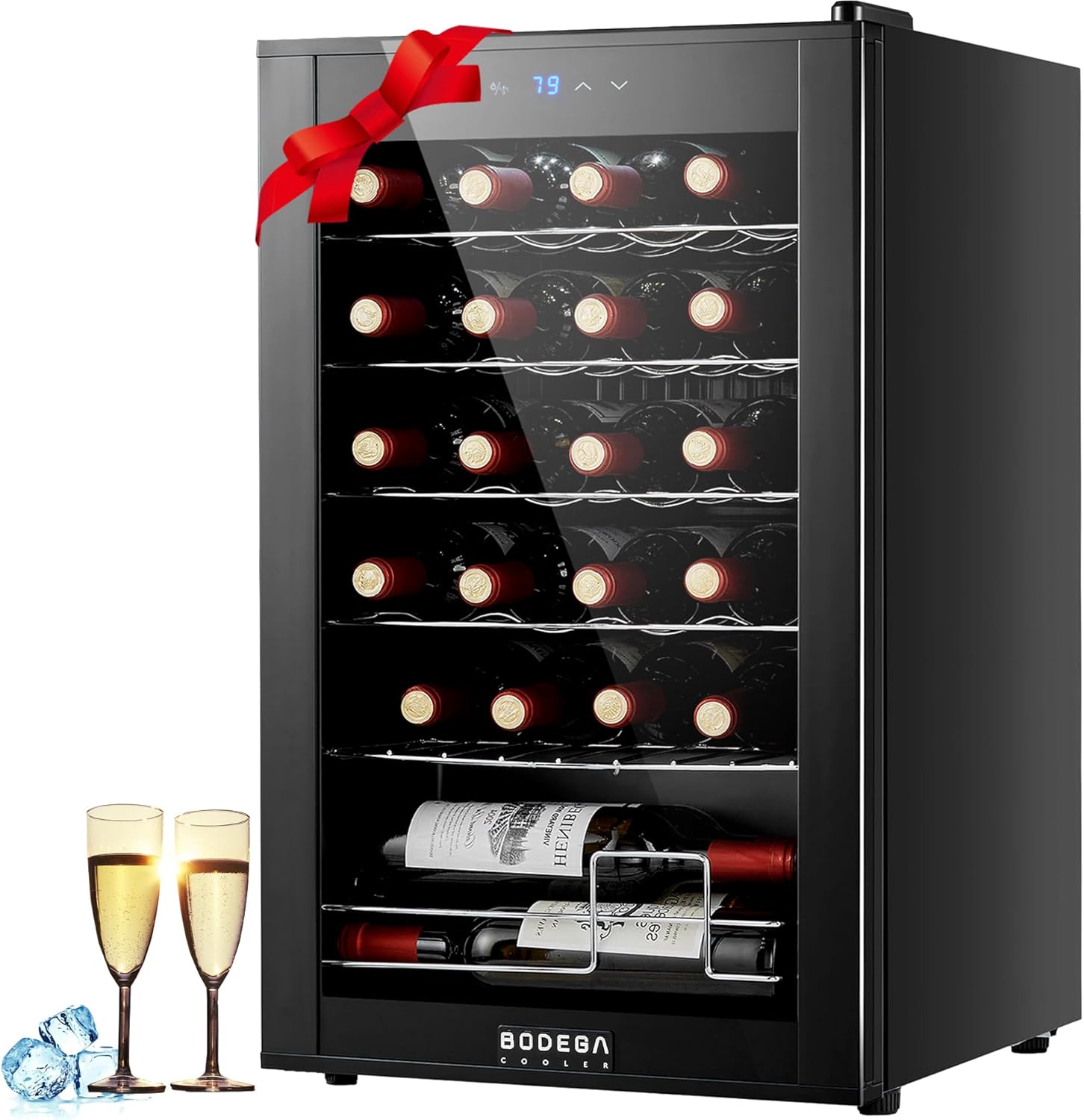
The BODEGA 24-bottle wine cooler is a compact freestanding fridge that uses a compressor cooling system to hold bottles between about 41°F and 64.4°F, making it suitable for reds, whites, and sparkling wine. It is typically used under a counter or tucked into a garage or bar area where steady, lower temperatures are needed. Notable features include six removable chrome-plated metal shelves, a double-layer UV-protected glass door, a digital control panel on the glass, soft interior LED lighting, and an automatic defrost cycle that runs periodically to reduce manual maintenance. In practice the compressor gives faster, wider-range cooling than thermoelectric models and is designed for quieter operation, so it can sit near living spaces without excessive noise. Trade-offs to consider are its single temperature zone, which limits separate storage for reds and whites, and the 2.5 cu ft capacity that fits about 24 standard bottles but may be small for larger collections. For buyers seeking a cost-effective, straightforward compressor wine fridge for a garage or small hospitality area, it covers the basics well.
Best for: Buyers wanting an affordable, compressor-cooled 24-bottle wine fridge for a garage, small bar, or under-counter spot who prioritize reliable cooling and compact footprint over multi-zone storage.
Less Ideal for: Collectors who need large capacity or dual-zone temperature control for storing whites and reds at different set points should look elsewhere.
- Compressor cooling provides faster, wider-range temperature control compared with thermoelectric units
- Double-layer UV-protected glass door helps reduce light exposure that can harm wine
- Six removable metal shelves let you reorganize storage and fit different bottle shapes
- Digital temperature panel on the glass door lets you adjust settings without opening the fridge
- Single-zone cooling prevents storing different wines at separate ideal temperatures
Verdict: A budget-friendly compressor wine cooler that delivers reliable single-zone cooling and a compact 24-bottle footprint ideal for garage or small bar use.
EORICE 24-Inch Beverage Refrigerator

| Capacity | 4.9 cubic feet |
|---|---|
| Cooling Method | Compressor |
| Temperature Range | 37°F to 64°F |
| Installation Type | Built-In or Freestanding |
| Annual Energy Consumption | 112 kilowatt hours per year |
This 24-inch EORICE beverage refrigerator is built for storing large drink collections in tight footprints, offering 4.9 cubic feet of capacity and three adjustable wire shelves to hold cans, bottles, or a mix of beverages. It uses a compressor cooling system with 360 degree air circulation and an LCD touch display that sets temperatures from 37°F to 64°F, plus a power‑outage memory to restore your last setting. The front-vent design lets you install it under a counter or use it freestanding without side or rear clearance, and the stainless steel door and activated carbon adsorption system help keep odors down. Noise is low at around 37 dB, and the unit includes a two-year compressor warranty backed by TUV and DOE certifications. Expect a solid, practical garage cooler that balances capacity and quiet operation, though it is relatively heavy and requires the usual compressor maintenance over time and occasional leveling for built-in installs.
Best for: Buyers who prioritize a dependable, larger-capacity under-counter cooler for a garage or built-in bar and want quiet, straightforward temperature control with warranty-backed compressor reliability.
Less Ideal for: People who need a lightweight, portable cooler or a unit rated for exposed outdoor weather conditions should consider other options.
- Large 4.9 cu ft capacity fits up to 180 standard cans or mixed bottles
- Front-vented design supports true built-in or freestanding installation
- Digital LCD touch control with wide 37°F–64°F temperature range and power‑outage memory
- Quiet compressor operation around 37 dB suitable for garages or living spaces
- Adjustable wire shelves and stainless steel door for durable, odor‑controlled storage
- Heavy unit may be awkward to move and install
- No explicit insulation or weatherproofing for extreme outdoor exposure
Verdict: Choose this EORICE 24-inch beverage refrigerator when you need a high-capacity, quiet, built-in-capable garage cooler with reliable compressor performance.
Velieta 24 Inch Dual Zone Wine Cooler

| Capacity | 4.24 cubic feet |
|---|---|
| Cooling Method | Compressor |
| Installation Type | Built-in/under counter/Freestanding |
| Number of Doors | 2 |
| Additional Features | Touch Control |
The Velieta 24 Inch Dual Zone Wine and Beverage Refrigerator combines separate wine and beverage compartments with a front-venting design that lets it sit under a counter or operate freestanding. It offers independent temperature ranges for each zone so you can keep cans and bottles cold in the left compartment while holding wine at cellar-like temperatures on wooden shelves in the right compartment. The unit uses a compressor and fan circulation for relatively fast, stable cooling and includes touch controls, blue LED lighting, a charcoal filter to reduce odors, and a door lock for security. Wire and wooden shelving are removable for flexible storage and the stainless steel frame and handle give it a clean built-in look. Trade-offs to expect are the moderate 4.24 cu ft capacity that limits very large collections and the specified noise and energy figures typical of compressor models, which may be louder and use more power than the quietest thermoelectric alternatives.
Best for: Buyers who want a compact dual-zone fridge that reliably stores both wine and ready-to-drink beverages under a countertop and value independent temperature control and a finished stainless look.
Less Ideal for: People needing high-capacity wine storage or the absolute quietest, lowest-energy option should consider larger single-purpose cellars or thermoelectric alternatives instead.
- Dual independent cooling zones with separate temperature ranges for beverages and wine
- Front ventilation allows built-in under-counter installation without added clearance
- Touch-screen digital controls and blue LED interior lighting for easy operation and visibility
- Removable wooden shelves and wire racks for flexible bottle and can storage
- Charcoal filter and fan circulation help reduce odors inside the cabinet
- 4.24 cubic foot capacity may be small for larger wine collections
- Compressor-based cooling typically produces more noise and uses more energy than thermoelectric models
Verdict: Choose this Velieta 24" dual-zone cooler when you want a compact under-counter fridge that keeps beverages and wine at optimal, independently controlled temperatures.
EUHOMY Wine Cooler BR001-110

| Capacity | 3.2 cubic feet |
|---|---|
| Bottle capacity | Up to 25 standard 750ml bottles |
| Temperature range | 41°F to 64°F |
| Cooling method | Compressor |
| Door orientation | Reversible |
This EUHOMY wine cooler is a compact freestanding unit aimed at steady, long-term beverage storage. It uses a compressor cooling system with a 41 to 64°F temperature range controlled by a digital touchscreen, so you can keep reds, whites, and sparkling bottles at appropriate serving temperatures. The interior offers four chrome full-width racks, a flat shelf and a bottom compartment to fit up to 25 standard 750ml bottles and to reconfigure storage as needed. The double-layer thermopane glass door reduces temperature swings and blocks UV light, and soft LED lighting helps with visibility without harsh heat. Practical touches include adjustable leveling legs, a built-in handle and a reversible door for flexible placement under counters or freestanding in a bar or office. Expect manual defrosting and typical small-fridge energy use; for buyers prioritizing quiet, vibration-free operation the compressor is described as high-performance and low-vibration but compressor units can still be noisier than thermoelectric models. The unit is supported by a one-year warranty and arrives with a user manual for setup and operation.
Best for: Buyers who want a compact, reliable freestanding cooler for steady storage of a small to medium wine collection and value precise temperature control and flexible placement.
Less Ideal for: Those seeking a zero-maintenance built-in cellar replacement, ultra-low energy operation, or very large bottle capacity should consider larger or different-style units.
- Compressor cooling with a wide 41–64°F range for storing different wine styles
- Double-pane glass door that insulates and blocks UV to protect wine quality
- Adjustable shelves and mix of racks allow flexible storage up to 25 standard bottles
- Digital touchscreen control and internal LED lighting simplify temperature monitoring and viewing
- Reversible door and leveling legs make placement under counters or freestanding easier
- Manual defrost requires occasional user maintenance
- Annual energy consumption is relatively high compared with the smallest thermoelectric units
Verdict: A compact, compressor-cooled freestanding wine cooler that delivers precise temperature control and flexible storage for a small commercial or bar setting.
Choosing the Right 24-Inch Wine Cooler for Garages: Key Factors to Consider
Temperature Range and Stability
Temperature range tells you the span of settable temperatures a cooler supports, while stability reflects how well the unit maintains a set point over hours and days. In a garage, ambient temperatures can swing widely between day and night and across seasons. A cooler with a narrow swing around its set point and an ability to maintain cellar-like temperatures is essential to prevent premature aging or cooked flavors. Look for digital controls and internal circulation that minimize hotspots and maintain consistent conditions across all shelves.
Stability is more important than absolute minimum temperature for garage use. A cooler that holds 55 to 65 degrees reliably under varied ambient conditions is preferable to one that briefly reaches lower temperatures but fluctuates significantly.
Ventilation and Heat Dissipation
Ventilation design determines how effectively a cooler expels heat produced by its compressor or thermoelectric system. Garages often lack the steady indoor airflow of a kitchen, so a unit with front-venting or purpose-built condenser clearance will cope better in confined or built-in installations. Adequate heat dissipation prevents the compressor from overworking, which preserves longevity and maintains internal set temperatures.
Also consider whether the cooler has filters or easily accessible rear vents for dust mitigation. Dust buildup in garage environments can impede air movement and cooling efficiency, so models that facilitate periodic cleaning or place vents in less dust-prone locations reduce maintenance and performance issues.
Vibration Control and Shelving
Excess vibration disturbs sediment in aged bottles and can accelerate oxidation. For garage installations where tools, vehicles, or HVAC equipment may introduce extra vibration, look for units with compressor isolation, anti-vibration mounts, or low-vibration cooling systems. Shelf type also matters: wooden or padded shelves absorb movement better than thin wire racks, and secure shelving prevents bottles from shifting during minor garage activity.
If you plan to age wines, prioritize vibration reduction over marginal gains in storage capacity. For casual short-term storage, standard vibration control may be acceptable but still warrants attention in a garage setting.
Door Construction and Sealing
A tight door seal prevents warm, humid garage air from infiltrating the cooled interior and causing condensation or frost. Insulated glass and durable gasket materials help maintain thermal integrity. For garages where temperature and humidity shift, choose a door design that resists warping and keeps consistent contact with the gasket. Some doors include UV protective glass that limits light-induced flavor changes, which is an extra benefit if your garage receives daylight near the cooler location.
Frequent door opening is common in multipurpose spaces, so fast recovery to set temperature is also a desirable attribute tied to good sealing and efficient refrigeration.
Installation Space and Orientation
Measure the intended garage location for height, width, depth, and necessary clearance. Some 24-inch coolers are designed for built-in use with front ventilation, while others require rear clearance for airflow. Garages often have lower clearances, uneven floors, or nearby obstructions, so installation flexibility determines whether the unit will perform safely. Consider floor leveling, the ability to secure the unit to prevent tipping, and door swing direction relative to other objects.
Power access is another factor. Make sure the cooler can reach a grounded outlet without using extension cords. If you intend to recess the unit into cabinetry or under counters in a garage workshop, verify the manufacturer clearance guidelines for safe operation.
Durability and Maintenance
Garages expose appliances to more dust, temperature extremes, and occasional bumps. Durable finishes, corrosion-resistant components, and easy-to-clean venting panels reduce long-term maintenance needs. Removable air filters, accessible condensers, and replaceable gaskets make upkeep straightforward and keep cooling performance reliable.
Regular maintenance routines like cleaning vents and checking seals will extend the unit life. When comparing options, favor designs that simplify those tasks, especially if you do not plan frequent deep maintenance in a garage setting.
Garage Placement Options and Venting Best Practices
Choosing where to place a 24-inch wine cooler in a garage influences performance. Prioritize locations with stable ambient airflow and avoid spots next to heat sources such as furnaces, dryers, or direct sun through garage windows. If the unit is built-in, ensure the model supports front ventilation to avoid requiring rear clearance.
Maintain at least the minimum manufacturer-specified clearance around vents and plan for routine dust removal. In dusty garages, a slightly elevated platform can reduce intake of floor-level particulates.
- Use front-venting models when recessing the unit.
- Keep clear space around exhaust vents for proper heat dissipation.
- Avoid placement near garage doors that open often during hot days.
Power Considerations and Electrical Safety
Ensure the cooler is plugged into a dedicated, grounded outlet. Garages sometimes share circuits with heavy-load tools, which can cause voltage drops or trips when multiple devices run simultaneously. Confirm the circuit capacity and avoid extension cords or multi-plug strips that can overheat.
If your garage is subject to intermittent power outages or voltage fluctuations, consider adding a surge protector designed for appliances. Proper grounding and periodic inspection of the outlet reduce risk of electrical problems that can damage cooling components.
- Verify circuit amperage before installation.
- Avoid shared circuits with power tools when possible.
- Use a surge protector rated for appliances if outages are common.
Seasonal Use and Winterization
Garages in cold climates introduce a different set of challenges. Some coolers that rely on compressor systems may not operate efficiently below certain ambient temperatures and could fail to maintain usable interior conditions in winter. For garages that dip below the cooler's minimum operating ambient temperature, consider models rated for low-ambient operation or plan to move the unit indoors during extreme cold.
If you plan on seasonal storage, monitor interior humidity to prevent gasket drying and inspect seals before heavy-use periods. In mild climates, a properly ventilated and insulated garage space often works year-round with the right cooler.
- Confirm the cooler's minimum operating ambient temperature.
- Check seals each season for cracking or leakage.
- Plan for relocation or supplemental heating in very cold garages.
Organizing Bottles and Maximizing Capacity
24-inch coolers strike a balance between footprint and bottle capacity. Use shelf types and layout to match the collection you keep. If you store larger-format bottles occasionally, look for adjustable shelving or mixed-depth racks to maximize flexibility. Proper organization improves airflow and temperature consistency inside the unit.
Label shelves by wine type or intended drinking window to reduce door openings when searching for a bottle. Frequent door openings are a common cause of internal temperature swings, so efficient organization reduces recovery load on the compressor.
- Store long-term bottles on lower, less-disturbed shelves.
- Use adjustable shelves for flexible bottle sizing.
- Avoid overpacking shelves to maintain air circulation.
Maintenance Routine for Garage Installations
Establish a simple maintenance schedule to keep a garage-installed cooler operating at peak efficiency. Monthly quick checks of exterior vents and filter screens, combined with quarterly vacuuming of accessible condenser fins if recommended, prevent dust buildup from reducing cooling performance.
Check door gaskets for gaps and clean glass surfaces to avoid UV exposure buildup. Keep a log of temperature trends to spot declining performance early, which can indicate the need for service or deeper cleaning.
- Wipe door gaskets and glass monthly.
- Clean or replace intake filters per manufacturer guidance.
- Monitor temperature readouts and note deviations over time.
How We Chose the Best 24-Inch Wine Cooler for Garages
We focused on attributes that directly affect wine storage performance in garage environments. Key evaluation criteria included temperature control accuracy and range, because garages experience wider ambient swings and require reliable internal regulation. Ventilation and condenser design were assessed for their ability to handle dust and fluctuating temperatures without overheating. Vibration control and shelving construction were included since constant vibration harms sediment and aging. Installation flexibility and clearance needs were evaluated to ensure proper airflow where garages may have limited built-in cabinetry or tight alcoves. Finally, durability of seals and door construction was considered because garages tend to be dustier and more exposed than interior spaces. We excluded units that are strictly designed for indoor, climate-controlled kitchens without any ruggedized ventilation or extended temperature ranges. We did not include single-bottle or countertop units because they do not meet the 24-inch cabinet footprint requirement. The list emphasizes measurable specs and user-focused features that affect long-term wine care in a garage setting.
Our full evaluation process is outlined in our review methodology.
FAQ
Can a 24-inch wine cooler be installed in an uninsulated garage?
It depends. Many units will work in garages with moderate temperature swings, but uninsulated spaces increase the risk of the cooler operating outside its optimal ambient range. Choose models rated for a wider ambient range and ensure proper ventilation and insulation around the installation area.
Do I need a front-venting cooler for built-in garage installations?
Front-venting is preferred for built-in installs where rear clearance is limited. It allows the unit to exhaust heat into the room rather than relying on rear airflow, which is helpful when the cooler sits flush against cabinetry or tight alcoves in a garage.
How do I protect a wine cooler from garage dust?
Regular cleaning of vents and accessible filters reduces dust buildup. Elevating the unit slightly off the floor, avoiding direct placement near open garage doors, and scheduling periodic vacuuming of condenser areas will help maintain airflow and cooling efficiency.
Will vibrations from garage tools damage stored wine?
Frequent or strong vibrations can disturb sediment and negatively affect aging. Select a cooler with vibration-dampening features and use wooden or padded shelving to absorb minor vibrations. Also place the unit away from frequent vibration sources when possible.
What should I check before winter in a garage-installed cooler?
Verify the cooler's minimum operating ambient temperature and check seals for integrity. If the garage regularly falls below the cooler's rated low limit, consider moving the unit indoors or providing supplemental insulation or controlled heat to prevent compressor damage.
Final Verdict
For garage installations, prioritize temperature stability, effective ventilation, and vibration control over marginal capacity gains. A 24-inch wine cooler that offers precise temperature regulation, front-venting or low-ambient capability, and sturdy door seals will protect bottles in the variable conditions of a garage. Balance installation needs, electrical considerations, and maintenance accessibility when choosing a unit. Focus on the operating range and venting layout first, then pick features like adjustable shelving and durable gaskets to match how you store and access wine. That approach will help you choose a garage-ready 24-inch cooler that preserves bottles reliably.