
Note: This article contains affiliate links. If you click on these links and make a purchase, we may earn a small commission at no extra cost to you. This helps support our research and content. Read our full affiliate disclosure here.
Picking the right wine cooler for home use matters because proper temperature and humidity control preserves flavor and helps you serve wine at its best. Whether you store a small selection or build a rotating collection, the right cooler reduces temperature swings, limits vibration, and keeps humidity stable so corks do not dry out. This guide shortlists the top wine coolers for home use, focusing on units that work well in everyday kitchens, apartment alcoves, and finished basements. We evaluated options for temperature accuracy, usable storage, noise, and fit in typical home layouts. Read on to find the style and capacity that matches how you store and serve wine at home.
Top Picks at a Glance
| Best Overall The best all-around choice for most situations | Ivation 33-Bottle Dual Zone Wine Cooler |  |
| Best Quality Built to a higher standard if you want something more solid | Ca'Lefort 24" Wine Fridge CLF-WS24 |  |
| Best Value The sweet spot between price and what you get | EUHOMY Wine Cooler BR001-110 |  |
| Best Budget The cheapest option that still gets the job done reliably | RibasuBB 8-Bottle Wine Cooler |  |
| Top Rated A top-rated pick with lots of positive feedback | Antarctic Star Wine Cooler 1.7 cu ft | 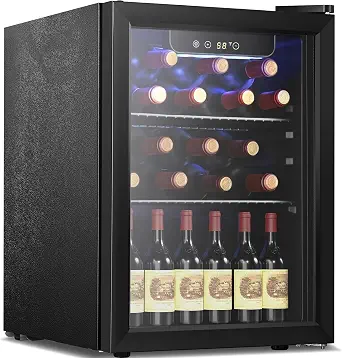 |
| Most Popular A crowd favorite that many people choose with confidence | Ivation 12-Bottle Wine Cooler |  |
| Best Seller A high-volume bestseller chosen again and again | hOmeLabs Beverage Refrigerator HME030065N | 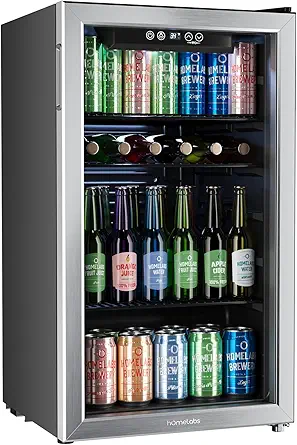 |
Ivation 33-Bottle Dual Zone Wine Cooler

| Capacity | 3.2 cubic feet |
|---|---|
| Bottle capacity | 33 Bottle |
| Temperature range (upper) | 54 – 64°F |
| Temperature range (lower) | 41 – 57°F |
| Cooling method | Compressor |
This Ivation wine cooler is a freestanding, compressor-cooled unit designed to store red and white wines at separate temperatures using its dual-zone control. Typical use is home cellar or kitchen placement where you want ready-to-serve whites chilled in the upper compartment and reds stored cooler in the lower zone. Notable features include a digital touch display, removable wire racks for mixed bottle sizes, soft LED interior lighting, and a UV-resistant double-paned glass door that helps protect labels and reduce light exposure. The compressor cooling and inverter tech provide stable temperatures suitable for both short- and longer-term storage, and the built-in keyed lock gives security for valuable bottles. Trade-offs are the wire shelving rather than solid wood racks favored by some collectors and a moderate 33-bottle capacity that fits a growing home collection but not large cellars. It is energy efficient and compact enough to fit in many kitchens while still offering dedicated dual-zone control for everyday entertaining and aging.
Best for: Buyers seeking a compact, reliable dual-zone cooler for home use who value separate temperature control for red and white wines and a secure, energy-efficient freestanding unit.
Less Ideal for: Collectors who need large-capacity storage or those who prefer premium wooden shelving and display-oriented cabinetry should consider larger or higher-end cellar options.
- Dual-zone compressor cooling for separate red and white storage
- Digital touch controls and visible LCD temperature readout
- UV-resistant double-paned glass door to reduce light exposure
- Removable wire racks accommodate mixed bottle sizes and easy cleaning
- Built-in keyed lock for added security
- Wire shelving instead of wooden display-style racks
- 33-bottle capacity may be small for large collectors
Verdict: A compact, dual-zone freestanding cooler that delivers stable, separate storage for reds and whites—ideal for home collectors who need reliable everyday temperature control.
Ca'Lefort 24" Wine Fridge CLF-WS24

| Capacity | 5.65 cubic feet |
|---|---|
| Bottle capacity | 61 Bottle |
| Temperature range | 40-65°F |
| Cooling method | Compressor |
| Installation type | Built-in, Under Counter, Freestanding |
The Ca'Lefort 24" Wine Fridge is a compressor-cooled wine cellar intended for built-in or freestanding home use and holds roughly 61 standard 750 ml bottles in its 5.65 cu.ft interior. Temperature is set through a digital panel with a 40–65°F range and 1°F adjustment steps, which makes dialing in serving or short-term aging temperatures straightforward. Six removable wooden shelves and a front-vent design support flexible bottle arrangements and allow installation under counters. The unit uses a rotary scroll compressor and claims quiet, even air circulation plus automatic defrost and power-failure memory to protect settings after outages. The double-glazed stainless steel door with UV protection and three LED color options helps limit light exposure while offering a polished look for a home bar. Expect the benefits of stable compressor cooling and good storage capacity, while noting this is a single-zone model so you cannot hold distinctly different temperature zones for whites and reds simultaneously.
Best for: Buyers who prioritize steady, compressor-driven temperature control and want substantial single-zone capacity for a home bar or cellar in a built-in footprint.
Less Ideal for: Those who need dual-zone storage for keeping whites and reds at different serving temperatures should look at multi-zone models instead.
- Compressor (rotary scroll) cooling delivers stable, precise temperatures across the 40–65°F range
- Large 61-bottle capacity fits substantial home collections in a 24-inch footprint
- Front-vent design allows built-in or under-counter installation without extra ventilation space
- Double-glazed door with UV protection and selectable LED colors reduces light exposure and looks upscale
- Removable wooden shelves provide flexible storage for various bottle sizes
- Single temperature zone prevents storing whites and reds at independent setpoints
Verdict: Choose this fridge if you want a large, compressor-cooled single-zone unit that gives stable, precise temperatures for serious home wine storage.
EUHOMY Wine Cooler BR001-110

| Capacity | 3.2 cubic feet |
|---|---|
| Temperature Range | 41 to 64°F |
| Cooling Method | Compressor |
| Number Of Shelves | 6 |
| Installation Type | Freestanding |
The EUHOMY BR001-110 is a compact freestanding wine cooler geared toward home kitchens and bars that need extra bottle storage without a full-size appliance. It uses a compressor cooling system with a digital touchscreen that lets you set temperatures between 41 and 64°F, so you can store reds, whites, and sparkling options at appropriate serving temps. The interior offers six shelves — four chrome full-width racks, a flat shelf and a bottom compartment — which can be reconfigured to hold up to 25 standard 750ml bottles. Double-pane glass helps block UV and the soft LED interior light shows labels without harsh heat. Useful touches include a reversible door, adjustable leveling feet, and a built-in handle for placement flexibility. Expect manual defrosting and a modest annual energy use; the unit is compact so it is best for supplementary storage rather than replacing a cellar. Noise and vibration are minimized thanks to the compressor design, but like all compressor coolers it will cycle on and off during use.
Best for: Homeowners who want a reliable, space-efficient secondary wine storage unit that keeps a mixed collection at proper serving temperatures and fits under counters or in small bars.
Less Ideal for: Collectors needing long-term cellar storage for large collections or buyers who require integrated undercounter built-in fitment for a specific cabinet depth.
- Compressor cooling with wide 41–64°F temperature range for versatile wine storage
- Holds up to 25 standard 750ml bottles with reconfigurable shelving
- Double-pane glass door reduces UV exposure and adds insulation
- Digital touchscreen and internal LED make temperature monitoring and display easy
- Manual defrost requires occasional maintenance
- Not intended as a full cellar replacement due to compact capacity
Verdict: Choose this EUHOMY cooler if you need a compact, compressor-cooled unit that reliably stores about two dozen bottles at controlled serving temperatures.
RibasuBB 8-Bottle Wine Cooler

| Cooling Method | Thermoelectric |
|---|---|
| Temperature Range | 46.4-64.4°F |
| Capacity | 8 Bottle |
| Power Source | Corded Electric |
| Number Of Shelves | 4 |
This compact freestanding wine cooler stores up to eight bottles on four removable shelves and uses a thermoelectric cooling system with a digital LED display and touch controls to set temperatures between about 46 and 64 degrees Fahrenheit. It is designed for countertop or floor placement and includes an interior blue LED light so you can check bottles without opening the door. The removable shelves make it easy to fit different bottle shapes, and the built-in key lock adds a basic security option. Thermoelectric cooling runs quietly and avoids compressor vibration that can disturb sediments, but it is best suited for short- to medium-term storage rather than long-term cellar aging, especially in warm rooms. Setup is simple since it is a plug-in freestanding unit and adjustable feet help level it on uneven surfaces. Expect modest power draw for a small unit and keep it out of direct sunlight to maintain stable temperatures.
Best for: Buyers who want an affordable, space-saving wine cooler for everyday chilled wine at home or in a small office and prioritize quiet operation and simple controls.
Less Ideal for: People seeking a long-term wine cellar, large-capacity storage, or precise cooling in very warm rooms should consider larger compressor-based models instead.
- Compact footprint fits on counters or small floor spaces
- Digital temperature control with readable LED display for precise set points
- Removable shelves accommodate different bottle sizes
- Thermoelectric cooling operates quietly and reduces vibration
- Interior LED light lets you view bottles without opening the door
- Thermoelectric cooling is less effective than compressor units in hot environments
- Limited capacity not suitable for larger collections
Verdict: A budget-friendly, quiet countertop wine cooler that keeps a small home collection chilled with straightforward digital controls.
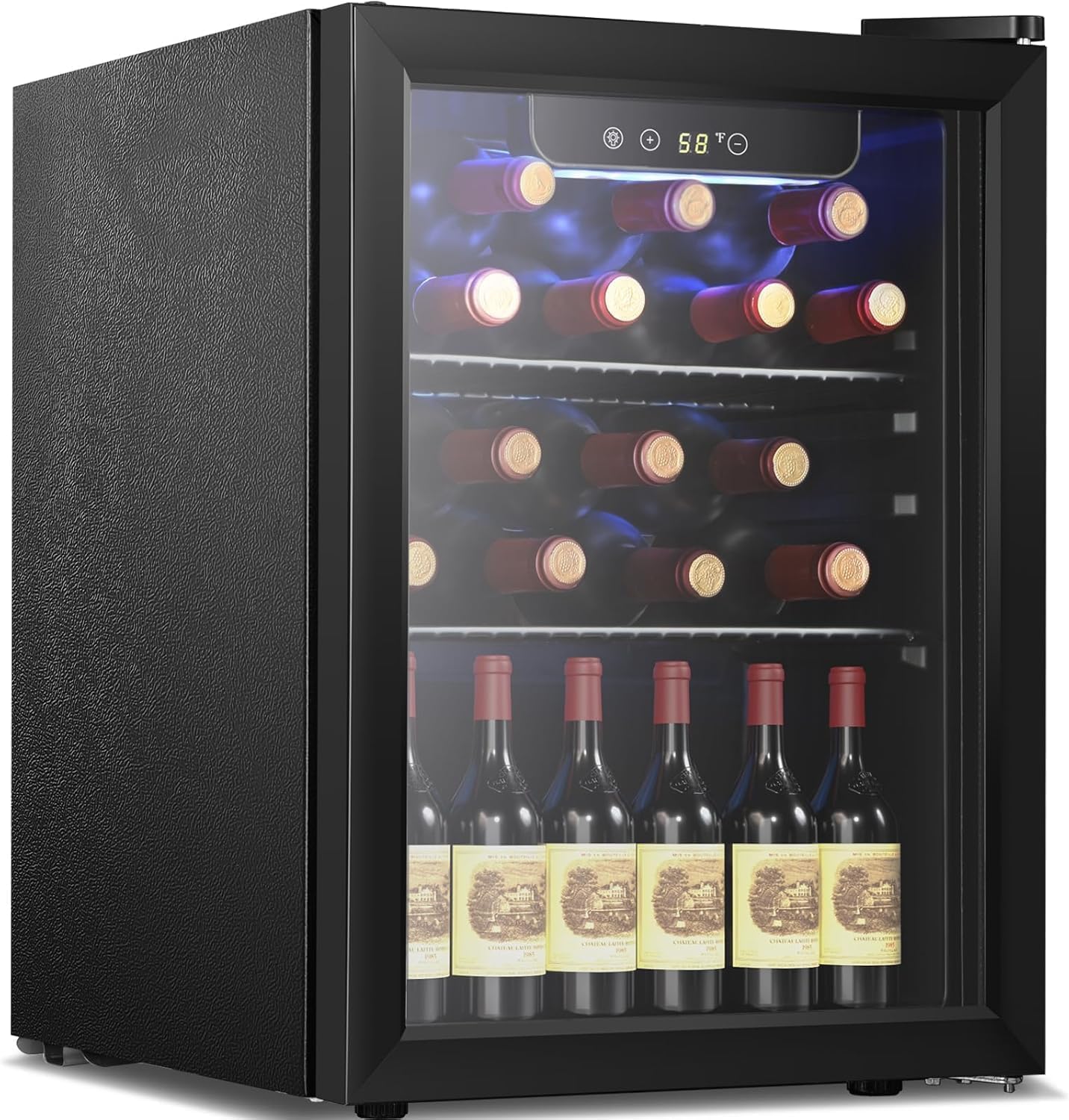
Antarctic Star Wine Cooler 1.7 cu ft
| Capacity | 1.7 cubic feet |
|---|---|
| Bottle Capacity | 16 Bottle |
| Cooling Method | Compressor |
| Temperature Range | 40°F – 61°F |
| Number of Shelves | 2 |
This Antarctic Star wine cooler is a small freestanding unit intended to chill wine and beverages without a freezer compartment. It holds about 16 bottles or roughly 68 cans across two adjustable shelves and uses a compressor cooling system with digital thermostatic controls to set temperatures between 40 and 61°F. The reversible double-pane glass door and airtight seal help insulation while an internal blue LED light improves visibility. In everyday use it works like a countertop or under-counter beverage cellar for a small home collection, entertaining space, or office. Notable practical benefits are its quiet compressor operation, adjustable shelving for different bottle shapes, and a clear display for easy temperature adjustments. Important limitations are its modest capacity and manual defrost system, so it is not suitable as a primary refrigerator or for storing fresh food, and larger collections will need a bigger unit.
Best for: Buyers who prioritize a reliable, compact beverage cooler to keep a modest home wine or drink selection at consistent temperatures and who value quiet, steady operation.
Less Ideal for: Those needing large-capacity storage, freezer capability, or a unit for chilling fresh food should choose a larger refrigerator or dedicated wine cellar instead.
- Compact footprint fits on counters or in small spaces
- Compressor cooling with digital thermostat for stable temperature control
- Reversible double-pane glass door with airtight seal for insulation and display
- Adjustable shelving accommodates different bottle sizes
- Quiet operation suitable for indoor living areas
- Limited 1.7 cu ft capacity not suited for medium or large wine collections
- Manual defrost requires occasional user maintenance
Verdict: A dependable, quiet compressor wine cooler that keeps a small home collection consistently chilled in a compact footprint.
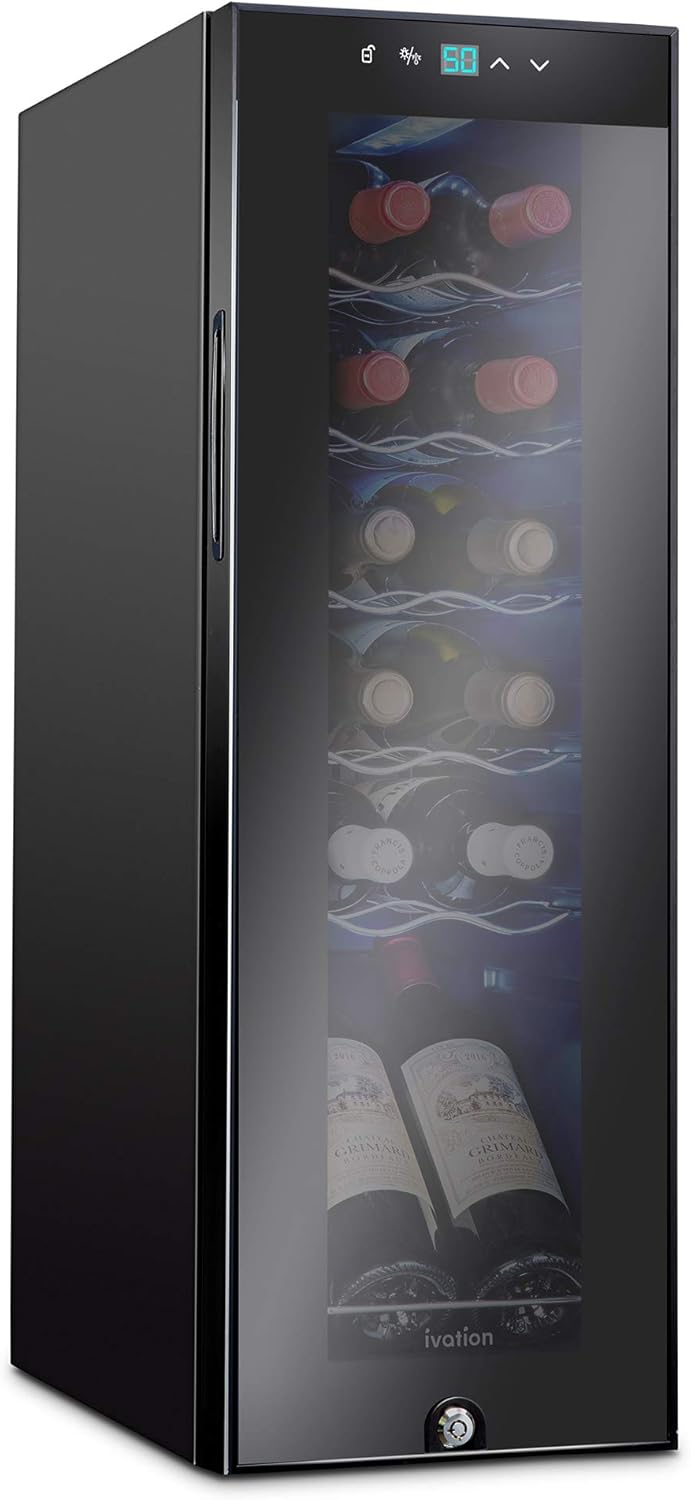
Ivation 12-Bottle Wine Cooler
| Capacity | 1.2 cubic feet |
|---|---|
| Temperature Range | 41-64°F |
| Power | 95W / 1.2 Amps |
| Cooling Method | Compressor |
| Refrigerant | R-600A |
This Ivation 12-bottle cooler uses a compressor cooling system and internal fan to hold a stable 41–64°F range, making it suitable for both chilling and longer-term storage. It installs freestanding and has six removable wire racks so you can fit standard 750 ml bottles or rearrange for larger formats. The digital touch display shows temperature in Fahrenheit or Celsius and can be locked to prevent accidental changes, while the double-paned UV-resistant glass and rubber gasket help keep light and air out. Vibration-reducing compressor operation preserves sediment and the interior LED provides soft illumination for inspections without harsh heat. As a compact unit it draws modest power (rated 95W) and includes a keyed lock for security. Limitations include a small 1.2 cu ft capacity that restricts larger fermentation batches and single-zone control that prevents separate temperature settings for multiple products. The unit is best when you need a reliable, quiet compressor fridge with precise temperature stability in a compact footprint rather than a higher-capacity or dual-zone system.
Best for: Buyers seeking a compact, performance-focused compressor fridge that holds steady temperatures for precise fermentation or small-batch aging and who prioritize stability and quiet operation.
Less Ideal for: Those who need higher capacity, multiple temperature zones, or to run several fermentations at different setpoints simultaneously should look at larger or dual-zone units.
- Compressor cooling with inverter ensures stable, low temperatures suitable for fermentation control.
- Wide adjustable temperature range (41–64°F) with digital touch controls and lock for set-and-forget operation.
- Double-paned UV-resistant glass and airtight gasket protect contents from light and external air.
- Removable wire racks allow flexible bottle arrangement and easier cleaning.
- Quiet, vibration-reducing operation that minimizes disturbance to sediments or sensitive contents.
- Small 1.2 cubic foot capacity limits the number and size of fermentation vessels you can fit.
- Single temperature zone cannot maintain different temperatures for multiple simultaneous projects.
Verdict: Choose this cooler when you want a compact, compressor-driven fridge that delivers stable, low-temperature control for small-batch fermentation and precision cooling.
hOmeLabs Beverage Refrigerator HME030065N

| Capacity | 3.2 cubic feet |
|---|---|
| Storage Capacity | Up to 120 cans |
| Temperature Range | 34°F-50°F |
| Cooling Method | Compressor |
| Defrost System Type | Automatic |
This hOmeLabs beverage refrigerator is a compact, performance-focused cooler for home bars, offices, or dorms. It uses a compressor-based cooling system with a whisper-quiet compressor and an adjustable digital thermostat that reaches as low as 34°F, so it reliably maintains cold, ready-to-drink beverages. The reinforced double-glazed glass door and bright internal LED let you see contents without opening the unit, and three removable chrome wire shelves give flexible storage for cans or bottles. Setup is simple: it is freestanding, has reversible door hinges, and adjustable feet to level on uneven floors. Practical benefits include steady cooling for long periods and quiet operation suitable for living spaces. Limitations are its compact 3.2 cubic foot capacity if you need larger chilled storage and moderately high annual energy consumption compared with some small fridge alternatives. If you plan to store a mixture of taller bottles and cans you will need to rearrange or remove shelves to fit larger items.
Best for: Buyers prioritizing reliable, low-noise cooling and precise temperature control who need a compact dedicated beverage fridge for a home bar, office, or dorm.
Less Ideal for: Those seeking a high-capacity refrigerator for entertaining large groups or users who need the most energy-efficient mini fridge available.
- Compressor cooling with whisper-quiet compressor for consistent, low-noise performance
- Digital touch temperature control down to 34°F for precise beverage chilling
- Reinforced glass door with bright interior LED for clear display without opening
- Three removable adjustable shelves for flexible can and bottle organization
- Reversible door and adjustable feet for flexible placement and installation
- 3.2 cubic foot capacity may be small for larger households or party use
- Annual energy consumption listed as 288 kWh per year, higher than some compact models
Verdict: Choose this unit when you want a compact, quiet beverage fridge that maintains precise, cold temperatures for ready-to-drink cans and bottles.
Choosing the Right Wine Cooler for Home Use: Key Factors to Consider
Temperature Range and Control
Wine requires consistent temperatures to preserve delicate flavors and aromas. Look for coolers that offer a stable, accurate temperature readout and the ability to set different ranges for whites and reds when you plan to store both. Digital controls tend to be more precise than mechanical dials, and models with a confirmed variance of a degree or two hold wine quality better over time.
Consider whether you need a single-zone cooler for a focused collection or a dual-zone unit if you store multiple styles at once. For everyday home use, the ability to switch between precise preset temperatures and small adjustments is more valuable than extra features that complicate operation.
Usable Capacity and Shelf Design
Advertised bottle counts can be misleading because they often assume ideal packing and standard Bordeaux bottle shapes. Focus on usable capacity and how the shelves accommodate different bottle sizes, including Bordeaux, Burgundy, and sparkling bottles. Pull-out shelves or wooden ribs make access easier and reduce the risk of bottles rolling or banging together.
Think about your typical buying habits and how your collection will grow. A compact unit that is nearly full limits flexibility, while oversized coolers in tight spaces can be wasteful. Shelving that allows mixed-height storage and easy removal is especially helpful for rotating inventory in a home setting.
Noise, Vibration, and Daily Operation
Because a home wine cooler often lives in a kitchen, living room, or finished basement, operational noise and vibration matter. Excessive vibration can disturb sediment and subtly affect aging, while loud compressors or fans make the unit intrusive in shared spaces. Look for models with vibration-reducing mounts, variable-speed compressors, or thermoelectric cooling if you prioritize quiet operation.
Consider where the cooler will be placed. A very quiet unit still benefits from solid placement and cushioning feet to minimize transmitted vibration. Check specifications for decibel ratings when available and balance the noise tradeoff against cooling strength if you need rapid temperature recovery after door openings.
Door Type, Sealing, and UV Protection
Doors affect both performance and bottle presentation. Solid doors provide better insulation while glass doors showcase bottles. If you choose glass, ensure it has UV protection to prevent light damage to wine. A tight door seal prevents warm air infiltration that forces the compressor to run more often and introduces temperature swings.
Locking doors or soft-close hinges are useful for homes with pets or children. Also evaluate whether the door is reversible or requires extra clearance, as swing direction and available space can limit placement options in typical home layouts.
Humidity Control and Cork Health
Maintaining appropriate humidity slows cork drying and preserves a bottle's seal. Some wine coolers include humidity control features or natural humidity levels created by their design. Units that are too dry may cause corks to shrink and let air in, while overly damp environments can harm labels and racks.
Assess whether you need active humidity control based on local climate and where the cooler will live in your home. For many owners, a cooler that maintains stable temperatures and good sealing is sufficient to sustain acceptable humidity levels for typical short- to medium-term cellaring.
Space, Ventilation, and Installation
Installation requirements vary: some coolers need front ventilation for built-in undercounter use, others require rear clearance for air circulation. Measure the intended location and verify whether the unit supports built-in, freestanding, or counter-height installation. Built-in models usually need more planning but provide a flush look under counters, while freestanding units offer greater placement flexibility.
Also consider electrical needs and whether the cooler will sit on carpet, tile, or wooden floors. Leveling feet and ventilation access affect performance and longevity, so ensure the chosen model matches your home's constraints before purchase.
Single-Zone Vs Dual-Zone: Which Suits Your Cellar
Single-zone coolers maintain a uniform temperature throughout the cabinet and are ideal if you primarily store one style of wine or keep bottles at a serving temperature. They are typically simpler to use and can offer better insulation per dollar of capacity.
Dual-zone units split the cabinet into two independently controlled areas so you can store whites and reds at different temperatures. For home collectors who rotate between varieties, dual-zone coolers provide convenience by eliminating the need to move bottles between appliances.
- Single-zone: simpler, often more consistent for single-style storage
- Dual-zone: flexibility for mixed collections and entertaining needs
Placement Tips for Quiet, Efficient Performance
Place the cooler away from direct sunlight and heat sources such as ovens or radiators to reduce workload and maintain steady temperatures. Ensure adequate clearance for ventilation if the unit is not designed for built-in installation.
Level and stable placement reduces vibration and sound transmission. If the cooler will be in a kitchen or living area, choose a location that minimizes foot traffic around the door to reduce temperature swings from frequent openings.
- Avoid direct sun and heat sources
- Keep unit level and allow for specified clearance
- Position away from high-traffic zones when possible
Maintaining Your Wine Cooler for Longevity
Regular maintenance keeps a cooler performing efficiently. Clean racks and interior surfaces periodically, check and replace door seals if they show wear, and vacuum condenser coils when accessible. These simple tasks reduce compressor strain and prolong service life.
If you plan to store wine long term, monitor internal conditions with a separate thermometer or hygrometer to confirm the unit holds target temperatures and humidity. Address any persistent fluctuations promptly to avoid spoilage.
- Wipe interior and sanitize as needed
- Inspect and replace worn seals
- Vacuum coils to maintain airflow
Design and Aesthetics for Home Integration
A wine cooler is both a functional appliance and a design element. Consider finishes, door style, and shelving that complement kitchen cabinets or a home bar. Glass doors with interior lighting highlight bottles, while stainless or matte finishes can blend with other appliances.
Think about handle style and whether you prefer a flush, integrated look or a statement piece. The visual fit influences satisfaction just as much as technical fit in home settings.
- Match finish and door style to surrounding cabinetry
- Interior lighting adds display appeal
- Choose handle and hinge style for desired aesthetic
Energy Use and Ongoing Costs
Wine coolers run continuously, so energy efficiency affects operating costs and environmental impact. Look at energy consumption ratings and consider models with efficient compressors or thermoelectric systems if your storage demands are modest.
Energy-efficient operation often ties to good insulation and tight door seals, which also improve temperature stability. Balance efficiency preferences with the need for performance and capacity in your home context.
- Check energy consumption ratings when available
- Good insulation reduces runtime and energy use
- Thermoelectric models can be quieter but may have capacity limits
How We Chose the Best Wine Cooler for Home Use
We focused on practical, home-ready features that influence long-term wine storage and everyday service. First, temperature control accuracy and range were required so coolers can handle both white and red wines or support dual-zone setups. Second, usable capacity and shelf design mattered because how many bottles a unit actually holds and how easy they are to access affects real-world convenience. Third, vibration and noise performance were prioritized since continuous operation in living areas should be unobtrusive. Fourth, humidity management and door sealing were considered to protect corks and labels. Finally, build quality and installation flexibility were evaluated to ensure units fit common home locations and last through regular use. We excluded units designed exclusively for commercial cellars or specialized long-term aging that require professional cellar conditions. We also filtered out models with inconsistent temperature regulation, poor user controls, or inadequate shelf layouts. The final list balances accuracy, storage practicality, everyday noise levels, and homeowner-friendly installation requirements.
Our full evaluation process is outlined in our review methodology.
FAQ
How many bottles should I plan to store at home?
That depends on your collecting habits and space. Many home owners find a 20 to 40 bottle cooler fits a modest collection and provides room to grow, while a larger 50+ bottle unit suits frequent entertaining. Measure shelf configuration as well as nominal capacity since bottle shapes affect real storage.
Can I use a wine cooler to age wine long term?
Some coolers support short- to medium-term aging if they maintain stable temperatures and humidity. True long-term cellaring typically requires professional cellar conditions, so evaluate how consistently the unit holds target parameters before relying on it for extended aging.
Is a glass door safe for wine storage?
Glass doors are acceptable if they include UV protection and the cooler is kept out of direct sunlight. UV-blocking glass prevents light damage, but a solid door can offer slightly better insulation if presentation is not a priority.
How noisy are wine coolers in everyday use?
Noise varies by cooling method and build. Thermoelectric units and models with vibration damping tend to be quieter, while compressor-based coolers can be more audible. Look for decibel ratings and consider placement to mitigate perceived noise.
Do I need a dedicated electrical circuit for a wine cooler?
Most residential wine coolers run on a standard household circuit. However, larger or built-in models with higher electrical draw may have specific installation recommendations. Check the unit's electrical requirements and ensure the outlet location meets installation instructions.
Final Verdict
Choose a wine cooler for home use by prioritizing stable temperature control and a shelf layout that matches the bottles you buy most often. Balance capacity against available space so the unit remains useful rather than overfilled or underused. Also weigh noise and installation needs against aesthetic preferences. The right home wine cooler delivers reliable storage and easy access without demanding special maintenance. Focus on temperature accuracy, usable shelving, and quiet operation to find a unit that preserves your bottles and fits naturally into everyday home life.