
Note: This article contains affiliate links. If you click on these links and make a purchase, we may earn a small commission at no extra cost to you. This helps support our research and content. Read our full affiliate disclosure here.
Choosing the right 3D printer for functional parts matters because these builds must meet strength, fit, and repeatability demands that cosmetic prints do not. You need machines that deliver accurate dimensions, consistent layer adhesion, and compatibility with engineering-grade materials so parts perform under load and in real assemblies. This guide shortlists the top options across common workflows for producing functional components and explains the evaluation criteria we used. Read on to find printers suited to strong, precise, and serviceable parts and to understand what specifications matter most.
Top Picks at a Glance
| Best Overall The best all-around choice for most situations | Snapmaker U1 3D Printer |  |
| Best Quality Built to a higher standard if you want something more solid | Original Prusa XL 2-Toolhead |  |
| Best Value The sweet spot between price and what you get | FLASHFORGE Adventurer 5M |  |
| Best Budget The cheapest option that still gets the job done reliably | ENTINA TINA2C 3D Printer |  |
| Top Rated A top-rated pick with lots of positive feedback | Bambu Lab P1S 3D Printer |  |
| Most Popular A crowd favorite that many people choose with confidence | Creality K1C 3D Printer |  |
| Best Seller A high-volume bestseller chosen again and again | FLASHFORGE AD5X 3D Printer | 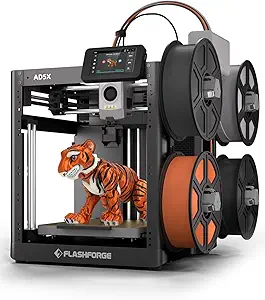 |
Snapmaker U1 3D Printer

| Build volume | 270 × 270 × 270 mm |
|---|---|
| Max print speed | 500 mm/s |
| Toolheads | 4 independent preheated toolheads |
| Compatible materials | PLA, PETG, TPU, PVA, ABS, ASA, PA, PC, and more |
The Snapmaker U1 is a toolchanger CoreXY 3D printer aimed at makers and small workshops that need fast, multi-color, multi-material capability for functional parts. It uses four independent preloaded toolheads and the SnapSwap system to swap heads in about five seconds, avoiding lengthy purging and cutting filament waste, which is useful when printing mixed-material assemblies or colorful prototypes. A rigid CoreXY motion system with carbon fiber X-axis rails supports high speeds up to 500 mm/s across a 270 × 270 × 270 mm build volume, while automatic toolhead offset calibration, vibration compensation, and fine-tuned extrusion help deliver repeatable first layers and dimensional accuracy. The printer supports a wide range of filaments including PLA, PETG, TPU, PVA, and engineering plastics, and integrates an on-device library, open-source slicing software, a 3.5-inch touchscreen, and remote app control for streamlined workflow. The U1 is designed to reduce material waste and speed iteration, but its advanced toolchanger and high speeds imply a more complex machine that benefits from responsible setup and maintenance in workshop settings.
Best for: Creators who need fast multi-color or multi-material printing for functional prototypes and end-use parts and who value reduced material waste and faster iteration over the simplicity of single-extruder machines.
Less Ideal for: Those seeking a very simple, low-maintenance entry-level printer for occasional hobby prints or exclusively single-color projects should consider simpler single-extruder models instead.
- Four independent preheated toolheads with 5-second SnapSwap changes reduce purge time and filament waste
- CoreXY motion with carbon fiber X-axis rails enables high-speed printing up to 500 mm/s
- Supports a broad range of filaments for multi-material and mixed-material prints
- Automatic calibration, vibration compensation, and tuned extrusion improve first-layer consistency and dimensional accuracy
- Toolchanger complexity increases maintenance and setup compared with single-nozzle printers
- High-speed capability and multi-material setups may require workshop-level tuning for best results
Verdict: Choose the Snapmaker U1 when you need fast, low-waste multi-color and multi-material printing for reliable functional parts and rapid iteration.
Original Prusa XL 2-Toolhead

| Build volume | 14.17×14.17×14.17 in |
|---|---|
| Tooling | Dual-tool multi-material system |
| Motion system | CoreXY |
| Included filament | 1 kg Prusament PLA |
| Embedded platform | 32-bit with Input Shaper and Pressure Advance |
The Prusa XL 2-Toolhead is a large-format CoreXY machine built for fast, repeatable multi-material prints and functional prototyping. It uses a dual-tool system to switch between materials and soluble supports with minimal waste, and the Nextruder with Loadcell sensing helps deliver reliable first-layer adhesion across the 14.17×14.17×14.17 in build volume. Segmented heated bed zones reduce warping on big parts while CoreXY mechanics plus firmware features like Input Shaper and Pressure Advance let the printer run at higher speeds without losing dimensional accuracy. The printer integrates with PrusaSlicer and Printables for streamlined workflows and ships with a Satin sheet and a 1 kg spool of PLA to get started. Expect a professional setup that favors throughput and predictable results, though the machine is large, requires careful initial assembly of shipped components, and is aimed at experienced users or teams rather than casual hobbyists.
Best for: Engineers, product teams, and advanced makers who need reliable, fast multi-material printing for functional prototypes and small-batch production.
Less Ideal for: Casual hobbyists, beginners, or users with limited shop space or who want a plug-and-play consumer printer.
- Dual-tool multi-material system for functional parts and soluble supports
- Large 14.17×14.17×14.17 in build volume for sizable prototypes
- Segmented heated bed to reduce warping and improve first-layer consistency
- CoreXY mechanics with Input Shaper and Pressure Advance for higher-speed accuracy
- Includes Satin print sheet and 1 kg spool to start printing immediately
- Physically large and heavy, requiring dedicated workspace and transport planning
- Some fragile parts ship separately and need careful assembly before first print
- Designed for advanced users and teams rather than casual or first-time builders
Verdict: Buy this if you need a professional, large-format CoreXY printer that delivers fast, repeatable multi-material functional parts.
FLASHFORGE Adventurer 5M

| Build volume | 220×220×220 mm |
|---|---|
| Max extruder speed | 600 mm/s |
| Max acceleration | 20000 mm/s² |
| Max extruder/platform temp | 280°C/110°C |
| Nozzle diameter options | 0.25/0.4/0.6/0.8 mm |
The FLASHFORGE Adventurer 5M is a Core XY desktop printer built for rapid, repeatable functional prints. It targets pragmatic users by combining a one-click auto leveling bed, quick-swap nozzles, filament detection and power-recovery so prints can run with minimal intervention. The machine claims up to 600 mm/s top speeds and very high acceleration for rapid prototyping while offering multiple nozzle diameters so you can trade resolution for throughput. A direct drive extruder and a dual-sided PEI platform simplify material handling for PLA, PETG, TPU and carbon-fiber blends, and Wi-Fi/Ethernet/USB connectivity plus compatibility with common slicers makes it fit into existing workflows. Practical conveniences like a 35-second warm-up, vibration compensation, and straightforward maintenance reduce downtime, but high-speed settings will still require tuning and suitable slicer profiles to avoid print artifacts. The open design also means it is best used in a well ventilated area when printing higher-temperature or composite filaments.
Best for: Engineers, makers, and small-shop users who prioritize fast, repeatable functional prototyping and want a printer that minimizes setup and maintenance time.
Less Ideal for: Users who need a fully enclosed, odor-controlled system for high-temperature or toxic materials or those who prefer plug-and-play ultra-quiet machines for living spaces.
- Core XY motion with high max speed and acceleration for faster prototyping
- One-click automatic bed leveling simplifies first-layer setup
- Quick-swap nozzles and direct-drive extruder reduce downtime for nozzle changes and flexible filaments
- Dual-sided PEI platform and fast warm-up improve print turnaround and part removal
- Multiple connectivity options and broad slicer compatibility integrate with common workflows
- Open-frame design requires good ventilation for abrasive or high-temperature filaments
- Achieving reliable high-speed prints needs careful tuning and slicer profiles
Verdict: Choose the Adventurer 5M when you need a fast, practical Core XY printer that reduces setup and downtime for efficient functional prototyping.
ENTINA TINA2C 3D Printer

| Build volume | 100 × 100 × 100 mm |
|---|---|
| Max nozzle temperature | 245°C |
| Print precision | ±0.1 mm |
| Max print speed | 150 mm/s |
The ENTINA TINA2C is a fully assembled, beginner-oriented mini FDM printer built to remove setup friction and keep printing simple. It arrives pre-calibrated and uses one-click 9-point auto leveling, auto nozzle cleaning, and build plate detection so you can power on, load filament, and start quickly via Wi‑Fi, app, USB, or TF card. The printer targets small practical parts with a 100×100×100 mm build area, ±0.1 mm precision, a 245°C brass-hardened nozzle, and a high-speed part cooling fan to help with fine details and faster print speeds up to 150 mm/s. A flexible magnetic plate and quick-swap print head simplify part removal and maintenance, while low noise under 45 dB and rounded edges make it suitable for home or classroom use. It supports common slicers like Cura and accepts PLA, TPU and other filaments, though the small, non-heated build plate limits large functional parts and some engineering materials. For makers who need compact, reliable prints without a long setup, the TINA2C is an approachable option with sensible features for everyday prototyping and hobbyist functional parts.
Best for: Buyers who want a low-friction, space-saving printer for quick prototyping, small functional parts, classroom projects, or hobbyist work without a steep learning curve.
Less Ideal for: Users who need to produce larger functional prototypes, high-temperature engineering parts, or repeatable industrial-grade components should look at larger, heated-bed machines.
- Comes fully assembled and pre-calibrated for nearly plug-and-play setup
- One-click 9-point auto leveling, auto nozzle cleaning, and build plate detection reduce fiddling
- Flexible magnetic build plate and quick-swap hotend make part removal and maintenance easy
- Wi‑Fi and app control plus compatibility with Cura and USB/TF card give multiple workflow options
- Low operating noise and compact footprint suit home, classroom, or office environments
- Small 100×100×100 mm build volume restricts larger functional parts
- Non-heated platform limits adhesion for some materials and larger prints
Verdict: If you want an inexpensive, ready-to-run desktop printer for quick small prototypes and hobbyist functional parts, the TINA2C delivers accessible, low-fuss performance.
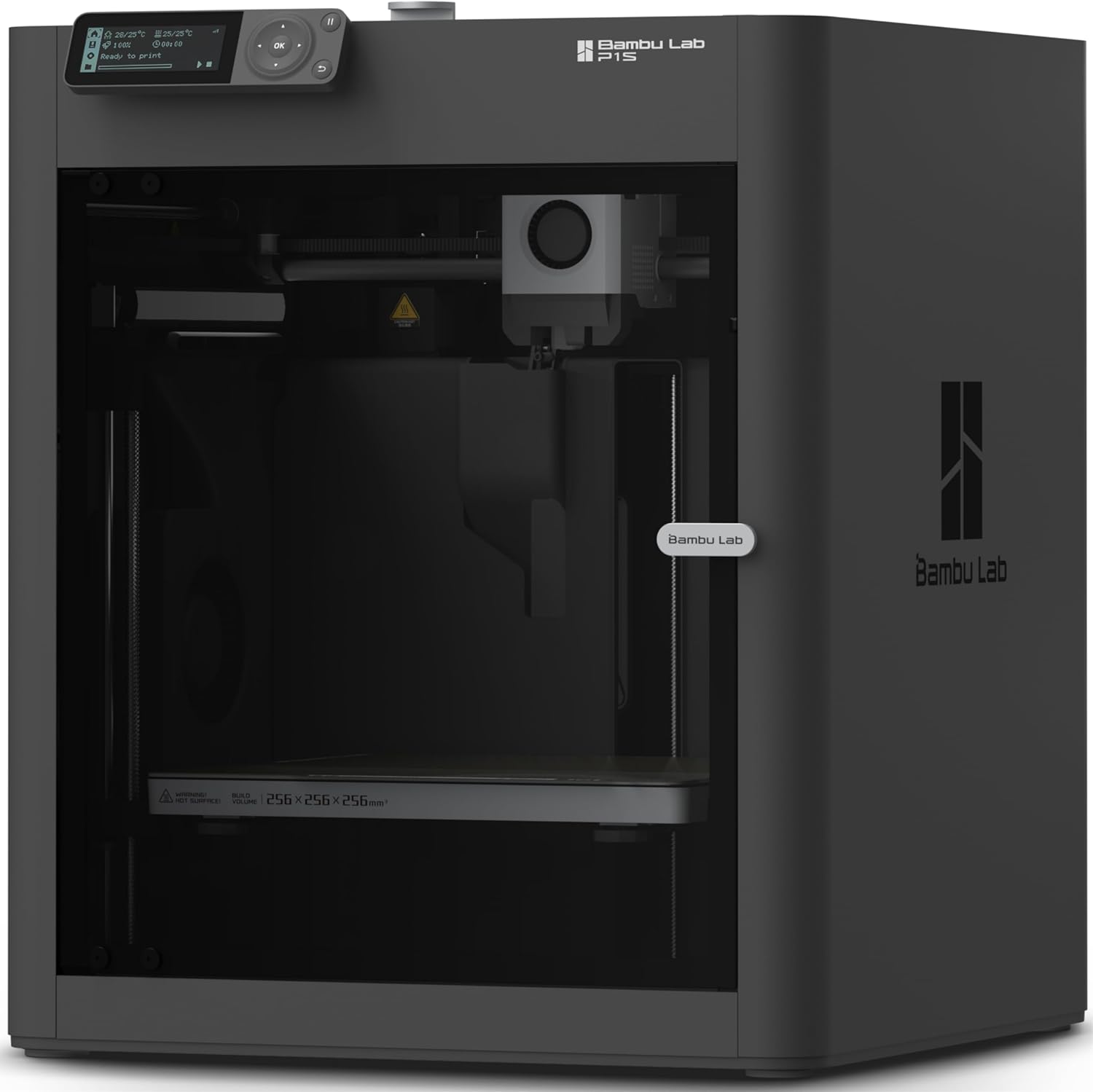
Bambu Lab P1S 3D Printer
| Build Volume | 256×256×256 mm³ |
|---|---|
| Max Speed | 500 mm/s |
| Max Acceleration | 20 m/s² |
| Supported Filaments | PLA, PETG, TPU, PVA, PET, ABS, ASA; capable PA, PC |
The Bambu Lab P1S is an enclosed CoreXY FDM printer built for speed and consistent part quality. It offers a 256×256×256 mm build volume, direct-drive extruder to handle flexible and engineering filaments, and automatic bed leveling to reduce failed prints. With top speeds quoted at 500 mm/s and very high acceleration, the P1S noticeably shortens print times for functional parts while maintaining fine detail when tuned. The enclosed frame helps with temperature-sensitive materials like ABS and ASA, and the camera and MakerWorld library simplify monitoring and sourcing models. Practical limits include the need to add the AMS for multi-color prints and that carbon or glass-filled composites are not recommended, so very high-stiffness, fiber-reinforced parts are out of scope. Setup is aimed to be quick, and the machine's reliability-oriented features make it a good match for frequent printing of functional prototypes and end-use components where repeatability matters.
Best for: Buyers who prioritize consistent, repeatable printing for functional prototypes and end-use parts and want a mostly turnkey machine that minimizes setup and failed prints.
Less Ideal for: If you need factory-grade composite parts with continuous fibers or integrated multi-material capability out of the box, this printer is not the best fit.
- Enclosed CoreXY design for improved thermal stability and better results with advanced filaments
- Direct-drive extruder supports flexible and a wider range of materials
- Automatic bed leveling reduces setup time and failed first layers
- High top speed and acceleration significantly reduce print times for large or many parts
- Built-in camera and MakerWorld library simplify monitoring and model access
- Multi-color/multi-material printing requires purchasing and connecting the AMS accessory
- Not recommended for carbon or glass fiber reinforced filaments, limiting highest-stiffness parts
Verdict: The P1S is a fast, enclosed, reliability-focused FDM printer that delivers repeatable functional parts with minimal setup.
Creality K1C 3D Printer

| Print speed | 600 mm/s (peak) |
|---|---|
| Acceleration | 20000 mm/s² |
| Extruder type | Direct extruder with tri-metal nozzle |
| Noise level | ≤45 dB silent mode |
The Creality K1C is a CoreXY desktop printer built around speed and material capability for functional parts. It claims up to 600 mm/s peak speed and high acceleration while using a balanced printhead and one-tap auto calibration to reduce vibration and simplify bed leveling. The direct extruder with a tri-metal nozzle is aimed at clog resistance and higher-temperature materials such as carbon-fiber filaments, and the machine includes an activated-carbon filtration system plus a silent mode that keeps noise at or below about 45 dB. A built-in AI camera enables real-time monitoring and time-lapse capture, which helps catch failures early. In practice, buyers should expect much faster prints for small to medium parts when tuned, but achieving top speeds requires careful slicing, cooling, and tuning to avoid quality loss. The filtration and quieter operation are useful in shared workspaces, though the printer's higher performance profile means more attention to setup and part testing compared with entry-level machines.
Best for: Buyers who prioritize printing functional parts faster and want a machine that supports higher-temperature filaments and remote monitoring while valuing peer validation and reliability.
Less Ideal for: Casual hobbyists or first-time users who prefer a plug-and-play experience with minimal tuning and lower setup overhead should consider simpler entry-level printers instead.
- CoreXY motion system for faster, more rigid printing than typical Cartesian kits
- Direct extruder with tri-metal nozzle designed for clog resistance and high-temperature filaments
- One-tap auto-leveling simplifies bed calibration and reduces setup time
- Built-in AI camera for live monitoring and time-lapse capture
- Activated carbon filtration and a silent mode reduce odors and noise in shared spaces
- Achieving advertised top speeds requires careful tuning and may reduce surface quality on large prints
- Higher-performance features add setup and calibration complexity compared with beginner-focused printers
Verdict: Pick the K1C if you need a CoreXY printer built for faster, higher-temperature functional parts and real-time monitoring in a workshop setting.
FLASHFORGE AD5X 3D Printer

| Build volume | 220x220x220mm |
|---|---|
| Max nozzle temp | 300°C |
| Structure | Open Core XY |
| Speed & acceleration | 600mm/s and 20,000mm/s² |
| Multi-color support | Up to 4 colors |
The FLASHFORGE AD5X is a Core XY FDM printer built for fast, functional prints and light production work. It supports up to four-color printing and uses a 300°C direct-drive extruder that handles PLA, ABS, PETG, TPU and composite filaments, while a one-click auto leveling system and quick-detach nozzle simplify setup and maintenance. The AD5X targets throughput with travel speeds up to 600mm/s and high acceleration, plus vibration compensation and dual-channel cooling to preserve detail at speed. Practical features include resume-printing after power loss, automatic filament feeding/retraction, and a mobile app for remote monitoring. Notable limitations are its open-frame design which exposes parts to drafts and temperature variation and the need to tune speed versus detail since ultra-fast settings will require profile refinement for best surface finish. For buyers focused on reliably producing functional parts and prototypes, the AD5X pairs aggressive speed and versatile extrusion options with user-friendly automation, but expect some calibration work to balance speed and precision for critical components.
Best for: Engineers and makers who prioritize fast, repeatable production of functional prototypes and parts and want a feature-rich printer that reduces routine setup time.
Less Ideal for: Users who need an enclosed, tightly temperature-controlled chamber for high-temperature nylons or precise dimensional stability without further enclosure modifications.
- Very high travel speed and acceleration for rapid prototyping.
- 300°C direct-drive extruder supports a wide range of engineering filaments.
- Four-color printing enables multi-material or color parts in a single job.
- One-click auto leveling and quick-detach nozzle reduce setup time.
- Open Core XY frame can allow drafts and makes thermal control harder for high-temp materials.
- Ultra-fast settings require careful tuning to avoid compromised surface quality.
Verdict: Choose the AD5X when you need a fast, versatile Core XY printer that delivers high-throughput functional parts with automated setup features.
Choosing the Right 3D Printer for Functional Parts: Key Factors to Consider
Dimensional Accuracy And Repeatability
Dimensional accuracy determines whether a printed part will fit with mating components and meet tolerance requirements. Small deviations accumulate in assemblies, so look for machines with tight XY resolution, consistent Z steps, and verified extrusion calibration procedures.
Repeatability matters when you print multiple copies or iterate on designs. A printer that reproduces the same dimensions across runs saves time and reduces rework, so consider lead screw quality, belt tensioning, and firmware features that compensate for mechanical variance.
Material Compatibility And High-Temperature Performance
Functional parts often require engineering filaments like nylon, polycarbonate, or glass- and carbon-filled materials for strength and wear resistance. That means the hot-end must reach higher temperatures and the extrusion path should handle abrasive fillers without premature wear.
A heated or enclosed build chamber helps with warping-prone materials by keeping ambient temperature stable. Check for hardened nozzle options, filament drive robustness, and firmware support for tuned retraction and temperature control to get consistent results with engineering plastics.
Frame Rigidity And Motion System Quality
A rigid frame and precise motion components reduce vibration and layer artifacts that compromise mechanical properties and dimensional fidelity. Look for machines with sturdy metal frames, quality linear rails or well-tensioned belts, and minimal frame flex under load.
Higher-quality motion systems also support faster print speeds without sacrificing accuracy, which is useful when producing multiple functional parts. Consider the design of the gantry, lead screws, and motor mounts because they directly affect long-term reliability and print consistency.
Build Volume And Part Orientation Flexibility
The usable build volume affects what you can print in one piece versus splitting parts into assemblies. Larger volumes let you print bigger functional prototypes or multiple parts in a single run, but with larger builds you must manage cooling and warping.
Part orientation matters for strength and surface finish. A printer that supports reliable multi-axis orientation through a large, flat bed or modular fixturing enables stronger prints in the desired load directions and reduces post-processing work.
Bed Adhesion, Heated Bed, And Enclosure
Good bed adhesion prevents warping and failed prints, which is especially important for engineering materials. Heated beds with appropriate surface options and adhesion aids reduce corner lifting for materials that contract on cooling.
An enclosure maintains ambient temperature to prevent delamination and improve interlayer bonding for high-temp filaments. Look for easy-to-use bed leveling and adhesion options to reduce failed prints and increase first-pass success rates.
Serviceability, Upgradability, And Workflow Integration
Functional parts are often produced in iterative workflows that benefit from machines you can service and upgrade. Accessible hot-ends, replaceable hardened nozzles, and clear maintenance procedures keep uptime high.
Compatibility with slicers and firmware that support advanced settings simplifies integration into engineering workflows. Consider available accessories like filament drying solutions, filament sensors, and support for remote monitoring or job queuing to keep production moving smoothly.
Preparing Designs For Strength And Fit
Design choices influence functional performance more than any single printer feature. Optimize wall thickness, infill patterns, and feature orientation to put continuous filament strands along load paths and to avoid weak layer interfaces.
- Use per-layer cooling sparingly for high-temp materials to avoid thermal stress.
- Orient thin features to reduce unsupported overhangs and to align layers with expected load directions.
- Add fillets and chamfers at stress concentrators to reduce crack initiation.
Choosing The Right Filament For Mechanical Demands
Match filament properties to the application. Nylon and polycarbonate offer toughness and heat resistance, while filled filaments boost stiffness and wear resistance. Each material has unique printing needs, such as drying, bed prep, and extrusion temperatures.
- Dry hygroscopic materials before printing and store them sealed.
- Use hardened nozzles for abrasive reinforced filaments.
- Adjust retraction and print speed to manage stringing with flexible or high-flow materials.
Calibration Routines That Improve Functional Outcomes
Regular calibration is essential for functional parts. Perform extrusion multiplier tuning, flow tests, XYZ dimensional tests, and bridging tests to ensure the machine produces parts that meet spec. Keep a log of calibration values after major material or environment changes.
- Print simple calibration cubes to verify dimensional accuracy.
- Run retraction towers and temperature towers for each new material.
- Re-check bed leveling after hardware changes or transport.
Post-Processing For Strength And Precision
Post-processing can enhance the strength and fit of functional parts. Annealing certain materials relieves internal stresses and increases dimensional stability. Mechanical finishing like tapping, reaming, or light milling produces precise mating surfaces when tolerances are tight.
- Anneal printed parts according to material-specific profiles to improve heat resistance.
- Use solvent smoothing cautiously on compatible materials to reduce surface defects without weakening critical features.
- Test-fit and adjust mating features incrementally rather than removing large amounts of material at once.
Setting Up A Small-Scale Production Workflow
If you plan to produce batches of functional parts, organize a workflow that reduces downtime and variation. Standardize material handling, drying procedures, and print profiles. Implement print queues and quality checks to catch defects early in the run.
- Keep a spare set of wear items like nozzles and belts on hand.
- Use consistent job templates in your slicer for repeatable settings.
- Schedule routine maintenance and record failure modes to refine the process.
How We Chose the Best 3D Printer for Functional Parts
Our selection prioritized machines that reliably produce functional parts in real-world use rather than hobby showpieces. We focused on print accuracy and dimensional consistency across multiple prints, the ability to handle engineering and high-temperature filaments, and robust motion systems that minimize artifacts like ringing and layer misalignment. Material ecosystem and hot-end/hot-bed capabilities were included to ensure compatibility with reinforced filaments and higher extrusion temperatures. We also evaluated build volume and part orientation flexibility to support both small, precise components and larger functional prototypes. Usability and maintenance were considered for shops that need repeatable results: features like reliable bed adhesion options, straightforward calibration, and serviceable hardware reduced downtime. Exclusions: we excluded machines intended only for decorative or educational prints, single-use resin hobbyers not rated for structural parts, and models lacking documented high-temperature performance. The result is a list of printers that balance accuracy, materials, and durability for producing functional components.
Our full evaluation process is outlined in our review methodology.
FAQ
Can I print load-bearing parts with consumer-grade printers?
Often yes, depending on material choice and part design. Many consumer and prosumer printers can handle engineering filaments and tight tolerances if the machine supports higher temperatures and has a stable motion system. Design and post-processing also play large roles in part performance.
Do I need a heated chamber to print functional parts reliably?
A heated chamber helps with warping-prone materials and improves layer adhesion for high-temperature filaments. It is not strictly required for all materials, but it significantly increases success rates with nylon, polycarbonate, and some filled filaments.
How important is nozzle material for functional prints?
Nozzle material matters when printing abrasive or filled filaments. Hardened steel or coated nozzles resist wear better than brass, maintaining accurate extrusion over many prints. For non-abrasive filaments, standard nozzles usually suffice.
What routine maintenance keeps prints consistently accurate?
Regularly check belt tension, clean and inspect linear rails or rods, verify lead screw alignment, and replace worn drive gears or nozzles. Re-run calibration prints after maintenance to confirm dimensional accuracy.
Are there simple tests to verify a printer is ready for functional parts?
Yes. Print dimensional calibration cubes, overhang and bridging tests, and long single-wall prints to check extrusion consistency. These quick tests reveal issues with extrusion, temperature control, and motion artifacts before you commit to a functional part run.
Final Verdict
Functional part printing demands prioritizing accuracy, materials, and machine stability. Focus on a printer that matches the engineering filaments you plan to use, offers a rigid motion system, and includes the temperature control needed for consistent interlayer bonding. Balance build volume against part orientation and workflow needs, and plan for regular calibration and service to maintain repeatable results. With those priorities in mind, you can select a machine that reliably produces strong, well-fitting components for prototypes and end-use applications.