
Note: This article contains affiliate links. If you click on these links and make a purchase, we may earn a small commission at no extra cost to you. This helps support our research and content. Read our full affiliate disclosure here.
Getting the right 4 Wire smart thermostat matters because it directly affects comfort, energy use, and how well your HVAC system responds to remote schedules and automation. If your system uses a common C-wire plus power and the standard control conductors, choosing a thermostat that supports that wiring and your heating and cooling setup avoids installation headaches and poor performance. This guide shortlists the top options for 4 Wire smart thermostats and explains the practical tradeoffs you should weigh. We test for wiring compatibility, control features, and ease of setup to help you pick a reliable unit. Read on for the evaluation criteria and what to expect from the best models in this class.
Top Picks at a Glance
| Best Overall The best all-around choice for most situations | Sensi Smart Thermostat ST55 |  |
| Best Quality Built to a higher standard if you want something more solid | ecobee Smart Thermostat Premium |  |
| Best Value The sweet spot between price and what you get | Amazon Smart Thermostat |  |
| Best Budget The cheapest option that still gets the job done reliably | meross Smart Thermostat MTS200 |  |
| Top Rated A top-rated pick with lots of positive feedback | Sensi Touch ST75 |  |
| Most Popular A crowd favorite that many people choose with confidence | Google Nest Thermostat |  |
| Best Seller A high-volume bestseller chosen again and again | ecobee Smart Thermostat Essential |  |
Sensi Smart Thermostat ST55

| Connectivity Technology | Wi-Fi |
|---|---|
| Control Method | App, Touch, Voice |
| Temperature Control Type | Programmable, Smart/Remote |
| Power Source | Corded Electric |
| Number of Batteries | 2 AA batteries required. (included) |
The Sensi Smart Thermostat ST55 replaces a traditional wall thermostat with a Wi‑Fi connected, programmable controller that works with furnaces, heat pumps, boilers, and air conditioners. It is designed for DIY installation and includes mounting hardware, wire labels, and step‑by‑step app guidance so homeowners can usually swap it in without a pro. The unit offers remote control via the Sensi mobile app, voice control through Alexa, Google Assistant and other platforms, usage reports and smart alerts to help track efficiency, plus filter reminders and a simple LED display and button controls for in‑room adjustments. It is ENERGY STAR certified and emphasizes data privacy. Important limits to note are that it is a basic, button‑style touchscreen alternative rather than a large color touch display, and advanced HVAC setups may still require professional compatibility checks despite broad support. Batteries are included for backup power and most installs do not require a common wire.
Best for: Buyers who want a reliable, privacy-focused smart thermostat that is easy to install themselves and delivers remote scheduling, voice control, and energy reports for everyday HVAC steering.
Less Ideal for: Homes that need an advanced touchscreen interface or highly specialized HVAC configurations that require professional-installation-only controls should consider other options.
- Works with major voice assistants and smart home platforms for hands‑free control
- ENERGY STAR certified with remote scheduling and usage reports to reduce HVAC energy use
- Designed for DIY installation with clear app instructions and included mounting hardware
- Includes smart alerts and filter reminders to help maintain HVAC performance
- No large color touchscreen — uses LED display and button controls which limits on‑device menus
Verdict: A straightforward, Energy Star smart thermostat that balances easy DIY installation, broad smart home support, and useful energy reporting for everyday homeowners.
ecobee Smart Thermostat Premium

| Connectivity Protocol | Wi-Fi |
|---|---|
| Controller Type | Amazon Alexa, Android, Apple HomeKit, Google Assistant, iOS |
| Voltage | 24 volts |
| Number of Batteries | 1 Lithium Ion batteries required. (included) |
The ecobee Smart Thermostat Premium is designed to replace a standard 4-wire thermostat with a feature-rich, voice-enabled control hub for heating and cooling. It installs on a wall plate and connects to 24VAC HVAC systems, and includes a Power Extender Kit for homes without a C-wire. Day-to-day use centers on the touchscreen interface, the ecobee mobile app, voice control via built-in Siri or Alexa, and the bundled SmartSensor that reduces hot and cold spots by sensing occupancy and temperature in important rooms. Notable features include a built-in air quality monitor with alerts, radar-based occupancy sensing for presence detection, live view integration with an ecobee doorbell camera, and energy-saving software that can lower annual HVAC costs. The thermostat also supports HomeKit, Google Assistant, SmartThings, and IFTTT. Trade-offs are its premium metal design and advanced feature set add complexity compared with basic programmable thermostats, and some smart features require ecosystem setup like an Apple home hub for Siri. For performance-focused buyers it delivers precise multi-room control and broad smart-home integration.
Best for: Buyers who prioritize precise, performance-oriented climate control and want deep smart-home integrations plus room-level sensing to cut HVAC runtime and improve comfort.
Less Ideal for: People who want a very simple, no-frills thermostat or those who prefer to avoid ecosystem setup and hands-on configuration.
- Includes SmartSensor for managing hot and cold spots and improving room-level comfort
- Built-in air quality monitor provides alerts and filter reminders
- Radar occupancy sensor improves presence detection without wearable devices
- Built-in Siri or Alexa speaker enables voice control and media playback
- Power Extender Kit and trim kit included to simplify DIY installation on many systems
- Advanced features and integrations can require additional setup and an existing smart home hub for full functionality
- Premium design and components make it more complex than basic thermostats
Verdict: Choose this thermostat if you want a high-performance, feature-packed smart thermostat that delivers room-level comfort control and strong smart-home integration.
Amazon Smart Thermostat
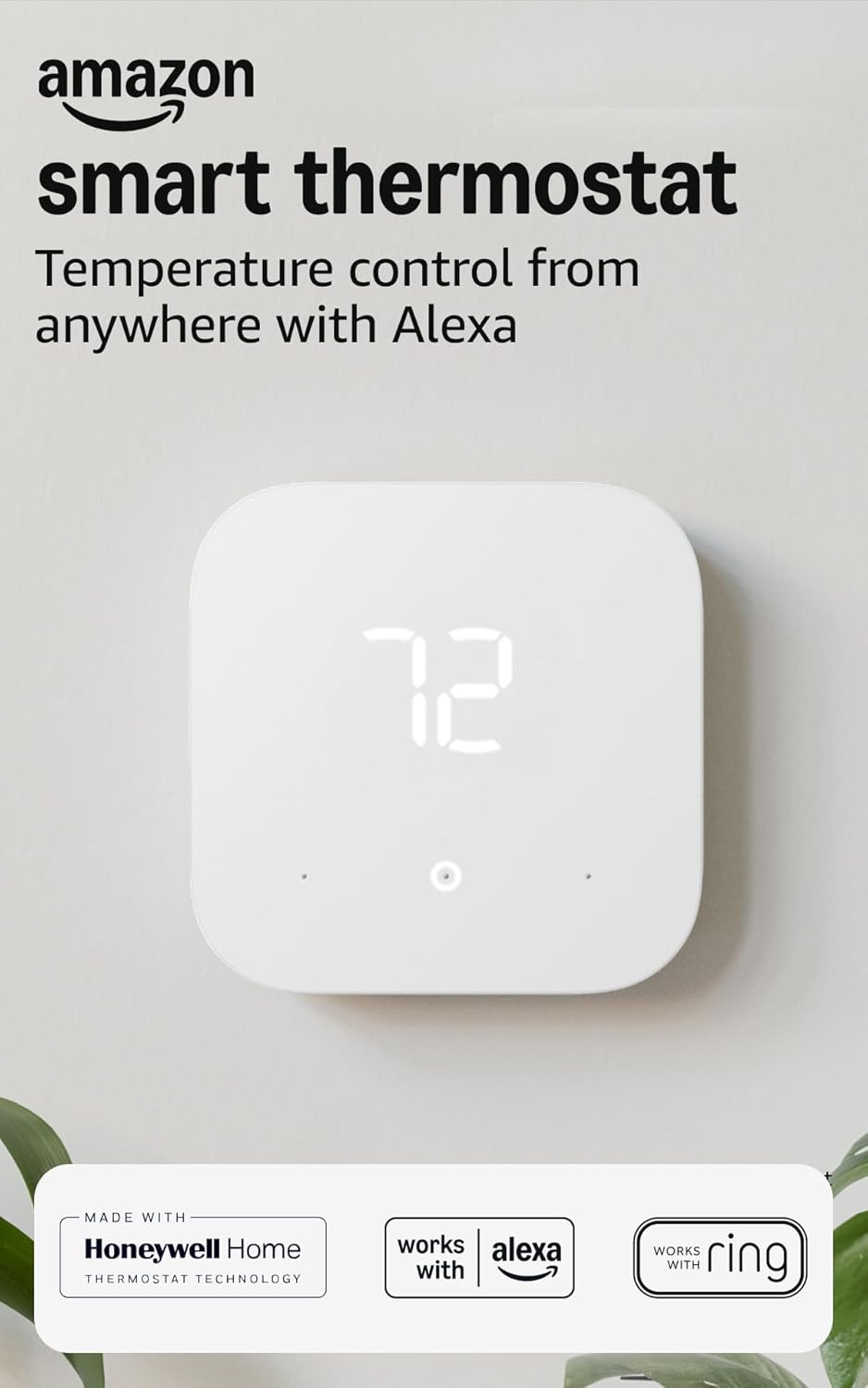
| ASIN | B08J4C8871 |
|---|---|
| Integration | Works with Alexa and Ring |
| Price | 79.99 USD |
| Manufacturer tech | Honeywell Home technology |
| Requires | C‑wire required |
The Amazon Smart Thermostat is a simple, Alexa-first replacement for a traditional thermostat that focuses on energy savings and easy setup. It connects to your home Wi‑Fi and the Alexa app to let you create schedules, control temperature remotely, and use presence sensing from compatible Alexa devices to adjust heating and cooling automatically. The unit leverages Honeywell Home thermostat technology for core control functions and includes Alexa+ features for routines and multi-device control. Installation is intended as a DIY job and the app guides you through wiring; a common requirement is a C‑wire. Practical benefits include straightforward voice control, integration with Ring and other Alexa devices, and built-in scheduling for home, away, and sleep modes that can reduce energy use. Limitations include reliance on the Alexa ecosystem for advanced automations and fewer advanced HVAC diagnostic tools than some higher-end thermostats, so it is best for users seeking a budget-friendly, voice-centric smart upgrade rather than pro-level HVAC control.
Best for: Buyers who want a straightforward, energy-conscious smart thermostat that works smoothly with Alexa and Ring and prioritizes simple setup and voice controls.
Less Ideal for: Users who need deep HVAC diagnostics, professional-level tuning, or who avoid relying on a single voice-assistant ecosystem.
- Easy Alexa integration for voice control and routines.
- App-based remote control and scheduling for home, away, and sleep modes.
- Energy-focused features and compatibility with Ring presence detection.
- Based on Honeywell Home thermostat technology for reliable temperature control.
- Requires a C‑wire and may need electrician help in homes without one.
- Advanced HVAC diagnostics and custom tuning options are limited compared with premium smart thermostats.
Verdict: If you want an affordable, Alexa-centric smart thermostat to cut energy use and add easy voice and app control, this is a practical choice.
meross Smart Thermostat MTS200

| Controller Type | Amazon Alexa, Apple HomeKit, Google Assistant, SmartThings |
|---|---|
| Connectivity Technology | Wi-Fi |
| Power Source | Corded Electric |
| Display Type | LCD |
| Specific Uses For Product | Convector, Electric Baseboard Heater, Fan-Forced Systems, In-Wall Heaters |
The meross MTS200 is a 4-wire smart thermostat built for high-voltage electric heating systems like baseboard, convector and fan-forced heaters, and it integrates with Apple Home, Alexa, Google Home and SmartThings. Installation is intended for a standard in-wall electrical box and the company says it can be fitted in under 30 minutes if you have four or more wires available; the unit provides live, neutral and load connections and includes wire nuts and screws. In daily use it offers app control, voice control, a programmable 7×24 schedule, an LCD readout, energy monitoring and open-window detection to pause heating when a window is opened. The thermostat also supports offline local control and stores settings across power interruptions. Practical limits are that it is not compatible with 24V HVAC systems, underfloor heating, or heat pumps, and its internal sensor can read warm if mounted near a heat source so placement or calibration may be necessary. For buyers who need a simple, smart, budget-friendly high-voltage thermostat with HomeKit support, the MTS200 covers the essentials.
Best for: Homeowners or renters on a budget who need a straightforward smart upgrade for electric baseboard or convector heaters and want HomeKit plus voice control without paying for premium features.
Less Ideal for: People with 24V HVAC systems, heat pumps, or electric in-floor heating should look for a thermostat specifically designed for those systems.
- Works with HomeKit, Alexa, Google Home and SmartThings for voice and app control
- Energy monitoring and open-window detection help reduce heating costs
- Programmable 7×24 schedule and local offline control when Wi-Fi is unavailable
- Designed for high-voltage electric heaters and includes mounting hardware and wire nuts
- Not compatible with 24V HVAC systems, heat pumps, or electric underfloor heating
- Temperature sensor sits under the casing and may need calibration or careful placement for accuracy
Verdict: A cost-conscious, HomeKit-compatible smart thermostat that gives reliable app and voice control for high-voltage electric heaters while adding basic energy monitoring and scheduling.
Sensi Touch ST75

| Connectivity Technology | Wi-Fi (2.4 GHz) |
|---|---|
| Control Method | App, Touch, Voice |
| Display Type | LCD color touchscreen |
| Temperature Control Type | Programmable |
| Power Source | AC/DC (C‑wire required) |
The Sensi Touch ST75 is a wall‑mounted smart thermostat designed to replace a conventional 4‑wire thermostat and bring remote control and scheduling to your HVAC system. It connects over 2.4 GHz Wi‑Fi and pairs with the Sensi mobile app, letting you change temperature, set schedules, and view usage reports from a phone. The large color touchscreen and touch controls make in‑home adjustments straightforward, while app and voice integrations with Alexa, Google Assistant, Apple HomeKit, SmartThings, and Vera enable hands‑free control and automation. Energy Star certification plus features like geofencing, programmable schedules, and usage reports help lower HVAC runtime and track savings. Installation is aimed at DIYers with illuminated easy‑click terminals and an in‑app step‑by‑step guide, but a common wire (C‑wire) is required so some systems will need a compatible power setup. The unit emphasizes data privacy and includes maintenance alerts such as filter reminders, though advanced installers may miss more granular HVAC diagnostics found on pro‑grade controllers.
Best for: Buyers who prioritize a dependable, manufacturer‑backed smart thermostat that integrates with major voice platforms and offers straightforward DIY installation and long‑term energy tracking.
Less Ideal for: Homes without a C‑wire or owners who need advanced pro‑level HVAC diagnostics and control features.
- Supports major smart home ecosystems including Alexa, Google Assistant, and Apple HomeKit
- Large color touchscreen with simple in‑home controls and an intuitive mobile app
- Energy Star certified with scheduling, geofencing, and usage reports to reduce HVAC energy
- DIY‑friendly installation with illuminated easy‑click terminals and step‑by‑step app guidance
- Provides maintenance alerts and usage reports to monitor system performance
- Requires a common wire (C‑wire), so homes without one need added wiring or a power adapter
- Does not expose the deep diagnostics that some professional HVAC controllers provide
Verdict: Choose the Sensi Touch ST75 if you want a reliable, Energy Star certified smart thermostat with a clear touchscreen, broad smart home compatibility, and easy DIY installation.
Google Nest Thermostat
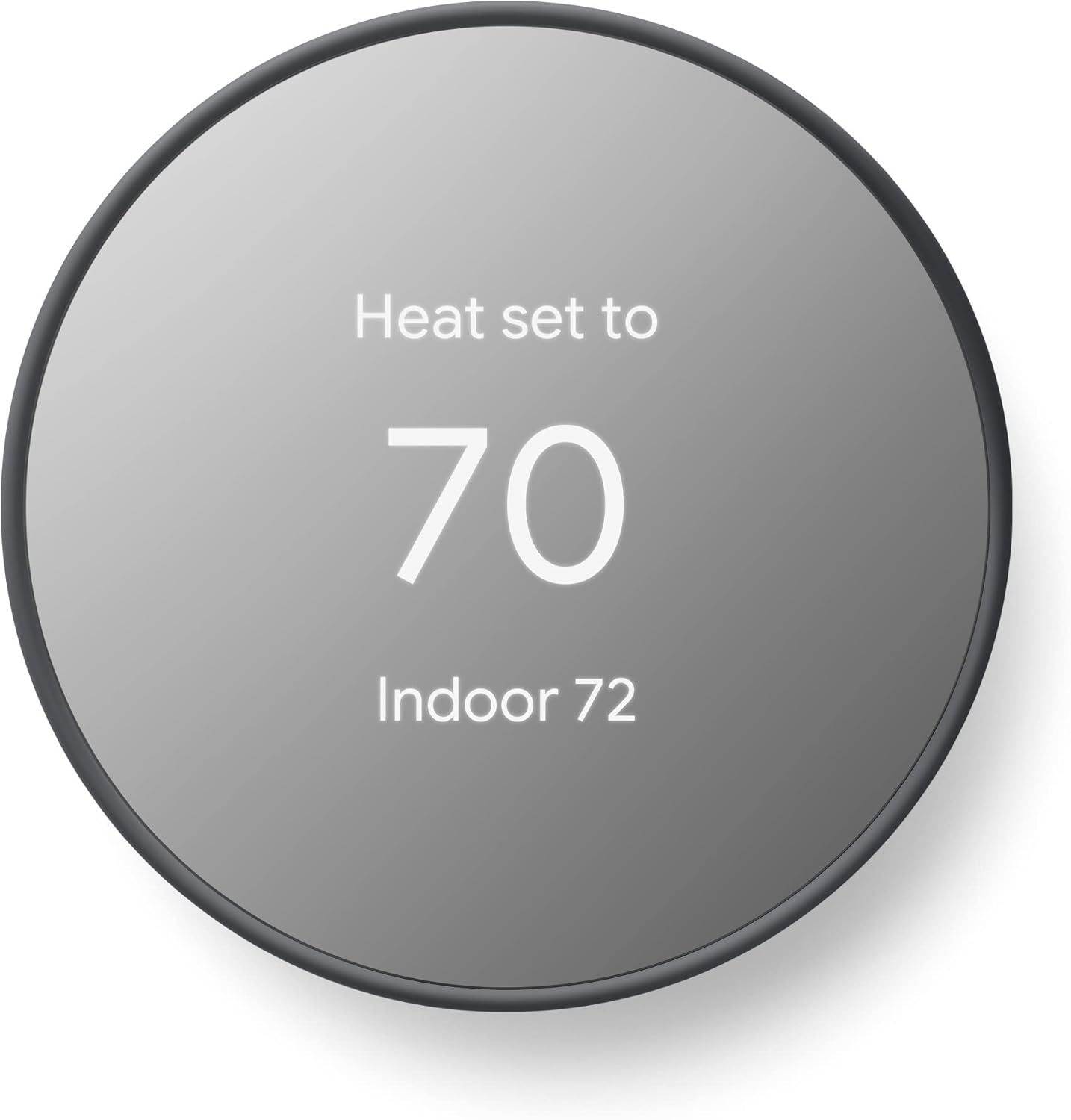
| Connectivity Technology | Bluetooth, Wi-Fi |
|---|---|
| Power Source | Battery Powered |
| Display Type | LCD |
| Control Type | Remote Control, Voice Control |
The Google Nest Thermostat is a compact, user-friendly smart thermostat designed to simplify temperature control and save energy. It connects to Wi‑Fi and Bluetooth so you can control HVAC settings from the Google Home app or with voice assistants, and it supports both heating and cooling as well as heat pump systems. Installation is aimed at DIYers and typically takes about 30 minutes; the product works without a C wire in many homes but can accept one when required. In daily use the thermostat can automatically switch to Eco Temperatures when nobody is home, suggest schedule tweaks via Savings Finder, and send basic HVAC monitoring alerts if something seems off. The unit runs on two included A batteries and has a small LCD screen with side touch control. Trade-offs are that it is a simpler, lower-cost Nest compared with higher-end learning models, so advanced learning features and some energy services are limited to select Nest devices and regions, and full functionality requires a reliable Wi‑Fi connection and compatible HVAC wiring.
Best for: Buyers who prioritize straightforward smart control, energy-saving basics, and an easy DIY install backed by broad user adoption and support.
Less Ideal for: People who want a thermostat with adaptive learning, extensive advanced energy services, or who need features tied to higher-end Nest models and subscriptions.
- Easy app and voice control via Google Home and compatible assistants
- Energy-saving features like Auto Eco and Savings Finder that suggest schedule tweaks
- Designed for quick DIY installation and works without a C wire in many homes
- Includes batteries and basic mounting hardware for out-of-the-box setup
- Fewer advanced learning capabilities compared with higher-end Nest models
Verdict: A simple, affordable smart thermostat that delivers app and voice control plus basic energy-saving automation with easy DIY installation.
ecobee Smart Thermostat Essential

| Connectivity Technology | Wi‑Fi |
|---|---|
| Power Source | Battery Powered |
| Display Type | LCD |
| Control Type | Touchpad Control |
| Specification Met | Energy Star |
The ecobee Smart Thermostat Essential is a compact, touchscreen Wi‑Fi thermostat designed to replace a standard 4‑wire thermostat and give remote control via the ecobee app or voice assistants. It is typically installed on a wall plate and used to manage heating and cooling schedules, enable auto‑away adjustments, and view basic temperature and humidity information on the LCD display. Notable features include dual‑band Wi‑Fi support, built‑in compatibility with Apple HomeKit, Google Assistant, and Siri/Alexa ecosystems, and eco+ software that adapts schedules to save energy. The unit supports common 24VAC HVAC systems and can work with ecobee SmartSensor accessories to better balance temperature across rooms. Practical benefits are easy DIY setup for compatible systems, touchscreen controls for quick local changes, and app access for remote adjustments and energy tracking. Limitations to watch for are reliance on a C‑wire or the optional Power Extender Kit for some homes and the pared‑down feature set compared with higher‑end ecobee models, which lack integrated air quality sensing and advanced multi‑zone controls.
Best for: Buyers who want a reliable, easy‑to‑use smart thermostat that integrates with major voice assistants and prioritizes straightforward energy savings without advanced extras.
Less Ideal for: Users needing built‑in air quality monitoring, advanced multi‑zone control, or the most feature‑rich ecobee model should consider higher‑tier options.
- Works with major smart home platforms including HomeKit, Google Assistant, and Alexa
- Dual‑band Wi‑Fi and mobile app allow convenient remote control and scheduling
- Simple touchscreen and app setup aimed at straightforward DIY installation
- eco+ features and scheduling can reduce heating and cooling energy use
- May require ecobee Power Extender Kit in systems without a C‑wire
- Fewer premium sensors and air quality features than higher‑end ecobee models
Verdict: A simple, compatible smart thermostat that delivers reliable app and voice control plus energy‑saving schedules for buyers who want straightforward, low‑risk smart home upgrades.
Choosing the Right 4 Wire Smart Thermostat: Key Factors to Consider
Wiring Compatibility
Confirming wiring compatibility is the first step. Four-wire thermostats typically expect power, common, and two control conductors. You need to verify that your control panel or furnace/air handler provides the necessary terminals and that the thermostat's installation instructions match your system's wiring colors and functions.
Mismatched wiring leads to nonfunctional features or the need for an adapter or professional rewiring. For many homeowners, the difference between a plug-and-play four-wire swap and an installation that requires running a new conductor is the deciding factor.
Supported HVAC Configurations
Not all smart thermostats support every combination of heating and cooling equipment. Check whether the thermostat handles single-stage, multi-stage, heat pump, or separate heat/cool systems. The unit should list supported equipment types and terminal labels clearly so you can confirm compatibility before purchase.
If your system includes auxiliary heat, two-stage compressors, or variable-speed fan controls, ensure the thermostat explicitly supports those features to avoid degraded comfort or control limitations.
Installation and Setup
Installation complexity affects total cost and how quickly the thermostat starts working. Look for clear wiring diagrams, labeled connectors, and compatibility with common mounting options. Some smart thermostats include built-in installers or phone-guided setup that walk you through wiring and testing.
Consider whether the thermostat needs a separate power accessory or adapter and whether you are comfortable performing basic electrical tasks. If you prefer a simpler path, prioritize models with straightforward, error-tolerant installation workflows.
Connectivity and Smart Features
Reliable Wi-Fi and cloud connectivity enable remote control, scheduling, and integrations with voice assistants or home automation platforms. Assess whether the thermostat supports 2.4 GHz versus 5 GHz networks, and whether it provides local control if the internet is down.
Smart features such as geofencing, learning schedules, occupancy sensing, and third-party integrations can improve convenience and efficiency. Decide which features you will use regularly, since advanced capabilities can add setup complexity without significant benefit for some households.
User Interface and Daily Use
An intuitive interface makes it easy to set schedules and make quick temperature changes. Consider screen readability, tactile button feedback versus touch-only controls, and how the thermostat displays current mode and temperature. A clutter-free menu system reduces the time needed to configure scenes or setpoints.
Also evaluate how well the mobile app mirrors on-device functionality. If you expect to make frequent adjustments from a phone, the app should offer full control rather than limited monitoring.
Energy Management and Reporting
Energy-saving features can justify the upgrade but only if they align with how you use HVAC. Look for clear reporting on runtime and temperature trends, as well as automated setback or adaptive algorithms. These features help identify opportunities to reduce consumption without sacrificing comfort.
Check whether the thermostat offers exportable usage reports or simple monthly summaries. Accurate, actionable feedback makes it easier to evaluate real energy savings over time.
How Four-Wire Thermostats Differ From Battery Models
Four-wire smart thermostats draw power from the HVAC system and typically rely on a common or dedicated power conductor. This eliminates the need for frequent battery replacements and supports features that require steady power, such as color displays, active Wi-Fi radios, and continuous sensing.
Because they use system power, four-wire units can run background tasks like adaptive learning and connectivity checks more reliably than battery-powered alternatives. That steady power also allows for more robust display and sensor capabilities.
- No regular battery swaps
- Stable Wi-Fi and background processes
- Support for richer displays and sensors
Common Installation Pitfalls and How to Avoid Them
A common issue is mislabeled wires. Before disconnecting the old thermostat, document each conductor's terminal. Take photos and note colors and labels so you can match them to the new thermostat's terminals. If labels differ, consult the HVAC manual or a wiring reference.
Another pitfall is neglecting to verify C-wire presence. Some systems appear to have a spare wire but do not provide a true common. In those cases, the thermostat may need a power adapter or a professional install to provide a stable C connection.
- Document wiring before removal
- Verify true common power on the spare conductor
- Follow manufacturer wiring diagrams closely
Integration With Home Automation
If you use a smart home platform, check that the thermostat supports local or cloud integration methods you rely on. Many models offer voice control and platform plugins, but the depth of integration varies. Determine whether you need scene triggers, temperature-based automations, or only remote control.
Also consider account linking and privacy. Some integrations require cloud accounts to bridge controls, which can affect response times and data flow. If local control is essential, prioritize thermostats that support LAN-based APIs or home automation bridges.
- Confirm supported automation platforms
- Decide between local control and cloud integration
- Look for clear developer or API documentation if needed
Maintenance and Long-Term Reliability
Routine maintenance for smart thermostats is mostly software-related: keep firmware updated and verify connectivity occasionally. Physically, ensure the thermostat remains level and free from drafts or direct sunlight that can skew temperature sensing.
Long-term reliability depends on both hardware build and software support. Favor devices with a track record of timely firmware updates and a clear update policy to maintain compatibility with network changes and platform integrations.
- Install updates when available
- Avoid mounting near heat sources or drafts
- Periodically confirm sensors and schedules are accurate
When to Call a Professional
If your system uses multi-stage compressors, complex zoning, or requires running a new conductor for a true common, a professional HVAC technician is the safest choice. Incorrect wiring in these cases can damage equipment or disable safety controls.
Also hire a pro if the system uses proprietary control boards or has unclear terminal labeling. A trained technician can confirm compatibility and complete necessary wiring changes without risking system performance.
- Complex multi-stage or zoned systems
- No accessible common conductor
- Unclear or nonstandard terminal labeling
How We Chose the Best 4 Wire Smart Thermostat
We focused on thermostats designed for systems that use four conductors including a dedicated common or power reference. Selection prioritized electrical compatibility, quality of smart features, installation simplicity, and runtime reliability. We examined technical specs for supported HVAC configurations, the presence and clarity of wiring diagrams, and whether the unit required additional adapters. Connectivity features were assessed for stability and ease of integration with common smart-home ecosystems. Interface and scheduling capabilities were evaluated for intuitive daily programming and remote access. Energy management features such as adaptive setback, learning modes, and clear reporting were also considered. We excluded units that require professional-only wiring conversions, models without explicit four-wire support, or devices lacking remote control capabilities. The final list favors devices that balance broad compatibility with straightforward installation and robust smart functions. Our selections reflect these concrete, product-specific filters rather than marketing claims or price alone.
Our full evaluation process is outlined in our review methodology.
FAQ
What exactly is a four-wire thermostat and why would I need one?
A four-wire thermostat typically uses a dedicated power or common conductor plus control wires to operate HVAC equipment. You need one if you want continuous power for Wi-Fi, advanced displays, and background features that battery-only units cannot sustain reliably.
Can I install a four-wire smart thermostat myself?
Many homeowners can handle a self-install if their system has standard terminals and an accessible common conductor. Follow wiring diagrams, document the old wiring first, and turn off power at the breaker. If the wiring is ambiguous or your system is complex, professional installation is recommended.
What if my system does not have a common wire?
If there is no true common conductor, some thermostats offer compatible power accessories or separate adapters. Alternatively, a professional can add a common wire or install a power adapter at the control board. Each option has tradeoffs in cost and complexity.
Do four-wire thermostats work with heat pumps and multi-stage systems?
Some four-wire thermostats support heat pumps and multi-stage systems, but support varies. Confirm that the thermostat lists your equipment type among supported configurations before buying, since advanced systems require explicit terminal and control support.
How important is the thermostat app and cloud service?
The app and cloud service determine remote control, scheduling convenience, and integration depth. Choose a thermostat whose app provides the features you need and whose connectivity is stable. If privacy or local control matters, verify whether the device offers LAN-based or minimal-cloud options.
Final Verdict
Prioritize electrical compatibility and installation simplicity when choosing a 4 Wire smart thermostat. Confirm your system's terminal layout and supported HVAC configurations first, then weigh connectivity and energy features that matter to your daily routines. Simpler interfaces and reliable networking often lead to the best real-world experience. If your wiring or equipment is unclear, plan for a professional check before replacing the thermostat. Focus on the handful of features you will actually use rather than every advanced capability, and choose a unit that balances straightforward setup with the smart functions that matter most.