
Note: This article contains affiliate links. If you click on these links and make a purchase, we may earn a small commission at no extra cost to you. This helps support our research and content. Read our full affiliate disclosure here.
Basement environments demand a dehumidifier that can pull a lot of moisture without being a constant nuisance. A properly chosen 50-pint dehumidifier for basements controls humidity at scale, reduces condensation on pipes and walls, and helps prevent mold and mildew growth in finished and unfinished lower-level spaces. You want a unit that balances sustained moisture removal, robust airflow, and sensible energy use while fitting your basement layout. This guide shortlists the top six 50-pint basement dehumidifiers that match common homeowner needs. We evaluated capacity stability, energy efficiency, drainage options, and noise to surface models suited to typical basement conditions. Read on for the selection criteria and practical buying considerations to help you pick the right unit for your space.
Top Picks at a Glance
| Best Overall The best all-around choice for most situations | Midea 50 Pint Dehumidifier |  |
| Best Quality Built to a higher standard if you want something more solid | LG PuriCare 50 Pint Dehumidifier |  |
| Best Value The sweet spot between price and what you get | Aiusevo 52-Pint Dehumidifier AS320 |  |
| Best Budget The cheapest option that still gets the job done reliably | DUMOS 50-Pint Dehumidifier | 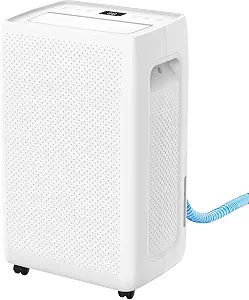 |
| Most Popular A crowd favorite that many people choose with confidence | hOmeLabs 50 Pint Dehumidifier | 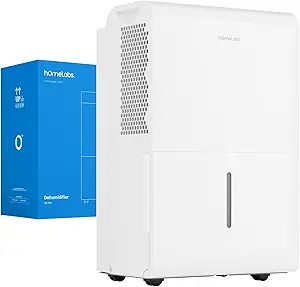 |
| Best Seller A high-volume bestseller chosen again and again | AEOCKY BOREAS-001 50‑Pint Dehumidifier |  |
Midea 50 Pint Dehumidifier

| Capacity | 50 pints per day |
|---|---|
| Floor Area | 4500 square_feet |
| Tank Volume | 1.6 gallons |
| Number of Speeds | 3 |
| Wattage | 470 watts |
The Midea 50 Pint Dehumidifier is built to remove up to 50 pints of moisture per day and cover spaces up to about 4,500 sq ft, making it suited to basements, large rooms, and laundry areas. It offers adjustable humidity from 35% to 85%, three fan speeds including a quiet low mode, and a 1.6 gallon tank with a built-in hose socket for continuous drainage. Smart features include Wi‑Fi app control and voice commands via Alexa or Google Assistant, while practical touches like a reusable air filter, digital display, timer, handles, and 360° rotating wheels make day-to-day use simple. In real-world use it delivers strong moisture removal and flexible control options, though its 470W power draw and sizeable weight mean it is best placed where it can run regularly rather than being frequently lifted. The unit is aimed at residential use and provides a balance of performance, smart connectivity, and portability for larger damp spaces.
Best for: Buyers who want a capable, connected dehumidifier that can handle large basements or rooms and value easy mobility, app control, and strong moisture removal.
Less Ideal for: Those who need an ultra-lightweight or ultra-compact solution for occasional small-room use or who cannot accommodate a unit with higher continuous power consumption.
- High dehumidification capacity up to 50 pints per day for large rooms and basements
- Wi‑Fi and voice control for remote monitoring and adjustments
- Continuous drain option plus a 1.6 gallon tank for less frequent emptying
- Reusable air filter and digital controls simplify maintenance and operation
- Quiet low fan mode and multiple speeds for flexible noise/performance balance
- Relatively heavy for a portable unit which makes lifting awkward
- 470 watt power draw may increase electricity use during extended operation
Verdict: A powerful, Wi‑Fi enabled 50‑pint dehumidifier that balances strong moisture removal and smart controls for large basements and rooms.
LG PuriCare 50 Pint Dehumidifier

| Dehumidification Capacity | 50 pints_per_day |
|---|---|
| Tank Volume | 14.3 pints |
| Number of Speeds | 4 |
| Wattage | 480 watts |
| Operation Mode | Automatic |
The LG PuriCare 50 Pint Dehumidifier is built to remove up to 50 pints of moisture per day and keep large basement spaces comfortable while using less energy. It offers automatic operation with adjustable humidity control, four fan speeds, and a 14.3 pint removable tank alongside a side hose connection for continuous draining, so you can choose bucket or hose use depending on how hands-off you want to be. The unit includes auto-defrost to maintain performance in cool conditions and an internal drying cycle to limit residual moisture after use. Controls are presented on a clear LED panel and you can monitor and change settings remotely through the LG ThinQ app. Practical touches like a one-hand removable bucket, filter-clean indicator, and quiet low-speed operation make it easy to run day and night. Expect reliable, energy-efficient moisture removal for basements, though the 14.3 pint tank still requires emptying if you do not set up continuous drainage and the unit is fairly heavy for occasional repositioning.
Best for: Buyers who prioritize strong daily moisture removal and energy-efficient continuous operation for basements and want app-based remote control and simple maintenance.
Less Ideal for: Those who need an ultra-light portable unit to move frequently between rooms or who prefer a larger onboard tank to avoid any emptying when a drain hookup is impractical.
- Removes up to 50 pints per day suitable for large basement areas
- ENERGY STAR certified for more efficient long-term operation
- Wi‑Fi and LG ThinQ app control for remote monitoring and alerts
- Auto-defrost and internal drying help maintain performance in cold conditions
- Side-access bucket and continuous drain option simplify maintenance
- 14.3 pint tank still needs regular emptying if continuous drain is not used
- Unit weight makes it less convenient to move between spaces
Verdict: Choose this model if you want a high-capacity, energy-efficient 50-pint dehumidifier with smart remote control and reliable basement performance.
Aiusevo 52-Pint Dehumidifier AS320

| Capacity | 52 pints |
|---|---|
| Tank Volume | 0.66 gallons |
| Wattage | 140.4 watts |
| Air Flow Capacity | 50 cfm |
| Number of Speeds | 2 |
The Aiusevo AS320 is a floor-standing dehumidifier built for large rooms and basements, rated to remove up to 52 pints of moisture per day. It offers three operating modes — a standard humidity-control mode, a quick-dry mode for laundry, and a continuous mode that works with the included 6.65 ft drain hose for unattended operation. Practical touches include a visible 0.66 gallon tank with auto shut-off, a washable filter, child lock, 24-hour timer, automatic defrost, and caster wheels plus an ergonomic handle for moving between rooms. Reported noise levels can be as low as 40 dB, so it can run overnight in bedrooms or basements without being intrusive. The unit is energy modest at about 140 watts and has two fan speeds and a digital humidity display for simple control. Limitations to note: the stated 52-pint rating is a high-humidity, 95°F condition figure, so real-world performance at lower temperatures will be reduced, and the tank size means frequent emptying unless you use the continuous drain option.
Best for: Buyers who prioritize reliable, whole-room humidity control in basements or large rooms and want flexible operation options with easy maintenance and mobility.
Less Ideal for: People who need a built-in pump for uphill drainage or those seeking the highest real-world pint output at low basement temperatures should consider a commercial-grade unit instead.
- High dehumidification capacity rated up to 52 pints per day for large spaces
- Continuous drain option with included 6.65 ft hose for unattended operation
- Multiple modes (humidity control, dry, continuous) for flexible use cases
- Washable filter and caster wheels make maintenance and relocation easy
- Child lock, 24h timer, and digital display simplify everyday operation
- Tank volume is small (0.66 gallons) so emptying is frequent without continuous drain
- Performance figure is based on high-temperature/high-humidity conditions and may be lower in typical basements
Verdict: A practical, mobile 50-plus pint dehumidifier with continuous-drain capability and straightforward controls tailored for basement and large-room humidity control.
DUMOS 50-Pint Dehumidifier
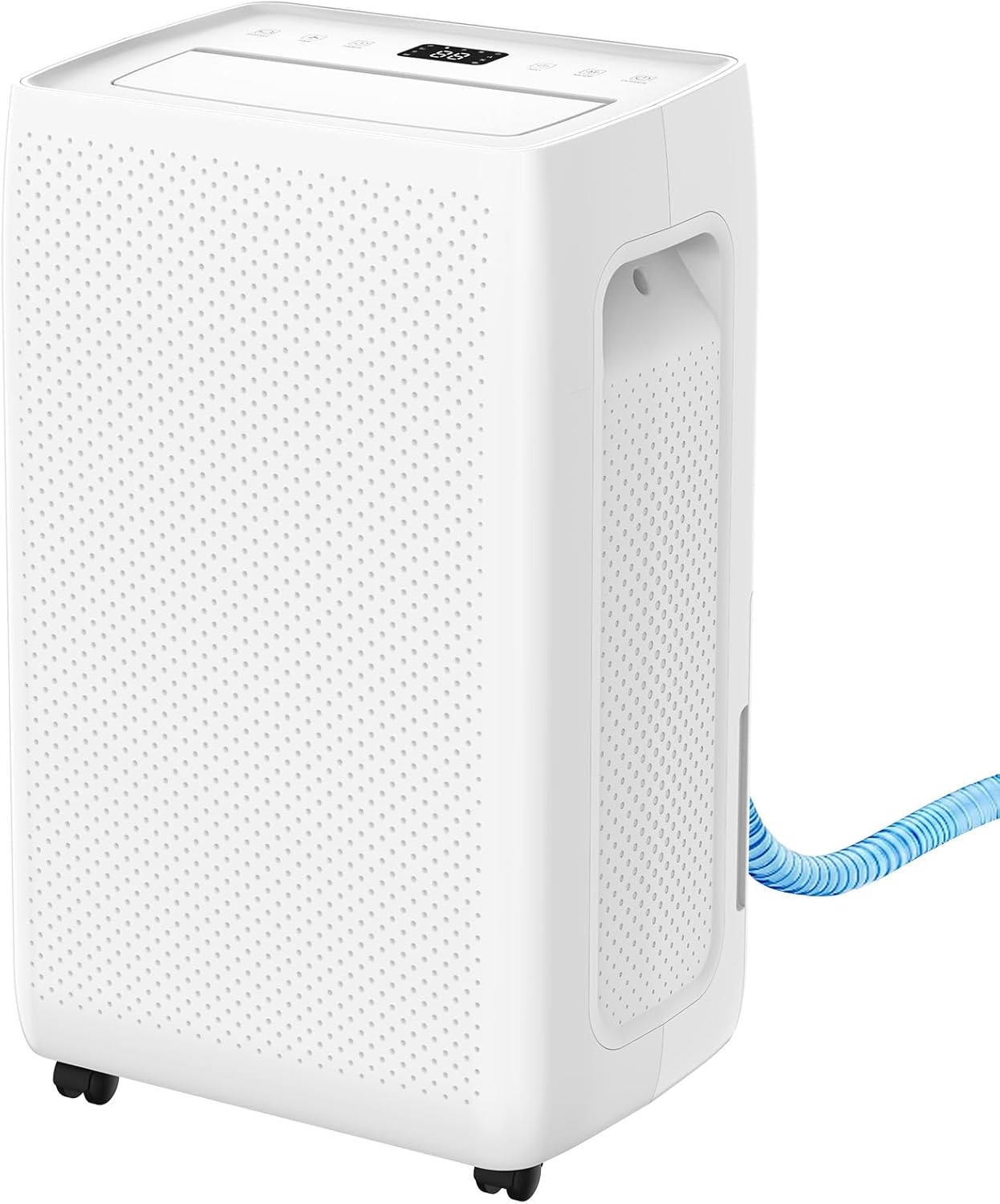
| Capacity | 50 pints |
|---|---|
| Tank Volume | 4.5 liters |
| Floor Area | 3500 square_feet |
| Noise Level | 41 dB |
| Number of Speeds | 2 |
This DUMOS 50-pint dehumidifier is built for large rooms and basements where steady moisture removal is needed. It pulls up to 50 pints per day and is rated to cover about 3,500 sq ft while operating quietly under 41 dB, making it suitable for overnight use in bedrooms or continuous basement duty. Controls provide multiple modes including Auto, Drying, Sleep, and an Air Purification option, while a vertical 75° swing and fixed louver setting let you direct airflow for faster drying. Practical features include a washable filter, a 1.19-gallon (4.5 L) tank plus a supplied drain hose for continuous drainage, auto defrost for cool spaces, a 24-hour timer, child lock, and caster wheels for easy placement. The unit claims high ENERGY STAR efficiency, which should reduce running costs versus typical models. The main compromises are its single basic two-speed fan and the lack of advanced smart connectivity, so you get efficient, straightforward dehumidification without premium smart features.
Best for: Buyers who need efficient, no-frills moisture removal for a basement or large room and prioritize lower operating costs over smart features.
Less Ideal for: Those who want app-based control, advanced scheduling, or many fan speed options should consider models with built-in Wi-Fi and more granular controls.
- High 50-pint dehumidification capacity suitable for large basements and rooms
- ENERGY STAR Most Efficient designation for lower operating costs
- Quiet operation under 41 dB for overnight or living-area use
- Includes washable filter and drain hose for low-maintenance continuous drainage
- Adjustable 75° vertical swing and multiple modes for targeted drying and comfort
- Only two fan speeds limit fine-grained airflow control
- No built-in smart connectivity or app control for remote monitoring
Verdict: A cost-conscious, energy-efficient 50-pint dehumidifier that delivers quiet, large-room moisture control without premium smart features.
hOmeLabs 50 Pint Dehumidifier
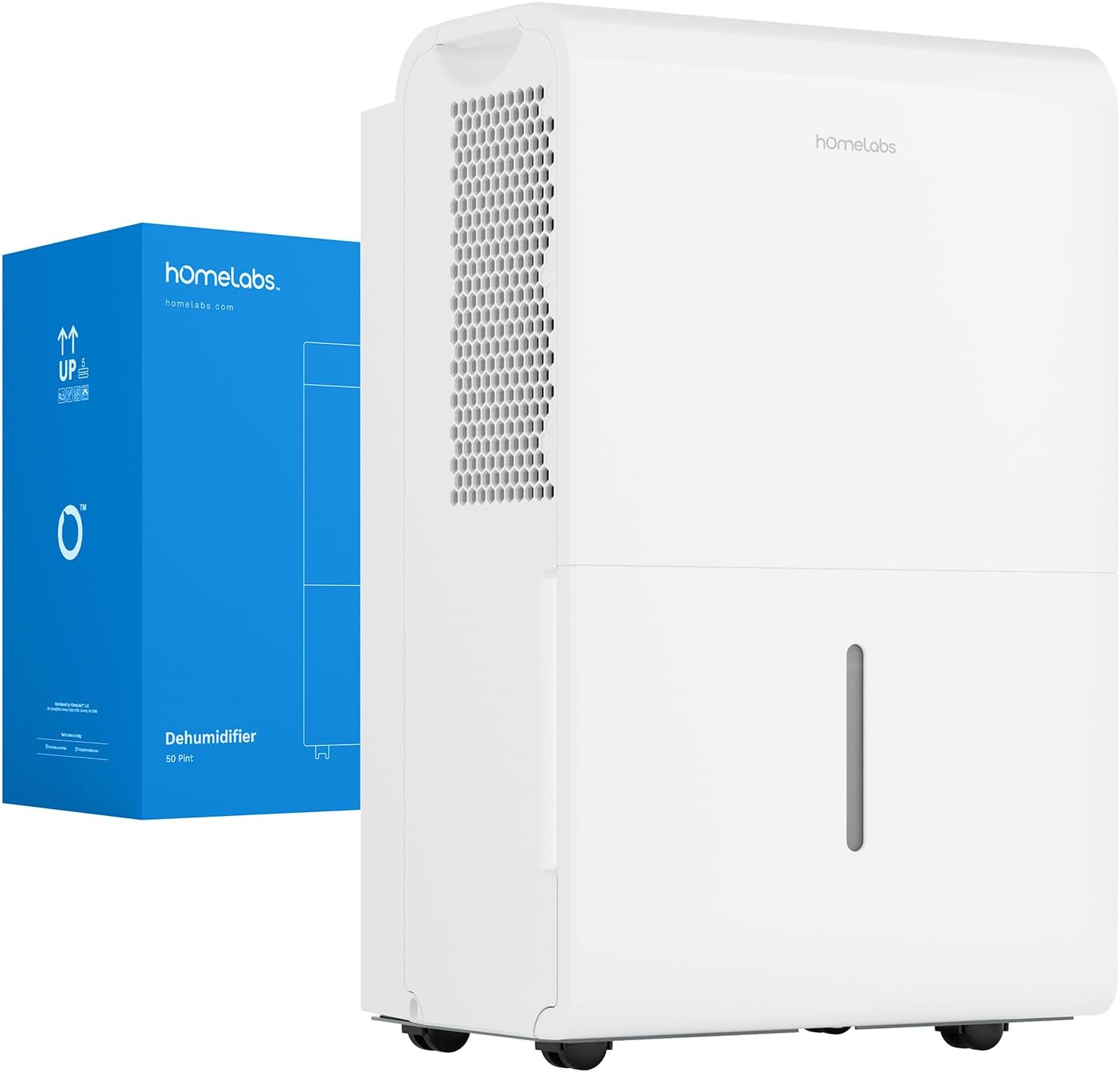
| Dehumidification Capacity | 50 pints/day |
|---|---|
| Coverage Area | 7000 square_feet |
| Tank Volume | 1.6 gallons |
| Wattage | 322 watts |
| Air Flow Capacity | 165 cfm |
This hOmeLabs 50‑pint dehumidifier targets large residential spaces and basements by removing up to 50 pints per day (with higher capacity under very hot, humid conditions). It uses a compressor and a two‑speed fan with a Turbo mode to accelerate moisture removal and offers a hose outlet for continuous drainage or a 1.6‑gallon removable tank with automatic shutoff. Built‑in Wi‑Fi lets you monitor and change settings remotely, while a touch control panel, timer, washable filter, caster wheels, and handles make day‑to‑day operation and maintenance straightforward. The unit is rated to cover up to 7,000 sq ft and includes automatic defrost and restart for more reliable basement use. Expect noticeable humidity reduction in damp basements, but be aware it is a substantial freestanding unit and draws several hundred watts when running, so factor that into energy considerations and placement for drainage or tank access.
Best for: Buyers who want a proven, well‑reviewed dehumidifier for reducing dampness in large basements and prefer remote control and easy maintenance backed by broad user adoption.
Less Ideal for: People who need an ultra-compact, lightweight unit for small rooms or extremely low-energy operation should consider smaller, lower‑wattage models instead.
- Designed for large areas up to 7,000 sq ft with 50 pint/day dehumidification capacity
- Wi‑Fi connectivity for remote monitoring and control
- Continuous drain option plus 1.6‑gallon removable tank with auto shutoff
- Washable filter, timer, and touch controls simplify maintenance and use
- Automatic defrost and restart improve reliability in cooler basement environments
- Relatively high power draw at 322 watts compared with smaller units
- Physically large and heavy which may limit placement in tight basements
Verdict: A robust, Wi‑Fi‑enabled 50‑pint dehumidifier built for large basements that balances strong moisture removal with convenient features and easy maintenance.
AEOCKY BOREAS-001 50‑Pint Dehumidifier

| Dehumidification Capacity | 50 pints_per_day |
|---|---|
| Applicable Area | 3500 square_feet |
| Tank Volume | 0.8 gallons |
| Wattage | 380 watts |
| Operating Noise (Min-Max) | 40-43 dB |
The BOREAS-001 packs compressor-level dehumidification into a small footprint intended for basements and living spaces. It extracts up to 50 pints/day (95°F, 95% RH) and is rated around 38 pints/day in typical damp-basement conditions, using a piston compressor, copper tubing, and hydrophilic fins for efficient heat exchange. Typical use is room-by-room: set the humidity target with the intelligent humidistat and choose continuous drainage via the included 2 m hose for hands-off operation, or use the 0.8 gallon tank for intermittent emptying. Notable features include a low-noise design (40–43 dB), auto-defrost for cooler basement environments, multicolor ambient humidity light, child lock, fan speed control, and a 24-hour timer. Benefits are strong moisture removal for medium-to-large basements, relatively quiet operation that can work in bedrooms or offices, and built-in durability components aimed at longer life. Important limitations are the small internal tank that fills quickly in very damp spaces and the recommendation to use continuous gravity drainage for extended runs; for extremely large or commercial basements, a higher-capacity model would be more appropriate.
Best for: Buyers who prioritize reliable, proven moisture removal in home basements and value quiet, durable compressor performance with low operational risk.
Less Ideal for: Homes without an easy gravity drain access or very large basements that need higher-capacity or pump-equipped commercial units.
- High rated dehumidification performance up to 50 pints/day in hot, high-humidity conditions
- Compact footprint and casters for easy placement in basements, bedrooms, or crawl spaces
- Quiet operation (40–43 dB) suitable for living areas and night use
- Auto-defrost and continuous drain option reduce downtime in cool basement environments
- Includes drain hose and garden-hose adapter for extended gravity drainage
- Water tank is only 0.8 gallons so it can require frequent emptying without continuous drainage
- No built-in pump for uphill drainage so gravity routing is required for continuous drainage
Verdict: Choose the BOREAS-001 when you want a compact, quiet compressor dehumidifier that reliably removes heavy basement moisture when routed to continuous gravity drainage.
Choosing the Right 50-Pint Dehumidifier for Basements: Key Factors to Consider
Actual Moisture Removal at Basement Temperatures
Rated pint capacities are measured under specific test conditions that are warmer than many basements. Real-world removal depends heavily on the unit's performance at lower temperatures. A dehumidifier that sustains extraction at 60 F or below will keep a cool basement drier than one that only meets its rating at 80 F.
When a unit drops off sharply in cool environments it can cycle inefficiently, run longer, or stop working entirely if it lacks auto-defrost or low-temperature modes. Look for documentation or specifications that describe capacity across a temperature range or mention low-temperature operation to avoid surprises.
Drainage Options and Installation Needs
Basements often benefit from continuous drainage to avoid manual tank emptying. Gravity drain outlets are the simplest when the unit sits above a floor drain. Pump-assisted discharge is necessary when the unit sits at or below the floor level and must lift condensate to a drain or sink.
Consider the length and elevation the pump must handle and whether the manufacturer's drain fittings match your hose. Also factor in tank access for intermittent use and whether a visible full-tank indicator or automatic shutoff is important for your setup.
Energy Consumption and Operating Cost
A 50-pint dehumidifier running in a basement can operate for many hours during humid months, so energy usage directly affects operating cost. Look at kilowatt-hour consumption at typical runtime and whether the unit offers energy-saving modes, programmable timers, or smart controls that reduce runtime when target humidity is reached.
Energy efficiency also ties to airflow and compressor design. Units that remove moisture more quickly may run less overall, offsetting slightly higher instantaneous power draw. Consider estimated monthly energy use based on your local climate and expected hours of operation.
Noise Level and Fan Control
Basements are often multi-use spaces—laundry rooms, hobby areas, or living spaces—so fan noise matters. Higher airflow typically means more sound, but variable fan speeds and quiet modes let you balance performance and comfort. A unit near a finished room, home office, or media center should have a low-noise setting or measured decibel ratings you can compare.
Noise also affects placement options. If you must put the dehumidifier adjacent to sleeping areas, choose models with softer sound profiles or the ability to schedule quiet operation overnight.
Filtration and Ongoing Maintenance
A basement dehumidifier will collect airborne dust and particulate over time. Accessible, washable filters extend time between service intervals and help maintain airflow. Consider how often filters need replacement, whether spare filters are easy to source, and how simple it is to access internal components for cleaning.
Maintenance also includes periodic inspection of drain lines and pump components. Units designed for easier access reduce maintenance time and the chance of performance degradation due to clogs or neglected drains.
Durability and Warranty Support
Basements expose equipment to damp conditions that can accelerate wear on controls, seals, and the compressor. Units built with corrosion-resistant materials and solid housings will last longer. Check for reasonable warranty coverage on the compressor and sealed system, and whether the design allows simple replacement of high-wear parts.
Reliable customer support and available parts can matter more over a long service life than small initial differences in features.
Sizing Your Basement and Expected Runtime
Measure the cubic footage of the basement by multiplying floor area by ceiling height. A 50-pint unit is designed for medium to large basements, but actual runtime depends on how leaky the space is, insulation, number of exterior-facing walls, and the degree of water intrusion.
Estimate runtime in hours by considering local humidity conditions and how often doors or windows open to the outside. In very humid climates or during wet seasons, a 50-pint unit may run continuously; in moderate climates it may cycle on and off. Planning for continuous drainage helps avoid frequent tank emptying when runtime is long.
- Measure cubic feet to confirm capacity needs
- Account for moisture sources such as sump pumps, water heaters, or laundry
- Expect longer runtimes in unfinished or poorly insulated basements
Placement and Airflow Considerations
Good placement maximizes airflow and extraction efficiency. Position the unit where it can draw air from the wettest areas and discharge into open space so the dry air can circulate. Avoid corners or blocked vents that restrict intake or exhaust.
Leave clearance around all sides per installation guidance to ensure adequate airflow and simplify maintenance. Elevating the unit a few inches off the floor can help if minor flooding is possible and can make gravity drainage easier if placed near a floor drain.
- Keep intake and exhaust unobstructed
- Allow manufacturer-recommended clearance for service access
- Consider slight elevation to protect against minor water pooling
Managing Condensate: Hoses, Pumps, and Drains
Decide between occasional manual emptying and a continuous drain setup. Continuous draining is usually best for basements to avoid having to empty a full tank frequently. Check whether the unit's drain connector matches standard hose sizes and whether it supports simple gravity flow.
If your layout requires pumping condensate uphill, choose a model with a built-in condensate pump rated for the lift required. Test the pump path length and outlet elevation during installation planning to prevent surprises.
- Use a gravity drain when the outlet is above a drain point
- Select a pump-assisted unit if the drain must be lifted
- Inspect hoses periodically for blockages or wear
Controls, Automation, and Smart Features
Modern units include adjustable humidistats, timers, and sometimes Wi-Fi or app control. Humidistats let you target a specific relative humidity so the unit runs only as needed, saving energy. Timers and schedules help reduce noise during sensitive hours.
Smart connectivity can be convenient for remote monitoring but is not essential. Prioritize reliable local controls and clear feedback such as digital humidity readouts and indicator lights if you prefer simpler operation.
- Use humidistat control to avoid over-drying
- Program quiet schedules for nighttime operation
- Balance smart features against potential network complexity
Cold-Climate and Low-Temperature Operation
Basements can fall to cool temperatures, especially in unheated spaces. Units with low-temperature operation, automatic defrost, or frost-resistant coils maintain extraction at lower temps. Without these features, the unit may ice up and stop running effectively.
If your basement routinely drops below the temperature range listed for a unit, consider placing the dehumidifier in a slightly warmer area or choosing a model rated for lower temperatures to ensure year-round performance.
- Check for low-temperature or defrost modes
- Avoid placing the unit where condensation can freeze
- Consider supplemental heating in very cold basements
Routine Care and Winter Storage
Plan for seasonal care including cleaning or replacing filters, flushing drain hoses, and running the pump briefly to clear lines. Before winter, empty and dry the reservoir and ensure all components are clean if the unit will be stored.
If you expect high use in summer months only, a winter storage routine that protects the compressor and internal parts will prolong life and prevent mold or odors during inactivity.
- Clean washable filters monthly in dusty basements
- Flush pump and drain lines before long idle periods
- Store in a dry place with the tank removed if leaving for winter
How We Chose the Best 50-Pint Dehumidifier for Basements
We focused on features and performance metrics that matter for sustained basement use. First, we prioritized sustained moisture removal at realistic basement temperatures and humidity levels rather than short-term peak rates. Second, we looked for efficient operation measured by energy consumption and humidity control features such as adjustable humidistats and programmable timers. Third, we evaluated drainage flexibility, including gravity drain options, pump-assisted discharge, and tank access for spaces where continuous drainage is necessary. Fourth, long-term durability and serviceability were considered via build quality, filter accessibility, and user-replaceable parts. Fifth, we factored in noise levels and airflow because basements are often occupied or house sensitive equipment. Units were excluded if they were undersized for typical basement cubic footage, lacked continuous drainage options, or had minimal temperature-rated performance for cooler basements. We did not include units intended only for small rooms or those without clear efficiency or control features. The result is a selection focused on steady dehumidification, practical installation options, and energy-aware operation.
Our full evaluation process is outlined in our review methodology.
FAQ
Will a 50-pint unit be too big for a small finished basement?
Often a 50-pint dehumidifier will work fine in a smaller finished basement but may cycle less frequently. You can lower target humidity or use a timer to avoid over-drying. Bigger units run less time but remove moisture faster when needed.
How should I set the humidistat for a basement?
A common target is 45 percent relative humidity for finished basements and 50 percent for unfinished spaces. Lower settings reduce mold risk but can increase runtime and energy use, so balance comfort and cost.
Can I run a dehumidifier continuously in my basement?
Yes, many basement installations run dehumidifiers continuously during humid seasons. Continuous operation is easier with a gravity drain or pump-assisted setup to avoid frequent tank emptying.
What maintenance keeps a basement unit running well?
Regularly clean or replace the air filter, inspect and clear the drain hose, and check the condensate pump if equipped. Periodic cleaning of the coils and housing helps maintain airflow and efficiency.
Will a dehumidifier help a musty basement smell?
Reducing humidity often lessens musty odors because mold and mildew growth slows as environments dry. Persistent smells may also require cleaning affected surfaces and improving ventilation.
Final Verdict
Choose a 50-pint dehumidifier for a basement when you need robust, sustained moisture removal across a medium to large lower-level space. Prioritize models that maintain extraction at cooler temperatures, offer continuous drainage options, and provide clear humidity control to avoid unnecessary runtime. Balance energy use against removal speed and pick a unit with accessible maintenance points to preserve long-term performance. Focus on the tradeoffs that matter most for your space: drainage method, noise tolerance, and low-temperature capability. With those priorities set, you can select a unit that reliably protects your basement from excess moisture and keeps the space healthier.