
Note: This article contains affiliate links. If you click on these links and make a purchase, we may earn a small commission at no extra cost to you. This helps support our research and content. Read our full affiliate disclosure here.
If mold and dust mites are triggering allergies or asthma at home, the right air purifier can make daily living noticeably easier. You want a unit that captures fine spores and mite debris, handles the square footage of your rooms, and runs without creating extra maintenance headaches. This guide shortlists seven top air purifiers chosen for their ability to reduce mold spores and mite allergens. We evaluate filtration efficiency, room coverage, noise and runtime, and maintenance needs so you can match a model to the size and sensitivities of your living spaces. Read on to find options suited to bedrooms, living rooms, and other problem areas.
Top Picks at a Glance
| Best Overall The best all-around choice for most situations | WINIX 5520 Air Purifier |  |
| Best Quality Built to a higher standard if you want something more solid | COWAY Airmega Mighty2 AP-1512N |  |
| Best Value The sweet spot between price and what you get | Afloia KILO Air Purifier |  |
| Best Budget The cheapest option that still gets the job done reliably | Purivortex PX500 Air Purifier |  |
| Top Rated A top-rated pick with lots of positive feedback | Levoit Core 300-P |  |
| Most Popular A crowd favorite that many people choose with confidence | Levoit Vital 100 Air Purifier |  |
| Best Seller A high-volume bestseller chosen again and again | VOOPNU HEPA Air Purifier DH-JH12 |  |
WINIX 5520 Air Purifier
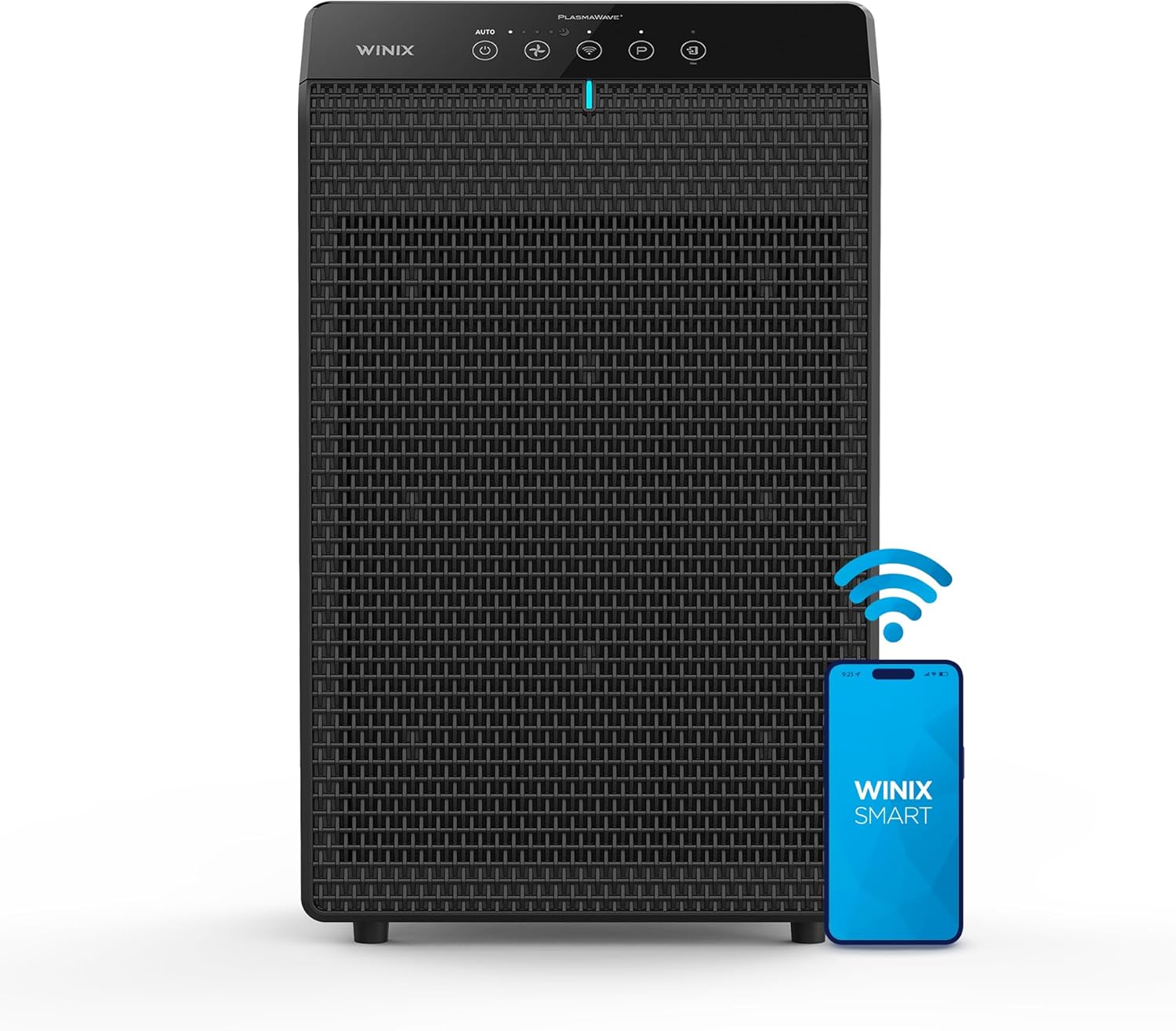
| Coverage (AHAM) | 392 sq ft |
|---|---|
| CADR claim | Cleans up to 1,882 sq ft in 1 hour |
| Noise (low) | 23.5 dB |
| Connectivity | Winix Smart App compatible |
The WINIX 5520 is a four-stage air purifier built to remove fine particles and common indoor allergens across large rooms. It uses a washable fine-mesh pre-filter, an advanced odor-control carbon filter, and a True HEPA stage that the manufacturer says captures particles down to 0.01 microns, plus Winix PlasmaWave technology for additional pollutant reduction. Smart sensors continuously monitor air quality and an LED indicator plus Auto Mode adjust fan speed automatically, while Sleep Mode reduces noise in the dark. Practical benefits include strong coverage for dust, pet dander, and smoke, simpler maintenance with a washable pre-filter, and remote control via the Winix Smart App. Important limitations are typical for tower purifiers: effectiveness depends on placement and runtime for large spaces, and specialized chemical or continuous high-VOC sources may need supplemental ventilation or dedicated filtration. Filter replacement needs and the unit footprint should be considered when planning long-term use in bedrooms or living areas.
Best for: Buyers who want a reliable, sensor-driven purifier that handles dust, pet allergens, and household odors across larger rooms while minimizing manual adjustments.
Less Ideal for: People needing targeted chemical gas removal for heavy VOC sources or portable point-of-use filtration for very small rooms should consider alternative or supplemental solutions.
- Four-stage filtration including True HEPA for very small particles
- Activated carbon filter for odors and VOC reduction
- Smart sensors with real-time LED air quality indicator and Auto Mode
- Washable pre-filter reduces large-particle load and extends filter life
- Sleep Mode and low-noise operation for night use
- Claims about 0.01 micron capture are manufacturer-stated and depend on real-world conditions
- Large-room cleaning requires proper placement and extended run time to reach stated ACH
Verdict: A sensor-driven, four-stage purifier that delivers strong allergen and odor control for large rooms, making it a solid all-around choice against mold-related particles, dust mites, and household allergens.
COWAY Airmega Mighty2 AP-1512N
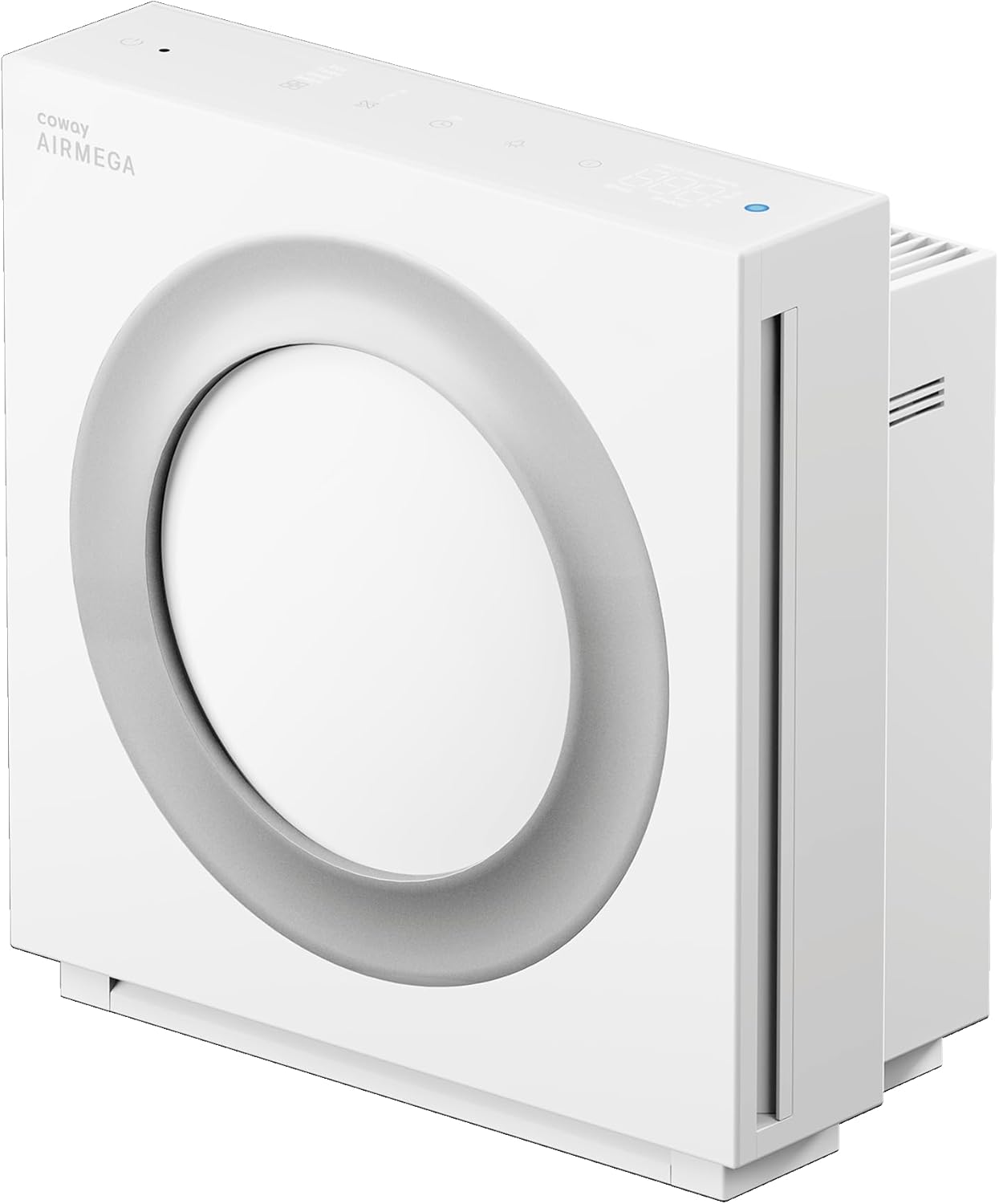
| Max coverage (1 hr) | 1,800 sq. ft. |
|---|---|
| 1‑hr coverage (half-speed) | 900 sq. ft. in 30 minutes |
| CADR (Dust/Smoke/Pollen) | 242 / 240 / 249 |
| Noise level | 19 dB – 50 dB |
| Power consumption | Up to 56 W |
The Airmega Mighty2 is a high-performance room air purifier built around a three-stage system: washable pre-filter, a combined HEPA and activated carbon Max2 filter, and a precise laser particle sensor that reads PM1/2.5/10 in real time. It is intended for continuous home use and excels in living rooms or bedrooms where fast turnover matters, capable of cleaning up to 900 sq ft in 30 minutes or 1,800 sq ft in 60 minutes. Smart Mode automates fan speed based on air quality, with Eco and Sleep modes to cut power and noise down to about 19 dB. The unit reports filter life as a percentage for both pre-filter and Max2, making maintenance predictable, and the washable pre-filter is easy to remove. Certified IEST HEPA performance and lab-backed VOC reduction make it effective against dust, mold spores, pet dander, smoke, and many gases. On the downside, replacement Max2 filters are required over time and peak power use is up to 56 W, so there is ongoing maintenance and modest energy draw compared with very small purifiers.
Best for: Buyers who prioritize fast, measurable air cleaning performance in medium to large rooms and want automated sensing and precise air-quality feedback.
Less Ideal for: People who need an ultra-compact travel or single-room nightstand purifier or who want a completely maintenance-free disposable-filter solution.
- IEST-certified HEPA filtration combined with activated carbon for particle and VOC removal
- Fast coverage: claims to clean 900 sq ft in 30 minutes and 1,800 sq ft in 60 minutes
- Accurate laser sensor with real-time PM1/2.5/10 readout and 4-color LED air quality indicator
- Whisper-quiet Sleep mode down to 19 dB and energy-saving Smart/Eco modes
- Washable pre-filter and digital filter-life readout simplify maintenance
- Requires periodic replacement of the Max2 HEPA/Carbon filter
- Not the smallest unit for tight spaces and has modest power draw at higher speeds
Verdict: Choose the Airmega Mighty2 when you want a fast, sensor-driven purifier with certified HEPA and carbon filtration that delivers measurable removal of mold spores, dust mites, and VOCs in medium to large rooms.
Afloia KILO Air Purifier
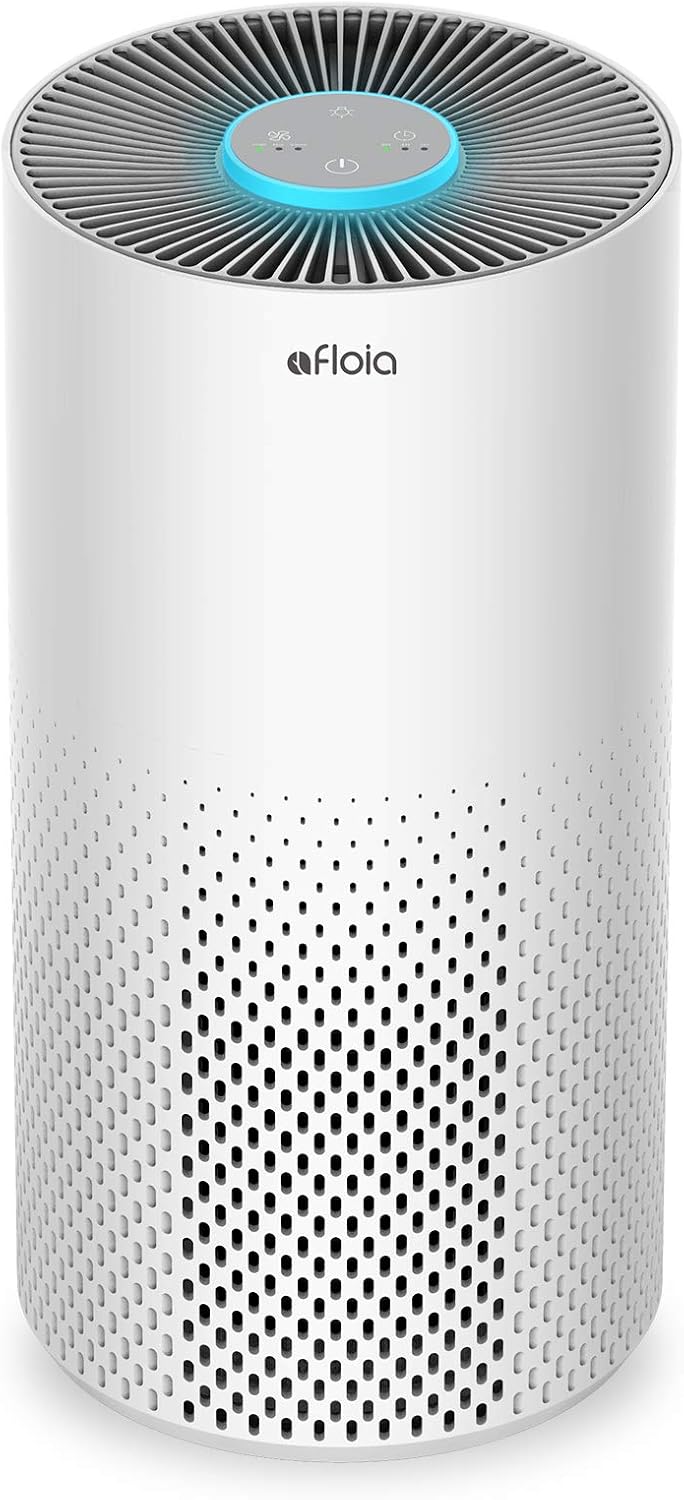
| Power Source | ac |
|---|---|
| Noise Level | 22 db |
| Particle Retention Size | 0.3 micron |
| Wattage | 23 watts |
| Contaminant Filtration Capability | Dust, Odors, Pet Dander, Pet Hair, Pollen, Wildfire Smoke |
The Afloia KILO is a compact tower purifier that uses a multi-stage filtration system—including a washable pre-filter and activated carbon—to capture dust, pet hair, odors and fine particles down to 0.3 micron. It is intended for everyday room use and offers adjustable fan speeds, 2/4/8/16-hour timers, and a 22 dB sleep mode so it can run in bedrooms without disturbing sleep. The unit also includes a color-changing night light for ambiance and a washable pre-filter that makes basic maintenance simple and cheap compared with single-use pre-filters. Practical buyers will appreciate the low 23-watt power draw and touch/button controls for straightforward operation. Limits to consider are that the listed floor area and air-change claims vary across materials and layouts, and higher pollutant loads or large open-plan spaces may need a higher-capacity unit or multiple purifiers to control mold spores and dense dust. Replacement specialized filters are available for pet or antibacterial needs and should be swapped per the recommended schedule to keep performance steady.
Best for: Buyers focused on a practical, low-maintenance purifier for bedrooms or medium rooms who want quiet operation and washable pre-filter convenience.
Less Ideal for: Homes with consistently high mold loads, large open-plan living areas, or users needing hospital-grade filtration should consider higher-capacity or medical-grade systems instead.
- Multi-stage filtration with washable pre-filter reduces visible dust and pet hair buildup
- Rated to capture particles down to 0.3 micron, suitable for common allergens and dust mite debris
- Very quiet 22 dB sleep mode for undisturbed bedroom use
- Low power consumption at 23 watts and simple touch/button controls
- Manufacturer area/air-change claims may overstate performance in large or poorly ventilated rooms
- Requires periodic replacement of specialized filters for peak allergen or antibacterial performance
Verdict: A quiet, energy-efficient bedroom and medium-room purifier with washable pre-filter that keeps upkeep simple for buyers prioritizing practical, low-maintenance air cleaning.
Purivortex PX500 Air Purifier

| Coverage Area | Up to 880 sq.ft |
|---|---|
| Filtration | Pre-filter, HEPA, Activated carbon |
| Decibel | 20db |
| Fan Modes | Sleep/Low/Med/High |
| Timer Settings | 4H/8H/12H |
The Purivortex PX500 is a compact tower purifier that pulls air through a three-layer system — pre-filter, HEPA, and activated carbon — to remove common household pollutants including dust, pollen, pet dander, and light odors. It is meant for whole-room use and the maker says it can cycle the air in an 880 sq ft space in an hour or clear a typical 215 sq ft bedroom in about 15 minutes, which makes it useful for tackling mold spores and dust-mite particles when placed in the affected room. The unit offers four fan speeds, three timer settings, and selectable night-light modes so you can run it quietly overnight; the low noise level helps in bedrooms. A taller 6-inch filter is highlighted as delivering greater airflow and longer life than smaller cartridge designs. Practical limits are typical for this class: while effective at removing particles, a purifier cannot remove existing surface mold and performance depends on placement and room ventilation. The PX500 is ETL, FCC, and CARB certified and includes a two-year warranty for added confidence.
Best for: Buyers who need an affordable, whole-room purifier that runs quietly in bedrooms and can substantially reduce airborne mold spores and dust-mite particles in living spaces.
Less Ideal for: People seeking a solution for active mold infestations, heavy chemical or industrial odors, or those who need a purifier with specialized medical-grade filtration should look elsewhere or combine this with targeted remediation.
- Three-layer filtration with HEPA and activated carbon for particles and light odors
- Rated to cycle air in rooms up to 880 sq ft, useful for larger spaces
- Quieter operation with multiple fan speeds and timer settings for overnight use
- Larger 6-inch filter design for increased airflow and potentially longer filter life
- Certifications include ETL, FCC, and CARB and comes with a two-year warranty
- Does not remove mold growth on surfaces and effectiveness depends on room layout and ventilation
- Activated carbon is for light household odors and may not absorb heavy chemical smells fully
Verdict: A budget-friendly, room-scale HEPA purifier that runs quietly and can rapidly reduce airborne mold spores and dust mites in typical bedrooms and living rooms.
Levoit Core 300-P

| Filter Type | 3 in 1 Filtration |
|---|---|
| Noise Level | 24 db |
| Wattage | 56 watts |
| Particle Retention Size | 0.3 micron |
| Floor Area | 1073 square_feet |
The Levoit Core 300-P is a small, reliable HEPA air purifier meant for bedrooms and living spaces where you need steady removal of fine particles and allergens. It uses a 3-in-1 filtration system with a HEPA-grade original filter that captures 99.97% of particles down to 0.1 to 0.3 microns, and a 56W motor that produces a CADR sufficient to refresh a 222 ft² room multiple times per hour. Practical features include touch controls, a Sleep Mode that drops noise to about 24 dB, a timer, and a display lights-off option for overnight use. The unit is AHAM verified and meets CARB and ETL standards, which supports consistent, tested performance. Limitations include manual fan-speed control on this model (no Auto Mode) and the recommendation to use factory replacement filters for best results, which adds ongoing filter costs. Its compact footprint makes it easy to move between rooms but also means it is best suited to single-room cleaning rather than whole-house coverage.
Best for: Buyers who prioritize dependable, tested filtration for bedrooms or single rooms and want a quiet, easy-to-use unit that consistently removes mold spores, dust mite allergens, smoke, and pet dander.
Less Ideal for: People who need whole-house coverage or automatic, sensor-driven speed adjustments should consider larger or smart-enabled models instead.
- True HEPA-grade 3-in-1 filter captures 99.97% of 0.1–0.3 μm particles
- AHAM verified CADR with effective coverage for typical bedrooms and living rooms
- Very quiet Sleep Mode at approximately 24 dB for undisturbed night use
- Certified to CARB and ETL standards, supporting safe home operation
- No Auto Mode on this model so fan speed must be adjusted manually
- Requires official replacement filters for optimal performance, adding ongoing cost
Verdict: A compact, AHAM-verified HEPA purifier that reliably removes fine particles and allergens from single rooms with very quiet night operation.
Levoit Vital 100 Air Purifier

| CADR | 105 CFM |
|---|---|
| Coverage | Cleans up to 788 sq ft/hr |
| Noise level | As low as 24 dB |
| Filtration | 3-stage (washable pre-filter, particle filter, activated carbon) |
The Levoit Vital 100 is a compact bedroom and small-room air purifier that uses a three-stage filtration system — washable pre-filter, efficient particle filter, and activated carbon — to capture hair, dust, pollen, odors, and some VOCs. It is typically placed near sleeping or living areas and runs quietly enough for night use with reported noise as low as 24 dB and an option to dim or turn off display lights. Practical features include a timer (2/4/8 hours), a carry handle for moving between rooms, and a check-filter indicator that simplifies maintenance. Its AHAM-verified 105 CFM CADR rating and claim to clean a room up to 788 sq ft once per hour mean it can cycle air quickly in small to medium spaces, which helps reduce dust-mite and mold-spore circulation when used continuously. Limitations are that filter performance depends on replacing genuine Levoit filters and the unit's compact footprint means peak performance is best in single rooms rather than whole-house applications.
Best for: Buyers who value proven performance and heavy customer feedback and want a quiet, easy-to-use purifier for bedrooms or living rooms to reduce dust, allergens, and odors.
Less Ideal for: Households needing whole-home air cleaning or very large open-plan spaces should consider higher-capacity systems instead.
- Three-stage filtration (washable pre-filter, particle filter, activated carbon) addresses dust, pollen, pet hair, and odors
- AHAM-verified 105 CFM CADR and stated coverage up to 788 sq ft per hour for effective single-room air changes
- Very quiet operation down to 24 dB suitable for nighttime use
- Simple controls with 2/4/8 hour timer and a filter check indicator for easy maintenance
- Best used in individual rooms rather than whole-house cleaning due to compact size
- Requires genuine Levoit replacement filters for reliable performance
Verdict: A quiet, AHAM-verified compact purifier with three-stage filtration that is a reliable choice for improving bedroom and small-room air to reduce dust mites and mold spores.
VOOPNU HEPA Air Purifier DH-JH12

| Coverage | Up to 1,076 ft² |
|---|---|
| Filter Type | H13 True HEPA multi-layer |
| Noise Level | As low as 22 dB |
| Speeds | 3 fan speeds |
| Certifications | DOE, ETL, FCC, CARB, CE, RoHS |
The VOOPNU DH-JH12 is a small, easy-to-use air purifier that uses a 360 degree intake and an H13 true HEPA multi-layer filter to capture fine particles, pet dander, pollen, and other common allergens. Setup is plug-and-play with a simple control panel, three fan speeds, a timer, and an essential oil tray for light scenting. Laboratory claims show it can clean 250 sq ft in about 15 minutes, which the manufacturer scales to a coverage figure near 1,076 sq ft; that makes it suitable for medium to large rooms when run continuously. It runs quietly down to roughly 22 dB on low, so it can operate overnight without disturbing sleep. The unit is DOE, ETL, FCC, CARB, CE, and RoHS certified, which supports consistent performance and safety standards. Practical limits include a compact physical footprint that implies a smaller filter and likely more frequent replacements if used heavily, and manufacturer coverage is based on optimal conditions so real-world performance will depend on room layout and pollutant sources. For those prioritizing straightforward operation and certified HEPA filtration, this model is a low-risk choice.
Best for: Buyers who want a straightforward, certified HEPA purifier they can set and forget to reduce mold spores and dust-mite allergens in living rooms or bedrooms without fuss or complex controls.
Less Ideal for: People who need whole-house HVAC integration or truly continuous very-high-volume cleaning for industrial or heavily contaminated spaces should consider higher-capacity systems.
- H13 true HEPA multi-layer filter captures 99.97% of fine particles including dust and pollen
- 360° air intake design promotes even room circulation
- Quiet operation down to about 22 dB suitable for bedroom use
- Simple one-touch controls and timer make it easy to operate
- Multiple safety and performance certifications (DOE, ETL, FCC, CARB, CE, RoHS)
- Compact footprint suggests a smaller disposable filter that may need replacing more often with heavy use
- Coverage claims are lab-based and actual clean times vary with room layout and pollutant load
Verdict: A compact, certified H13 HEPA purifier that offers quiet, easy operation and reliable particulate removal for risk-averse buyers targeting mold and dust-mite reduction in rooms.
Choosing the Right Air Purifier for Mold and Dust Mites: Key Factors to Consider
Filtration Type and Particle Capture
High-quality particle filtration is the primary defense against mold spores and dust mite fragments. True HEPA filters capture at least 99.97% of particles down to 0.3 microns, which addresses most spores and mite allergens. Some modern filters also claim improved capture at smaller particle sizes; check for independent or standardized testing where possible.
Beyond HEPA, look for multi-stage systems that include a washable pre-filter to trap large debris and an activated carbon layer to reduce odors. If antimicrobial or antifungal-treated filter elements are advertised, prefer products with safety documentation and no ozone output to avoid introducing new indoor air contaminants.
Clean Air Delivery Rate and Room Size
A purifier's CADR or specified room coverage determines how effectively it can reduce airborne particles in a given space. Choose a model with a CADR appropriate for the square footage and layout of the room where you plan to use it, and consider units that can cycle the air multiple times per hour for allergy relief.
For bedrooms and living rooms, target a purifier that can handle the actual floor area plus some margin if the space has high ceilings or open connections to other rooms. Running a unit rated for slightly larger rooms at moderate speed often produces better real-world results than an undersized unit operating at maximum fan speed.
Noise Levels and Continuous Operation
People with allergies often need a purifier running for many hours or overnight, so noise matters. Manufacturers may publish decibel ratings at different fan speeds; compare quiet-night modes and real-world user reports to judge sleep-friendly performance.
Also consider whether the unit has automatic modes that adjust fan speed based on detected particle levels. Energy-efficient motors and low-power standby modes reduce operating cost for continuous use. If you plan to run the purifier 24/7 in a bedroom, prioritize models with verified low-noise performance at effective filtration speeds.
Maintenance, Filter Life, and Cost of Upkeep
Filter replacement frequency and ease of access directly affect long-term value and consistent protection. Check published filter lifespans and whether pre-filters are washable or reusable to reduce consumable costs. Clear filter-change indicators and simple access panels make timely maintenance more likely.
Consider the availability and typical lead time for replacement filters. Some filters include antimicrobial treatments that claim longer life, but real-world replacement schedules depend on local air quality, mold exposure, and how often the unit runs. Budget for periodic filter replacement when comparing options.
Special Features and Monitoring
Extra features can improve usability and targeted performance. Particle sensors and air-quality displays let you see when the purifier is working hardest, and auto modes adjust output to conserve energy. Timers, scheduling, and smart-home connectivity are useful but secondary to basic filtration performance.
Avoid relying on features like unverified ionization or ozone generation. Useful extras include washable pre-filters, child locks, and portable handles for moving the unit between rooms. Consider models with certified or third-party indoor air quality indicators if you want objective feedback on performance.
Why Mold Spores and Dust Mites Require Different Approaches
Mold spores are biological particles that can vary widely in size and often thrive in damp environments, while dust mite allergens are primarily microscopic fragments and fecal particles bound to larger dust. An effective indoor strategy combines humidity control and targeted filtration to reduce airborne counts and limit reintroduction from surfaces.
Filtration addresses the airborne component by capturing spores and fragments before they circulate. However, persistent or visible mold growth must be remediated at the source, and mite populations are best controlled through regular cleaning of soft furnishings and reducing indoor humidity.
- Use filtration for airborne particles; source control for established mold growth
- Lower relative humidity to slow mold and mite proliferation
- Combine purifier use with cleaning protocols for fabrics and vents
Placement and Room Layout Tips
Placement affects performance more than many buyers expect. Position a purifier away from walls and obstructions so the intake and outflow are unobstructed, and place it closer to the problem area rather than hidden in a corner. In open-plan spaces, a single unit may not be sufficient; consider multiple units sized to each zone.
For bedrooms, place the purifier near the head of the bed on the floor or a low table so it treats the breathing zone effectively. Avoid placing units near windows or doors that remain frequently open, as incoming outdoor particles can reduce net indoor benefit.
- Keep at least several inches clearance around intake and exhaust
- Place units near allergen sources for targeted reduction
- Use separate units for distinct zones in large or open layouts
Maintaining Low Indoor Humidity
Mold and dust mites thrive when humidity is elevated. Maintaining indoor relative humidity between about 30 and 50 percent reduces conditions that favor growth. Use dehumidifiers in damp basements and bathrooms, and run exhaust fans during showers and cooking to keep moisture levels down.
An air purifier does not remove moisture, so coordinating filtration with humidity control delivers the best results. Monitor humidity with a simple hygrometer and address persistent condensate or leaks that sustain mold reservoirs.
- Aim for 30 to 50 percent relative humidity
- Use dehumidification in basements and problem rooms
- Repair leaks and improve ventilation to prevent regrowth
When to Run Your Purifier and Recommended Settings
For allergy relief, continuous operation at a moderate fan speed often provides steadier particle reduction than intermittent high-speed bursts. Use higher speeds during cleaning or known high-exposure periods, and switch to a quieter setting overnight if noise is a concern.
Enable automatic modes if available; these adjust output based on detected particles and can improve energy efficiency while maintaining air quality. If your space experiences seasonal mold spikes, increase run time and consider more frequent filter checks during those periods.
- Run continuously at moderate speed for consistent reduction
- Use high speed during active cleaning or high exposure
- Enable auto modes to balance air quality and energy use
Safe Use Notes: Ozone and Ionizers
Avoid devices that produce ozone as a primary cleaning mechanism. Ozone can irritate airways and is not a recommended method for removing mold spores or mite allergens. If a unit includes ionization, verify third-party testing and ensure ozone emissions are within safe, negligible limits.
When in doubt, choose a purifier that emphasizes mechanical filtration and provides clear specifications for particle capture. Mechanical systems are effective without introducing additional airborne chemicals.
- Prefer mechanical filtration over ozone-based approaches
- Check for independent tests if ionization is present
- Look for clear, documented filtration specifications
How We Chose the Best Air Purifier for Mold and Dust Mites
We selected units that target airborne biological particles and small allergen particles with measurable filtration capabilities. Our evaluation prioritized true HEPA or equivalent filtration performance, certified or third-party test results for particle capture, and multi-stage systems that include pre-filters and optional antimicrobial or activated-carbon stages. We also weighed clean air delivery rate relative to room size, energy and noise performance for continuous operation, and ease of filter replacement and maintenance. Excluded from consideration were units that rely solely on ozone generation, unverified ionizers without independent testing, or products lacking clear filtration specifications. We favored devices with clear CADR or equivalent ratings, explicit particle-size capture data, and practical features like programmable run modes and accessible filter-change indicators. Durability, warranty terms, and typical filter lifespans also influenced selection to help buyers minimize long-term upkeep.
Our full evaluation process is outlined in our review methodology.
FAQ
Can an air purifier get rid of existing mold in my home?
An air purifier can reduce airborne mold spores but will not remove mold growing on surfaces. Visible or persistent mold requires source remediation, drying, and cleaning of affected materials in addition to filtration to prevent recontamination.
How often should I change filters when targeting dust mites and mold?
Filter-replacement intervals depend on runtime and local conditions, but expect to check filters every 3 to 12 months. Pre-filters that are washable extend main filter life; inspect filters more often in high-dust or high-spore environments and replace when clogging reduces airflow.
Is a HEPA filter enough to control mold spores?
True HEPA filtration captures the majority of airborne spores and mite fragments, making it a strong foundation. For odors or volatile organic compounds associated with mold, an activated carbon stage can help, but the underlying source must still be addressed.
Will running a purifier all night hurt indoor humidity or comfort?
Air purifiers do not affect humidity, so overnight use does not dry the air. Running a purifier continuously can slightly alter perceived airflow or temperature but is generally safe. Choose a quiet mode for night operation if noise is a concern.
Do purifiers with antimicrobial-treated filters prevent mold regrowth?
Antimicrobial treatments can inhibit microbial growth on filter media, but they do not prevent mold on household surfaces. These treatments may extend filter life in damp environments but should not replace proper moisture control and cleaning.
Final Verdict
Prioritize filtration performance and room coverage when choosing an air purifier for mold spores and dust mite allergens. Ensure the unit has true HEPA or equivalent capture, a CADR appropriate for the space, and practical features that support continuous, low-noise operation. Balance filtration with humidity control and cleaning to address sources of mold and mite reservoirs. Focus on long-term maintenance needs and verified filtration data so you can select a unit that reduces airborne allergens reliably without introducing new concerns.