
Note: This article contains affiliate links. If you click on these links and make a purchase, we may earn a small commission at no extra cost to you. This helps support our research and content. Read our full affiliate disclosure here.
A damp, poorly ventilated basement is a common place for mold growth and lingering musty odors. Choosing the right air purifier for mold in basement spaces matters because not all units capture fine mold spores or move enough air to cover finished or unfinished lower-level rooms. The right unit can reduce airborne spores, cut down settled dust, and help control odors while you address the moisture source. This guide shortlists the top seven air purifiers suited to basements, focusing on filtration efficiency, room coverage, and practical features that matter in lower-level environments. Below you will find the criteria used to evaluate each unit and concise, actionable guidance to help you pick the best fit for your basement layout and conditions.
Top Picks at a Glance
| Best Overall The best all-around choice for most situations | COWAY Airmega Mighty2 AP-1512N |  |
| Best Quality Built to a higher standard if you want something more solid | AIRDOCTOR AD4000 Air Purifier |  |
| Best Value The sweet spot between price and what you get | PuroAir 240 HEPA Air Purifier |  |
| Best Budget The cheapest option that still gets the job done reliably | VOOPNU DH-JH12 Air Purifier |  |
| Top Rated A top-rated pick with lots of positive feedback | Levoit Core 300-P Air Purifier |  |
| Most Popular A crowd favorite that many people choose with confidence | Levoit Vital 100 Air Purifier |  |
| Best Seller A high-volume bestseller chosen again and again | Winix 5510 Air Purifier |  |
COWAY Airmega Mighty2 AP-1512N
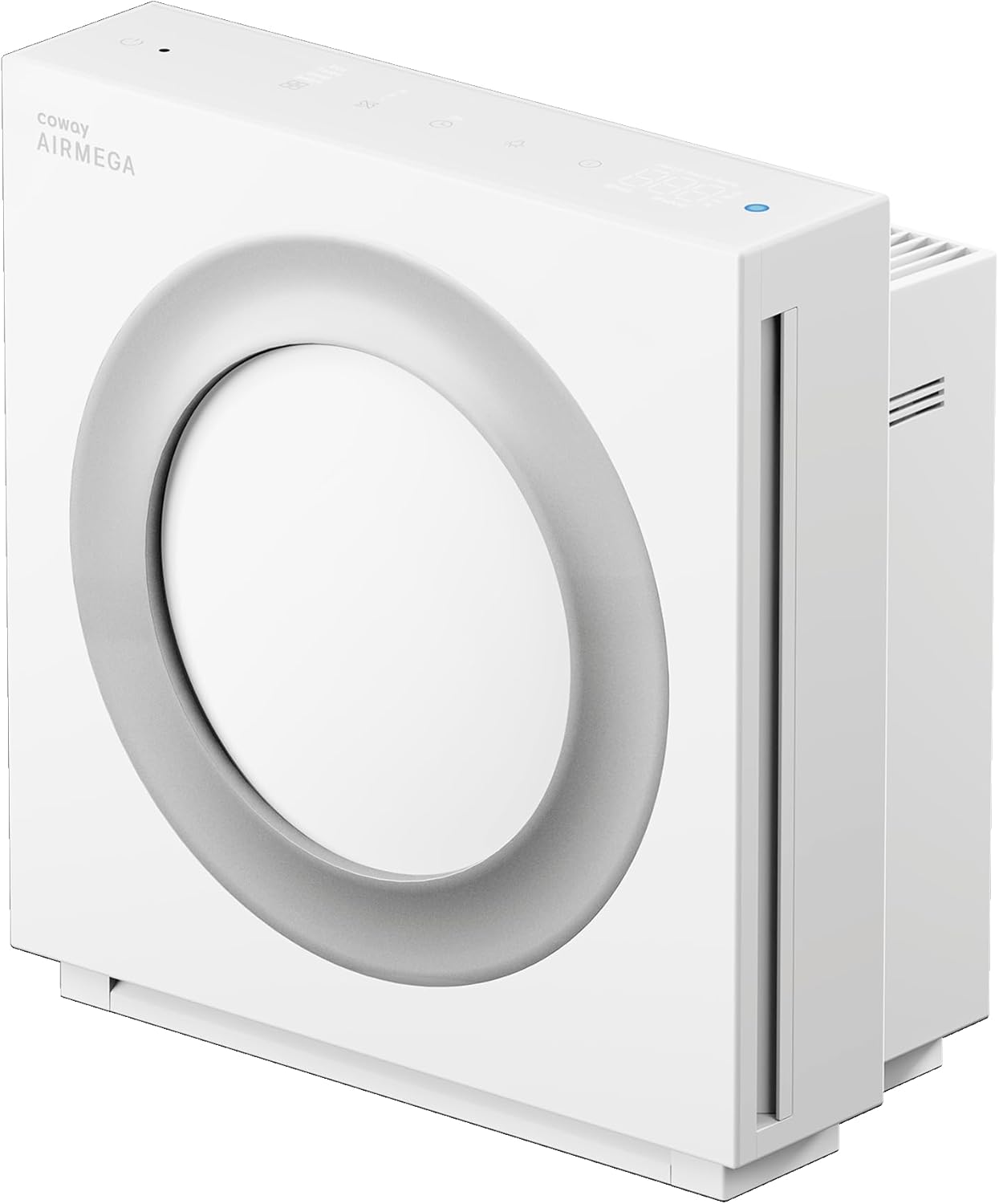
| Max coverage (60 min) | 1,800 sq ft |
|---|---|
| CADR (Smoke/Dust/Pollen) | 240 / 242 / 249 |
| HEPA effectiveness | 99.97% of 0.3 μm particles |
| Noise level | 19 dB – 50 dB |
| Power consumption | 56 W |
The Coway Airmega Mighty2 (AP-1512N) is a room air purifier built to remove particles, odors, and certain gases in larger spaces using a three-stage system: a washable pre-filter, a combined HEPA and activated carbon Max2 filter, and a laser particle sensor for real-time monitoring. It is typically used in living areas, basements, or bedrooms where quick turnover matters — Coway rates it to clean up to 1,800 sq ft in 60 minutes with CADR values focused on smoke, dust, and pollen. Practical features include a smart mode that auto-adjusts fan speed, an LED air-quality display with PM1/2.5/10 readings, an energy‑saving eco mode, and a sleep mode that can reach 19 dB for quiet nighttime operation. The washable pre-filter and digital filter-life readout make maintenance straightforward, and the Max2 filter also targets VOCs and formaldehyde in lab tests. Limitations are typical for single-room purifiers: performance depends on placement and room airflow, and the chemical reduction claims are based on lab conditions so real-world removal of mold spores and gases will vary with concentration and ventilation.
Best for: Buyers who want a reliable, quiet purifier that reduces airborne particles and common indoor gases across larger single rooms or finished basements and value easy maintenance and smart auto modes.
Less Ideal for: Do not choose this if you need whole‑house coverage, continuous commercial dehumidification, or specialized industrial mold remediation solutions.
- IEST‑certified HEPA filtration capturing 99.97% of 0.3 μm particles
- Combined activated carbon filter that targets VOCs, odors, and certain gases
- High CADR and coverage for rapid cleaning of larger rooms
- Accurate laser sensor with real‑time PM1/2.5/10 readout and 4‑color LED indicator
- Washable pre‑filter and digital filter‑life indicator simplify maintenance
- Lab tests for VOC and gas reduction may not reflect every real-world environment
- Single‑room unit effectiveness depends on correct placement and room airflow
Verdict: For a finished basement that needs fast particle removal and VOC reduction in a single large room, the Mighty2 offers high CADR, certified HEPA performance, and quiet smart operation.
AIRDOCTOR AD4000 Air Purifier

| Model | AD4000 |
|---|---|
| Coverage | Up to 2,776 ft2 (1 hour) / 694 ft2 (15 minutes) |
| Filtration | Pre-filter + Premium Activated Carbon + UltraHEPA (0.003 microns) |
| Fan speeds | 6 speeds + Auto Mode + Boost |
The AIRDOCTOR AD4000 is a high-performance air purifier built for large spaces and basements where mold spores, smoke, and odors are a concern. It uses a three-stage system with a pre-filter, premium activated carbon/VOC filter, and a hospital-grade UltraHEPA element rated to capture 99.99% of particles down to 0.003 microns, which targets microscopic mold spores and airborne fragments. Real-time PM2.5 sensing and an Auto Mode adjust fan speed and trigger Boost when pollution rises, while six manual fan speeds and a timer give control over cleaning intensity and runtime. The carbon/VOC stage helps reduce musty basement smells and chemical odors from paints or cleaners. Practical strengths include thorough coverage—manufacturer-stated CADR supports rapid cleaning of hundreds of square feet in minutes—and user-friendly filter access for replacement. Trade-offs are its large footprint and weight compared with bedroom-sized units and the need to replace the integrated filter approximately every six months for best performance. Noise remains low on lower speeds but will increase when Boost runs in heavy contamination events.
Best for: Buyers who prioritize proven, high-efficiency particulate removal and fast coverage for large basements or shared spaces where mold spores, smoke, and VOCs are recurring problems.
Less Ideal for: People wanting a compact, lightweight bedroom or travel purifier or those seeking the lowest upfront cost for occasional small-room use should consider smaller models instead.
- UltraHEPA filtration rated to capture particles down to 0.003 microns for strong removal of mold spores and fine particulates
- Premium activated carbon/VOC filter targets odors, smoke, and chemical gases common in basements
- Real-time PM2.5 sensor with Auto Mode and Boost provides responsive increased airflow during pollution events
- Designed for large rooms and basements with stated coverage up to 2,776 sq ft and fast clean times
- User-accessible filter design simplifies replacement and maintenance
- Large physical footprint and weight make it less suited for small rooms or tight basement corners
- Integrated all-in-one filter requires periodic full replacement rather than swapping individual layers
Verdict: If you need a high-capacity, science-backed purifier that quickly reduces mold spores, odors, and fine particles across a large basement, the AIRDOCTOR AD4000 is a performance-focused choice.
PuroAir 240 HEPA Air Purifier

| Coverage | 1,000 sq ft |
|---|---|
| Filter | 3-layer HEPA + CarbonTech |
| Modes | Auto, Sleep, Multiple fan speeds |
| Certifications | CARB, ETL, ISO, UL |
The PuroAir 240 is a tall, room-scale purifier built to clean airborne particles and odors across roughly 1,000 sq ft using a three-layer HEPA plus CarbonTech filter and variable fan speeds. It is typically used in living rooms, bedrooms, or basements to capture dust, pollen, pet dander, smoke and common household odors while running quietly in sleep mode. The unit includes an auto mode driven by an air quality sensor so fan speed adjusts automatically as particle levels change, and the carbon layer helps reduce smells and VOCs that often accompany damp, musty spaces. Practical benefits include long-lasting filter design and multiple speed settings for balancing performance versus noise. Trade-offs are its physical height for tight ceiling basements and the ongoing cost and hassle of replacement filters to maintain peak performance; there is no mention of built-in dehumidification, so it cannot address moisture that drives mold growth directly.
Best for: Buyers who want an automated, high-coverage air purifier that focuses on particle and odor removal and prefer a set-and-forget device for larger rooms or finished basements.
Less Ideal for: People whose primary basement problem is high humidity or active mold growth needing moisture control or specialized mold remediation should look at dehumidifiers or professional services instead.
- HEPA plus activated carbon CarbonTech filter removes particles and reduces odors and VOCs.
- Auto mode with air quality sensor adjusts fan speed based on detected pollution levels.
- Quiet sleep mode suitable for overnight operation.
- Designed for large rooms up to about 1,000 sq ft, covering basements and main living areas.
- Does not include a dehumidifier function to reduce basement moisture that causes mold.
- Tall tower form may be awkward in low-clearance or very cramped basement spaces.
Verdict: Choose the PuroAir 240 when you need an automated, large-room HEPA-plus-carbon purifier to reduce particles and odors in finished basements where air cleaning, not dehumidification, is the priority.
VOOPNU DH-JH12 Air Purifier

| Model number | DH-JH12 |
|---|---|
| Coverage (tested) | 250 ft² per 15 minutes / 1,076 ft² per hour |
| Filter type | H13 True HEPA triple-layer |
| Noise level | 22 dB (low) |
The VOOPNU DH-JH12 is a compact air purifier built around an H13 true HEPA triple-layer filter and 360° intake to capture airborne particles such as dust, pollen, pet dander, and smoke. It is typically used as a plug-in room unit on a desk, shelf, or corner and is intended for continuous operation; manufacturer testing cites cleaning 250 ft² every 15 minutes and coverage up to 1,076 ft² per hour. Controls are simple and user-friendly, with three fan speeds, a timer, and a small essential oil tray for light scenting. Noise can be very low on the lowest fan setting, which makes it unobtrusive for overnight use. The purifier is certified to multiple safety and energy standards. Important limitations: the unit is physically small and best for spot treatment or single-zone use, and relying on it for persistent mold problems requires pairing with moisture control and ventilation since filters remove spores in the air but do not address the underlying dampness that feeds mold growth. Filter replacement intervals are indicated at a few months depending on use, which adds ongoing operating cost.
Best for: Homeowners on a tight budget who need an affordable, easy-to-use purifier to reduce airborne mold spores and particulates in a single basement room or a focused zone.
Less Ideal for: People seeking a combined dehumidifier/air treatment solution or whole-basement coverage should consider larger-capacity units or adding moisture control before relying on this purifier alone.
- H13 true HEPA filtration captures 99.97% of fine airborne particles.
- Compact footprint that fits on a desk, shelf, or corner for flexible placement.
- Very quiet low-speed operation suitable for bedrooms or overnight runs.
- 360-degree intake and lab-tested coverage rate for effective single-room air turnover.
- Simple controls and a built-in essential oil tray for light scenting.
- Small, single-zone unit that cannot replace whole-house ventilation or dehumidification.
- Filter replacements are recommended every few months, creating recurring costs.
Verdict: If you need a budget-friendly, quiet HEPA purifier to reduce airborne mold spores in a single basement room, the VOOPNU DH-JH12 delivers effective filtration in a compact package.
Levoit Core 300-P Air Purifier

| Power Source | Corded Electric |
|---|---|
| Filter Type | 3 in 1 Filtration |
| Noise Level | 24 db |
| Wattage | 56 watts |
| Particle Retention Size | 0.3 micron |
The Levoit Core 300-P is a small, quiet HEPA air purifier built to capture fine particles and reduce common indoor contaminants in rooms and basements with moderate airflow needs. It uses a three-stage original filter (pre-filter, true HEPA-grade layer, and activated carbon) driven by a 56W motor to deliver substantial CADR numbers for smoke, dust, and pollen, and the unit is AHAM verified and ETL listed for safety. Typical use is simple: place it in the space, run one of the manual fan speeds, and set the timer or sleep mode to keep noise low at night; the display can be turned off to avoid light while sleeping. The practical benefits are strong particle capture down to 0.1 to 0.3 microns, portable footprint, and low sleep-mode noise around 24 dB, which makes it unobtrusive in living areas or finished basements. Limitations include the lack of an automatic sensing/auto mode on this Core 300-P variant, and its air delivery is sized for single rooms rather than whole basements with heavy mold or moisture sources, so multiple units or source remediation may be required for larger damp spaces.
Best for: Homeowners who prioritize a reliable, independently tested purifier that quietly removes fine particles and odors in individual rooms or finished basement areas.
Less Ideal for: People seeking an automatic, sensor-driven purifier or a single unit to handle large, moisture-prone basements without addressing the source of mold and dampness.
- True HEPA-grade filtration down to 0.1–0.3 microns for effective capture of mold spores and fine particulates
- Included 3-stage original filter with activated carbon to reduce odors and VOCs
- AHAM verified and ETL listed, providing third-party performance and safety validation
- Quiet Sleep Mode (around 24 dB) and a display-off option for undisturbed nighttime use
- No built-in air quality sensor or automatic fan speed control on this model
- Designed for single-room coverage; may not be sufficient alone for large or actively damp basements
Verdict: Choose the Core 300-P when you want a compact, third-party verified HEPA purifier that reliably captures fine particles and reduces odors in single rooms or finished basements.
Levoit Vital 100 Air Purifier

| CADR | 105 CFM |
|---|---|
| Coverage | 788 ft² per hour |
| Filtration stages | 3-stage (pre-filter, efficient filter, activated carbon) |
| Noise level | As low as 24 dB |
The Levoit Vital 100 uses a three-stage filtration system — washable pre-filter, HEPA-style efficient filter, and activated carbon layer — to reduce dust, pollen, pet hair, odors, and fine particles in everyday rooms. It is typically placed in bedrooms, living rooms, or basements where airborne particulates and musty smells are a concern; the handle and compact footprint make moving it between spaces easy. Notable features include a 105 CFM CADR rating, AHAM verification for performance, a low-noise sleep mode down to about 24 dB, and a timer with 2/4/8 hour settings. In practical use the washable pre-filter catches hair and large debris so the main filter lasts longer, while the carbon layer helps control mold-related odors and VOCs. Limitations are its modest coverage when you need continuous heavy-duty remediation in large damp basements and the need to use Levoit genuine filters to maintain verified performance and avoid potential damage from off-brand parts.
Best for: Buyers who prioritize proven, well-reviewed air cleaners that quietly reduce airborne particles and odors in smaller rooms or moderately sized basements and who prefer products with strong social proof.
Less Ideal for: Homes with extensive mold growth, persistent high humidity, or very large basement spaces that require industrial dehumidification or whole-house remediation.
- Three-stage filtration (washable pre-filter, efficient filter, activated carbon) targets particles and odors
- AHAM-verified performance with a 105 CFM CADR for reliable air cleaning
- Very quiet operation down to about 24 dB suitable for night use
- Compact, portable design with rear handle makes it easy to move between rooms
- Not intended as a standalone solution for heavy mold infestations in large, damp basements
- Requires genuine Levoit replacement filters to preserve verified performance
Verdict: A compact, AHAM-verified purifier that quietly reduces particles and mold-related odors in small to medium basement areas when paired with proper moisture control.
Winix 5510 Air Purifier

| Filtration stages | 4-Stage |
|---|---|
| Particle capture | 0.01 microns (True HEPA) |
| App compatibility | Winix Smart App |
| Noise (lowest speed) | 23.5 dB |
| Certification | AHAM Verified, UL Certified |
The Winix 5510 is a four-stage air purifier built for whole-room cleaning with a True HEPA filter that captures very small particles and an advanced carbon filter for odors and VOCs. It runs in Auto Mode using built-in air quality sensors and an LED indicator so the unit raises or lowers fan speed as conditions change, and Sleep Mode reduces noise automatically when the room is dark. The washable fine mesh pre-filter handles large particles and helps extend the life of the HEPA element, while PlasmaWave technology adds an extra layer intended to reduce airborne pollutants. The unit is AHAM verified for room coverage and is compatible with the Winix Smart App for remote monitoring and controls. For damp spaces like basements where mold spores and musty odors are a concern, the True HEPA plus carbon combination and continuous auto monitoring are useful, but the purifier does not replace source remediation for active mold growth and will need periodic filter changes and occasional cleaning of the pre-filter to maintain performance.
Best for: Buyers who want a dependable, easy-to-use purifier that actively monitors air quality and reduces airborne spores and odors in larger basement or living spaces while minimizing daily fuss.
Less Ideal for: Homes with ongoing moisture or structural mold problems that need professional remediation or dehumidification as the primary solution.
- True HEPA filtration capturing particles down to 0.01 microns for fine particulates and spores
- Advanced carbon filter reduces household odors and some VOCs common in basements
- Smart sensors with Auto Mode and LED air quality indicator for hands-off operation
- Washable pre-filter that traps larger debris and is easy to clean
- Winix Smart App and voice assistant compatibility for remote control and monitoring
- Not a substitute for fixing active mold or moisture sources
- Requires periodic replacement of HEPA and carbon filters to retain effectiveness
Verdict: A reliable, sensor-driven HEPA purifier with odor control and smart features that is well suited to reducing spores and musty smells in large basement spaces when moisture is already managed.
Choosing the Right Air Purifier for Mold in Basement: Key Factors to Consider
Filtration Stage and Efficiency
Basement mold spores are often small enough to remain airborne for long periods, so filter media matters. A true HEPA stage or an equivalent high-efficiency particulate filter captures 99.97 percent of particles down to 0.3 microns and is most effective against mold spores and many allergenic particles.
Multiple filtration stages are useful: a washable prefilter traps larger debris and extends main filter life, while a high-efficiency particulate stage captures spores. Some units also add specialized antimicrobial coatings or UV stages; these can complement filtration but should not substitute for proper particle capture.
Airflow and Room Coverage
Air changes per hour and CADR-like metrics determine whether an air purifier can effectively cycle the air in a basement. Larger basements or open-plan lower levels require higher airflow to achieve several air changes per hour, which reduces airborne spore concentration more quickly.
Consider measured coverage at different fan speeds and whether the unit can sustain higher airflow without excessive noise. Proper placement within the basement and avoiding blocked intakes will maximize the effective coverage reported by manufacturers.
Odor and VOC Removal
Basements often carry musty smells from damp materials or off-gassing from stored items. A dedicated adsorbent stage, typically activated carbon or another high-surface-area media, captures many odor-causing molecules and some volatile organic compounds.
The amount and quality of carbon matter. Thin carbon layers will saturate quickly in odor-prone environments, so choose units with substantial carbon capacity or replaceable large-surface cartridges to maintain effectiveness over time.
Humidity Tolerance and Durability
Basements tend to be more humid and can expose equipment to moisture. Materials and construction that resist corrosion or moisture damage extend a purifier's useful life. Look for sealed filter housings and coatings on internal components when possible.
High humidity can also affect filtration performance and promote microbial growth on filters. Regular maintenance, timely filter changes, and using prefilters help mitigate these risks and keep the unit functioning reliably.
Noise and Variable Fan Control
To run effectively, basement purifiers often need higher fan speeds that produce more noise. Units with multiple speed settings, quiet high-efficiency motors, or sleep modes let you balance performance and comfort based on use—daytime cleaning versus nighttime low-noise operation.
Check manufacturer noise ratings at different speeds and consider where the purifier will run most often. If the basement is used as a bedroom or media room, prioritize lower noise at effective airflow settings.
Maintenance, Filter Availability, and Cost of Ownership
Effective long-term performance depends on regular filter replacement and maintenance. Filters that are easy to access and replace reduce the chance of deferred maintenance, which can degrade filtration and increase microbial growth on old filters.
Also consider filter lifespan and availability. Frequently replaced or uncommon filter sizes increase running costs and downtime. Some purifiers use washable prefilters to cut consumable costs and improve total ownership.
Sizing Your Purifier to Basement Layout
Basement geometries vary from small utility rooms to wide open finished areas. Start by calculating the square footage and ceiling height to estimate volume. Aim for a unit that can deliver at least two to four air changes per hour in working conditions for mold control; higher rates speed up removal of airborne spores after disturbances.
Consider multiple smaller units for very large or zoned basements rather than one oversized unit. Multiple units can create circulation in dead spots and limit the distance air must travel to reach a purifier inlet.
- Measure floor area and ceiling height to get room volume.
- Match purifier rated coverage on higher fan speeds to your target air changes.
- Use more than one unit for compartmentalized basements.
Placement and Installation Tips
Place the purifier where it can draw air from the main living area of the basement and not directly against walls or under low shelving that blocks airflow. Elevation off the floor by a few inches can help capture air that circulates slightly higher, while keeping it away from direct moisture sources.
Avoid placing purifiers inside closets, behind furniture, or very close to humidifiers or water sources. Ensure power access and leave clearance per the manufacturer's instructions for unrestricted intake and exhaust.
- Keep inlet and outlet clear of obstructions by several inches.
- Avoid direct proximity to dehumidifiers, sump pumps, or wet walls.
- Consider short test runs in multiple locations to identify the most effective spot.
Managing Mold Sources Alongside Purification
An air purifier reduces airborne spores but does not fix the underlying moisture problem that allows mold to grow. Pair purifier use with targeted moisture control: identify leaks, improve drainage, and use a dehumidifier if relative humidity is consistently above 50 percent.
Clean visible mold according to safety guidelines and replace water-damaged materials when necessary. Treat purifiers as part of a multi-pronged approach: they reduce airborne exposure during cleanup and help control re-aerosolization of settled spores.
- Address leaks and water intrusion first.
- Use dehumidification to lower humidity below 50 percent.
- Combine cleaning, repairs, and purifier use for best results.
Operating Strategies for Continuous Mold Control
Run purifiers continuously at a moderate to high fan setting during and after any activity that disturbs dust or mold, such as renovation, cleaning, or moving boxes. Continuous operation prevents spikes in airborne spore counts and lowers steady-state concentrations.
For nighttime or noise-sensitive periods, set the purifier to a lower fan speed but increase runtime. If units have programmable timers or air-quality-triggered modes, use them to increase airflow automatically when particle levels rise.
- Maintain continuous operation during and after disturbance events.
- Use timers and auto modes to adapt performance to activity.
- Increase fan speed temporarily after cleaning or moving stored items.
Filter Maintenance Best Practices
Inspect and replace filters on schedule and clean washable prefilters regularly. Dirty prefilters reduce airflow and force the main filter to work harder, lowering overall effectiveness. Keep a simple log of replacement dates to avoid accidental overuse.
When replacing filters, follow proper disposal and seating procedures to avoid dust release. Store replacement filters in a dry place to prevent them from absorbing moisture before installation.
- Clean washable prefilters every few weeks in high-dust basements.
- Replace HEPA and carbon filters on the recommended schedule.
- Keep spare filters on hand to minimize downtime.
How We Chose the Best Air Purifier for Mold in Basement
We focused on features and performance metrics that directly affect a unit's ability to reduce airborne mold spores and improve basement air quality. Key evaluation criteria included high-efficiency particle filtration capable of removing submicron spores, measured CADR or equivalent airflow rates in room-size terms, and true HEPA or comparable filtration media. We also prioritized units with activated carbon or other proven odor-adsorbing stages because basements frequently have musty or chemical smells. Practical considerations were included: coverage versus airflow tradeoffs, maintenance and replacement filter availability, and noise output at higher fan speeds since basements are often used for sleeping, work, or media rooms. We excluded devices that rely solely on ionization without validated particle capture, and we did not consider single-function odor neutralizers that offer no particulate filtration. Units were assessed for durability in higher-humidity environments and for features that aid long-term use, such as washable prefilters or sealed filter housings that reduce bypass.
Our full evaluation process is outlined in our review methodology.
FAQ
Will an air purifier alone remove mold from my basement walls?
No. An air purifier reduces airborne mold spores but does not remove mold growing on surfaces. You must fix the moisture source and clean or replace contaminated materials to eliminate active mold growth.
What is the ideal CADR or airflow for a basement?
Aim for airflow sufficient to provide two to four air changes per hour for typical mold-control goals. For larger or highly contaminated basements, target higher air change rates. Use unit coverage ratings at higher fan speeds to estimate needed capacity.
Should I run the purifier continuously?
Running a purifier continuously is the most effective way to keep airborne spore levels low, especially in damp or frequently used basements. If noise or energy use is a concern, run at higher speeds during activity and lower speeds at night.
Do carbon filters help with mold problems?
Carbon filters help reduce musty odors and some volatile organic compounds but do not capture mold spores. Use carbon stages alongside HEPA-grade particulate filtration when odors are a concern.
How does humidity affect purifier performance?
High humidity can reduce filter efficiency and promote microbial growth on filters. Using a dehumidifier in tandem and replacing or cleaning filters more frequently helps maintain purifier performance in humid basements.
Final Verdict
When choosing an air purifier for mold in basement spaces, prioritize true high-efficiency particulate filtration and sufficient airflow for your basement volume. Add a robust adsorbent stage if odors are present, and factor in humidity tolerance and maintenance needs for long-term performance. Remember that purifiers are one component of mold control. Address moisture sources and clean affected materials first, then use a properly sized purifier continuously to reduce airborne spores and keep basement air healthier.