
Note: This article contains affiliate links. If you click on these links and make a purchase, we may earn a small commission at no extra cost to you. This helps support our research and content. Read our full affiliate disclosure here.
A damp, musty basement can spread mold spores into the rest of your home and worsen allergies or respiratory irritation. Picking the right air purifier for a moldy basement matters because not every unit can capture fine mold spores, handle higher humidity environments, or move enough air to cover finished basement spaces. This guide shortlists the top air purifiers suited to mold-prone basements and explains the practical tradeoffs you should expect. We evaluated filtration efficiency, airflow coverage, and maintenance needs to help you choose a unit that reduces airborne mold and improves indoor air quality. Read on for our top picks and the decision factors that matter most.
Top Picks at a Glance
| Best Overall The best all-around choice for most situations | BLUEAIR Blue Pure 211i Max |  |
| Best Quality Built to a higher standard if you want something more solid | Medify MA-50 V3.0 Air Purifier |  |
| Best Value The sweet spot between price and what you get | COWAY Airmega Mighty2 AP-1512N |  |
| Best Budget The cheapest option that still gets the job done reliably | VOOPNU HEPA Air Purifier DH-JH12 |  |
| Top Rated A top-rated pick with lots of positive feedback | Levoit Core 300-P |  |
| Most Popular A crowd favorite that many people choose with confidence | Honeywell AllergenPlus HPA304 |  |
| Best Seller A high-volume bestseller chosen again and again | Levoit Vital 200S-P |  |
BLUEAIR Blue Pure 211i Max

| Room coverage (1 hour) | 3,235 sq ft |
|---|---|
| Filtration technology | HEPASilent (mechanical + electrostatic) |
| Particle capture | Down to 0.1 microns |
| Noise range | 23–53 dB |
The Blue Pure 211i Max is a high-performance air purifier built to move a lot of air in large, open areas and basements with persistent airborne contaminants. It combines mechanical and electrostatic filtration (HEPASilent) to capture particles down to 0.1 microns, addressing dust, pollen, pet dander, smoke and mold spores. The unit uses 360° intake and a strong airflow rate to refresh up to about 3,235 sq ft in an hour, and built-in sensors plus an app let you run it on auto mode or schedule cleaning remotely. In everyday use it is noticeably quieter at low speeds while providing very rapid air changes at higher settings, and the modern minimalist design keeps it unobtrusive in shared spaces. Expect regular filter replacements with heavy basement or mold remediation use and a fairly large footprint for placement; it is optimized for whole-room circulation rather than tight corners or portable spot cleaning.
Best for: Buyers who want a single, powerful purifier to continuously clean air across a large basement or open-plan home and value automated monitoring and app control.
Less Ideal for: Those needing a small portable unit for single tight rooms, spot treatment, or extremely low-noise bedroom-only use should consider compact models instead.
- Handles very large rooms and open floor plans with high clean-air delivery
- HEPASilent filtration captures particles down to 0.1 microns including mold spores and smoke
- Smart sensors and mobile app allow automatic adjustments, scheduling and filter-life reminders
- Relatively quiet at low speeds while still delivering strong airflow when needed
- Large footprint and weight make it less convenient to move between tight spaces
- High-capacity operation and frequent use in contaminated basements will increase filter replacement frequency
Verdict: Choose the Blue Pure 211i Max when you need a single, app-controlled purifier that can rapidly clean air across a large basement or open living area to reduce mold spores and airborne contaminants.
Medify MA-50 V3.0 Air Purifier

| Filter Class | HEPA H13 |
|---|---|
| Particle Retention Size | 0.1 micrometer |
| Wattage | 70 watts |
| Noise Level | 56 db |
| Power Source | ac |
The Medify MA-50 V3.0 is a powerful air purifier built for large spaces and heavy contamination scenarios like damp basements. It uses a True HEPA H13 filter and a high CADR (listed as cleaning up to 2,640 sq ft per hour) to capture fine particles including dust, pollen, smoke, and many spores down to 0.1 microns. Controls are touch-based with programmable timers, sleep mode, a filter replacement indicator, and a child lock for simple day-to-day use. In practice the unit runs across several fan speeds so you can run it quietly overnight or ramp it up when you need fast clearance; noise ranges from very quiet to moderate at high speed. The filter life is specified at about 2,500 hours (roughly 3–4 months under typical use) so expect periodic replacement costs. It is ETL, CARB, and Energy Star certified and backed by a lifetime warranty, which supports long-term, heavy-duty use. The main compromises are its physical footprint and ongoing filter replacements for continuous large-room operation, but its raw cleaning capacity suits problem areas where strong performance matters.
Best for: Buyers who prioritize maximum particle removal and fast air turnover in problem rooms and want a durable, certified purifier that can run continuously to improve air quality.
Less Ideal for: People with very tight budgets, very small closets or rooms where a compact, low-cost unit would be a better fit.
- Very high coverage/CADR suitable for large or open basements
- True HEPA H13 filtration capturing particles down to 0.1 microns
- Multiple fan speeds plus sleep mode for quiet overnight operation
- Certified (ETL, CARB, Energy Star) and backed by a lifetime warranty
- Replacement HEPA filters require periodic swapping and add to operating cost
- Larger, heavier unit that needs floor space and clearance
Verdict: Choose the MA-50 V3.0 when you need a high-capacity, certified HEPA H13 purifier that can rapidly clear heavy airborne contamination in a mold-prone basement.
COWAY Airmega Mighty2 AP-1512N
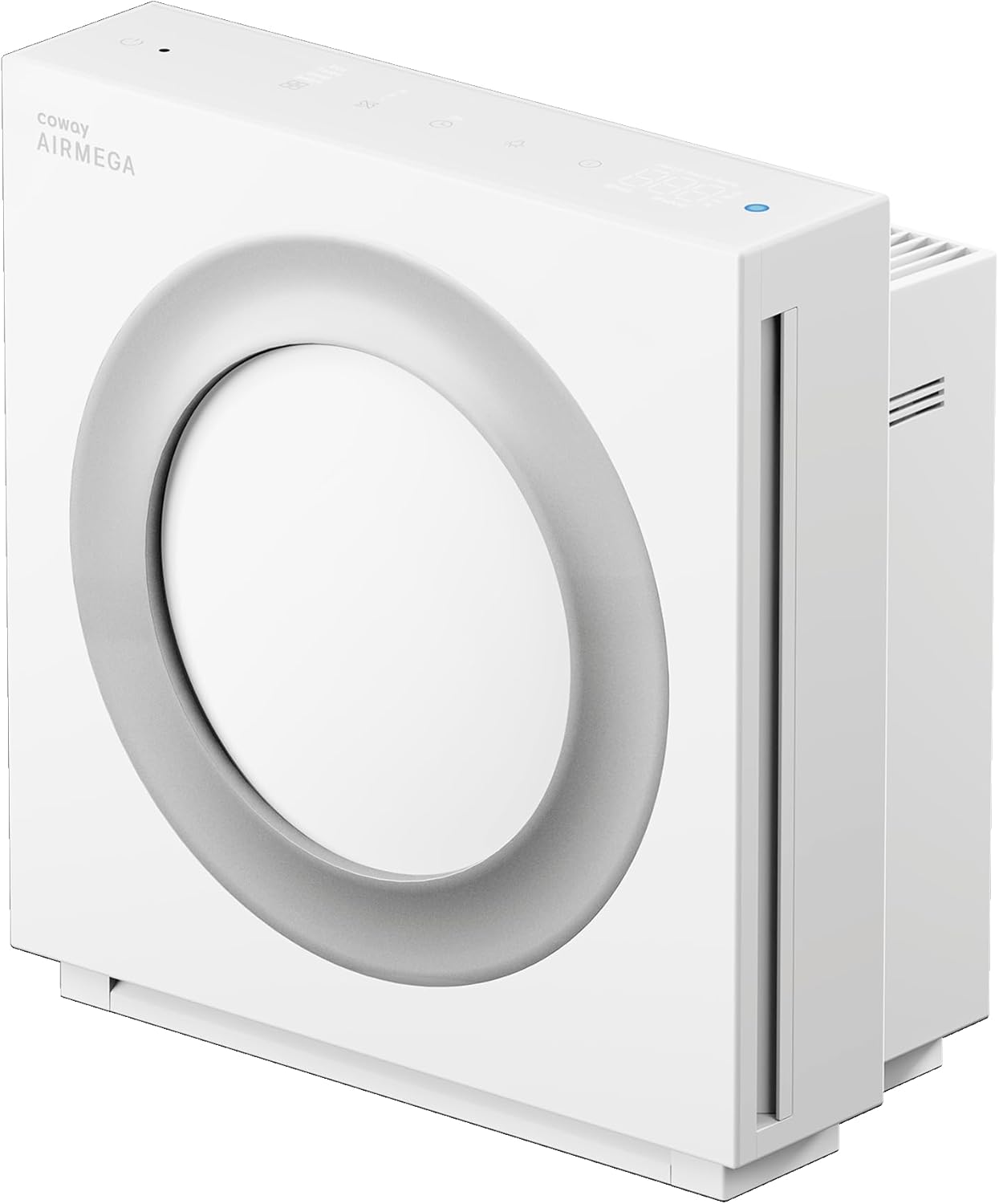
| Max coverage (1 hr) | 1,800 sq ft |
|---|---|
| CADR (Dust/Smoke/Pollen) | 242 / 240 / 249 |
| HEPA effectiveness | 99.97% of 0.3μm particles |
| Noise level | 19 dB – 50 dB |
| Power consumption | 56 W |
The Coway Airmega Mighty2 (AP-1512N) is a compact, high-performance air purifier built to tackle airborne particles and common indoor gases across large spaces. It uses a three-stage system with a washable pre-filter plus a 2-in-1 HEPA and activated carbon Max2 filter certified to capture 99.97% of 0.3 μm particles and to reduce many VOCs and odors. A laser particle sensor reports PM1/2.5/10 in real time and a four-color LED makes air quality easy to read, while Smart, Eco, and Sleep modes automatically adjust fan speed to balance cleaning and energy use. The unit is whisper-quiet at low speeds and reports filter life digitally so maintenance is straightforward. For damp, mold-prone basements the combination of true HEPA capture and activated carbon helps remove spores, dust, and mold-associated odors, though the purifier does not control humidity so it should be paired with dehumidification for best mold prevention. Its coverage claims (up to 1,800 sq ft in 60 minutes) and relatively low power draw make it practical for continuous use in finished basements and living areas.
Best for: Buyers who want a low-maintenance, high-efficiency purifier that continuously monitors air quality and reduces particles and odors in larger finished basement spaces.
Less Ideal for: People seeking a single-device solution for mold control in damp, unfinished basements where moisture removal is the primary need should consider a dehumidifier-first approach.
- IEST-certified HEPA combined with activated carbon for particle and VOC removal
- Megascan laser sensor tracking PM1/2.5/10 with real-time numerical readout
- Washable pre-filter and digital filter-life indicator simplify maintenance
- Smart/Eco/Sleep modes and low noise (as low as 19 dB) enable quiet, energy-conscious operation
- Large claimed coverage with CADR figures suitable for sizable basement rooms
- Does not include humidity control, so mold prevention requires a separate dehumidifier
- Replacement Max2 filter required periodically to maintain VOC and allergen removal effectiveness
Verdict: Choose the Airmega Mighty2 when you need a powerful, low-noise purifier that reliably captures fine particles and reduces odors in large basement living spaces while requiring simple, predictable maintenance.
VOOPNU HEPA Air Purifier DH-JH12

| Filter type | H13 True HEPA triple-layer |
|---|---|
| Coverage claim | Up to 1,076 ft² (lab-tested 250 ft² per 15 minutes) |
| Noise level | 22 dB (low speed) |
The VOOPNU DH-JH12 is a small tower air purifier built around an H13 true HEPA triple-layer filter and 360 degree intake, designed to remove particles tied to mold, pollen, pet hair, and smoke. It is simple to use with a one-tap control panel, three fan speeds, and a timer, and it includes an essential oil tray if you want light fragrance while running. Laboratory-style claims say it cleans 250 ft² every 15 minutes, which the company frames as coverage up to roughly 1,076 ft²; in practice the compact unit is best for single rooms or corners of basements where airflow is not obstructed. The unit runs very quietly at low speed (about 22 dB), so continuous operation overnight is feasible. Filters are replaceable on a 3–6 month cadence depending on pollution levels, and certifications such as CARB, ETL, and FCC add confidence in safety. The main limitations are its small physical intake area and modest fan power compared with larger dedicated mold-focused purifiers, so in very large or heavily moldy basements you will need multiple units or a higher-CADR machine to move enough air to impact spore concentrations quickly.
Best for: Buyers on a tight budget who need a quiet, easy-to-use purifier for a single basement room or for spot treatment of damp areas and want HEPA-level filtration without complicated setup.
Less Ideal for: Homes with very large basements, extensive visible mold, or active water intrusion should choose higher-CADR or whole-room commercial-grade solutions instead of relying on this single compact unit.
- H13 true HEPA filtration captures 99.97% of fine particles including mold spores.
- 360° surround intake helps pull air from multiple directions in a room corner.
- Very quiet low-speed operation (~22 dB) suitable for continuous overnight use.
- Compact footprint makes placement easy in tight basement spaces.
- Simple controls and a timer make it easy to run continuously without fuss.
- Coverage and airflow are modest for large or heavily moldy basements, so a single unit may not be sufficient.
- Filter replacement is required every few months under heavy use, adding ongoing cost.
Verdict: An affordable, quiet HEPA tower that works well for spot cleaning and single basement rooms but will need multiples or a higher-CADR unit for large or heavily moldy basements.
Levoit Core 300-P

| Filter Type | 3 in 1 Filtration |
|---|---|
| Floor Area | 1073 square_feet |
| Noise Level | 24 db |
| Particle Retention Size | 0.1 micron |
| Wattage | 56 watts |
The Levoit Core 300-P is a compact, user-friendly HEPA air purifier designed to remove fine particles, pollen, dust, smoke, and pet dander from indoor air. It uses a 3-in-1 filtration stack with a genuine Levoit filter rated to trap 99.97% of 0.1–0.3 micron particles and a 56W motor that delivers a CADR suitable for refreshing smaller rooms frequently and larger open spaces at a lower exchange rate. Controls are touch-based and include a near-silent Sleep Mode that drops noise to about 24 dB for undisturbed nights, plus a timer and filter-check indicator for basic maintenance. The unit is corded and CARB, EPA, and ETL certified, and Levoit recommends using factory replacement filters every 6–8 months to maintain performance. Limitations to note for basement use: it lacks an automatic air-quality sensor or Auto Mode on this model, so you must set speeds manually, and while the Core 300-P can help reduce airborne mold spores, persistent dampness or heavy visible mold will require moisture control and remediation beyond what any portable purifier provides.
Best for: Buyers who prioritize reliable, tested particle removal and quiet continuous operation for living spaces that need consistent airborne filtration rather than automated sensing or smart features.
Less Ideal for: People needing an air purifier that autonomously adjusts to changing air quality or those expecting a standalone solution for active mold infestations and moisture problems.
- HEPA-grade 3-in-1 filter captures 99.97% of 0.1–0.3 micron particles
- AHAM-verified CADR and certified safety listings provide predictable performance
- Sleep Mode reduces noise to about 24 dB for quiet overnight use
- Compact footprint and simple touch controls make placement and operation easy
- No built-in air-quality sensor or automatic fan control on this model
- Not a substitute for moisture remediation when mold growth is present
Verdict: For a reliability-first portable purifier that quietly removes fine particles in living spaces, the Levoit Core 300-P is a straightforward, certified choice.
Honeywell AllergenPlus HPA304

| Filter Type | HEPA |
|---|---|
| Floor Area | 465 square_feet |
| Particle Retention Size | 0.3 micron |
| Wattage | 80 watts |
The Honeywell AllergenPlus HPA304 is a plug-in HEPA air purifier built to clean large spaces by pulling room air through a HEPA filter and recirculating it multiple times per hour. It is intended for continuous home use and offers touch controls, a filter change indicator, and 2/4/8 hour auto-shutoff. In practice the unit is straightforward to operate: set one of the cleaning speeds (including a turbo mode) and let it run; Honeywell rates it to circulate air in rooms up to 465 sq ft several times per hour and reports one full air change per hour for up to 2250 sq ft at its highest setting. The HEPA filter targets common indoor allergens and particles such as dust, pollen, pet dander, dust mite debris and smoke, which helps reduce airborne mold spores as they pass through the filter. The unit is relatively quiet on low and uses modest power, but filter replacement is required to maintain performance and Honeywell emphasizes using genuine replacement filters for best results. For basements with visible mold growth remember an air purifier reduces airborne spores but does not remove mold on surfaces or fix moisture problems.
Best for: Buyers who prioritize proven filtration and want a widely reviewed, brand-name unit to reduce airborne allergens and spores in larger basement spaces while relying on established performance data.
Less Ideal for: Homes that need a solution for active mold remediation, persistent high humidity, or structural moisture — those issues require drying, cleaning, and trades rather than just an air cleaner.
- True HEPA filtration capturing 99.97% of particles 0.3 microns and larger
- Rated coverage for large to extra-large rooms and multiple air changes per hour
- Touch controls with timer and filter change indicator for simple operation
- Includes turbo/boost setting for faster air turnover when needed
- Does not address surface mold or underlying moisture issues
- Requires periodic genuine filter replacements to retain rated performance
Verdict: Choose this Honeywell HEPA unit if you want a proven, high-coverage air purifier to reduce airborne mold spores and allergens in a large basement room.
Levoit Vital 200S-P

| Power Source | Corded Electric |
|---|---|
| Control Method | App |
| Filter Type | 3-Stage Filter |
| Floor Area | 1875 square_feet |
| Noise Level | 27 db |
The Levoit Vital 200S-P is a tower-style smart air purifier built to handle large, high-traffic rooms and homes with pets. It uses a three-stage filter stack (washable pre-filter, activated carbon layer, and HEPA-grade filtration) and an AHAM-verified CADR to remove smoke, dust, pollen, pet dander, and odors; the listing notes particle retention down to 0.1 micrometer and CADR figures for smoke, dust, and pollen. Typical use is whole-room continuous filtration controlled by on-device buttons or the mobile app and monitored by the built-in air quality sensor, with a low-noise sleep mode rated at 27 dB. Practical benefits include fast air exchange for larger spaces, targeted odor and VOC capture via the activated carbon stage, and smart controls for scheduling and remote monitoring. Important limitations are its physical footprint and weight for basement placement and the ongoing cost and replacement schedule for specialized filters when addressing persistent mold or heavy VOC loads. For damp basements, pairing with moisture control is necessary because a purifier treats airborne spores but does not remove the moisture that allows mold to grow.
Best for: A cautious buyer who prioritizes proven, independently tested performance and wants a smart, whole-room purifier for basements or large living spaces that also need odor and pet-allergen control.
Less Ideal for: People who need a portable, lightweight unit for very small or cramped spaces or those seeking a standalone solution for dampness and active mold remediation.
- AHAM-verified CADR for smoke, dust, and pollen supports measurable whole-room cleaning
- Smart app control and built-in air quality monitor let you schedule and track performance remotely
- Three-stage filtration with activated carbon reduces odors and VOCs in addition to particulates
- Low noise sleep mode (27 dB) suitable for continuous overnight operation
- Relatively large and heavier than travel-sized purifiers, which may limit placement in small basement corners
- Specialized replacement filters are required to address different contaminants and add ongoing cost
Verdict: Choose the Vital 200S-P when you want a smart, AHAM-verified purifier that can rapidly clean large basement spaces and also reduce odors and VOCs.
Choosing the Right Air Purifier for Moldy Basement: Key Factors to Consider
Filtration Efficiency and Filter Type
Basement mold control depends on capturing fungal spores and associated particulate. Look for true HEPA-level filtration or verified submicron particulate removal specifications. HEPA filters trap at least 99.97 percent of particles down to 0.3 microns, which covers most mold spores, but some units also include pre-filters to catch larger debris and activated carbon for odors.
Higher filtration ratings mean fewer spores recirculating in the air, but very dense filters can reduce airflow if the fan is not powerful enough. Balance the filter's capture rate with the unit's airflow capacity to ensure effective air changes in the basement.
Airflow Capacity and CADR
Air exchange rate matters more than just filter efficiency. Clean Air Delivery Rate or stated room coverage numbers indicate how much air the purifier can process per hour. For basements, which often have larger open areas or higher ceilings, choose a unit with CADR or airflow rated for a room size equal to or greater than your basement footprint.
Undersized purifiers will run without meaningfully reducing airborne spores. Consider the number of air changes per hour you want; for mold-prone spaces, higher turnover rates are preferable. Also account for furniture, open stairwells, and connected rooms that can dilute or concentrate airflow patterns.
Humidity Tolerance and Placement
Basements typically have higher relative humidity, which can affect purifier components and filter longevity. Choose units designed to tolerate occasional elevated humidity or install the purifier in a drier zone of the basement when possible. Metal housings and corrosion-resistant fan components are beneficial in humid environments.
Avoid placing units directly on damp floors or in standing water areas. If humidity is a persistent issue, pair air cleaning with moisture control measures such as dehumidification to reduce mold growth at the source.
Maintenance, Filter Lifespan, and Running Costs
Regular filter replacement keeps capture performance consistent. Check the expected service life for primary and pre-filters and whether replacements are readily available. Some basement applications need more frequent pre-filter cleaning due to dust, insulation fibers, or pet dander.
Also factor in the cost of replacement filters and the effort required to swap them. Units with washable pre-filters can lower ongoing expenses, while easily accessible filter compartments reduce the hassle of maintenance in tighter basement spaces.
Noise Levels and Continuous Operation
Basements may require continuous or long-run purification to control spores. Noise becomes a practical concern if the basement is used as a living area, home gym, or workspace. Check measured decibel ratings at typical fan speeds and whether the unit has a low-noise or sleep mode that still provides meaningful air turnover.
Quieter units often have lower maximum airflow, so weigh acceptable noise against coverage. If noise is a limiting factor, plan on running the purifier at higher speeds during unoccupied periods and at lower speeds when the area is in use.
Why Mold Spores Need Active Filtration
Mold reproduces by releasing microscopic spores that travel on air currents. In a basement environment with damp surfaces, airborne spores can remain suspended and spread to finished areas. Active filtration reduces the concentration of airborne spores, lowering the chance they settle and colonize new surfaces.
Filtration does not remove existing mold growth on surfaces. Rather, it minimizes airborne spread and reduces exposure for occupants. Combine air cleaning with source remediation and moisture control for effective long-term mold management.
- Removes spores from circulating air before they settle
- Reduces allergen load for sensitive occupants
- Supports remediation efforts by lowering airborne recontamination
Sizing and Placement Tips for Basements
Place the purifier where air circulates through the basement rather than tucked behind furniture or in a corner. Central locations or near stairwells can help draw air from adjoining spaces. Ensure intake and exhaust are unobstructed for maximum effectiveness.
If your basement is divided into multiple rooms, consider more than one unit or place a single higher-capacity purifier in the largest open area. Elevate the unit a few inches off cold floors to avoid dust intake and to keep it away from minor dampness on concrete surfaces.
- Keep clearances specified by the manufacturer for intake and exhaust
- Avoid placing directly on the floor in damp spots
- Use multiple units for separated rooms or large open plans
Managing Odors and Volatile Compounds
Moldy basements often have musty smells from microbial metabolism and accumulated organic matter. While particulate filters reduce spores, activated carbon or other adsorbents are better at capturing odors and some volatile organic compounds. If odors are a concern, pick a purifier that pairs particulate filtration with a dedicated carbon stage.
Carbon filters saturate over time and will need replacement independently of particulate filters. For persistent odors, combine air cleaning with cleaning of organic sources and improved ventilation.
- Use carbon stages for odor and VOC reduction
- Replace carbon filters as recommended to maintain odor control
Running an Air Purifier Safely in a Damp Environment
Keep electrical safety in mind when operating any appliance in a basement. Position the unit away from wet areas, ensure outlets and cords remain dry, and avoid adapters or extension cords that are not rated for continuous use. If the basement is prone to condensation, consider installing the purifier near a dehumidified zone.
Regularly inspect the unit for signs of moisture damage, such as rust or degraded seals, and replace filters promptly if they become damp. Operating a purifier with wet filters can reduce performance and potentially promote microbial growth on the filter media.
- Avoid placing the unit where it can contact standing water
- Inspect for moisture damage and replace damp filters immediately
When to Combine Purification with Dehumidification
Air purifiers handle airborne particles but do not remove moisture from the air. If relative humidity consistently exceeds recommended indoor levels, mold will continue to grow on surfaces and produce spores. Pairing an air purifier with a dehumidifier reduces the root cause of mold growth and improves the purifier's effectiveness and filter longevity.
Target basement humidity below local thresholds that favor mold growth, typically under 50 percent relative humidity. Using both systems together is often the most effective strategy for long-term control of mold in basements.
- Use a dehumidifier to reduce moisture that enables mold growth
- Lower humidity improves filtration longevity and reduces spore production
How We Chose the Best Air Purifier for Moldy Basement
We focused on features and performance that matter specifically for mold-prone basements. Primary evaluation criteria included true particulate filtration efficiency for submicron spores, clean air delivery rate relative to typical basement room sizes, and durability in higher-humidity environments. We also considered maintenance requirements such as filter life and ease of access, plus noise levels when units must run for long periods. Energy use and continuous-run capability were assessed because basements often need extended operation to control airborne spores. Products were excluded if they lacked objective filtration ratings, did not offer HEPA or equivalent particulate capture, or were designed solely for odor control without particulate filtration. We prioritized units with clear specified CADR or airflow coverage numbers and those with serviceable filters. The result is a shortlist that balances proven filtration, sufficient airflow for basement volumes, and practical upkeep needs.
Our full evaluation process is outlined in our review methodology.
FAQ
Can an air purifier remove mold growing on basement walls?
No. Air purifiers remove airborne spores but do not eliminate mold colonies on surfaces. You need to address moisture and clean affected surfaces to remove existing growth.
How often should I run an air purifier in a moldy basement?
Often. Continuous or long-run operation is common in mold-prone basements to keep airborne spore counts low. Running at higher speeds during unoccupied periods and lower speeds when occupied balances noise and effectiveness.
Is HEPA filtration enough to protect against mold spores?
HEPA-level filtration captures most mold spores in the air, which significantly reduces airborne exposure. Filtration is one part of a strategy that should also include moisture control and surface remediation.
Will a purifier remove musty basement odors?
Particulate filtration alone reduces spores but may not remove odors. Units with activated carbon or other adsorbents are better at reducing musty smells and volatile compounds.
Where should I place an air purifier in a finished basement?
Place it centrally in the area where people spend time and where air circulates, avoid obstructed corners, and keep it elevated slightly off the floor to reduce dust and moisture intake.
Final Verdict
For moldy basements, prioritize units with proven particulate capture and enough airflow to achieve frequent air changes across the basement area. Also consider humidity tolerance and whether the purifier includes odor control if mustiness is a concern. Balance noise and running cost against the coverage you need, and pair air cleaning with moisture control and surface remediation for the most reliable long-term results. Ultimately, choose a purifier sized for your basement, maintain filters on schedule, and combine filtration with dehumidification when humidity is a persistent problem to keep airborne mold under control.