
Note: This article contains affiliate links. If you click on these links and make a purchase, we may earn a small commission at no extra cost to you. This helps support our research and content. Read our full affiliate disclosure here.
Picking the right automatic espresso machine matters because small differences in shot consistency, maintenance, and programmability affect how often you actually use it. If you want café-style espresso at home without a constant learning curve, an automatic machine can save time while producing repeatable results. This guide shortlists seven top automatic espresso machines under $1,000 that balance shot quality, convenience, and long-term reliability. We evaluate each pick on practical criteria like extraction consistency, user controls, and ease of cleaning so you can choose the machine that fits your daily routine. Read on for the product recommendations and the factors that should guide your decision.
Top Picks at a Glance
| Best Overall The best all-around choice for most situations | KitchenAid KF3 Fully Automatic Espresso |  |
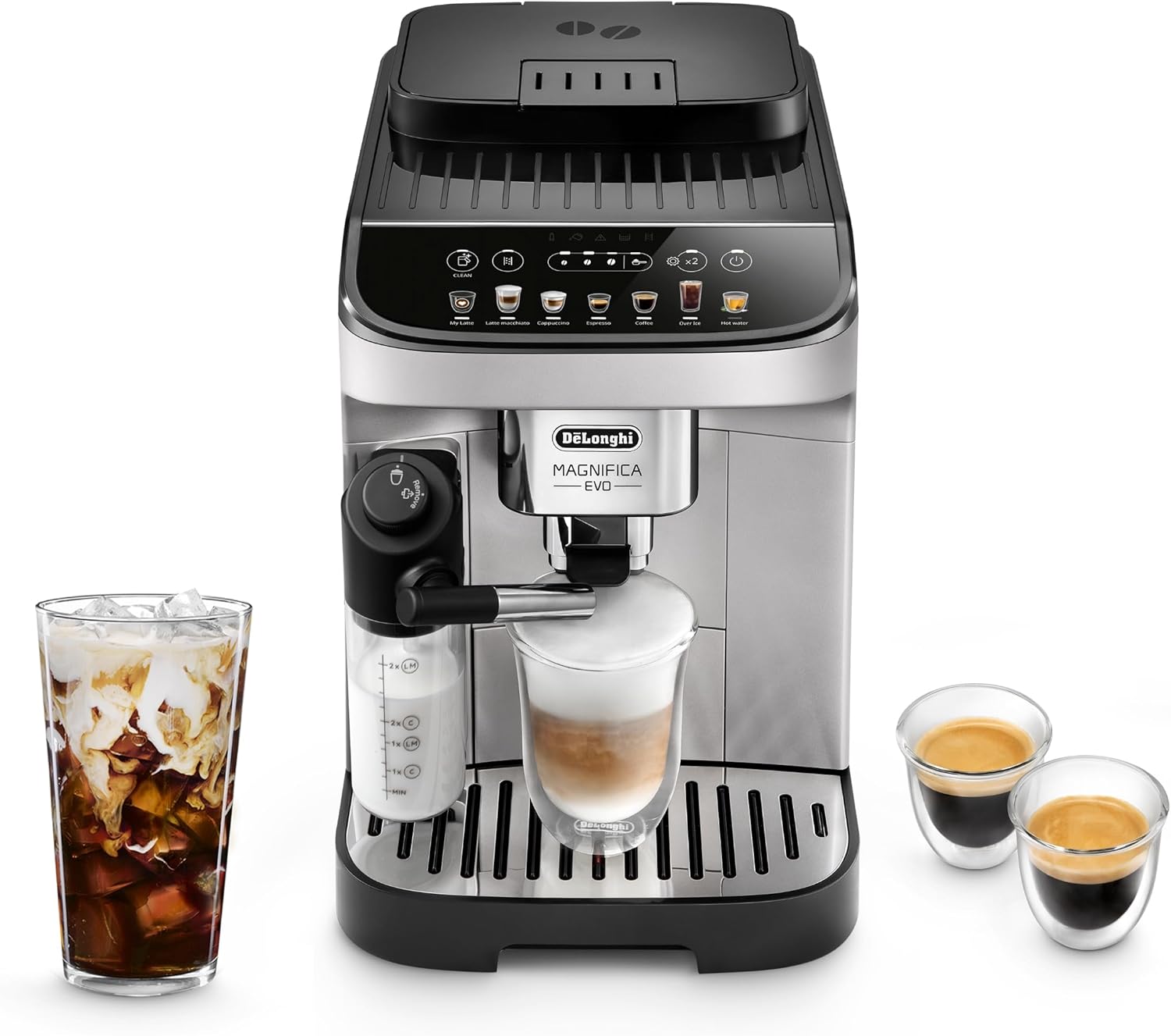
| Best Quality Built to a higher standard if you want something more solid | De'Longhi Magnifica Evo ECAM29084SB |  |
| Best Value The sweet spot between price and what you get | De'Longhi Magnifica Start ECAM22022B |  |
| Best Budget The cheapest option that still gets the job done reliably | IDEALHOUSE Fully Automatic Espresso Machine |  |
| Top Rated A top-rated pick with lots of positive feedback | PHILIPS 2300 Series EP2330/14 |  |
| Most Popular A crowd favorite that many people choose with confidence | Philips 3200 Series EP3241/54 |  |
| Best Seller A high-volume bestseller chosen again and again | Ninja Luxe Café ES601 |  |
KitchenAid KF3 Fully Automatic Espresso

| Output Pressure | 15 bar |
|---|---|
| Capacity | 1.8 liters |
| Included Components | Filter, Milk Frother |
| Coffee Maker Type | Espresso Machine |
The KitchenAid KF3 is a compact super-automatic espresso machine designed to make café-style drinks with minimal fuss. It combines a built-in burr grinder with IntelliGrind dose adjustment and a Quiet Grinding System to produce consistent grounds without loud noise, and the Auto Milk System textures and dispenses milk for lattes and cappuccinos either from the main spout or an optional container. The machine offers over 15 hot and over-ice recipes and includes conveniences like a 1.8 L water tank, a quick warm rinse on startup, and preset lower-temperature over-ice brewing to avoid over-extraction. In daily use it's straightforward: select a drink, the grinder and brew unit dose automatically, and milk is handled by the auto system. Trade-offs are its footprint and weight relative to some compact pod machines and the need for routine descaling and cleaning like any super-automatic. For buyers wanting an all-in-one countertop machine that balances grind-to-cup automation and milk capability, the KF3 delivers a capable, user-friendly experience.
Best for: Buyers who want a balanced, all-in-one countertop espresso solution that automates grinding, dosing, brewing, and milk steaming for daily cafe-style drinks with minimal manual tweaking.
Less Ideal for: Those who need the smallest possible footprint, want fully manual control over every extraction variable, or rarely make milk-based drinks.
- Built-in burr grinder with IntelliGrind that adapts grind dose to bean type
- Auto Milk System that textures and dispenses milk for multiple drink styles
- 15+ preset hot and over-ice recipes including lower-temperature iced brewing
- Quiet Grinding System and automatic warm rinse for easier daily use
- Requires regular cleaning and descaling typical of super-automatic machines
- Larger and heavier than single-serve or manual home machines
Verdict: Choose the KF3 if you want a compact, user-friendly super-automatic that grinds, brews, and textures milk for reliable café-style drinks every day.
De'Longhi Magnifica Evo ECAM29084SB
| Operation Mode | Fully Automatic |
|---|---|
| Output Pressure | 15 bar |
| Wattage | 1250 watts |
| Coffee Input Type | Whole Bean |
| Capacity | 60 fluid ounces |
The Magnifica Evo is a performance-focused super-automatic that grinds, doses, brews, and textures milk at the touch of a button. It uses a conical burr grinder with multiple grind settings and a 15-bar brewing system to deliver consistent espresso and offers seven one-touch recipes including espresso, cappuccino, latte macchiato, and an over-ice option. De'Longhi's LatteCrema milk system produces long-lasting microfoam and its detachable milk carafe can be stored in the fridge between uses. The machine includes a touchscreen interface, user profiles, and a My Latte personalization feature so you can save strength, volume, and milk preferences. Practical touches include reusable filters, removable dishwasher-safe parts, an auto-clean routine, and a fairly large 60 fl oz water capacity for reduced refill frequency. Expect a solid set of cafe-style features for home use, but the machine is sizable on the counter and requires periodic descaling and cleaning of the milk parts to keep foam quality consistent over time.
Best for: Buyers who prioritize espresso quality, consistent grind-to-cup performance, and programmable one-touch drinks for daily home use and want a machine that delivers cafe-style beverages with minimal manual barista work.
Less Ideal for: If you need a very compact or travel-friendly brewer or prefer a manual barista experience with full steam wand control, this fully automatic unit is not the best match.
- Built-in conical burr grinder with 13 grind settings for fresh, consistent extraction
- Seven one-touch recipes plus My Latte personalization and user profiles
- LatteCrema system produces silky, long-lasting milk foam and includes a removable milk carafe
- Touchscreen controls and auto-cleanable, dishwasher-safe removable parts for easier maintenance
- 60 fl oz water capacity reduces frequency of refills during regular use
- Relatively large footprint that may dominate small countertops
- Requires regular cleaning and occasional descaling to maintain milk and brew performance
Verdict: A capable, performance-oriented super-automatic that delivers consistent, cafe-style espresso and milk drinks with one-touch convenience.
De'Longhi Magnifica Start ECAM22022B

| Operation Mode | Fully Automatic |
|---|---|
| Coffee Input Type | Ground, Whole Bean |
| Wattage | 1250 watts |
| Filter Type | Reusable |
| Other Special Features | 15 Bar Pressure, Conical Burr Grinder, PID Temperature Control |
The Magnifica Start is a user-friendly super-automatic that simplifies daily espresso, coffee, and Americano with three one-touch recipes and an internal conical burr grinder. You fill the hopper with whole beans or use ground coffee, select a preset, and the machine grinds, doses, and brews with 13 grind settings to tailor strength and extraction. Milk drinks are made using the manual frother, which gives control over texture but requires a little practice compared with automatic steam wands. The touchscreen and removable brewing parts make setup and cleanup straightforward, and dishwasher-safe components cut maintenance time. At 15 bar pressure and 1250 watts it reaches proper extraction and stable brewing temperatures aided by PID control. The unit is compact enough for most countertops but keeps a sizable 60 oz water capacity for multiple daily uses. Limitations include the manual frother for milk fans who want fully automatic milk delivery and a plastic exterior rather than metal trim, but for buyers prioritizing reliable grinding, simple one-touch brewing, and easy upkeep it performs well under daily use.
Best for: Buyers who want a practical, easy-to-maintain super-automatic that grinds and brews reliably at the touch of a button and who value consistent daily espresso without complex controls.
Less Ideal for: People who want a fully automatic milk system or a metal-bodied, luxury-finish machine should consider other options.
- Built-in conical burr grinder with 13 grind settings for consistent fresh grinding
- Three one-touch recipes (Espresso, Coffee, Americano) for fast, repeatable brewing
- Removable, dishwasher-safe parts simplify cleaning and maintenance
- PID temperature control and 15 bar pressure support stable extraction
- Manual milk frother requires hand technique and is not an automatic milk system
- Plastic exterior may feel less premium than metal-bodied competitors
Verdict: A straightforward, reliable super-automatic that delivers fresh-ground espresso and easy one-touch brewing for pragmatic home users.
IDEALHOUSE Fully Automatic Espresso Machine

| Operation Mode | Fully Automatic |
|---|---|
| Output Pressure | 20 bar |
| Coffee Input Type | beans |
| Capacity | 1.5 liters |
This IDEALHOUSE fully automatic espresso machine combines a built-in conical burr grinder, one-touch brewing, and a 360-degree steam wand to make espresso, cappuccino, and lattes with minimal fuss. You load beans into the 200 g hopper, pick one of 15 grind settings, and use the touchscreen to choose single or double shots or milk-based drinks; the 20-bar pump aims to extract bold flavor while the removable 1.5 L water tank and drip tray simplify refills and cleaning. The stainless steel grinder and adjustable grind sizes let you tune extraction, and the automatic/self-clean cycle and removable parts reduce day-to-day maintenance. Expect a compact footprint so it fits most countertops, but note the machine is relatively heavy and may require occasional descaling and maintenance like other super-automatic units. For a buyer watching budget yet wanting an all-in-one home espresso setup, it provides strong core features without premium marque pricing.
Best for: Buyers on a budget who want a single, integrated machine that grinds beans and froths milk automatically to produce café-style drinks at home without a steep price tag.
Less Ideal for: People seeking the smallest possible countertop appliance or a premium commercial-grade machine with advanced programmability and long-term service support should consider other options.
- Built-in conical burr grinder with 15 grind settings for fresher, customizable shots
- One-touch touchscreen controls for single/double shots and milk-based drinks
- 20-bar high-pressure pump designed for strong extraction and crema
- Removable 1.5 L water tank and drip tray for easier filling and cleaning
- 360-degree steam wand produces microfoam for lattes and cappuccinos
- Heavier, bulkier unit compared with minimalist home machines
- Requires routine descaling and maintenance typical of super-automatic machines
Verdict: A budget-friendly fully automatic espresso machine that grinds, brews, and steams in one compact package for easy at-home café-style drinks.
PHILIPS 2300 Series EP2330/14

| Operation Mode | Fully Automatic |
|---|---|
| Wattage | 1500 watts |
| Output Pressure | 15 bar |
| Capacity | 1 cups |
The Philips 2300 Series EP2330/14 is a compact fully automatic espresso machine that grinds, tamps, brews and froths milk at the touch of a button. It offers four presets (espresso, coffee, latte and hot water) plus adjustable strength and cup volume so you can dial in consistent daily drinks. The built-in ceramic grinder and 15-bar pump aim to extract steady flavor, while SilentBrew Technology reduces operating noise compared with older models. LatteGo handles milk automatically with a simple three-part system that rinses or goes in the dishwasher for fast cleaning, and the removable brew group plus AquaClean filter simplify maintenance and extend descaling intervals. Practical limits are single-cup capacity and a focus on convenience rather than barista-level manual control, so advanced users who want full manual steaming or complex profiling may find it restrictive. For everyday use it delivers reliable, repeatable coffee and easy upkeep that suits a busy kitchen.
Best for: Buyers who prioritize dependable, low-maintenance daily espresso and want consistent one-touch cappuccinos and lattes without fuss.
Less Ideal for: If you need to make many drinks back-to-back for groups or require full manual steaming and advanced tuning, consider a prosumer or manual machine instead.
- Fully automatic workflow grinds, tamps and brews one-touch drinks for consistent daily results
- LatteGo milk system produces smooth froth and is quick to clean or dishwasher safe
- Ceramic grinder and 15-bar pump for steady extraction and durable grinding components
- Removable brew group and AquaClean filter reduce maintenance and extend time between descaling
- Quieter operation with SilentBrew Technology compared to previous models
- Designed for single-cup routines so it is not ideal for high-volume serving
- Limited manual control for experienced home baristas who prefer full steaming wand or detailed profiling
Verdict: If you want a reliable, low-maintenance automatic machine that delivers consistent one-touch espresso and milk drinks under $1,000, the Philips 2300 Series is a smart pick.
Philips 3200 Series EP3241/54

| Operation Mode | Fully Automatic |
|---|---|
| Coffee Input Type | whole_beans |
| Wattage | 1500 watts |
| Filter Type | Reusable |
The Philips 3200 Series EP3241/54 is a fully automatic espresso machine designed to make espresso, americano, cappuccino and latte macchiato from whole beans with minimal effort. It grinds beans with a 100% ceramic grinder, brews using the Aroma Extract system to balance temperature and flavor, and offers five one-touch coffee options via an intuitive touch display. The two-piece LatteGo milk system produces smooth froth and detaches for fast cleaning without tubes, and the removable brew group lets you rinse internal parts easily. An AquaClean water filter reduces the need for descaling for up to 5,000 cups when replaced as prompted. Practical benefits include consistent grind quality from the ceramic burrs, easy daily maintenance, and quick one-touch drinks useful for mornings or entertaining. Limitations to consider are the plastic exterior which trades premium materials for lower weight, and the machine requires regular filter changes and cleaning to maintain peak performance.
Best for: Buyers who want a low-hassle, one-touch automatic machine that delivers consistent espresso and milk drinks with easy daily cleaning and solid user feedback guiding the purchase decision.
Less Ideal for: Those seeking a heavy-duty commercial build or a metal-finished luxury appliance, or buyers who prefer manual control over every extraction parameter.
- Built-in 100% ceramic grinder for consistent grinding and flavor extraction
- Intuitive touch display with five preset coffee varieties for one-touch brewing
- LatteGo two-part milk system that detaches and rinses quickly without tubes
- AquaClean filter support that can delay descaling up to 5,000 cups when used as directed
- Removable brew group for straightforward cleaning and maintenance
- Glossy plastic exterior feels less premium than metal alternatives
- Regular filter replacements and routine cleaning are required to avoid performance issues
Verdict: A dependable, easy-to-use fully automatic espresso machine that delivers consistent one-touch coffee and quick-clean milk frothing, making it a practical choice under $1,000.
Ninja Luxe Café ES601

| Operation Mode | Fully Automatic |
|---|---|
| Wattage | 1650 watts |
| Coffee Input Type | Ground, Whole Bean |
| Filter Type | Reusable |
The Ninja Luxe Café ES601 is a fully automatic 3-in-1 coffee system that aims to simplify café-style drinks at home by combining an integrated conical burr grinder, assisted tamping, hands-free frothing, and guided Barista Assist workflows. You can grind beans with 25 grind settings and the machine uses weight-based dosing to deliver double or quad espresso shots, make classic or over-ice drip coffee in several preset sizes, or produce cold-pressed espresso and rapid cold brew. The dual froth system (magnetic whisk plus automatic steamer) and self-cleaning steam wand cut the learning curve for milk drinks, while the removable 70 oz water reservoir and built-in accessory storage help with everyday convenience. Practical benefits include consistent dosing, a guided interface that helps novices avoid common mistakes, and a wide drink range so a single unit covers most household needs. Trade-offs are its substantial footprint and weight compared with simpler machines, and the complexity of extras means occasional cleaning and maintenance are required to keep grinders and the steam system working at peak performance.
Best for: Buyers who want a low-risk, all-in-one home café solution that removes guesswork and guides them through espresso and milk-based drinks without needing barista skills.
Less Ideal for: People who need a compact, lightweight single-purpose brewer or who prefer a bare-bones manual espresso workflow for full control should look elsewhere.
- Integrated conical burr grinder with 25 settings for precise grinding
- Barista Assist guides and weight-based dosing simplify brewing for beginners
- Hands-free dual froth system and self-cleaning steam wand for consistent milk texture
- Supports espresso, drip coffee, and rapid cold brew in one machine
- Large, heavy countertop unit that needs significant space
- More parts to clean and maintain than single-function machines
Verdict: If you want a guided, risk-minimizing machine that reliably delivers espresso, drip coffee, and cold brew from a single unit, the Ninja Luxe Café ES601 is a strong all-in-one choice under $1,000.
Choosing the Right Automatic Espresso Machine: Key Factors to Consider
Shot Consistency and Extraction Control
Consistent extraction is the core purpose of an automatic espresso machine. Machines that maintain stable pressure and temperature produce more predictable flavor and crema from shot to shot. Look for models that allow consistent pre-infusion or programmable shot volumes so you get repeatable results with the same grind and dose.
For home use, consistency reduces the need for constant dial-in and prevents wasted beans. If you plan to serve multiple drinks in succession, a machine that stabilizes quickly between shots will save time and improve drink quality.
Temperature and Pressure Stability
Espresso flavor is highly sensitive to brew temperature and pump pressure. Machines that control brew temperature accurately and hold stable pressure produce clearer, more balanced shots. Check for features such as PID temperature regulation, pressure profiling, or reliably calibrated pumps if you value nuanced espresso flavors.
Temperature stability also affects steam performance. Machines that warm up quickly and maintain stable boiler temperature will give more consistent microfoam when steaming milk, which matters for lattes and cappuccinos.
Built-in Grinder and Dosing Options
A high-quality built-in grinder simplifies routine use and helps ensure consistent dosing and particle distribution for better extraction. If the machine includes a grinder, evaluate grind range, burr type, and whether the dose is adjustable or automatic.
For home users, integrated grinders reduce kitchen clutter and streamline workflow. However, grinders add complexity and require occasional cleaning; consider how accessible the burrs are and whether the machine allows single-dosing or grinder bypass for pre-ground coffee.
Ease of Cleaning and Maintenance
Routine cleaning keeps espresso machines performing well. Machines that offer accessible brew components, removable drip trays, and clear cleaning cycles make upkeep straightforward. Pay attention to how milk systems are cleaned—automatic milk wands and removable milk containers that rinse easily are advantageous.
Maintenance considerations include how often descaling is required, whether the water reservoir and filters are easy to access, and how simple it is to replace seals or other wear parts. A machine that is easy to maintain will have lower long-term frustration and cost.
Milk Steaming and Frothing Capability
If you drink milk-based drinks regularly, evaluate steam wand power, steam temperature control, and the ability to produce fine microfoam. Some automatic machines offer automatic milk frothing systems that adjust temperature and texture, while others provide manual steam wands for hands-on control.
Consider which approach fits your preferences. Automatic frothers are great for speed and consistency, whereas manual steaming gives more control for latte art and texture refinement.
User Interface and Programmability
An intuitive user interface reduces the learning curve and speeds up drink prep. Look for clear displays, programmable shot volumes, and simple menus for adjusting extraction parameters. Physical knobs and buttons often work well for everyday use, while touchscreen controls can provide more options but may be less forgiving in busy routines.
Programmability matters if you want to save custom shot profiles or set automatic cleaning cycles. Evaluate whether the machine's controls are logical for your typical workflow and whether it supports quick adjustments on the fly.
Daily Workflow: From Beans to Cup
Streamlining the daily routine helps ensure the machine gets regular use. Consider the path from beans to cup: loading beans, grinding, dosing, tamping (if required), brewing, and milk prep. Automatic machines can collapse several steps, but the convenience depends on how each component is implemented.
Think about counter layout and access. Machines with front-facing water tanks and easy-access bean hoppers save time during refill and cleaning. Also consider whether the machine supports single-dosing or quick switch-over for different beans when you want variety.
- Front-access water tanks reduce the need to move the machine.
- Removable drip trays and cup platforms speed daily washing.
- Integrated grinders with easy-to-adjust settings simplify dialing in.
Water Quality and Filtration
Water chemistry affects espresso flavor and machine longevity. Hard water leads to scale buildup, which impairs heating elements and can alter temperature performance over time. Many machines accept inline or cartridge filters; using a proper filter can reduce scale and maintain extraction consistency.
If a machine requires frequent descaling with hard water, that is a maintenance cost in time and supplies. Check whether the machine has a recommended filter size and how easy it is to replace or access the filter housing.
- Using filtered water prolongs component life and preserves flavor.
- Some machines have built-in filter compartments, others rely on external solutions.
- Follow manufacturer guidance on filter replacement intervals to avoid scale.
Space and Kitchen Fit
Automatic espresso machines come in a range of footprints and heights. Measure your counter space and overhead cabinets before buying. Taller machines with milk hoppers or built-in bean containers may need more vertical clearance.
Also consider electrical requirements. Most home machines run on standard household circuits, but confirm power specifications and cord length so you can position the machine where it is convenient to use and service.
- Measure width, depth, and height including hopper and steam wand clearance.
- Keep the machine near a water source if you plan frequent refills.
- Allow space for airflow around vents to avoid overheating during extended use.
Noise, Heat, and Daily Comfort
Grinders and pumps create noise. If you make espresso early in the morning or in a shared living area, consider quieter grinders or machines with timed grind cycles. Heat output can also matter; some machines vent heat and steam conspicuously during long milk steaming sessions.
Think about how the machine's noise and heat profile fits your household. Quieter, lower-heat machines are more pleasant for multi-person homes but may trade off steam power or grinder aggressiveness.
- Look for grinder burr size and motor type if noise is a concern.
- Check whether the machine has eco or low-power modes to reduce heat between uses.
- Position the machine away from fragile items sensitive to heat or steam.
Warranty, Support, and Serviceability
A solid warranty and accessible service options matter for complex machines. Automatic espresso machines combine electrical, mechanical, and water-handling systems, and failures can be costly if parts are hard to source. Verify warranty coverage for major components and typical response times for repairs.
Serviceability includes how easy it is to access common wear parts like seals, filters, and gaskets. Machines designed with user-replaceable components reduce downtime and the cost of ownership over several years.
- Check whether the machine allows user replacement of common seals and filters.
- Look for clear documentation on maintenance intervals and part numbers.
- Local service networks or clear repair guides make long-term ownership simpler.
How We Chose the Best Automatic Espresso Machine
We focused on machines that consistently produce good espresso shots with minimal ongoing fuss. Editorial filters included extraction stability, temperature and pressure control, built-in grinder or dosing options, ease of daily cleaning, and durable build quality. We prioritized features that matter to home users: programmable shot volumes, reliable steam performance for milk drinks, accessible water and bean handling, and straightforward maintenance routines. Operational criteria were concrete. We required accurate temperature control within the brew group, stable pump pressure around espresso norms, and simple user interfaces for programming. Durability considerations included serviceability of common wear parts and the quality of water-handling components. We excluded models lacking reliable pressure/temperature data or machines that require frequent professional servicing to remain usable. Products that passed these filters were then assessed on usability and long-term upkeep. That meant giving weight to intuitive controls, how easy it is to clean group heads and milk systems, and whether routine tasks like descaling and filter replacement are well documented. The final list emphasizes reliable daily use and manageable maintenance for home espresso drinkers.
Our full evaluation process is outlined in our review methodology.
FAQ
How often should I descale an automatic espresso machine?
Descale frequency depends on water hardness and usage. With moderately hard water and daily use, descaling every 3 to 6 months is common. Using a water filter can lengthen intervals; follow the machine's maintenance prompts when available.
Can I use pre-ground coffee in these machines?
Some automatic machines include a bypass doser for pre-ground coffee, but using freshly ground beans typically yields better crema and flavor. If you use pre-ground, ensure the machine supports it and adjust the volume settings to avoid over-extraction or clogging.
Do automatic machines make good milk-based drinks?
Many automatic machines produce consistent milk textures with integrated frothers or automatic milk systems. Results vary by model; automatic frothers are convenient for routine drinks, while manual steam wands give more control for advanced milk texturing.
What grind settings should I use for an automatic espresso machine?
Grind setting depends on the grinder and beans, but espresso requires a fine, consistent grind. Start in the middle of the machine's espresso range and adjust finer if shots run too quickly or coarser if shots are overly slow. Small adjustments and tasting are key.
How much counter space do I need for an automatic machine?
Measure the machine's width, depth, and height including hoppers and steam wands. Leave additional clearance for the water tank and cleaning access. Most home machines fit a standard countertop, but models with large bean hoppers or milk containers require more vertical and lateral space.
Final Verdict
When choosing an automatic espresso machine under $1,000, prioritize consistent extraction, stable temperature and pressure control, and manageable cleaning routines. Decide whether integrated grinders and automatic milk systems fit your daily habits, and weigh convenience against the desire for hands-on control. Balance shot quality with ease of maintenance and kitchen fit. If you value quick, repeatable espresso with low daily fuss, favor machines with reliable programmability and accessible service points. For those who enjoy customizing texture and extraction, choose models that make manual adjustments straightforward. That approach will help you pick a machine that suits your routine and delivers the best long-term satisfaction.