
Note: This article contains affiliate links. If you click on these links and make a purchase, we may earn a small commission at no extra cost to you. This helps support our research and content. Read our full affiliate disclosure here.
If you want café-style shots without a big investment, the right espresso machine under $300 makes a major difference in daily coffee at home. A well-chosen unit delivers consistent extraction, straightforward controls, and fast warmup so you get quality espresso and a usable steam wand for milk drinks when you want them. This guide shortlists the top seven machines in this price range and evaluates them on extraction consistency, build and parts that affect longevity, ease of cleaning, and steam performance. Read on to find a pick that fits your space, drink preferences, and hands-on comfort level before the product list.
Top Picks at a Glance
| Best Overall The best all-around choice for most situations | De'Longhi Dedica EC680M |  |
| Best Quality Built to a higher standard if you want something more solid | Breville Bambino BES450BSS | 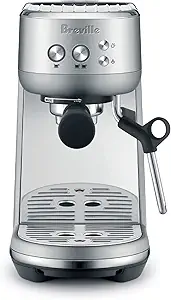 |
| Best Value The sweet spot between price and what you get | Gevi Espresso Machine ECMI0-SS0A1 |  |
| Best Budget The cheapest option that still gets the job done reliably | IMUSA Espresso & Cappuccino Maker |  |
| Top Rated A top-rated pick with lots of positive feedback | CASABREWS 5418 PRO Espresso Machine |  |
| Most Popular A crowd favorite that many people choose with confidence | De'Longhi Stilosa EC260BK | 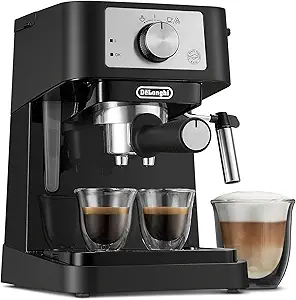 |
| Best Seller A high-volume bestseller chosen again and again | CASABREWS CM5418 Espresso Machine |  |
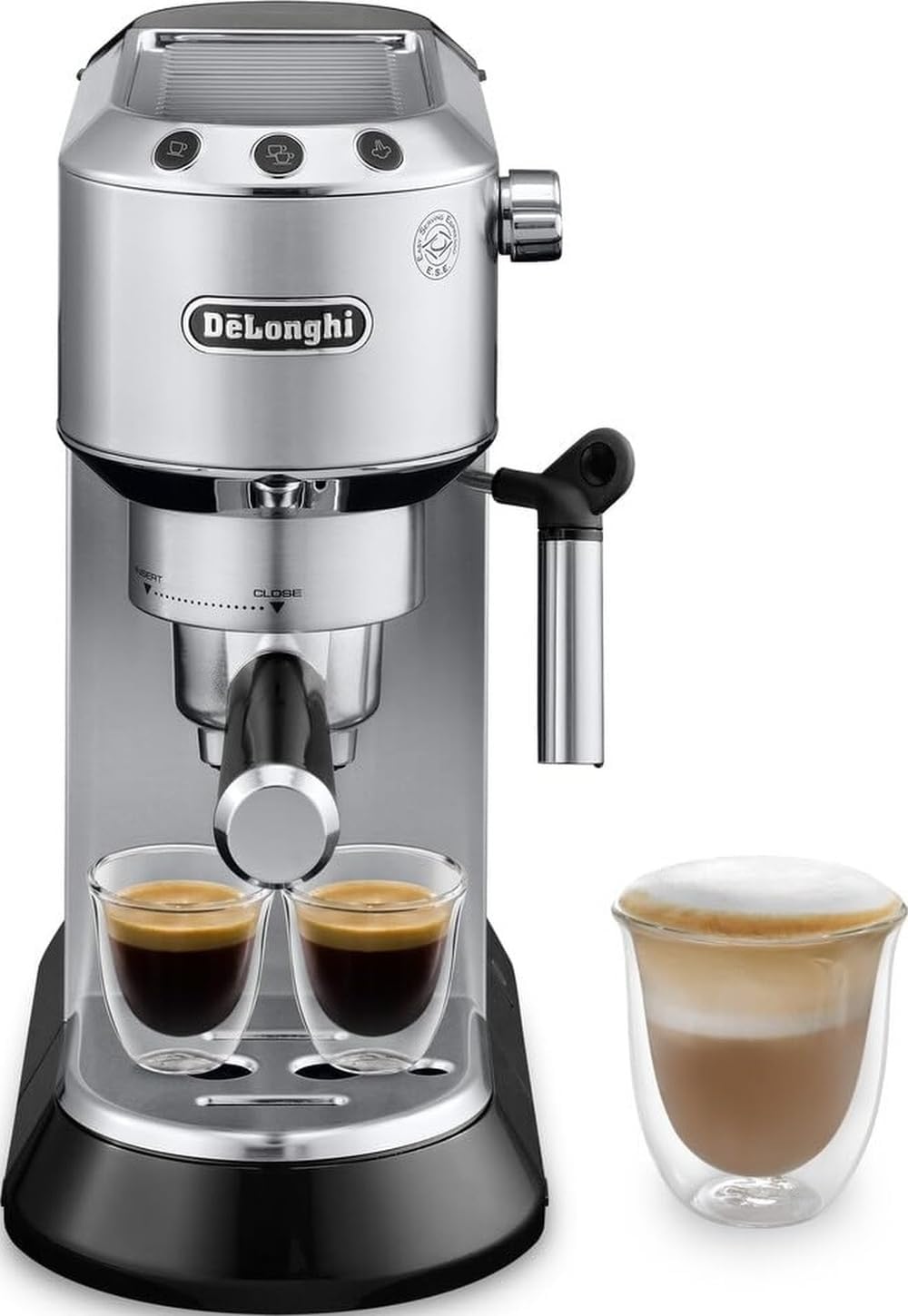
De'Longhi Dedica EC680M
| Output Pressure | 15 bar |
|---|---|
| Wattage | 1450 watts |
| Power Source | electric |
| Coffee Input Type | ground, pod |
| Capacity | 1 liters |
The De'Longhi Dedica EC680M packs a cafe-style espresso setup into a slim footprint that fits small kitchens. It brews using a 15-bar pump and thermoblock heater that reaches brewing temperature quickly, and the three-in-one filter holder accepts single, double shots or ESE pods for flexible daily use. The manual steam wand produces creamy foam for cappuccinos and lattes once you learn the technique, and the adjustable drip tray lets you use taller cups. Cleanup is straightforward thanks to a removable water tank and dishwasher-safe parts. Expect straightforward, manual operation via illuminated buttons and a dial rather than one-touch automation, so it rewards users who want hands-on control over tamping and shot length. It is not a super-quiet or fully automated machine and the steam wand requires a little practice to get milk texture consistent, but for the price and size it delivers reliable espresso performance and a full milk-based drink capability in a compact, stylish stainless steel package.
Best for: Buyers who want a compact, hands-on espresso machine that delivers real espresso and milk drinks without taking much counter space and who value control over one-touch convenience.
Less Ideal for: People who want a fully automatic or programmable machine for push-button drinks or those who prefer a super-quiet, maintenance-free unit.
- Slim 6-inch footprint fits tight countertops
- 15-bar pump with thermoblock heats up in about 40 seconds
- Three-in-one filter holder accepts single, double shots and ESE pods
- Manual steam wand produces rich milk froth for cappuccinos and lattes
- Removable water tank and dishwasher-safe parts simplify cleaning
- Manual operation requires practice for consistent milk texture and shot timing
- Limited sound insulation so it can be relatively loud during extraction and steaming
Verdict: If you want a compact, hands-on espresso machine that produces authentic shots and frothed milk without demanding a lot of counter space, this is a top practical choice.
Breville Bambino BES450BSS

| Operation Mode | Semi-Automatic |
|---|---|
| Wattage | 1560 watts |
| Coffee Input Type | Ground |
| Capacity | 47 fluid ounces |
| Filter Type | Reusable |
The Breville Bambino is a compact semi-automatic espresso machine built for buyers who prioritize extraction quality and speed in a small footprint. It uses a ThermoJet heating system and PID temperature control to reach brewing temperature in about 3 seconds, so shots are ready quickly, and a 54mm portafilter accepts standard single- and double-shot baskets for concentrated espresso with consistent pressure. The unit includes an automatic steam wand that produces microfoam for lattes and cappuccinos, making milk-based drinks straightforward even for novices. Controls are button-based with single- or double-shot dosing and separate steam/hot-water functions, and the package includes both single- and dual-wall filter baskets, a tamper, and a milk jug. Trade-offs are typical for a compact machine: it is manual rather than fully automatic so learning tamping and dosing improves results, and the 47 fl oz water capacity means more frequent refills in busy households. The Bambino shines when you want café-style extraction and fast heat-up in a countertop-friendly size without extra built-in grinder features.
Best for: Buyers who want café-quality extraction and fast readiness in a compact machine and are willing to learn basic manual techniques to dial in shots.
Less Ideal for: People who want an all-in-one, hands-off machine with a built-in grinder or those needing large-capacity, high-throughput brewing for many daily drinks.
- Very fast heat-up via ThermoJet for near-instant shots
- PID temperature control for consistent extraction temperature
- 54mm portafilter supports standard single and double shots for richer flavor
- Automatic steam wand creates microfoam suitable for latte art
- Compact footprint fits small countertops
- No built-in grinder so buyers must buy a separate grinder for best results
- Manual operation requires learning tamping and dosing for optimal shots
- Water reservoir is modest, requiring periodic refills for heavy use
Verdict: Choose the Bambino if you want near-instant heat-up and precise, barista-style espresso and milk texturing from a compact, performance-focused machine.
Gevi Espresso Machine ECMI0-SS0A1

| Output Pressure | 20 bar |
|---|---|
| Capacity | 2.3 liters |
| Wattage | 1450 watts |
| Operation Mode | Semi-Automatic |
| Coffee Input Type | GROUND_COFFEE |
The Gevi ECMI0-SS0A1 is a countertop semi-automatic espresso machine aimed at home users who want café-style drinks without separate equipment. It combines a built-in conical burr grinder with 30 grind settings and a 20-bar pump to produce freshly ground shots, and the steam wand delivers steam for textured milk and hot water for Americanos. Controls are button-based and consolidated on one panel, and the machine includes a 58mm commercial-style portafilter and several single- and dual-wall filter baskets for single or double shots. Practical additions include PID/NTC temperature control for more consistent extraction, a removable 2.3 L water tank for refills, and a cup warmer. The unit draws 1450 watts, so heat-up is brisk, but it is not a fully automatic espresso system, so dialing in grind, dose, and tamping takes some trial and user effort. Build is stainless steel which looks sturdy, though size and noise from the integrated grinder may be considerations for small kitchens. For buyers who prioritize fresh grinding and hands-on control, this machine delivers strong capability at an entry level budget, but expect a learning curve to hit consistent barista-level shots.
Best for: Buyers who want a single machine that grinds and brews to produce café-style espresso drinks at home and who prefer hands-on control and customization over push-button convenience.
Less Ideal for: Those who want a fully automatic, maintenance-free espresso experience or need a very compact, ultra-quiet unit for small spaces.
- Built-in conical burr grinder with 0–30 adjustable settings for on-demand fresh grounds
- 20 bar pump plus PID/NTC temperature control for stronger, more consistent extraction
- Commercial-style 58mm portafilter and multiple single/dual-wall filter baskets included
- Powerful steam wand that produces textured milk and also dispenses hot water
- Removable 2.3 L water tank and top cup warmer for convenient daily use
- Integrated grinder and pump can be noisy during operation
- Semi-automatic workflow requires skill with grind, dose, and tamp to get consistent results
- Larger footprint and stainless steel construction may be bulky for very small counters
Verdict: An all-in-one semi-automatic espresso machine with a built-in burr grinder and steam wand that delivers café-style control and fresh grinding for budget-minded home baristas.
IMUSA Espresso & Cappuccino Maker

| Capacity | 4 cups |
|---|---|
| Wattage | 800 watts |
| Operation Mode | Semi-Automatic |
| Other Special Features | Milk Frother, Permanent Filter |
This IMUSA espresso and cappuccino maker is a compact countertop unit that brews up to four cups of espresso and includes a steam nozzle for frothing milk into cappuccinos and lattes. It uses a 3-position selector and claims 5 bar pressure to extract richer flavor than a basic drip brewer, while the permanent filter and removable drip tray make routine use and cleanup straightforward. The glass carafe with a cool-touch handle lets you brew directly into a serving vessel and the included brew basket and filter reduce the need for disposable paper. At 800 watts the unit heats quickly, though it is a small-capacity, consumer-grade machine rather than a commercial espresso maker, so shot quality and steam power are appropriate for occasional home use rather than heavy daily cafe workloads. The plastic exterior and matte finish keep it lightweight and affordable but may not feel as premium as higher-end metal-bodied machines.
Best for: Buyers seeking an affordable, space-saving espresso machine that makes basic espresso drinks and milk-based beverages at home without needing barista-level performance.
Less Ideal for: Those who want commercial-grade steam and extraction, heavy daily use, or a metal-bodied premium machine should consider higher-end models instead.
- Brews up to four cups, suitable for small households or entertaining a few guests
- Built-in steam nozzle creates milk froth for cappuccinos and lattes
- Permanent filter and removable drip tray simplify daily cleanup
- Compact, lightweight design fits small countertops
- Consumer-grade steam pressure and pump may not match thicker crema or strong steam of higher-end machines
- Plastic exterior feels less durable and premium than metal-bodied espresso makers
Verdict: A budget-friendly compact espresso maker that delivers basic espresso and frothed milk for home users who prioritize cost and countertop space.
CASABREWS 5418 PRO Espresso Machine

| Operation Mode | Semi-Automatic |
|---|---|
| Wattage | 1550 watts |
| Voltage | 120 volts |
| Output Pressure | 20 bar |
| Coffee Input Type | Ground |
The CASABREWS 5418 PRO is a compact semi-automatic espresso machine built for fast, everyday use. It uses a flashheat single-boiler system that reaches brew temperature in about 5 seconds and switches to steam in roughly 3 seconds, which makes short work of back-to-back milk drinks. The built-in 20-bar pump with pre-infusion and a pressure gauge supports consistent extraction and visible feedback for dialing in shots, while the PID temperature control and stainless steel heating components help stabilize brew temperature. Practical touches include a removable 34 oz water tank with level indicator, a detachable drip tray that fits taller cups, and a 51mm portafilter with single and double filters and basic tamping tools. The machine favors ground coffee and does not accept pods, and there is no integrated cup warmer, so achieving hotter pour temperatures may require warming the portafilter and cup. For buyers prioritizing reliable, fast espresso and good steam performance in a small footprint, the 5418 PRO delivers professional-style features with a straightforward, serviceable design.
Best for: Buyers who want a dependable, fast home espresso machine that consistently produces espresso and milk drinks without taking much counter space or fuss.
Less Ideal for: Those who need pod compatibility, an integrated cup warmer, or a fully automatic grinder-and-brew workflow should consider other solutions.
- Extremely fast heat-up and mode switching (brew ready in ~5s, steam in ~3s) for quick consecutive drinks
- 20-bar pump with pre-infusion and pressure gauge provides extraction control and visible feedback
- PID temperature control and stainless steel heating parts for steadier brew temperatures
- Includes 51mm portafilter, single/double filters and basic accessories for immediate use
- Designed for ground coffee only and not compatible with espresso pods
- No built-in cup warmer, which may require extra steps to keep shots hotter
Verdict: A compact, reliability-focused semi-automatic that brings fast heat-up, strong steam performance, and factory-style extraction controls to home baristas under $300.
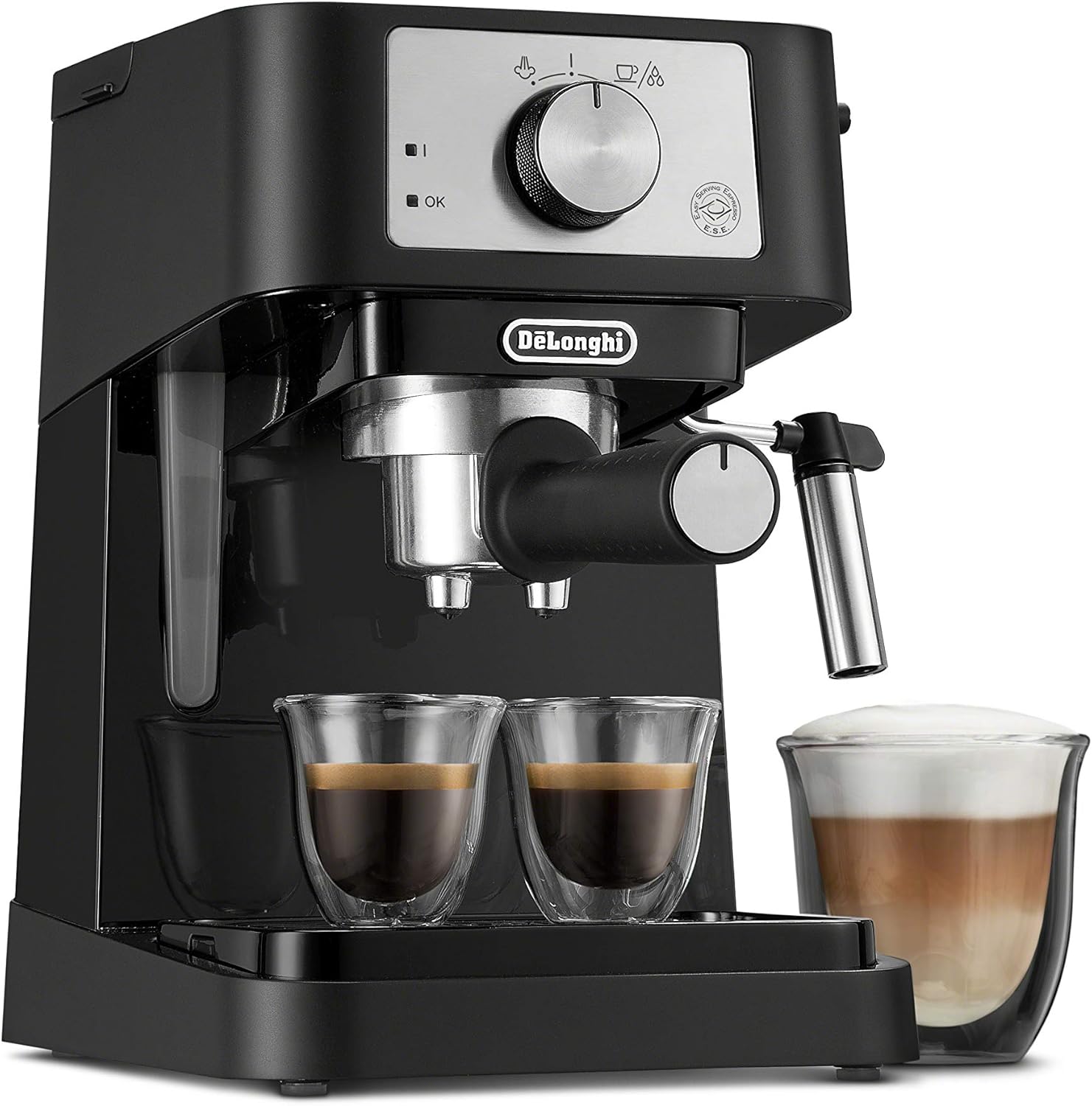
De'Longhi Stilosa EC260BK
| Output Pressure | 15 bar |
|---|---|
| Wattage | 1100 watts |
| Power Source | AC adapter |
| Coffee Input Type | ground_coffee |
| Filter Type | Reusable |
The De'Longhi Stilosa EC260BK is a compact manual espresso machine aimed at home users who want to make espressos, lattes and cappuccinos without a steep learning curve. It uses a 15 bar pump and an ergonomically designed portafilter with single and double filters to extract shots from ground coffee, while a manual steam wand textures milk for creamy cappuccinos and lattes. The stainless steel boiler promises consistent heat and durability compared with cheaper all-plastic internals, and the two-level cup holder makes it easy to fit taller mugs. Setup and cleaning are straightforward and the machine includes a tamper and measuring spoon so you can get started right away. Limitations include manual controls that require some technique for best results and a modest 33.8 fl.oz water tank that means more frequent refills for multiple drinks. For a sub-$300 machine it balances build quality and useful accessories against the time and practice needed to dial in shots.
Best for: Buyers looking for a budget-friendly but well-built manual espresso machine who value consistent heating and the ability to make milk-based drinks at home while relying on real-user feedback to confirm reliability.
Less Ideal for: People who want push-button automation, one-touch milk systems, or a fully hands-off espresso experience should consider automatic or super-automatic machines instead.
- 15 bar pump and stainless steel boiler for consistent extraction and heat stability
- Includes portafilter, tamper, single and double filters so you can start brewing immediately
- Manual steam wand produces textured milk for lattes and cappuccinos
- Compact footprint and two-level cup holder that fits taller cups
- Manual operation requires practice to achieve consistent shot quality
- Relatively small 33.8 fl.oz water tank needs frequent refilling for multiple drinks
Verdict: A solid, compact manual espresso machine that delivers factory-quality heating and milk-texturing for home users who want reliable performance under $300.
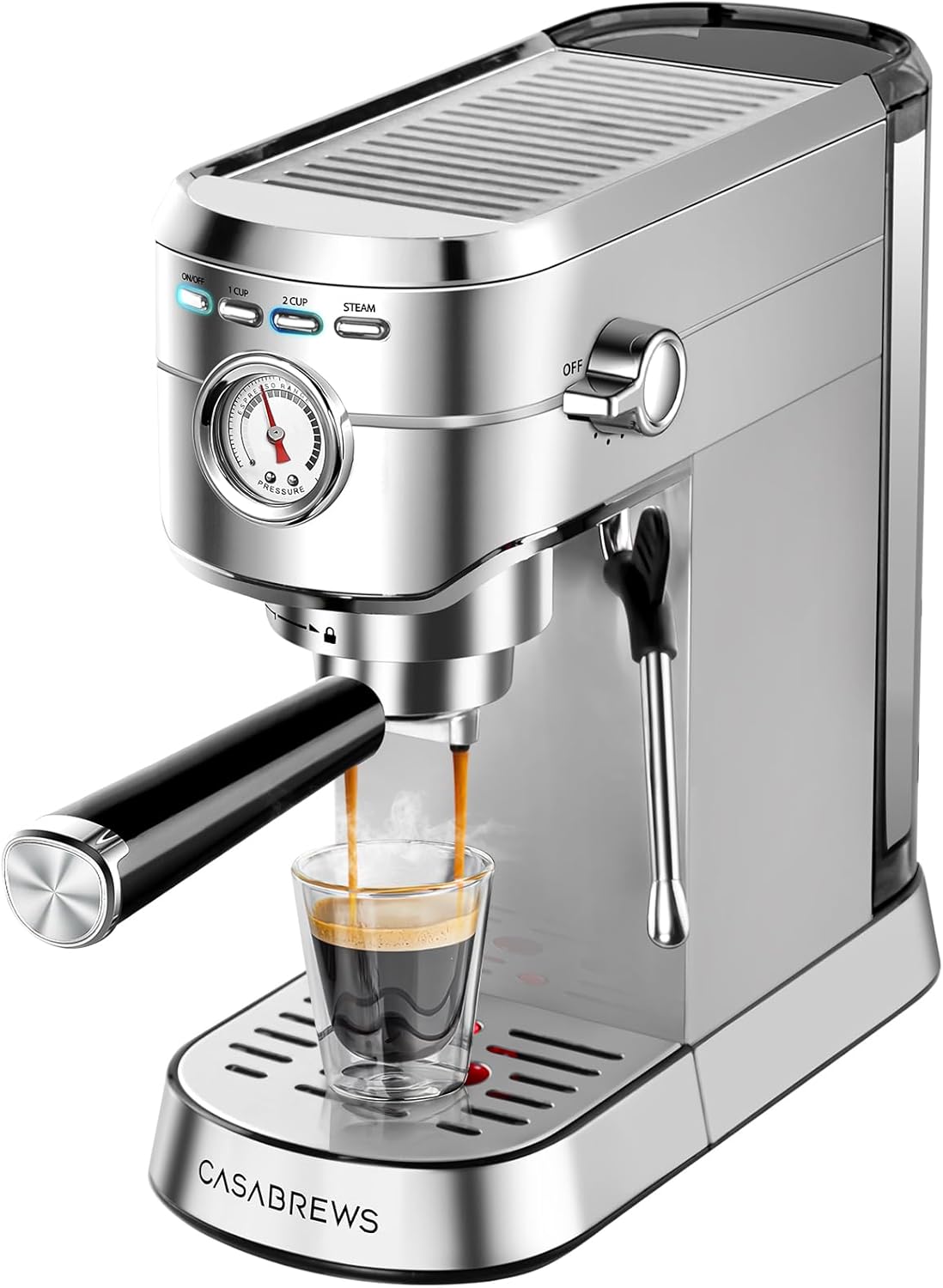
CASABREWS CM5418 Espresso Machine
| Output Pressure | 20 bar |
|---|---|
| Wattage | 1350 watts |
| Operation Mode | Semi-Automatic |
| Coffee Input Type | ground_coffee |
| Filter Type | Reusable |
The CASABREWS CM5418 is a compact semi-automatic espresso machine built for home use that combines a 20-bar pump and a built-in pressure gauge to help you dial in consistent shots. It accepts ground coffee, uses 51mm filter baskets, and offers single- and double-shot buttons so you can control shot volume. The steam wand produces textured microfoam suitable for lattes and cappuccinos, and a top cup warmer plus a removable 34 oz water tank make daily use convenient. Practical features like pre-infusion and a visual pressure gauge help beginners troubleshoot grind and tamping for better extraction. Expect short warm-up times and 1350W power that delivers quick readiness. Limitations include the single boiler design, which means you should avoid brewing immediately after steaming to prevent overheating and delays while the unit cools; also, it requires manual tamping and some technique to get the best crema. For buyers who want near-cafe drinks at home without professional complexity, this machine balances features and size well.
Best for: Buyers who want a reliable, feature-packed home espresso machine that helps guide extraction and milk-texturing without professional complexity and prefer a straightforward, fuss-minimizing experience.
Less Ideal for: Those seeking true dual-boiler or commercial workflow for back-to-back steaming and brewing, or users who want fully automatic bean-to-cup operation without manual dosing and tamping.
- 20-bar Italian pump with built-in pressure gauge for visible extraction feedback
- Powerful steam wand capable of producing microfoam for lattes and cappuccinos
- Removable 34 oz water tank and cup warmer for convenient daily use
- Compact stainless steel body that fits small counters and includes reusable filter baskets
- Single boiler means you must wait for the machine to cool after steaming before brewing again
- Requires manual tamping and some experimentation with grind and dose to achieve optimal shots
Verdict: A compact, user-friendly semi-automatic that delivers café-style shots and steam performance for home users who want control without pro complexity.
Choosing the Right Espresso Machine: Key Factors to Consider
Extraction Consistency and Pressure Control
What the pump and group head deliver directly affects shot quality. Reliable pressure delivery during the 25–30 second extraction window produces balanced flavor and crema.
Look for machines that maintain steady pressure and allow you to control dose and grind. If a machine cannot hold pressure or cycles wildly during a shot, the result is under- or over-extraction and inconsistent cups. For home users, small differences in pump consistency have outsized effects on perceived quality.
Steam Wand Power and Milk Texture
If you plan to make lattes or cappuccinos, the wand or milk system matters as much as the brew head. A wand with good steam pressure and a proper tip lets you introduce air and create microfoam for smooth latte art.
Consider how easy it is to position the wand, how much steam control is offered, and whether the wand is easy to purge and clean. Low-power wands produce thin, large-bubbled foam that does not integrate well with espresso, limiting the range of drinks you can make.
Build Quality and Serviceability
Materials, internal components, and access for maintenance determine how long a machine will perform well. Metal boilers, brass fittings, and serviceable pumps are preferable to thin plastics and permanently sealed units.
Also check how easy it is to access the water reservoir, clean the group head, and replace wearable parts like gaskets or filters. A machine that is slightly more robust but maintainable will likely save money and hassle over time.
Ease of Cleaning and Daily Maintenance
Routine cleaning keeps shots tasting fresh and prevents failures. Features that reduce daily labor include removable drip trays, clear water reservoirs, accessible portafilters, and simple backflush or cleaning procedures.
If maintenance is awkward or time-consuming, owners often skip it, which degrades taste and shortens lifespan. Consider how filters are replaced and whether the machine supports standard cleaning tools.
Size, Capacity, and Kitchen Fit
Physical footprint and water tank capacity influence how the machine fits into your workflow. A compact machine saves counter space but may have a smaller reservoir that needs frequent refills.
Think about how often you brew, how many milk drinks you make, and whether the machine fits under cabinets or beside other appliances. Accessibility to controls and portafilter clearance for taller cups is also important.
Control Options and User Skill Level
Different machines suit different users. Some are purposely simple with one-touch functions for quick shots, while others provide manual control over dosing and steam for enthusiasts.
If you are new to espresso, a machine with straightforward controls and forgiving temperature stability helps you learn. Experienced home baristas may prefer adjustable settings and a commercial-style portafilter that supports dialing in grind and dose.
Countertop Placement and Workflow Tips
Plan where the machine will live before buying. Leave space for the water reservoir to be removed and replaced, for the steam wand to swing without hitting nearby objects, and for a small workspace to tamp and rest cups. If you drink multiple beverages per morning, position the machine near storage for cups and tools to streamline your routine.
- Allow 4–6 inches of clearance behind the machine for reservoir removal.
- Place a small tray or towel near the wand to catch steam and milk drips.
- Keep a dedicated tamper and distribution tool within arm's reach.
Choosing Between One-Touch and Manual Controls
One-touch or automatic shot presets are convenient for consistent results, especially if you prefer speed. Manual paddles and pressure-activated buttons give more control over shot length and allow experimentation with extraction variables. Consider whether you want preset convenience or the ability to fine-tune shots as your skills improve.
- Automatic presets reduce setup time but limit tuning.
- Manual controls require more attention but unlock better results for practiced users.
Grind and Dose: The Biggest Impact on Results
The single largest variable you control is grind size and dose weight. Even the best machine cannot compensate for incorrect grind. Use a consistent, espresso-appropriate grind and measure dose by weight if you can. Small adjustments in grind and dose will noticeably change extraction and mouthfeel.
- Start with a typical espresso dose range and adjust by 0.1–0.2 grams.
- If your shots taste sour, try a finer grind; if bitter, try coarser.
Simple Maintenance Routines to Prolong Lifespan
Set a short weekly and monthly maintenance routine. Daily wiping of the group head, purging the wand after each use, and emptying the drip tray prevents buildup. Monthly tasks should include backflushing with a cleaner if the machine supports it and descaling according to water hardness and usage.
A small time investment in straightforward cleaning preserves flavor and avoids costly repairs later. Keep a basic kit of cleaning tablets, a soft brush, and a descaling solution handy.
- Purge the steam wand immediately after steaming.
- Backflush monthly if supported; otherwise clean the portafilter and basket thoroughly.
Accessories That Make a Big Difference
A few inexpensive accessories can raise your at-home results. A simple scale helps dial in dose, a quality tamper improves puck consistency, and a milk thermometer or pitcher speeds steaming and temperature control. These extras are often a better investment than upgrades in machine features alone.
Also consider a compact knock box and a brush for the group head. Proper accessories reduce variability and make the daily routine smoother.
- Use a 58 mm or correctly sized tamper for your machine's portafilter.
- A digital scale to 0.1 g helps with repeatable dosing.
How We Chose the Best Espresso Machine
Our selection process focused on machines that realistically deliver espresso-style shots within the sub-$300 budget while avoiding units that sacrifice core function for low cost. We prioritized concrete, testable specs and everyday usability. Key evaluation dimensions included brewing consistency and pressure stability, steam wand or milk system effectiveness, build quality and serviceable parts, and ease of cleaning and maintenance. We filtered out machines that lacked a proper 15-bar pump or did not provide user-adjustable dosing or tamping compatibility, since those omissions materially affect shot quality. Units with proprietary, non-serviceable heating systems were excluded unless they offered clear tradeoffs in convenience. We also favored machines with replaceable water filters or accessible internal components. The final shortlist balances extraction performance, practical milk steaming, user ergonomics, and long-term durability for home use in this price tier.
Our full evaluation process is outlined in our review methodology.
FAQ
Do you need a grinder with an espresso machine under $300?
Often yes. Grind quality has the largest influence on shot consistency. While some machines accept pre-ground espresso, a burr grinder gives far better and more repeatable results and makes dialing in shots possible.
How often should I descale a budget espresso machine?
Descale frequency depends on water hardness and use, but a common interval is every 2–3 months for hard water or every 6 months for softer water. Follow manufacturer guidance and look for signs like slow heating or odd tastes.
Can I steam milk well on lower-cost machines?
Many machines under $300 can steam milk adequately for lattes, but steam power and wand control vary. Expect slower steaming and more technique work than higher-end steam systems, and plan for longer heat-up times between successive milk drinks.
Is a 15-bar pump necessary?
A pump rated around 15 bar is a common spec and useful for creating pressure, but what matters more is stable pressure during extraction. A stated 15-bar rating alone does not guarantee good shots without proper boiler and brew group control.
How important is removable water tank access?
Very important for daily convenience. Removable reservoirs make refilling and cleaning simpler and reduce the chance of spills and mineral buildup compared with hard-plumbed or difficult-to-access tanks.
Final Verdict
Choose an espresso machine under $300 by prioritizing the features that matter most to how you drink. If you make milk-based drinks, favor models with a stronger, serviceable steam wand and easy purge access. If straight espresso shots are your focus, look for steady pressure delivery and a durable portafilter setup. Balance footprint and tank capacity against how often you brew. Investing in basic accessories and a good grinder will usually yield larger quality gains than spending the full budget on a slightly better machine. With reasonable expectations for maintenance and technique, a sub-$300 machine can reliably produce satisfying espresso at home.