
Note: This article contains affiliate links. If you click on these links and make a purchase, we may earn a small commission at no extra cost to you. This helps support our research and content. Read our full affiliate disclosure here.
If you want café-style coffee without the ongoing cost of shop visits, a bean-to-cup coffee maker can be a game changer. Under $200, you can find machines that grind fresh beans and brew consistently, saving time on mornings and reducing clutter compared with separate grinder-and-brewer setups. Picking the right unit matters because extraction, noise, and cleaning requirements vary widely and affect how often you will actually use it. This guide shortlists the top bean-to-cup coffee makers under $200 and explains the practical differences between them. We evaluated grind consistency, brew performance, build and upkeep, and how suited each model is to everyday home use. Read on for the key considerations and FAQs to help you pick the best fit for your kitchen and routine.
Top Picks at a Glance
| Best Overall The best all-around choice for most situations | AMZCHEF Espresso Machine CM1626 |  |
| Best Quality Built to a higher standard if you want something more solid | Hausmojo CM1620 Espresso Machine |  |
| Best Value The sweet spot between price and what you get | Gevi Grind & Brew 10-Cup | 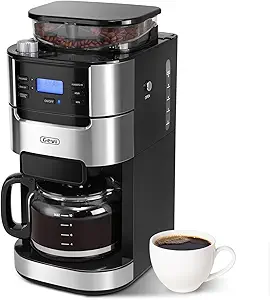 |
| Best Budget The cheapest option that still gets the job done reliably | Mixpresso 5-Cup Coffee Maker |  |
| Top Rated A top-rated pick with lots of positive feedback | Gevi Grind & Brew 10-Cup |  |
| Most Popular A crowd favorite that many people choose with confidence | Cuisinart Grind & Brew DGB-550BK |  |
| Best Seller A high-volume bestseller chosen again and again | Cuisinart Grind & Brew DGB-30 |  |
AMZCHEF Espresso Machine CM1626

| Operation Mode | Semi-Automatic |
|---|---|
| Wattage | 1500 watts |
| Coffee Input Type | whole bean |
| Capacity | 3.9 pounds |
The AMZCHEF CM1626 combines a built-in grinder, temperature control, and steam wand into a compact semi-automatic unit aimed at home use. It grinds whole beans into one of 44 grind settings, lets you adjust brewing temperature between 190°F and 201°F, and offers one-touch brewing modes including a cold brew option. The 60 oz removable water tank and 1500 watt powertrain get the machine up to temperature quickly, and the stainless steel steam wand produces microfoam for cappuccinos and lattes when paired with proper milk and technique. A touch display reports grind and brew parameters, and the descaling feature and removable tank simplify maintenance. Expect a learning curve dialing in grind, dose, and tamp to hit consistent shots, and the grinder may need occasional cleaning if oily beans clog it. For its size it delivers a lot of control and useful features, but it is not fully automatic so users should plan on basic hands-on workflow and routine cleaning.
Best for: Buyers who want a single compact machine that grinds beans and produces espresso and milk drinks with adjustable temperature and grind control, and who value hands-on control over fully automatic convenience.
Less Ideal for: People who want fully automatic push-button simplicity or commercial-level throughput should look at automatic or prosumer machines instead.
- Built-in grinder with 44 adjustable grind settings for fine control
- Temperature control between 190°F and 201°F for tailored extraction
- Powerful steam wand and 1350W heating system for quick microfoam
- 60 oz removable water tank and removable components for easier cleaning
- Touchscreen one-touch brewing and cold brew mode simplify use
- Semi-automatic operation requires practice to achieve consistent shots
- Grinder can clog with oily or damp beans and needs regular cleaning
- Compact machine may have smaller internal components than prosumer units
Verdict: If you want an affordable bean-to-cup home espresso setup with extensive grind and temperature control for making espresso and milk drinks, this machine packs those features into a compact, user-focused package.
Hausmojo CM1620 Espresso Machine

| Output Pressure | 20 bar |
|---|---|
| Wattage | 1350 watts |
| Operation Mode | Semi-Automatic |
| Coffee Input Type | Ground, Whole Bean |
The Hausmojo CM1620 is an all-in-one countertop espresso maker that grinds beans, extracts espresso, and steams milk for lattes and cappuccinos. It pairs a 44‑setting stainless conical burr grinder with a 20‑bar pump and low‑pressure pre‑infusion to produce consistent shots and thick crema, while the touchscreen and grind controls let you fine‑tune each brew. A powerful steam wand creates microfoam for milk-based drinks and the removable 61 oz water tank reduces refill frequency. Practical touches include a detachable drip tray, cup warmer, dosing funnel and a 51mm portafilter with single and double baskets for a barista workflow at home. Expect a learning curve dialing in grind and dose and occasional grinder clumping with oily beans or high humidity, so it needs routine cleaning and attention to bean quantity. The machine is compact and stainless steel, but it requires active user input for tamping and steaming since it is semi‑automatic rather than fully automatic.
Best for: Buyers who prioritize extraction control and want a single machine that handles grinding, shot tuning, and milk steaming to produce café‑quality espresso at home.
Less Ideal for: Those who want push‑button, fully automatic operation or a maintenance‑free appliance should consider simpler super‑automatic or pod machines instead.
- Integrated 44‑setting conical burr grinder for precise grind control
- 20‑bar pump with low‑pressure pre‑infusion for balanced extraction and crema
- Powerful steam wand that produces café‑style microfoam
- Large removable 61 oz water tank reduces refills and is easy to clean
- Includes 51mm portafilter, tamper, dosing funnel and accessories for a barista workflow
- Grinder can clump with oily beans or in high humidity without regular maintenance
- Semi‑automatic operation requires manual tamping and steaming, so not fully hands‑off
- Learning curve to dial in grind, dose, and shot volume for consistent results
Verdict: If you want a compact bean‑to‑cup machine that gives you granular control over grind and extraction for café‑style drinks, the CM1620 delivers serious performance for home use.
Gevi Grind & Brew 10-Cup
| Capacity | 1.5 liters |
|---|---|
| Wattage | 900 watts |
| Voltage | 120 volts |
| Coffee Input Type | ground, whole bean |
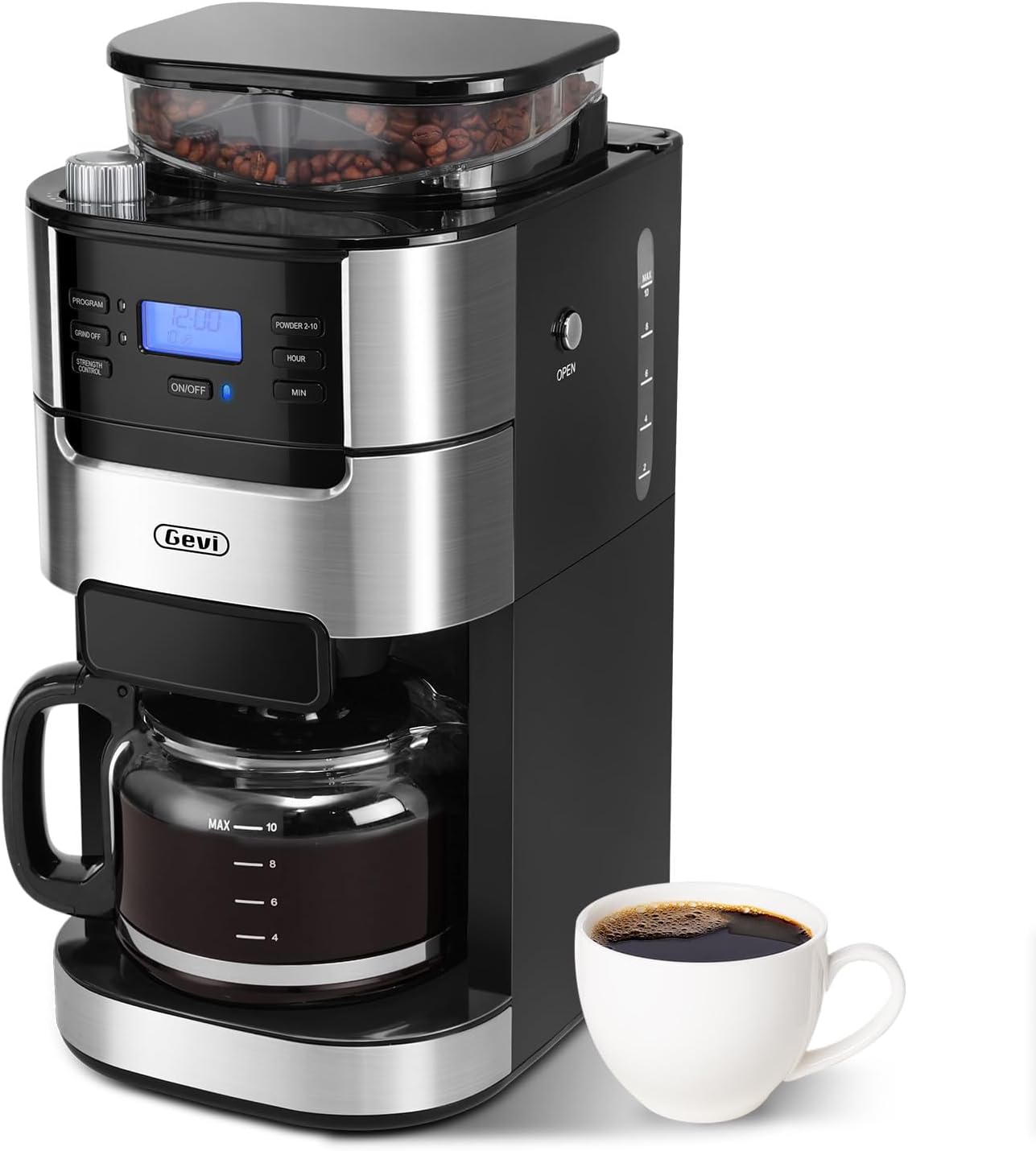
The Gevi Grind & Brew combines a burr grinder and drip brewer into one countertop machine that handles 2–10 cup brews. You load beans in the hopper, pick one of eight grind settings and three strength levels, and the unit grinds fresh before brewing; the POWDER 2–10 button automatically scales the water-to-coffee ratio for different batch sizes. Practical touches include a 1.5 L water tank, programmable delay timer, pre-brew soaking to improve extraction, and a reusable permanent filter to avoid paper waste. In real use the grinder settings and strength control let you tune flavor from mild to robust, and the keep-warm function holds coffee for a short time after brewing. Expect some regular cleaning of the grinder and grounds area, and the machine is fairly tall so check cabinet clearance. For buyers who want fresh-ground drip coffee without using separate devices, this hits the key needs while staying compact enough for most kitchens.
Best for: Buyers who want fresh-ground drip coffee without buying separate grinder and brewer and who prioritize adjustable strength and batch-size flexibility for everyday use.
Less Ideal for: Anyone who needs an ultra-compact or under-cabinet unit or who prefers single-serve brewing or commercial-grade espresso extraction.
- Built-in burr grinder with multiple grind settings for fresher flavor
- Programmable timer and automatic powder-to-cup scaling for 2–10 cup batches
- Three brew strength settings to match taste preferences
- Reusable permanent filter reduces paper waste and ongoing cost
- Pre-brew technology improves extraction and aroma
- Requires regular cleaning of grinder and grounds compartment to prevent clogging
- Taller footprint may not fit under low kitchen cabinets
Verdict: If you want café-fresh drip coffee from whole beans in a single countertop unit with adjustable strength and batch sizing, this Gevi grind-and-brew is a practical choice.
Mixpresso 5-Cup Coffee Maker

| Wattage | 650 watts |
|---|---|
| Operation Mode | Fully Automatic |
| Coffee Input Type | ground, whole bean |
| Capacity | 1.6 pounds |
The Mixpresso 5-Cup Coffee Maker combines a bean grinder and automatic drip brewer in a small, countertop-friendly package aimed at everyday use. You load either whole beans or ground coffee, the built-in grinder processes beans just before brewing, and the 25 oz tank fills a 5-cup glass carafe that sits on a non-stick warming plate. The unit has a simple button LCD interface with a 24-hour delay timer and an auto shutoff for energy savings, plus an anti-drip system and removable mesh filter for easier cleanup. At 650 watts it delivers reasonable brew speed and the quiet grinder helps keep morning noise down. Trade-offs are its small capacity suited to solo or couple use rather than large households and a mostly plastic build that keeps cost and weight down but may not match higher-end durability. For budget buyers who want freshly ground beans without a separate grinder, this is a convenient all-in-one option.
Best for: Buyers on a tight budget who want the convenience of grinding beans and brewing in one compact machine for daily solo or small household use.
Less Ideal for: Large households or users who need multiple carafes per brew or prefer metal-heavy, premium construction should consider larger or higher-end models.
- Built-in grinder lets you brew from whole beans for fresher flavor
- Programmable 24-hour timer and LCD for scheduled brewing
- Compact footprint fits small kitchens and dorms
- Removable mesh filter and anti-drip design simplify cleaning and pouring
- Small 25 oz water tank limits output to 2–5 cups per brew
- Predominantly plastic construction may feel less durable than higher-end machines
Verdict: If you want fresh-ground coffee without buying a separate grinder, this compact programmable brewer delivers that convenience on a tight budget.
Gevi Grind & Brew 10-Cup

| Capacity | 1.5 liters |
|---|---|
| Wattage | 900 watts |
| Coffee Input Type | ground, whole bean |
| Filter Type | Permanent Filter |
The Gevi Grind & Brew is an all-in-one drip machine that grinds beans and brews up to 10 cups on a programmable schedule. You load beans into the hopper, choose grind and strength settings, set the 24-hour timer and the machine grinds fresh and runs an automated brew cycle into the glass carafe. Notable features include a built-in conical burr grinder with multiple grind settings, a reusable permanent filter, pre-brew extraction to wet grounds before full brew, and a keep-warm plate. In practice it simplifies morning routines by removing a separate grinder step and offers flexible cup counts from 2 to 10. Practical benefits are fresher flavor from same-machine grinding, fewer tools to clean, and programmable delay brewing for consistent mornings. Expect some compromises typical of combo units: the glass carafe and plastic housing keep it affordable but are less durable than all-metal alternatives, and oily dark roasts can clog the grinder so regular cleaning and medium roasts work best. The unit is best for daily household use where convenience and consistent brewing matter more than commercial-grade parts.
Best for: Buyers who prioritize dependable everyday convenience and want one machine to handle grinding and drip brewing with easy scheduled starts.
Less Ideal for: Those seeking a commercial-grade or fully metal construction machine, or buyers who regularly use very oily dark roasts and want a dedicated industrial grinder.
- Built-in conical burr grinder for fresher grounds right before brewing
- Programmable 24-hour timer for ready-made morning coffee
- Reusable permanent filter reduces waste and simplifies upkeep
- Pre-brew extraction and strength controls improve flavor consistency
- Plastic-heavy construction and glass carafe are less rugged than metal-bodied units
- Grinder can struggle with oily dark-roast beans and needs periodic cleaning
Verdict: A reliable, budget-friendly bean-to-cup drip maker that grinds and brews on a schedule, ideal for households that want fresh coffee with minimal extra equipment.
Cuisinart Grind & Brew DGB-550BK

| Capacity | 12 cups |
|---|---|
| Wattage | 1100 watts |
| Coffee Input Type | Whole Bean |
| Filter Type | Reusable |
The Cuisinart DGB-550BK combines a built-in bean grinder with a 12-cup drip brewer so you can grind fresh beans and brew a full carafe on a timer. You fill the bean hopper, pick a grind-to-brew setting and program a 24-hour start time for morning coffee; the reusable filter and water filter simplify daily use and reduce paper waste. At 1100 watts it heats quickly and the glass carafe lets you monitor volume while the control buttons are straightforward to operate. Practical benefits include fresher-tasting coffee compared with using pre-ground beans and the convenience of scheduling a single-step grind-and-brew cycle. Limits to expect are typical for this class: the built-in grinder uses a blade-style mechanism so grind consistency is not as uniform as a burr grinder, and the glass carafe does not retain heat like a thermal carafe. The unit is midweight and has a brushed stainless look that fits most kitchens, but if you need espresso-style pressure or barista-level grind control this model is not designed for that.
Best for: Someone who values fresh-ground drip coffee and wants a single machine to grind beans and auto-brew a full carafe for daily household use, with straightforward controls and programmable convenience.
Less Ideal for: Buyers who need precise grind control, espresso capability, or long-lasting thermal heat retention should look at machines with burr grinders, espresso systems, or thermal carafes instead.
- Integrated grinder and brewer for one-step fresh coffee
- Programmable 24-hour start for ready coffee in the morning
- Reusable permanent filter and water filter reduce ongoing costs
- Simple button controls make daily operation easy
- Uses a blade grinder rather than a burr grinder so grind uniformity is limited
- Glass carafe does not keep coffee as hot as a thermal carafe
Verdict: Choose this model if you want a convenient, programmable bean-to-cup drip machine that grinds and brews a 12-cup pot for reliably fresher daily coffee.
Cuisinart Grind & Brew DGB-30
| Capacity | 24 fluid ounces |
|---|---|
| Coffee Input Type | whole bean, ground |
| Filter Type | Reusable |
| Operation Mode | Fully Automatic |
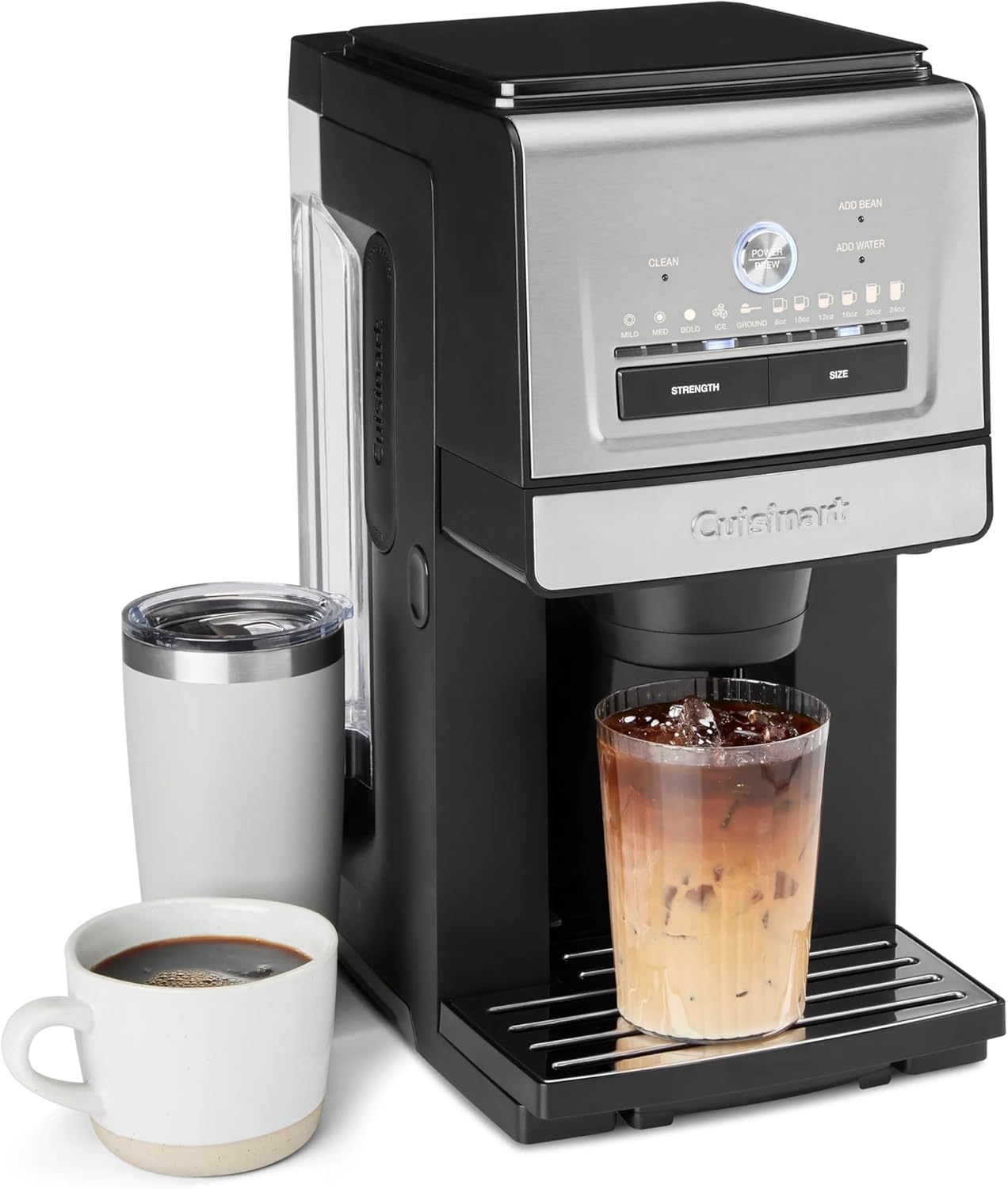
The Cuisinart Grind & Brew DGB-30 grinds whole beans and brews single-serve drip coffee in sizes from 8 to 24 ounces, with programmable controls for grind, strength, and an over-ice option for iced coffee. It uses a stainless steel conical burr mill to grind beans just before brewing, and a removable hopper, brewing chamber, and drip tray that make daily cleaning and maintenance straightforward. Brewing happens at a higher temperature than many single-serve machines, so cups come out consistently hot, and the grind-off setting lets you use pre-ground coffee when desired. Practical benefits include adjustable brew strength, a reusable filter to avoid paper costs, and a removable drip tray that fits travel mugs. Limitations are the requirement to clear out grounds after each use to avoid buildup and that the 24-ounce max limits batch brewing for multiple people at once; the machine is built around single-serve convenience rather than making large carafes.
Best for: Buyers who want fresh-ground single-serve drip coffee and value consistent hot brews with programmable options and easy daily maintenance.
Less Ideal for: Households that need to brew large pots for several people at once or want a hands-off, rarely maintained machine.
- Built-in stainless steel conical burr grinder for fresh grounds before each brew
- Brews 8 to 24 ounce servings with adjustable strength and grind control
- Programmable controls and over-ice function for iced coffee
- Removable hopper, brewing chamber, and drip tray for easier cleaning
- Reusable filter reduces ongoing paper filter costs
- Requires emptying ground coffee after every use to prevent buildup
- Not designed for brewing large carafes or serving multiple people at once
Verdict: Choose this model if you want a reliable bean-to-cup single-serve brewer that grinds fresh beans and delivers consistently hot, customizable cups.
Choosing the Right Bean-to-Cup Coffee Maker: Key Factors to Consider
Grind Adjustability and Burr Type
How the machine grinds whole beans is the single biggest determinant of cup quality. Machines with multiple grind settings let you tune particle size for espresso-style concentrated shots or longer filter-style brews. At this price point, expect mostly blade or entry-level burr grinders; prefer burr designs for more consistent particle distribution.
Grind adjustment also affects extraction balance. Finer grinds extract faster and produce stronger, more concentrated flavors, while coarser grinds extract slower and can taste weak. If you plan to use darker or lighter roasts interchangeably, look for clear, repeatable grind steps so you can switch settings without guesswork.
Brew Temperature Control
Stable water temperature during extraction impacts flavor clarity and bitterness. Machines with basic thermostatic control or preheating cycles usually deliver more consistent results than machines that rely on ambient heat only. At lower price points, expect modest temperature regulation, so look for models that advertise brew temperature range or preinfusion functions.
Poor temperature stability can make coffee taste over-extracted or dull. If you prefer brighter notes in lighter roasts, aim for units that emphasize hotter, steady brewing. For darker roasts, slight temperature moderation can reduce bitterness, so ease of adjustment and consistent heating are worth prioritizing.
Cleaning Access and Removable Parts
Bean-to-cup machines combine grinders, channels, and water paths that collect oil, grounds, and limescale. Frequent cleaning prevents off-flavors and mechanical issues. Favor models with tool-free removal for the bean hopper, burr assembly, and brew group or drip tray to keep maintenance quick.
Consider how easy it is to access the grinder and brew areas for brushing and rinsing. Machines that require disassembly with tools or have sealed internal compartments will increase upkeep time and reduce the likelihood you will perform regular maintenance, shortening the appliance's effective life.
Machine Footprint and Water Capacity
Counter space is a practical constraint for many kitchens. Compact dimensions and a slim footprint help if you have limited room, but smaller machines often have smaller water reservoirs, which means more frequent refilling for households that brew multiple cups.
Think about typical daily volume. If you brew one cup each morning, a smaller reservoir is fine. For multiple daily servings or guests, a larger tank reduces interruptions. Also check how easy it is to remove the reservoir for refilling and whether the design fits under common cabinets.
Noise and Speed
Integrated grinders add noise to the brewing process. Quieter units make early-morning use less disruptive, which is important in shared living situations or apartments. However, quieter grinders sometimes sacrifice speed or use smaller motors.
Balance noise tolerance against how quickly you need your coffee. A faster grind-to-brew cycle is convenient for busy mornings, but if you value a peaceful household, prioritize models noted for quieter operation or that allow scheduled brewing so the grinder runs at a predictable time.
How Bean-to-cup Machines Differ From Separate Grinders and Brewers
An integrated bean-to-cup machine combines grinding and brewing in one unit to save counter space and simplify the routine. That integration can be a convenience win because it eliminates the need to transfer grounds and coordinate two devices, but it also concentrates failure modes and maintenance into a single appliance.
With separate grinder and brewer setups you often get better grinder performance and more flexible brewing hardware. Conversely, single-unit machines aim for a balance of convenience and acceptable brew quality. Under $200 models try to optimize that balance, so understanding the compromises—especially around grind consistency and cleanability—helps set realistic expectations.
- Integrated systems reduce workflow steps but increase maintenance points.
- Single-unit machines are typically sized for home use and smaller volumes.
- Expect tradeoffs between grinder sophistication and compact design at this price.
Daily Maintenance Routine That Keeps Flavor Consistent
A simple, repeatable cleaning routine will keep a bean-to-cup machine producing better coffee and extend its usable life. After each use, empty the catch tray and wipe the brew area. Weekly, remove and brush out the bean hopper and the accessible grinder areas to prevent oil buildup.
Monthly descaling of the water path reduces mineral buildup that alters taste and blocks small passages. Use a recommended descaling method for your water hardness. Consistent maintenance prevents gradual flavor decline and helps avoid service issues that are more common when internal components are neglected.
- Daily: Empty grounds and wipe surfaces.
- Weekly: Brush out hopper and grinder, clean drip tray.
- Monthly: Descale and sanitize water reservoir.
Best Grind Settings for Common Coffee Styles
For concentrated short shots similar to espresso, use the finer end of the grind range. This produces a richer, fuller cup but can increase the risk of clogging or slower flow in machines not designed for true espresso pressure. For standard drip-strength coffee, select a medium grind that balances extraction and flow.
Coarser grinds are appropriate for milder, longer brews and reduce the chance of over-extraction. If your machine offers numbered settings, start in the middle and adjust one step at a time while tasting. Small incremental changes are easier to dial in than large jumps.
- Fine: concentrated, bold flavor; watch for slow flow.
- Medium: balanced extraction for everyday cups.
- Coarse: lighter body, less bitterness.
Water Quality and Its Impact on Taste
Tap water minerals interact with coffee compounds and affect both flavor and machine longevity. Hard water speeds scale buildup and can mute delicate flavors, while very soft or distilled water may produce flat-tasting coffee because minerals contribute to extraction balance.
Use filtered water with moderate mineral content when possible. Regular descaling based on your local water hardness reduces maintenance problems and helps preserve consistent brewing temperatures and flow rates.
- Check local water hardness and adjust descaling frequency accordingly.
- Use a simple charcoal filter or bottled water with balanced minerals if needed.
- Avoid distilled water for brewing unless minerals are added back for extraction.
When a Compact Size Matters More than Small Performance Gains
If counter space is tight or you need a machine that tucks easily into a small kitchen, prioritize compact dimensions and simple controls. Many under $200 models are designed for one- or two-person households and trade advanced features for a smaller footprint.
Accept that very compact machines may use smaller grinders and water tanks. For a single user or occasional guests, the convenience of small size and quick setup outweighs the marginally better extraction you might get from a larger, more feature-rich machine.
- Measure your intended storage or setup area before selecting a unit.
- Consider removable reservoirs that make refilling easier in tight spaces.
- Compact machines are often lighter and easier to store between uses.
How We Chose the Best Bean-to-Cup Coffee Maker
We focused on real-world factors that determine whether an inexpensive bean-to-cup machine will be useful day to day. Key evaluation criteria included grind quality and adjustability, because even a well-designed brewer cannot compensate for an inconsistent grind; brew extraction and temperature stability, since these directly shape flavor; ease of cleaning and removable parts, which influence maintenance time and long-term reliability; machine footprint and water reservoir capacity, to fit kitchen spaces and serving needs; and build quality and warranty support, which matter for lifespan at this price point. Our selection process filtered for machines that include an integrated grinder and automatic brewing in a single footprint, are readily available new, and list clear specifications for grind settings or brew controls. We excluded single-serve capsule systems and separate grinder-plus-brewer bundles. We prioritized units with user-accessible components for cleaning, documented grind adjustments, and straightforward brew programming. The scoring focused on measurable, comparable attributes so shoppers can weigh tradeoffs between flavor, convenience, and upkeep when choosing a budget bean-to-cup coffee maker.
Our full evaluation process is outlined in our review methodology.
FAQ
How often should I clean the grinder and brew path?
Brush out loose grounds and empty the grounds container after each day of use. More thorough cleaning of removable grind components and the brew path should be done weekly, with descaling every one to three months depending on water hardness.
Can I use pre-ground coffee in a bean-to-cup machine?
Many bean-to-cup machines will accept pre-ground coffee if they have a bypass doser or a filter basket that can be filled. Using pre-ground coffee skips the grinder step but reduces freshness compared with grinding immediately before brewing.
Will a bean-to-cup machine make true espresso?
Most budget bean-to-cup machines approximate espresso-style concentrated coffee but do not reach the high pump pressures of professional espresso machines. Expect a stronger, espresso-like cup rather than a true crema-rich espresso shot.
How loud are integrated grinders typically?
Noise levels vary, but integrated grinders at this price often produce noticeable sound during operation. Some models are engineered to be quieter; if noise is a concern, look for units that advertise reduced-grind noise or schedule brewing when ambient sound is acceptable.
What grind setting should I start with for a balanced cup?
Begin with a medium grind setting and adjust one step finer or coarser while tasting. Small tweaks produce clearer differences than large jumps and help you find a balance between strength and clarity for your preferred roast.
Final Verdict
When choosing a bean-to-cup coffee maker under $200, prioritize grind consistency and ease of cleaning because those two factors most directly affect daily enjoyment and machine longevity. Match the machine size and reservoir capacity to your household volume, and consider noise and temperature stability relative to how and when you brew. Tradeoffs are inevitable at this price point: you will gain convenience and a smaller footprint but may accept simpler grinder technology and fewer temperature controls. Focus on the attributes that matter most to you. If fresh flavor and repeatable settings are top priorities, emphasize grind adjustability and build access for cleaning. If space and speed matter more, choose a compact, straightforward unit with an easy refill routine. With the right priorities, you can get reliable, fresh-cup brewing without a complex setup.