
Note: This article contains affiliate links. If you click on these links and make a purchase, we may earn a small commission at no extra cost to you. This helps support our research and content. Read our full affiliate disclosure here.
If you want true fresh-ground coffee without a complex setup, a bean-to-cup coffee maker under $300 can be an efficient daily solution. These machines combine a built-in grinder, dosing system, and integrated brew group to turn whole beans into brewed coffee with minimal steps and countertop space. This guide shortlists the top options in the under-$300 bracket and explains the tradeoffs that matter for home use. We evaluated grind consistency, brew taste, and usability so you can pick a machine that fits your morning routine. Read on for the selection rationale and practical buying factors before the product list.
Top Picks at a Glance
| Best Overall The best all-around choice for most situations | Cuisinart Automatic Grind & Brew 10-Cup |  |
| Best Quality Built to a higher standard if you want something more solid | Grindora Espresso Machine AT-CMG-01 |  |
| Best Value The sweet spot between price and what you get | Gevi Grind & Brew Drip Coffee Maker | 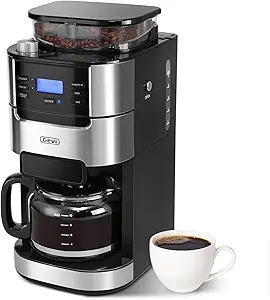 |
| Best Budget The cheapest option that still gets the job done reliably | Mixpresso 5-Cup Drip Coffee Maker |  |
| Top Rated A top-rated pick with lots of positive feedback | Gevi 10-Cup Grind & Brew |  |
| Most Popular A crowd favorite that many people choose with confidence | Cuisinart Grind & Brew DGB-550BK |  |
| Best Seller A high-volume bestseller chosen again and again | AMZCHEF Espresso Machine CM1626 |  |
Cuisinart Automatic Grind & Brew 10-Cup
| Capacity | 10 cups |
|---|---|
| Wattage | 1025 watts |
| Power Source | Corded Electric |
| Coffee Input Type | whole_beans |
| Filter Type | Reusable |
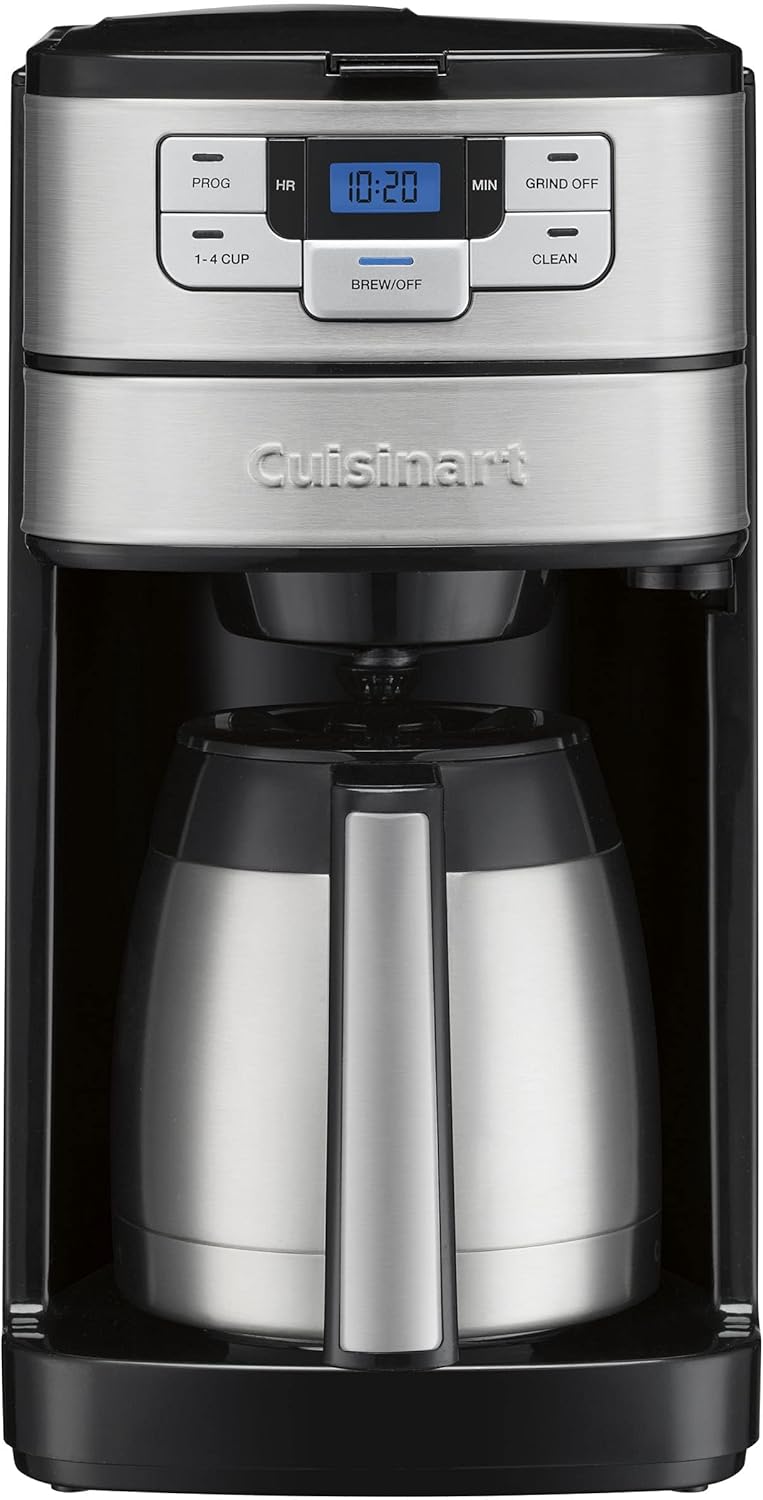
The Cuisinart Automatic Grind & Brew 10-Cup combines a built-in blade grinder and a programmable drip brewer to deliver fresh-ground coffee with minimal effort. You add whole beans to the hopper, set the 24-hour programmable timer if you want coffee ready in the morning, and the machine grinds then brews into a glass carafe; there is also a grind-off option to use pre-ground coffee. Practical touches include a 1-4 cup setting for smaller batches, a Brew Pause to pour a cup mid-cycle, and a reusable gold-tone filter plus a charcoal water filter for cleaner flavor. The blade grinder produces quick, aromatic results but is less consistent than burr grinders, and the glass carafe will not keep coffee hot as long as thermal carafes. Button controls are straightforward and the unit runs at household voltage and wattage levels, making it an easy fit for home or office counters where convenience and fresh flavor matter most.
Best for: Buyers who want a convenient bean-to-cup routine and programmable scheduling for home or small-office use with a focus on fresh flavor over barista-level grind precision.
Less Ideal for: People seeking the most uniform grind and longest heat retention or those who prefer a dedicated burr grinder and thermal carafe setup.
- Integrated blade grinder grinds beans immediately before brewing for fresher flavor
- 24-hour programmable start and 1-4 cup setting for flexible morning prep and small batches
- Reusable gold-tone filter and charcoal water filter reduce waste and improve taste
- Brew Pause feature lets you pour a cup mid-cycle without making a mess
- Blade grinder gives less uniform grind size than a burr grinder
- Glass carafe does not retain heat as long as thermal models
Verdict: A practical programmable grind-and-brew coffeemaker for buyers who want fresh-ground coffee with easy scheduling and everyday convenience.
Grindora Espresso Machine AT-CMG-01

| Output Pressure | 20 bar |
|---|---|
| Coffee Input Type | whole bean |
| Operation Mode | Semi-Automatic |
| Capacity | 1.8 liters |
This Grindora semi-automatic espresso machine combines a built-in conical burr grinder, PID temperature control, and a steam wand to deliver café-style drinks at home. The integrated grinder offers 44 grind settings and precision dosing to tune extraction for different beans, while the PID with three temperature presets helps stabilize brew heat for more consistent shots. A 20-bar pump with pre-infusion aims to improve crema and flavor balance, and anti-static features plus a dosing ring reduce mess during grinding. The machine supports a 51mm portafilter and includes a cup warmer and removable water tank for everyday convenience. Practical benefits include faster single-machine workflow from bean to milk drinks and easier cleaning compared with separate grinder-plus-machine setups. Expect a learning curve to dial in grind size and dose for best results and that build and water capacity are typical for home machines rather than commercial use. For buyers focused on extracting better shots without assembling multiple devices, this unit offers strong performance for its price bracket.
Best for: Buyers who prioritize shot quality and control on a budget and want an integrated grinder-plus-brewer that lets them experiment with grind, dose, and temperature to improve espresso flavor.
Less Ideal for: Users who need a high-volume or commercial-grade machine or who prefer a fully automatic, push-button convenience brewer without manual dialing and technique.
- Built-in conical burr grinder with 44 grind settings for fine tuning extraction
- PID temperature control with three presets for stable brewing temperatures
- 20-bar pump with pre-infusion to improve crema and flavor balance
- Anti-static grinder features and dosing ring reduce mess during use
- Includes steam wand, cup warmer, and removable water tank for convenience
- Home-focused capacity and build quality may not suit heavy daily commercial use
- Dialing in ideal grind and dosing requires time and some trial and error
Verdict: A performance-focused bean-to-cup machine that packs a precision grinder, PID control, and steam wand into one unit for serious home espresso tuning under $300.
Gevi Grind & Brew Drip Coffee Maker
| Capacity | 1.5 liters |
|---|---|
| Wattage | 900 watts |
| Voltage | 120 volts |
| Coffee Input Type | ground, whole bean |
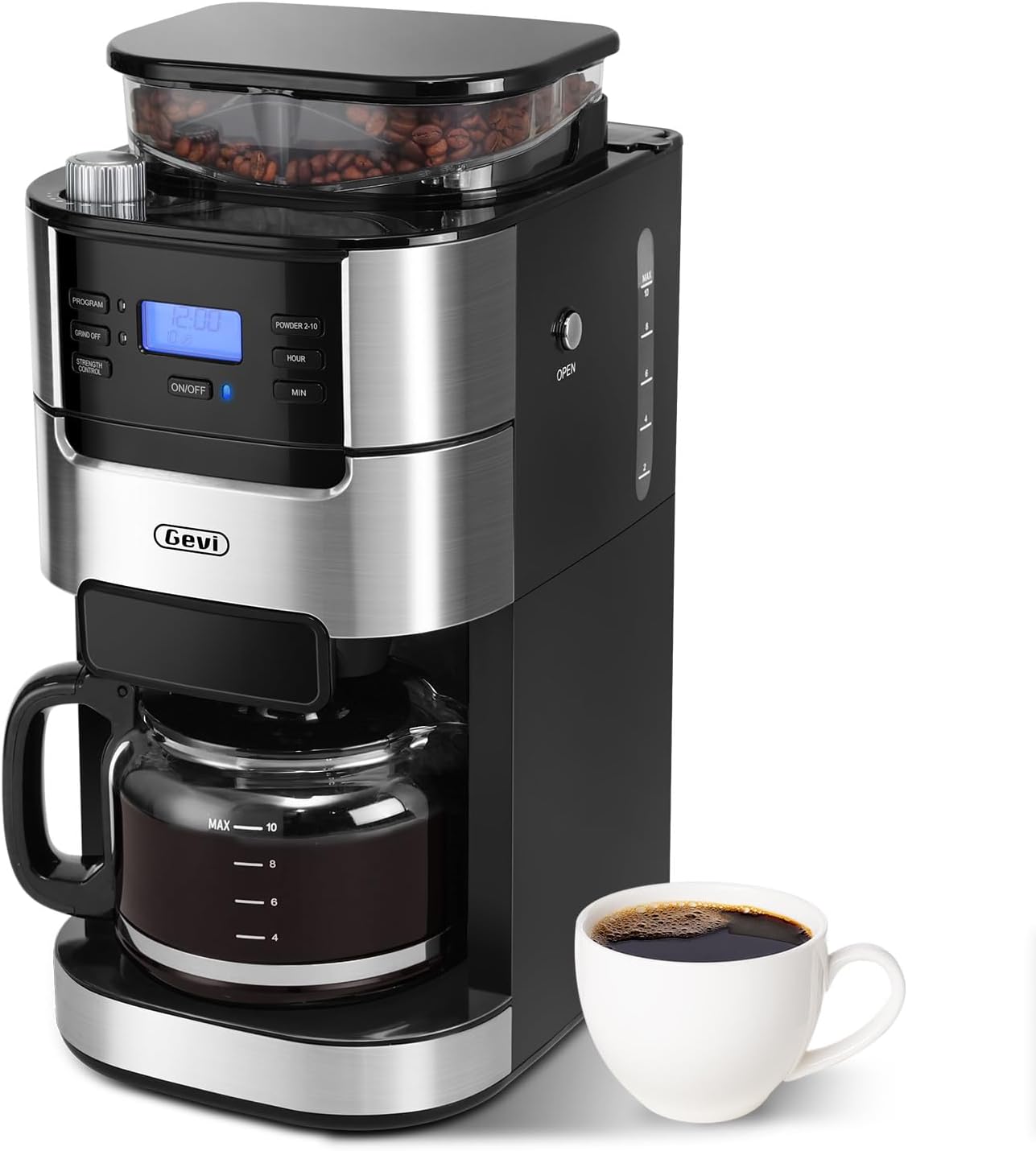
This Gevi grind-and-brew drip coffee maker combines a built-in burr grinder, 1.5 L water tank, and programmable timer to deliver fresh-ground coffee without separate equipment. Use the hopper for whole beans or add grounds directly, choose one of three strength settings and the "POWDER 2-10" portion button to automatically match water-to-coffee ratio, then schedule a brew with the delay timer. The reusable permanent filter and pre-brew saturation step aim to improve extraction and cut paper filter waste, while the 2-hour keep-warm function maintains serving temperature. Practical controls and eight grind settings let you fine-tune flavor, but the unit is fairly tall so check cabinet clearance and the hopper can need weekly cleaning if you use oily dark roasts. For routine daily brewing it replaces a standalone grinder plus brewer and simplifies cleanup compared with multi-part setups.
Best for: Buyers who want to streamline morning routine by combining a grinder and brewer into one machine while keeping flavor control and easy scheduling a priority.
Less Ideal for: Anyone who needs a compact low-profile brewer for tight cabinet spaces or users who prefer a separate commercial grinder and espresso-capable machine.
- Built-in burr grinder with multiple grind settings for fresher flavor
- Programmable timer and portion button for consistent 2–10 cup brewing
- Reusable permanent filter reduces paper waste and ongoing cost
- Pre-brew saturation technology for improved extraction and aroma
- Adjustable brew strength and 2-hour keep-warm for serving convenience
- Tall footprint may not fit under some cabinets
- Oily dark-roast beans can stick and require more frequent hopper cleaning
Verdict: If you want fresher coffee without buying separate appliances, this all-in-one grind-and-brew maker delivers adjustable flavor and scheduled brewing in a single unit.
Mixpresso 5-Cup Drip Coffee Maker

| Wattage | 650 watts |
|---|---|
| Voltage | 110 volts |
| Coffee Input Type | ground, whole bean |
| Capacity | 1.6 pounds |
The Mixpresso 5-Cup Drip Coffee Maker combines a small-capacity drip brewer with an integrated grinder so you can brew fresh coffee from whole beans or use preground grounds. It has a 25 oz water tank and glass carafe that make 2 to 5 cups, and the machine uses a blade-style grinder that runs quietly enough for everyday use. Programming is straightforward via a backlit LCD and delayed-brew timer up to 24 hours, and an auto shut-off plus an anti-drip spout help keep counters tidy and conserve energy. A removable mesh filter and included scoop simplify cleanup and routine maintenance, though the 5-cup capacity means it is best for single users or small households. The unit is compact and uses 650 watts, so it fits modest kitchens but will not match the extraction control or build quality of higher-end bean-to-cup machines. For buyers prioritizing fresh-ground convenience on a budget, it delivers good value, but those wanting larger batches or professional-grade grind and brew precision should look higher up the price ladder.
Best for: Budget-focused buyers who want the convenience of grinding beans and brewing fresh coffee without paying for a full-size bean-to-cup machine, especially in small kitchens or for solo drinkers.
Less Ideal for: Homes that need larger batch brewing, users who demand precise grind settings or café-level extraction, or those who prefer fully stainless or commercial-grade construction.
- Built-in grinder lets you brew from whole beans or ground coffee
- Programmable 24-hour delay and easy-to-read LCD for timed brewing
- Compact footprint suitable for small kitchens and apartments
- Auto shut-off and anti-drip feature help keep the countertop clean
- Removable mesh filter and included scoop simplify maintenance
- Small 2–5 cup capacity not suitable for larger households
- Integrated grinder is basic and offers limited grind-size control
Verdict: An affordable compact grinder-plus-brewer that delivers fresh-ground coffee for 1–2 people, making it a strong value pick under $300.
Gevi 10-Cup Grind & Brew

| Capacity | 1.5 liters |
|---|---|
| Wattage | 900 watts |
| Operation Mode | Fully Automatic |
| Coffee Input Type | ground, whole bean |
| Filter Type | Permanent Filter |
The Gevi 10-Cup Grind & Brew combines a conical burr grinder and drip brewer into one countertop unit so you can grind whole beans and brew automatically on a schedule. You fill the 1.5 L tank, choose cup count and strength using the control panel, and the machine grinds then pre-wets grounds with pre-brew extraction before finishing a full 2–10 cup batch into the glass carafe. Notable features include three grind strength levels with multiple grind settings, a permanent reusable filter, a keep-warm plate, auto shut-off and a 24-hour programmable delay timer for ready-made morning coffee. Practical benefits are fresher-tasting coffee from same-day grinding, flexible batch sizes, and lower long-term cost from the reusable filter. Limits to consider are the glass carafe and plastic/stainless construction which are less robust than commercial materials, and oily dark roasts can stick in the grinder so lighter roasts and regular cleaning are needed to maintain performance.
Best for: Buyers who prioritize dependable, everyday fresh-ground drip coffee and want a single machine that automates grinding and scheduled brewing without complex setup.
Less Ideal for: People seeking a commercial-grade machine, metal carafe durability, or those who primarily use oily dark-roast beans without regular grinder maintenance.
- Built-in conical burr grinder for fresh grinding before brewing
- Programmable 24-hour delay timer for automatic morning brew
- Reusable permanent filter reduces waste and saving on paper filters
- Pre-brew extraction technology to improve flavor and aroma
- Adjustable strength and cup count for 2–10 cup flexibility
- Grinder may require frequent cleaning and can struggle with oily dark-roast beans
- Glass carafe and plastic parts are less durable than metal alternatives
Verdict: Choose this Gevi if you want a reliable all-in-one bean-to-cup drip maker that grinds fresh beans and delivers scheduled 2–10 cup brewing for daily use.
Cuisinart Grind & Brew DGB-550BK

| Capacity | 12 cups |
|---|---|
| Wattage | 1100 watts |
| Power Source | Corded Electric |
| Coffee Input Type | Whole Bean |
| Filter Type | Reusable |
The Cuisinart DGB-550BK combines a built-in burr-style grinder and a 12-cup drip brewer so you can grind beans and brew in one automatic cycle. You fill the bean hopper, set the grind-and-brew program or use the front buttons for immediate brewing, and the machine grinds beans just before extraction to deliver fresher-tasting coffee than pre-ground servings. Notable features include a reusable permanent filter, 24-hour programmability for scheduled starts, and a water filter to reduce scale and off-flavors. The 1100-watt heater gets a full carafe up to temperature quickly and the glass carafe makes it easy to monitor volume. Limitations to consider are the glass carafe instead of thermal insulation, so brewed coffee cools faster, and the unit is relatively large and needs countertop space. The integrated grinder simplifies daily use but adds cleaning needs and occasional adjustments if you prefer very fine or very coarse grinds. For buyers prioritizing fresh brewed coffee from beans without extra equipment, this model is a straightforward, practical choice under $300.
Best for: Buyers who want the convenience and taste improvement of grinding beans immediately before brewing and who value programmable, hands-off morning starts backed by many customer reviews.
Less Ideal for: Anyone who needs a travel-ready thermal carafe to keep coffee hot for hours or who prefers separate, customizable grinder and espresso-capable systems.
- Integrated grinder and brewer for single-step fresh brewing
- Programmable 24-hour start lets you wake to freshly brewed coffee
- Reusable permanent filter reduces waste and ongoing filter purchases
- Water filter helps reduce scale and improves taste consistency
- 1100-watt heater brings a full 12-cup carafe to brewing temperature quickly
- Glass carafe does not keep coffee hot for long compared with thermal carafes
- Integrated grinder requires regular cleaning and occasional adjustment
Verdict: If you want fresh, bean-to-cup drip coffee with programmable convenience and grinder integration under $300, this Cuisinart delivers a simple, reliable solution.
AMZCHEF Espresso Machine CM1626

| Operation Mode | Semi-Automatic |
|---|---|
| Wattage | 1500 watts |
| Coffee Input Type | whole bean |
| Capacity | 3.9 pounds |
| Included Components | Milk Frother |
The AMZCHEF CM1626 is a compact semi-automatic espresso machine that grinds whole beans and brews espresso, plus offers steaming for milk-based drinks. It combines a built-in grinder with 44 grind settings and adjustable brew temperature (190°F–201°F), letting you dial in extraction for different roast profiles. The touchscreen and one-touch brewing modes simplify operation for beginners while the removable 60 oz water tank and descaling function make routine maintenance easier. The stainless steel steam wand and strong heating system produce good microfoam for lattes and cappuccinos, and the machine's 1500 W power helps it heat up quickly. On the practical side, the grinder can clog with oily or damp beans so it needs periodic cleaning, and the many settings add complexity if you prefer a simple push-button maker. The size is relatively compact for a grinder-plus-espresso unit, but expect some learning to get consistent shots and milk texture. For buyers who want hands-on control and a full bean-to-cup workflow under $300, this model balances features and serviceability well.
Best for: Buyers who want a full bean-to-cup workflow and are cautious about long-term reliability will appreciate the machine’s temperature control, serviceable design, and clear controls.
Less Ideal for: If you want a fully automatic machine that requires almost no hands-on dialing or frequent grinder maintenance, choose a simpler pod or super-automatic brewer instead.
- Built-in grinder with 44 grind settings for precise extraction
- Temperature control (190°F–201°F) to match different beans
- Powerful steam wand and 1350 W heating for quick microfoam
- Removable 60 oz water tank and descaling function for easier maintenance
- Grinder can clog with oily or moist beans and requires regular cleaning
- Multiple settings increase complexity for users seeking one-touch simplicity
Verdict: This compact bean-to-cup espresso machine gives risk-conscious buyers under $300 precise temperature and grind control plus a serviceable design that supports reliable at-home espresso and milk drinks.
Choosing the Right Bean-to-Cup Coffee Maker: Key Factors to Consider
Grind Quality and Adjustable Settings
A bean-to-cup machine's built-in grinder determines how well the beans are prepared for extraction. Consistent particle size across grind settings helps avoid over- or under-extraction, which directly affects flavor and acidity.
Look for grinders with multiple steps or stepless adjustment if you like to fine-tune strength and flow. Consider whether the grinder is a burr type, as burrs produce more uniform grounds than blade-style systems and tend to be more durable for daily use.
Brew Temperature and Extraction Control
Stable brew temperature and even water distribution over the coffee puck or filter are critical to getting repeatable flavor from freshly ground beans. Machines that hold water temperature within a narrow band will extract more predictable results across shot sizes.
Also check whether the machine allows you to adjust strength, volume, or pre-infusion timing. Those controls help you tailor extraction to darker or lighter roasts and to different grind settings, improving the chance of hitting your preferred cup profile.
Ease of Cleaning and Maintenance
Daily and periodic cleaning routines affect how long a bean-to-cup machine performs well. Removable brew groups, accessible bean hoppers, and front-access water reservoirs make routine cleaning quicker and less likely to be skipped.
Pay attention to how the machine handles spent grounds, whether the waste bin is easy to empty, and whether descaling or cleaning cycles are automated. Simpler maintenance reduces the risk of off flavors and extends the usable life of the machine.
Capacity and Countertop Footprint
Water tank and bean hopper capacity determine how often you need to refill the machine. Larger tanks suit households that brew multiple cups a day, while smaller reservoirs and hoppers keep the machine compact for tight countertops.
Measure available counter space and consider whether the machine's height will fit under cabinets. Also factor in how often you are willing to refill beans or water when choosing capacity appropriate to your routine.
Control Layout and Program Flexibility
An intuitive control panel with clear icons or a basic display makes daily use faster, especially during morning routines. Programmable settings for cup size, strength, and pre-infusion allow you to save preferences for repeatable results.
If you often switch between espresso-style shots and longer brews, check whether the machine supports multiple profiles or quick adjustments. Simpler knobs and buttons can be preferable to complex menus if you value speed over deep customization.
Serviceability and Part Replacement
Even budget machines benefit from accessible service paths. Machines designed with replaceable wear parts such as grinders, gaskets, and water filters are easier and cheaper to maintain long term.
Consider whether the manufacturer supplies clear documentation on routine parts replacement and whether common items like water filters or seals are easy to access. A machine that can be serviced without full disassembly will typically have a lower total cost of ownership.
How Bean-to-Cup Machines Differ From Drip or Capsule Brewers
Bean-to-cup coffee makers automate grinding and dosing in a single countertop unit, which eliminates the need for a separate grinder. Unlike capsule or drip machines, they are optimized to process whole beans just before extraction, maximizing freshness and aroma.
This grouping adds mechanical complexity. Expect more moving parts and routine cleaning, but also the convenience of one-step brewing from whole bean to cup. For most home users, the tradeoff is worthwhile when you want fresher flavor without a multi-device workflow.
- Built-in grinder and dosing mechanism
- Integrated brew group or extraction chamber
- More maintenance than simple drip brewers
Daily Use Tips to Keep Flavor Consistent
Clean grounds chutes and empty the spent-puck container after each use to prevent stale oils from affecting future brews. Wipe the brew area and check the grinder hopper for residual beans that can go rancid if left long term.
Use filtered water if your tap is hard to reduce mineral buildup and follow the machine's descaling schedule. Keep beans in a sealed container and only fill the hopper with enough for a few days to preserve freshness.
- Empty grounds daily
- Descale according to frequency of use
- Use medium-fresh beans and replenish hopper often
Choosing the Right Grind Setting for Your Roast
Lighter roasts often benefit from slightly finer settings to increase extraction, while darker roasts typically extract faster so slightly coarser settings help avoid bitterness. Start with the manufacturer's medium setting and adjust by one step at a time.
When changing grind settings, purge a small amount so the new setting reaches the brew path. Taste-based adjustments are the most reliable way to dial in settings because roast profile and bean origin both influence extraction behavior.
- Adjust in small increments
- Purge grounds after big changes
- Taste and iterate
Space-Saving Layouts and Installation Notes
If counter space is limited, prioritize machines with front-access water tanks and pull-out drip trays to avoid the need to move the unit for refilling or cleaning. Also check overall height and measure under-cabinet clearance before purchasing.
Electrical requirements are usually standard for household plugs, but confirm plug orientation and cord length so the machine sits conveniently near an outlet. Allow a few inches at the rear for ventilation and access to the water reservoir.
- Measure height for under-cabinet fit
- Prefer front-access tanks for tight counters
- Leave clearance for service and airflow
What To Expect From Warranty and Support
Warranty coverage for bean-to-cup machines often focuses on electrical components and manufacturing defects. Check the length of basic coverage and whether the warranty explicitly covers the grinder and brew group.
Beyond warranty, availability of replacement parts and clear maintenance guidance makes ownership less stressful. Machines that document routine service tasks and offer easy part replacement are simpler to keep running beyond the warranty period.
- Confirm what components are covered
- Look for accessible spare parts
- Readable maintenance guides improve longevity
How We Chose the Best Bean-to-Cup Coffee Maker
We narrowed the field by focusing on machines that combine a built-in conical or flat burr grinder with an integrated brew system designed for home use. Key evaluation criteria included grind consistency across settings, brew extraction quality, and the machine's ability to maintain temperature stability during brewing. We also prioritized user-facing factors that affect ownership: ease of cleaning and access to the brew group, programme flexibility for strength and cup size, and the durability of key wear parts such as the grinder and water heater. Portability and countertop footprint were considered to ensure the picks suit typical kitchens and apartment settings. We excluded specialty commercial units, machines that require separate accessory purchases to work as intended, and any models that lack an integrated grinder. Where applicable, we favored machines with clear maintenance paths, available replaceable parts, and straightforward control layouts. The final short list balances extraction performance, daily convenience, and long-term upkeep for budget-conscious home coffee drinkers.
Our full evaluation process is outlined in our review methodology.
FAQ
How often should I descale a bean-to-cup coffee maker?
Descaling frequency depends on water hardness and usage, but typically every 2 to 3 months for daily use. If you use filtered or softened water, you can extend intervals; follow visible scale buildup and the manufacturer's guidance.
Can I use oily or flavored beans in these machines?
Oily beans can gunk up grinders faster and increase cleaning needs, while heavily flavored beans may leave residual aromas in the brew path. Both can be used occasionally, but plan for more frequent cleaning if you use them regularly.
Will a smaller bean hopper force me to refill often?
Yes. Smaller hoppers reduce countertop footprint but require more frequent refills if you brew multiple cups daily. Match hopper size to your typical weekly bean consumption to minimize reloads.
Is a built-in grinder as good as a separate grinder?
Built-in grinders can be very convenient and produce acceptable grind consistency, but dedicated high-end grinders typically offer finer control and longevity. For most home users on a budget, an integrated burr grinder is a practical balance.
What maintenance should I do weekly?
Weekly tasks should include emptying the grounds container, rinsing removable parts, wiping the brew area, and checking the hopper for stale beans. Regular small tasks reduce the need for intensive monthly cleaning.
Final Verdict
When choosing a bean-to-cup coffee maker under $300, focus on grind consistency, ease of cleaning, and temperature stability. Those factors have the biggest impact on daily flavor and long-term reliability. Balance hopper and tank capacity against available countertop space and prioritize machines with straightforward maintenance paths. With those tradeoffs in mind, pick a model that matches how you brew most often and accept that routine upkeep is part of getting the best fresh-ground coffee at home.