
Note: This article contains affiliate links. If you click on these links and make a purchase, we may earn a small commission at no extra cost to you. This helps support our research and content. Read our full affiliate disclosure here.
Picking the right bottled water dispenser for home use matters because it affects daily convenience, sanitation, and how often you need to maintain the unit. A reliable dispenser reduces spills, makes hot and cold water instantly available, and keeps bottled water safe between changes. This guide covers seven shortlisted dispensers that meet common home needs and explains the practical tradeoffs to consider. We evaluated flow and sanitation features, installation and upkeep demands, and convenience functions so you can find the dispenser that fits your household routines.
Top Picks at a Glance
| Best Overall The best all-around choice for most situations | Avalon A4 Bottom Loading Water Cooler |  |
| Best Quality Built to a higher standard if you want something more solid | EUHOMY Water Dispenser with Ice Maker |  |
| Best Value The sweet spot between price and what you get | COSVALVE Bottom Load Water Dispenser |  |
| Best Budget The cheapest option that still gets the job done reliably | Housiwill Countertop Water Dispenser |  |
| Top Rated A top-rated pick with lots of positive feedback | Primo Bottom Loading Water Dispenser |  |
| Most Popular A crowd favorite that many people choose with confidence | Brio Bottom Load Water Cooler |  |
| Best Seller A high-volume bestseller chosen again and again | Brio Bottom Loading Water Cooler | 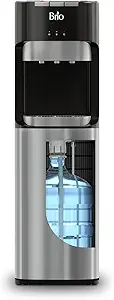 |
Avalon A4 Bottom Loading Water Cooler

| Access Location | Bottom |
|---|---|
| Number of settings | 3 |
| Upper Temperature Rating | 85 °C |
| Lower Temperature Rating | 8.3 °C |
| Capacity | 5 gallons |
The Avalon A4 is a bottom-loading water cooler designed for home use that fits standard 3–5 gallon bottles without lifting them into a top load. It provides three temperature settings — hot, cold, and room — with separate heating and cooling power to serve morning tea or chilled drinking water, and the stainless steel cabinet gives it a durable, low-profile look for a kitchen or small office. Practical touches include a built-in nightlight for easy night-time dispensing and an empty-bottle indicator so you know when to replace the jug, and high-contact areas are treated with an antimicrobial BioGuard coating. Setup is simple since it is freestanding and corded electric, but expect standard cooler-level power draw and routine bottle replacements. If you need advanced filtration, plumbed water connection, or a slimmer counter model, this floor-standing bottled cooler is not that type of solution.
Best for: Buyers who want a simple, reliable freestanding bottled cooler that eliminates lifting heavy jugs and delivers hot, cold, and room water for everyday home use.
Less Ideal for: People seeking a compact countertop dispenser, a direct-plumbed refrigerator-style dispenser, or a unit with built-in water filtration should consider other options.
- Bottom-loading design reduces lifting and spills when changing 3–5 gallon bottles
- Three temperature settings (hot, cold, room) cover common household needs
- Stainless steel cabinet provides durable, low-profile appearance for home settings
- Built-in nightlight and empty-bottle indicator add convenience for daily use
- High-contact surfaces treated with BioGuard antimicrobial coating
- No integrated filtration or plumbed-water option included
- Takes floor space and may be larger than counter models
Verdict: A practical bottom-loading bottled cooler that makes swapping heavy jugs easier while giving reliable hot, cold, and room-temperature water for everyday home use.
EUHOMY Water Dispenser with Ice Maker

| Capacity | 5 gallons |
|---|---|
| Upper Temperature Rating | 203 °F |
| Lower Temperature Rating | 47 °F |
| Power Source | Corded Electric |
This EUHOMY unit combines a bottom-loading water dispenser with a built-in ice maker to deliver cold (≤47°F), room-temperature, and hot (185–203°F) water plus bullet-style ice cubes on demand. It is typically used on a countertop or freestanding in a kitchen, office, or small break room where you want bottled-water convenience without lifting heavy jugs. The ice maker claims up to 33 lb per day and can produce nine cubes in about 7 minutes, which is useful for parties or frequent chilling; the ice basket and removable drip tray simplify cleanup. Bottom loading makes bottle changes easy and reduces waste from disposable cups. Safety features include a child lock on the hot water outlet. Practical limitations are the lack of a true freezer — ice must be moved to a refrigerator if you want long-term storage — and the unit is relatively heavy for a countertop appliance. Expect basic controls and indicator lights rather than advanced connectivity or smart features.
Best for: People who prioritize performance and frequent ice or hot/cold dispensing for home or small-office use and want a bottom-load unit to avoid lifting heavy bottles.
Less Ideal for: Users who need frozen ice storage or an ultra-light portable countertop unit for occasional use should consider other options.
- Integrated ice maker with up to 33 lb daily capacity for fast ice production
- Bottom-loading design makes bottle replacement easier and reduces lifting
- Delivers hot, cold, and room-temperature water for multiple uses
- Removable drip tray and ice basket simplify cleaning
- Child safety lock on the hot water dispense
- No built-in freezer for long-term ice storage
- Relatively heavy for a countertop appliance
Verdict: Buy this if you want a high-performance bottled-water dispenser that also produces fast, plentiful ice and simplifies bottle changes with a bottom-load design.
COSVALVE Bottom Load Water Dispenser

| Capacity | 5 gallons |
|---|---|
| Wattage | 550 watts |
| Cooling power | 80w |
| Temperatures | Hot, Cold, Room |
| Access Location | Bottom |
This COSVALVE bottom-load water dispenser is built for everyday home use where ease and safety matter. It holds standard 3- or 5-gallon bottles in a hidden lower cabinet so you avoid lifting heavy jugs onto the top, and the push-button controls deliver hot, cold, or room-temperature water on demand. The unit uses a compressor cooling system and a 550 W heater to reach stated temperatures, and an empty-bottle indicator helps you know when to replace the jug. A child safety lock on the hot spout is useful for households with kids, and the removable drip tray simplifies cleanup. Expect a compact footprint and a stainless steel water tank that resists odor and staining, though the cooler is somewhat heavy and will sit best in a fixed location rather than being moved often. Setup is straightforward for a grounded corded outlet, but you should allow space for ventilation around the compressor.
Best for: Buyers who want a low-lift, reliable home water dispenser that provides hot and cold water on demand and prioritizes easy bottle swaps and basic safety features.
Less Ideal for: People who need a lightweight, portable dispenser for frequent relocation or those who want built-in filtration or countertop models.
- Bottom-loading design makes bottle changes easier and hides the jug
- Three temperature settings (hot, cold, room) for versatile daily use
- Empty-bottle indicator prevents unexpected runouts
- Child safety lock on hot spout reduces risk in homes with children
- Stainless steel water tank resists odors and is easier to clean
- Relatively heavy and bulky, so not convenient to move frequently
- Requires a nearby grounded outlet and space for compressor ventilation
Verdict: A practical bottom-load cooler that simplifies bottle changes while delivering hot, cold, and room-temperature water for everyday home use.
Housiwill Countertop Water Dispenser

| Installation Type | Countertop |
|---|---|
| Upper Temperature Rating | 85 °C |
| Capacity | 5 gallons |
The Housiwill countertop water dispenser is a compact top-loading unit designed to give hot and cold water from standard 1.2 to 5 gallon bottles. It uses rotating dual outlets that rotate to dispense water without forceful pressing, which makes pouring easier for kids and older users, and includes a detachable drip tray and barrel seat for different bottle sizes. The unit offers rapid electric heating to about 85°C for hot drinks and electronic cooling that lowers water temperature about 8–12°C below ambient after roughly 40 minutes of continuous operation, with a stated chilled output of about 1 L/hour and hot output up to 5 L/hour. A transparent dustproof door keeps the spouts cleaner and lets you monitor the interior. Practical limits include a slower cooling system compared with compressor models and sensitivity to ambient heat, so chilled water may not be very cold in hot environments. For a straightforward, budget-focused countertop dispenser that emphasizes simple operation and portability, this model covers the basics well.
Best for: Buyers who want an inexpensive, compact countertop dispenser that provides ready hot and moderately chilled water with simple, user-friendly controls for small homes, offices, or dorms.
Less Ideal for: People who need near-refrigerator cold water quickly or who prioritize rapid compressor cooling performance for large households or very hot environments.
- Top-loading design fits 1.2–5 gallon bottles for flexible bottle choices
- Rotating dual spouts allow no-press continuous dispensing for easier use
- Fast electric heating to about 85°C delivers hot water quickly
- Transparent dustproof door keeps spouts hygienic and visible
- Detachable drip tray and barrel seat are easy to clean and accommodate different bottle sizes
- Electronic cooling is relatively slow and may only lower water a modest amount in hot ambient conditions
- Not as effective at producing very cold water compared with compressor-based coolers
Verdict: A budget-friendly, compact top-loading dispenser that delivers easy no-press dispensing and fast hot water for small spaces.
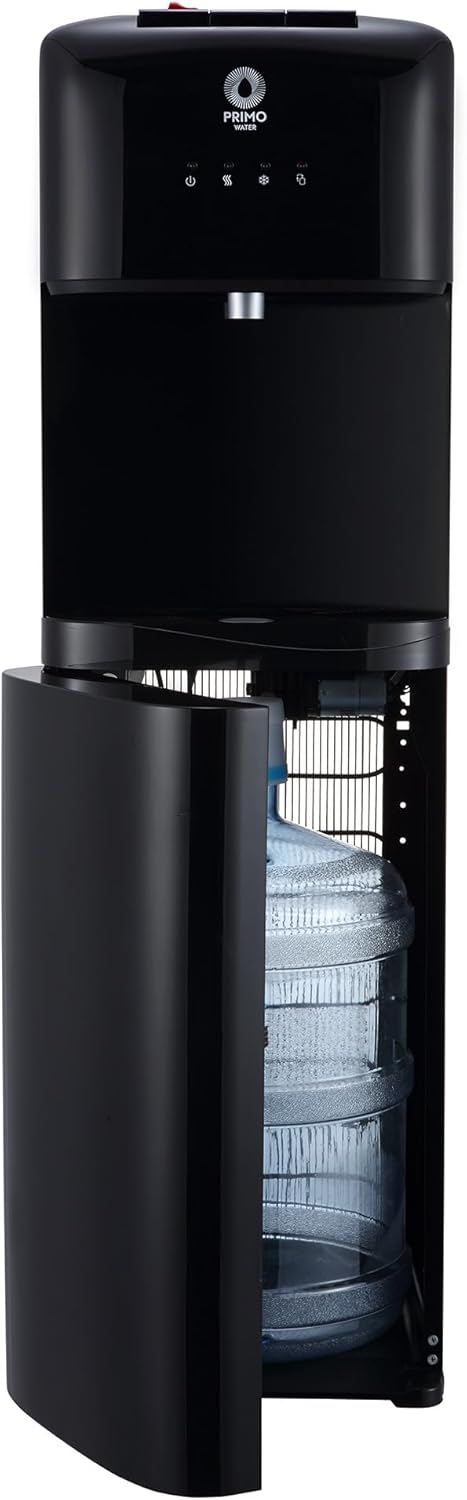
Primo Bottom Loading Water Dispenser
| Installation Type | Freestanding |
|---|---|
| Upper Temperature Rating | 95 °F |
| Power Source | Corded Electric |
| Capacity | 5 gallons |
| Material Type | Stainless Steel |
The Primo Bottom Loading Water Dispenser provides two temperature options—hot and cold—using a bottom-loading bottle system that removes the need to lift heavy jugs. It is typically used in kitchens, home offices, or common areas where easy access to drinking water and occasional hot water for drinks is desired. Setup requires no plumbing or tools and the dispenser offers quiet heating and cooling, push-button controls, an LED night light for visibility, and a removable dishwasher-safe drip tray for easier cleaning. Safety is addressed with a two-step hot water child lock and stainless steel reservoirs that resist corrosion and help keep water tasting fresh. The main compromises are the fixed temperature range (upper temperature rating shown at 95 °F) which may not be as hot as some users expect for beverage preparation, and the unit footprint that requires floor or counter space because it is freestanding bottom-loading design.
Best for: Home buyers who prioritize a reliable, low-maintenance water dispenser that minimizes heavy lifting and provides consistent hot and cold water for everyday use.
Less Ideal for: People who need very high-temperature hot water for specialty beverages or those wanting a built-in or compact countertop unit with a smaller footprint.
- Bottom-loading design removes heavy lifting and reduces spills when changing bottles
- Stainless steel reservoirs resist corrosion and help maintain water taste
- Simple push-button controls with LED night light for easy, low-light use
- Quiet heating and cooling operation suitable for home environments
- Removable dishwasher-safe drip tray simplifies cleaning
- Upper hot temperature listed at 95 °F which may be lower than some users expect for hot beverages
- Freestanding footprint requires dedicated floor or counter space
Verdict: Choose this Primo dispenser if you want a dependable, easy-to-use bottom-loading unit that minimizes lifting while delivering everyday hot and cold water.
Brio Bottom Load Water Cooler

| Wattage | 500 watts |
|---|---|
| Installation Type | Freestanding |
| Access Location | Bottom |
| Number of settings | 3 |
| Power Source | Corded Electric |
The Brio bottom load water cooler gives home users easy access to hot, cold, and ambient water without lifting heavy bottles thanks to its bottom-access cabinet. It uses stainless steel reservoirs for cleaner taste and includes an automatic UV self-cleaning cycle to reduce biofilm build-up, which is handy for low-maintenance households. Controls are straightforward and there is a child-safety two-step lock on the hot spout plus a nightlight that helps when dispensing in low light. The unit is freestanding and runs on corded electric power; practical touches include a removable drip tray and a visible LED display for status. Expect typical cooler trade-offs: it is a substantial freestanding appliance that needs floor space and occasional filter or maintenance attention despite the self-cleaning feature, and its 5-gallon bottle capacity means you will need to replace bottles periodically. For buyers who want a durable, low-lift dispenser with built-in sanitizing, the Brio is a solid choice for home use.
Best for: Homebuyers wanting a sturdy, low-lift bottled water dispenser with built-in sanitizing and simple controls who value ease of use and visible safety features.
Less Ideal for: People who need a compact countertop solution or a completely maintenance-free, bottleless filtration system should consider other options.
- Bottom-load design eliminates heavy lifting and simplifies bottle replacement
- Stainless steel reservoirs preserve water taste and resist corrosion
- UV self-cleaning cycle helps reduce contaminants and biofilm
- Offers hot, cold, and room-temperature dispensing with child-safety lock
- Nightlight and LED display improve visibility and status monitoring
- Large freestanding footprint requires floor space and placement planning
- Still requires periodic bottle replacement and maintenance despite self-cleaning
Verdict: Choose this cooler if you want a durable, no-lift bottled dispenser for home use that combines hot, cold, and ambient water with built-in UV sanitizing for lower maintenance.
Brio Bottom Loading Water Cooler

| Wattage | 500 watts |
|---|---|
| Installation Type | Freestanding |
| Access Location | Bottom |
| Number of settings | 3 |
| Power Source | Corded Electric |
The Brio bottom-loading water cooler is designed to make bottled water easier to use at home by eliminating heavy lifting and offering three temperature settings: hot, cold, and room temperature. It installs freestanding and stores the bottle inside the cabinet so replacing a jug is a simple slide-in instead of lifting. The unit uses stainless-steel reservoirs for cleaner taste, provides a child-safety lock on the hot spout, and reports low-bottle status with its display to reduce guesswork on refills. Typical use cases are kitchens, home offices, or family rooms where quick hot drinks and cold water are both valuable. Practical benefits include accessible bottle changes, a stable stainless interior that resists flavor transfer, and a clear indicator for when to replace the jug. Important limitations are its footprint and weight, which make it less portable, and it requires standard electric power and periodic jug replacement since it is a bottled model rather than plumbed filtration.
Best for: Home buyers who want a low-effort bottled water solution that delivers hot and cold water safely and prefers predictable, easy maintenance over plumbing a dispenser.
Less Ideal for: People seeking a plumbed-in or bottleless filtration system or those who need a very lightweight, portable dispenser for occasional use.
- Bottom-load design removes heavy lifting and eases bottle changes
- Three temperature options (hot, cold, room) for versatile use
- Stainless-steel reservoirs intended to preserve water taste
- Child-safety lock on hot spout for added household safety
- LED display with low-bottle alert simplifies maintenance
- Freestanding unit with substantial weight and footprint, not ideal for frequent moving
- Requires regular purchase and replacement of 3- or 5-gallon bottles
Verdict: Choose this bottom-load Brio cooler if you want a safe, stainless-steel bottled water dispenser that removes heavy lifting and reliably delivers hot, cold, and room-temperature water for everyday home use.
Choosing the Right Bottled Water Dispenser for Home Use: Key Factors to Consider
Dispense Flow Rate
How quickly a dispenser fills a glass or pitcher affects daily convenience. Faster flow rates reduce wait time for multiple servings, which matters for families, entertaining, or frequent refills. Flow is determined by internal pump design, gravity feed path, and spout diameter. If you frequently fill large containers, prioritize models with higher flow rates to avoid waiting or repeated cycles.
Flow consistency also reduces the chance of splashing when containers are placed at different angles. Some units include a boost pump for steady pressure while others rely on gravity; each approach has tradeoffs in noise and power consumption.
Sanitation and Materials That Contact Water
Surfaces inside the dispenser that touch water should be made from nonreactive, food-safe materials to avoid taste transfer and bacterial growth. Look for BPA-free plastics or stainless-steel reservoirs and internal tubing that are rated for potable water.
Designs that minimize exposed seams and crevices simplify cleaning and lower contamination risk. Removable drip trays and easy-access reservoirs help with periodic sanitation. Consider whether the unit offers antimicrobial coatings or UV cleaning features if you want added protection, but remember these are supplemental to regular cleaning.
Ease of Bottle Change
Changing the bottled water supply is an everyday task for many homes, so ease of bottle replacement affects overall satisfaction. Top-loading models require lifting the bottle overhead and positioning it on the reservoir, which can be awkward for some users and may cause spills. Bottom-load or bottle-less conversion options eliminate heavy lifting but may add initial installation steps.
Evaluate whether the dispenser includes a drip-capture system or spill guard to reduce mess during bottle swaps. Also consider access space around the unit; models meant for corner or cabinet placement should allow enough room to change bottles comfortably.
Temperature Performance and Range
If you want both hot and cold water, the unit's ability to reach and hold target temperatures matters. Hot taps should reach temperatures suitable for beverages and instant foods, while cold taps should chill quickly and stay cool under repeated dispensing.
Temperature stability depends on insulation, compressor or thermoelectric cooling systems, and tank size. Smaller cold tanks chill faster but can warm more quickly with heavy use. For households that rely on the hot function, check whether the hot tank has safety locks to prevent accidental dispensing.
Maintenance and Cleaning Frequency
Regular upkeep keeps a dispenser sanitary and performing well. Consider how often filters (if present) need replacing and how accessible internal parts are for cleaning. Units with removable panels, tool-free access, or dishwasher-safe drip trays reduce the time required for routine maintenance.
Also check whether the manufacturer recommends scheduled sanitization of the reservoir and how straightforward that process is. Frequent but simple cleaning is better than infrequent complex procedures when you factor household routines.
Top-loading Vs Bottom-loading: Pros and Cons
Top-loading dispensers are straightforward in design and often less expensive, but they require lifting full bottles onto the unit. That can be a strain for some users and can lead to spills if the bottle is heavy or awkward. Top-loaders usually rely on gravity feed, which reduces electrical complexity and can mean fewer moving parts to maintain.
Bottom-loading designs place the heavy bottle out of sight in a lower compartment and use a pump to draw water to the taps. This reduces lifting, makes the unit tidier, and can be easier for households with mobility considerations. Pumps add mechanical parts that may need occasional servicing and can make the unit slightly noisier during operation.
- Top-loading: simpler mechanics, potential lifting strain.
- Bottom-loading: easier bottle handling, may require a pump.
- Consider your storage space and who will change bottles when choosing.
Sanitation Practices for Home Dispensers
Create a simple maintenance schedule: wipe exterior surfaces weekly, clean drip trays when soiled, and sanitize the reservoir every 1 to 3 months depending on use intensity. Use food-safe sanitizing solutions and follow manufacturer guidance when available.
When sanitizing, fully drain the dispenser, disassemble removable parts, and clean them separately. Rinse thoroughly to remove any cleaning agent residue. For units with internal tubing, run clean water through the system multiple times after sanitization to clear residues.
- Weekly: wipe external surfaces and handles.
- Monthly: clean drip tray and sanitize frequently touched parts.
- Every 1–3 months: sanitize reservoir and internal waterways as usage dictates.
Energy Use and Temperature Systems
Dispensers use different methods to heat and chill water: small electric heaters maintain hot tanks, while cooling can be thermoelectric or compressor-based. Thermoelectric systems are quieter and simpler but may be less efficient in high-use scenarios. Compressor cooling behaves more like a refrigerator and can maintain lower temperatures under heavier loads.
If energy consumption is a concern, look for models with good insulation and on-demand heating features. Units with standby modes or eco settings reduce electricity draw when not actively used. Remember that keeping a hot tank at serving temperature consumes energy continuously.
- Thermoelectric: quieter, suitable for moderate chilling.
- Compressor: stronger cooling for frequent cold dispensing.
- Check for eco or standby modes to save energy between uses.
Installation and Placement Tips
Place the dispenser on a flat, stable surface near a cleared path for bottle deliveries and away from direct sunlight which can promote algae growth in clear reservoirs. Allow several inches of clearance at the back for ventilation if the unit uses a compressor cooling system.
If you plan to use the hot water function frequently, situate the dispenser away from curious children and consider models with child-safety locks. For bottom-loading units, ensure the access door can open fully in your intended location.
- Allow ventilation space for compressor models.
- Keep out of direct sunlight to preserve water quality.
- Ensure enough clearance for bottle changes, especially for top-loaders.
Accessories and Add-ons Worth Considering
Consider drip trays that are easy to remove and clean, antibacterial nozzle covers, and spouts that minimize splashing. Some households benefit from additional stands that raise the tap height for bottles and pitchers.
If frequent dispensing means more wear, look for models with replaceable nozzles or serviceable pumps. For those using the dispenser in a small office or busy kitchen, an indicator light for bottle level or filter status can be helpful.
- Removable drip trays and easy-access nozzles simplify cleaning.
- Indicator lights for tank or filter status reduce guesswork.
- Replacement parts and serviceability extend the useful life of the unit.
How We Chose the Best Bottled Water Dispenser for Home Use
We shortlisted units that match the typical demands of home use: steady flow for quick fills, hygienic designs that limit contamination risks, and serviceability for easy cleaning and bottle changes. Our evaluation prioritized measurable, user-facing factors such as dispense rate, internal sanitation features, build quality and materials that touch water, and the simplicity of routine maintenance. We also considered temperature performance for both cold and hot outputs and the clarity of operating controls. Units with unnecessary complexity, poor access to parts that contact water, or designs that made cleaning impractical were excluded. We favored dispensers that use materials resistant to staining and odor retention and that provide clear user controls. The list reflects items that meet those functional filters rather than price or brand recognition alone.
Our full evaluation process is outlined in our review methodology.
FAQ
How often should I sanitize a bottled water dispenser at home?
Sanitize the reservoir and internal water paths every 1 to 3 months depending on household usage. Clean the drip tray and wipe external surfaces more often, typically weekly or whenever they appear dirty.
Are bottom-loading dispensers better for households with limited strength?
Yes, bottom-loading units eliminate lifting heavy bottles onto the top of the dispenser, which reduces physical strain. They use a pump to draw water up, so consider the tradeoff of slightly more mechanical complexity.
Can I use any bottled water with these dispensers?
Most dispensers accept standard-sized potable water bottles, but sizes and neck fittings vary. Confirm the bottle dimensions recommended by the dispenser manufacturer to ensure proper fit and a secure seal.
Do dispensers with hot water present a safety risk?
Hot water taps can cause burns if used carelessly. Many home-oriented dispensers include a child-safety lock for the hot dispense. Always supervise children and consider a model with a lock if safety is a concern.
How noisy are bottom-loading pumps during normal use?
Pumps make brief operational noise while drawing water and may be slightly louder than gravity-fed top-loading units. Noise levels vary by model, but most home-focused pumps are designed to be unobtrusive during typical household use.
Final Verdict
Prioritize sanitation, ease of bottle change, and dispense speed when choosing a bottled water dispenser for home use. Decide whether lifting a full bottle is acceptable or if a bottom-loading pump is worth the added mechanical parts. Balance temperature needs against energy use and choose a unit with accessible parts for straightforward cleaning. Focusing on these factors will help you pick a dispenser that fits daily routines and keeps water service convenient and hygienic.