
Note: This article contains affiliate links. If you click on these links and make a purchase, we may earn a small commission at no extra cost to you. This helps support our research and content. Read our full affiliate disclosure here.
Choosing the right bottom-loading water dispenser for an office affects everyday workflow, staff comfort, and breakroom upkeep. You want a unit that delivers steady hot and cold water, fits common office layouts, and keeps maintenance tasks simple so facility staff spend less time on refills and troubleshooting. This guide shortlists the top options for office use and explains the practical tradeoffs behind each pick. We evaluated reliability, dispensing speed, and serviceability to help you select a dispenser that meets your daily demand and cleaning routines. Read on for a focused look at the best units for typical office environments.
Top Picks at a Glance
| Best Overall The best all-around choice for most situations | Avalon Bottom Loading Water Cooler |  |
| Best Quality Built to a higher standard if you want something more solid | Brio Moderna Bottom Load CLBL720SC |  |
| Best Value The sweet spot between price and what you get | COSVALVE Bottom-Loading Water Dispenser |  |
| Best Budget The cheapest option that still gets the job done reliably | DIITGGE Bottom Loading Water Cooler |  |
| Top Rated A top-rated pick with lots of positive feedback | EUHOMY Bottom-Loading Water Dispenser |  |
| Most Popular A crowd favorite that many people choose with confidence | Avalon A4 Bottom Loading Water Cooler |  |
| Best Seller A high-volume bestseller chosen again and again | Brio Bottom Load Water Cooler CLBL420V2 | 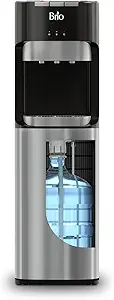 |
Avalon Bottom Loading Water Cooler

| Wattage | 520 watts |
|---|---|
| Access Location | Bottom |
| Number of settings | 2 |
| Upper Temperature Rating | 185 °F |
| Power Source | Corded Electric |
The Avalon bottom-loading water cooler provides both cold and near-boiling hot water from paddle-style spouts while hiding the bottle in a lower cabinet to avoid heavy lifting. It cools water with a compressor to around 47°F for crisp drinks and heats to about 185°F for tea or instant beverages, with a child-safety lock on the hot tap for safer use in shared spaces. The unit is freestanding, UL listed, and includes a replace-bottle indicator and nightlight that helps with nighttime use. Setup is straightforward: load a 3- or 5-gallon bottle into the bottom cabinet and plug in the corded electric unit. Practical limitations include a largely plastic exterior and moderate footprint that requires a bit of floor space, and the unit relies on full bottles rather than a plumbed water line. For offices that need a simple, no-frills cooler that reduces bottle lifting and gives reliable hot and cold dispensing, this model covers the essentials without complex controls.
Best for: Office managers or teams that want a practical, low-effort water solution that reduces bottle handling and supplies both hot and cold water for staff and visitors.
Less Ideal for: Workplaces that need a plumbed-in or heavy-duty metal cooler for continuous high-volume use should consider other commercial-grade options.
- Bottom-loading design eliminates heavy lifting and reduces spills.
- Provides both cold (approx. 47°F) and hot (approx. 185°F) water for beverages and instant foods.
- Child safety lock on the hot spout protects against accidental use.
- Built-in nightlight and replace-bottle indicator improve usability in office settings.
- Plastic exterior may feel less durable than metal-bodied commercial units.
- Requires bottled water supply rather than direct plumbed connection.
Verdict: A straightforward bottom-loading cooler that reduces bottle lifting while delivering reliable hot and cold water for typical office use.
Brio Moderna Bottom Load CLBL720SC

| Installation Type | Freestanding |
|---|---|
| Access Location | Bottom |
| Power Source | Corded Electric |
| Upper Temperature Rating | 174 °F |
| Lower Temperature Rating | 39 °F |
The Brio Moderna bottom-load cooler is built for steady office use, delivering hot and cold water at adjustable setpoints and a bright digital interface for simple control. It installs as a freestanding unit that accepts 3- or 5-gallon bottles in the lower cabinet so staff do not need to lift heavy jugs, and a built-in pump pushes water through stainless steel reservoirs for dispensing. Notable features include an electronic LED display, child-safety lock on the hot spout, and a self-cleaning ozone cycle to sanitize the tank and lines with minimal maintenance. The unit reaches temperatures from about 39°F up to 174°F, which covers cold beverages and near-boiling hot water for beverages and instant drinks. For a busy office the visible low-bottle alert, touch-sensitive controls, and durable stainless-steel construction make day-to-day operation straightforward, though the large footprint means planning placement and the ozone cycle requires running when the cooler is idle for best results.
Best for: Office managers seeking a low-maintenance cooler that provides reliably adjustable hot and cold water for staff and visitors with minimal handling of bottles.
Less Ideal for: Small teams with very limited floor space or users who need a fully touchless dispensing experience should consider more compact or different dispensing styles.
- Bottom-load design avoids heavy bottle lifting and fits 3- or 5-gallon jugs
- Adjustable hot and cold temperature range (39°F to 174°F) for flexible beverage needs
- Self-cleaning ozone sanitization reduces manual maintenance and biofilm risk
- Stainless steel reservoirs and bright digital LED display built for frequent use
- Relatively large freestanding footprint requires dedicated floor space
Verdict: Choose the Brio Moderna if you need a sturdy bottom-loading office cooler that delivers adjustable hot and cold water with built-in ozone sanitization for low-maintenance performance.
COSVALVE Bottom-Loading Water Dispenser

| Capacity | 5 gallons |
|---|---|
| Wattage | 550 watts |
| Cooling power | 80w |
| Hot water temperature | 190.4℉-203℉ |
| Cold water temperature | 42.8 ℉-50℉ |
The COSVALVE bottom-loading water dispenser provides hot, cold, and room-temperature water on demand and hides the bottle in a lower cabinet for easier changes and a cleaner look. It uses a compressor cooling system and a 550 W heater to reach hot temperatures near boiling and cold temps in the low 40s Fahrenheit, so it suits quick beverage prep, tea or coffee, and daily hydration in an office. Practical features include an empty-bottle indicator, a drip tray for cleanup, and a child-safety lock on the hot spout for added protection. Setup is simple since it is freestanding and designed for standard 3- or 5-gallon jugs, but the unit is relatively heavy and takes floor space typical of office coolers. Expect basic push-button dispensing and no advanced filtration or Wi-Fi features; the stainless inner tank and clear temperature range make performance predictable but straightforward. For an office break room this model balances convenience, safety, and clean styling without extra smart features or filtration bells and whistles.
Best for: Buyers who want a practical, no-frills office dispenser that prioritizes easy bottle changes, clear temperature options, and safety for shared spaces.
Less Ideal for: Users who need integrated water filtration, smart connectivity, or a compact countertop solution should consider other options.
- Bottom-loading cabinet for easier bottle changes and hidden storage
- Three temperature settings covering hot, cold, and room water for versatile use
- Empty-bottle indicator prevents unexpected runouts
- Child safety lock on hot spout reduces accidental burns
- Stainless steel water tank and compressor cooling for reliable temperatures
- No built-in filtration system included
- Relatively heavy and requires dedicated floor space
- Basic controls with no smart or advanced features
Verdict: A straightforward bottom-loading dispenser that makes bottle changes easy and reliably delivers hot, cold, and room water for office break rooms.
DIITGGE Bottom Loading Water Cooler

| Wattage | 500 watts (heating) |
|---|---|
| Upper Temperature Rating | 203 °F |
| Lower Temperature Rating | 41 °F |
| Capacity | 5 gallons |
This DIITGGE bottom-loading water cooler provides hot, cold, and room-temperature water from a freestanding unit that accepts standard 5-gallon bottles. It uses a bottom-load design to make bottle changes easier and reduce lifting, and the unit pairs a 500W heater with a 90W cooling system to deliver roughly 1.32 gallons of hot water and 0.53 gallons of cold water per hour. Controls are simple: toggle heating or cooling switches on the rear and wait for the selected temperature; built-in safety features include over-temperature, overload, dry-burn protection, and an automatic thermostat disconnect. The polypropylene construction and electrostatic spray finish are meant to resist rust and deformation, which helps longevity in an office setting. Expect straightforward performance suitable for light-to-moderate office use, but note the cooling power is modest so cold-water recovery will be slower under heavy demand and the unit is relatively basic in features compared with higher-end models.
Best for: Buyers seeking an inexpensive, no-frills bottom-loading dispenser for a small office or breakroom who prioritize ease of bottle changes and basic hot/cold functionality.
Less Ideal for: Large offices or locations with high cold-water demand that need fast recovery, advanced controls, or premium cooling performance should consider more powerful units.
- Bottom-loading design simplifies bottle replacement and reduces lifting.
- Offers hot, cold, and room-temperature dispensing for varied needs.
- Safety protections include over-temperature, overload, and dry-burn protection.
- Durable polypropylene body with electrostatic spray finish resists rust and deformation.
- Cooling output is relatively low, so cold-water recovery can be slow under heavy use.
- Feature set is basic with simple rear switches rather than digital controls.
Verdict: A budget-friendly bottom-loading cooler that makes bottle changes easy and delivers reliable basic hot and cold water for small office use.
EUHOMY Bottom-Loading Water Dispenser

| Capacity | 5 gallons |
|---|---|
| Upper Temperature Rating | 194 °F |
| Lower Temperature Rating | 39.2 °F |
| Installation Type | Freestanding |
The EUHOMY bottom-loading dispenser is designed for hands-free bottle replacement and routine hygiene in small offices. It holds standard 5-gallon bottles in a lower compartment so staff do not have to lift heavy jugs, and the removable drip tray and 8.3-inch spout height accommodate mugs and tall bottles. The unit offers three temperature outlets — hot for coffee and tea, cold for beverages, and room temperature for quick hydration — with LED indicators and a child safety lock on the hot spout. A built-in UV self-cleaning cycle runs automatically to reduce biofilm and minimize manual maintenance, while an internal hot tank reaches temperatures near 194 to 203 F to support rapid beverage preparation. Practical touches include a night light for low-light use and adjustable feet for leveling. Trade-offs are typical for freestanding dispensers: it occupies floor space and requires occasional servicing for the cooling/heating system, but for an office that values easier refills and reduced handling, it is a dependable choice.
Best for: Teams or facilities managers wanting a low-hassle, hygienic water station for an office where easy bottle changes and automatic cleaning reduce daily maintenance.
Less Ideal for: Very small deskside situations or users needing a compact countertop unit should look for smaller or countertop dispensers instead.
- Bottom-loading design eliminates lifting heavy 5-gallon bottles for easier refills
- Automatic UV self-cleaning cycle reduces manual sanitizing and helps maintain water cleanliness
- Three temperature settings (hot, cold, room) cover common office beverage needs
- Child safety lock and LED indicators improve safe, clear operation
- Requires dedicated floor space and periodic servicing of heating/cooling components
- Hot water reaches very high temperatures which requires care despite the safety lock
Verdict: Choose this bottom-loading dispenser if you need a reliable, low-effort office water station that minimizes heavy lifting and adds automated UV self-cleaning for cleaner water.
Avalon A4 Bottom Loading Water Cooler

| Wattage | 400 watts |
|---|---|
| Number of settings | 3 |
| Upper Temperature Rating | 85 °C |
| Lower Temperature Rating | 8.3 °C |
| Capacity | 5 gallons |
The Avalon A4 is a bottom-loading water dispenser built for office or breakroom use that delivers hot, cold and room-temperature water from 3- to 5-gallon bottles without lifting the jug. It installs freestanding and uses manual push-button controls with a built-in nightlight and an empty-bottle indicator to keep refills visible after hours. The stainless steel cabinet and BioGuard-treated high-contact areas help reduce microbial growth and present a professional look in common areas. Heating and cooling are handled by dedicated circuits, so you get a hot outlet (heating power listed) alongside a cold basin for chilled water; the unit is UL and Energy Star approved. Expect straightforward operation and minimal setup, but know that it relies on bottled water (bottle not included) and manual dispensing rather than integrated filtration or touchless sensors, and the unit is fairly tall and weighs a few dozen pounds which matters if you move it often. For offices that want a reliable, easy-to-service bottled dispenser, the Avalon A4 covers the basics well.
Best for: Offices and breakrooms that prioritize an easy-to-use, low-maintenance bottled dispenser with visible social-proof features like a durable stainless finish and antimicrobial treatment.
Less Ideal for: Workplaces that need plumbed-in filtration, touchless dispensing, or a lightweight portable cooler should consider other solutions.
- Bottom-loading design eliminates heavy lifting and reduces spills when changing bottles
- Three temperature settings (hot, cold, room) for versatile beverage needs
- Stainless steel cabinet with BioGuard coating on high-contact areas helps limit bacterial growth
- Nightlight and empty-bottle indicator improve usability in low-light office settings
- Uses bottled water only and does not include an integrated filtration system
- Manual push-button controls with no touchless dispensing or advanced automation
- Relatively heavy and tall, which makes frequent relocation more difficult
Verdict: A practical, bottom-loading bottled water cooler that gives offices reliable hot, cold and room-temperature water with easy bottle changes and antimicrobial surfaces.
Brio Bottom Load Water Cooler CLBL420V2

| Wattage | 500 watts |
|---|---|
| Installation Type | Freestanding |
| Access Location | Bottom |
| Number of settings | 3 |
| Upper Temperature Rating | 198 °F |
The Brio bottom-loading water cooler simplifies office hydration by letting you slide 3- or 5-gallon jugs into a concealed cabinet instead of lifting them onto the top. It delivers three temperatures—hot, cold, and room—using a 500-watt corded power source and a stainless steel reservoir designed to preserve taste. The unit includes a child-safety lock on the hot spout and an LED display that signals when the bottle is empty, which reduces guesswork for busy teams. Its freestanding design and no-lift loading make it easy to place in kitchens, break rooms, or nurseries, and the stainless-steel accents give it a professional look. Practical limitations include its footprint and weight, which make it less mobile than countertop units, and reliance on 3- or 5-gallon bottles rather than plumbed-in filtration. For offices that want straightforward, ready-to-use hot and cold water without installing plumbing, this cooler is a durable, low-fuss option that emphasizes safety and convenience.
Best for: Office managers or facilities teams who prioritize safety, low maintenance, and easy bottle changes for shared workspaces.
Less Ideal for: Workplaces that need a plumbed-in or bottleless solution or very small teams needing a compact countertop dispenser.
- Bottom-load cabinet eliminates heavy lifting and awkward bottle changes
- Three temperature settings provide hot, cold, and room-temperature water on demand
- Stainless steel reservoirs help maintain water taste and hygiene
- LED empty-bottle alert and digital display simplify maintenance
- Child-safety lock reduces risk of accidental hot-water dispensing
- Not plumbed-in so it requires regular bottle replacement
- Freestanding size and weight limit portability and placement options
Verdict: A practical, low-fuss bottom-load cooler that delivers ready hot, cold, and room-temperature water with safety features and easy bottle changes ideal for office use.
Choosing the Right Bottom-Loading Water Dispenser for Offices: Key Factors to Consider
Dispensing Capacity and Flow
How quickly a dispenser can deliver water determines whether it will bottleneck during breaks or meetings. Offices often see multiple back-to-back requests, so a unit with a higher flow rate and larger internal reservoirs will reduce wait times and lines.
Flow matters for both cold and hot outputs. If staff routinely fill large mugs, kettles, or pitchers, a slow dispenser increases interruptions and causes people to bypass the unit. Verify a dispenser's continuous output and recovery speed after heavy use to match your office's peak demand.
Temperature Performance
Consistent hot and cold temperatures are essential for beverage quality and safety. Hot water should reach safe serving temperatures for tea and instant beverages without being scalding, and cold water should be cool enough for palatable drinking.
Look for units with accurate thermostats, independent hot and cold systems, and clear temperature specs. Inadequate temperature control can frustrate users and create safety risks when hot water is unpredictable.
Maintenance and Sanitation
Office dispensers need simple cleaning routines and accessible components to minimize downtime. Bottom-loading designs remove heavy bottles from the top, but internal reservoirs and drip trays still require periodic cleaning.
Choose models with removable drip trays, easily accessible internal compartments, and clear cleaning instructions. Antimicrobial surfaces and sealed water paths help reduce contamination risk. Consider how often parts must be replaced and whether the cleaning process can be performed by in-house staff without specialized tools.
Footprint and Installation
Available floor space and electrical access determine where a dispenser can sit in an office. Measure the intended location for width, depth, and clearance for accessing the bottle compartment and drip tray.
Some dispensers have built-in storage or small cabinets that affect placement. Consider whether the unit needs a dedicated outlet and how cord length or plug orientation will fit your layout. A stable base and level feet are also important in high-traffic areas.
Durability and Serviceability
Units in communal spaces face heavier use than residential models, so robust build quality reduces repairs. Look for reinforced housings, reliable valve systems, and components rated for frequent cycles.
Serviceability matters because easier access to replaceable parts cuts downtime. Check whether common wear items are user-replaceable and whether the design allows technicians to access internal components without disassembling the entire cabinet.
Energy Use and Safety Features
Energy-efficient compressors, standby modes, and insulated reservoirs reduce operating costs over time, which matters in offices with many fixtures. Evaluate power draw for continuous hot mode versus standby.
Safety features like hot-water locks and indicator lights prevent accidental burns and signal maintenance needs. In shared environments, these controls protect users and reduce liability concerns.
Sizing for Your Office Demand
Estimate daily usage by counting employees and typical serving sizes, then multiply by peak-period demand to choose a dispenser with adequate recovery and reservoir volume. For small teams, a single dispenser with modest recovery may suffice. For larger offices, prioritize faster recovery and higher flow rates to avoid queues.
Placement and access patterns also affect sizing. A single central dispenser may work for compact workplaces, while multi-floor or spread-out offices benefit from additional units or strategically placed smaller dispensers.
- Calculate expected daily liters per person and add a margin for visitors
- Consider peak windows like morning rush and lunch breaks
- Account for additional uses such as kettle refills or pitcher fills
Bottom-Loading Advantages and Tradeoffs
Bottom-loading dispensers eliminate lifting heavy water bottles onto the top of the unit, which reduces strain and makes bottle changes faster and safer. The lower bottle orientation also hides the bottle from view, creating a cleaner aesthetic in communal areas.
Tradeoffs include slightly larger cabinet depth to accommodate the bottle and different internal tubing arrangements. Confirm that bottle access from the front works within your intended location and that the cabinet can handle the bottle size your office uses.
- Easier and safer bottle changes
- Cleaner appearance with hidden bottles
- May require more front clearance for bottle removal
Cleaning and Preventative Maintenance Routine
Establish a simple, recurring cleaning schedule to keep the dispenser sanitary and operating reliably. Weekly wipe-downs of external surfaces and drip trays, monthly internal sanitization, and scheduled checks of seals and gaskets extend lifespan and keep water tasting fresh.
Document who is responsible for each task and store necessary cleaning supplies nearby. If the office lacks a facilities person, realistic maintenance frequency should influence which model you choose.
- Weekly external clean and drip tray emptying
- Monthly or quarterly internal rinses depending on usage
- Regular inspection of hoses and seals for wear
Energy and Operating Costs To Watch
Look beyond the sticker price to energy consumption patterns. Models with insulated tanks or eco modes can noticeably reduce electricity use for heating and cooling. For offices running dispensers 24/7, even small efficiency differences add up over months.
Consider selecting a unit with programmable standby or sleep modes if the office has predictable off-hours. Also check whether heating elements cycle independently or run continuously, which affects power draw.
- Check standby vs active power draw
- Insulated tanks reduce reheating frequency
- Programmable settings save energy during nights and weekends
User Convenience Features That Matter
Simple, intuitive dispensing controls, clear hot-water locks, and visible indicators for empty bottles or filter life make daily use smoother and reduce accidental misuse. LED indicators and labeled taps help new employees quickly find the correct outlet.
Additional conveniences such as cup holders, bottle storage, or a drip tray with a visible fill level minimize clutter and simplify maintenance. Prioritize features that match your office's culture and traffic patterns.
- Hot-water safety locks
- Visible empty-bottle indicators
- Removable drip trays and easy-access panels
How We Chose the Best Bottom-Loading Water Dispenser for Offices
We focused on features and performance that matter most in office settings. Primary evaluation criteria included dispensing capacity and flow rate to ensure units can serve multiple users during peak periods; temperature consistency and range for reliable hot and cold delivery; maintenance and sanitary design for easy cleaning and reduced bacteria risk; and build quality and durability for heavy daily use. We also considered energy efficiency and user safety features, such as child-locks on hot taps and auto-shutoff behaviors. Serviceability and parts availability were evaluated to estimate likely upkeep time and downtime. Units that required frequent hands-on maintenance or had unclear access for internal cleaning were excluded. We excluded models intended strictly for residential use or those that lack clear office-grade durability specifications. The final list prioritizes dispensers that balance fast dispensing, straightforward upkeep, and robust construction for reliable performance in shared workplace settings.
Our full evaluation process is outlined in our review methodology.
FAQ
How often should we sanitize a bottom-loading office dispenser?
Sanitize the internal water path every one to three months depending on usage. High-traffic offices should sanitize monthly, while low-traffic environments can often follow a quarterly schedule. Regular external cleaning should occur weekly.
Can office staff change the water bottle themselves safely?
Yes. Bottom-loading designs are intended to make bottle changes safer and easier for non-technical staff. Provide a short training on correct bottle insertion, sealing, and how to handle spills to prevent leaks and ensure a hygienic seal.
Do bottom-loading dispensers require special bottles?
Most bottom-loading units accept standard office-size bottles, but bottle dimensions and neck fittings can vary. Confirm bottle compatibility with the specific dispenser model before purchase to ensure a proper fit and reliable operation.
How can we reduce energy use from an office dispenser?
Use models with insulated tanks, programmable standby modes, or eco settings to lower energy consumption. Turning off the hot function during extended closures and scheduling standby for off-hours also reduces power draw without compromising availability during work hours.
What maintenance tasks prevent common dispenser failures?
Regularly empty and clean the drip tray, inspect seals and hoses for cracks, and perform scheduled sanitization of the reservoir. Replacing worn gaskets and checking valve operation before they fail reduces leaks and extends service intervals.
Final Verdict
For office environments, prioritize dispensing flow rate, ease of maintenance, and reliable temperature control when choosing a bottom-loading water dispenser. Consider the number of daily users and peak demand windows to size recovery capacity appropriately, and favor units with straightforward access for cleaning to reduce downtime. Balance efficiency and safety features against footprint and serviceability; the right tradeoff depends on your office size and staffing for upkeep. When you focus on flow, sanitation, and durable construction, you will end up with a dispenser that keeps staff hydrated with minimal interruptions.