
Note: This article contains affiliate links. If you click on these links and make a purchase, we may earn a small commission at no extra cost to you. This helps support our research and content. Read our full affiliate disclosure here.
Choosing the right box fan to pair with an air filter matters for indoor air quality and everyday comfort. The wrong fan can reduce filter effectiveness, create excessive noise, or underperform in rooms where steady circulation is needed. This guide covers seven carefully shortlisted box fans for air filter use, focusing on how well they move air through filtration media, how loud they run, and how easy they are to set up and maintain. You will get clear, practical criteria to compare options and a concise rundown of features that matter most for room-by-room filtration. Read on to find the fan profile that best matches your filtration setup and living space.
Top Picks at a Glance
| Best Overall The best all-around choice for most situations | Air King 9723 20-Inch Box Fan |  |
| Best Quality Built to a higher standard if you want something more solid | PELONIS 20 Inch Box Fan FB50-16H |  |
| Best Value The sweet spot between price and what you get | BLACK+DECKER 20" Box Fan BFB20SW |  |
| Best Budget The cheapest option that still gets the job done reliably | Generic 20" Box Fan |  |
| Top Rated A top-rated pick with lots of positive feedback | Vornado Model 80 Box Fan |  |
| Most Popular A crowd favorite that many people choose with confidence | Hurricane Classic 20" Floor Fan | 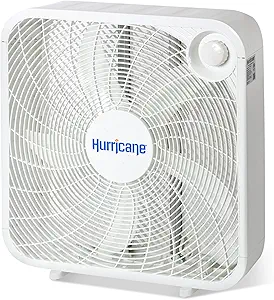 |
| Best Seller A high-volume bestseller chosen again and again | Genesis 20" Box Fan G20BOX |  |
Air King 9723 20-Inch Box Fan

| Number of Speeds | 3 |
|---|---|
| Air Flow Capacity | 2163 cfm |
| Wattage | 105 watts |
| Power Source | ac |
| Motor Type | AC permanent split capacitor motor |
The Air King 9723 is a heavy-duty 20-inch box fan built to move a lot of air for rooms, garages, dorms, or workshops. It uses a permanently lubricated 1/25 HP permanent split capacitor motor and a top-mounted rotary switch to offer three distinct speeds; the manufacturer lists up to about 2,100–2,160 CFM on high, which produces a strong, direct breeze for quick air exchange. The fan's steel housing, impact-resistant plastic grills, and chemical-resistant polypropylene blades are designed for durability in frequent use and the integrated handle and stabilizing feet make it easy to reposition. Noise is noticeable on higher settings but expected given the airflow; the unit is ETL listed and uses a grounded NEMA 5-15 plug. This model is straightforward and serviceable with manual controls and no filters or smart features, so it excels when you want raw airflow rather than quiet, automated, or filtered air cleaning. If you plan to use a filter with it, you will need to add a compatible box or panel filter attachment since the fan itself does not include filtration.
Best for: Buyers who want a no-nonsense, high-airflow fan for fast cooling or to pair with an external filter solution will appreciate this model’s durability and output.
Less Ideal for: People seeking a quiet, smart, or built-in-filter fan for bedroom or allergen-focused use should consider alternative models designed for low noise and integrated filtration.
- High peak airflow (around 2,100 CFM) for fast room air exchange
- Durable steel body and impact-resistant grills suited to heavy use
- Simple, reliable 3-speed rotary control with a permanently lubricated motor
- Portable design with integrated carry handle and stabilizing feet
- No built-in air filtration or filter frame included
- Can be loud on high speed compared with quieter circulation fans
- Basic manual controls with no timer or remote features
Verdict: Choose the Air King 9723 when you need rugged, high-volume airflow to move air quickly or to drive an external filter attachment.
PELONIS 20 Inch Box Fan FB50-16H

| Number of Speeds | 3 |
|---|---|
| Noise Level | 34 db |
| Wattage | 55 watts |
| Air Flow Capacity | 2295 cfm |
| Motor Type | brushed DC motor |
The Pelonis 20-inch box fan is built to push a lot of air while staying simple to use. It offers three push-button speeds driven by a brushed DC motor and is rated at up to 2,295 CFM with a blade speed of about 25 ft/s, so it excels at room-to-room air circulation, exhaust through a window, or helping an air filter move conditioned air more quickly. The fan is lightweight with a built-in handle, runs on standard 120 V power, and uses around 55 watts, which makes it energy efficient for continuous operation. Noise is listed at 34 dB, which is reasonable on low but will increase at higher settings. The all-plastic construction keeps weight down but means it is not as rugged as metal fans and the simple three-speed control lacks timers or oscillation features. For people who want straightforward, high-flow airflow to boost ventilation or support a portable air filter, this fan is an effective, easy-to-position option; those seeking advanced controls or heavier-duty construction may want a different style.
Best for: Buyers focused on strong airflow to improve room ventilation or to pair with an air filter for faster air exchange in bedrooms, offices, and living spaces.
Less Ideal for: People who need quiet, feature-rich fans with timers, remote control, or heavy-duty metal construction should consider other fan types.
- Very high airflow capacity (2295 CFM) for rapid room circulation
- Low power draw (55 watts) makes it cheap to run continuously
- Lightweight design and built-in handle for easy placement and window use
- Simple three-speed controls that are easy to operate
- Plastic construction is less durable than metal alternatives
- No timer, oscillation, or advanced speed settings for finer control
Verdict: Choose this Pelonis box fan when you want straightforward, high-volume airflow to boost ventilation or speed up an air filter's effectiveness.
BLACK+DECKER 20" Box Fan BFB20SW

| Number of Speeds | 3 |
|---|---|
| Wattage | 80 watts |
| Air Flow Capacity | 1200 cfm |
| Number of Blades | 5 |
| Power Source | ac |
The BLACK+DECKER 20" box fan is a straightforward portable blower meant to move a lot of air in bedrooms, garages, basements, or near windows. It uses a five-blade plastic impeller driven by an 80W copper-brushed motor and delivers up to about 1,200 CFM on high, with three mechanical speed settings controlled by a rotary dial. Built-in stabilizing feet and a top carry handle make it easy to position and move, and recessed cord storage keeps the six-foot cord tidy. The fan is simple to clean with a damp cloth and the polypropylene housing is lightweight for quick redeployment. It lacks advanced features like timers, remote control, or integrated filtration, so pairing it with a separate air filter or window-mounted filter is necessary when you need particle removal rather than just airflow. Noise on higher speeds is noticeable, so it is best used where airflow priority outweighs quiet operation.
Best for: Buyers who prioritize moving large volumes of air cheaply and reliably to improve ventilation or to pair with a separate air filter for targeted cleaning.
Less Ideal for: People seeking a quiet bedroom fan, integrated filtration, or smart controls should consider other models with dedicated filters or low-noise brushless motors.
- High airflow capacity up to ~1200 CFM for strong room circulation
- Three simple mechanical speeds with a durable rotary control
- Lightweight design with carry handle and recessed cord storage for portability
- Rain-resistant motor housing and stabilizing feet for safer indoor placement
- No built-in air filtration or filter mounting options
- Brushed motor and higher speed produce noticeable noise
Verdict: If you want a portable, high‑flow box fan to boost ventilation or to push air through a separate filter, this 20" BLACK+DECKER unit is a practical, no-frills choice.
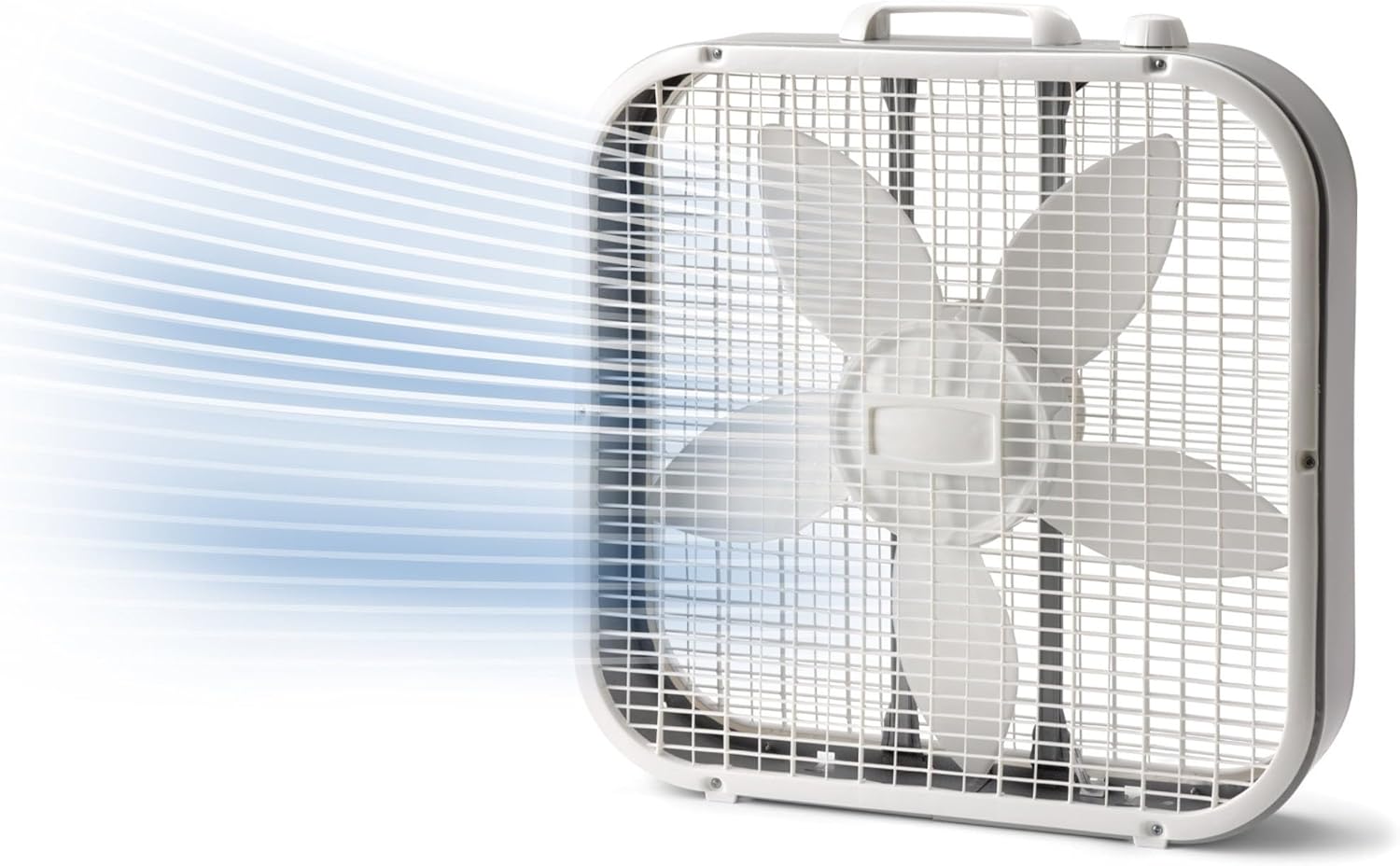
Generic 20" Box Fan
| Power Source | ac |
|---|---|
| Special Features | Weather Resistant |
| Recommended Uses For Product | Ventilating |
| Mounting Type | Window Mount |
This 20-inch box fan is a straightforward, budget-friendly unit that delivers strong airflow for ventilating rooms or boosting an air conditioner. It uses a metal frame with a built-in handle and removable front grill and blades so you can clean it quickly, which is useful if you pair the fan with a DIY filter or run it near dust sources. The three manually controlled speeds are quiet enough for bedroom or office use, and the weather-resistant motor lets you place it in a window without worrying about brief exposure to humidity. Setup requires no tools and the fused safety plug adds a basic layer of protection. Limitations include the lack of any built-in filter mounting system or advanced controls like timers or thermostats, so adding a filter requires an external attachment or tape-on solution and speed is controlled only by the simple dial.
Best for: Buyers looking for an inexpensive, no-frills fan to improve room ventilation or to use as the airflow component of a DIY filter setup will appreciate its simplicity and portability.
Less Ideal for: Users who want a factory-designed filtered fan, precise speed control, or smart features should consider higher-end models with integrated filter options and digital controls.
- Simple three-speed manual control that is easy to use
- Removable grill and blades for straightforward cleaning and maintenance
- Weather-resistant motor suitable for window placement
- Portable metal frame with built-in handle for easy moving
- No built-in filter or filter holder for integrating air filters
- Basic controls only, no timer, remote, or variable speed beyond three settings
Verdict: A practical, low-cost box fan that provides solid airflow and easy maintenance, making it a good choice for budget DIY filter builds or basic room ventilation.
Vornado Model 80 Box Fan

| Power Source | ac |
|---|---|
| Number of Speeds | 5 |
| Wattage | 120 watts |
| Motor Type | Brushless |
The Vornado Model 80 is a heavy-duty 20-inch box fan built for strong whole-room air circulation. It offers five speeds and a brushless motor that delivers up to 1400 rpm, making it useful for cooling, drying, or boosting ventilation in bedrooms, home offices, and living areas. Practical touches include an integrated handle for carrying, cord storage, and a removable grille that makes routine cleaning straightforward—important when pairing the fan with an air filter or clean-air setup. The fan's alloy-steel construction and ETL safety listing give it a sturdy, long-lived feel, and the button/touch controls are simple to operate. Expect focused, powerful airflow rather than whisper-quiet operation at higher speeds, and its size and weight make it less convenient to store than ultra-compact models. There is no built-in filtration, so plan to use this as a circulation unit in combination with a standalone air filter or DIY filter box for particulate control.
Best for: Buyers who prioritize a dependable, long-lasting fan to move air efficiently around living spaces and want an easy-to-clean circulation unit to pair with an external air filter.
Less Ideal for: If you need a quiet, ultra-portable fan for small desks or a product with integrated filtration, choose a smaller model or a fan that includes a filter instead.
- Strong whole-room airflow from a brushless motor and five speed settings
- Removable grille simplifies cleaning when used near filters or dusty environments
- Durable alloy-steel construction and ETL certification support long service life
- Integrated handle and cord storage make placement and transport easier
- No built-in air filtration so it must be paired with a separate filter to remove particles
- Relatively heavy and larger footprint compared with compact circulation fans
Verdict: Choose the Model 80 when you want a sturdy, high-flow box fan that reliably circulates room air and holds up to regular use alongside an external air filter.
Hurricane Classic 20" Floor Fan

| Air Flow Capacity | 2400 cfm |
|---|---|
| Number of Speeds | 3 |
| Wattage | 55 watts |
| Noise Level | 42 db |
| Motor Type | Brushed AC |
The Hurricane Classic 20" floor box fan is a simple, no-frills circulation fan built to move a lot of air in rooms, garages, or basements. It uses a brushed AC motor and five plastic blades to produce up to 2400 CFM and about 1100 RPM on high, and three push-button speed settings make it easy to switch between gentle and powerful airflow. The fan is freestanding and lightweight with a slim profile and a five-foot power cord, so it is easy to reposition for spot cooling or to direct air toward a window or an air filter. Noise is modest for its airflow at about 42 dB on the lower settings but will be more noticeable on high. Controls are basic mechanical buttons rather than a dial or remote, and the materials are polypropylene and plastic blade construction, which keeps cost and weight down but is less premium than metal options. For buyers who want strong ventilation and a durable, simple box fan to pair with an in-room air filter, this is a practical, tested option.
Best for: Buyers who prioritize proven airflow and clear user feedback and need a strong, portable fan to assist with room ventilation or to pair with an air filter for faster air circulation.
Less Ideal for: Those wanting a premium metal build, precise variable-speed control, or smart features such as timers and remote control should consider other models.
- High airflow capacity up to 2400 CFM for effective room ventilation
- Three straightforward speed settings for easy control
- Lightweight, slim freestanding design that is easy to move and store
- ETL listed and uses a standard NEMA 5-15 plug for household outlets
- Plastic blade and housing are less durable than metal alternatives
- Basic push-button controls lack timer, remote, or variable-speed precision
Verdict: A straightforward, high-airflow 20-inch box fan that reliably boosts room ventilation and pairs well with in-room air filters.
Genesis 20" Box Fan G20BOX

| Blade Length | 20 inches |
|---|---|
| Number of Speeds | 3 |
| Wattage | 60 watts |
| Power Source | Corded Electric |
| Motor Type | Copper |
The Genesis 20" Box Fan is a straightforward high-velocity floor fan built for simple, dependable cooling in bedrooms or offices. It uses a copper motor and five plastic blades to move air through a 20-inch head, and three knob-controlled speeds let you pick from gentle to strong airflow. The fan is light enough to lift by its carry handle and can sit on the floor, a dresser, or a table for spot cooling; it also includes overload safety protection with a fused plug and ETL listing for basic electrical safety. Practical benefits include efficient operation at 60 watts and a durable motor expected to last longer than typical budget fans. Limitations are the lack of oscillation or advanced controls and a manual knob rather than remote or smart controls, which means positioning matters for room coverage and there is no built-in filtration — you would need to pair this fan with an external filter or DIY filter frame if air cleaning is required.
Best for: Buyers who prioritize reliable, no-frills cooling and electrical safety will appreciate this simple, sturdy fan for bedrooms, home offices, or temporary cooling needs.
Less Ideal for: Not a good choice if you need whole-room oscillation, integrated air filtration, or remote/smart control features.
- Durable copper motor for longer service life
- Three energy-efficient speeds for simple control
- Large 20-inch blade head moves strong airflow for spot cooling
- Lightweight with carry handle for easy repositioning
- ETL listed and includes overload safety protection
- No oscillation or wide-area sweep
- No built-in air filtration or filter mounting option
- Basic manual controls only, no remote or smart features
Verdict: Choose this fan when you want an inexpensive, safety-minded 20-inch box fan that delivers strong, dependable spot cooling.
Choosing the Right Box Fan for Air Filter: Key Factors to Consider
Airflow Versus Filter Resistance
How much air a box fan can push when a filter is attached is the single most important factor for filtration use. Filters add static pressure that reduces raw airflow, so choose fans with higher rated CFM at the speeds you plan to use. A fan that moves a lot of air on its own can still be ineffective if it cannot overcome the filter�s resistance or if it drops to very low CFM with a dense filter.
Consider the typical filter types you will use and whether the fan can sustain the needed airflow at your preferred noise level. For whole-room filtration, prioritize models with stronger low-end torque rather than models that only peak at high RPMs for short bursts.
Noise Output During Continuous Use
Noise matters because box fans used with filters often run for many hours. Even modest differences in decibel level become noticeable over time, affecting sleep and concentration. Evaluate noise at normal operating speeds rather than just the maximum. Some fans include sound-dampening housings or motor mounts that reduce vibration and perceived loudness.
If you need overnight or office-friendly filtration, prioritize models that balance airflow with low noise rather than the loudest high-CFM options. Check for variable speed control so you can run a quieter mid-speed that still moves adequate air through the filter.
Durability For Extended Operation
Box fans paired with filters are often run for long stretches, so components that tolerate continuous operation are crucial. Look for fans with robust motors, good ventilation to avoid overheating, and sturdy housings that resist warping when a filter is attached. Bearings and motor mounts that minimize friction extend service life and reduce noise growth over time.
Durability also affects safety. Fans intended for continuous duty are less likely to encounter heat-related failures, and a solid build reduces the risk of filter or housing detachment during operation.
Mounting, Placement, and Filter Attachment
How you attach a filter and where you place the fan affects the whole setup's effectiveness. Some box fans are easier to pair with filter frames or slip-on filters because of flat faces or integrated grilles. Consider whether you will stand the fan upright, mount it to a window, or position it against a wall, and choose models that support your preferred placement without stressing the filter attachment.
Flexibility can mean the difference between a temporary solution and a tidy permanent installation. Check for handles, rubber feet, or mounting points that make secure placement simple and stable.
Ease of Maintenance and Cleaning
Filters require periodic replacement and the fan itself will collect dust. Choose fans with grills that are easy to remove or clean and with accessible housings so you can clear dust buildup on blades and motor vents. Simpler maintenance reduces performance degradation and keeps noise from increasing due to imbalanced blades.
Also consider how easy it is to replace or fit different filter thicknesses. If you plan to swap denser filters seasonally, choose a fan that accommodates those changes without complicated modifications.
How Filter Type Affects Fan Choice
Different filter media change how much resistance a fan experiences. Thin electrostatic or low-MERV filters add minimal drag, while thicker high-MERV or HEPA-style filters create substantial backpressure. Match the fan to the filter: choose higher-torque fans for thicker filters and quieter, moderate-CFM fans for low-resistance filters used in bedrooms.
Also note that filter orientation and sealing matter. A poorly sealed filter creates bypass that reduces filtration effectiveness regardless of fan power. Plan for a secure attachment method and consider a small gasket or foam strip to minimize leaks around the filter perimeter.
- Low-resistance filters work well with quieter, lower-CFM fans
- High-resistance filters need stronger fans with sustained torque
- Ensure a snug seal between fan housing and filter to avoid bypass
Placement Strategies For Best Circulation
Placement determines how effectively filtered air mixes into the room. Position the fan so it draws room air through the filter and directs the cleaned air toward the occupied zone. For source control, place the fan near the pollution source; for whole-room mixing, center it or use multiple units.
Avoid placing the fan directly against heavy furniture or curtains that block intake or exhaust. When using multiple fans or pairing with HVAC, consider airflow patterns to prevent short-circuiting cleaned air back into the intake.
- Place intake where pollutants are concentrated for source removal
- Point cleaned air toward living or sleeping areas for better benefit
- Leave clearance around intake and exhaust for unobstructed flow
Speed Control and Runtime Considerations
Variable speed control lets you optimize the tradeoff between airflow and noise. Running a fan at a moderate speed for longer periods often yields more effective continuous filtration than short bursts at max speed. Look for intuitive controls or multiple speed presets to dial in performance for different times of day.
Consider timers or smart plugs for scheduled operation to conserve energy while maintaining necessary air changes. Continuous duty ratings are useful if you plan to run the fan 24/7 during high-pollen or wildfire events.
- Use mid-speed for lower noise and sustained filtration
- Timers and scheduling can keep runtime efficient
- Confirm continuous-duty suitability if planning long runtimes
Safety and Electrical Considerations
When pairing a fan with a filter, pay attention to electrical safety and ventilation. Ensure the fan motor has adequate airflow through its own vents and that attaching a filter does not block required cooling paths. Avoid homemade attachments that stress the housing or obscure fan vents.
Use grounded outlets and inspect cords for wear. If you plan to leave a fan running unattended for long periods, choose models with thermal protection or automatic shutoff features to reduce risk.
- Do not block motor vents when attaching filters
- Inspect power cords and use grounded outlets
- Prefer fans with thermal protection for long runtimes
Measuring Performance: Practical Tests You Can Do
You can assess a fan's suitability with simple at-home checks. Measure perceived airflow by holding a hand at the outlet at different speeds to feel relative force. Listen for noise at typical operating distances and note whether vibration increases with certain filters attached.
For a more objective check, use a household anemometer to compare airflow before and after attaching a filter. Track runtime temperature by touching the motor housing after extended use to ensure it does not overheat.
- Hand-check outlet force at multiple speeds
- Listen for vibration and noise with the filter attached
- Use an anemometer to quantify airflow changes if available
How We Chose the Best Box Fan for Air Filter
We selected box fans for air filter use by emphasizing measurable performance and real-world usability. Primary filters included airflow capacity through add-on or inline filter setups, because adequate cubic feet per minute is essential when a fan must overcome the resistance of a filter. We evaluated noise output at typical operating speeds so quieter fans for overnight or office use score higher. Durability and build quality were judged by chassis design and motor cooling features that reduce wear during extended runs. Ease of use covered mounting or placement options, speed controls, and compatibility with common filter sizes and attachment methods. Maintenance factors included accessibility for cleaning and whether common replacement filters or filter frames fit with minimal modification. We excluded fans that are not designed to operate continuously or that lack straightforward filter-attachment options. The result is a list focused on airflow, acoustic performance, continuous-duty reliability, mounting flexibility, and maintainability.
Our full evaluation process is outlined in our review methodology.
FAQ
Can any box fan be used with an air filter?
Often any box fan can be paired with a filter, but not all are suitable for continuous filtration. Choose fans with flat faces, sturdy housings, and enough motor torque to handle filter resistance. Avoid fans that overheat quickly or have blocked motor vents when a filter is attached.
How do I attach a filter to a box fan securely?
Common methods include using straps, bungee cords, or a simple frame that holds the filter against the fan face. Add a thin foam gasket to seal gaps around the edges and prevent bypass. Ensure the attachment does not block motor vents or stress the fan frame.
Will adding a filter make the fan much louder?
Adding a filter can change noise characteristics because the motor may run slightly harder and turbulence increases. The increase is often modest with low-resistance filters, but denser filters can create more perceived noise. Choosing a fan with sound-dampening features or running at a lower speed helps keep noise manageable.
How often should I replace the filter when using a box fan?
Replacement frequency depends on local air quality and filter type. Light dust environments might allow monthly swaps for disposable filters, while heavy pollution or allergy seasons may require more frequent changes. Check the filter visually and monitor airflow drop as a sign it is time to replace.
Is it safe to run a box fan with a thick HEPA-style filter attached?
It can be safe if the fan is rated for continuous use and the motor has adequate cooling. Thick HEPA-style filters add significant resistance, so ensure the fan can maintain airflow without overheating. Monitor motor temperature during initial use and avoid covering motor vents.
Final Verdict
When choosing a box fan for air filter use, prioritize the fan�s ability to move air through the filter media and maintain quiet, reliable operation over long runtimes. Balance airflow needs against acceptable noise and ensure the fan has a secure, safe way to attach your chosen filter. Consider placement and control features so you can run the fan effectively in the rooms where filtered air matters most. With these tradeoffs in mind, pick the model that meets your target airflow for the filter you plan to use while keeping noise and maintenance within your tolerance.