
Note: This article contains affiliate links. If you click on these links and make a purchase, we may earn a small commission at no extra cost to you. This helps support our research and content. Read our full affiliate disclosure here.
If you follow a low-carb or ketogenic diet, making reliable keto-friendly loaves at home changes meal planning. A dedicated bread maker for keto bread helps you get consistent crumb structure, controlled crusting, and repeatable loaf density without long manual shaping. This guide highlights seven top-performing machines shortlisted for their ability to handle dense, non-wheat doughs and deliver dependable results for home bakers. We evaluated machines for how they handle low-hydration, high-fat batters, their program flexibility, and how easy they are to clean and maintain. Below are the best options for different needs, followed by buying guidance so you can pick the right bread maker for your keto baking routine.
Top Picks at a Glance
| Best Overall The best all-around choice for most situations | Hamilton Beach Premium Bread Maker 29890 |  |
| Best Quality Built to a higher standard if you want something more solid | Breville Custom Loaf BBM800XL | 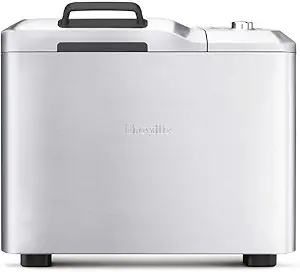 |
| Best Value The sweet spot between price and what you get | Amazon Basics 2-Pound Bread Maker |  |
| Best Budget The cheapest option that still gets the job done reliably | Elite Gourmet Bread Maker EBM8103B |  |
| Top Rated A top-rated pick with lots of positive feedback | Cuisinart Bread Maker CBK-110P1ES |  |
| Most Popular A crowd favorite that many people choose with confidence | KBS Pro 710W Bread Maker |  |
| Best Seller A high-volume bestseller chosen again and again | OSIPOTO Bread Maker BM8205 | 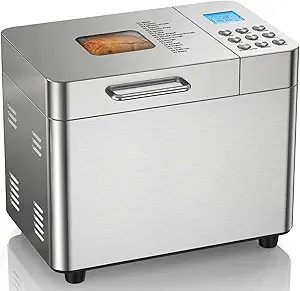 |
Hamilton Beach Premium Bread Maker 29890

| Capacity | 2 pounds |
|---|---|
| Wattage | 550 watts |
| Number of Programs | 21 |
| Voltage | 120 volts |
This Hamilton Beach Premium Bread Maker is a full-featured countertop machine for home bakers who want a wide range of preset cycles and hands-off mixing. You add ingredients, choose one of 21 programs and the machine handles kneading, rising, and baking, then switches to keep-warm when the loaf is done. The automatic fruit and nut dispenser adds mix-ins at the correct time so nuts or dried fruit do not get crushed during kneading, and the unit supports three loaf sizes and three crust shades for flexible results. Notable settings include Gluten-Free and Keto programs, plus express and dough modes for faster or intermediate prep. Cleanup is straightforward thanks to the removable nonstick pan and paddle, and the stainless steel exterior gives it a durable, kitchen-ready look. Trade-offs are typical for single-basin machines: you must measure ingredients carefully for specialty recipes like keto to get texture right, and you cannot shape artisan-style loaves the same way a free-form oven bake would allow.
Best for: Home bakers who want a versatile, low-effort machine that includes dedicated Keto and gluten-free programs and values preset convenience over manual technique.
Less Ideal for: Bakers who prefer hands-on shaping or artisan-style free-form loaves and those who want complete manual control over every stage of the bake.
- Automatic fruit and nut dispenser keeps mix-ins from being crushed
- 21 program presets including Gluten-Free and Keto for low-carb recipes
- Three loaf size and crust shade options for flexible baking results
- Removable nonstick pan and paddle make cleanup easier
- Single-basin design limits control over loaf shape and crust development
- Keto and other specialty recipes may require precise ingredient adjustments to achieve ideal texture
Verdict: Choose this Hamilton Beach model if you want an easy, program-rich bread maker that includes dedicated Keto and gluten-free cycles for consistent low-carb loaves.
Breville Custom Loaf BBM800XL

| Capacity | 2.5 pounds |
|---|---|
| Wattage | 830 watts |
| Number of Programs | 13 |
| Voltage | 120 volts |
The Breville Custom Loaf BBM800XL is a well-equipped bread machine aimed at home bakers who want control over loaf composition and timing. It offers 13 automatic programs plus nine custom settings so you can create, save, and run personalized recipes—useful when adapting formulas for low-carb or keto-friendly doughs. The collapsible kneading paddle mixes ingredients on a platform then folds away before baking, minimizing large paddle holes in the crumb. An automatic fruit and nut dispenser times add-ins accurately, and the smart LCD makes it easy to monitor progress from mixing through bake. Power-interruption protection gives 60 minutes of backup, which helps for longer rising cycles. At 830 watts and with a 2.5-pound capacity, it handles full-size loaves reliably, but the machine is fairly heavy and hand-wash care is required for parts. For keto bakers, the ability to program custom cycles and control kneading and bake times is the primary practical advantage, though adapting very wet or nontraditional batters may still need recipe tweaks and some trial runs.
Best for: Bakers focused on performance and customization who want to develop and store tailored low-carb or keto bread recipes and prefer precise control over kneading and bake cycles.
Less Ideal for: Casual users who want a lightweight, no-fuss appliance or those who prefer fully hands-off machines without recipe tweaking.
- Extensive program options including custom recipe storage for tailored keto formulas
- Collapsible kneading paddle reduces paddle-shaped holes in finished loaves
- Automatic fruit and nut dispenser times add-ins precisely
- 60-minute power interruption protection preserves long cycles
- Clear LCD display for monitoring and manual control
- Relatively heavy countertop unit and requires hand-washing some parts
- May require recipe adjustments for very high-fat or nonstandard keto batters
Verdict: Choose the Breville Custom Loaf BBM800XL if you need a powerful, programmable machine that lets you create and store custom keto bread recipes with precise kneading and timing control.
Amazon Basics 2-Pound Bread Maker

| Capacity | 2 pounds |
|---|---|
| Wattage | 550 watts |
| Number of Programs | 14 |
| Voltage | 120 volts |
The Amazon Basics 2-pound bread maker is a straightforward, budget-friendly machine for making a variety of loaves and doughs at home. You set the ingredients, choose one of 14 programs and one of three crust settings, and the unit handles mixing, kneading, rising, and baking; the ExpressBake mode can finish a loaf in under 90 minutes when you need bread quickly. The nonstick pan and stainless steel exterior are easy to clean and the LCD display makes program selection simple. For people baking low-carb or keto bread, the machine handles denser doughs and dough-only cycles well, but keto recipes often require manual timing adjustments and occasional hand-kneading because they lack gluten and behave differently in automated cycles. The 2-pound capacity is roomy enough for family servings, though the single pan shape limits loaf variety. If you want a no-frills, reliable machine that reduces hands-on time for repeat keto experiments and everyday loaves, this model delivers good value; expect to tweak settings for optimal texture with specialty flours.
Best for: Buyers who want an affordable, easy-to-use machine for regular home baking and who plan to experiment with keto or low-carb recipes while willing to make small timing tweaks.
Less Ideal for: If you need fully hands-off performance for every specialty recipe or want multiple loaf shapes and advanced customization, look at higher-end models or countertop mixers instead.
- 14 preset programs cover breads, doughs, gluten-free options, and jams for recipe flexibility
- ExpressBake option completes a loaf in under 90 minutes for fast results
- Nonstick 2-pound baking pan simplifies loaf removal and cleanup
- Simple LCD controls and three crust settings make operation intuitive
- Single pan shape limits loaf size and shape options
- Keto and very low-gluten doughs may need manual timing or intervention for best texture
Verdict: A no-frills, economical bread maker that handles everyday and keto-style loaves well if you are willing to tweak cycles for denser, low-gluten recipes.
Elite Gourmet Bread Maker EBM8103B

| Capacity | 2 pounds |
|---|---|
| Wattage | 550 watts |
| Voltage | 120 volts |
| Number of Programs | 19 |
The Elite Gourmet EBM8103B is a straightforward programmable bread machine for home bakers who want fresh loaves without fuss. You load ingredients, pick one of 19 programs — including gluten-free and dough modes — and the machine handles kneading, rising, and baking for up to a 2 lb loaf or smaller 1 lb and 1.5 lb sizes. Notable features include a 15-hour delay timer to schedule baking, a 60-minute keep-warm function, and selectable crust darkness. Practical advantages are the wide program selection that covers specialty breads and doughs, the compact footprint that saves kitchen space and energy compared with an oven, and the included accessories like a nonstick pan and measuring tools. Limitations to consider are that it is a basic model without advanced temperature control or dedicated settings labeled for low-carb or keto recipes, so successful keto breads will depend on adapting recipes and monitoring texture. For buyers on a budget this machine delivers reliable, no-frills automation but expect some recipe testing for dense, low-carb doughs.
Best for: Buyers watching their budget who want an easy, automated way to make homemade bread and experiment with specialty loaves without needing advanced controls.
Less Ideal for: Bakers who need precise temperature or proofing settings for experimental low-carb or artisanal techniques should look at higher-end machines or standalone proofing ovens.
- Wide set of 19 preset programs including gluten-free and dough modes
- Three loaf-size options (1, 1.5, 2 lb) for flexible batch sizes
- 15-hour delay timer lets you schedule fresh bread for specific mealtimes
- Compact, energy-saving design uses less power than baking in a full oven
- Includes nonstick bread pan and basic accessories for immediate use
- No dedicated keto or low-carb setting so recipes may require manual adjustments
- Lacks advanced temperature or proofing controls for precise artisan-style results
Verdict: A budget-friendly, no-frills bread maker with many preset programs that is a practical starting point for making and testing keto-friendly bread recipes.
Cuisinart Bread Maker CBK-110P1ES

| Capacity | 2 pounds |
|---|---|
| Wattage | 550 watts |
| Number of Programs | 12 |
| Voltage | 120 volts |
The Cuisinart CBK-110P1ES is a compact countertop bread maker that mixes, kneads, and bakes loaves up to 2 pounds using one of 12 preprogrammed cycles. Typical use is straightforward: add ingredients, choose loaf size and crust color, set the delay timer if you want fresh bread later, and the machine handles rising and baking while showing progress on the LCD. Notable features include 3 crust colors, 3 loaf-size options, a 60-minute keep-warm cycle, audible beeps, and a removable nonstick vertical pan for easier removal and cleanup. For low-carb or keto bread recipes you can use the machine to handle mixing and kneading for dense doughs, though many keto recipes need manual ingredient tweaks and careful monitoring of rise times. The unit is reasonably compact for small counters and runs on 550 watts, so it heats and bakes consistently without excessive power draw. Limitations: the recipe and program library is aimed at traditional bread and may require experimentation for consistent keto results, and the machine's nonstick pan and paddle require hand washing rather than dishwasher cleaning.
Best for: Buyers who prioritize a dependable, easy-to-use machine to automate mixing, kneading, and baking for everyday and specialty loaves while minimizing fuss and maintenance.
Less Ideal for: People seeking a bread maker that runs turnkey keto programs with factory recipes tailored for low-carb flours or those who prefer fully dishwasher-safe parts.
- 12 preprogrammed cycles cover a wide range of bread types and basic baking needs
- Three loaf sizes and crust color settings let you tailor loaf volume and crust darkness
- 13-hour delay-start timer makes it easy to have fresh bread ready on a schedule
- Compact footprint with a removable nonstick vertical pan simplifies handling and storage
- Programs and default recipes are designed for traditional wheat/gluten doughs and may need adjustment for keto formulas
- Pan and paddle require hand washing instead of dishwasher-safe cleaning
Verdict: A reliable, no-nonsense bread maker that automates traditional baking tasks and is a solid platform for home bakers willing to experiment with keto recipes.
KBS Pro 710W Bread Maker

| Wattage | 710 watts |
|---|---|
| Capacity | 2 pounds |
| Number of Programs | 17 |
| Voltage | 120 volts |
The KBS Pro 710W is a full-featured bread maker aimed at home cooks who want a hands-off baking experience. It steers dough through mixing, kneading, rise, and bake cycles using a 710W motor, 360-degree convection heating, and a ceramic nonstick pan that avoids Teflon coatings. The unit includes 17 preset programs plus a custom setting, a timed delay and 60-minute keep-warm, and an automatic dispenser for nuts and add-ins so mix-ins are added at the right moment without supervision. The touchscreen and large viewing window make operation and monitoring straightforward, and the package includes two paddles, measuring tools, a recipe book and other accessories to get started. For ketogenic baking, the custom program and temperature/time control let you experiment with low-carb flours and shorter bake profiles, though results will depend on recipe adjustments. The machine is relatively heavy and sized for multi-loaf capacity, so it suits a dedicated countertop spot rather than occasional, compact use.
Best for: Buyers who prioritize reliable, fully automated baking with preset programs and want a factory-built machine that reduces hands-on steps while offering flexibility to experiment with custom recipes.
Less Ideal for: If you need an ultra-compact or travel-friendly bread maker or rarely bake, this larger, more permanent appliance is not the best fit.
- Powerful 710W motor and convection heating for consistent crust and crumb development
- Healthy ceramic nonstick pan and paddle that avoid Teflon coatings
- Automatic nut/add-in dispenser for hands-off mix-ins
- 17 preset programs plus a customizable setting for recipe flexibility
- Includes useful accessories and a recipe book to start baking immediately
- Relatively heavy and sized for a permanent countertop placement
- May require recipe tweaking for successful keto/low-carb loaves due to different hydration and bake needs
Verdict: Choose this KBS bread maker if you want a powerful, programmable machine with a ceramic pan and automatic dispenser that makes hands-off baking and recipe experimentation—including low-carb trials—easy.
OSIPOTO Bread Maker BM8205

| Capacity | 2 pounds |
|---|---|
| Wattage | 600 watts |
| Number of Programs | 17 |
| Voltage | 120 |
The OSIPOTO BM8205 is a straightforward automatic bread maker aimed at home cooks who want predictable loaves with minimal fuss. You add ingredients, pick one of 17 programs and the machine handles kneading, rising and baking in a nonstick pan; it supports three loaf sizes and three crust settings for flexible results. Practical features for everyday use include a 15-hour delay timer and a one-hour keep-warm function so you can have fresh bread on your schedule, plus overheat protection to guard the motor. Its 600W motor and claimed 360 degree heat distribution aim for even crust color and a soft interior, while the stainless steel body and removable nonstick pan make cleaning manageable. Noise is reported low, so it is unlikely to disturb household activity. Limitations to consider are the 2 lb maximum capacity that may be larger than needed for keto loaves which are often smaller and denser, and the unit expects standard bread ingredients and cycles so achieving consistent results with high-fat, low-carb dough may require recipe tweaking and shorter cycles.
Best for: Buyers who want a reliable, easy-to-use machine that delivers consistent, hands-off loaves and values scheduled baking and safety features.
Less Ideal for: People who need a machine tuned specifically for dense, high-fat low-carb recipes or who prefer very small single-serve bread makers.
- 17 built-in programs cover a wide range of breads and non-bread options like jam and yogurt
- 15-hour delay timer and 1-hour keep-warm let you schedule fresh bread for meals
- Nonstick removable pan simplifies cleanup and loaf removal
- Stainless steel housing with overheat protection improves durability and safety
- Designed around standard bread cycles so keto or low-carb doughs may need manual adjustments
- Maximum 2 lb loaf capacity may be more than needed for single-serve keto recipes
Verdict: A dependable, beginner-friendly bread maker with flexible programs and scheduling that is a safe choice for home bakers wanting predictable results.
Choosing the Right Bread Maker for Keto Bread: Key Factors to Consider
Program Flexibility and Custom Cycles
Keto and low-carb doughs behave very differently from wheat-based doughs. Many recipes require longer kneading, multiple short rises, or no rise at all. Machines with adjustable program steps or a customizable cycle let you change knead, rest, and bake durations to suit denser batters. This flexibility matters because a program tuned for gluten development can overwork a nut- or seed-based mix, while too little mixing leaves dry pockets.
Look for bread makers that let you modify times in each stage or save custom presets. Even a short delay timer is useful when preparing ingredients, but full control over knead and bake segments is the most helpful for repeatable keto loaves.
Mixing Mechanism and Paddle Strength
Keto recipes often include heavier ingredients such as almond flour, coconut flour, psyllium husk, or ground seeds. Those mixes can be dense and sticky, so a robust motor and well-engineered paddle are critical. Single tiny paddles can leave significant unmixed material at the bottom and sides of the pan, producing uneven crumb and inconsistent texture.
Consider machines with reinforced paddles, dual paddles, or paddle shapes designed to scrape the pan. A stronger motor with slower, torque-rich mixing settings helps blend heavy ingredients without overheating the motor. Also check whether the paddle is easy to remove and whether replacement parts are available.
Temperature Accuracy and Crust Options
Accurate baking temperatures are more important for keto loaves because the sugar substitutes and higher fat content change browning behavior. Some machines run hot and quickly overbrown crusts, while others struggle to fully bake dense centers. Adjustable crust settings and precise thermostat control let you dial in the right bake without trial-and-error.
A preheat or warm-up function that stabilizes the pan temperature before the bake stage can improve internal doneness. Also consider whether the machine offers multi-stage baking or incremental heat steps, which help avoid a burnt exterior with an underdone middle.
Loaf Size, Shape, and Capacity
Keto recipes vary from small personal loaves to larger family-sized pans. The pan size and loaf shape affect the final texture because taller loaves may bake differently than wider, shallower pans. If you want sandwich slices, choose a machine that produces an even rectangular loaf and offers a consistent crumb. If you prefer small, dense loaves or baking in batches, a smaller capacity pan can be more efficient.
Also think about how much dough the machine can handle without overflowing. Machines that specify maximum flour or total ingredient weight per program are easier to use for scaled keto recipes.
Ease of Cleaning and Sticky Residue Management
Keto doughs tend to be oilier and stickier than standard wheat doughs, leaving residue on paddles and pans. A bread maker with nonstick interiors, removable paddles, and simple access to the pan will save time and prevent buildup that affects future bakes. Some pans have smooth contours that prevent trapped batter while others have crevices that collect sticky mix.
Dishwasher-safe components are convenient but verify manufacturer guidance for heat-sensitive parts. Consider how easy it is to inspect, reach, and clean the heating elements and bottom edges where crumbs and oil can accumulate.
Control Interface and Recipe Memory
Bakers who follow keto plans often repeat the same recipes. A machine with intuitive controls, a clear display, and the ability to save custom programs reduces setup time and ensures consistency. Look for models with straightforward program editing, labeled stage indicators, and memory for storing a few custom cycles.
A reliable control interface also reduces the learning curve. Buttons that respond consistently and an easy method to pause or stop a cycle are practical for experimenting with new low-carb formulas.
How Keto Dough Differs From Traditional Dough
Keto doughs usually lack the gluten network that gives wheat loaves their structure. Instead, they rely on binders, eggs, psyllium, or gums to trap air and hold shape. That means mixing, resting, and baking behave differently compared with traditional bread.
Because of these differences, you will notice denser crumb, less oven spring, and a greater sensitivity to mixing time and temperature. Understanding these distinctions helps you choose machine features that compensate for the lack of gluten.
- Low hydration and heavy flours require longer, gentler mixing.
- Higher fat content affects browning and may reduce crust crispness.
- Binders and eggs need careful incorporation to avoid lumps.
Adapting Recipes and Timings for Your Machine
When converting a keto recipe for a bread maker, reduce rise times and watch kneading intensity. Many home recipes assume hand-mixing or stand mixers, so use shorter, more frequent mixing intervals instead of a single long knead.
Test a new recipe at a smaller scale first and keep notes on timing, temperature, and loaf weight. Slightly lowering bake temperature or shortening bake duration often produces a moister crumb and prevents overbrowning when sugar substitutes are present.
- Start with 75 percent of the recommended knead time, then adjust.
- Use a probe thermometer to verify internal doneness for dense loaves.
Maintenance Tips for Keto Baking
Regular cleaning prevents sticky residue from building up on paddles and pan walls. After each bake, allow the pan to cool then soak the paddle and pan briefly to loosen oil and flour deposits. Avoid metal utensils that can damage nonstick finishes.
Inspect paddle mounting points and pan seals periodically. Sticky batter can accelerate wear on mechanical parts if left uncleaned, so establishing a quick post-bake routine keeps the machine running well.
- Soak removable parts in warm, soapy water before scrubbing.
- Avoid abrasive cleaners and protect nonstick surfaces when washing.
Accessory and Ingredient Suggestions
Certain accessories make keto baking easier. A small offset spatula or silicone scraper helps lift sticky dough from the pan. A digital probe thermometer ensures internal loaf temperatures are safe and consistent for dense recipes.
On the ingredient side, use finely ground nut flours and sifted psyllium to reduce grittiness. Consider hydration aids like extra egg or water in small increments to reach a workable dough consistency without turning it runny.
- Silicone scrapers and nonmetal spatulas for cleanup.
- Probe thermometer for internal temperature checks.
Common Mistakes and How to Avoid Them
One common mistake is overloading the pan with too much mix. Follow the machine's maximum ingredient guidance and avoid scaling recipes beyond recommended totals. Overfilling causes uneven mixing and can overflow during rising.
Another frequent issue is using standard wheat program settings for keto recipes. Resist the impulse to use long gluten-development cycles. Instead, shorten kneading and monitor progress through the machine's viewing window or pause points.
- Do not overfill beyond specified capacity.
- Adjust knead and rise times away from default wheat programs.
How We Chose the Best Bread Maker for Keto Bread
We prioritized features that matter specifically when baking low-carb, gluten-free, or nut-and-seed–based loaves. First, we looked for loaf programs and timing flexibility that accommodate longer kneading or shorter rise cycles required by dense, low-gluten doughs. Second, paddle and pan design were evaluated because heavy mixes need robust mixing and minimal dead zones. Third, temperature control and crust settings were considered essential to get consistent crumb and avoid overbrowning when recipes include sugar substitutes or extra fats. Fourth, we weighed capacity and loaf shape options so that users can choose single- or family-sized loaves without compromising mixing action. We also considered cleanup and maintenance, since sticky, oily batter residues are common with keto flours and add-ins. Durability of mechanical components and reliability of the control panel were further filters. We excluded machines that lack adjustable program parameters or have small, weak paddles that routinely leave unmixed pockets. The final shortlist balances programmability, mixing power, thermal control, and practical usability for regular keto baking.
Our full evaluation process is outlined in our review methodology.
FAQ
Can I use a regular bread maker program for keto recipes?
Often you should not. Regular programs are optimized for wheat dough and longer rises. Keto mixes usually need shorter, gentler kneading and reduced rise times to avoid overworked batter and dense, gummy centers.
How do I tell when a keto loaf is done?
Because keto loaves are dense, rely on an internal temperature check rather than feel. A probe thermometer reading in the commonly recommended range for the recipe indicates doneness. Also look for even browning and a pull-away from pan edges as visual clues.
Will my bread maker handle eggs, seeds, and nuts?
Most bread makers can mix eggs, seeds, and ground nuts, but very large chunks can interrupt mixing. Chop add-ins finely or fold them in later if your machine supports an add-in beep or delayed addition feature to prevent uneven distribution.
Do I need special paddles for keto dough?
Special paddles are not always required, but sturdier or dual-paddle designs mix dense doughs more evenly. Removable paddles that expose the full pan bottom help reduce trapped batter and make cleanup easier.
Is cooling different for keto loaves?
Yes. Keto loaves often need longer cooling to set because they lack gluten structure. Allow the loaf to cool fully on a rack before slicing to prevent gummy texture and ensure slices hold together.
Final Verdict
Choosing the right bread maker for keto bread means prioritizing program flexibility, strong mixing, and precise temperature control. Expect tradeoffs between loaf size and mixing power, and favor machines that let you customize knead and bake stages for dense, non-gluten doughs. Focus on durability and ease of cleaning since keto mixes can be sticky and oily. With the right feature set and a bit of trial-and-error on timing and hydration, you can produce consistent, satisfying low-carb loaves at home. Pick a machine that matches the loaf sizes you prefer and offers the control you need to refine recipes over time.