
Note: This article contains affiliate links. If you click on these links and make a purchase, we may earn a small commission at no extra cost to you. This helps support our research and content. Read our full affiliate disclosure here.
If you bake regularly or want to streamline meal prep, a dedicated bread maker for dough can save time while producing consistent results. The right machine handles mixing, kneading, and proofing so you get reliable dough for loaves, rolls, or pizza bases with minimal hands-on work. This guide covers the top shortlisted bread makers for dough, focusing on machines that deliver predictable texture, strong kneading, and flexible programming. Below we summarize the key traits that set the best dough-focused bread makers apart and the evaluation criteria used to build this list. Use the product blocks to compare features before deciding which model fits your routine.
Top Picks at a Glance
| Best Overall The best all-around choice for most situations | Elite Gourmet Bread Maker EBM8103B |  |
| Best Quality Built to a higher standard if you want something more solid | Breville Custom Loaf BBM800XL | 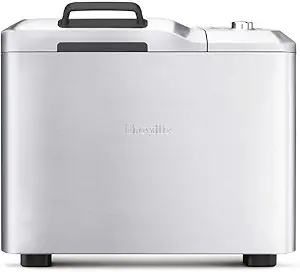 |
| Best Value The sweet spot between price and what you get | Amazon Basics 2-Pound Bread Maker |  |
| Best Budget The cheapest option that still gets the job done reliably | VEVOR Bread Maker MBF-020 |  |
| Top Rated A top-rated pick with lots of positive feedback | Zojirushi Home Bakery Virtuoso Plus BB-PDC20BA |  |
| Most Popular A crowd favorite that many people choose with confidence | Cuisinart Bread Maker CBK-110P1ES |  |
| Best Seller A high-volume bestseller chosen again and again | OSIPOTO 2LB Bread Maker | 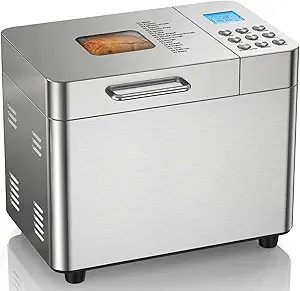 |
Elite Gourmet Bread Maker EBM8103B

| Capacity | 2 pounds |
|---|---|
| Wattage | 550 watts |
| Number of Programs | 19 |
| Voltage | 120 volts |
The Elite Gourmet EBM8103B automates mixing, kneading, rising, and baking so you can make fresh bread with minimal effort. You pick a loaf size (1, 1.5, or 2 lb), choose one of 19 programs — including gluten-free, whole wheat, quick bread, pizza dough, and jam — and the machine runs the cycle; a 15-hour delay timer and 60-minute keep-warm let you time fresh bread for meals. The nonstick pan and included measuring tools simplify cleanup and portioning, and the compact footprint fits small kitchens while using less energy than a full oven. For dough-focused cooking the multiple dough and pizza-dough presets remove guesswork and produce consistent results compared with hand mixing. Limitations are typical for budget bread machines: you get a single kneading blade design that can be harder to remove from some loaves, and customization beyond the preset cycles is limited for advanced bakers who want fine control over knead/rise timing.
Best for: Home cooks who want a reliable, hands-off way to make a variety of breads and doughs without needing advanced baking skills.
Less Ideal for: Bakers who require precise, customizable cycle programming or frequent large-batch baking should consider more advanced or commercial options.
- Wide program selection with 19 presets including gluten-free and pizza dough
- Three loaf size options (1, 1.5, 2 lb) for flexible batch sizes
- 15-hour delay timer and 60-minute keep-warm for scheduled fresh bread
- Compact, energy-saving design suitable for small kitchens
- Single paddle/kneading blade can stick in some loaves and requires a removal tool
- Limited manual control for experienced bakers who want to customize cycles
Verdict: Choose this if you want an affordable, easy-to-use machine that consistently produces fresh loaves and reliable dough with minimal effort.
Breville Custom Loaf BBM800XL

| Capacity | 2.5 pounds |
|---|---|
| Wattage | 830 watts |
| Number of Programs | 13 |
| Voltage | 120 volts |
The Breville Custom Loaf BBM800XL is a feature-rich bread machine aimed at serious home bakers who want control over dough and finished loaves. It provides 13 programs plus nine custom recipe slots so you can create and store personalized dough cycles, and the smart LCD shows progress from mix through bake. The collapsible kneading paddle mixes on a platform and folds away before baking so the loaf browns evenly without a hole from a fixed paddle, and the automatic fruit and nut dispenser times mix-ins precisely for consistent results. Practical additions include a gluten-free program, a jam setting, and 60 minutes of power interruption protection to save long cycles. At 830 watts and a 2.5 pound capacity it handles large loaves, but the unit is relatively heavy and requires hand washing for care. Expect a learning curve when dialing in custom settings, but the machine rewards experimentation with reliably textured dough and well-shaped loaves.
Best for: Bakers who prioritize control over dough development and finished loaf quality and who want programmable flexibility to experiment with custom recipes and specialty breads.
Less Ideal for: Casual users who want a simple, no-fuss machine or those who need a lightweight, compact unit for small kitchens.
- Collapsible kneading paddle prevents a large hole and improves loaf shape
- Automatic fruit and nut dispenser times mix-ins for consistent results
- Thirteen programs plus nine custom settings let you create and store personal recipes
- 60 minutes of power-interruption backup protects long baking cycles
- Relatively heavy countertop footprint and requires hand washing care
- Takes time to learn and fine-tune custom program settings
Verdict: Choose the Breville Custom Loaf BBM800XL if you want a powerful, programmable bread maker built for experimenting with dough and producing bakery-quality loaves.
Amazon Basics 2-Pound Bread Maker

| Capacity | 2 pounds |
|---|---|
| Wattage | 550 watts |
| Number of Programs | 14 |
| Voltage | 120 volts |
This Amazon Basics bread maker is a straightforward countertop machine for making fresh loaves and dough with minimal fuss. You pick a program on the LCD, add ingredients, and the unit automatically mixes, kneads, rises, and bakes up to a 2-pound loaf using one of 14 settings that include gluten-free and dough-only cycles, plus a jam program. The stainless steel housing and nonstick pan simplify cleanup and the three crust color choices give basic browning control. Notable practical features are the ExpressBake mode that finishes a loaf in under 90 minutes for quick needs and the dedicated dough setting for pizza or proofing. It runs on 550 watts, so it heats and cycles reliably without being oversized. Limitations are a single loaf capacity and a modest control set compared with higher-end machines, so users who want artisan-style loaf shaping or multi-loaf flexibility may find it too basic. For everyday baking, quick dough prep, and occasional gluten-free loaves, it is a capable, no-frills option.
Best for: Buyers who want a reliable, low-effort machine to make everyday loaves and to prepare dough quickly without learning complex techniques.
Less Ideal for: Those seeking large-capacity, multi-loaf baking or advanced artisan features like custom knead cycles and manual shaping should look elsewhere.
- 14 preset programs including gluten-free and dough-only cycles
- ExpressBake option produces a loaf in under 90 minutes
- Nonstick pan and stainless steel exterior are easy to clean
- Three crust color settings for basic browning control
- Limited to a single 2-pound loaf capacity
- Basic controls lack advanced customization for artisan-style breads
Verdict: A practical, easy-to-use bread maker that reliably produces 2-pound loaves and ready-to-use dough with a quick ExpressBake option.
VEVOR Bread Maker MBF-020

| Capacity | 0.9 kg |
|---|---|
| Wattage | 650 watts |
| Number of Programs | 19 |
| Voltage | 120 volts |
This VEVOR bread maker handles the full bread-making cycle from mixing and kneading to proofing and baking with simple, one-button operation. It is intended for home bakers who want routine fresh bread or to experiment with whole grain and gluten-free recipes; the 19 program presets include dough, jam, cake, and multiple bread types so beginners can get consistent results. The food-grade ceramic inner pan and included measuring tools make it straightforward to manage ingredients, while the 0–15 hour delay timer and 1-hour keep-warm let you schedule fresh loaves. The machine is reasonably powerful at 650 watts and runs quietly with a vent to control humidity for better crumb texture. Limitations include a maximum 2 lb loaf capacity, which is small for large families, and the mixing blades and pan are integrated so cleaning requires careful wiping rather than dishwasher convenience. For buyers focused on simple, scheduled baking and ingredient control, it delivers solid function at a low cost; if you need larger loaves or full removable-dishwasher parts, a different model may suit better.
Best for: Cost-focused home bakers who want a programmable, no-fuss machine to make daily loaves, specialty doughs, and scheduled fresh bread without breaking the bank.
Less Ideal for: Those who need very large loaves, fully dishwasher-safe removable parts, or commercial-level throughput should consider larger or higher-end machines.
- Wide selection of 19 preset programs for bread, dough, jam, and cake
- Food-grade ceramic nonstick inner pan for even heating and easy release
- Delay timer and 1-hour keep-warm for scheduled baking
- Includes measuring cup, spoon, blade removal hook, and two mixing blades
- Maximum loaf size is 2 pounds, limiting output for larger households
- Inner pan and blades are not dishwasher-friendly and require careful wiping
Verdict: A budget-friendly programmable bread maker that delivers flexible presets and scheduled baking for everyday home use.
Zojirushi Home Bakery Virtuoso Plus BB-PDC20BA

| Capacity | 2 pounds |
|---|---|
| Wattage | 700 watts |
| Voltage | 120 volts |
| Number of Programs | 7 |
The Zojirushi Home Bakery Virtuoso Plus is a full-featured breadmaker designed to produce consistent, bakery-style loaves at home. It bakes up to a 2-pound rectangular loaf using dual heaters for more even browning and two kneading blades that improve dough development and rise. The control panel offers seven programs including whole wheat, multigrain, rapid whole wheat, and a gluten-free setting, plus three crust shade choices and a 13-hour delay timer so you can schedule baking to finish when you need it. Practical touches include a removable nonstick pan, a large viewing window, and included measuring tools and recipes. Its rapid courses can deliver a finished loaf in roughly 2 hours 25 minutes when time is tight, while slower programs give better texture for artisan or whole-grain breads. The machine is substantial in size and weight, so it is best placed on a dedicated counter spot, and hand-wash care is required for some components. For someone who values consistent results and versatile baking options, this model makes reliable daily bread production straightforward.
Best for: Home bakers who prioritize dependable, repeatable results and want a machine that handles specialty doughs like whole wheat and gluten-free without guesswork.
Less Ideal for: Casual users who need a lightweight, compact machine for occasional use or those who require fully dishwasher-safe parts.
- Dual heating elements promote even browning across the loaf
- Two kneading blades improve dough mixing and loaf rise
- Multiple program settings including gluten-free and rapid cycles
- 13-hour delay timer lets you schedule fresh bread on demand
- Removable nonstick pan and viewing window simplify monitoring and cleanup
- Heavy and relatively large, requiring dedicated counter space
- Some parts require hand washing rather than being dishwasher-safe
Verdict: Choose this model if you want a robust, reliable breadmaker that consistently delivers well-browned, well-risen loaves and handles a range of specialty doughs.
Cuisinart Bread Maker CBK-110P1ES

| Capacity | 2 pounds |
|---|---|
| Wattage | 550 watts |
| Number of Programs | 12 |
| Voltage | 120 volts |
The Cuisinart CBK-110P1ES is a compact countertop bread machine that mixes, kneads and bakes up to 2 lb. loaves using 12 preset programs. It is typically used for everyday sandwich loaves, specialty breads, and basic doughs for pizza or rolls, and the 13-hour delay-start lets you wake to freshly baked bread. The upright baking pan and removable nonstick pan make loaf removal straightforward, and the LCD display with audible beeps keeps cycle information visible. Practical benefits include multiple loaf-size and crust color choices, a 60-minute keep-warm function, and a range of program options that cover gluten-free and cake settings so you can experiment beyond plain bread. Limitations are the compact footprint, which means narrower vertical loaves compared with full-size ovens, and the unit is primarily designed for single-loaf home batches rather than large-volume baking. The machine also requires hand washing of parts rather than full dishwasher convenience.
Best for: Buyers who want a reliable, fully automatic bread machine to make fresh single loaves and experiment with doughs while valuing preset convenience and proven performance.
Less Ideal for: Home bakers who need large-capacity or bakery-style wide loaves or those who want dishwasher-safe components for faster cleaning.
- 12 preset programs let you make different bread types, doughs, and cakes without manual programming
- Three loaf sizes and three crust color options give control over loaf volume and crust darkness
- 13-hour delay-start timer produces fresh bread on your schedule
- Removable nonstick vertical pan simplifies loaf removal and cleanup
- Hand wash only parts instead of dishwasher-safe components
- Compact vertical loaf shape may not suit users wanting wider, bakery-style loaves
Verdict: A dependable, compact bread maker with versatile presets and a delay timer that makes fresh single loaves and doughs with minimal effort.
OSIPOTO 2LB Bread Maker

| Capacity | 2 pounds |
|---|---|
| Wattage | 600 watts |
| Number of Programs | 17 |
| Voltage | 120 |
The OSIPOTO 2LB Bread Maker is a straightforward automatic machine that handles kneading, rising, and baking with minimal input, making it a good fit for home bakers who want fresh loaves without fuss. You pick ingredients, choose one of 17 programs (including basic, whole wheat, gluten-free, jam, and cake), set one of three loaf sizes and crust shades, and the machine runs through mixing to baking; a 15-hour delay timer and one-hour keep-warm function let you schedule baking for mornings or meals. The 600W motor claims 360 degree even heat distribution for consistent crust color and a relatively quiet 50 dB operation, and the removable nonstick pan and included measuring tools simplify cleanup and setup. Practical touches include an overheat protection pause and clear approximate bake times for each loaf size, but the unit requires hand washing of parts and is a compact single-appliance solution rather than a full stand-alone oven. For cautious buyers the simple controls and many preset programs reduce guesswork, though those wanting advanced customization or oven-size loaves may want a different solution.
Best for: Home bakers who prefer a low-effort, reliable machine with many presets and a delay timer so they can get consistent loaves without experimenting.
Less Ideal for: Bakers seeking professional-level control over fermentation and shaping or those who need larger oven-style bakes should look elsewhere.
- Large 2 lb capacity with three loaf size options for family-sized loaves
- 17 preset programs cover basic, whole wheat, gluten-free, cake, jam, and yogurt
- 15-hour delay timer and 1-hour keep-warm allow scheduled baking
- Nonstick removable pan and included measuring tools make cleanup and setup easier
- Parts require hand washing rather than dishwasher-safe convenience
- Not a substitute for a full-size oven if you need very large or specialty loaves
Verdict: Choose this machine if you want a risk-averse, easy-to-use bread maker that reliably produces family-sized loaves from a wide set of preset programs.
Choosing the Right Bread Maker for Dough: Key Factors to Consider
Kneading Power and Paddle Design
Kneading power determines how well the machine develops gluten for strong dough structure. A motor with steady torque and a well-shaped paddle yields uniform mixing and reduces the chance of underworked or overworked dough.
Paddle geometry and position matter too because they influence how thoroughly ingredients are incorporated and whether dough clumps around the shaft. For heavier doughs like high-hydration or whole-grain blends, stronger kneading capability helps achieve the same texture you would get by hand or with a stand mixer.
Program Flexibility and Custom Cycles
Flexible programming lets you adjust knead time, rest intervals, and proof durations to match different recipes. Machines with multiple dough presets plus a manual program option let you tailor cycles for pizza dough, enriched doughs, or slow-fermented batches.
The ability to set custom timings and temperatures matters if you adapt recipes or follow artisan techniques. A unit that offers delay start, memory for custom cycles, and clear timing feedback is more useful long term for serious home bakers.
Proofing Accuracy and Temperature Control
Reliable proofing requires consistent internal temperature and gentle humidity retention. Accurate thermostats and well-insulated pans keep the dough rise predictable across different ambient conditions.
Some machines provide variable proof temperatures or a proof-only mode, which is useful when you want to arrest fermentation or use the machine as a controlled environment. Consider units that maintain stable heat during both rest and final proof stages to avoid uneven rise or overproofing.
Pan Capacity and Shape
Pan size affects how much dough you can prepare in a single batch. If you bake for a family or cook in bulk, choose a capacity that matches typical batch sizes to avoid splitting dough or running multiple cycles.
Shape influences how the dough moves during mixing and whether you can easily remove sticky dough for hand shaping. Wider, low-profile pans help with mixing and provide more surface area for heat transfer during proofing if the machine has active warming.
Ease of Cleaning and Maintenance
Dough residue can be sticky and build up on paddles and pan walls, so removable, dishwasher-safe parts simplify cleanup. Machines with accessible seams and minimal crevices reduce the time needed to keep the unit sanitary.
Also consider how easy it is to remove and reattach paddles and whether replacement parts are straightforward to source. Regular maintenance such as wiping seals and checking the mixing shaft will prolong performance.
Durability and Long-Term Reliability
A durable bread maker has a robust motor, corrosion-resistant interior surfaces, and reinforced attachment points for the paddle. Frequent dough cycles place repeated mechanical stress on the motor and paddle, so construction quality directly affects lifespan.
Look for units with solid warranties and straightforward access to service information. Machines with metal gears or reinforced drives typically outlast budget models with lightweight plastic components.
Why a Dedicated Dough Cycle Matters
A dedicated dough cycle optimizes kneading intensity and rest periods specifically for dough development rather than for baking finished loaves. That means the motor runs at the right speed for gluten formation and then pauses for rests and proofs when needed.
Using the dough cycle saves you the effort of mixing by hand and reduces variability between batches, which is especially helpful when you want consistent results for multiple recipes or frequent baking.
- Pre-programmed rest and knead stages minimize guesswork
- Proof-only modes let you use the machine as a controlled environment
- Dough cycles typically use cooler initial mixing speeds to avoid overheating yeast
Using a Bread Maker as a Dough Station
Treat the bread maker as a dough station by using its mixing and proofing features, then removing the dough for final shaping and oven baking. This hybrid approach gives you the advantage of machine consistency plus the artisan finish of oven baking.
Plan your workflow around cycle times and consider par-baking or final proof timing in the oven. For sticky doughs, lightly oiling the pan or flouring hands before removal helps with transfer.
- Start mixing in the machine, finish shaping on a floured surface
- Use the proofing mode to control final rise before oven baking
- Chill dough in the fridge for cold fermentation if your machine supports delay start
Common Dough Problems and How to Avoid Them
Dense or under-risen dough often stems from insufficient kneading, incorrect hydration, or proofing at the wrong temperature. Adjust knead time incrementally and check dough development visually rather than relying solely on program defaults.
Overworked dough can become gummy; if you notice excessive stickiness, reduce the knead duration or add flour in small amounts. Also verify yeast freshness and proper ingredient ratios to avoid unexpected results.
- Too dense: increase knead time or check yeast activity
- Too sticky: reduce hydration slightly or cut knead time
- Inconsistent rise: check proofing temperature and avoid drafts
Maintenance Tips for Frequent Dough Use
Clean paddles and pans after each use to prevent dough buildup that impairs future cycles. Wipe the mixing shaft and seals, and let removable parts dry fully before storage.
Periodically inspect the drive coupling and motor vents for flour dust. Light lubrication of moving parts should follow the manufacturer maintenance recommendations to preserve motor health.
- Remove paddles promptly to prevent baked-on residue
- Run a damp cycle with a small amount of warm water to loosen stubborn dough
- Store the machine with the lid slightly open to prevent musty odors
Adapting Recipes for Machine Dough
Not all recipes translate directly to machine cycles. Reduce liquid slightly for wet recipes and add ingredients in the order your machine recommends to ensure even mixing. If your model has a dough-only program, use it rather than a bake cycle.
When converting from hand-kneaded doughs, expect to tweak knead time and rest intervals. Start with modest adjustments and keep notes so you can repeat successful settings.
- Add liquids first, then dry ingredients to promote thorough mixing
- Adjust knead time by 10 to 20 percent for high-hydration recipes
- Use a test batch to dial in final proof times
How We Chose the Best Bread Maker for Dough
We selected bread makers for dough based on features and capabilities that matter for producing consistent, usable dough rather than simply baking a finished loaf. Primary evaluation criteria included kneading power and paddle design, program flexibility for custom dough cycles, and proofing control including temperature accuracy and hold times. We also weighed build quality and reliability for repeated dough batches, plus ease of cleaning since dough residue can accumulate quickly. Excluded items included compact machines that lack a true dough cycle, single-function loaves-only units, and appliances without variable timing or temperature control. We prioritized units with documented steady motor torque and adjustable program parameters because these elements most directly affect dough development. Finally, we favored intuitive interfaces and serviceability since routine maintenance and troubleshooting matter to frequent bakers.
Our full evaluation process is outlined in our review methodology.
FAQ
Can I use any bread maker to make dough?
Many bread makers include a dough cycle, but not all are optimized for frequent dough preparation. Look for clear dough presets, robust kneading, and proofing options. Compact loaf-only units may not handle heavy or high-hydration doughs well.
How do I know when dough is properly kneaded in a machine?
Properly kneaded dough should be smooth and slightly elastic, pulling away from the pan walls cleanly. You can use the windowpane test on a small piece of dough to check gluten development; if it stretches thin without tearing, it is well kneaded.
Is it better to finish shaping in the oven or by hand after machine proofing?
For best crust and crumb control, final shaping and oven baking by hand is preferred. The machine produces consistent bulk fermentation, and hand shaping before the final proof gives you more control over loaf appearance and oven spring.
Can I cold-ferment dough produced in a bread maker?
Yes, you can use the machine for initial mixing and kneading, then refrigerate dough for slow fermentation. Be sure to use a suitable container and allow time for the dough to come to temperature before final shaping and baking.
How often should I clean the paddle and pan?
Wipe and wash removable parts after every use to prevent residue buildup. Inspect the mixing shaft and seals regularly and deep-clean the pan and paddle if you notice dough sticking or discoloration.
What adjustments help with sticky or wet doughs?
Reduce liquid slightly or shorten knead time, and consider adding flour in small increments during mixing. Also ensure the paddle and pan are lightly oiled or floured when removing very sticky dough.
Final Verdict
When choosing a bread maker for dough, prioritize kneading power, program flexibility, and reliable proofing control. These features most directly affect dough texture and rise, while pan size and ease of cleaning determine practical usability for frequent batches. Balance the tradeoffs between a heavier-duty motor and user-friendly controls. If you rely on the machine for regular dough prep, favor models with adjustable cycles and accessible maintenance so you get consistent results over time.