
Note: This article contains affiliate links. If you click on these links and make a purchase, we may earn a small commission at no extra cost to you. This helps support our research and content. Read our full affiliate disclosure here.
If you need dependable gluten-free bread without the hassle of shaping and long hand-mixing, a bread maker with a gluten free setting can make daily baking manageable. These machines adjust kneading, mixing, and baking times to suit gluten-free batters and often include temperature control, timed cycles, and loaf-size options that matter for texture and crumb. This guide covers the top shortlisted bread makers that include a dedicated gluten-free program. We focused on features that directly affect gluten-free results, including cycle flexibility, heating consistency, and ease of use, so you can pick a machine that fits your kitchen and baking routine.
Top Picks at a Glance
| Best Overall The best all-around choice for most situations | KITCHENARM 29‑in‑1 Bread Machine |  |
| Best Quality Built to a higher standard if you want something more solid | Zojirushi Home Bakery Virtuoso Plus BB-PDC20BA |  |
| Best Value The sweet spot between price and what you get | Elite Gourmet Programmable Bread Maker |  |
| Best Budget The cheapest option that still gets the job done reliably | Generic 2LB Bread Maker |  |
| Most Popular A crowd favorite that many people choose with confidence | Cuisinart Bread Maker CBK-110P1ES |  |
| Best Seller A high-volume bestseller chosen again and again | OSIPOTO Bread Maker BM8205 | 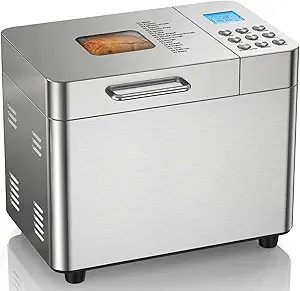 |
KITCHENARM 29‑in‑1 Bread Machine

| Voltage | 120 volts |
|---|---|
| Capacity | 2 pounds |
| Wattage | 550 watts |
| Number of Programs | 29 |
This KitchenArm bread machine is built around versatility: 29 automatic programs cover basic and specialty breads plus cakes, jam, yogurt and a fully programmable HOME MADE cycle for custom recipes. It supports three loaf sizes and three crust colors, with a 15-hour delay timer, 1-hour keep-warm and useful alerts for adding nuts or removing the paddle. The large LCD and saved-setting memory make repeat recipes effectively one-button operations. For gluten-free bakers the dedicated GF menu and the ability to tweak cycle times and temperatures help adapt recipes that need gentler mixing and longer rests. The stainless steel housing and Teflon-coated pan are easy to wipe down, though the pan is hand-wash only. Practical downsides are the machine's bulk and the need to learn the custom HOME MADE programming to get the most from advanced recipes; inexperienced users will still do fine with the preset menus. If you want a single machine that handles everyday loaves plus specialty and gluten-free baking with deep customization, this is a strong pick.
Best for: Buyers who want one versatile machine that reliably handles everyday breads and specialty recipes and who value the ability to fine-tune cycles for gluten-free and custom loaves.
Less Ideal for: If you need a very compact or lightweight machine for small kitchens or you prefer a strictly plug-and-play unit with no programming, this model may be more capability than you need.
- Extensive program list including a dedicated gluten-free menu and customizable HOME MADE cycle
- Supports three loaf sizes and three crust colors for flexible results
- Large LCD and saved settings make repeat recipes quick to run
- 15-hour delay timer, keep-warm and add-nuts/remove-paddle alerts add practical convenience
- ETL certified with food-grade nonstick pan and stainless steel exterior for durability
- Bread pan requires hand washing rather than being dishwasher-safe
- Relatively large and heavy footprint compared with compact models
Verdict: Choose this machine if you want a highly configurable bread maker that includes a dedicated gluten-free program and deep cycle customization for consistent homemade loaves.
Zojirushi Home Bakery Virtuoso Plus BB-PDC20BA

| Capacity | 2 pounds |
|---|---|
| Wattage | 700 watts |
| Voltage | 120 volts |
| Number of Programs | 7 |
The Zojirushi Home Bakery Virtuoso Plus is a performance-focused breadmaker designed to produce consistent loaves with minimal fuss. It bakes a rectangular 2-pound loaf and offers seven programs including gluten-free, whole wheat, multigrain, and rapid whole wheat, plus three crust shade settings. Dual heaters on the lid and base help deliver even browning and a reliable crust, while the included double kneading blades promote good dough development and higher rise. The large LCD control panel and 13-hour delay timer make scheduling convenient for busy routines, and the removable nonstick pan and viewing window simplify monitoring and cleanup. Rapid courses can make a loaf in about 2 hours 25 minutes when you need bread fast, though advanced bakers may miss the manual controls and custom program options found on pro models. The unit is relatively heavy and uses hand-washable components, so moving and washing require a bit more effort than lighter machines. For someone prioritizing dependable results and a true gluten-free program, this model delivers consistent performance every bake.
Best for: Bakers who want reliable, repeatable loaves and need a trustworthy gluten-free program that produces well-browned, evenly baked results with minimal tinkering.
Less Ideal for: Users who want a lightweight, highly portable machine or who require deep manual control and programmable custom cycles for experimental recipes.
- Dedicated gluten-free and specialized healthy-course programs for dietary needs
- Dual heaters for more even browning and consistent crust color
- Double kneading blades improve dough development and loaf rise
- 13-hour delay timer and clear LCD for easy scheduling and monitoring
- Rapid bake option produces a loaf in about 2 hours 25 minutes when time is limited
- Heavier and bulkier than many countertop breadmakers, making it less portable
- Controls offer limited manual customization compared with advanced bakery machines
Verdict: Choose this Zojirushi if you need a high-performing breadmaker that reliably produces evenly baked gluten-free and specialty loaves with minimal effort.
Elite Gourmet Programmable Bread Maker

| Capacity | 2 pounds |
|---|---|
| Wattage | 550 watts |
| Number of Programs | 19 |
| Voltage | 120 volts |
This Elite Gourmet bread maker handles mixing, kneading, rising, and baking automatically, making it easy to produce fresh loaves without constant monitoring. You pick a loaf size (1, 1.5, or 2 lb), choose from 19 one-touch programs such as gluten-free, whole wheat, French, pizza dough, and jam, and use the 15-hour delay timer to schedule baking for mornings or events. The nonstick bread pan, kneading blade, and included measuring tools simplify prep and cleanup, and the 60-minute keep-warm holds bread at serving temperature. At 550 watts it uses far less energy than a full oven and its compact footprint suits small kitchens and apartments. Limitations to note are basic controls rather than a touchscreen and a single-bay baking chamber that restricts simultaneous batches, so it is not for high-volume baking or heavy customization beyond the presets. For everyday home bakers who want reliable, mostly hands-off gluten-free and standard loaves, this machine delivers consistent results at a modest size and power draw.
Best for: Home bakers who want a practical, set-and-forget appliance to produce regular and gluten-free loaves on a predictable schedule without mastering manual techniques.
Less Ideal for: People who need to bake large quantities at once, want advanced customization beyond presets, or prefer a premium touchscreen interface.
- 19 preset programs including a dedicated gluten-free setting for easy specialty loaves
- Three loaf size options (1, 1.5, 2 lb) to match household needs
- 15-hour delay timer and 60-minute keep-warm for scheduled baking
- Compact, energy-efficient operation compared with using a full oven
- Basic physical controls rather than a modern touchscreen interface
- Single pan limits batch size and simultaneous baking
Verdict: Choose this machine if you want a compact, energy-saving bread maker that reliably produces standard and gluten-free loaves with minimal fuss.
Generic 2LB Bread Maker

| Capacity | 2 pounds |
|---|---|
| Wattage | 650 watts |
| Number of Programs | 19 |
This compact bread machine handles the full bake cycle from mixing and kneading to rising and baking, and its 19 programs include gluten-free and quick bread options so you can make specialty loaves without manual steps. It offers three loaf-size settings and two crust color choices, plus a food-grade ceramic inner pan and a Teflon mixing blade for easier release and cleaning. Practical features include a 0–15 hour delay timer, a 1-hour keep-warm function, ingredient-add reminders during the cycle, and a short power-interruption memory so a brief outage does not ruin a bake. At 650 watts it runs reasonably quickly for a home unit, and the multiple presets make it useful for beginners who want one-button baking. Expect basic controls and a modest parts set rather than high-end build quality, and some users may prefer a removable paddle design for simpler cleanup. For the price-conscious buyer who wants a versatile machine that can bake gluten-free loaves, this is a capable, no-frills option.
Best for: Buyers looking for an affordable, easy-to-use bread maker that can reliably produce gluten-free and other specialty loaves without advanced baking experience.
Less Ideal for: Home bakers who want premium materials, a detachable paddle for effortless cleaning, or advanced customization beyond preset programs should consider higher-end models.
- Gluten-free preset included among 19 programs for specialty diets
- Food-grade ceramic nonstick inner pan reduces sticking and is heat resistant
- 0–15 hour delay timer and 1-hour keep-warm let you schedule fresh bread
- Ingredient-add reminder and power-interruption memory improve reliability during longer cycles
- Mixing paddle is not a removable paddle-less design which can make full cleanup harder
- Build and controls are basic compared with higher-end models
Verdict: A budget-friendly, full-featured bread maker that includes a gluten-free program and scheduling features for fresh bread with minimal fuss.
Cuisinart Bread Maker CBK-110P1ES

| Capacity | 2 pounds |
|---|---|
| Wattage | 550 watts |
| Number of Programs | 12 |
| Voltage | 120 volts |
The Cuisinart CBK-110P1ES is a compact countertop bread machine that automates mixing, kneading and baking for a range of breads and other baked goods. You pick one of 12 programs via the LCD, choose crust color and loaf size, set a 13-hour delay and let the machine run a full cycle with an audible beep and 60-minute keep-warm. Its vertical nonstick bread pan and three loaf-size settings make it easy to switch between 1, 1.5 and 2 lb. loaves, and the 12 preprogrammed menus include options for specialty breads and gluten-free recipes commonly needed by households avoiding wheat. The stainless-steel-accented body keeps a small counter footprint, and the removable pan simplifies cleanup despite hand-wash care instructions. Limitations include a 550 W motor that can be slower than commercial machines and no explicit mention of a dedicated gluten-free paddle or program details in the listing, so advanced bakers may need to adjust recipes. For cooks who want reliable, mostly hands-off loaf baking and occasional gluten-free baking, this model is a practical choice.
Best for: Home bakers who want an easy, mostly automatic machine to produce regular and gluten-free loaves with straightforward controls and trusted brand backing.
Less Ideal for: People who bake professionally, need heavy-duty fast performance, or who require fully dishwasher-safe components should look elsewhere.
- 12 preprogrammed menu options for a variety of breads and baked goods
- Three loaf-size selections and three crust-color settings for customization
- 13-hour delay start and 60-minute keep-warm for convenient scheduling
- Compact footprint with a removable nonstick vertical bread pan for easier handling
- Pan and components require hand washing rather than dishwasher-safe convenience
- Listing does not specify a dedicated gluten-free paddle or detailed gluten-free program behavior
Verdict: A compact, reliable bread maker suited to home cooks who want flexible, mostly hands-off loaf and gluten-free baking with simple controls.
OSIPOTO Bread Maker BM8205

| Voltage | 120 |
|---|---|
| Capacity | 2 pounds |
| Wattage | 600 watts |
| Number of Programs | 17 |
The OSIPOTO BM8205 is a straightforward automatic bread maker aimed at home bakers who want reliable, hands-off loaves. You add ingredients, pick one of 17 preset programs — including gluten-free and whole wheat options — and the machine handles kneading, rising, and baking in a nonstick pan. It offers three loaf sizes and three crust settings, a 15-hour delay timer for fresh bread on your schedule, and a keep-warm mode that holds loaves for about an hour. The stainless steel housing and 600W motor deliver steady, even heat and the unit is relatively quiet in operation. Practical touches include overheat protection and included accessories like a measuring cup, spoon, and recipe book. The main limitations are the 2 lb maximum capacity, which fits families but not large gatherings, and the recommendation to hand-wash parts rather than using a dishwasher, which adds cleanup time. For buyers who prioritize predictable results and a strong gluten-free program, this is a low-risk option that makes homemade bread convenient.
Best for: Buyers who want a simple, dependable machine that produces consistent loaves with a dedicated gluten-free program and minimal fuss.
Less Ideal for: Those who need very large loaves regularly or who prefer fully dishwasher-safe components for faster cleanup.
- 17 preset programs including a gluten-free setting for varied recipes
- Large 2 lb capacity with three loaf sizes and three crust darkness options
- 15-hour delay timer and 1-hour keep-warm function for scheduled baking
- Stainless steel exterior with a nonstick pan for easier bread removal
- Quiet 600W motor with overheat protection for dependable operation
- Nonstick pan and accessories require hand washing rather than dishwasher cleaning
- 2 lb maximum capacity may be small for entertaining larger groups
Verdict: Choose this bread maker if you want a low-risk, beginner-friendly machine that reliably bakes gluten-free and standard loaves on a predictable schedule.
Choosing the Right Bread Maker with Gluten Free Setting: Key Factors to Consider
Gluten-Free Program Design
A true gluten-free program adjusts mixing, rest, and bake phases to accommodate batter-like doughs. Unlike wheat doughs that rely on gluten development, gluten-free recipes need gentler mixing and often longer rest periods or adjusted bake times to hydrate starches properly. Machines that let you modify individual phases or offer a well-tuned dedicated program will produce more consistent crumb and reduce collapsed loaves.
Look for programs that reduce high-speed kneading and include pause or soak steps. These differences directly affect texture and structure in gluten-free bread and are more important than general-purpose quick cycles.
Temperature Control and Heating Pattern
Even heat and accurate temperature control are critical because gluten-free breads can be sensitive to too-rapid browning or uneven baking. A machine with predictable, adjustable browning settings and steady internal heat will help create a set crumb without a dry exterior or underbaked center.
Consider features such as multiple browning levels, delayed start with temperature compensation, and insulated housing that keeps internal temperatures stable during long cycles. These aspects influence final loaf color, moisture retention, and shelf life.
Mixing System and Paddle Design
Kneading mechanics matter even for gluten-free mixes because thorough, even mixing ensures additives and binders are uniformly distributed. Paddle shape, placement, and motor torque determine how well a machine handles thicker batters or heavy gluten-free flours.
A removable paddle that is easy to clean and durable will reduce the chance of leftover residue that affects future bakes. Also check whether the machine offers options for single or double paddles and how easily paddles are extracted without damaging the loaf.
Capacity and Loaf Size Options
Gluten-free recipes often have different hydration levels and may expand unpredictably, so loaf pan size and capacity affect rise and bake consistency. Machines that offer multiple loaf size settings allow you to match the recipe volume and get an even bake without overfilling the pan.
If you regularly bake for a family, choose a larger capacity with consistent heat across the full loaf. For small households, a smaller loaf size can reduce waste and shorten bake cycles.
Ease of Use and Preset Clarity
Clear controls and well-labeled presets reduce guesswork when working with sensitive gluten-free recipes. A user interface that explicitly names the gluten-free program and shows remaining time, crust selection, and loaf size helps avoid errors in multi-step cycles.
Additional conveniences like one-touch start, memory for custom programs, and a visible viewing window make real-time adjustments and monitoring simpler, improving first-time success rates for gluten-free baking.
Cleaning, Maintenance, and Durability
Residue from gluten-free flours and binders can build up on paddles and pans, so removable, nonstick pans and easy-to-clean paddles matter for hygiene and consistent performance. Durability of motor and components matters because frequent mixing of dense batters puts strain on parts.
Choose machines with accessible parts that resist sticking and are rated for repeated use. A machine that is simple to maintain will encourage regular baking and reduce the chance of part wear affecting loaf quality.
How Gluten-Free Settings Change The Baking Process
Gluten-free cycles alter the standard bread-making timeline by reducing aggressive kneading and adding hydration or rest stages. Instead of building gluten networks, these programs focus on evenly hydrating flours, incorporating binders, and controlling bake time to set the crumb.
Because the batter behaves differently in the pan, some machines include a preliminary soak step or a lower-speed mix followed by a gentler proof. Understanding how your chosen machine sequences these steps helps you adapt recipes and expect consistent results.
- Gentler mixing prevents overbeating batter and preserves binder function
- Longer hydration or rest improves starch gelatinization and crumb structure
- Altered bake profiles avoid too-rapid crusting that would prevent proper rise
Adapting Recipes for Machine-Based Gluten-Free Baking
Most conventional gluten-free recipes are written for ovens and hand mixing, so you may need to tweak hydration, binder levels, or mixing times for a bread maker. Start by following the machine manufacturer's gluten-free recipe template when available and adjust flour-water ratios gradually.
Track how a recipe performs over a few batches, noting crumb moisture, density, and oven spring. Small changes to liquid amount or adding a short rest before baking can have outsized benefits when working inside the constrained environment of a bread pan.
- Reduce added fats slightly if loaves brown too quickly
- Add small increases in liquid if the loaf is dry or crumbles
- Experiment with different binders in small increments to improve texture
Practical Tips for Preventing Collapsed Gluten-Free Loaves
Collapsed or sunken loaves often result from over-mixing, underbaking, or too much leavening. Use the dedicated gluten-free setting whenever possible and avoid adding extra yeast beyond recipe amounts. If the machine allows, lengthen bake time rather than ramping up mixing intensity.
Also watch the loaf during the bake window if your machine has a viewing window. Minor alterations to hydration or bake duration after initial trials will typically prevent collapse and produce a more even rise.
- Follow recommended ingredient order to ensure proper activation
- Avoid opening the lid during critical proof or early bake phases
- Measure leavening agents precisely; small overages can destabilize structure
Cleaning and Maintaining Your Bread Maker
Regular cleaning preserves nonstick surfaces and prevents old flour or binder residues from affecting future bakes. Remove paddles and pans after cooling and wash according to the manual. If paddles are hard to extract, soak the pan to loosen residue before attempting removal.
Periodic checks on seals, hinges, and the kneading mechanism extend machine life. Replace worn paddles or pans promptly to keep mixing effective and reduce the risk of parts becoming lodged in a loaf.
- Clean controls and exterior with a damp cloth; avoid submerging the machine
- Inspect paddle and pan nonstick coating for wear and replace if scratched
- Keep the ventilation areas clear to prevent overheating during long cycles
When A Dedicated Gluten-Free Machine Makes Sense
If you bake gluten-free bread frequently, a machine with a robust gluten-free program and user-adjustable cycles can reliably reduce trial-and-error. Such machines are worth the investment when you want consistent weekly loaves or plan to scale recipes for a household.
For occasional bakers, models with a simple, well-designed gluten-free preset and straightforward cleanup provide most of the benefit without advanced customization.
- Frequent bakers benefit from customization and durable components
- Occasional users should prioritize an easy preset and simple maintenance
How We Chose the Best Bread Maker with Gluten Free Setting
We shortlisted models that include a dedicated gluten-free program and then evaluated them across concrete, user-relevant dimensions. Our selection focused on machines that let bakers fine-tune cycle length, start time, and crust color, because gluten-free doughs often need different mixing and proofing rhythms than wheat-based recipes. We prioritized even, adjustable heating and stable temperature control since heat distribution strongly affects crumb structure in gluten-free loaves. Practical usability was another filter. We favored machines with intuitive controls, clear program labeling, and removable components that simplify cleanup. Build quality and the durability of critical parts like paddles and pans were considered to reduce the risk of poor kneading or part failure. We excluded models without a true gluten-free program or those that only offer a generic "quick" cycle, because those rarely produce consistent gluten-free results. Final picks balanced cycle customization, heating performance, user-friendly design, and long-term reliability.
Our full evaluation process is outlined in our review methodology.
FAQ
Can I use regular bread recipes in the gluten-free cycle?
Usually not without modification. Regular recipes assume gluten development and different hydration. Use gluten-free-specific recipes or adapt them by adjusting liquid, binder, and mixing steps to match the bread maker's program.
How do I prevent my gluten-free loaf from collapsing?
Collapse is often due to over-mixing, too much leavening, or insufficient bake time. Use the gluten-free setting, measure leavening carefully, and consider slightly longer bake durations rather than more intense mixing.
Is a viewing window helpful for gluten-free baking?
A viewing window lets you monitor rise and early browning without opening the lid, which can be useful. However, avoid frequently checking during critical proof stages, as temperature changes can affect the result.
How often should I clean paddles and pans when making gluten-free bread?
Clean paddles and pans after every use to remove sticky residues from binders and starches. Regular cleaning prevents buildup that can alter mixing performance and flavor over time.
Do I need to adjust yeast amounts for gluten-free loaves?
Often recipes call for similar yeast amounts, but small adjustments may be necessary depending on hydration and mix behavior. Start with the recipe recommendation and adjust slightly if loaves rise too quickly or collapse.
Final Verdict
Prioritize machines that offer a dedicated, well-designed gluten-free program, consistent heating, and gentle mixing mechanics. Match loaf capacity and preset clarity to how often you will bake and how much customization you need. By focusing on cycle flexibility, temperature control, and easy maintenance, you can pick a bread maker that reliably produces better gluten-free loaves with fewer trials.