
Note: This article contains affiliate links. If you click on these links and make a purchase, we may earn a small commission at no extra cost to you. This helps support our research and content. Read our full affiliate disclosure here.
Choosing the right budget hot-and-cold water dispenser matters because it affects daily convenience, safety, and energy use in your kitchen or workplace. You want a unit that heats quickly for tea and soups, chills for cold drinks, and runs reliably without costly upkeep. This guide focuses on affordable hot-and-cold water dispensers that strike a practical balance between performance and running cost. We shortlisted seven options that fit common small-space needs and evaluated them on heating speed, cooling capability, safety features, and ongoing efficiency. Read on to find a compact, user-friendly model that matches how you use hot and cold water every day.
Top Picks at a Glance
| Best Overall The best all-around choice for most situations | Avalon Top Loading Water Cooler |  |
| Best Quality Built to a higher standard if you want something more solid | InSinkErator HOT250 Hot/Cold Dispenser |  |
| Best Value The sweet spot between price and what you get | Frigidaire Top-Load Water Dispenser |  |
| Best Budget The cheapest option that still gets the job done reliably | Xianikoho 5-Gallon Water Dispenser |  |
| Top Rated A top-rated pick with lots of positive feedback | Avalon A4 Bottom Loading Water Cooler |  |
| Most Popular A crowd favorite that many people choose with confidence | Brio Bottom Load Water Cooler | 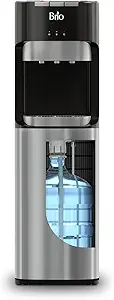 |
| Best Seller A high-volume bestseller chosen again and again | InSinkErator HOT250 HC250SN-SS |  |
Avalon Top Loading Water Cooler

| Wattage | 420 watts |
|---|---|
| Installation Type | Freestanding |
| Access Location | Top |
| Number of settings | 2 |
| Upper Temperature Rating | 185 °F |
The Avalon Top Loading Water Cooler delivers straightforward hot and cold dispensing in a compact, top-load cabinet intended for home or small office use. It uses paddle spouts so you press the cup against the lever to dispense, and its compressor chills water to about 47°F while the hot tap reaches around 185°F; a child safety lock covers the hot spout. The slim footprint and top-loading bottle design make it easy to fit in corners and to see when the bottle is low, and a metal cabinet gives it a durable feel. Setup is simple since it is freestanding and corded electric, and the unit is UL listed and Energy Star compliant which helps with efficiency. Trade-offs include the absence of built-in filtration and a top-load bottle that can be awkward to lift for some users, but for buyers seeking an affordable, no-frills hot-and-cold dispenser the Avalon covers the essentials reliably.
Best for: Buyers who want an affordable, compact hot-and-cold dispenser for home or a small office and prioritize simple setup, visible bottle level, and basic safety features.
Less Ideal for: People who need a built-in filtration system or hands-free bottle loading solutions should consider other models.
- Provides both hot (≈185°F) and cold (≈47°F) water from paddle spouts for quick access
- Child safety lock on hot spout reduces burn risk for families
- Slim, top-loading freestanding design fits small spaces and makes bottle level visible
- UL listed and Energy Star compliant for safety and energy efficiency
- Top-loading bottles require lifting and can be difficult for some users
- No built-in water filtration is included
Verdict: A budget-friendly, slim top-loading dispenser that reliably delivers hot and cold water with family-safe hot tap controls.
InSinkErator HOT250 Hot/Cold Dispenser

| Wattage | 750 watts |
|---|---|
| Installation Type | Under Sink |
| Upper Temperature Rating | 200 °F |
| Capacity | 0.67 gallons |
| Material Type | Stainless Steel |
The InSinkErator HOT250 is an under-sink instant hot-and-cold dispenser that delivers near-boiling water on demand alongside a separate cold, filter-ready faucet. It pairs a compact 0.67-gallon stainless steel tank and a 750-watt heater with a 2-handle matte black faucet whose spout rotates 360 degrees and includes a spring-loaded safety hot-handle. Typical uses are hot drinks, speeding cooking tasks, cleaning stubborn stains without chemicals, and topping up filtered cold drinking water. Installation is straightforward for a standard sink with an under-sink outlet and tool-free tank connections, and the tank includes dry-start protection. For buyers focused on performance, the unit heats quickly to about 200°F and is NSF certified for use with reverse osmosis systems, which helps maintain water quality. The main compromises are tank capacity and the need for an electrical outlet under the sink, so it is best for kitchens that want fast hot water close to the tap rather than high-volume continuous dispensing.
Best for: Buyers who prioritize fast, near-boiling water at the sink for cooking, beverage prep, and cleaning tasks and want a compact, performance-focused instant hot-and-cold solution.
Less Ideal for: Households that need high-volume continuous hot water service or that lack under-sink power and installation space should consider alternatives.
- Provides near-boiling hot water (approx. 200°F) on demand for cooking and beverage tasks
- Compact 0.67-gallon stainless steel tank with dry-start protection for durability and safe operation
- Two-handle faucet with 360-degree spout rotation and spring-loaded hot safety handle
- NSF certified for use with reverse osmosis systems and compatible with in-line filtration
- Relatively small tank capacity limits the volume of consecutive hot pours
- Requires an under-sink electrical outlet and space for installation
Verdict: A compact, performance-oriented under-sink dispenser that delivers near-boiling water on demand while providing a separate filter-ready cold faucet for kitchen convenience.
Frigidaire Top-Load Water Dispenser

| Wattage | 420 watts |
|---|---|
| Installation Type | Freestanding |
| Number of settings | 2 |
| Power Source | Corded Electric |
| Capacity | 5 gallons |
The Frigidaire top-load water dispenser delivers hot and cold water on demand in a slim freestanding cabinet designed for small spaces. It uses a compressor-based 100W cooling system and a 420W heater to reach cold and near-boiling temperatures quickly, and the top-loading design accepts both 3- and 5-gallon bottles so you can use standard refill jugs. Controls are simple: two push buttons and separate spigots for hot and cold, with a child-safety lock on the hot side and a removable drip tray for easy cleaning. The stainless steel welded tank aims to resist overheating and improve longevity, while indicator lights show power, cooling, and heating status. Trade-offs for the price include a basic two-setting control scheme with no precise temperature adjustment and the usual top-load inconvenience of lifting heavy bottles onto the unit, but for kitchens, offices, or dorms that need an affordable hot-and-cold dispenser this model covers core needs reliably.
Best for: Buyers seeking a straightforward, budget-friendly hot-and-cold dispenser for small kitchens, offices, or dorms who prioritize reliable basic performance over advanced controls.
Less Ideal for: Users who want adjustable temperature settings, bottom-load convenience, or a fully countertop compact unit should consider other designs.
- Delivers both hot and cold water using compressor cooling and a 420W heater
- Fits standard 3- and 5-gallon top-load bottles for easy refilling
- Child safety lock on the hot spigot for added protection
- Removable drip tray and stainless steel welded tank for easier cleaning and durability
- Only two temperature settings with no precise temperature control
- Top-loading design requires lifting full bottles onto the unit
Verdict: A practical, no-frills hot-and-cold dispenser that gives reliable hot and cold water using standard 3- and 5-gallon bottles at an affordable price.
Xianikoho 5-Gallon Water Dispenser

| Wattage | 110 watts |
|---|---|
| Installation Type | Countertop |
| Number of settings | 3 |
| Upper Temperature Rating | 95 °C |
| Lower Temperature Rating | 8 °C |
This compact countertop dispenser provides hot and cold water from top-loaded bottles up to about 5 gallons, using a simple one-button control and a push-cup outlet for single-handed use. It heats quickly to high temperatures and cools to around 8 C using an internal circuit board and stainless steel liner, so it works for tea, coffee, and chilled drinks without needing a separate appliance. The removable base fits a range of bottle sizes and the small footprint makes it easy to place on a desk, kitchen counter, or office. Construction mixes polypropylene outer housing with a stainless steel liner for basic durability, and the unit runs on a corded 110V supply. Expect straightforward operation rather than advanced features: temperature is set via a three-position control and cooling/heating times are measured in minutes, so it is best for steady household or light office use rather than high-volume commercial needs.
Best for: Buyers looking for an inexpensive, space-saving dispenser to provide hot and cold water for a small household, home office, or dorm where convenience and low upfront cost matter more than high throughput.
Less Ideal for: Do not choose this if you need a high-capacity or commercial-grade dispenser for continuous heavy use or if you require precise digital temperature control.
- Compact countertop design fits small kitchens, offices, and bedside tables
- Heats and cools with three temperature settings for versatile daily use
- Removable base accommodates multiple bottled water sizes up to 5 gallons
- Stainless steel inner liner resists high heat and reduces corrosion
- Cooling and heating speeds are moderate and may require waiting between uses
- Basic controls with no digital display or precise temperature readout
Verdict: A budget-friendly, small-footprint hot-and-cold countertop dispenser that gives households quick access to heated and chilled bottled water without extra bells or complex controls.
Avalon A4 Bottom Loading Water Cooler

| Access Location | Bottom |
|---|---|
| Number of settings | 3 |
| Upper Temperature Rating | 85 °C |
| Lower Temperature Rating | 8.3 °C |
| Capacity | 5 gallons |
The Avalon A4 is a bottom-loading water dispenser built for simple daily use in small offices or homes. It accepts 3–5 gallon bottles mounted in a lower compartment to avoid lifting, and delivers three temperature options—hot for beverages, cold for drinking, and room temperature for quick refills. The unit uses manual push-button controls, has a stainless steel cabinet that cleans up easily, and includes a nightlight and empty-bottle indicator for convenience. Heating and cooling are handled by modest 420W and 100W elements respectively, so it is energy conscious compared with larger commercial models. High-contact areas are treated with an anti-microbial coating and the design aims to cut spills and strain during bottle changes. The trade-offs are predictable: it is a basic, no-frills dispenser with manual controls and limited cooling power, so it is best where steady moderate use is expected rather than heavy commercial throughput or very fast chill cycles.
Best for: Buyers who prioritize a dependable, low-maintenance dispenser for home or light office use and want an easier bottle-change experience without complex controls.
Less Ideal for: Not a good fit for high-demand commercial environments or users who need rapid chill recovery or advanced temperature programming.
- Bottom-loading design reduces lifting and spill risk during bottle changes
- Three temperature settings (hot, cold, room) cover common household and office needs
- Stainless steel cabinet is durable and easy to wipe clean
- Built-in nightlight and empty-bottle indicator improve usability in low light
- Cooling power is modest so it may not produce ice-cold water quickly under heavy use
- Controls are manual push-buttons with no digital display or programmable features
Verdict: Choose the Avalon A4 if you want a reliable, easy-to-use bottom-loading dispenser that covers hot, cold, and room water without unnecessary complexity.
Brio Bottom Load Water Cooler

| Wattage | 500 watts |
|---|---|
| Installation Type | Freestanding |
| Access Location | Bottom |
| Number of settings | 3 |
| Power Source | Corded Electric |
The Brio bottom-load water cooler is a freestanding dispenser designed to accept 3- or 5-gallon bottles without lifting, delivering hot, cold, and room-temperature water from separate spouts. It is usually placed in a kitchen, office, or common area and used for on-demand beverages and simple meal prep. Notable features include a bottom-access cabinet that makes bottle changes easy, a child-safety lock on the hot spout, stainless-steel reservoirs for cleaner taste, and an LED indicator that alerts when the bottle is empty. In practice the unit provides convenient, continuous access to hot and cold water with minimal setup and straightforward operation, and the stainless internals help reduce metallic taste. Trade-offs are typical for budget dispensers: it is a sizable, heavier appliance that requires a dedicated floor spot and a power outlet, and it lacks advanced self-cleaning or touchless dispense modes found on higher-end models. Routine cleaning and occasional filter or maintenance attention are still needed to keep water quality consistent.
Best for: Buyers who want a straightforward, proven hot-and-cold dispenser that prioritizes ease of bottle changes and dependable everyday use supported by many customer reviews.
Less Ideal for: Those who need a compact countertop unit, touchless dispensing, or built-in filtration and self-cleaning systems should consider other models.
- Bottom-load cabinet eliminates heavy lifting when changing 3- or 5-gallon bottles.
- Three temperature settings provide hot, cold, and room-temperature water on demand.
- Child-safety lock reduces accidental hot-water dispensing.
- Stainless-steel reservoirs promote cleaner taste and easier sanitation.
- LED empty-bottle alert simplifies maintenance and refill timing.
- Large and relatively heavy, so it needs a dedicated floor space and stable surface.
- Does not include advanced self-cleaning or touchless dispensing features.
Verdict: A practical, no-frills bottom-load dispenser that delivers reliable hot, cold, and room-temperature water while removing the hassle of lifting heavy bottles.
InSinkErator HOT250 HC250SN-SS

| Wattage | 750 watts |
|---|---|
| Installation Type | Under Sink |
| Number of settings | 2 |
| Upper Temperature Rating | 200 °F |
| Capacity | 3 gallons |
The InSinkErator HOT250 pairs a compact under-sink 3-gallon stainless steel tank with a two-handle satin nickel faucet to deliver near‑boiling hot water and a separate cold, filter-ready line at the sink. It is typically installed in the cabinet below the sink and uses a standard 1 3/8-inch faucet hole and a grounded outlet for the tank's 750-watt corded power. The hot side heats to about 200°F on demand while the cold side can be plumbed to a water filter or left as a direct cold dispense. Practical features include a spring-loaded safety hot handle that closes when released, tool-free tank connections for easier DIY installation, dry-start protection to prevent damage if tank is energized without water, and a 3-year limited service warranty. Trade-offs are the need for under-sink space and an electrical outlet, and the system's focused purpose means it does not replace a full water filtration or larger hot-water needs for whole-house use. For everyday kitchen tasks like tea, instant cooking, warming bottles, and quick cleaning, it saves time over boiling a kettle and keeps a neat footprint under the sink.
Best for: A mainstream buyer who wants a reliable, low‑hassle way to get near‑boiling water at the sink for cooking, beverages, and quick cleaning without complicated setup or exotic parts.
Less Ideal for: Not a good choice for households that need whole‑house hot water, large-volume commercial use, or where no under-sink outlet or space is available.
- Near‑boiling hot water (approx. 200°F) on demand for cooking and cleaning
- Separate cold faucet that is filter-ready for better tasting drinking water
- Compact 3‑gallon stainless steel tank fits under most sinks with tool-free connections
- Safety features including spring-loaded hot handle and dry-start protection
- Backed by a 3-year limited service warranty
- Requires under-sink space and a nearby electrical outlet for the tank
- Designed for point-of-use hot and cold dispensing, not whole-house hot water
Verdict: Choose the HOT250 if you want a compact, dependable under‑sink dispenser that delivers near‑boiling hot water and filter-ready cold water with straightforward DIY installation and strong safety features.
Choosing the Right Budget Hot-and-Cold Water Dispenser: Key Factors to Consider
Heating Speed and Temperature Control
How quickly a dispenser reaches and maintains hot water temperatures matters when you use the unit for beverages or quick cooking. Faster heat-up times reduce wait, and precise temperature control helps avoid scalding while still producing water hot enough for tea or instant meals.
Look for specifications that list standby recovery or liters per hour at a stated temperature. In practice, performance is affected by tank size and heating element wattage. For budget models, aim for a balance: a modest tank with solid recovery can outperform a larger poorly insulated reservoir.
Cold Performance and Chilling Reliability
Cold-side performance determines whether the dispenser can provide truly cold water on demand, especially in warm rooms or continuous-use situations. Refrigeration-based chillers will outperform simple chilling coils, but they draw more power. Pay attention to stated cold temperature ranges and any notes about recovery times after heavy use.
If chilled water is used frequently, a model with active refrigeration and good insulation will save frustration. For occasional cold-water needs, simpler chilled-reservoir designs may be acceptable and more energy efficient.
Energy Use and Operating Cost
A low purchase price can be offset by high energy consumption. Consider both standby energy draw and active heating or cooling power. Heating elements are typically the primary energy consumers, while compressors and fans affect cold-side use.
Look for energy-saving features such as insulated tanks, programmable standby modes, or ECO settings. For budget buyers, a unit that reduces idle power and recovers temperature efficiently will lower long-term cost and environmental impact.
Safety Features and User Controls
Safety features are essential when hot water is accessible in shared spaces or around children. Seek models with a reliable child lock or safety latch on the hot outlet, clear temperature labeling, and stable dispensing controls that prevent accidental activation.
Controls should be intuitive and durable. Mechanical buttons often last longer in budget appliances than fragile touch panels. Visible indicators for heating and cooling status improve safe operation and reduce guesswork.
Footprint, Installation, and Placement
Where you place the dispenser affects usability and convenience. Countertop and freestanding units require different amounts of space, and some will need a nearby electrical outlet or a drip tray location that handles spills. Consider whether a unit needs top-loading bottles or supports bottom-access reservoirs for easier refills.
Assessment should include clearance for ventilation, especially for refrigerated models, and whether the dispenser's height fits under cabinets or in tight spaces. Simpler installations reduce the likelihood of improper setup and long-term issues.
Maintenance, Cleaning, and Longevity
Budget dispensers vary widely in how easy they are to clean and maintain. Removable drip trays, accessible tanks, and instructions for descaling will extend service life. Stagnant water areas and hidden components increase the risk of microbial buildup if not cleaned regularly.
Check for clear guidance on descaling intervals and whether replacement filters or parts are easy to source. A model that simplifies routine maintenance is less likely to require repairs or early replacement.
Which Dispensing Style Suits Your Space
Hot-and-cold dispensers come in top-load, bottom-load, and direct-plumbed styles. Top-load units are compact and simple but require lifting heavy bottles. Bottom-load designs trade a slightly larger footprint for easier refills since the bottle sits low and slides into place. Direct-plumbed options deliver continuous supply but require a water line and may not suit every budget-minded buyer.
Think about how often you will refill the unit, how much counter space you have, and whether you can route a water line. For small kitchens or temporary setups, a compact top- or bottom-load model usually provides the best mix of convenience and affordability.
- Top-load: smallest footprint, requires lifting bottles
- Bottom-load: easier refills, slightly higher cost or footprint
- Direct-plumbed: continuous water, needs installation and plumbing access
Managing Noise and Compressor Considerations
Refrigeration-based chillers use compressors and fans that generate noise. In quiet offices, bedrooms, or small apartments, compressor noise can be a deciding factor. Budget models tend to have less sophisticated sound dampening, so check for noise ratings or user reports when possible.
If you plan to keep the dispenser in a living or work area, place it where airflow is not restricted and away from direct contact with seating areas. Some models offer quieter operation modes that reduce compressor cycles at the expense of slightly warmer chilled water.
- Look for lower decibel ratings for quieter rooms
- Allow clearance for airflow to avoid higher fan speeds
- Consider units with ECO or reduced-noise modes for night use
Descaling, Filters, and Water Quality
Hard water accelerates mineral buildup, which affects heating efficiency and taste. Budget dispensers may include basic filters or require periodic descaling to maintain performance. Understand the maintenance routine required and whether the unit accepts standard filter cartridges.
Even if a dispenser includes a filter, maintain a regular cleaning schedule for faucets, drip trays, and reservoirs. Good access to internal components makes these tasks easier and reduces long-term issues with flow or flavor.
- Regular descaling improves heating efficiency
- Check filter compatibility and replacement frequency
- Accessible design simplifies routine cleaning
Space-Saving Installation Tips
Measure the intended location before buying to ensure headroom and side clearance. For refrigerated units, provide at least a few inches of space behind and to the sides for airflow. If you are placing the dispenser under cabinets, account for the spout height and any bottle or reservoir access needed for refills.
Consider a drip tray with a removable insert for easy cleanup and choose a model with a stable base to avoid tipping when a cup is pressed to the spigot.
- Allow clearance for ventilation on refrigerated models
- Confirm spout height fits your most common containers
- Use removable drip trays for quick cleaning
Energy-Saving Habits to Lower Running Costs
Use ECO modes or programmable standby features to reduce energy use during periods of low demand. Turning off the heating function overnight or on weekends can save electricity if the unit will not be used for extended periods.
Keep the dispenser away from heat sources and direct sunlight to reduce refrigeration load. Regular descaling keeps heating elements working efficiently, which also lowers energy consumption over time.
- Enable ECO or standby settings when available
- Avoid placing unit near ovens or windows
- Follow descaling schedule to maintain efficiency
How We Chose the Best Budget Hot-and-Cold Water Dispenser
We narrowed the field to budget hot-and-cold water dispensers that deliver dependable hot and cold output without excessive running costs. Our selection filters prioritized practical performance over specialty features, keeping the list useful for kitchens, small offices, and dorm rooms. Key evaluation criteria included heating speed and temperature consistency, cold-side chilling performance, energy efficiency during idle and active use, safety protections such as child locks and overheat cutoffs, and build quality for routine cleaning and maintenance. We also considered footprint and installation ease to ensure units fit common counters or freestanding spaces. Units were excluded if they required uncommon installation work, relied on proprietary consumables that dramatically increased operating cost, or lacked basic safety protections. We focused on measurable specs and real-world usability rather than premium extras that do not help everyday reliability. The resulting picks reflect balanced tradeoffs between upfront affordability and sensible long-term costs.
Our full evaluation process is outlined in our review methodology.
FAQ
How often should I descale a budget hot-and-cold dispenser?
Descale frequency depends on water hardness and usage but commonly ranges from every 3 to 6 months. Heavy mineral buildup will slow heating, so increase frequency in hard-water areas and follow the maker's descaling instructions.
Are refrigerated dispensers noisy in quiet rooms?
Refrigerated units use compressors and fans and can produce noticeable noise, especially on budget models with less insulation. Noise varies by design; placing the unit with adequate ventilation and a bit of distance from seating areas helps reduce perceived sound.
Can a budget dispenser provide water hot enough for sterilizing or only for beverages?
Most budget hot-and-cold dispensers reach temperatures suitable for beverages and quick cooking tasks but may not reach higher temperatures specified for sterilization. Check temperature specifications and safety guidance if you need near-boiling water for sterilizing purposes.
Is a bottom-load or top-load dispenser easier to maintain?
Bottom-load dispensers are generally easier to refill and can reduce strain, while top-load units are slightly simpler mechanically. Maintenance in either style depends more on access to the reservoir and removable parts than on loading orientation.
Do budget models include filters for improving taste?
Some budget units include basic carbon or sediment filters, while others rely on external filtration. If taste or particulates are a concern, choose a model that supports standard filter cartridges and plan for periodic replacement.
Final Verdict
When choosing a budget hot-and-cold water dispenser, prioritize the features that match how you use hot and cold water daily: reliable heating recovery for frequent hot-use, adequate chilling for cold drinks, and safety features if children are present. Balance upfront cost against energy efficiency and maintenance needs to avoid surprises in operating expense. Focus on units with clear temperature controls, easy access for cleaning, and sensible safety locks. That approach will help you pick an affordable dispenser that performs dependably over time and fits your space and routine.