
Note: This article contains affiliate links. If you click on these links and make a purchase, we may earn a small commission at no extra cost to you. This helps support our research and content. Read our full affiliate disclosure here.
If you want fresh-squeezed orange juice without spending a lot, the right budget orange juicer makes a big difference in flavor, yield, and cleanup. You probably care about how much juice you get from each fruit, how quickly you can juice in the morning, and how easy the unit is to maintain. This guide spotlights six shortlisted budget orange juicers that balance extraction efficiency, durability, and simple cleaning routines. Below we explain the criteria used to evaluate these models and what to consider when picking one for everyday use.
Top Picks at a Glance
| Best Overall The best all-around choice for most situations | Eurolux Electric Citrus Juicer ELCJ-1600SN |  |
| Best Quality Built to a higher standard if you want something more solid | Breville Citrus Press Pro 800CPXL |  |
| Best Value The sweet spot between price and what you get | Cuisinart Pulp Control Citrus Juicer | 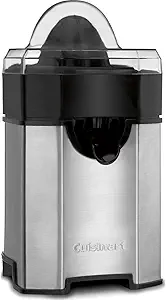 |
| Best Budget The cheapest option that still gets the job done reliably | Elite Gourmet ETS623 Citrus Juicer |  |
| Top Rated A top-rated pick with lots of positive feedback | Astralship Citrus Juicer ASCJ-01S |  |
| Most Popular A crowd favorite that many people choose with confidence | BLACK+DECKER Citrus Juicer CJ625 |  |
Eurolux Electric Citrus Juicer ELCJ-1600SN

| Maximum Power | 120 watts |
|---|---|
| Power Source | Corded Electric |
| Material | Stainless Steel |
| Product Care Instructions | Dishwasher Safe |
The Eurolux ELCJ-1600SN is a countertop citrus squeezer built for everyday orange and lemon juicing. It starts automatically when you press the soft rubber handle and stops when pressure is released, letting you juice hands-free without changing cones for different fruit sizes. The integrated stainless steel filter traps seeds and pulp for cleaner, drinkable juice while detachable components are dishwasher-safe for quick cleanup. Eurolux highlights a quiet but powerful 120-watt motor with auto-reversing and overheat protection to prolong the unit in regular home use. The all-stainless-steel construction feels sturdy and keeps the juicer looking neat on the counter, though the larger footprint means it takes more counter space than compact models. For buyers wanting simple, reliable citrus extraction with straightforward controls and easy maintenance, this model delivers; if you need a very compact or multi-function juicer, look elsewhere.
Best for: Buyers who want a reliable, easy-to-use countertop juicer for daily orange and lemon use and value simple controls, easy cleanup, and durable stainless-steel construction.
Less Ideal for: Those seeking a very small, travel-friendly juicer or a multifunction juicer that processes non-citrus fruits and vegetables should consider other models.
- Automatic one-touch operation for easy, hands-free juicing
- Integrated stainless steel filter captures seeds and pulp for cleaner juice
- Dishwasher-safe detachable parts simplify cleaning
- Stainless steel construction offers a premium, durable finish
- Motor features like auto-reversing and overheat protection improve longevity
- Larger footprint compared with compact citrus presses
- 120-watt rating may be less powerful than high-wattage commercial units
Verdict: A solid, easy-to-use stainless-steel citrus juicer that balances everyday performance and easy cleanup for budget-conscious home juicing.
Breville Citrus Press Pro 800CPXL

| Maximum Power | 100 watts |
|---|---|
| Wattage | 110 watts |
| Power Source | Corded Electric |
| Capacity | 800 ml |
| Material | Stainless Steel |
The Breville Citrus Press Pro 800CPXL is a heavy‑duty lever citrus juicer that uses a power‑assisted, triple‑hinged arm and a quadra‑fin die‑cast cone to squeeze lemons, limes, oranges and grapefruits with minimal effort. You place the fruit on the finned cone, lower the arm and the cone spins only when sufficient pressure and the safety arm are engaged, which keeps operation simple and safe. The die‑cast stainless cone and body are acid resistant for long life, and removable parts including the cone, juice collector and dome are dishwasher safe for easy cleanup. The drip‑stop spout reduces counter mess during handoff to a glass or carafe. At around 110 watts this is not an electric extractor for large‑scale juicing but it excels at high extraction yield and durability for regular household use. The unit is fairly substantial on the counter and focused on citrus only, so buyers wanting a multi‑fruit or compact personal model should look elsewhere.
Best for: Buyers who prioritize extracting the most juice with minimal effort and want a durable, performance‑focused citrus press for regular home use.
Less Ideal for: People seeking a lightweight travel or multipurpose juicer or those who need a high‑speed centrifugal juicer for large volume non‑citrus produce.
- Power‑assisted lever and triple‑hinged arm make pressing large citrus effortless
- Quadra‑fin die‑cast cone extracts high yield from all citrus sizes
- Acid‑resistant die‑cast stainless parts improve longevity
- Removable juicing parts are dishwasher safe for easy cleanup
- Drip‑stop spout minimizes countertop mess
- Higher weight and footprint compared with compact personal juicers
- Single‑purpose citrus design not suitable for non‑citrus juicing
Verdict: Choose the Breville Citrus Press Pro if you want a robust, lever‑assisted citrus juicer that maximizes extraction and durability for home use.
Cuisinart Pulp Control Citrus Juicer

| Power Source | Corded Electric |
|---|---|
| Wattage | 800 watts |
| Number of Speeds | 3 |
| Capacity | 12 ounces |
| Material | Stainless Steel |
The Cuisinart Pulp Control Citrus Juicer is a small counter-top electric juicer designed for everyday citrus use from limes to grapefruits. It uses an auto-reversing universal reamer and a final-spin action to extract more juice, and three pulp-control settings let you dial in texture without changing parts. An extra-long snap-up spout reduces drips and the removable pieces are dishwasher-safe, which keeps cleanup quick for frequent use. The motor is modest but effective for citrus; the unit is meant for squeezing fruit rather than high-volume commercial use. Its 12-ounce carafe limits continuous batch juicing, so you will need to empty it for larger quantities. Stainless-steel construction and simple button controls make it durable and easy to operate, though it does occupy counter space and is single-purpose compared with multifunction machines. For buyers prioritizing straightforward juice yield, easy cleanup, and adjustable pulp in a budget-friendly package, this model performs well.
Best for: Buyers who want a straightforward, efficient home citrus juicer that maximizes yield and keeps cleanup minimal while staying budget-friendly.
Less Ideal for: People who need to juice large volumes at once or want a multifunction juicer that handles non-citrus produce.
- Auto-reversing reamer and final-spin feature increase juice extraction
- Three pulp-control settings let you adjust juice texture without swapping parts
- Dishwasher-safe removable parts simplify cleanup
- Stainless-steel construction with extra-long snap-up spout reduces drips
- 12-ounce capacity requires frequent emptying for larger batches
- Not designed for continuous heavy-duty or multi-fruit processing
Verdict: A practical, budget-friendly citrus juicer that boosts juice yield with adjustable pulp control and easy cleanup.
Elite Gourmet ETS623 Citrus Juicer

| Maximum Power | 40 watts |
|---|---|
| Capacity | 24 oz |
| Power Source | Corded Electric |
| Special Features | Quiet Motor; Auto-reversing reamer |
The Elite Gourmet ETS623 is a small, straightforward electric citrus juicer aimed at everyday home use. It uses a 40-watt motor and an auto-reversing reamer to extract juice from oranges, lemons, limes, and grapefruit with push-down activation, while a built-in pulp and seed filter yields smoother juice. The 24 oz container and easy-pour spout let you make 2 to 3 servings at once and serve directly from the juicer, and the compact footprint fits tight counters, dorms, or RV kitchens. Detachable parts are top-rack dishwasher safe for faster cleanup and most user-contact components are BPA-free. Practical downsides are modest power compared with larger citrus machines and hand-wash is recommended for longevity despite the dishwasher-safe claim, so heavy daily use may show wear sooner. For buyers on a budget who want quick fresh citrus juice without complicated features, this model delivers good extraction and simple cleanup in a small package.
Best for: Buyers on a tight budget who want an easy-to-use countertop juicer for occasional fresh citrus at home, in small apartments, or while traveling.
Less Ideal for: People who need high-capacity or heavy daily juicing for large households or commercial use should consider more powerful or professional models.
- 40-watt motor with auto-reversing reamer for improved juice extraction
- 24 oz container with easy-pour spout for making multiple servings
- Built-in pulp and seed filter produces smoother juice
- Compact footprint suitable for small kitchens, dorms, and RVs
- BPA-free parts and ETL listed for basic safety
- Lower power than larger juicers limits heavy-duty or commercial use
- Manufacturer recommends hand washing for longest life despite dishwasher-safe parts
Verdict: A compact, budget-friendly citrus juicer that delivers solid extraction and simple cleanup for casual home use.
Astralship Citrus Juicer ASCJ-01S

| Maximum Power | 80 watts |
|---|---|
| Power Source | ac |
| Voltage | 120 volts |
| Capacity | 24 fluid ounces |
| Special Features | Easy to Clean, Manual, Portable, Powerful Motor, Quiet Motor |
The Astralship ASCJ-01S is a motorized citrus juicer intended for everyday household juicing of lemons, limes, oranges, and grapefruits. It uses an 80W high-torque motor and a pressure-activated spindle so the reamer runs while you press fruit onto it, and it stops when you release pressure. Two nesting cones handle small and large fruit sizes, and the included 24 oz pitcher with a built-in pulp filter and measurement markings makes collecting and pouring juice straightforward. The stainless steel motor base is weighted for stability and designed to wipe clean easily while removable parts are top-rack dishwasher safe for faster cleanup. Practical benefits include solid extraction for a range of citrus, low vibration during operation, and simple assembly with a twist-lock pitcher. Limitations are its single-purpose design and modest pitcher capacity, which means you may need to refill for larger batches, and it does not include adjustable speed settings or a dedicated pulp-control dial.
Best for: Buyers who prioritize a dependable, easy-to-use countertop juicer for daily citrus use and want low-maintenance cleanup and stable operation.
Less Ideal for: Those who need large-capacity or multi-speed juicing for heavy entertaining or want a machine that handles non-citrus produce like leafy vegetables or hard fruits.
- 80W high-torque motor provides consistent extraction across citrus sizes
- Pressure-activated operation reduces hand effort and simplifies use
- Two interchangeable cones maximize juice yield from small and large fruit
- Removable pitcher, pulp filter, and attachments are top-rack dishwasher safe
- 24 oz pitcher is small for batch juicing and needs frequent refilling
- No adjustable speed or pulp-control settings for finer extraction control
Verdict: A reliable, low-maintenance electric citrus juicer that delivers consistent results for everyday home use.
BLACK+DECKER Citrus Juicer CJ625

| Wattage | 150 watts |
|---|---|
| Power Source | Corded Electric |
| Voltage | 120 volts |
| Special Features | Auto-Reversing |
| Material | Plastic |
The BLACK+DECKER CJ625 is a basic, budget-friendly electric citrus juicer designed to extract juice from a range of citrus sizes. It uses auto-reversing reamer cones and small and large cone inserts to maximize extraction, and an adjustable pulp basket lets you control how much pulp ends up in the pitcher. The clear plastic juice container has measurement markings and a drip-free spout so you can pour directly into glasses or recipe bowls, and most removable parts are dishwasher-safe for easy cleanup. At modest power it handles routine morning oranges, lemons, and limes quickly but is not built for heavy commercial use or continuous large-batch juicing. Its plastic construction keeps weight and price down but means it is less durable than higher-end metal models. For everyday home use where value matters, it delivers straightforward squeezing performance with minimal fuss.
Best for: Buyers wanting a low-cost, no-frills household juicer that reliably handles daily citrus for recipes and drinks and who value easy cleanup and simple controls.
Less Ideal for: People who need a heavy-duty or commercial-grade juicer, or buyers who prioritize metal construction and long-term durability over upfront value.
- Auto-reversing cones for improved juice extraction
- Adjustable pulp basket so you can choose pulp level
- Clear pitcher with measurement markings and drip-free spout
- Dishwasher-safe removable parts for easy cleanup
- Plastic construction is less durable than metal alternatives
- Not intended for heavy continuous or commercial juicing
Verdict: A practical, inexpensive countertop citrus juicer that gives dependable everyday squeezing and easy cleanup for budget-focused home buyers.
Choosing the Right Budget Orange Juicer: Key Factors to Consider
Extraction Efficiency
How much juice you get per orange directly affects how economical the juicer is over time. A more efficient reamer or motorized juicing cone will extract more liquid and less pulp and waste, meaning fewer oranges needed for the same volume of juice.
For budget models, extraction efficiency is often tied to reamer design, rotation speed, and whether the unit allows you to apply steady pressure. Manual presses can outperform weak motors by letting you apply consistent force, while poorly matched reamer sizes can leave juice in the peel. Consider how much yield matters for your household and favor designs proven to squeeze more out of each fruit.
Ease of Cleaning
Frequent use makes cleanup a key factor. A juicer that disassembles quickly and has a minimal number of crevices will save time and reduce the temptation to skip washing. Dishwasher-safe parts are convenient but check that plastic parts are sturdy enough to survive repeated cycles.
Also look at pulp traps and mesh screens. Fine meshes can capture more pulp but are harder to clean. Units with simple, smooth surfaces and removable reamers usually require less scrubbing and dry faster, which is especially important in busy kitchens.
Build Durability
Budget models vary widely in material and construction. Food-contact plastics should be thick and free of thin stress points, and any metal shafts or screws should resist corrosion from citrus acids. Durability affects how long the juicer keeps performing well without parts cracking or seizing.
Assess whether the design relies on fragile clips or integrates robust fastening. For electric models, check that the motor housing is well-sealed against splashes. Durable construction reduces long-term cost by avoiding replacements and ensures safer operation.
User Ergonomics
Ergonomics covers how comfortable and convenient the juicer is in everyday use. This includes reamer size and shape, handle position for manual presses, spout height, and whether pulp control settings are intuitive. A good ergonomic design speeds up juicing and reduces hand fatigue for frequent use.
Also consider how the unit fits in your kitchen and whether it is stable during operation. Non-slip bases, balanced weight distribution, and easily reachable controls make juicing less fiddly and more reliable.
Footprint and Storage
Counter space is often limited, so the juicer's footprint and how it stores matter. Compact, slim designs are easier to tuck into a cabinet or a pantry shelf when not in use. Conversely, larger units might offer better extraction or larger juice containers but require permanent counter space.
Think about how often you will use the juicer and whether you prefer a compact model you store away or a slightly bigger unit that stays on the counter ready to use.
Maintenance and Replacement Parts
Even budget appliances need occasional maintenance. Check whether wear parts such as reamers, strainers, or seals are replaceable and how easy they are to access. Units that allow simple part swaps extend usable life and reduce long-term waste.
Also consider warranty coverage and manufacturer support for replacement pieces. Machines that require specialized or proprietary components can become difficult to maintain once parts are unavailable, so prefer approachable designs with easy-to-source components.
Manual Versus Electric Budget Options
Manual juicers and electric juicers each have tradeoffs that are especially pronounced at budget price points. Manual reamers and lever presses are simple, nearly silent, and often easier to clean. They also avoid motor failures, which are a common weak point in inexpensive electric units.
Electric models speed up the process and reduce hands-on effort, which matters if you juice multiple oranges regularly. At the budget level, expect lower-power motors that rely on efficient reamer design more than high torque. Consider how many oranges you typically juice and whether the convenience of power outweighs potential maintenance down the line.
- Manual pros: low maintenance, quiet, compact.
- Manual cons: more physical effort, slower for large batches.
- Electric pros: faster, less physical effort.
- Electric cons: potential motor wear, usually louder.
How Reamer Design Affects Yield and Texture
Reamer size, shape, and surface texture influence both juice yield and the amount of pulp transferred into the juice. Larger, stepped reamers can handle different citrus sizes and extract more efficiently by engaging more of the fruit interior.
Finer ridges on a reamer tend to break up pulp more, which increases yield but may also send more particulate into the juice. If you prefer smoother juice, look for models with effective strainers or options to adjust pulp capture.
- Stepped reamers fit a range of fruit sizes.
- Finer ridges extract more but increase pulp.
- Separate strainers control texture without sacrificing yield.
Cleaning Tips for Long-Term Performance
Rinse parts immediately after juicing to prevent sticky buildup from drying on surfaces. Remove pulp baskets and reamers and wash under running water with a soft brush to dislodge trapped fibers. For stubborn residues, soak removable parts briefly in warm, soapy water before scrubbing.
Avoid abrasive pads on plastic components to prevent micro-scratches that trap bacteria and accelerate wear. If parts are dishwasher-safe, place them on the top rack and use a gentle cycle to extend their life. Regular maintenance preserves seal integrity and prevents odors.
- Rinse immediately after use.
- Soak and brush fine meshes.
- Avoid abrasive scrubbers on plastic.
Pulp Control and Juice Texture
Different models handle pulp in different ways. Some units use fine mesh strainers to remove most pulp, producing smoother juice, while others collect pulp separately so you can add it back to taste. If you or your family prefer a specific texture, choose a design that makes adjusting pulp levels straightforward.
Budget juicers sometimes compromise on the quality of the strainer, so inspect how easily the strainer lifts out and cleans. A removable, simple strainer is better than a permanently integrated fine mesh that is difficult to access.
- Separate pulp containers simplify texture adjustment.
- Easily removable strainers make cleaning quicker.
- Fine meshes improve smoothness but require more maintenance.
Small-Kitchen Storage and Counter Convenience
If you have limited counter space, favor compact or stackable designs that store neatly. Some budget models tuck reamers and strainers into the base or nest inside the juice cup to minimize storage volume. Consider whether you will leave the juicer on the counter for daily use or store it between uses.
Also evaluate how easy it is to set up and break down. A unit that takes many small steps to disassemble will be less likely to be used often, negating the convenience of having a juicer at home.
- Compact designs are better for infrequent users.
- Nesting parts cut storage footprint.
- Fewer assembly steps encourage daily use.
How We Chose the Best Budget Orange Juicer
We focused on practical, measurable traits that matter when buying a low-cost orange juicer. Key evaluation criteria included extraction efficiency, which measures how much juice a unit yields from a standard orange; motor reliability or manual lever design durability for mechanical models; ease of cleaning, covering disassembly and dishwasher-safe parts; build quality and materials, emphasizing food-safe plastics and corrosion-resistant components; and user ergonomics, including drip control, pulp control, and comfortable reamer shapes. We also considered noise level for electric models and footprint for small kitchens. Units with fragile parts, unclear food-safety materials, or excessively complex cleaning requirements were excluded. We prioritized models that deliver consistent juice yield, straightforward maintenance, and a low total time-to-serve for everyday citrus use.
Our full evaluation process is outlined in our review methodology.
FAQ
Will a budget orange juicer give less juice than an expensive model?
Often a budget model can yield comparable juice if the reamer and extraction method are efficient. Higher-priced units may use stronger motors or premium materials, but a well-designed budget reamer or manual press can still produce good yield.
Are budget electric juicers noisy?
Many budget electric models are louder than premium ones because they use simpler motors and less sound insulation. Noise level usually depends on motor design and housing; if quiet operation matters, consider manual options or models noted for lower noise.
How often should I replace parts on a budget juicer?
Replacement frequency depends on use and part quality. Removable reamers and strainers may last years with regular care, but thin plastic pieces can wear faster. Inspect parts periodically for cracks or discoloration and replace them if they show damage.
Can I juice other citrus fruits with a budget orange juicer?
Yes. Most orange juicers handle lemons, limes, and grapefruits, though efficiency varies. Smaller fruits may need a smaller reamer or more effort on a manual model, while large fruit may overflow a small juice container.
Is dishwasher cleaning safe for budget juicers?
Some parts may be dishwasher-safe, but frequent dishwashing can stress plastics and shorten part life. If dishwasher use is important, choose a model whose removable parts are explicitly rated for dishwasher cycles and place them on the top rack.
Final Verdict
When choosing a budget orange juicer, prioritize extraction efficiency, ease of cleaning, and durable materials. Expect tradeoffs between power and maintenance: manual models often win on simplicity and longevity, while electric units offer quicker operation at the cost of potential motor wear. Decide whether compact storage or faster throughput is more important for your routine, and pick a design with replaceable parts and straightforward cleaning to extend usable life. Focusing on these criteria will help you select a reliable, inexpensive juicer that fits your daily citrus needs.