
Note: This article contains affiliate links. If you click on these links and make a purchase, we may earn a small commission at no extra cost to you. This helps support our research and content. Read our full affiliate disclosure here.
Picking the right juicer changes how often you actually make fresh juice. A good juicer extracts more liquid from fruits and vegetables, leaves drier pulp, and fits your kitchen habits so cleanup does not become a chore. This guide shortlists the top options across common home setups, focusing on extraction efficiency, maintenance, and usability. Below are our seven top juicer picks, each chosen for real-world advantages like higher juice yield, easier cleaning, quieter operation, or compact footprint. Use the quick evaluation notes and our decision criteria to match a model to how you plan to use it.
Top Picks at a Glance
| Best Overall The best all-around choice for most situations | Breville Juice Fountain Cold Plus | 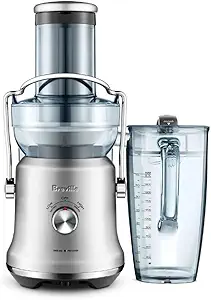 |
| Best Quality Built to a higher standard if you want something more solid | NAMA J2 Cold Press Juicer |  |
| Best Value The sweet spot between price and what you get | Hamilton Beach Big Mouth Juicer 67601A |  |
| Best Budget The cheapest option that still gets the job done reliably | HOUSNAT Centrifugal Juicer AMR516 |  |
| Top Rated A top-rated pick with lots of positive feedback | Omega NC900HDC Juicer |  |
| Most Popular A crowd favorite that many people choose with confidence | Breville Juice Fountain Plus JE98XL |  |
| Best Seller A high-volume bestseller chosen again and again | Juilist Centrifugal Juicer AMR526 |  |
Breville Juice Fountain Cold Plus

| Maximum Power | 1000 watts |
|---|---|
| Number of Speeds | 2 |
| Special Features | 3.5 Inch Extra-Wide Chute Feed |
| Power Source | AC |
| Blade Material | Stainless Steel |
The Breville Juice Fountain Cold Plus is a countertop centrifugal juicer designed for quick, everyday juicing of fruits, vegetables, and leafy greens. It uses Cold Spin Technology with a precision mesh filter to reduce heat during extraction, and a 3.5-inch extra-wide chute cuts prep time by allowing many whole fruits and veggies to be fed without extensive chopping. Two speed settings let you dial back speed for softer produce or use high for harder items, while the included 70 fl oz seal-and-store jug and detachable juice nozzle make batch juicing and mess-free pouring straightforward. The unit places the pulp bin behind the base to save counter space and comes with a cleaning brush and recipe book, though parts are hand-wash only. Expect fast output and easy throughput for family-sized batches, but as a centrifugal model it will produce more foam and slightly less shelf-stable clarity than slow masticating juicers and requires regular cleaning after each use to avoid buildup.
Best for: Buyers who want a fast, reliable everyday juicer that handles family-sized batches with minimal prep and values countertop space savings and straightforward operation.
Less Ideal for: Those prioritizing maximum juice yield, very quiet operation, or the longest shelf life for stored juice should consider a slow masticating juicer instead.
- Extra-wide 3.5-inch chute reduces prep by handling larger pieces and some whole fruits
- Cold Spin Technology with precision mesh filter limits heat for better nutrient preservation
- 70 fl oz seal-and-store jug lets you juice larger batches and store juice for up to three days
- Space-saving design places the pulp bin behind the base for a smaller countertop footprint
- Two speeds accommodate both soft and hard produce
- Being a centrifugal juicer, it produces more foam and slightly less extraction yield than slow masticating models
- Key components are hand-wash only, adding time to cleanup
Verdict: Choose this juicer if you want fast, low-prep juicing with a large seal-and-store jug and a compact, user-friendly design for everyday family use.
NAMA J2 Cold Press Juicer

| Maximum Power | 200 watts |
|---|---|
| Power Source | Corded Electric |
| Voltage | 120 |
| Number of Speeds | 1 |
| Capacity | 30 fluid ounces |
The NAMA J2 is a compact masticating juicer built for steady, hands‑free cold pressing of fruits and vegetables. It uses a single auger running at a low speed to gently crush produce, which helps preserve nutrients and reduces heat and foam while maximizing juice yield from leafy greens and hard produce. The wide self‑feeding hopper accepts larger pieces so you can load a full recipe and walk away, and included strainers and containers make it ready to use out of the box. At 200 watts and around 50 RPM the motor is quiet and efficient for regular home use, and most parts are quick‑release for rinsing and light scrubbing. Practical limits are its single speed control and 30‑ounce capacity, so it suits daily servings and moderate batches rather than continuous commercial juicing, and it requires hand washing rather than dishwasher convenience. For a buyer focused on extraction performance and nutrient retention, the J2 delivers strong yield and gentle operation in a compact package.
Best for: Buyers who prioritize extraction performance and nutrient retention and want a compact, mostly hands‑free cold press that delivers higher yields for daily juicing.
Less Ideal for: People who need large‑batch or continuous commercial juicing, or who prefer dishwasher‑safe parts and multiple speed settings for more control.
- Self‑feeding wide hopper lets you load full recipes for hands‑free juicing
- Low‑speed single auger preserves nutrients and reduces heat and foam
- Designed to maximize juice yield from leafy greens and hard produce
- Quiet 200 W motor suitable for regular home use
- Quick‑release parts and included cleaning brush simplify cleanup
- Single speed limits control over texture and extraction for specialty juices
- 30 fl oz capacity is modest for large batches
Verdict: Choose the NAMA J2 if you want a compact, hands‑free cold press that prioritizes high juice yield and nutrient‑preserving slow extraction.
Hamilton Beach Big Mouth Juicer 67601A

| Maximum Power | 800 watts |
|---|---|
| Power Source | Corded Electric |
| Number of Speeds | 1 |
| Material | Plastic, Stainless Steel |
| Included Components | Cleaning Brush, Dishwasher Safe Parts |
The Hamilton Beach Big Mouth Juicer is a centrifugal extractor built for fast, everyday juicing. Its 800 watt motor and stainless steel strainer basket spin hard and soft produce quickly to maximize yield, while the 3-inch feed chute handles whole apples, celery stalks, and similarly sized items so you spend less time prepping. A large pulp bin reduces interruptions when making multiple servings and removable parts are dishwasher safe for straightforward cleanup. The unit is simple to operate with a single-speed control and includes a cleaning brush to help clear the strainer. Expect a smooth, mostly pulp-free juice typical of centrifugal machines, but know it is not a cold-press style juicer so juices will have more foam and slightly less shelf life. The juicer also relies on a single speed, so it is best for straightforward juicing rather than fine-tuning extraction for delicate leafy greens. For someone who wants fast, routine juicing with minimal prep and cleanup, this model delivers reliable performance and durable, easy-to-service parts.
Best for: Buyers who prioritize fast, low-effort juicing and want to skip extensive produce prep while keeping cleanup simple.
Less Ideal for: People seeking cold-press quality juice, minimal oxidation, or precise speed control for leafy greens should consider masticating juicers instead.
- Extra-large 3" feed chute reduces pre-cutting and speeds prep
- 800 watt motor designed to extract juice efficiently from hard and soft produce
- Removable parts are dishwasher safe for easier cleanup
- Includes cleaning brush and a large pulp bin for longer continuous use
- Centrifugal extraction creates more foam and shorter juice shelf life than cold-press models
- Single-speed operation limits control when juicing delicate leafy greens
Verdict: Choose this juicer if you want fast, everyday extraction with a big feed chute and easy cleanup for routine home use.
HOUSNAT Centrifugal Juicer AMR516

| Maximum Power | 400 watts |
|---|---|
| Number of Speeds | 3 |
| Power Source | Corded Electric |
| Capacity | 450 ml |
The HOUSNAT AMR516 is a budget-friendly centrifugal juicer designed for quick daily use. It accepts whole or roughly cut produce via a 65 mm wide chute and runs on a 400 W motor with a pulse boost to handle harder items like carrots and beets. Three speed settings let you match speed to produce softness, and a stainless steel micro-mesh filter and anti-corrosion blades aim to increase juice yield and reduce wet pulp. Detachable BPA-free parts, a 1.6 L pulp collector and a 360-degree cleaning brush make cleanup straightforward, and most removable pieces are top-rack dishwasher safe for convenience. The unit is intended for light to moderate use and may need cooling breaks under heavy loads, so it fits best in households that juice several times a week rather than continuous commercial use. For the price it delivers solid extraction performance and useful accessories, though centrifugal designs generally produce slightly more foam and less long-term nutrient retention than slow masticating juicers.
Best for: Buyers who want a low-cost, fast countertop juicer for everyday home use and value quick prep and easy cleaning over professional-grade continuous operation.
Less Ideal for: People who need heavy-duty or continuous commercial juicing or who prioritize the slow-extraction nutrient profile of masticating juicers should look elsewhere.
- Wide 65 mm feed chute reduces prep by fitting larger pieces or whole fruit
- Three speeds plus pulse let you tailor extraction to soft and hard produce
- Stainless steel micro-mesh filter and blades for improved juice yield
- Dishwasher-safe, BPA-free detachable parts and a cleaning brush simplify cleanup
- Designed for light to moderate use and may overheat with continuous heavy juicing
- Centrifugal design can produce more foam and slightly drier pulp than slow juicers
Verdict: A practical, budget-minded centrifugal juicer that delivers fast, easy juicing and simple cleanup for everyday home use.
Omega NC900HDC Juicer

| Wattage | 150 watts |
|---|---|
| Power Source | Corded Electric |
| Voltage | 120 volts |
| Number of Speeds | 1 |
| Blade Material | Stainless Steel |
The Omega NC900HDC is a low-speed, dual-stage masticating juicer designed to maximize juice yield and preserve enzymes by operating at 80 RPM. It is commonly used for extracting juice from fruits, vegetables, leafy greens and wheatgrass, and also doubles as a nutrition system for making nut butters, soy milk, baby food, pasta, and spice grinding with included nozzles. Notable features include an adjustable end cap with five pressure settings, automatic pulp ejection for continuous juicing, and a gear reduction that delivers high torque while staying comparatively quiet. Most removable parts rinse clean easily and the stainless steel cutting components help with durability. Important limitations are its relatively large footprint and weight compared with compact models, and hand washing is required for care rather than dishwasher-safe parts. The single slow speed is excellent for nutrient retention but not suited to high-speed batch processing when you need juice very quickly.
Best for: Buyers who prioritize a durable, reliable juicer that maximizes nutrient extraction and performs multiple kitchen tasks will appreciate this unit for daily health-focused juicing and food prep.
Less Ideal for: If you need a very compact, lightweight appliance or want fastest possible batch throughput, a high-speed centrifugal model or smaller countertop unit may be a better fit.
- Low 80 RPM masticating extraction preserves enzymes and reduces oxidation
- Adjustable end cap with multiple pressure settings improves yield across produce types
- Automatic pulp ejection enables longer continuous juicing sessions
- Versatile: can make nut butters, baby food, soy milk, extrude pasta and grind spices
- Durable gear-reduction motor with quiet operation for frequent use
- Relatively heavy and takes up significant counter space
- Removable parts require hand washing rather than dishwasher convenience
- Single speed means longer processing time compared with centrifugal juicers
Verdict: Choose the Omega NC900HDC when you want a reliable, heavy-duty cold-press juicer that maximizes nutrient retention and handles a wide range of kitchen tasks.
Breville Juice Fountain Plus JE98XL

| Power | 850 watts |
|---|---|
| Number of Speeds | 2 |
| Feed Chute | 3 inch extra-wide |
| Capacity | 35.2 fl oz juice jug |
The Breville Juice Fountain Plus JE98XL is a straightforward centrifugal juicer built for fast daily use. It uses an 850W motor with two speeds so you can run softer fruits and leafy greens on low and harder produce on high, and the 3-inch feed chute reduces prep by letting many items be juiced whole. A titanium-reinforced disc and stainless-steel micro mesh filter basket are meant to boost extraction, and the included 35.2 fl oz juice jug has a built-in froth separator to pour clearer juice. Cleanup is simplified by a detachable pulp container and dishwasher-safe parts, and cord storage under the base keeps the counter tidy. Practical limitations include the typical centrifugal tradeoffs: it does not match slow masticating models for maximum yield or longer shelf life of juice, and it can be louder during operation. For buyers who want quick, fresh juice with minimal prep and easy cleaning, this model delivers reliable daily performance at a reasonable size.
Best for: Buyers who want a fast, no-fuss way to make fresh juice most mornings and value quick prep, straightforward controls, and easy cleanup guided by other owners' positive experience.
Less Ideal for: If you prioritize maximum juice yield, very long juice storage, or the quietest operation, consider slow masticating or cold-press juicers instead.
- Extra-wide 3-inch chute reduces prep by allowing many fruits and vegetables to be juiced whole
- Two-speed control matches speed to soft or hard produce for better handling of varied ingredients
- Titanium-reinforced disc and stainless-steel micro mesh basket for improved extraction compared with basic models
- Included juice jug with froth separator yields clearer pours and less foam
- Dishwasher-safe removable parts and cord storage make cleanup and storage simpler
- Centrifugal design yields lower extraction and shorter juice storage life compared with slow masticating juicers
- Operates with noticeable noise during use
Verdict: Choose the JE98XL if you want a fast, easy-to-use centrifugal juicer that minimizes prep and cleanup for reliable everyday juicing.
Juilist Centrifugal Juicer AMR526

| Feed Chute | 3" |
|---|---|
| Maximum Power | 800 watts |
| Wattage | 400 watts |
| Number of Speeds | 3 |
| Capacity | 400 ml |
The Juilist Centrifugal Juicer AMR526 is a countertop juicer aimed at quick, frequent use. It accepts whole or large pieces through a 3" wide feed chute so prep time is reduced, and a high-speed motor (listed up to 800W peak, 400W running) with three speed settings handles soft and firmer produce. The stainless steel cutting disc and micro-mesh filter are designed to improve extraction and the package includes a cleaning brush and a juicer cup; many removable parts are dishwasher-safe which simplifies cleanup. Safety features such as a double lock arm, visible juicing window, non-slip base and automatic overheat protection make it suitable for everyday kitchens. Expect typical centrifugal juicer tradeoffs: faster extraction and easier cleanup than slow masticating models, but less dry pulp and slightly lower nutrient retention for leafy greens. The unit is compact for small counters but the 400 ml capacity means frequent emptying for larger batches.
Best for: Buyers who want a straightforward, low-friction juicer for daily fruit and vegetable juices and who prioritize easy cleanup and built-in safety features.
Less Ideal for: If you primarily plan to juice leafy greens, wheatgrass, or want the highest nutrient retention and the driest pulp, a slow masticating juicer would be a better choice.
- 3" wide feed chute reduces chopping and speeds prep
- Three speed settings cover soft fruits through harder vegetables
- Stainless steel cutting disc and micro-mesh filter for improved extraction
- Dishwasher-safe removable parts and included cleaning brush simplify cleanup
- Safety features include double lock arm, non-slip base, visible window, and overheat protection
- Centrifugal design is less effective on leafy greens and yields wetter pulp than slow juicers
- 400 ml capacity requires frequent emptying for larger batches
Verdict: A compact, easy-to-use centrifugal juicer that gets quick, everyday juices with minimal prep and cleanup, making it a sensible choice for cautious mainstream buyers.
Choosing the Right Juicer: Key Factors to Consider
Extraction Method
Different juicers use different extraction methods, and that choice affects yield, nutrient retention, and how well the machine handles various produce. Centrifugal machines spin at high speed to separate juice quickly, which is useful for fast, occasional use. Masticating or slow-press designs operate at lower speeds to crush and press produce, typically producing drier pulp and higher yield, especially from leafy greens.
Consider the types of produce you plan to juice most often. If you use a lot of hard root vegetables or leafy greens, a slow-press or masticating approach generally gives better results. If you value speed and convenience and mostly juice softer fruits, a centrifugal model can be sufficient.
Yield and Nutrient Preservation
Juice yield determines how much produce you need to buy and prepare for a given volume of juice. Machines that extract more juice reduce waste and lower ongoing food cost per serving. Higher-yield designs also typically leave drier pulp, signaling efficient extraction.
Beyond volume, some extraction methods expose juice to less heat and oxidation, which can help preserve fragile vitamins and enzymes. If you drink juice for its nutritional benefits, prioritize models that operate at lower speeds or advertise cold-press extraction characteristics.
Cleaning Time and Complexity
How a juicer is taken apart and cleaned strongly affects whether you will use it daily. Units with many small parts or trapped pulp pathways require more time to rinse and brush, while machines with easily removable, dishwasher-safe components reduce the friction of daily use.
Also check how accessible the filter and blade areas are for scrubbing. Some designs include cleaning brushes and simplified assemblies that let you rinse pulp directly from the screen, which shortens turnaround time between sessions.
Motor Strength and Duty Cycle
Motor power and the device duty cycle determine how the juicer performs under load and how long you can run it continuously. Stronger motors handle dense root vegetables and repeated use with less slowdown. Duty cycle indicates whether the manufacturer intends continuous operation or shorter bursts.
If you plan to make larger batches or juice hard produce frequently, choose a unit with a robust motor and a longer recommended run time to avoid overheating and premature wear.
Size and Storage
Counter space is a limiting factor in many kitchens. Some juicers are tall and narrow, designed to fit under cabinets, while others are wider and require permanent counter real estate. Consider where you will store the unit when not in use and whether frequent setup will be practical.
Smaller models may trade capacity or motor size for a compact footprint. If you plan to leave the juicer on the counter, look for a design that visually and physically fits your kitchen without crowding other appliances.
Noise Level
Noise affects when and where you can comfortably use a juicer. High-speed centrifugal units tend to be louder, which can be disruptive early in the morning or in open-plan living spaces. Slow-press models are typically quieter but may take longer to produce a given volume.
If you have noise-sensitive family members or small children, measure or read reported decibel levels and consider models designed for reduced vibration and sound insulation.
Preparing Produce for Best Results
Proper prep makes juicing faster and improves yield. Remove hard pits and thick peels from fruits, and cut large items into pieces that match the juicer feed chute to reduce jamming. For leafy greens, roll or loosely pack them to help the machine grab fibers and extract more liquid.
Soak or rehydrate very wilted ingredients briefly to make them easier to process. For some machines, alternating soft and hard items during feeding helps clear the mechanism and maintain steady throughput.
- Trim tough stems and thick rinds before juicing
- Cut large produce to fit the feed opening
- Alternate soft and firm items to prevent clogging
Dealing With Pulp and Waste
Pulp volume varies by extraction method. If you want to reuse pulp for baking or composting, look for models that produce consistent, slightly moist pulp. Drier pulp indicates more efficient extraction but may be less suited for certain culinary uses.
Plan for pulp disposal or repurposing. Keep a bin or compost bag close to your prep area to streamline cleanup and reduce mess. Some users rinse pulp in a sieve to recover any residual juice.
- Drier pulp equals higher extraction efficiency
- Wet pulp can be repurposed for recipes or compost
- Empty pulp container promptly to avoid odors
Maintenance Tips to Extend Lifespan
Regular maintenance prevents wear and keeps performance consistent. Clean filters and brushes after each use, and periodically inspect gaskets and seals for wear. Dry components thoroughly before reassembly to prevent mold or corrosion.
For heavy-use households, schedule a deeper clean every few weeks to remove trapped fibers. Follow manufacturer guidance for lubrication or part replacement intervals if provided.
- Rinse immediately after juicing to avoid dried residue
- Inspect seals and screens for damage regularly
- Follow recommended duty cycles to avoid motor strain
Common Troubleshooting Steps
If a juicer clogs, stop the motor and clear the feed throat before restarting to avoid strain. Use a cleaning brush to remove compacted fibers and check that pieces are the right size. Overheating often indicates extended continuous use; let the machine cool per guidance before resuming.
Unusual noises can signal loose components or trapped debris. Disconnect power before inspecting, then reassemble carefully and test with softer produce to confirm normal operation.
- Clear jams with power off to avoid injury
- Let motors cool if the unit has thermal cutoff
- Tighten or reseat removable parts to reduce rattling
How to Compare Warranties and Support
Warranty terms vary and can indicate expected durability. Look for coverage on motors and major structural components, and note what is excluded, such as wear items like screens or gaskets. Understand the process for getting parts or service in your region.
Consider availability of replacement filters and seals. Read the length and scope of service support so you can estimate long-term ownership cost beyond the initial purchase.
- Check which components are covered and for how long
- Confirm access to replacement parts in your area
- Keep proof of purchase and register the unit if required
How We Chose the Best Juicer
We prioritized measurable performance and everyday usability when selecting these juicers. Primary filters included extraction efficiency, which affects how much juice you get from a given quantity of produce; ease of cleaning, since frequent maintenance is a major deterrent to regular juicing; and build quality, which influences long-term reliability under repeated use. We also evaluated noise levels for comfortable kitchen use, motor durability for tougher produce, and footprint to suit small or fully equipped counters. Excluded items included single-function devices with very low throughput, models that require proprietary single-use consumables, and items with insufficient user-serviceable parts. We favored designs with removable, dishwasher-safe components and robust motors that maintain speed under load. Our selections reflect options that perform well across leafy greens, soft fruits, and harder root vegetables, and that minimize prep time and post-use cleanup.
Our full evaluation process is outlined in our review methodology.
FAQ
Which juicer is best for leafy greens?
Slow-press or masticating juicers generally extract more juice from leafy greens because they compress fibers rather than rely solely on high-speed centrifugal force. Those designs tend to leave drier pulp and capture more nutrients from fibrous greens.
How often should I clean my juicer?
Rinse removable parts immediately after each use and perform a full clean with soap and a brush to remove trapped fibers. A deeper clean every few weeks helps prevent buildup and keeps extraction consistent.
Can I juice whole fruits or do I need to chop them?
Large fruits should be cut to match the feed chute to prevent jams and uneven extraction. Some models accept whole small fruits, but cutting to size reduces motor strain and improves throughput.
Why is my juicer overheating?
Overheating usually results from extended continuous use or pushing overly dense produce without breaks. Allow the motor to cool according to the unit's recommended duty cycle and feed a mix of soft and hard items to ease load.
Is pulp safe to eat or reuse?
Pulp is safe and can be used in baked goods, soups, or composted. Its moisture content varies by extraction method; drier pulp indicates efficient juice extraction but may be less useful in some recipes.
Final Verdict
Prioritize the extraction method and ease of cleaning when choosing a juicer because those two factors most influence daily use and long-term satisfaction. If you juice leafy greens or dense root vegetables regularly, favor slow-press designs that maximize yield and nutrient retention. If speed and occasional use matter more, a faster centrifugal model can be appropriate. Balance motor strength, footprint, and noise against your kitchen habits. Focus on machines with accessible, dishwasher-safe parts and a duty cycle that matches how often you will use the unit. With those tradeoffs in mind, you can confidently select a juicer that fits both your countertop and your routine.