
Note: This article contains affiliate links. If you click on these links and make a purchase, we may earn a small commission at no extra cost to you. This helps support our research and content. Read our full affiliate disclosure here.
If you bake bread regularly, choosing the right budget stand mixer for bread dough can make the difference between dense loaves and light, well-developed crumb. You need a unit that delivers strong, steady torque for long kneading cycles, a bowl large enough for typical dough batches, and attachments that stand up to heavier, wetter doughs. This guide shortlists the top budget stand mixers for bread dough, focusing on motor performance, bowl capacity, and long-term durability. Below you will find concise evaluations and the criteria we used to vet each option, plus practical buying guidance to match a mixer to your baking habits.
Top Picks at a Glance
| Best Overall The best all-around choice for most situations | Aucma 6.5QT Stand Mixer |  |
| Best Quality Built to a higher standard if you want something more solid | KitchenAid Classic Series K45SS |  |
| Best Value The sweet spot between price and what you get | CUSIMAX Stand Mixer 5-Quart |  |
| Best Budget The cheapest option that still gets the job done reliably | OLIXIS 4.2 Qt Stand Mixer |  |
| Top Rated A top-rated pick with lots of positive feedback | ChronosGear Electric Dough Maker |  |
| Most Popular A crowd favorite that many people choose with confidence | KitchenAid Artisan 5-Quart Mixer |  |
| Best Seller A high-volume bestseller chosen again and again | Kitchen in the box 3.2QT Stand Mixer | 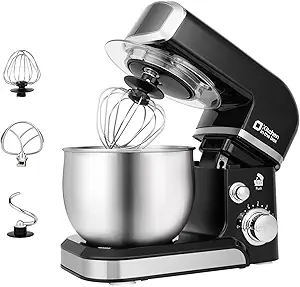 |
Aucma 6.5QT Stand Mixer

| Wattage | 660 watts |
|---|---|
| Voltage | 120 volts |
| Number of Speeds | 6 |
| Capacity | 6.5 quarts |
| Noise Level | 76 db |
The Aucma 6.5QT stand mixer is a budget-oriented tilt-head machine aimed at home bakers who mix everything from whipped egg whites to dense bread dough. Its 660W copper motor and six speeds plus pulse give enough torque to handle cookie and bread dough in small to medium batches, and the large stainless steel bowl with dual handles makes loading and removing dough convenient. The package includes a whisk, beater and dough hook, and all three are dishwasher-safe which speeds cleanup. The machine sits on non-slip feet and includes a splash guard with an ingredient feed hatch to reduce mess when mixing wetter batters. Noise is moderate at about 76 dB, and the ABS housing keeps the unit lightweight for countertop storage. Expect limitations with very large or frequent commercial-style batches and some users may find the plastic body less durable than metal-bodied alternatives, but for the price it delivers strong mixing performance and useful features for home baking and bread-making prep.
Best for: Home bakers who want a capable, affordable stand mixer that handles typical bread dough, cookies and cakes without premium metal construction.
Less Ideal for: Professional bakers or users who need to mix large commercial batches frequently should choose a heavier duty, metal-bodied machine with higher continuous power.
- 660W pure copper motor provides solid power for home baking and dough mixing
- 6.5 quart stainless steel bowl with dual handles fits medium batches and is easy to remove
- Includes whisk, beater and dough hook that are dishwasher safe
- Tilt-head design and splash guard with feed hatch make loading and adding ingredients simple
- ABS plastic housing is less rugged than metal-bodied mixers
- Not ideal for very large or continuous commercial dough batches
Verdict: Aucma's 6.5QT mixer gives budget-minded home bakers the power and capacity to mix bread dough and everyday recipes without paying for premium construction.
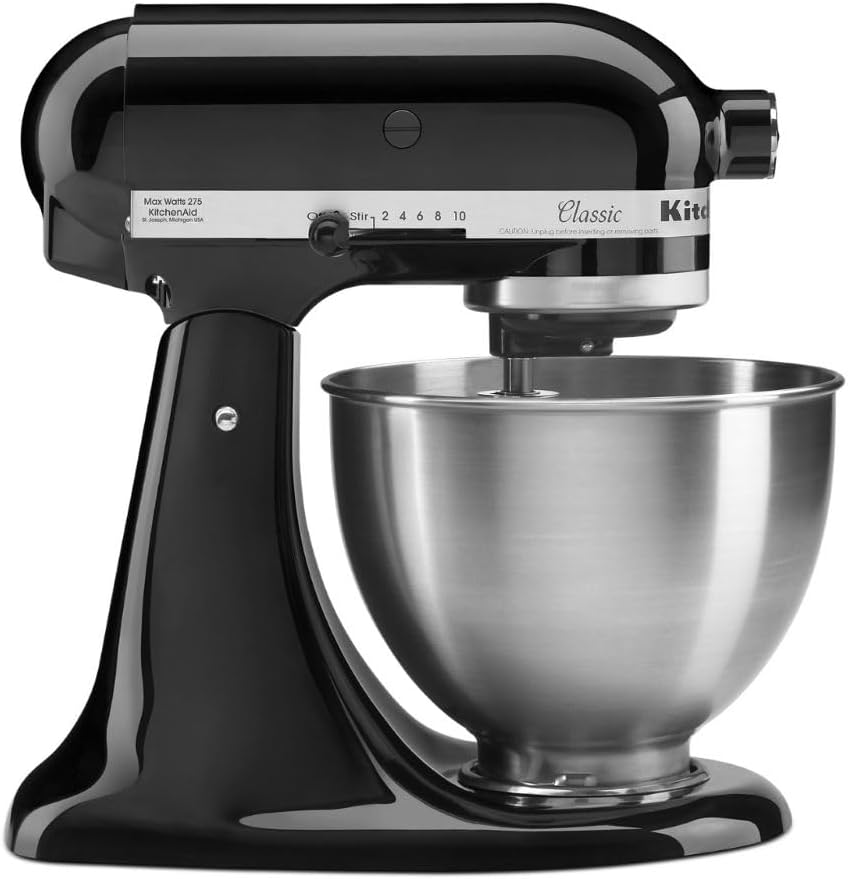
KitchenAid Classic Series K45SS
| Capacity | 4.5 quarts |
|---|---|
| Wattage | 275 watts |
| Number of Speeds | 10 |
| Voltage | 120 volts |
The KitchenAid Classic Series K45SS is a compact, metal‑bodied tilt‑head stand mixer aimed at handling routine mixing, whipping, and light-to-medium dough tasks. It ships with a 4.5-quart stainless steel bowl plus a coated flat beater, dough hook, and 6-wire whip, and the 10-speed control covers everything from slow stirring to high‑speed whipping. The mixer's durable metal construction and 59 touchpoints around the bowl support consistent mixing and good ingredient incorporation, while the power hub accepts optional attachments for grinders, pasta makers, and other accessories. In practice this model is efficient for cookie doughs, batters, and small-to-moderate bread doughs, though heavier or very large batches will push the unit and require shorter mixing cycles to avoid overheating. The tilt‑head design makes adding ingredients and swapping tools quick, and the bowl is dishwasher safe for easier cleanup. For buyers who need a reliable, no‑frills performer for most home baking tasks, this mixer delivers solid everyday performance with broad attachment versatility.
Best for: Home bakers who prioritize consistent, reliable performance for everyday recipes and moderate bread doughs and want a sturdy, attachment-capable mixer without stepping up to the largest professional models.
Less Ideal for: People who regularly mix large volumes of heavy, high-hydration bread doughs or need a mixer designed for commercial or near-commercial workloads.
- Durable metal construction and metal gearbox for long-term reliability
- 10 speed settings provide flexible control from stirring to whipping
- Includes flat beater, dough hook, and 6-wire whip for common baking tasks
- 4.5-quart stainless steel bowl handles typical home batches and is dishwasher safe
- Power hub supports optional attachments to expand functionality
- Lower wattage and 4.5-quart capacity limit performance on very heavy or large bread doughs
- Tilt-head layout can be less stable than bowl-lift designs with very stiff doughs
Verdict: A compact, metal-built stand mixer that delivers dependable everyday mixing and attachment flexibility for home bakers working with moderate bread doughs.
CUSIMAX Stand Mixer 5-Quart

| Wattage | 650 watts |
|---|---|
| Number of Speeds | 8 |
| Capacity | 5 liters |
| Controls Type | Touch |
The CUSIMAX stand mixer is a budget-focused 5-quart tilt-head mixer built around a 650W motor and metal gear drive intended for everyday home baking. You use it like a traditional stand mixer: secure the stainless-steel bowl, choose one of the three attachments (dough hook, flat beater or wire whip), set one of eight speeds and an optional 15-minute timer, then let it run hands-free while you prepare other ingredients. The digital touch control and timer make repeatable mixing simpler, and the splash guard with access port helps add ingredients without interrupting the run. Practical features such as non-slip feet, a lift handle on the head and metal gears improve durability and stability when tackling heavier mixes like bread dough. Limitations include a plastic housing that is less robust than full-metal machines and a 15-minute timer cap that may require manual restart for very long kneads; very frequent heavy use could stress components over time. For home bakers on a budget it delivers the core mixing performance needed for dough and batters without frills.
Best for: Buyers who want a capable, no-frills stand mixer that can handle occasional to regular bread dough and family baking without spending for pro-grade construction.
Less Ideal for: Users who need industrial duty machines for daily commercial baking or who prefer an all-metal, heavy‑use appliance for continuous long kneading cycles.
- 650W motor with metal gear drive suited for thicker doughs
- 5-quart stainless steel bowl handles family-size batches
- Digital touch controls with 8 speeds and 15-minute timer for repeatable results
- Includes dough hook, flat beater and wire whip for common baking tasks
- Splash guard and non-slip feet improve cleanliness and stability
- Plastic exterior is less durable than full-metal housings
- 15-minute timer may be too short for some extended kneading sessions
Verdict: A practical, affordable 5‑quart mixer with a strong motor and basic attachments that handles home bread dough reliably for budget-minded bakers.
OLIXIS 4.2 Qt Stand Mixer

| Capacity | 4.2 quarts |
|---|---|
| Wattage | 300 watts |
| Number of Speeds | 10 |
| Noise Level | 60 db |
| Voltage | 120 volts |
The OLIXIS 4.2 Qt Stand Mixer is a budget-friendly tilt-head mixer aimed at home bakers who need a capable machine for cakes, cookies and moderate bread doughs. Its 300W motor and ten speed settings let you go from slow kneading to higher-speed whipping, and the package includes a dough hook, flat beater and wire whisk so you can start using it right away. The removable stainless steel bowl and anti-skid base make routine mixing and cleanup straightforward, and the splash lid with built-in tools adds small-space convenience. Noise is listed around 60 dB, so it runs at a typical household mixer volume. Expect it to handle everyday doughs and batters well, but very heavy, high-hydration artisan doughs may push the motor more than premium, higher-watt models. Build materials are a mix of ABS plastic and aluminum which keeps cost and weight down but also means it is not as rugged as higher-end metal-body units. For budget buyers who want a ready-to-use stand mixer for regular home baking, this hits the essentials without extras that raise price.
Best for: Home bakers on a tight budget who want a ready-to-use stand mixer for everyday cakes, cookies and small-to-medium bread doughs without paying for premium metal construction.
Less Ideal for: Serious or frequent bread bakers making very large loaves or heavy high-hydration doughs who need a higher-power, industrial-style mixer should look at more robust models.
- Includes dough hook, flat beater and wire whisk so it is ready to use out of the box
- Ten-speed control covers slow kneading through fast whipping
- Removable stainless steel bowl and anti-skid base for stable, easy cleanup
- Compact 4.2 quart capacity fits smaller kitchens and typical home batches
- 300W motor may struggle with very heavy or very large bread doughs
- Plastic-heavy exterior is less durable than full metal housings
Verdict: An affordable, no-frills stand mixer that delivers the core mixing performance budget-minded home bakers need for routine bread and pastry tasks.
ChronosGear Electric Dough Maker

| Capacity | 5 liters |
|---|---|
| Wattage | 200 W |
| Voltage | 109.98 V |
| Controls Type | Touch |
| Noise Level | 75 db |
The ChronosGear Electric Dough Maker is a compact, reliability-oriented stand mixer designed for home bread and dough tasks. It uses a 200W pure copper DC motor running at 140–170 RPM to knead dough automatically, and a 5 liter stainless steel bowl handles batches for pizza, bread, dumplings, and noodles. Controls are via a digital touch screen with programmable kneading times from 5 to 40 minutes, and included accessories (measuring cup, spoon, dumpling wrapper, egg separator) make setup simple. Built from 304 stainless steel, ABS, and silicone with a visible dust-proof lid, it includes heat-dissipation openings and overheat protection for safer, longer runs. Practical limitations are the single fixed speed range and a noise level around 75 dB, so it is noisier than premium models and offers less speed flexibility for delicate whipping tasks. For budget buyers focused on consistently reliable kneading and simple automatic operation, this machine delivers straightforward performance without extra bells and whistles.
Best for: Buyers who prioritize a dependable, straightforward machine for regular bread and dough making on a budget and want a model that runs automatically with minimal supervision.
Less Ideal for: Those who need a multi-speed mixer for delicate whipping, large-capacity commercial baking, or ultra-quiet operation should consider higher-end alternatives.
- Solid 200W pure copper DC motor designed for steady, consistent kneading
- Large 5 liter 304 stainless steel bowl suitable for family-size dough batches
- Digital touch control with programmable 5–40 minute kneading timer for hands-off operation
- Built-in safety features including overheat protection and visible dust-proof lid
- Includes useful accessories (measuring cup, spoon, dumpling wrapper, egg white separator) for baking prep
- Single narrow speed range (140–170 RPM) limits versatility for whipping or mixing tasks beyond dough
- Reported operating noise around 75 dB is relatively loud for countertop use
Verdict: A budget-friendly, no-frills dough maker built for steady, automatic kneading and dependable home bread baking.
KitchenAid Artisan 5-Quart Mixer

| Capacity | 5 quarts |
|---|---|
| Wattage | 325 watts |
| Number of Speeds | 10 |
| Included Components | Bowl, flat beater, dough hook, 6-wire whip, pouring shield |
| Voltage | 120 volts |
The KitchenAid Artisan 5-Quart Tilt-Head Mixer is a heavy-duty, metal-built stand mixer aimed at home bakers who make anything from cookies to yeast breads. It uses a 325-watt motor and ten speeds to handle tasks like stirring, whipping, and kneading; the included coated dough hook and flat beater make bread dough straightforward for small to medium batches. The tilt-head design gives easy access for adding ingredients or changing attachments, and the polished stainless steel 5-quart bowl with handle is dishwasher safe for quicker cleanup. A pouring shield is included to reduce splatter when adding liquids. Its durable construction and broad accessory hub mean you can expand beyond basic mixing with optional hub-powered tools. Trade-offs are mainly size and weight: it is a substantial, countertop appliance that takes up space, and larger or commercial-scale dough batches may exceed its capacity. Noise and power are reasonable for home use but it is not marketed as a commercial mixer.
Best for: Home bakers who prioritize a proven, durable mixer with enough power and bowl capacity to regularly knead bread dough and bake batches for family or small gatherings.
Less Ideal for: People who need a compact, lightweight mixer for occasional use or those who regularly mix very large or commercial-volume dough batches.
- Durable metal construction built for frequent home use
- 5-quart stainless steel bowl handles small to medium batches including multi-dozen cookies
- Ten speed settings cover stirring through whipping for versatile recipes
- Includes coated dough hook, flat beater, 6-wire whip and pouring shield for immediate use
- Tilt-head design and comfortable bowl handle make adding ingredients and cleanup easier
- Large and heavy countertop footprint may challenge small kitchens or tight storage
- Not intended for commercial-scale dough batches
Verdict: Choose this mixer if you want a durable, kitchen-ready 5-quart stand mixer that reliably handles home bread dough and everyday baking tasks.
Kitchen in the box 3.2QT Stand Mixer

| Capacity | 3 liters |
|---|---|
| Wattage | 300 watts |
| Number of Speeds | 6 |
| Included Components | Whisk, Beater, Dough Hook |
| Voltage | 120 |
This compact Kitchen in the box stand mixer is built for small kitchens and everyday single- or two-person batches. It uses a 300W motor with six speed settings and planetary rotation to handle tasks from whipping cream and meringues to light bread dough and batters, and it ships with a stainless-steel whisk, aluminium dough hook, and flat beater. The tilt-head and removable 3.2Qt stainless bowl make loading and cleaning straightforward, and anti-splash lid and four suction feet help keep the work area tidy and the mixer stable during operation. Because it is intentionally small and lightweight, it saves counter space and is easy to store, but the bowl capacity limits batch size so it is not suitable for large or frequent heavy dough mixing. The accessories are dishwasher-safe and the construction uses a mix of ABS plastic and metal parts that balance durability with low weight. For buyers wanting a budget, space-saving machine for occasional bread dough and home baking, this mixer offers a practical, simple solution with a few obvious capacity limits to consider.
Best for: Buyers who prioritize a compact, budget-friendly stand mixer for occasional home baking and small-batch bread dough that fits limited counter space.
Less Ideal for: Serious bakers or households that regularly mix large batches or very heavy dough should choose a larger, higher-powered model instead.
- Compact, lightweight design saves counter space and is easy to store.
- Six speed settings and planetary rotation handle a range of mixing tasks from whipping to light dough.
- Includes three common attachments: whisk, dough hook, and flat beater for versatile use.
- Removable stainless-steel bowl and anti-splash lid simplify cleaning and reduce mess.
- Four suction feet improve stability during operation.
- 3.2Qt bowl is small and limits batch sizes for bread dough and large recipes.
- 300W motor may struggle with very heavy or dense dough during frequent use.
Verdict: A compact, budget-friendly stand mixer made for small-batch home baking and occasional bread dough where space and price matter most.
Choosing the Right Budget Stand Mixer for Bread Dough: Key Factors to Consider
Motor Torque and Continuous-Knead Capability
Bread dough is dense and demands sustained torque during kneading. A mixer with higher torque will keep speed steady under load, preventing stalls and reducing kneading time. Look for motors and gearing designed for intermittent long cycles rather than only short creaming tasks.
Continuous-knead capability matters because typical bread recipes may require 8 to 12 minutes of active mixing. Models with inadequate cooling or low-duty ratings can overheat or cut out during a knead cycle. Prioritizing torque and cooling will improve dough development and reduce the need to finish kneading by hand.
Bowl Capacity and Shape
Bowl capacity determines how much dough you can mix in one batch. For most home bakers, a bowl that accommodates at least two standard loaf batches is practical. Taller, narrower bowls promote better ingredient circulation for bread dough, while shallow bowls may cause spillage or poor mixing when hydration is high.
Consider the bowl material as well. Stainless steel resists staining and odor retention, and a smooth interior helps dough slide clear of the sides instead of bunching up. The bowl shape affects how the dough hook reaches into the mass, so choose a capacity and profile aligned to the batch sizes you bake most often.
Dough Hook Design and Attachment Robustness
The shape and strength of the dough hook directly affect kneading efficiency. Spiral hooks and C-shaped hooks move and fold dough differently; a hook that maintains contact with the dough and folds it inward will build gluten better. Attachment points must be sturdy to avoid bending or breaking under heavy loads.
Check whether hooks are coated or stainless; coatings can prevent sticking but may wear over time. A secure, positive-fit connection reduces wobble that wastes motor power. For budget mixers, a heavier, well-shaped hook often compensates for lower peak power.
Cooling, Duty Cycle, and Thermal Protection
Units intended for bread dough should offer adequate motor cooling and sensible duty-cycle limits. Thermal protection that shuts the motor down before damage occurs is useful, but frequent cutouts indicate the motor is undersized for dough work. Models with vents positioned to avoid flour buildup and with internal airflow to dissipate heat will sustain longer kneading sessions.
Understand the recommended continuous runtime from the manufacturer and factor that into recipes that call for extended kneading. A mixer that stays within safe operating temperatures while maintaining torque ensures consistent results and a longer service life.
Stability and Base Design
A stable base prevents the mixer from walking across the countertop during vigorous kneading. Weight distribution, non-slip feet, and a low center of gravity all contribute to stability. If a mixer shifts while kneading, you may get inconsistent gluten development and a messy kitchen.
Consider how the mixer locks the head and bowl in place. A wobble-free attachment system ensures the dough hook maintains proper alignment and reduces stress on the motor and gears.
Ease of Cleaning and Maintenance
Bread dough can be sticky and high in starch, so components that clean easily save time and keep the mixer hygienic. Removable bowls and hooks that are dishwasher-safe or have smooth surfaces reduce buildup. The bowl lift or tilt head mechanism should be accessible for wiping out flour and dough residue.
Regular maintenance like checking attachment seals and wiping vents will extend the life of a budget mixer. Parts that are easy to remove and reattach also reduce the chance of damage during cleaning and support routine upkeep.
How Much Power Do You Really Need?
Power ratings can be confusing because manufacturers report wattage or amps in different ways. For bread dough, steady torque under load matters more than peak wattage. Focus on user-oriented cues like stated duty-cycle, mentions of reinforced gearing, and any documentation on continuous operation.
If you bake weekly large batches, prefer mixers that emphasize sustained torque and thermal management. For occasional small loaves, a lower-powered budget mixer may suffice if paired with appropriately sized batches and shorter kneading times.
- Look for clear guidance on continuous run time rather than just peak power numbers
- Consider gearing descriptions that reference metal gears or reinforced transmissions
- Match motor claims to your typical batch size and kneading frequency
Batch Size Planning and Recipe Scaling
Decide on the most common batch sizes you will make and choose a mixer with a bowl and motor sized to handle that workload without strain. Scaling a recipe up by 50 percent often increases the load on the motor disproportionately, so verify that claimed bowl capacity includes comfortable headroom for high-hydration dough.
If you plan to test multiple dough formulas, a slightly larger bowl gives flexibility. For tight kitchens, a compact mixer may be better, but accept smaller batches to avoid overworking the machine.
- Estimate loaf size and determine how many loaves you usually mix at once
- Allow headroom in bowl capacity for rising and initial mixing without overflow
Attachments and Versatility for Bakers
While dough hooks are the primary attachment for bread, mixers that include paddles and whisks increase utility for other baking tasks. Check that the dough hook is purpose-built for heavy dough and that the attachment mount is robust. Versatility is useful if you want a single appliance for mixing, whipping, and light batters.
Consider the availability of optional accessories such as splash guards to reduce mess with high hydration dough. Even on budget models, simple extras can improve the user experience during intensive mixing sessions.
- Prioritize a durable dough hook, then consider other attachments for multi-task use
- Look for splash guards or pouring shields to minimize cleanup during wet mixes
Practical Setup and Countertop Considerations
Think about where the mixer will live. A heavier base improves stability but requires a permanent spot or careful lifting. Tilt-head mixers are easier to access for swapping attachments, while bowl-lift designs often provide more stability for heavy dough.
Measure clearance for a tilt head and ensure you have room to operate the mixer without moving it frequently. Consider noise levels if your kitchen is near living areas, and check that vents are not blocked when the unit sits on a counter.
- Decide between tilt-head for convenience and bowl-lift for stability
- Ensure adequate counter clearance and airflow around ventilation points
Maintenance Tips to Extend Lifespan
After each kneading session, remove dough residue from hooks and bowls before it dries. Inspect attachment fittings periodically for wear and tighten any loose fasteners. Clean ventilation areas with a soft brush to prevent buildup that can impede cooling.
Avoid forcing oversized batches that stress the motor. If thermal protection trips, allow the motor to cool and assess whether batch sizes should be reduced. Routine, simple maintenance extends the usable life of budget machines considerably.
- Wipe and dry attachments immediately after use to prevent crusting
- Keep vents clear and check fittings for wear every few months
How We Chose the Best Budget Stand Mixer for Bread Dough
We selected models that deliver reliable dough-kneading performance while remaining affordable. Our primary filters emphasized motor torque and duty-cycle durability because bread dough requires sustained power over long kneading sessions. We also prioritized bowl capacity that suits common home bread recipes, and mixing head designs that maintain consistent ingredient incorporation without overheating. Additional evaluation criteria included accessory robustness and available dough hooks, planetary mixing pattern coverage, and ease of cleaning to reduce maintenance time. We favored mixers with clear speed controls and stable base designs to prevent movement during intensive kneading. Units that lacked adequate motor cooling, undersized bowls for a two-loaf batch, or flimsy dough hooks were excluded. The final selection balances raw kneading capability, practical capacity, and construction quality appropriate to budget-minded home bakers.
Our full evaluation process is outlined in our review methodology.
FAQ
Can a budget stand mixer handle high-hydration dough?
Often it depends on the motor and bowl capacity. Some budget mixers can manage wetter doughs if the motor provides steady torque and the bowl has enough room. If a model lists short recommended continuous run times, reduce batch size or finish kneading by hand to avoid overheating.
How many loaves can I mix at once in a typical budget mixer?
Usually one to two standard loaves is realistic for most budget models. Exact capacity depends on bowl size and dough hydration. Leaving headroom in the bowl prevents overflow and ensures better mixing action.
What dough hook style is best for bread?
Spiral hooks tend to fold and stretch dough efficiently, while C-shaped hooks can be effective for denser mixes. The best design combines a shape that moves dough inward with sufficient strength to resist bending under load.
Is a tilt-head or bowl-lift mixer better for bread dough?
Bowl-lift designs generally offer greater stability for heavy dough and can handle larger batches more securely. Tilt-head units are more convenient for attachment changes and storage but may be less stable under very heavy loads.
How can I prevent my mixer from overheating during long kneads?
Use recommended batch sizes, allow rest periods between long kneading sessions if needed, and ensure vents are clean and unobstructed. If a model has thermal cutoff, follow guidance on cooldown times to avoid repeated trips.
Final Verdict
For home bakers on a budget, prioritize motor torque and adequate bowl capacity above cosmetic extras. Choose a mixer whose continuous-run guidance and cooling design match your typical kneading habits, and favor stable base designs and robust dough hooks to reduce strain on the motor. With sensible batch planning and routine maintenance, a well-chosen budget stand mixer can reliably handle most home bread recipes and deliver consistent, well-kneaded loaves.