
Note: This article contains affiliate links. If you click on these links and make a purchase, we may earn a small commission at no extra cost to you. This helps support our research and content. Read our full affiliate disclosure here.
If you need extra frozen storage but have limited floor space, a budget undercounter freezer can be a practical solution. These compact units tuck beneath counters or fit into small kitchen footprints while offering a dedicated frozen zone for bulk staples, meal prep, or overflow from the main freezer. Choosing the right model matters because smaller freezers vary widely in usable capacity, temperature stability, and operating cost. This guide presents a shortlist of top budget undercounter freezers chosen for real-world use. We evaluated usability, energy performance, and installation practicality to help you find a compact freezer that meets everyday needs. Read on to compare the most relevant features and options before the product list.
Top Picks at a Glance
| Best Overall The best all-around choice for most situations | ICECASA ITF-27 Undercounter Freezer |  |
| Best Quality Built to a higher standard if you want something more solid | Bluelinecool 29" Undercounter Freezer NUC29F |  |
| Best Value The sweet spot between price and what you get | Coolski Undercounter Freezer MTF-27 |  |
| Best Budget The cheapest option that still gets the job done reliably | Accucold 20" Undercounter Freezer FS407LW |  |
| Top Rated A top-rated pick with lots of positive feedback | VEVOR 28" Worktop Freezer | 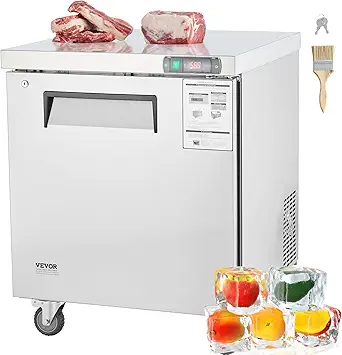 |
| Most Popular A crowd favorite that many people choose with confidence | Summit SCFF53BSS Undercounter Freezer |  |
ICECASA ITF-27 Undercounter Freezer

| Capacity | 7 cubic feet |
|---|---|
| Voltage | 115 volts |
| Cooling Method | Compressor, Fan |
| Defrost System Type | Automatic |
| Refrigerant | R-290 |
The ICECASA ITF-27 is a compact commercial undercounter freezer designed for busy kitchens and service counters. It serves as a worktop freezer with a sturdy 2.1-inch cutting board and a fan-cooled compressor that keeps temperatures uniform across the 7 cubic foot interior. Typical use cases are short-order restaurants, bars, and catering stations where quick access and a durable stainless steel surface are useful. Notable features include automatic defrosting on a timed cycle, an LCD digital temperature display that supports -8°F to 0°F operation, adjustable metal shelving rated for heavy loads, and lockable casters for mobility. Practical benefits include strong build quality, ETL listing, a six-year compressor warranty plus two years of on-site service, and a design that prevents the door from swinging closed or staying open unintentionally. Trade-offs to consider are its relatively high annual energy consumption figure and its 27.5-inch width footprint, which requires planning for undercounter fit and service access.
Best for: Buyers who want an affordable, heavy-duty undercounter freezer for commercial use and value a durable stainless worktop and long compressor warranty.
Less Ideal for: Home users seeking the lowest possible energy bills or those with very tight undercounter depth or width constraints should consider smaller or residential-specific models.
- Commercial-grade stainless steel interior and exterior for durability and easier cleaning
- Adjustable metal shelf that supports heavy loads for flexible storage
- Integrated worktop with thick cutting board rated for heavy use
- Automatic defrost with fan cooling for more even temperatures and reduced frost
- Long compressor warranty plus two years of on-site service for peace of mind
- Listed annual energy consumption is relatively high compared with residential undercounter units
- Requires sufficient undercounter clearance and service access due to its footprint and compressor placement
Verdict: A budget-minded commercial undercounter freezer that pairs a heavy-duty stainless worktop with fan-cooled, warranty-backed refrigeration for busy small kitchens.
Bluelinecool 29" Undercounter Freezer NUC29F

| Capacity | 6.7 cubic feet |
|---|---|
| Wattage | 115 watts |
| Door Orientation | Left |
| Number Of Shelves | 1 |
| Specification Met | ETL |
This Bluelinecool 29" undercounter freezer is built for busy kitchens that need reliable, low-temperature storage in a compact footprint. It uses a commercial-grade compressor with fan-assisted cooling to deliver uniform temperatures between -8 and 0°F, and an automatic electric defrost cycle every four hours helps reduce manual maintenance and frost buildup. The unit includes an LCD digital temperature display for quick monitoring, one adjustable shelf, and a self-closing door that stays open beyond 90 degrees to aid workflow. The reinforced stainless steel worktop doubles as a prep surface and is rated to support heavy loads, while heavy-duty casters make it easy to move and lock into place. Important limitations are its single-shelf layout and modest 6.7 cu ft capacity, which may require more frequent restocking in higher-volume operations, and its reported weight which makes initial positioning a two-person job. For the price-conscious operator who still needs commercial performance, this freezer offers a solid balance of durability, temperature control, and useful worktop functionality.
Best for: Operators who need a compact, budget-friendly undercounter freezer that still delivers commercial cooling performance and a durable worktop for prep use in restaurants, cafes, or food trucks.
Less Ideal for: Large-volume kitchens that need extensive frozen storage or flexible shelving configurations should consider larger or multi-door units instead.
- Commercial-grade compressor and fan-assisted cooling for consistent low temperatures
- Digital LCD temperature control with thermometer range suitable for frozen storage
- Stainless steel interior and exterior that is easy to clean and durable for commercial use
- Reinforced worktop that doubles as a prep surface and heavy-duty casters for mobility and stability
- Single adjustable shelf limits organized storage options
- Heavy unit weight makes initial placement and delivery handling more difficult
Verdict: A cost-conscious commercial operator looking for dependable low-temperature performance and a durable stainless worktop will get strong value from this compact undercounter freezer.
Coolski Undercounter Freezer MTF-27

| Capacity | 7.5 cubic feet |
|---|---|
| Temperature range | -13°F to -5°F |
| Voltage | 115 volts |
| Daily energy consumption | 1.43 kW/h |
| Refrigerant | R290 |
The Coolski 27" undercounter freezer is a compact commercial unit that pairs a reinforced stainless steel worktop with a 7.5 cu.ft. frozen storage cavity and an adjustable shelf. It uses a forced-air compressor and R290 refrigerant to hold temperatures between -13°F and -5°F, with digital controls that simplify set up and recovery after frequent door openings. The top doubles as a certified ETL prep surface so you can stage ingredients or place small equipment directly above the freezer, which helps save space in tight kitchens or food trucks. Practical features include automatic defrost, adjustable heavy-duty shelving, four casters for mobility, and an energy-conscious daily consumption rating of 1.43 kW·h. Trade-offs are its single-door, modest internal volume—suitable for small commercial operations but limiting if you need large batch storage—and its right-hand door orientation that may affect placement in some layouts.
Best for: Small restaurants, cafes, food trucks, or bars that need a durable, space-saving freezer with a built-in prep surface and efficient daily operation.
Less Ideal for: Large-volume kitchens or operations that require wide or multi-door freezer capacity and heavy bulk storage.
- Integrated stainless steel worktop certified for prep use saves counter space and adds a durable workstation
- Digital temperature control with -13°F to -5°F range provides consistent freezing and fast recovery
- Energy efficient operation rated at 1.43 kW·h per day reduces running costs for busy establishments
- Full stainless steel interior and exterior are easy to clean and resist corrosion in commercial kitchens
- Included casters and an adjustable shelf make the unit flexible for layout changes and varied storage needs
- Single-door, 7.5 cu.ft. capacity may be too small for high-volume kitchens
- Right-hand door orientation limits placement options in some undercounter layouts
Verdict: A compact, worktop-ready commercial undercounter freezer that delivers reliable cold performance and space-saving prep functionality for budget-conscious small food businesses.
Accucold 20" Undercounter Freezer FS407LW

| Capacity | 2.8 cubic feet |
|---|---|
| Wattage | 184 watts |
| Voltage | 115 volts_of_alternating_current |
| Installation Type | Freestanding |
| Specification Met | ETL |
The Accucold FS407LW is a narrow 20-inch undercounter freezer intended for basic low-temperature storage where space and cost matter. It uses manual defrost and a rear-mounted adjustable dial thermostat to reach temperatures down to about -20ºC, making it suitable for healthcare or lab-style needs as well as household overflow freezing. Interior organization comes from four slide-out baskets with plastic fronts that reduce warm-air exposure when the door opens, and the magnetic gasket helps maintain a tighter seal for efficiency. The unit includes a hospital-grade cord and a factory-installed lock with two keys for added security. Because it is a simple, manual-defrost design, expect occasional defrost maintenance and less temperature precision than a forced-defrost commercial model, and it lacks advanced controls or smart features. Its narrow footprint fits under counters or in small utility spaces, and the basic feature set keeps the price and operating complexity low.
Best for: Buyers seeking an affordable, space-saving undercounter freezer for basic low-temperature storage or overflow use who prioritize low upfront cost and simple operation.
Less Ideal for: Users who need fully automatic defrosting, precise digital temperature control, or smart features should consider higher-end models with those capabilities.
- Compact 20-inch width fits under counters and in tight spaces
- Capable of low temperatures down to -20ºC for demanding storage needs
- Includes four slide-out baskets for organized interior storage
- Factory-installed lock and hospital-grade cord add security and safety
- Manual defrost requires periodic thawing and maintenance
- Thermostat is a simple dial with limited precision and no digital controls
Verdict: A compact, budget-focused undercounter freezer that delivers low-temperature performance and secure storage for buyers who want simple, reliable operation.
VEVOR 28" Worktop Freezer

| Capacity | 7.42 cubic feet |
|---|---|
| Temperature range | 0~-8℉ / -18~-22℃ |
| Defrost system type | Frost Free |
| Voltage | 110 volts |
| Refrigerant | R-290 |
This VEVOR 28" worktop freezer is a compact commercial frozen prep table designed for kitchens that need a durable undercounter freezer without a large footprint. It keeps ingredients at frozen temperatures between 0~-8°F with a digital control display and internal lighting for easier access, while adjustable wire shelves allow basic dual-zone organization. The stainless steel cabinet and thick 2.1" worktop provide a stable prep surface for chopping and assembly, and four heavy-duty casters make it straightforward to reposition for cleaning or service. The unit uses a compressor with finned copper tubing for steady cooling, a frost-free defrost system, and a self-closing insulated door to help maintain efficiency. Practical safety features include overload protection and a keyed door lock. Trade-offs are the basic one-door layout and a single internal shelf, which limit storage layout flexibility, and its reported energy draw is moderate at 468 kWh/year, so running costs matter in high-use settings. For a budget-minded commercial undercounter freezer, it delivers solid materials and reliable cooling for prep-station duties.
Best for: Operators seeking a dependable, no-frills undercounter freezer for a busy prep station who prioritize durable construction and steady temperature control over extra storage features.
Less Ideal for: Businesses that need large, highly configurable frozen storage or the lowest possible operating cost per cubic foot should consider larger or higher-efficiency units instead.
- Stainless steel construction and thick 2.1" worktop provide a durable prep surface
- Digital temperature control and internal lighting simplify monitoring and access
- Finned copper tubing and branded compressor deliver steady freezing performance
- Frost-free system and self-closing door help maintain internal temperature
- Heavy-duty casters with brakes allow easy repositioning and cleaning
- Single-door design with only one adjustable shelf limits flexible storage configurations
- Moderate annual energy consumption (468 kWh/year) may raise operating costs in heavy use
Verdict: A sturdy, budget-friendly undercounter freezer that delivers reliable frozen performance and a durable worktop for commercial prep stations.
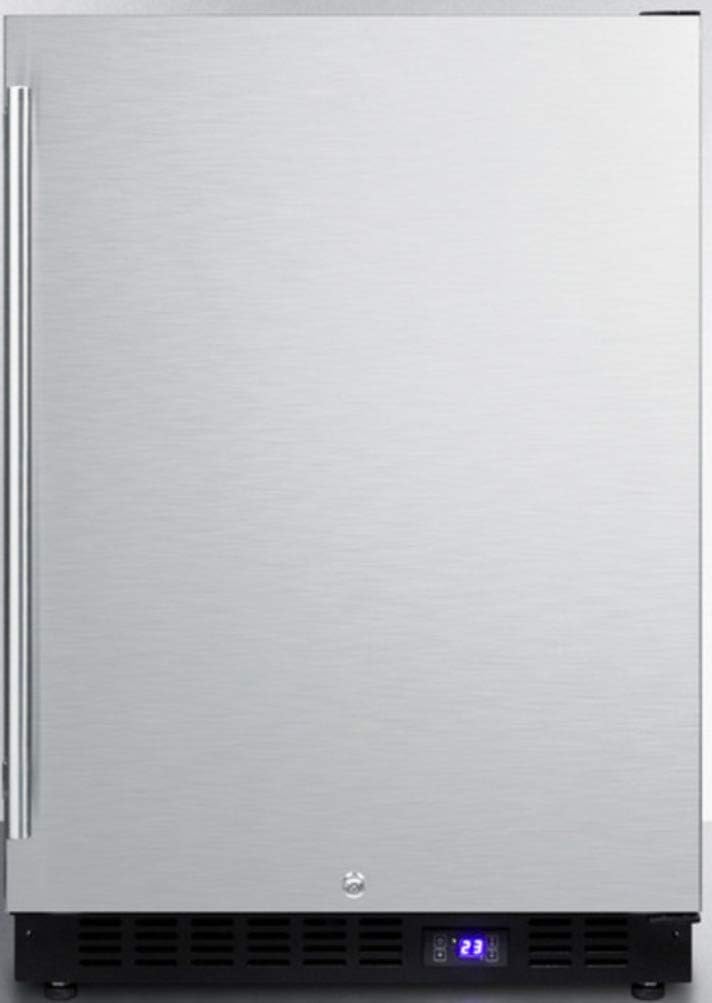
Summit SCFF53BSS Undercounter Freezer
| Capacity | 4.72 cubic feet |
|---|---|
| Number Of Shelves | 4 |
| Voltage | 120 volts |
| Door Orientation | Right |
The Summit SCFF53BSS is a compact undercounter freezer built for low-maintenance everyday use in kitchens where space is limited. It delivers frost-free, fan-forced cooling that prevents ice buildup and evens temperature across adjustable chrome shelves, and the digital thermostat makes temperature changes straightforward. Practical touches like recessed LED lighting, an audible open-door and high-temperature alarm, a factory-installed lock, and a Sabbath mode make it suitable for residential or light commercial environments. Installation is flexible because it can be freestanding or built-in in a 24-inch opening. On the downside the capacity is modest compared with full-size freezers and the single-door right-hand orientation limits placement options in some layouts. For buyers balancing footprint, convenience, and reliable basic freezing performance, this model covers the essentials without extra complexity.
Best for: Buyers who want a compact, low-maintenance undercounter freezer that fits a 24-inch opening and prioritizes reliable basic freezing plus practical safety features.
Less Ideal for: Those needing larger capacity storage or a reversible-door layout for tight kitchen configurations.
- Frost-free, fan-forced cooling reduces the need for manual defrosting
- Digital thermostat and adjustable chrome shelves make temperature and storage flexible
- Built-in capable design fits standard 24-inch undercounter spaces
- Audible open-door and high-temperature alarms improve food safety
- Factory-installed lock adds security
- Modest 4.6 cu ft capacity may be small for larger households
- Right-hand door orientation reduces installation flexibility in some kitchens
Verdict: A compact, low-maintenance undercounter freezer that delivers frost-free cooling and practical safety features for buyers seeking dependable performance in a 24-inch footprint.
Choosing the Right Budget Undercounter Freezer: Key Factors to Consider
Usable Capacity and Layout
Capacity numbers can be misleading for undercounter freezers because raw cubic feet do not reflect shelf spacing, drawer depth, or obstruction by the compressor. Inspect how shelves, baskets, or drawers are arranged and whether common items such as pizza boxes, ice trays, or grocery bags will fit. A unit with adjustable shelves or removable baskets often provides more practical flexibility than a slightly larger but poorly organized interior.
Think about the mix of items you store. If you need to stack frozen meals, look for flat shelves or removable bins. If you rely on bulk items or large containers, prioritize wider shelf spans and deeper drawers. Usable capacity matters more than the headline figure when planning daily use.
Energy Use and Running Cost
Initial price is only part of the cost of ownership for a freezer; energy consumption determines ongoing expense. Look for clear energy use figures, such as estimated annual kWh, and compare them relative to the size of the unit. More efficient compressors and better insulation reduce runtime and electricity bills, which matters when a freezer runs continuously under a counter.
Also consider features that affect energy use, like fast-freeze modes or automatic defrost cycles. Manual-defrost models often use less energy but require user maintenance. For budget shoppers, the optimal choice balances low upfront cost with reasonable ongoing energy draw so unexpected utility costs do not offset initial savings.
Temperature Control and Stability
Consistent temperature is critical to preserve food quality and safety. Check whether the freezer offers adjustable temperature settings and how precise the control is. Digital thermostats generally allow tighter control than basic mechanical dials, but simple controls can be adequate if the compressor and insulation maintain steady temperatures.
Pay attention to how quickly the unit recovers temperature after door openings and whether it can maintain safe frozen conditions when fully loaded. Temperature stability also affects freezer burn and long-term food texture, so prioritize models that hold set points reliably.
Noise and Kitchen Integration
Undercounter freezers often sit near living spaces or open kitchens, so noise level is important. Check rated noise levels where available and read descriptions of compressor cycles. Some budget models run noisier during defrost or heavy cooling cycles. Consider placement if you are sensitive to sound; an undercounter freezer near a dining or living area should be quieter than one tucked into a utility space.
Also consider vibration and how the unit mounts under the counter. Proper leveling feet or included mounting hardware reduce rattles and prolong compressor life. Noise matters for everyday comfort and indicates how well the appliance will fit your home environment.
Installation Type and Ventilation
Undercounter freezers are sold in both built-in (front-venting) and freestanding configurations, and the choice affects installation complexity. Built-in units are designed for tight cabinetry clearances and vent from the front, while many budget freestanding models need side or rear clearance for airflow. Confirm required clearances before buying to avoid overheating and shortened compressor life.
Also check door swing direction and reversible hinge options to ensure the door opens conveniently in your layout. Simpler models are easier to install but may require more planning for ventilation and door clearance.
Maintenance and Defrosting
Defrost type influences both convenience and performance. Manual-defrost freezers are common in budget segments and can be more energy efficient, but they require periodic defrosting to remove ice buildup. Auto-defrost or frost-free models reduce maintenance but may be less efficient and can dry out stored items faster.
Consider ease of cleaning as well. Removable drawers and smooth interior surfaces speed routine maintenance. A good door gasket that is easy to inspect and replace helps maintain a tight seal and prevents warm air infiltration.
Built-In Vs Freestanding Undercounter Options
Choose a built-in model if you plan to integrate the freezer into cabinetry and need a flush look. Built-in undercounter freezers are engineered to vent at the front so they can fit into tighter spaces without overheating. Confirm front-venting is specified for the model if you will enclose it in cabinetry.
Freestanding units tend to be less expensive and more flexible for placement, but they usually require side or rear clearance for proper airflow. If you might move the freezer or use it in a garage or utility room, freestanding models offer greater versatility.
- Built-in: front venting, flush installation, better for tight cabinetry
- Freestanding: more flexible placement, usually requires side/rear clearance
- Consider hinge direction and required clearances before installation
Sizing the Freezer for Your Routine
Think about the types of items you freeze and how frequently you access them. If you open the freezer several times daily for meal components, prioritize shelving and drawer layout that keeps items visible and accessible. For long-term bulk storage, deeper drawers and stable low temperatures are more important.
Measure the available undercounter space carefully, including toe-kick and counter overhang. Allow for door swing and any required ventilation gaps. A model that fits the available footprint but offers poor interior organization often performs worse in daily use than a slightly smaller, better-organized unit.
- Measure width, depth, and height including toe-kick and door clearance
- Plan storage by item type: flat packages, bulk bags, ice trays
- Prioritize interior layout over small differences in advertised capacity
Managing Defrost and Food Quality
Budget undercounter freezers often rely on manual defrost to keep costs and energy use down. Establish a defrost schedule based on how much frost accumulates and how full the unit runs. Regular defrosting maintains airflow and temperature performance while preventing thick ice that reduces usable space.
To limit freezer burn, wrap items tightly and avoid frequent temperature fluctuations. Use bins or baskets to organize similar items together so you do not leave the door open while searching. These practical steps keep food quality high even in lower-cost units.
- Manual defrost saves energy but requires periodic maintenance
- Group similar items and label them for quick access
- Use airtight packaging to reduce freezer burn
Energy-Saving Habits and Settings
Small behavior changes can reduce running costs. Keep the door closed as much as possible, avoid placing warm items inside, and maintain a modest internal set point that matches your storage needs. If the unit has a fast-freeze setting, use it sparingly for newly added warm items to reduce total compressor runtime.
Ensure the unit is level and has the recommended ventilation to allow the compressor to run efficiently. Proper installation and routine gasket checks prevent energy waste from warm air infiltration.
- Minimize door openings and organize contents for quick access
- Avoid overfilling the freezer which can block airflow
- Check and maintain door gaskets to prevent air leaks
Where to Place an Undercounter Freezer in Your Home
Undercounter freezers work well in kitchens, utility rooms, and finished basements where temperatures remain within the appliance's operating range. Avoid placing a budget undercounter freezer in unconditioned spaces if the ambient temperature falls below the unit's recommended operating range, as this can impair compressor performance or cause temperature control problems.
Consider proximity to the main food preparation area and how frequently you will access frozen items. If noise is a concern, place the unit where compressor sound and vibration will be least disruptive.
- Ideal locations: kitchens, utility rooms, finished basements
- Avoid extremely cold or hot unconditioned spaces
- Keep near prep areas for frequent access, away from living spaces if noise-sensitive
How We Chose the Best Budget Undercounter Freezer
We focused on undercounter freezers that deliver reliable cold storage on a tight budget. Selection prioritized measurable specs and owner-relevant features that affect day-to-day use. Key evaluation criteria included usable storage capacity and shelving layout, measured energy consumption and efficiency ratings, temperature control accuracy and minimum achievable temperature, noise level for kitchen integration, and installation flexibility including built-in versus freestanding configurations. We also considered build quality indicators such as door seal design and interior finish that influence long-term reliability. To keep the list practical for budget buyers we excluded specialty or commercial-grade units and models that require complex installation or nonstandard power. We filtered out units lacking clear energy data or basic temperature control. The result is a set of compact undercounter freezers that balance low purchase cost with predictable operating expenses and straightforward installation.
Our full evaluation process is outlined in our review methodology.
FAQ
How much clearance does an undercounter freezer need?
Clearance requirements vary by model but built-in units vent from the front and need minimal side clearance, while freestanding units usually need a few inches at the sides or rear for airflow. Always check the manufacturer's installation specs for exact clearances.
Are manual-defrost freezers a good choice on a budget?
Yes. Manual-defrost freezers are common in budget models and typically use less energy, but they require periodic defrosting to remove ice buildup. If you prefer low maintenance, look for frost-free options while noting those may use more power.
Can an undercounter freezer be installed under a standard kitchen countertop?
Many undercounter freezers are designed for standard counter heights, but you must confirm the unit's height and whether it is front-venting for built-in installation. Check door swing, hinge reversibility, and ventilation requirements before installing.
How noisy are budget undercounter freezers?
Noise varies by model and compressor design. Budget units can be louder during cooling cycles or defrost, so consider rated noise levels if you will place the freezer near living spaces. Proper leveling and secure installation reduce rattles and perceived noise.
What temperature should I set my undercounter freezer to?
Most food-safety guidelines recommend keeping a freezer at or below 0 degrees Fahrenheit for long-term storage. However, your needs may vary; ensure the unit can reliably hold the chosen set point, and monitor temperature after loading the appliance.
Final Verdict
When choosing a budget undercounter freezer, prioritize usable interior layout and reliable temperature control over marginal differences in advertised capacity. Energy efficiency and proper ventilation are key to keeping running costs manageable, while noise and installation type determine how well the unit fits into your home. Balance these tradeoffs based on how often you access the freezer and where it will be placed. Focus on stable temperature performance, adequate usable space, and straightforward installation to find a compact, low-cost freezer that serves daily needs with minimal surprises.