
Note: This article contains affiliate links. If you click on these links and make a purchase, we may earn a small commission at no extra cost to you. This helps support our research and content. Read our full affiliate disclosure here.
A carbon monoxide detector for home is one of the simplest yet most critical safety devices you can install. Because carbon monoxide is odorless and colorless, the right detector protects your household by alerting you early enough to act. You want reliable sensor accuracy, straightforward installation, and battery or power options that fit how you live. This guide shortlists the top choices for home use, focusing on real-world reliability and practical features. We evaluate each entry on accuracy, installation and placement, power and backup, and long-term maintenance. Read on for concise guidance to help you pick the best detector for your living space.
Top Picks at a Glance
| Best Overall The best all-around choice for most situations | X-Sense SC01 Combination Detector |  |
| Best Quality Built to a higher standard if you want something more solid | X-Sense SC07 Combination Detector |  |
| Best Value The sweet spot between price and what you get | HEIMAN C1-S CO Detector |  |
| Best Budget The cheapest option that still gets the job done reliably | Kidde Carbon Monoxide Detector KN-COB-LP2 | 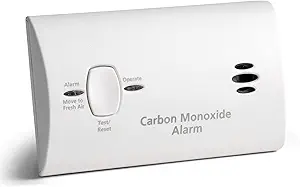 |
| Top Rated A top-rated pick with lots of positive feedback | Kidde CO Detector COP |  |
| Most Popular A crowd favorite that many people choose with confidence | First Alert CO606 Plug-In CO Alarm |  |
| Best Seller A high-volume bestseller chosen again and again | First Alert SMICO100-AC Combination Alarm |  |
X-Sense SC01 Combination Detector

| Power Source | 10-Year Sealed Battery |
|---|---|
| Sensor Type | electrochemical, photoelectric |
| Alarm | Audible (85 dB) |
| Battery Type | Lithium metal |
The X-Sense SC01 is a simple, battery-powered combination smoke and carbon monoxide detector designed for straightforward home use. It pairs a photoelectric smoke sensor with an electrochemical CO sensor and runs on a built-in 10-year lithium battery so you do not need to replace batteries during the device lifespan. Installation is typical for a standalone alarm: mount it on a wall or ceiling with the included bracket and screws, then rely on the loud 85 dB alarm and the real-time LCD to show CO levels and battery life. The sealed battery and long service life reduce maintenance and the unit carries UL 217 and UL 2034 certification. Its limitations are that it is not hardwired, lacks Wi-Fi or app connectivity, and cannot interconnect wirelessly with other alarms, so it is best used as an independent unit rather than part of a smart or networked system. For many homeowners who want reliable, low-maintenance CO and smoke protection, the SC01 covers the essentials without extra setup.
Best for: Homeowners wanting dependable, low-maintenance protection from both smoke and carbon monoxide without the complexity of smart features or wiring.
Less Ideal for: People who need a networked system, app notifications, or hardwired alarms that interconnect across multiple units should look at connected or hardwired models instead.
- Built-in 10-year sealed lithium battery eliminates routine battery changes
- Combination photoelectric smoke and electrochemical CO sensing for two hazards in one unit
- Real-time LCD displays CO level and battery status for quick checks
- Loud 85 dB alarm meets typical home audibility needs
- UL 217 and UL 2034 certification for recognized safety standards
- No Wi-Fi, app control, or wireless interconnect capability
- Not hardwired, so it cannot be tied into a home electrical system
Verdict: Choose the SC01 if you want a reliable, low-maintenance standalone detector that provides both smoke and CO protection for a decade without battery swaps.
X-Sense SC07 Combination Detector

| Power Source | 10-Year Sealed Battery |
|---|---|
| Alarm | 85 dB |
| Sensor Type | Photoelectric, Electrochemical |
| Battery Type | Lithium metal |
The X-Sense SC07 combines a photoelectric smoke sensor with an electrochemical CO sensor in a simple, standalone package designed for long-term, low-maintenance protection. Install it on a ceiling or wall with the included bracket and screws; the unit runs on a sealed lithium battery rated for 10 years so you do not need to replace batteries or deal with recurring low-battery chirps. The photoelectric sensing helps reduce false alarms from cooking and detects smoldering fires more reliably, while the electrochemical CO sensor gives continuous monitoring for carbon monoxide. The bright LCD provides status at a glance and the alarm reaches 85 dB for audible alerts. This model is not networked and does not support wireless interconnection or app control, so it is best used as an individual, code-compliant detector rather than part of a linked system. Build quality is typical for safety gear with a heat-resistant PC enclosure and UL certification for both smoke and CO standards.
Best for: Buyers who prioritize reliable, low-maintenance detection and want a high-performance standalone unit that minimizes upkeep and false alarms.
Less Ideal for: Those who need a fully interconnected or smart alarm system with remote alerts and cross-property signaling should consider networked or Wi-Fi models instead.
- 10-year sealed lithium battery eliminates regular battery changes and late-night chirps
- Dual sensors (photoelectric smoke and electrochemical CO) cover both smoldering fires and carbon monoxide
- UL 217 and UL 2034 certification supports code-compliant installation
- Simple, no-wiring installation with included mounting hardware
- Not networkable or interoperable with other alarms, so it cannot be linked into a home-wide system
- No smart features or app connectivity for remote alerts
Verdict: For a performance-focused, maintenance-free smoke and CO solution, the X-Sense SC07 delivers dependable dual-sensor detection with a sealed 10-year battery.
HEIMAN C1-S CO Detector

| Power Source | Battery Powered |
|---|---|
| Sensor Type | Electrochemical |
| Battery Average Life | 10 years |
| Alarm | Audible/Visual |
The HEIMAN C1-S is a compact, battery-operated carbon monoxide alarm intended for simple residential and light-commercial protection. It uses a FIGARO electrochemical sensor to detect CO and signals danger with an 85 dB audible alarm plus an LED for visual notification; a single Test/Silence button makes periodic checks and nuisance silencing straightforward. Installation is DIY-friendly—mount it on a wall or ceiling or place it on a surface using the included hardware—and the sealed long-life lithium battery is rated for 10 years so you rarely need to replace power. The enclosure is flame-retardant ABS+PC and the unit meets UL 2034 5th Edition and CSFM approvals, which helps with code-conscious buyers and landlords. Limitations are its stand-alone design: there is no app connectivity or hardwire/interconnect capability, and the unit only monitors CO (no smoke detection). For someone prioritizing reliable, low-maintenance CO monitoring in bedrooms, kitchens, garages, or rental units, this is a practical, compliant option.
Best for: Buyers who want a low-maintenance, code-compliant CO alarm that stays installed and largely forgettable for years, especially landlords and homeowners optimizing safety with minimal upkeep.
Less Ideal for: People who need integrated smart features, multi-sensor (smoke plus CO) protection, or systems that interconnect with other alarms should look elsewhere.
- FIGARO electrochemical sensor for accurate CO detection
- Long sealed lithium battery rated for 10 years to minimize maintenance
- UL 2034 5th Edition and CSFM approvals for regulatory compliance
- Loud 85 dB audible alarm plus LED visual alert and one-touch Test/Silence button
- No wireless app control or interconnect capability with other alarms
- Only detects carbon monoxide and does not provide smoke detection
Verdict: Choose this detector if you want a dependable, low-maintenance CO alarm with a 10-year sealed battery and UL-certified sensing for practical home protection.
Kidde Carbon Monoxide Detector KN-COB-LP2
| Power Source | Battery Powered |
|---|---|
| Alarm | Audible |
| Operating Humidity | 10 to 95% relative humidity (RH), non-condensing |
| Built-In Media | AA Batteries |
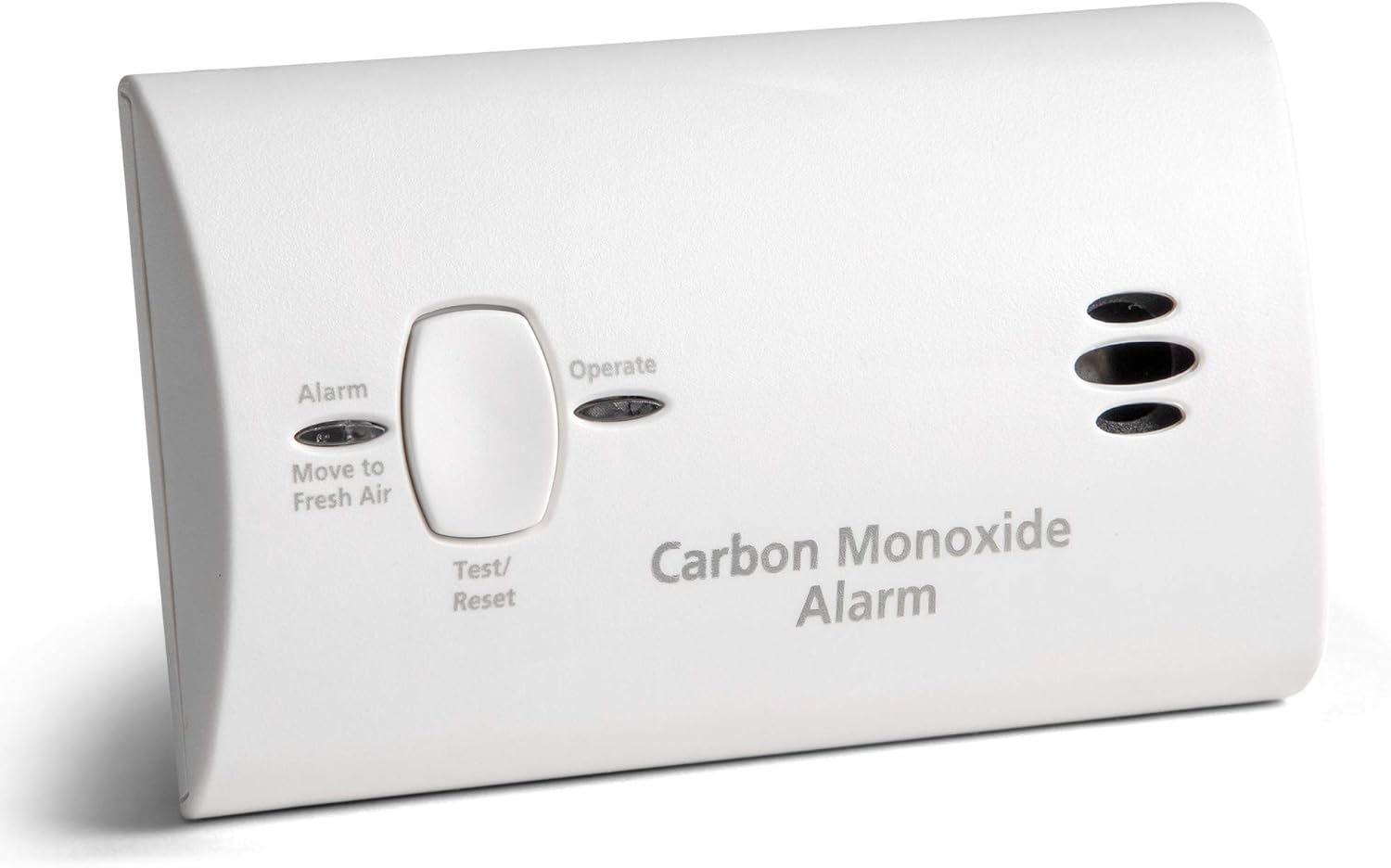
The Kidde KN-COB-LP2 is a simple, battery-powered carbon monoxide (CO) alarm intended for home or travel use where easy installation and portability matter. It uses an electrochemical sensor to detect CO and runs on two AA batteries so it continues to protect homes during power outages and requires no wiring. Installation is flexible — wall mount or tabletop — and the unit provides clear LED status lights: green for power and red flashing with an 85 dB alarm when CO is detected. A test-hush button makes periodic testing and temporary silencing of nuisance chirps straightforward, and event memory records the last detection or test. Practical benefits include low setup time, portability for moving between rooms or taking on trips, and audible/visual alerts that are easy to interpret. The main limitations are basic feature set — no digital CO level display, no wireless interconnect, and reliance on user-replaced AA batteries — which may matter for buyers seeking advanced monitoring or long-life sealed options.
Best for: Buyers looking for an affordable, no-fuss CO alarm that is easy to install, portable for travel or temporary use, and effective at providing basic audible and visual alerts.
Less Ideal for: Users who want advanced features like a digital CO readout, smart connectivity, long-life sealed batteries, or a system that interconnects multiple alarms automatically.
- Battery powered with 2 AA batteries so it works during power outages and needs no wiring
- Electrochemical sensor for reliable CO detection
- Portable design supports wall mounting or tabletop placement for flexible use
- Clear LED status indicators and an 85 dB audible alarm for easy recognition of alerts
- Test-hush button and event memory for simple testing and basic diagnostic information
- No digital numeric CO level display to show concentration
- Lacks wireless interconnect or smart monitoring features
- Requires periodic battery replacement rather than a sealed long-life battery
Verdict: A straightforward, budget-friendly battery CO detector that delivers reliable alerts and easy installation for basic home or travel protection.
Kidde CO Detector COP

| Power Source | Corded Electric |
|---|---|
| Sensor Type | Electrochemical |
| Alarm | Audible, Visual |
| Operating Humidity | 10 to 95% Relative Humidity, Non-Condensing |
The Kidde COP is a straightforward plug-in carbon monoxide monitor intended for home and travel use where 120V outlets are available. It runs on mains power with two included AA batteries for backup and uses an electrochemical sensor that meets UL 2034 5th Edition testing. The rotating plug and compact housing make it easy to install in vertical or horizontal receptacles without blocking neighboring outlets, and bright LED status lights plus an 85 dB alarm provide clear visual and audible warnings. Built-in power surge immunity and a Test/Hush button are practical touches for daily reliability and occasional nuisance silencing. It is not rated for 220V environments, RVs, or boats, and like all CO alarms it has a finite service life and should be replaced according to the manufacturer. For buyers prioritizing dependable, standards-tested CO detection in living spaces, this model delivers the core functions with few extras.
Best for: Buyers who want a no-nonsense, standards-tested CO alarm they can trust for everyday home protection and occasional travel use, with simple installation and reliable backup power.
Less Ideal for: People who need networked monitoring, smart home integration, or a unit rated for 220V, RV, or marine environments should consider different models.
- Electrochemical sensor meeting UL 2034 5th Edition for accurate CO detection
- Plug-in design with rotating plug for flexible installation in vertical or horizontal outlets
- Two AA battery backup maintains operation during power outages
- Built-in power surge immunity helps prevent false failures during voltage fluctuations
- Test/Hush button and LED status lights make testing and local alerts simple
- Not compatible with 220V outlets and not approved for RV or boat use
- No smart features or remote alerts for off-site monitoring
Verdict: Choose this Kidde COP if you need a reliable, standards-tested plug-in CO detector with battery backup and flexible outlet installation for home use.
First Alert CO606 Plug-In CO Alarm

| Power Source | Corded Electric |
|---|---|
| Sensor Type | Electrochemical |
| Alarm | Carbon Monoxide |
| Operating Humidity | 10-95% RH |
| Upper Temperature Rating | 105 °F |
The First Alert CO606 is a plug-in carbon monoxide alarm that uses an electrochemical sensor for accurate CO detection and a 9V battery backup so the unit continues to protect during power outages. It installs directly into a standard wall outlet with no mounting hardware required and has a single button that tests the alarm and silences nuisance alerts, making it straightforward to use. The alarm produces an 85 dB audible alert when dangerous CO levels are detected and includes an end-of-life chirp and low-battery signal with a temporary mute for the low-battery tone. Because it is corded, it is best placed near an outlet and is convenient for bedrooms, hallways, and living areas where a visible, plug-in solution is preferred. The unit meets UL standards and carries a seven-year limited warranty, but it does not have a digital display or wireless connectivity for remote notifications, so it is not suited to someone wanting app alerts or a readout of current CO levels.
Best for: Buyers who prioritize reliable, easy-to-use CO detection backed by proven sensor technology and visible in-home placement rather than smart features.
Less Ideal for: Users who want app notifications, remote monitoring, or a digital CO level display should consider a networked or smart model instead.
- Electrochemical sensor for accurate carbon monoxide detection
- Battery backup keeps the alarm working during power outages
- Simple plug-in installation with single test/silence button
- Loud 85 dB alarm and end-of-life indicator for long-term safety
- No digital display or numerical CO readout
- Lacks wireless connectivity or remote alerts
Verdict: Choose this plug-in alarm if you want a straightforward, UL-tested CO detector with a reliable electrochemical sensor and battery backup for continuous home protection.
First Alert SMICO100-AC Combination Alarm

| Power Source | Corded Electric |
|---|---|
| Alarm | Smoke, CO |
| Sensor Type | Ionization |
| Unit Count | 3 Count |
This First Alert SMICO100-AC is a hardwired 2-in-1 smoke and CO alarm intended to be installed as part of an interconnected home alarm system. It uses First Alert Precision Detection to cut down on cooking nuisance alerts while still providing early smoke detection, and the unit also contains an ionization smoke sensor alongside carbon monoxide sensing. The quick connect plug simplifies wiring during installation and lets you interconnect multiple compatible alarms so that when one detects danger, all alarms sound. A 9V battery backup keeps the detector working during outages, and the test/silence button makes routine checks and temporary muting straightforward. Because it is a corded electric, it is best used in permanent locations rather than as a portable unit and requires basic wiring or an existing alarm circuit for full functionality. The design focuses on dependable, whole-house coverage rather than extra smart features, making it a practical choice for homes that need reliable detection and easy interconnect installation.
Best for: Homeowners who prioritize dependable, whole-house fire and CO protection and want a permanently installed, interconnected alarm system with straightforward installation.
Less Ideal for: Renters or users who need a portable or battery-only detector, and households that specifically require photoelectric-only smoke sensing for cooking-prone environments.
- Combined smoke and CO detection in a single hardwired unit for centralized protection
- Interconnect capability sounds all linked alarms when one triggers for whole-home early warning
- Quick Connect plug simplifies installation and wiring to existing alarm circuits
- Battery backup ensures continued operation during power outages
- Test/silence button allows easy regular testing and temporary muting of nuisance alarms
- Requires hardwiring or compatible alarm circuit so not suitable as a standalone plug-in unit
- Uses ionization smoke sensing which can be more prone to nuisance alarms from some cooking activities compared with photoelectric in certain scenarios
Verdict: Buy this if you want a factory-quality hardwired smoke and CO alarm that links across a home for fast, whole-house warning with battery backup.
Choosing the Right Carbon Monoxide Detector for Home: Key Factors to Consider
Sensor Type and Accuracy
The core job of a carbon monoxide detector is to detect low concentrations quickly and accurately. Different sensor technologies have varying sensitivity and drift characteristics over time. Choosing a detector with a proven sensor type and clear performance specifications reduces the chance of false negatives and excessive false alarms.
When evaluating accuracy, look for devices with explicit detection thresholds, documented response times, and third-party certification where available. Accurate sensors need less frequent replacement and deliver more trustworthy warnings, which is essential for home safety.
Power Source and Backup
Power reliability matters because a detector without power cannot warn you. Many home detectors are hardwired, plug-in, battery-powered, or use sealed long-life batteries. Consider what happens during a power outage and whether the unit offers battery backup or a battery-only option with sufficient runtime. Battery type and accessibility are also important if you prefer easy in-place battery replacement.
Sealed long-life batteries reduce maintenance but require full-unit replacement at end of life. Replaceable batteries give flexibility but increase routine upkeep. Match the power approach to your household habits and access to electrical wiring.
Placement and Installation Flexibility
Where you can legally and effectively place a detector affects its performance. Some units are designed for wall mounting, ceiling placement, or tabletop use. The mounting method should fit typical home locations such as hallways near bedrooms, living rooms, or basements where fuel-burning appliances are present.
A detector that is easy to install encourages correct positioning and consistent use. Consider whether the unit includes all necessary mounting hardware, clear instructions, and indicators showing correct installation orientation. Flexibility makes it easier to follow local codes and recommended placement guidelines.
Alarm Characteristics and User Interface
An alarm must be loud and comprehensible so occupants can respond quickly. Look for units with clear, standardized alarm tones and visible status indicators for power, sensor faults, and end-of-life notifications. A simple, intuitive interface for silencing nuisance alerts and testing the unit is important for household usability.
Some detectors add voice alerts or multi-tone systems that explain the type of hazard. While these features are helpful, ensure they do not complicate basic operation. Clear labeling and straightforward controls reduce user error during stressful events.
Maintenance, Sensor Life, and End-of-Life Warnings
Carbon monoxide sensors degrade over time and eventually need replacement. Check the expected sensor life and how the unit signals end-of-life. Units with clear end-of-life alerts reduce the chance of using an ineffective detector. Maintenance requirements should be minimal and easy to perform, such as periodic battery changes and quick visual inspections.
Choose models with accessible batteries if you plan to manage replacements yourself. If you prefer minimal upkeep, consider sealed units with multi-year life spans, but plan for full-unit replacement when the sensor expires.
Certifications and Compliance
Certified detectors have passed standardized tests that verify sensor performance, alarm audibility, and electrical safety. Look for recognized third-party certification marks and check that the unit meets local building and safety codes. Certification reduces the risk of buying a device with unverified claims about detection thresholds or alarm performance.
Compliance also matters for home resale and local inspections. Devices that explicitly state their certifications give buyers more confidence in documented performance.
Where to Install Carbon Monoxide Detectors
Place detectors in locations where people sleep and near any rooms that contain fuel-burning appliances. Hallways outside bedrooms are commonly recommended because they allow the alarm to wake sleeping occupants. For multi-level homes, install at least one detector on each level and near stairways to ensure alarm propagation throughout the home.
Avoid installing detectors directly above or beside fuel-burning appliances, since localized exhaust can cause nuisance triggers. Follow manufacturer orientation guidance for wall or ceiling placement and ensure access for battery changes and testing.
- Install on every level, including basements
- Place outside sleeping areas within hearing distance
- Keep a sensible distance from stoves, furnaces, and fireplaces
- Ensure detectors are accessible for maintenance
Power Options Explained
Battery-only units are often the simplest to install and can be placed where wiring is not available. They rely on periodic battery replacement unless they use sealed long-life cells. Hardwired detectors integrate with home power and usually include battery backup to protect during outages. Plug-in units are convenient for some spaces but require an accessible outlet near recommended placement zones.
When choosing a power approach, weigh installation complexity against maintenance. Hardwiring offers hands-off operation but may require professional installation. Battery units are flexible but need routine attention to avoid downtime.
- Battery-only: easy placement, requires regular battery checks
- Sealed battery: low maintenance, full replacement at end-of-life
- Hardwired: continuous power, usually includes battery backup
- Plug-in: limited placement, simple setup
Interconnected Alarms and Home Coverage
Interconnected systems link multiple detectors so that when one senses danger, all units alarm. This is especially useful in larger homes or if sleeping areas are separated. Interconnection can be wired or wireless depending on the product, and it significantly increases the likelihood that everyone in the house will hear the alarm.
If you have a multi-detector setup, confirm compatibility and installation requirements before choosing a unit. For single-detector scenarios, prioritize the best possible placement to maximize effective coverage.
- Interconnected units provide whole-home alerts
- Wired interconnection may need electrician help
- Wireless interconnection is more flexible but verify range
Testing, Troubleshooting, and Routine Checks
Regular testing is essential. Use the detector's test button monthly to confirm the alarm and status indicators function. Replace batteries according to the manufacturer's schedule and immediately replace units that indicate sensor failure or end-of-life.
If a unit gives frequent nuisance alarms, check placement and nearby sources of combustion byproducts. Persistent false alarms or failure to test properly may indicate sensor degradation, which requires replacement of the unit rather than more troubleshooting.
- Test monthly using the built-in button
- Replace batteries and address end-of-life warnings promptly
- Move units if repeated nuisance alarms occur
Addressing Nuisance Alarms Without Compromising Safety
Nuisance alarms can come from installing a detector too close to a bathroom, kitchen, or furnace. Rather than silencing and ignoring repeated alerts, reposition the unit to a location where airflows and occasional harmless combustion byproducts are less likely to trigger it. Use the hush or silence feature sparingly and only when you are certain there is no hazard.
If nuisance alarms remain frequent after repositioning, consider a model with better discrimination or different sensor technology. However, never disable or remove a detector to stop nuisance alerts; maintaining functioning detectors is critical for safety.
- Relocate detectors away from routine combustion sources
- Use silence features only temporarily and with caution
- Replace units that continue to alarm without cause
How We Chose the Best Carbon Monoxide Detector for Home
We prioritized characteristics that directly affect a detector's ability to protect occupants in everyday home settings. Primary considerations included sensor accuracy and response time, which determine how quickly and correctly a unit detects hazardous carbon monoxide levels. We also assessed ease of installation and placement flexibility, since a detector that is hard to install or position will often be used improperly. Power options and backup were another key filter; we looked for units that offer reliable primary power and safe battery backup or long-life sealed power to avoid lapses in protection. Durability and maintenance demands were evaluated to estimate long-term ownership effort, including sensor life and whether the unit requires frequent battery changes. Audible alerts and user interface were included because clear, understandable alarms and simple status indicators reduce confusion during an event. We excluded devices that did not meet basic certifications or that rely on ambiguous sensor technologies with limited testing data. Units that lacked essential mounting hardware or clear instructions were also filtered out. The resulting list emphasizes real-world safety, practical installation, and low ongoing maintenance.
Our full evaluation process is outlined in our review methodology.
FAQ
How many carbon monoxide detectors should I have in my home?
You should have at least one on every level of the home and one outside sleeping areas. Larger or spread-out homes often need additional detectors to ensure alarms can be heard throughout the house.
Where is the best place to mount a carbon monoxide detector?
Mount detectors on a wall or ceiling outside bedrooms and near fuel-burning appliances, but not directly above them. Follow the specific mounting orientation in the unit's instructions for optimal performance.
How often do carbon monoxide detectors need to be replaced?
Sensor life varies by model but commonly ranges from 5 to 10 years. Detectors should clearly indicate end-of-life, and you should replace the entire unit when the sensor can no longer guarantee detection.
Can a carbon monoxide detector be hardwired into my home's electrical system?
Yes. Many home detectors offer hardwired power options with battery backup. Hardwiring provides continuous power but may require professional installation to meet local electrical and building codes.
What should I do if the alarm goes off?
If a carbon monoxide alarm sounds, immediately move to fresh air by exiting the building and call emergency services. Do not re-enter until the area has been ventilated and authorities or qualified technicians confirm it is safe.
Final Verdict
Prioritize sensor accuracy, consistent power, and correct placement when choosing a carbon monoxide detector for home. Balance installation complexity against how likely you are to maintain batteries or replacements, and favor units with clear end-of-life signals and easy testing. For homes with multiple levels or separated sleeping areas, interconnected alarms improve detection coverage and response. Focus on practical safety features and straightforward maintenance rather than extra bells and whistles. With those priorities in mind, you can choose a detector that provides reliable warning and peace of mind for years to come.