
Note: This article contains affiliate links. If you click on these links and make a purchase, we may earn a small commission at no extra cost to you. This helps support our research and content. Read our full affiliate disclosure here.
A properly chosen carbon monoxide detector is one of the simplest and most effective ways to protect your household from an invisible, odorless threat. The right unit gives you dependable early warning, clear status feedback, and installation options that fit your home layout. This guide highlights seven shortlisted carbon monoxide detectors chosen for home use and evaluates them on alarm accuracy, installation, and daily convenience. Read on to understand the practical tradeoffs that matter when picking a detector and find the features that match your living situation.
Top Picks at a Glance
| Best Overall The best all-around choice for most situations | X-Sense SC07 Combination Detector |  |
| Best Quality Built to a higher standard if you want something more solid | First Alert CO606 Plug-In CO Alarm |  |
| Best Value The sweet spot between price and what you get | HEIMAN C1-S CO Detector |  |
| Best Budget The cheapest option that still gets the job done reliably | First Alert CO600 Plug-In CO Alarm |  |
| Top Rated A top-rated pick with lots of positive feedback | Kidde KN-COB-DP2 Plug-In CO Detector |  |
| Most Popular A crowd favorite that many people choose with confidence | Kidde KN-COB-LP2 Carbon Monoxide Detector | 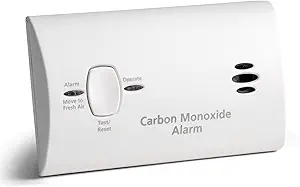 |
| Best Seller A high-volume bestseller chosen again and again | X-Sense SC01 Combination Detector |  |
X-Sense SC07 Combination Detector

| Power Source | 10-Year Sealed Battery |
|---|---|
| Alarm | 85 dB |
| Sensor Type | Photoelectric, Electrochemical |
| Battery Type | Lithium metal |
| Safety Standards | UL 217 & UL 2034 |
The X-Sense SC07 combines a photoelectric smoke sensor and an electrochemical CO sensor in a single, easy-to-install standalone unit designed for long-term, low-maintenance protection. Its built-in 10-year sealed lithium battery eliminates battery changes and late-night chirps, and the unit includes a clear LCD readout for quick status checks. Photoelectric sensing helps reduce nuisance alarms from cooking and detects slow-smoldering fires, while the electrochemical CO sensor provides continuous CO monitoring and triggers an 85 dB alarm when levels are dangerous. Installation is straightforward using the supplied mounting bracket and screws, and the enclosure is heat-resistant PC plastic. The main limitations are that it is not hardwired, does not support Wi-Fi or wireless interconnection, and cannot be linked to other alarms for whole-house signalling, so it is best used as an individual room or replacement detector rather than part of a networked system. It meets UL 217 and UL 2034 standards, making it suitable for code-conscious buyers seeking a reliable, maintenance-free combination detector for a bedroom, hallway, or living area.
Best for: Buyers who want a reliable, low-maintenance standalone detector for individual rooms or as a direct replacement that prioritizes long battery life and straightforward installation.
Less Ideal for: Households that need a networked alarm system, smart-home integration, or hardwired detectors for whole-house coverage should choose a different model.
- 10-year sealed lithium battery for no-battery-replacement convenience
- Dual sensing: photoelectric smoke sensor plus electrochemical CO sensor for broad hazard coverage
- Meets UL 217 and UL 2034 safety standards for smoke and CO detection
- Simple wall or ceiling mounting with included bracket and hardware
- LCD display provides quick status and level information at a glance
- No wireless interconnection or Wi-Fi, so it cannot network with other alarms
- Not hardwired, which may limit placement for some installations
Verdict: Choose the X-Sense SC07 when you want a dependable, maintenance-free standalone smoke and CO detector with a decade-long sealed battery.
First Alert CO606 Plug-In CO Alarm

| Power Source | Corded Electric |
|---|---|
| Sensor Type | Electrochemical |
| Product Style | Plug in Alarm with Battery Backup |
| Upper Temperature Rating | 105 °F |
The First Alert CO606 is a straightforward plug-in CO alarm that uses an electrochemical sensor for accurate detection and plugs directly into any standard outlet for easy placement. It is typically used in living areas, hallways, or near sleeping areas where you want continuous monitoring without hardwiring; the built-in battery backup keeps the unit active during power outages. Notable features include a single test/silence button to verify operation or quiet nuisance alerts, an 85 dB alarm for clear audible warning, and an end-of-life chirp that reminds you when replacement is needed. The electrochemical sensing element provides reliable readings compared with cheaper sensor types, and the simple design means there are no complicated settings to configure. Trade-offs are minimal but include the need to occupy an outlet and the lack of a digital readout or wireless connectivity for remote alerts, so it is best where you want a dependable, no-frills detector rather than networked monitoring.
Best for: Buyers who prioritize reliable, sensor-level performance and want a simple, maintenance-light detector for bedrooms or common areas where networked features are not necessary.
Less Ideal for: Users who need integrated smart-home alerts, remote monitoring, or a visible numeric CO readout should look for a different model with those capabilities.
- Electrochemical sensor for accurate CO detection
- Battery backup keeps the alarm functioning during power outages
- Simple single-button test/silence makes operation easy
- Loud 85 dB alarm provides a clear audible warning
- Requires use of a wall outlet so it occupies that receptacle
- No digital CO level display or wireless/remote alert features
Verdict: Choose this detector if you want a dependable, plug-in CO alarm with a high-accuracy electrochemical sensor and battery backup for straightforward room-level protection.
HEIMAN C1-S CO Detector

| Power Source | Battery Powered |
|---|---|
| Sensor Type | Electrochemical |
| Alarm | Audible/Visual |
| Battery Average Life | 10 years |
| Operating Humidity | 5%-95% relative humidity |
The HEIMAN C1-S is a standalone carbon monoxide alarm designed for simple DIY installation in homes, apartments, and light commercial spaces. It uses a Japan-made FIGARO electrochemical sensor to detect CO and signals danger with an 85 dB audible alarm plus an LED visual indicator; a one-touch Test/Silence button makes checks and nuisance-silencing straightforward. The unit runs on a long-life lithium battery rated for 10 years, which removes the need for yearly battery swaps and reduces maintenance for busy households or property managers. Its compact, flame-retardant ABS+PC enclosure supports wall or ceiling mounting and comes with basic hardware. Important limitations are that it is battery-only with no hardwired or app features and it offers single-station detection rather than interconnected alarms, so coverage planning requires multiple units in larger homes. For buyers prioritizing low maintenance, clear alarms, and reliable electrochemical sensing in a code-compliant package, this is a practical, no-frills choice.
Best for: Buyers who want a low-maintenance, code-conscious CO alarm with long battery life and reliable electrochemical sensing for everyday residential or rental safety.
Less Ideal for: People who need interconnected, smart, or centrally monitored CO detection for large homes or integrated home safety systems should consider wired or networked alternatives.
- Electrochemical FIGARO sensor for accurate CO detection
- 10-year lithium battery life minimizes maintenance
- 85 dB audible alarm plus LED visual indicator for clear alerts
- Simple one-touch Test/Silence button and easy DIY mounting
- UL 2034 5th Edition certified and CSFM approved for compliance
- No hardwiring or wireless/interconnect capability
- Lacks smartphone app or remote monitoring features
Verdict: Choose the HEIMAN C1-S if you want a dependable, low-maintenance CO detector with a long sealed battery and accurate electrochemical sensing for straightforward residential protection.
First Alert CO600 Plug-In CO Alarm

| Power Source | Corded Electric |
|---|---|
| Alarm | Audible |
| Sensor Type | Electrochemical |
| Operating Humidity | 10-95% RH |
The First Alert CO600 is a straightforward plug-in carbon monoxide alarm that you install by plugging into any standard 120 V outlet. It uses an electrochemical sensor, which is the most accurate technology for detecting CO, and sounds an 85 dB alarm when levels become dangerous. The unit has a single test/silence button for quick checks and to temporarily silence nuisance alerts, and an end-of-life indicator that lets you know when to replace the device. Because it is corded and requires no batteries for main power, maintenance is limited to occasional testing and responding to the end-of-life chirp. The design is compact and intended for placing on each floor and in sleeping areas, but being a plug-in model means placement is tied to outlet locations and it does not include a display or battery backup. For buyers who want a reliable, no-frills CO detector that is easy to install and uses a precise sensor, this unit delivers practical protection at a modest feature set.
Best for: Buyers seeking an affordable, easy-to-install CO alarm that relies on a proven electrochemical sensor and minimal setup for basic home protection.
Less Ideal for: People who need remote alerts, battery-backed operation, or a display showing CO concentration should consider units with those features instead.
- Electrochemical sensor for accurate carbon monoxide detection
- Loud 85 dB alarm provides clear audible warning
- Plug-in design installs easily without wiring or frequent battery changes
- Single test/silence button simplifies routine testing and muting non-critical alerts
- Requires an outlet for operation so placement is limited to outlet locations
- No digital display or CO concentration readout
- No battery backup if power is lost
Verdict: A no-frills, budget-friendly plug-in CO alarm that uses a reliable electrochemical sensor for accurate detection and easy installation.
Kidde KN-COB-DP2 Plug-In CO Detector

| Power Source | Plug In with AA battery backup |
|---|---|
| Alarm | 85 dB audible |
| Operating Humidity | 10 to 95% relative humidity (non-condensing) |
The Kidde KN-COB-DP2 is a simple plug-in carbon monoxide detector that uses an electrochemical sensor to monitor CO levels and sounds an 85 dB alarm when dangerous concentrations are detected. It installs directly in a standard 120V outlet and includes two AA batteries for backup power, so it continues to protect during outages. The unit updates the digital display every 15 seconds and stores a peak level memory so you can see the highest reading since the last event or test. A Test-Hush (Smart-Hush) button mutes nuisance alarms for about eight minutes, which helps with temporary false alerts from cooking or shower steam. Practical benefits include easy installation, visible numeric feedback on CO concentration, and the backup battery for continued operation. Limitations are few for this class: it is a single-station plug-in device without wireless connectivity or multi-unit interconnect, and placement is limited to near outlets rather than wall-mount-only locations. For buyers prioritizing straightforward, factory-quality sensing and dependable backup power, this model delivers reliable baseline protection.
Best for: Buyers who want a dependable, easy-to-install CO detector with clear numeric readout and battery-backup for consistent, low-maintenance protection in living areas.
Less Ideal for: People who need networked detectors, multi-unit interconnect, or hardwired installation should consider a smart or hardwired model instead.
- Electrochemical sensor technology for accurate CO detection
- Numeric digital display with updates every 15 seconds and peak level memory
- Includes two AA batteries for backup during power outages
- Easy plug-in installation requires no tools and is quick to place near living areas
- 85 dB audible alarm and Test-Hush button for temporary silencing of nuisance alarms
- No wireless connectivity or app notifications for remote alerts
- Not designed for hardwired interconnect with other alarms
Verdict: Choose this Kidde plug-in CO detector if you want a straightforward, reliable alarm with a numeric display and battery backup for consistent home protection.
Kidde KN-COB-LP2 Carbon Monoxide Detector
| Power Source | Battery Powered |
|---|---|
| Sensor Type | Electrochemical |
| Operating Humidity | 10%-95% relative humidity non-condensing |
| Upper Temperature Rating | 100 °F |
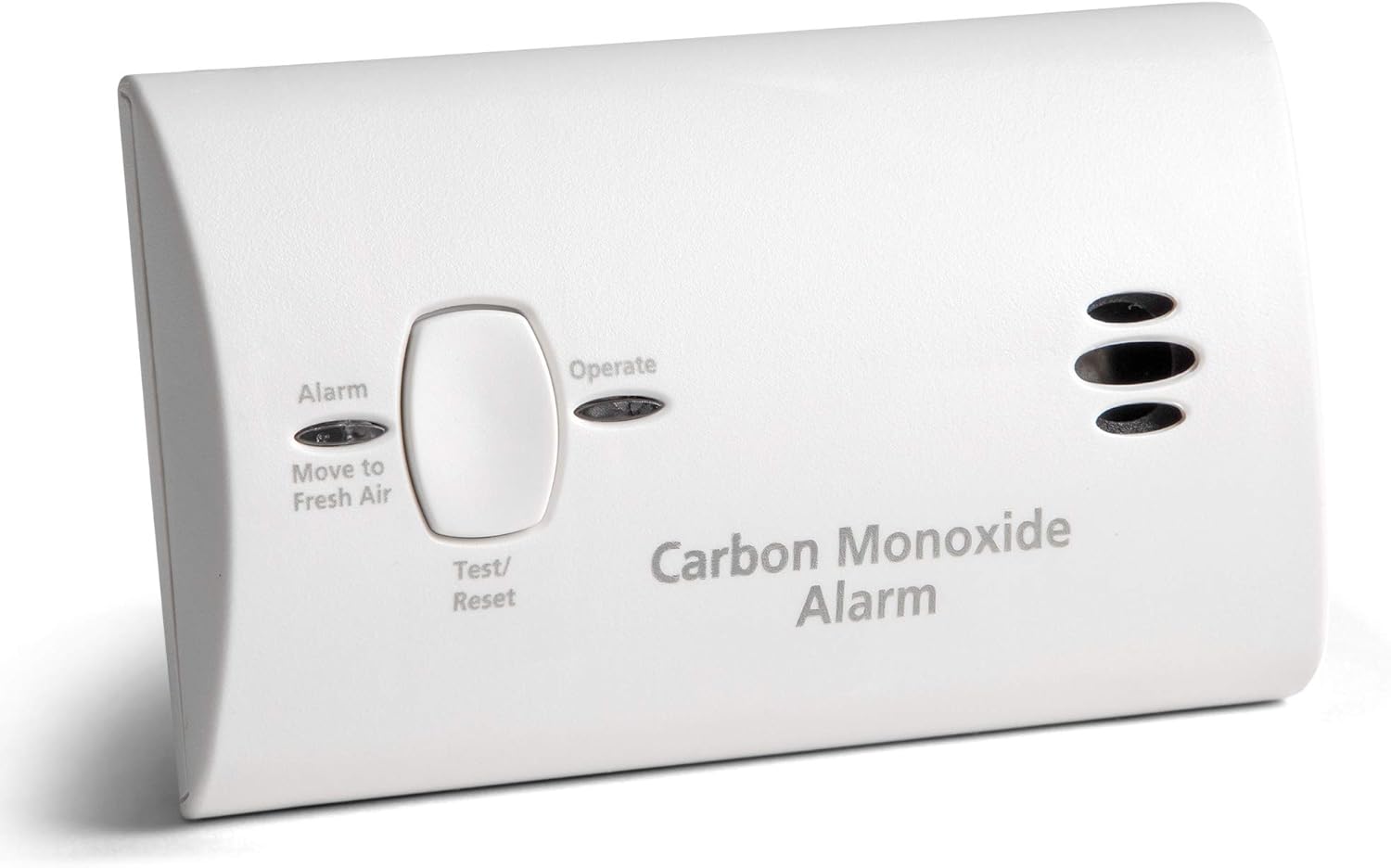
The Kidde KN-COB-LP2 is a simple, battery-powered carbon monoxide detector that uses an electrochemical sensor to continuously monitor CO levels and alert you with an 85-decibel alarm and flashing red LED when dangerous concentrations are detected. It runs on two AA batteries stored in a slide-out compartment for quick replacement and includes a test/reset button and a green power LED that flashes during normal operation. The unit can be mounted on a wall or set on a tabletop, making it useful for both permanent home installation and temporary or travel use. Event memory records the last detection or test, and the low-battery chirp plus visible indicators help you keep the unit operational. Limitations are straightforward: it is a basic single-station alarm without digital display or smart connectivity, and it requires periodic battery replacement and end-of-life replacement per manufacturer guidance. For buyers who want a reliable, no-frills CO alarm that is easy to install and maintain, this unit covers the essentials well.
Best for: Buyers who prioritize a proven, easy-to-install CO alarm with clear audible and visual alerts and want reassurance from a widely used, well-reviewed unit.
Less Ideal for: Users seeking a networked or display-equipped detector with remote alerts, multi-unit interconnect, or built-in long-life sealed batteries should consider other models.
- Electrochemical sensor technology for accurate CO detection
- Battery powered with slide-out battery door for easy installation and replacement
- Portable design supports wall mounting or tabletop placement
- Loud 85-decibel alarm and LED indicators for clear alerts
- Event memory records the last CO detection or test
- No digital concentration display or peak level readout
- No smart features or interconnect capability with other alarms
Verdict: A straightforward, reliable battery CO alarm that delivers loud, clear local alerts and easy installation for buyers who want dependable core protection.
X-Sense SC01 Combination Detector

| Power Source | 10-Year Sealed Battery |
|---|---|
| Sensor Type | electrochemical, photoelectric |
| Alarm | Audible |
| Battery Type | Lithium metal |
| Operating Humidity | 90 percent |
The X-Sense SC01 is a standalone smoke and carbon monoxide detector intended for simple, long-term protection without wiring or app connectivity. It combines a photoelectric smoke sensor and an electrochemical CO sensor, displays CO levels and battery status on an LCD, and uses a built-in 10-year lithium battery so you do not need annual battery swaps. Installation is straightforward: mount the included bracket to a wall or ceiling, attach the unit, and it begins monitoring. The alarm is rated at 85 dB for clear audible alerts, and the sensors aim to reduce false alarms while still responding quickly to real threats. Because it is not hardwired and lacks wireless interconnection or Wi-Fi, it is best used as an independent device in individual rooms rather than as part of a linked home alarm network. The sealed battery and 10-year life make the unit low-maintenance, but you will need to replace the entire alarm at end of life rather than swapping batteries.
Best for: Buyers who prioritize a low-maintenance, reliable standalone detector for basic smoke and CO protection and want clear on-device readings without using apps or home automation.
Less Ideal for: Homes that need interconnected alarms or remote monitoring should choose a model with wireless linking or Wi‑Fi and app support instead.
- Two-in-one protection with photoelectric smoke and electrochemical CO sensors
- Built-in LCD shows real-time CO readings and battery status
- 10-year sealed lithium battery eliminates annual battery changes
- Simple, no-wiring installation with included mounting hardware
- Loud 85 dB alarm for clear audible alerts
- No wireless interconnection or Wi-Fi control for multi-unit linking
- Sealed battery means replacing the whole unit at end of service life
Verdict: Choose the SC01 if you want a low-maintenance, standalone smoke and CO detector with a 10-year sealed battery and on-device CO readout.
Choosing the Right Carbon Monoxide Detector: Key Factors to Consider
Sensor Accuracy and Response Time
A detector's primary role is to sense dangerous carbon monoxide concentrations quickly and reliably. Sensor accuracy determines whether the device will trigger an alarm at the correct threshold, while response time affects how much early warning you receive.
Look for detectors that meet recognized testing standards and give consistent readings across a range of concentrations. Faster response times are particularly important in homes with fuel-burning appliances or attached garages where CO levels can rise quickly.
Power Source and Reliability
How the detector is powered influences maintenance effort and assurance the unit will function when needed. Battery-only models offer placement flexibility but require periodic battery replacement and clear low-battery alerts.
Hardwired units with battery backup reduce the chance of a dead device due to battery neglect, but they need compatible wiring and may require professional installation. Consider units with long-life sealed batteries for lower upkeep or models with easily replaceable batteries if you prefer DIY maintenance.
Installation Options and Placement
Proper placement is essential for accurate detection. Installation flexibility lets you mount detectors on ceilings or walls and use plug-in options where wiring is unavailable.
Think about the layout of sleeping areas, fuel-burning appliances, and garages when deciding how many detectors you need and where to install them. Choose detectors with simple mounting hardware and clear instructions to avoid placement mistakes that could compromise performance.
Alarm Indicators and User Interface
Clear, unambiguous alerts ensure you notice a problem immediately. Look for loud, distinctive alarms plus visual cues like bright LEDs or numeric displays that show measured CO concentration levels.
A straightforward test/reset button and intuitive status indicators make routine checks easier. Models that provide both audible and visual notifications help ensure occupants with hearing limitations or noisy environments will still be alerted effectively.
Maintenance, Lifespan, and End-of-Life Alerts
CO sensors have a finite service life. Knowing when a detector needs replacement is essential for long-term safety. Units that provide end-of-life warnings remove guesswork and prevent reliance on an expired sensor.
Consider how easy it is to perform regular tests and change batteries. Durable housings and corrosion-resistant components also reduce the chance of failure in boilers, basements, or humid spaces.
Additional Safety Features
Extra features can improve real-world usefulness without replacing core detection performance. Useful additions include digital concentration readouts, mute or hush functions for nuisance alerts, and interconnected alarm capability for whole-home warning.
Evaluate whether these extras fit your needs. For example, an audible hush option helps during nonemergency nuisance triggers but should not complicate reaching a manual override in a true alarm.
Where to Install Carbon Monoxide Detectors
Install detectors outside sleeping areas and on every level of the home to ensure occupants can hear alarms wherever they are. Place units near rooms that contain fuel-burning appliances, furnaces, water heaters, or fireplaces, but avoid installing them directly above combustion appliances or too close to windows and vents where drafts can interfere with readings.
When mounting, follow manufacturer height guidance. Ceiling placement is common because CO mixes evenly with room air, but wall-mounted units should be positioned at least several feet above the floor. Avoid corners and enclosed spaces that can trap stale air or cause delayed detection.
- Place one detector outside each sleeping area
- Install at least one detector on every floor, including basements
- Keep units away from cooking appliances to reduce false alarms
- Avoid placing detectors next to windows, doors, or vents
Interconnected Systems and Whole-Home Safety
Interconnected detectors communicate alarms across multiple units so everyone hears a single triggered alarm. This is especially useful in larger houses or homes with distant bedrooms. Interconnection can be wired or wireless depending on the detector design.
If you plan to use interconnected devices, ensure compatibility and that the network supports both CO and smoke alarm signaling if you intend combined protection. Interconnection adds complexity to installation but significantly improves the chance that all occupants will be alerted promptly.
- Wired interconnection may require professional installation
- Wireless interconnection offers retrofit convenience
- Confirm that interconnection does not delay individual unit response
Testing, Maintenance, and Troubleshooting
Routine testing keeps detectors reliable. Test units monthly using the manufacturer's test button and replace batteries or sealed power sources according to recommended intervals. Clean the exterior periodically to remove dust that can affect sensors or speaker output.
If a detector gives frequent false alarms, check placement and possible sources of transient CO such as idling vehicles in attached garages or nearby portable heaters. Persistent issues may indicate a sensor fault or end-of-life condition, which calls for replacement rather than continued troubleshooting.
- Test monthly and document test dates
- Replace batteries promptly when low-battery alerts sound
- Clean vents and housings gently with a vacuum or soft cloth
- Replace detectors at end-of-life as indicated by the unit
Choosing Between Display Types and Alerts
Some detectors include numeric displays that show current CO concentration in parts per million. These readouts help you assess the severity of a reading and track small changes over time. Other models rely solely on indicator lights and audible patterns to signal alarm conditions.
If you want immediate context when an alarm occurs, a digital display is helpful. For straightforward, low-maintenance setups, an LED status system with a loud, recognizable alarm may be sufficient and simpler to use.
- Numeric displays give concentration data and trend clues
- LED-only units are simpler and often more affordable
- Consider visual and audible alert combinations for accessibility
Dealing with False Alarms and Nuisance Triggers
False alarms can reduce trust in a detector and lead to disabled units. Common causes include placement too close to fuel-burning appliances, rapid changes in ventilation, or environmental contaminants. Address nuisance triggers by moving the unit, improving ventilation, or selecting models with improved filtering and hush features.
When a unit repeatedly alarms without a clear source, treat the alarm seriously until the cause is identified. If no obvious CO source exists and alarms persist, replace the detector or consult a professional to examine potential hidden sources of carbon monoxide.
- Avoid placing detectors near kitchens or garages
- Use hush or silence features sparingly and only for nuisance events
- Investigate persistent alarms promptly
How We Chose the Best Carbon Monoxide Detector
We selected carbon monoxide detectors based on criteria that matter for dependable home safety and everyday usability. Primary considerations included sensor accuracy and response time because fast, reliable detection is the core purpose of these devices. We also weighed installation flexibility, meaning mounting options and wiring or battery choices that suit different home setups. Ease of use and visibility were assessed through display clarity, status indicators, and simple test/reset controls. Power reliability and expected battery life, including low-battery notification behavior, were required to ensure sustained protection. Finally, additional safety features such as integrated end-of-life alerts and silence/test features were included in the evaluation. We excluded devices that lack basic CO sensing certification or that do not provide clear alarm thresholds. Units intended only for industrial or vehicle use were not considered. Our picks prioritize residential suitability and straightforward operation so buyers can choose based on measurable performance, installation needs, and long-term maintenance factors.
Our full evaluation process is outlined in our review methodology.
FAQ
How often should I test my carbon monoxide detector?
You should test your carbon monoxide detector at least once a month using the test button to confirm the alarm and electronics are functioning. Regular testing ensures the unit will respond if dangerous levels occur.
Where is the best place to mount a CO detector in my home?
Mount detectors on every floor and outside sleeping areas, and place at least one near fuel-burning appliances. Avoid installing directly above stoves or too close to windows and vents that could dilute sensor readings.
Can battery-only detectors be as reliable as hardwired models?
Yes, battery-only detectors can be reliable if batteries are maintained and the unit provides clear low-battery alerts. Hardwired models with battery backup reduce the risk of a dead detector due to neglected batteries but require compatible wiring.
What does the digital readout on some detectors tell me?
A digital display shows the measured carbon monoxide concentration in parts per million, offering immediate context about exposure levels. Displays help you judge whether an event is low and transient or high and dangerous.
How long do carbon monoxide detectors last?
Most CO sensors have a limited service life typically measured in years, after which sensor performance can degrade. Look for units that provide end-of-life warnings and follow manufacturer guidance on replacement intervals.
Final Verdict
Prioritize detector accuracy, reliable power, and sensible placement when choosing a carbon monoxide detector for your home. Tradeoffs are common: a hardwired, interconnected system reduces maintenance but may require professional installation, while battery-powered units offer flexible placement at the cost of periodic battery changes. Focus on clear alerts, end-of-life notifications, and straightforward testing to keep protection consistent. With those priorities in mind, you can choose a detector that matches your installation constraints and gives dependable warning when it matters most.