
Note: This article contains affiliate links. If you click on these links and make a purchase, we may earn a small commission at no extra cost to you. This helps support our research and content. Read our full affiliate disclosure here.
If you rely on ceramic knives in the kitchen, keeping their edges precise is essential for clean cuts and safe prep work. Ceramic blades need different handling than steel, and a purpose-built ceramic knife sharpener preserves the blade geometry while restoring a keen edge. This guide highlights five shortlisted ceramic knife sharpeners chosen for consistent edge results, ease of use, and safe operation. Below we summarize how each sharpener performs on core tasks like edge restoration, blade alignment, and everyday maintenance so you can pick the best tool to keep your ceramic knives working like new.
Top Picks at a Glance
| Best Overall The best all-around choice for most situations | KYOCERA Diamond Wheel Sharpener |  |
| Best Value The sweet spot between price and what you get | Brigii Knife Sharpener SST01 |  |
| Best Budget The cheapest option that still gets the job done reliably | Arkansas Sharpeners AC46 Ceramic Sharpening Stick |  |
| Top Rated A top-rated pick with lots of positive feedback | Green Elephant Ceramic Honing Rod | 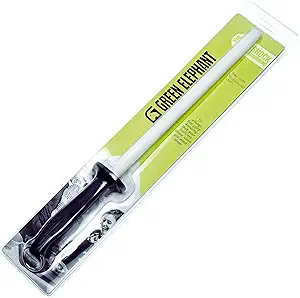 |
| Most Popular A crowd favorite that many people choose with confidence | longzon 4-Stage Knife Sharpener |  |
KYOCERA Diamond Wheel Sharpener

| Material Type | Ceramic, Plastic |
|---|---|
| Grit Type | Fine |
| Included Components | knife sharpener |
The Kyocera Diamond Wheel Sharpener is a compact manual tool built around a durable #1000 grit diamond wheel that can sharpen both ceramic and metal kitchen knives. You use it by placing the sharpener on a flat surface, inserting the blade in the single sharpening slot and pulling the blade back lightly a few times; the fixed-angle design and fine grit focus on edge refinement rather than heavy stock removal. It is easy to operate for left- or right-handed users and the diamond wheel provides consistent abrasion with good wear resistance, so repeat passes give predictable results. The unit is simple, low-maintenance and sized for countertop storage, but it is not intended for serrated blades and lacks adjustable angles or coarse stones for reshaping very dull or damaged edges. For routine touch-ups and keeping ceramic blades in service, it is an effective, foolproof option with minimal setup.
Best for: Buyers who want a straightforward, low-effort way to maintain the edges of ceramic and steel kitchen knives without learning complex sharpening techniques.
Less Ideal for: If you need to repair chips, reprofile blades, or sharpen serrated knives, a multi-grit stone or professional sharpening system is a better choice.
- Durable #1000 grit diamond wheel for consistent, fine sharpening
- Works on both ceramic and steel blades
- Simple, single-slot design that is easy to use for left- or right-handed users
- Not suitable for serrated knives
- No adjustable angle or coarse grit option for repairing chipped or very dull edges
Verdict: A simple, reliable manual sharpener that keeps ceramic and steel knives finely honed with minimal effort.
Brigii Knife Sharpener SST01

| Material Type | Ceramic, Tungsten Steel |
|---|---|
| Grit Type | Fine |
| Included Components | no |
The Brigii Knife Sharpener SST01 is a small, manual 4-in-1 tool for restoring edges on kitchen knives and scissors. You use it by pulling a blade through the coarse, medium, and fine slots in sequence for progressive sharpening and then use the dedicated scissor slot as needed. Notable features include ceramic and tungsten steel sharpening elements, angle guides that help keep strokes consistent, an ergonomic handle for controlled pulls, and a non-slip base for stability on countertops. In practice it is quick for routine maintenance and bringing mildly dull blades back to usable sharpness without removing them from the kitchen. Because it is a handheld, guided sharpener it is easier to use correctly than freehand stones, but it does not replace a full sharpening system for badly damaged or high-end specialty knives. The compact size and simple operation make it a convenient bench or drawer tool for everyday upkeep, but users seeking precise edge geometry or repair of chips will need a stone or professional service.
Best for: Buyers who want a low-effort, reliable way to keep everyday kitchen knives and scissors sharp without learning freehand techniques.
Less Ideal for: Users who need to repair chipped blades, set custom edge angles, or maintain high-end specialty knives should consider sharpening stones or professional services instead.
- Four sharpening stages (coarse, medium, fine plus scissor slot) for stepwise edge restoration
- Ceramic and tungsten steel abrasives suitable for steel and ceramic blades
- Ergonomic handle and angle guides simplify consistent sharpening strokes
- Non-slip base adds stability and safer use on countertops
- Compact, lightweight design fits easily in a kitchen drawer
- Not intended for rebuilding heavily chipped or professionally finished edges
- Guided slots limit angle flexibility compared with freehand stones or professional systems
Verdict: A compact, easy-to-use 4-in-1 sharpener that quickly maintains everyday knife and scissor edges with guided ceramic and tungsten steel slots.
Arkansas Sharpeners AC46 Ceramic Sharpening Stick

| Material Type | Ceramic |
|---|---|
| Grit Type | Very Fine |
| Included Components | 1 Count |
| Model Number | AC46 |
The Arkansas Sharpeners AC46 is a very fine ceramic sharpening stick built as a basic sharpening tool for home kitchens. It pairs a 7-inch ceramic rod with a comfortable wood handle and is used by drawing a knife blade across the rod to realign and refine the edge. The very fine ceramic grit is best for polishing and maintaining an already sharp edge rather than aggressively re-profiling a dull blade, so users will get quick touch-ups and a polished cutting surface. Its compact, handheld design makes it easy to store and use at the counter, and the wood handle gives a secure grip during repeated passes. Because it is a ceramic rod, it is brittle compared with steel and should not be dropped or used on very hard steel without care. This tool is straightforward, low-tech, and effective for routine edge maintenance but not a substitute for coarse stones when repairing chips or restoring severely worn knives.
Best for: Buyers looking for an inexpensive, no-frills way to maintain kitchen knife edges between full sharpenings and who prioritize low cost and simple operation.
Less Ideal for: People who need to repair damaged blades, re-profile very dull knives, or who prefer a full sharpening system with multiple grit stages should look elsewhere.
- Very fine ceramic grit gives a polished, razor-like edge for touch-ups.
- Compact handheld form that is easy to store and use at the countertop.
- Wood handle provides a comfortable, non-slip grip during sharpening.
- Low-cost and simple to operate with no setup or accessories required.
- Not suitable for heavy edge repair or reshaping since it lacks coarse grit.
- Ceramic rod is brittle and can chip or break if dropped or used improperly.
Verdict: A budget-friendly ceramic stick that delivers quick, polished touch-ups for everyday knife maintenance.
Green Elephant Ceramic Honing Rod

| Material Type | Ceramic |
|---|---|
| Grit Type | 1500 |
| Item Type Name | Honing rod |
| Unit Count | 1 Count |
The Green Elephant Ceramic Honing Rod is a lightweight 11-inch ceramic sharpening steel intended for routine honing and light sharpening of kitchen knives. With a fine 1500 grit ceramic surface and a vibration-absorbing handle design, it realigns edges with just a few strokes and minimizes the shock that can cause ceramic rods to chip when dropped. The slim profile and comfortable handle make it easy to control during regular maintenance after cooking, and its ceramic hardness promises a durable abrasive surface that maintains performance over time. It is hand-wash only, so care is simple but requires drying after cleaning, and the rod is best suited for maintaining already-sharp blades rather than repairing heavily damaged edges. For cooks who keep up with frequent honing, this rod offers an efficient, low-effort way to preserve edge alignment without removing significant metal.
Best for: Home cooks or professional cooks who prioritize a reliable, easy-to-use tool for regular edge maintenance and want a durable ceramic rod that minimizes breakage risk.
Less Ideal for: People needing aggressive sharpening or repair of chipped and very dull blades should choose a coarser stone or a dedicated sharpening system instead.
- Fine 1500 grit ceramic surface for precise edge realignment
- Vibration-absorbing handle design reduces risk of shattering on impact
- Lightweight and ergonomic handle for comfortable, controlled use
- Durable ceramic hardness that sustains abrasive performance
- Hand-wash only and must be air-dried to avoid damage
- Not intended for major edge repair or reshaping very dull blades
Verdict: A durable, fine-grit ceramic honing rod built for dependable, low-effort edge maintenance and reduced breakage risk.
longzon 4-Stage Knife Sharpener

| Material Type | Ceramic, Tungsten Steel |
|---|---|
| Grit Type | Ultra Fine |
| Included Components | knife sharpener |
The longzon 4-stage knife sharpener is a manual countertop tool that guides blades through coarse grinding, fine grinding and a precision polishing stage, with an additional slot for scissors. It is intended for routine home kitchen maintenance: set the unit on a flat surface, hold the handle and pull the blade through each slot a few times to reshape and then refine the edge. The sharpener uses tungsten steel and ceramic abrasive components and sits on a non-slip base for stable operation, and the package includes a cut-resistant glove for safer handling. In practice it brings tired stainless steel knives back to usable sharpness quickly and the dedicated polishing stage helps produce a cleaner finish. It is simple to use with no setup or angle adjustment required, but like other guided manual sharpeners it cannot reprofile complex or specialty edges and may remove more metal than a stropping-only method. For buyers who want an easy, repeatable way to maintain everyday kitchen knives, it is an effective, low-effort option.
Best for: Buyers who want a straightforward, low-skill way to keep everyday kitchen knives and scissors sharp and prefer products backed by many user reviews.
Less Ideal for: Users seeking a precision, angle-adjustable system for high-end or specialty knives or those who prefer only minimal metal removal methods.
- Four guided stages for coarse reshaping, fine sharpening and precision polishing
- Works with scissors and most standard kitchen knives
- Non-slip base and included cut-resistant glove improve safety during use
- Compact, drawer-friendly profile that is easy to store
- Does not allow angle adjustment or professional edge profiling
- Can remove more metal than gentle honing methods on repeated heavy use
Verdict: A safe, easy guided sharpener that quickly restores everyday knives and scissors without special skills.
Choosing the Right Ceramic Knife Sharpener: Key Factors to Consider
Abrasive Type and Grit
Ceramic knives are extremely hard and require abrasives at least as hard as the blade to cut and reform the edge. Diamond abrasives or specially formulated ceramic stones are the most effective choices because they remove material without excessive glazing. Different grit levels matter because coarse grits remove chips and re-profile bevels, while fine grits polish and refine the edge.
When choosing a sharpener, check whether it offers multiple grit stages or replaceable abrasive components. A single fine grit may be fine for routine touch-ups but will struggle to repair nicks. Conversely, a coarser grit without a finishing stage can leave a toothy edge that tears food rather than slicing cleanly.
Angle Control and Edge Consistency
Maintaining a consistent bevel angle is critical for a predictable cutting edge and long blade life. Devices with fixed guides or adjustable angle settings help ensure each pass meets the same geometry across the entire length of the blade. Inconsistent angles lead to a weak edge that dulls quickly and cuts poorly.
Look for sharpeners with clear, repeatable angle guidance and a contact surface that tracks the blade evenly. For home cooks who are not practiced with freehand sharpening, guided systems reduce the learning curve and lower the chance of accidentally overgrinding a narrow edge.
Safety Features and Stability
Sharpening a ceramic blade involves applied force and abrasion, so safety features matter. Non-slip bases, hand guards, and secure blade rests reduce the risk of slips that can damage the blade or cause injury. A stable sharpener also improves sharpening quality by keeping the blade aligned and the abrasive engaged consistently.
Consider how the unit sits on your countertop and whether it locks in place during use. Smaller sharpeners can be handheld but often benefit from a rubberized grip or tab to help control motion. Where possible, choose a design that keeps fingers safely away from the abrasive path.
Speed Versus Control
Some sharpeners remove material quickly to restore an edge in a few passes, while others favor slower, controlled abrasion to preserve the blade profile. Fast material removal can be useful when repairing chips or heavily dulled blades, but aggressive sharpening increases the amount of material taken off the edge and can shorten blade life if overused.
Decide whether you need a rapid re-profile tool or a gentler maintenance device. Many users appreciate a two-stage approach: a coarser stage for repairs and a finer stage for regular touch-ups. Think about how often you plan to sharpen and whether quick fixes or long-term edge preservation is more important.
Ease of Use and Maintenance
A sharpener that is easy to set up, use, and maintain will get more regular use. Consider whether the abrasive elements are fixed or replaceable, how simple it is to clean abrasive housings, and whether any parts require periodic replacement. Tools that need minimal adjustment and have clear user guidance are better for cooks who want reliable results without a learning curve.
Also factor in storage size and whether the unit can be used safely in a typical kitchen environment. Devices that disassemble for cleaning or accept replaceable cartridges give longer practical life and lower long-term cost of ownership.
Why Ceramic Blades Need Different Sharpeners
Ceramic blades are much harder than standard stainless steels and respond differently to abrasion. Steel-focused sharpeners often rely on abrasives that are too soft to cut ceramic effectively, which results in glazing and no real edge restoration. A sharpener designed for ceramic uses diamond or similarly hard abrasives and often includes finer finishing stages to polish the brittle edge.
Understanding this distinction helps you pick a tool that will actually restore cutting performance rather than just burnishing the blade surface. Correct technique and the right abrasive materials make the difference between a usable, long-lasting edge and a dull or chipped blade.
- Ceramic blades require harder abrasives than common steel stones.
- Specialized finish stages help remove microchips and polish the edge.
- Incorrect sharpening can lead to chipping or uneven bevels.
Handheld Versus Bench-Mounted Designs
Handheld sharpeners are compact and often designed for quick touch-ups. They can be convenient for occasional maintenance and typically include a single guided angle and a non-slip grip. However, they may lack the stability and multiple grit stages of larger units.
Bench-mounted or clamp-style sharpeners provide more control and usually accommodate multiple abrasive stages. These designs are better suited for full re-profiles or for users who want consistent results on multiple blades. Consider how much counter space you have and whether portability is important.
- Handheld: portable, quick touch-ups, limited grit options.
- Bench-mounted: stable, multi-stage, better for thorough restoration.
- Pick based on how often and how thoroughly you need to sharpen.
Maintaining Your Ceramic Sharpener
Regular maintenance extends the life of the sharpener and preserves its abrasive effectiveness. Wipe away ceramic dust and residue after use, and follow manufacturer guidance for cleaning abrasive elements. Some devices have removable cartridges or stones that can be gently rinsed or replaced when worn.
Inspect guides and bases for wear and keep moving parts free of grit. Proper storage prevents accidental damage to both the sharpener and stored blades.
- Clean abrasive surfaces after each session to prevent clogging.
- Replace worn cartridges or stones per the device instructions.
- Store sharpeners in a dry, protected place away from heavy kitchen traffic.
Common Sharpening Mistakes to Avoid
Avoid applying excessive pressure. Ceramic abrasives cut differently than steel stones, and heavy force can cause uneven removal or chipping. Let the abrasive do the work and use steady, controlled passes.
Do not mix angle techniques. Keep to the recommended bevel angle for your blades and avoid frequent angle changes that produce an inconsistent edge. Also, do not attempt to use a steel-only sharpener on ceramic blades because the abrasive will usually be ineffective.
- Do not press too hard; use steady, even strokes.
- Maintain a consistent angle and avoid constantly changing it.
- Use only abrasives intended for ceramic materials.
When to Seek Professional Re-profiling
If a ceramic blade has deep chips or extensive edge damage, home sharpeners may struggle to restore the original geometry without removing large amounts of material. In those cases, professional re-profiling can recover a clean, uniform bevel while minimizing unnecessary loss of blade width.
Professionals use diamond wheels and controlled setups that can remove chips safely and re-establish a correct angle. Consider professional service if multiple repair attempts at home do not return a usable edge.
- Deep chips or multiple damage points may need professional attention.
- Professional tools can re-profile without excessive material loss.
- Use home tools for maintenance and small repairs; escalate if needed.
How We Chose the Best Ceramic Knife Sharpener
We focused on tools specifically designed for ceramic blades and evaluated options across measurable, user-relevant dimensions. Key criteria included abrasive material and grit range since ceramic requires diamond or similarly hard abrasives to remove material without glazing. We assessed edge consistency by looking at whether a device produces repeatable bevel angles and uniform contact across the blade length. Speed and material removal rate were considered for users who need quick touch-ups versus full re-profiles. Safety features such as guards, non-slip bases, and guided angles were counted to reduce slip risk during use. Ergonomics and ease of use were evaluated for typical home cooks, including one-handed operation, comfortable grips, and clear positioning guides. We excluded general-purpose steel sharpeners that lack the hardness required to sharpen ceramic. Also left out wet-stone-only methods that do not reliably address ceramic blades. The final short list favors sharpeners that balance effective ceramic abrasion, user safety, and straightforward maintenance.
Our full evaluation process is outlined in our review methodology.
FAQ
Can I use a ceramic knife sharpener on steel knives?
Often ceramic-specific sharpeners use diamond abrasives that can cut steel, but the angle guidance and grit sequence may not be optimized for steel. For best results, use a sharpener intended for the blade material or confirm the device supports both materials.
How often should I sharpen ceramic knives?
It depends on use, but many cooks need light touch-ups every few weeks with regular home use. Heavy use or cutting abrasive materials will require more frequent maintenance. Avoid over-sharpening to preserve blade life.
Will sharpening remove chips from a ceramic blade?
Minor chips and burrs can often be removed with a coarser diamond stage, but deep chips may require significant material removal or professional re-profiling. Use a repair stage sparingly to avoid excessive thinning of the edge.
Are guided-angle sharpeners better for beginners?
Yes. Guided-angle sharpeners reduce the skill needed to maintain a consistent bevel and lower the risk of overgrinding. They are a practical choice for home cooks who want repeatable results.
How do I know when the abrasive needs replacement?
If sharpening requires noticeably more passes, leaves inconsistent edges, or the abrasive surface looks glazed or excessively worn, it is time to clean or replace the abrasive element. Follow maintenance intervals suggested by the manufacturer.
Final Verdict
Choosing the right ceramic knife sharpener comes down to matching abrasive capability, angle control, and safety to your typical sharpening tasks. If you need to repair chips, prioritize devices with a coarser diamond stage and stable mounting. For routine upkeep, a guided, fine-finish tool offers the quickest path to a razor-like edge with minimal material removal. Balance speed against long-term blade preservation and favor designs that provide consistent angles and secure handling. With the right sharpener and proper technique, you can keep ceramic knives performing reliably for many years.