
Note: This article contains affiliate links. If you click on these links and make a purchase, we may earn a small commission at no extra cost to you. This helps support our research and content. Read our full affiliate disclosure here.
If you regularly juice hard root vegetables like carrots and beets, the right cold press juicer can make a big difference in yield, flavor, and cleanup time. You want a machine that preserves nutrients while extracting as much liquid as possible from dense produce without clogging or wasting pulp. This guide summarizes the top shortlisted cold press juicers for carrots and beets, explaining the tradeoffs that matter for home use. We evaluated machines on extraction efficiency, ease of cleaning, motor and build durability, and how they handle fibrous or leafy material. The products below represent the best options across those criteria and different home-kitchen needs. Read on to find the model that fits your routine and juice goals.
Top Picks at a Glance
| Best Overall The best all-around choice for most situations | Canoly C16 Cold Press Juicer |  |
| Best Quality Built to a higher standard if you want something more solid | Hurom H400 Slow Juicer |  |
| Best Value The sweet spot between price and what you get | TUUMIIST Cold Press Juicer TM-580SJ |  |
| Best Budget The cheapest option that still gets the job done reliably | Elite Gourmet EJX600 Juicer |  |
| Top Rated A top-rated pick with lots of positive feedback | anybear Cold Press Juicer SJ054C |  |
| Most Popular A crowd favorite that many people choose with confidence | EanOruus 3-in-1 Cold Press Juicer E-18 |  |
| Best Seller A high-volume bestseller chosen again and again | Ninja NeverClog Cold Press Juicer JC151 |  |
Canoly C16 Cold Press Juicer

| Maximum Power | 250 watts |
|---|---|
| Power Source | ac |
| Number of Speeds | 45 |
| Capacity | 2.65 liters |
The Canoly C16 is a single-auger cold press juicer designed for everyday family use and batch prep. It extracts juice from whole fruits and vegetables using a slow masticating auger and offers two strainers for juice and sorbet plus a screen for nut milk, so you can make fresh carrot or beet juices, frozen fruit sorbets, and plant-based milks with one machine. The 6-inch feed chute reduces prep time by accepting larger pieces, and the brushless AC motor runs quietly while delivering steady torque for hard root vegetables. A large-capacity hopper and detachable pulp outlet let you process bigger batches without frequent stops, and most removable parts are dishwasher-safe for easier cleanup. Practical limits are its 250 W motor rating, which is typical for masticating juicers but means very large volumes of hard produce will be slower than commercial models, and the unit is moderately heavy, so it is not meant to be moved daily. The C16 is best when you want high-yield, nutrient-friendly cold-pressed juice and occasional sorbets or nut milks from home produce like carrots and beets.
Best for: Buyers who want a versatile home cold-press juicer that handles carrots, beets, and occasional nut milk or sorbet batches with minimal prep and quiet operation.
Less Ideal for: People who need rapid commercial-scale output or a lightweight portable unit for occasional single-serving use should look elsewhere.
- 6-inch extra-wide feed chute reduces chopping and speeds prep for whole fruits and large vegetables
- 3-in-1 strainers support juice, sorbet, and nut milk so the machine covers multiple kitchen tasks
- Brushless AC motor runs quietly while providing consistent torque for hard produce
- Large 90 oz hopper and detachable pulp outlet enable larger batch processing with less interruption
- Most removable parts are BPA-free and dishwasher-safe for easier cleaning
- 250-watt motor and single-auger design make extraction slower than high-powered or commercial juicers
- Relatively heavy and bulky compared with compact countertop models
Verdict: Choose the Canoly C16 if you want a quiet, family-oriented cold-press juicer that handles carrots and beets while also making sorbets and nut milks.
Hurom H400 Slow Juicer

| Capacity | 2 liters |
|---|---|
| Wattage | 240 watts |
| Power Source | Corded Electric |
| Voltage | 120 |
| Number of Speeds | 1 |
The Hurom H400 is a single-auger masticating juicer built for steady, high-yield cold-press extraction of fruits and vegetables. It uses a low-speed auger and Hurom's Slow Squeeze approach to minimize oxidation and produce smooth, low-pulp juice that keeps well refrigerated for up to 72 hours. The oversized self-feeding hopper accepts larger produce with less prep, and the strainer-free chamber simplifies cleaning by avoiding trapped pulp. At 240 watts and a quiet motor, it runs with minimal noise for morning use. Materials include ABS, Tritan, and Ultem and the unit is intended to be hand-washed. Practical limits are typical for slow juicers: it processes fibrous roots like carrots and beets effectively but will be slower than centrifugal machines and requires some disassembly for cleaning and maintenance. The H400 suits users who prioritize juice quality and yield over blitz speed and want a quieter, gentler extraction that preserves flavor and nutrients.
Best for: Buyers focused on maximum juice quality and yield from hard vegetables like carrots and beets who prefer quiet, low-oxidation extraction and minimal chopping before juicing.
Less Ideal for: Users who need very fast throughput or fully dishwasher-safe parts should consider faster centrifugal models or machines with dishwasher-ratable components.
- Low-speed masticating extraction reduces oxidation and yields smoother, longer-lasting juice
- Self-feeding wide-mouth hopper reduces prep and fits larger produce
- Strainer-free chamber design simplifies cleaning by limiting trapped pulp
- Quiet motor suitable for early-morning juicing without much noise
- Slower processing speed compared with high-speed centrifugal juicers
- Requires hand washing and some disassembly for cleaning
Verdict: Choose the Hurom H400 if you want quiet, high-yield cold-pressed juice from carrots and beets with low pulp and extended freshness.
TUUMIIST Cold Press Juicer TM-580SJ
| Wattage | 300 |
|---|---|
| Number of Speeds | 55 |
| Power Source | AC |
| Special Features | No Mesh Filter, Whole Fruit Processing |
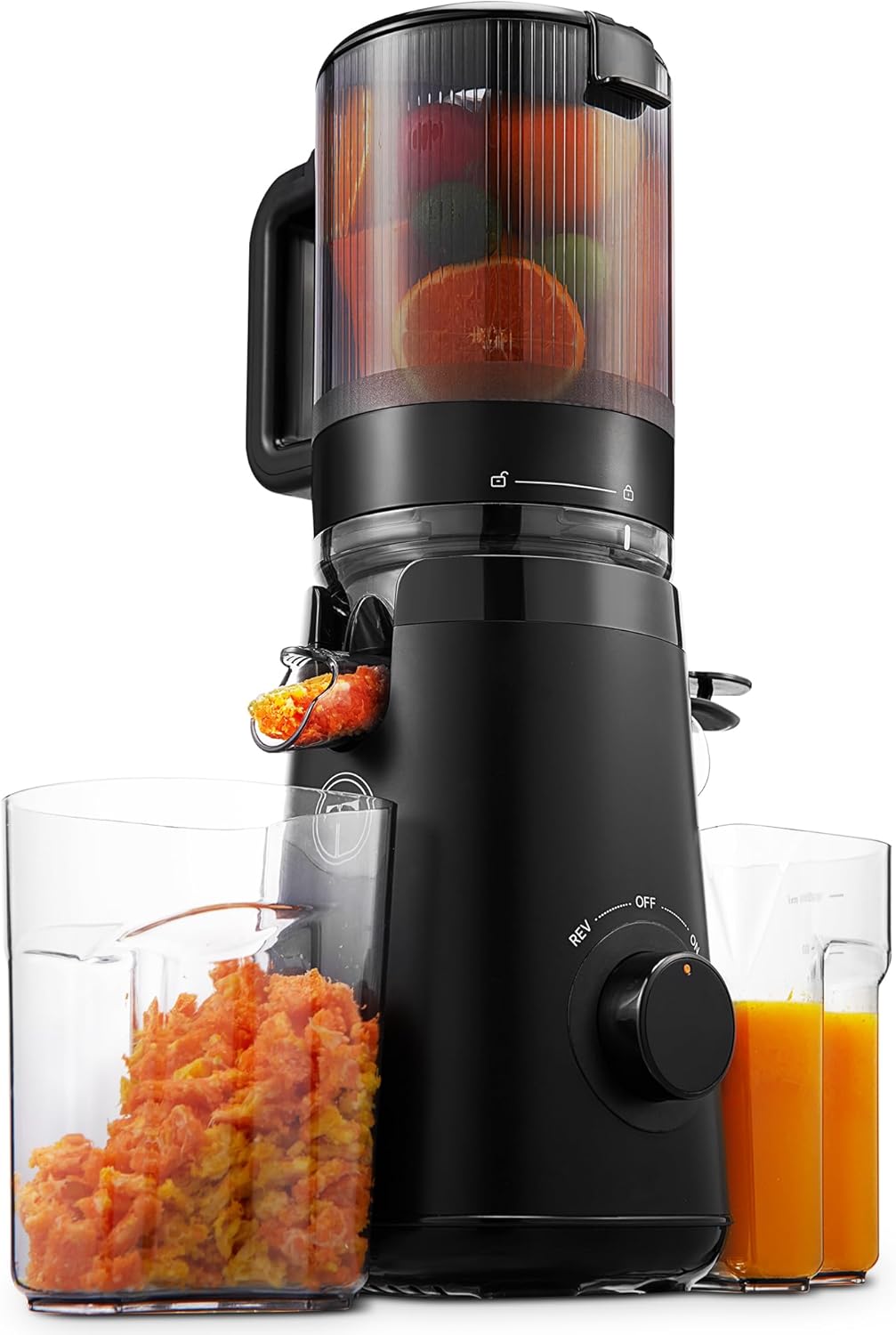
The TUUMIIST TM-580SJ is a slow-speed masticating juicer built to press whole fruits and vegetables with minimal prep. It uses a 300 watt motor and a single auger running at about 55 RPM to extract juice gently, which preserves nutrients and produces a relatively high yield from fibrous produce like carrots and beets. The extra-large feed chute accepts large pieces or whole items, cutting down prep time, and the no-mesh-filter design claims simpler operation and easier cleaning. Included accessories such as a cleaning brush, juice cup, and pulp cup make daily use straightforward. Practical buyers will appreciate the hands-free extraction for batch juicing and the BPA-free construction for food safety. Trade-offs are typical for slow juicers: extraction is slower than centrifugal models and the unit requires occasional disassembly for cleaning; the ABS construction keeps weight down but feels less premium than metal-bodied units. For those focused on nutrient-rich carrot and beet juices, it offers solid performance at an entry-level price point.
Best for: Buyers who want higher-yield, nutrient-preserving juicing of hard vegetables like carrots and beets and who value reduced prep time and straightforward maintenance.
Less Ideal for: Those who need very fast single-serve juices or a heavy-duty, metal-bodied commercial machine should consider other options.
- Slow 55 RPM extraction preserves nutrients and yields more juice from fibrous roots
- 5.8" extra-large feed chute reduces or eliminates pre-cutting for faster prep
- Comes with cleaning brush and removable juice/pulp cups for easier cleanup
- BPA-free materials for safer food contact
- Slower throughput compared with centrifugal juicers, so batch jobs take longer
- Mostly ABS plastic construction may feel less durable than metal-bodied models
Verdict: A budget-friendly slow masticating juicer that minimizes prep and maximizes juice yield for nutrient-rich carrot and beet juices.
Elite Gourmet EJX600 Juicer

| Capacity | 16 ounces |
|---|---|
| Wattage | 100 watts |
| Power Source | Corded Electric |
| Number of Speeds | 1 |
The Elite Gourmet EJX600 is a mini masticating slow juicer built for one- to two-serving cold-pressed juice routines. It runs at about 70 RPM with a single low-speed setting and a 100-watt motor, which helps reduce foam and oxidation when extracting juice from softer produce and most root vegetables. The unit includes a 16 oz Tritan juice cup, a small 3/4" feed chute that requires fruits and hard roots like carrots or beets to be cut into smaller pieces, and three removable parts plus a cleaning brush for straightforward cleanup. Safety features such as overload and overheat protection are useful for occasional heavy loads. Practical limits are its small capacity and narrow chute, so it is not intended for large batches or continuous juicing sessions, and hand-wash care is recommended for the motor base. For simple daily single-serve juicing of carrots and beets, it offers a space-saving, nutrient-preserving option at an entry-level power and complexity.
Best for: Home users who want an inexpensive, space-saving cold-press juicer for making one-serve fresh carrot and beet juices with minimal counter clutter and easy daily cleaning.
Less Ideal for: People who need to make large batches, juice frequently for multiple servings, or avoid chopping produce into small pieces before juicing should consider a larger-capacity model.
- Cold-press masticating extraction reduces foam and oxidation for smoother juice
- Compact single-serve footprint fits small kitchens and takes little counter space
- Only three removable parts plus a cleaning brush make disassembly and cleaning quick
- BPA-free and Tritan materials with stainless steel blades for safer food contact
- Built-in overload and overheat protection adds durability during heavier loads
- Small 3/4" feed chute requires more prep for hard produce like whole carrots or beets
- 16 oz capacity is limited for batch juicing or multiple servings
- Single speed and modest 100-watt motor limit throughput and continuous heavy use
Verdict: Choose the Elite Gourmet EJX600 if you want a budget-friendly, space-saving cold-press juicer for single-serve carrot and beet juices.
anybear Cold Press Juicer SJ054C
| Maximum Power | 200 watts |
|---|---|
| Wattage | 200 watts |
| Voltage | 110 volts |
| Special Features | Easy to Clean |
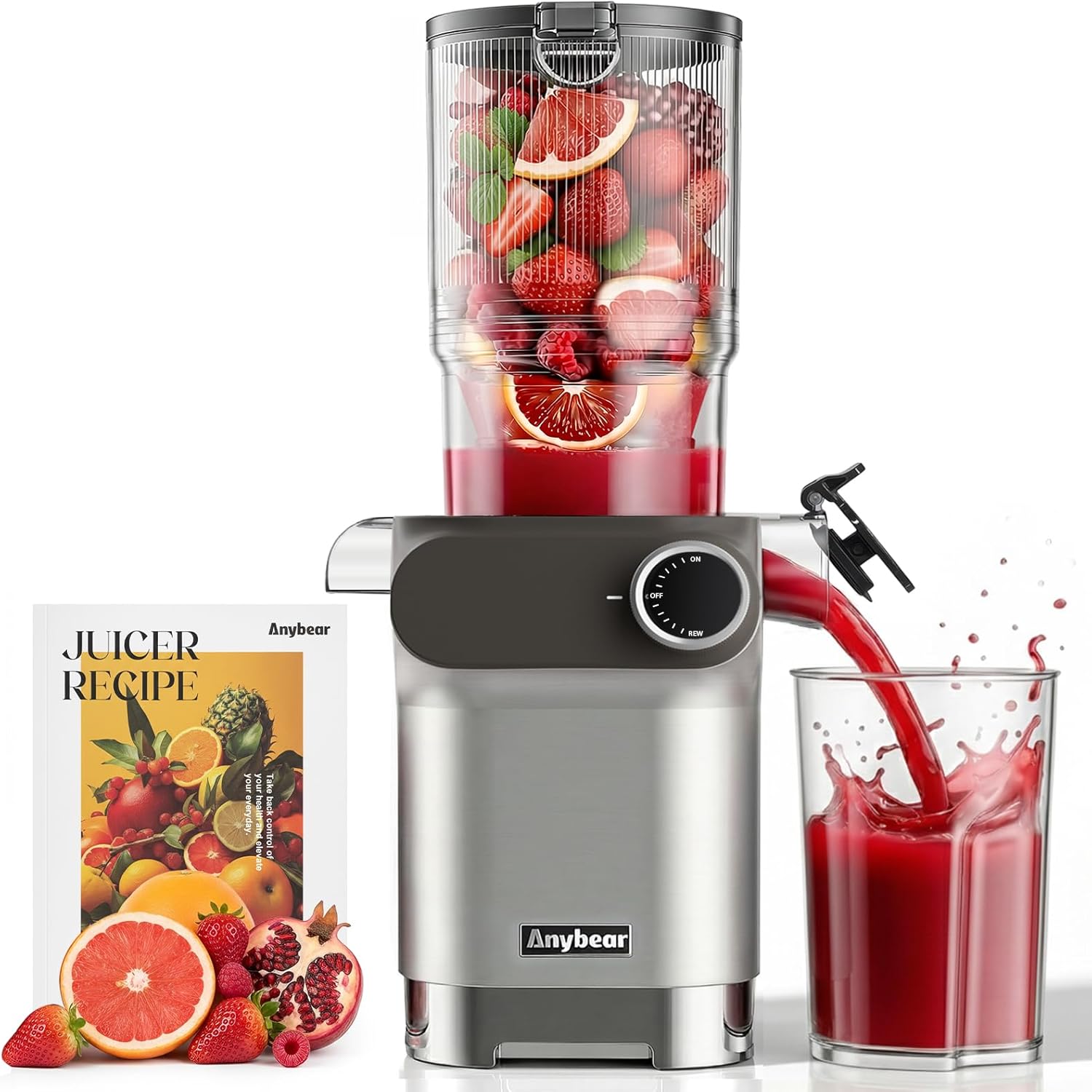
The anybear SJ054C is a single-auger masticating juicer built to extract juice at low speeds using a 200W, high-torque motor that runs around 65 RPM. It handles whole or large pieces via a 4.3-inch feed chute, so you can put in larger carrots, beets, and other produce with less prep. The slow extraction and heavy-duty auger are intended to maximize yield and reduce oxidation for fresher flavor, while Tritan and stainless components keep juice tasting clean. Disassembly is straightforward and the one-piece stainless filter plus the included brush make rinsing and light cleaning quick, though the unit is hand-wash only. Practical limits include its single-speed operation and modest footprint, which is fine for regular home juicing but may slow throughput for heavy batch work. The vendor notes an extended five-year warranty and a recipe booklet, which help with reliability and getting started. For carrot and beet juicing the combination of a wide chute and low-speed extraction makes this a solid option for consistent, nutrient-forward extraction.
Best for: Buyers who prioritize reliable, nutrient-preserving extraction for root vegetables and want a heavy-torque, low-speed juicer that reduces prep time with a larger feed chute.
Less Ideal for: People who need variable speed control, very fast batch processing, or dishwasher-safe cleanup should consider other models.
- 200W high-torque motor with low 65 RPM speed for higher yield and less oxidation
- Wide 4.3-inch feed chute accepts larger fruits and vegetables with less prep
- Tritan and stainless components preserve juice taste and are BPA free
- One-piece stainless filter and included brush simplify cleaning
- Five-year extended warranty for long-term reliability
- Single-speed operation limits control over extraction for delicate ingredients
- Hand-wash only parts may be slower to clean than dishwasher-safe alternatives
Verdict: Choose the anybear SJ054C if you want a dependable low-speed juicer that maximizes yield and freshness from carrots and beets with minimal chopping.
EanOruus 3-in-1 Cold Press Juicer E-18

| Maximum Power | 250 watts |
|---|---|
| Power Source | ac |
| Voltage | 110 volts |
| Capacity | 100 fluid ounces |
The EanOruus 3-in-1 cold press juicer is a single-auger masticating machine built for high-capacity home use and batch prep. It accepts whole fruits and vegetables through a 6.5-inch chute into a 100 oz hopper so you can feed multiple carrots, beets, apples or other produce with minimal cutting, and the slow masticating action preserves more juice and nutrients than high-speed blenders. The included interchangeable strainers let you switch between juice, nut milk and sorbet, and an AC brushless motor with auto-reverse and overheat protection handles fibrous roots like carrots and beets without frequent clogging. Detachable parts and a removable pulp outlet make cleanup easier, though the manual specifies hand washing. Practical limits are that the unit is fairly large and relatively heavy, and plastic components mean buyers who prefer metal parts might look elsewhere. For someone focused on steady, nutrient-focused cold pressing and batch extraction, this juicer delivers strong yields and convenient throughput for root vegetables.
Best for: Buyers who prioritize high-yield, nutrient-preserving cold press extraction for carrots, beets and other roots and who want a machine that handles batch prep with minimal chopping and steady performance.
Less Ideal for: People seeking a compact countertop appliance or an all-metal, restaurant-grade build should consider smaller or commercial models instead.
- Very wide 6.5-inch chute reduces prep and fits whole apples and large produce
- Large 100 oz hopper lets you process batches without frequent refills
- Auto-reverse and overheat protection reduce jams and protect the motor during fibrous juicing
- Interchangeable strainers allow juice, nut milk and sorbet from the same unit
- High-torque AC brushless motor maintains slow, consistent extraction for better nutrient retention
- Major structural parts are plastic rather than metal
- Requires hand-washing for removable parts
Verdict: Choose this juicer if you want a high-capacity, slow-extraction machine that handles carrots and beets with minimal prep and reliable, nutrient-focused yields.
Ninja NeverClog Cold Press Juicer JC151

| Maximum Power | 150 watts |
|---|---|
| Number of Speeds | 2 |
| Capacity | 24 fluid ounces |
| Power Source | Corded Electric |
The Ninja NeverClog JC151 is a slow masticating juicer built to handle fibrous produce like carrots and beets without frequent clogs. Its 150-watt high-torque motor turns a slow auger to press juice out of dense fruits and vegetables, and two interchangeable pulp filters let you choose less pulp for smoother juice or more pulp for thicker, fiber-forward blends. The package includes a 24 oz juice jug and a 36 oz pulp container so you can make larger batches without pausing. Controls are simple: a start/stop and a reverse program to help clear jams and improve extraction. Cleanup is made easier by dishwasher-safe juice-contact parts and a compact footprint that fits under most cabinets. Practical limits: it is not as fast as centrifugal machines, so juicing large volumes takes time, and the motor is 150W so very heavy commercial loads are outside its design. For home users focused on nutrient-preserving cold-pressed juice from hard root vegetables, it balances good yield and straightforward maintenance.
Best for: Home cooks who prioritize reliable, clog-resistant cold-pressed juice from hard vegetables and want a user-friendly machine that is easy to maintain.
Less Ideal for: People who need very fast throughput for large daily volumes or commercial use should consider higher-capacity, commercial-grade machines instead.
- High-torque 150W auger is effective on fibrous produce like carrots and beets
- Two interchangeable pulp filters let you control texture from smooth to fiber-rich
- Larger 24 oz juice jug and 36 oz pulp container reduce interruption during batch juicing
- Dishwasher-safe juice-contact parts simplify cleanup and maintenance
- Slower throughput compared with centrifugal juicers, so large batches take more time
- 150W motor is intended for home use and not heavy commercial workloads
Verdict: Choose the Ninja JC151 if you want a dependable, clog-resistant cold press juicer that extracts juice from carrots and beets with minimal fuss and easy cleanup.
Choosing the Right Cold Press Juicer for Carrots and Beets: Key Factors to Consider
Extraction Yield and Pulp Dryness
How much juice a cold press juicer extracts from carrots and beets determines how cost-effective and efficient it is over time. A higher extraction yield means less wasted produce and fewer batches to achieve the same volume of juice. For dense, fibrous roots this depends on the auger design, the press speed, and the screen configuration.
Pulp dryness is the practical indicator of yield. Drier pulp shows that the machine is squeezing out more liquid rather than leaving juice trapped in fibers. When you compare options, look for descriptions or tests that report pulp moisture and per-pound juice output so you can estimate running costs and prep time for regular use.
Motor Torque and Continuous Use
Carrots and beets are hard and can stall under weak motors. Torque and gearing are more important than raw RPM for cold press juicers aimed at root vegetables. A juicer with higher torque and thermal protection will handle tougher loads and repeated use without overheating.
Consider whether the motor is rated for continuous operation or only intermittent duty cycles. If you plan to make large batches or juice daily, favor models designed for sustained workloads. Thermal cutouts and overload protection help prevent motor damage when processing fibrous or high-sugar vegetables.
Feed Chute Size and Prep Time
A larger feed chute reduces chopping and prep time but may affect the juicer's ability to thoroughly crush and compress each piece. For carrots and beets, a balance between chute size and effective compression is ideal: wide enough to fit larger roots with minimal trimming but narrow enough to ensure close contact with the auger for maximum extraction.
Also think about whether you want to pre-cut produce into uniform pieces. Faster prep lowers the barrier to daily juicing, while very small chutes increase hands-on time but can improve final yield on fibrous items.
Ease of Cleaning and Maintenance
Cleaning is a major factor in whether you will use a juicer regularly. Cold press juicers often have multiple parts that trap fiber and juice residues. Designs with fewer crevices, dishwasher-safe components, or brush tools make cleanup faster and reduce bacterial buildup.
Routine maintenance also includes checking seals, replacing worn screens, and occasionally unclogging pulp channels. Choose a design that allows simple disassembly without special tools, and consider how much hands-on scrubbing the parts will require after juicing beets, which can stain.
Pulp Ejection and Management
Efficient pulp ejection keeps the machine running smoothly when processing fibrous root vegetables. Some juicers produce compact, drier pulp that is easy to discard or compost, while others produce wetter pulp that may clog or require frequent stops to empty.
Consider how the juicer handles stringy beet greens or long carrot shreds. A steady, self-ejecting system reduces interruptions during larger batches. Also evaluate the size and accessibility of the pulp bin for quick emptying between cycles.
Durability, Materials, and Warranty
Because juicing carrots and beets puts more mechanical stress on a machine, durable materials and solid construction matter. Metal augers, reinforced housings, and robust seals typically last longer than thin plastic components under heavy use.
Warranty length and the availability of replacement parts are practical indicators of expected longevity. A clear warranty that covers motor burnout and mechanical failure gives confidence when using the juicer for dense produce regularly.
Why Cold Press Works Better for Root Vegetables
Cold press juicers extract juice through slow crushing and pressing, which reduces heat and oxidation. For root vegetables like carrots and beets, this method helps preserve flavor clarity and more heat-sensitive nutrients compared with high-speed centrifugal juicers.
Slow extraction also deals better with fibrous cell structures, allowing more thorough breakdown of fibers and yielding clearer juice with less foam. That means more juice per pound of produce and a fresher taste profile.
- Lower rotational speed minimizes heat buildup and oxidation
- More efficient fiber breakdown yields clearer, fuller-tasting juice
- Often produces drier pulp indicating higher extraction
Preparing Carrots and Beets for Best Results
Trim and wash root vegetables thoroughly to remove dirt and any grit that can damage the auger. Peel beets if you prefer milder flavor and reduced earthy notes, though unpeeled beets are acceptable when washed well.
Cut produce into pieces that match the juicer's feed chute. For narrow chutes, slice roots into uniform sticks; for wider chutes you can leave larger chunks. Removing large, woody tops and excessively leafy greens reduces clog risk and protects motor load.
- Wash and scrub rather than soaking to preserve flavor
- Slice to fit the feed chute while keeping pieces as large as practical
- Remove very thick stems or woody sections before juicing
Techniques to Improve Yield and Reduce Clogging
Alternate soft and hard items in the feed tube to prevent compacted blocks of pulp. For example, feed a few softer items or beet greens between dense carrot chunks to keep material moving.
Rotate the juicer off occasionally to clear pulp pockets in long sessions, and use a tamper if provided rather than pushing produce too forcefully. Frequent, gentle feeds reduce stress on the motor and the chance of jams.
- Alternate produce textures during feeding
- Use the provided tamper; do not jam with utensils
- Empty pulp bin before it gets overly full to maintain throughput
Stain and Odor Management for Beets
Beet juice stains plastic and cloth quickly. To limit permanent staining, rinse parts immediately after use and soak stained plastic components in a baking soda solution or diluted vinegar if necessary. Avoid prolonged contact between concentrated beet juice and porous materials.
To minimize beet odor lingering, run a short cycle with water and a slice of lemon or a few ice cubes to flush the system, then rinse and air-dry parts thoroughly.
- Rinse immediately after juicing beets to reduce staining
- Use mild acid or baking soda for stain removal
- Air-dry components to avoid trapped odors
Batch Juicing and Throughput Planning
If you plan to juice for several people or prepare multiple servings at once, consider throughput capacity. Some cold press juicers are optimized for single-cup production and may take considerably longer for large batches. Others are designed for higher throughput with larger feed chutes and more robust motors.
Plan your session to include cleaning breaks to avoid overheating. For frequent batch juicing, choose a model intended for continuous or repeated use and factor in pulp-emptying intervals to keep the process steady.
- Estimate how many pounds of produce you will process per session
- Pick a juicer whose duty cycle matches your intended batch size
- Schedule pulp-emptying breaks into longer juicing runs
How We Chose the Best Cold Press Juicer for Carrots and Beets
We focused on attributes that directly affect how well a cold press juicer handles dense root vegetables such as carrots and beets and delivers an efficient, consistent juicing experience. Key evaluation criteria included extraction yield and pulp dryness, since maximizing juice from fibrous roots is a primary user goal. We also assessed motor torque and gearing to ensure machines can process hard produce without bogging down or stalling. Ease of cleaning and the design of removable parts was another major filter because complex assemblies can discourage regular use. Build quality and warranty coverage were considered to gauge long-term reliability for frequent use with tough vegetables. Noise and vibration were weighed for home-kitchen comfort, and throughput speed was noted for users who prepare larger batches. We excluded machines designed only for citrus or that rely on high-speed centrifugal action, because those architectures do not provide the slow, low-heat extraction needed for nutrient retention and ideal beet and carrot results. We also filtered out juicers with poorly documented torque specs or consistently reported clogging issues. The remaining items were compared across the concrete criteria listed above to produce a practical, buyer-focused shortlist.
Our full evaluation process is outlined in our review methodology.
FAQ
Can I juice raw beets and carrots together?
Yes. Juicing carrots and beets together is common and complements flavors. Be mindful that beets can stain and have higher sugar content, so rinse parts promptly and balance tastes to suit your preference.
Will cold press juicers handle beet greens and carrot tops?
Most cold press juicers can process leafy greens, but fibrous stems and large bundles may tangle. Feed greens in small amounts and alternate with firmer pieces to prevent clumping and maintain steady throughput.
How often should I clean the juicer when juicing beets and carrots?
Rinse and disassemble the juicer immediately after each session to avoid stains and residues. For daily users, a quick rinse plus a regular deep clean of screens and seals once a week keeps performance consistent.
Do I need to peel beets before juicing?
Peeling is optional. Unpeeled beets are fine if washed thoroughly, but peeling reduces earthy flavor and the chance of grit from the skin. Personal taste and produce condition usually determine the choice.
How can I tell if my juicer is producing good yield?
Dry, compact pulp and a high volume of juice per pound of vegetables indicate good extraction. If pulp is soggy and you get little liquid, consider a machine with higher torque or different screen/auger geometry.
Final Verdict
When choosing a cold press juicer for carrots and beets, prioritize extraction yield, motor torque, and ease of cleaning. Those three factors have the biggest impact on daily convenience, long-term operating cost, and the quality of the juice you get from fibrous root vegetables. Consider feed-chute size and pulp management based on whether you will juice small daily servings or larger batches. Balance durability and warranty against your expected use. Buyers who juice often will benefit from higher-torque, serviceable machines with straightforward disassembly, while occasional users can prioritize compact design and easier storage. Focus on the tradeoffs described above to pick the model that matches your routine and juice goals with confidence.