
Note: This article contains affiliate links. If you click on these links and make a purchase, we may earn a small commission at no extra cost to you. This helps support our research and content. Read our full affiliate disclosure here.
Picking the right cold press juicer for fruits and vegetables matters if you want vibrant, nutrient-rich juice without wasting produce or time. The wrong machine can leave pulp-dense cups, require endless prep, or take ages to clean. This guide focuses on the top cold press juicers suited for extracting juice from both fruits and vegetables, with shortlisted options chosen for consistent yield, gentle extraction, and realistic kitchen use. Below you will find our top picks and a clear breakdown of the attributes we evaluated, so you can match a juicer to how you plan to use it. Read on for concise buying guidance and practical considerations before the product list.
Top Picks at a Glance
| Best Overall The best all-around choice for most situations | YPONE Cold Press Juicer SJ-057 |  |
| Best Quality Built to a higher standard if you want something more solid | Hurom H70 Masticating Juicer |  |
| Best Value The sweet spot between price and what you get | AMZCHEF Cold Press Juicer SJ-036C PRO |  |
| Best Budget The cheapest option that still gets the job done reliably | NEWBULIG Cold Press Juicer |  |
| Top Rated A top-rated pick with lots of positive feedback | anybear Cold Press Juicer SJ054C |  |
| Most Popular A crowd favorite that many people choose with confidence | AMZCHEF Cold Press Juicer 1902B |  |
| Best Seller A high-volume bestseller chosen again and again | EanOruus 3-in-1 Cold Press Juicer E-18 |  |
YPONE Cold Press Juicer SJ-057

| Maximum Power | 400 watts |
|---|---|
| Power Source | Corded Electric |
| Voltage | 120 volts of alternating current |
| Number of Speeds | 1 |
| Capacity | 500 ml, 700 ml |
The YPONE SJ-057 is a 2-in-1 masticating cold press juicer built to handle whole fruits and vegetables and to make nut or soy milk as well. It uses a 55 RPM single-auger mechanism and a 400 W motor to slowly squeeze produce, which helps reduce heat and oxidation and delivers relatively foam-free juice. The 5.8" large feed chute accepts many items without pre-cutting, speeding prep for morning routines, and dual 0.3 mm mesh strainers aim to boost yield while reducing clogging. Cleanup is simplified by a small number of main parts, a included brush, and parts that are labeled dishwasher safe, though core components are plastic. The unit includes safety features such as a lid lock and overheat protection, and it runs quietly compared with fast centrifugal models. Limitations include predominantly PVC and plastic components rather than metal for the auger or housing, and only one speed setting which reduces manual control for delicate ingredients. For someone who prioritizes nutrient retention and easy feeding of whole produce, this juicer performs well; users seeking metal construction or multi-speed precision may want a different model.
Best for: Buyers who want a practical, nutrient-focused cold press juicer that handles whole produce and simplifies morning juice prep without complex settings.
Less Ideal for: Do not choose this if you need metal construction, multiple speed options, or advanced customization for varied ingredients.
- Large 5.8" feed chute accepts many whole fruits and vegetables to reduce prep time
- Low 55 RPM masticating action preserves nutrients and minimizes foam and oxidation
- Dual fine mesh strainers increase juice yield and reduce clogging
- Includes cleaning brush and simple disassembly for relatively easy cleaning
- Safety lock and overheat protection improve safe everyday use
- Major exterior and blade components are plastic/PVC rather than metal
- Single speed limits control for different produce textures
Verdict: Choose this juicer if you want an easy-to-use cold press machine that maximizes nutrient retention and accepts whole fruits to speed daily juicing.
Hurom H70 Masticating Juicer

| Wattage | 150 watts |
|---|---|
| Power Source | Corded Electric |
| Material | Plastic |
| Special Features | Easy to Clean |
The Hurom H70 is a slow masticating cold-press juicer built to squeeze high yield from fruits and vegetables while keeping cleanup quick. It uses a strainer-free chamber with a two-part auger system that separates pulp without a mesh filter, which the brand says reduces clogging and rinses clean in under a minute. The wider self-feeding hopper accepts larger produce and lets you feed ingredients while juicing, saving prep time for daily use. At 150 watts and low RPM operation it runs quietly and is aimed at preserving flavor and nutrients for juice that can be stored for a couple of days. Practical strengths are its compact footprint for countertop use, simplified internal design for straightforward assembly, and a front-facing gauge to monitor juice level. Be aware that many exterior parts are plastic and care requires hand washing rather than dishwasher-safe cleaning, and heavier-duty users who need commercial throughput might find the H70 better suited to home or family use rather than continuous heavy batches.
Best for: Buyers who prioritize high juice yield, nutrient-preserving cold-press performance, and easy daily use in a home kitchen, especially those who value minimal prep and quick cleanup.
Less Ideal for: People who need a commercial-grade or high-volume juicer for continuous daily production should consider heavier-duty models instead.
- Strainer-free easy-clean chamber reduces scrubbing and speeds post-use cleanup
- Self-feeding wide-mouth hopper lets you add whole or larger produce with less chopping
- Designed for high juice yield with slow squeeze masticating action
- Quiet low-RPM operation preserves flavor and uses less energy than high-speed juicers
- Core components and blade are plastic and require hand washing rather than dishwasher cleaning
- Not intended for continuous commercial-level throughput or very large daily batches
Verdict: Choose the Hurom H70 when you want a quiet, high-yield cold-press juicer that minimizes prep and cleanup for daily fruit and vegetable juicing.
AMZCHEF Cold Press Juicer SJ-036C PRO

| Wattage | 250 watts |
|---|---|
| Power Source | ac |
| Voltage | 120 volts |
| Number of Speeds | 2 |
| Special Features | 3-in-1 Easy Clean Juicer; 60RPM Slow Extraction; Quick-Release Design |
The AMZCHEF SJ-036C PRO is a single-auger cold press juicer designed to make fresh fruit and vegetable juices with minimal prep and low oxidation. Its 6.3-inch wide chute and self-feeding hopper let you put in whole apples, carrots, and other long produce so you spend less time cutting and can run the machine hands-free for short batches. The 250W motor and 60 RPM extraction with a seven-stage auger prioritizes slow pressing to reduce heat and foam, while a triple-filtration system and included versatile filters mean you can switch between clear juice, nut milk, and sorbet textures. Cleaning is simplified by quick-release parts and the removable juicing body, but all detachable pieces must be hand washed as they are not dishwasher-safe. The unit is practical for daily juicing, family meal prep, and making small batches of nut milk, though heavier use will require regular manual cleaning and some counter space. For buyers who value nutrient-preserving extraction and less prep, this juicer delivers a feature-rich, easy-to-use experience at this level of performance.
Best for: Buyers who prioritize efficient prep and nutrient-preserving slow extraction for daily fruit and vegetable juicing and who want a versatile machine that handles juice, nut milk, and sorbet.
Less Ideal for: Those who prefer dishwasher-cleanable parts or who need a heavy-duty commercial unit for continuous high-volume juicing should consider other options.
- Extra-wide 6.3-inch feed chute reduces chopping and saves prep time
- Slow 60 RPM extraction with a 250W motor to limit heat and oxidation
- 3-in-1 removable filtration lets you make juice, nut milk, and sorbet with one machine
- Self-feeding hopper enables hands-free operation for short runs
- Quick-release design and removable juicing body simplify disassembly for cleaning
- Detachable parts are not dishwasher safe and require hand washing
- Plastic blade and several plastic components may feel less durable than all-metal alternatives
Verdict: If you want a practical, low-oxidation juicer that saves prep time with a wide chute and handles juice, nut milk, and sorbet, this AMZCHEF model is a strong, versatile choice.
NEWBULIG Cold Press Juicer
| Wattage | 200 watts |
|---|---|
| Voltage | 120 volts |
| Feed chute | 4.25 inches |
| Materials | ABS, PC, Silicone, Stainless Steel |
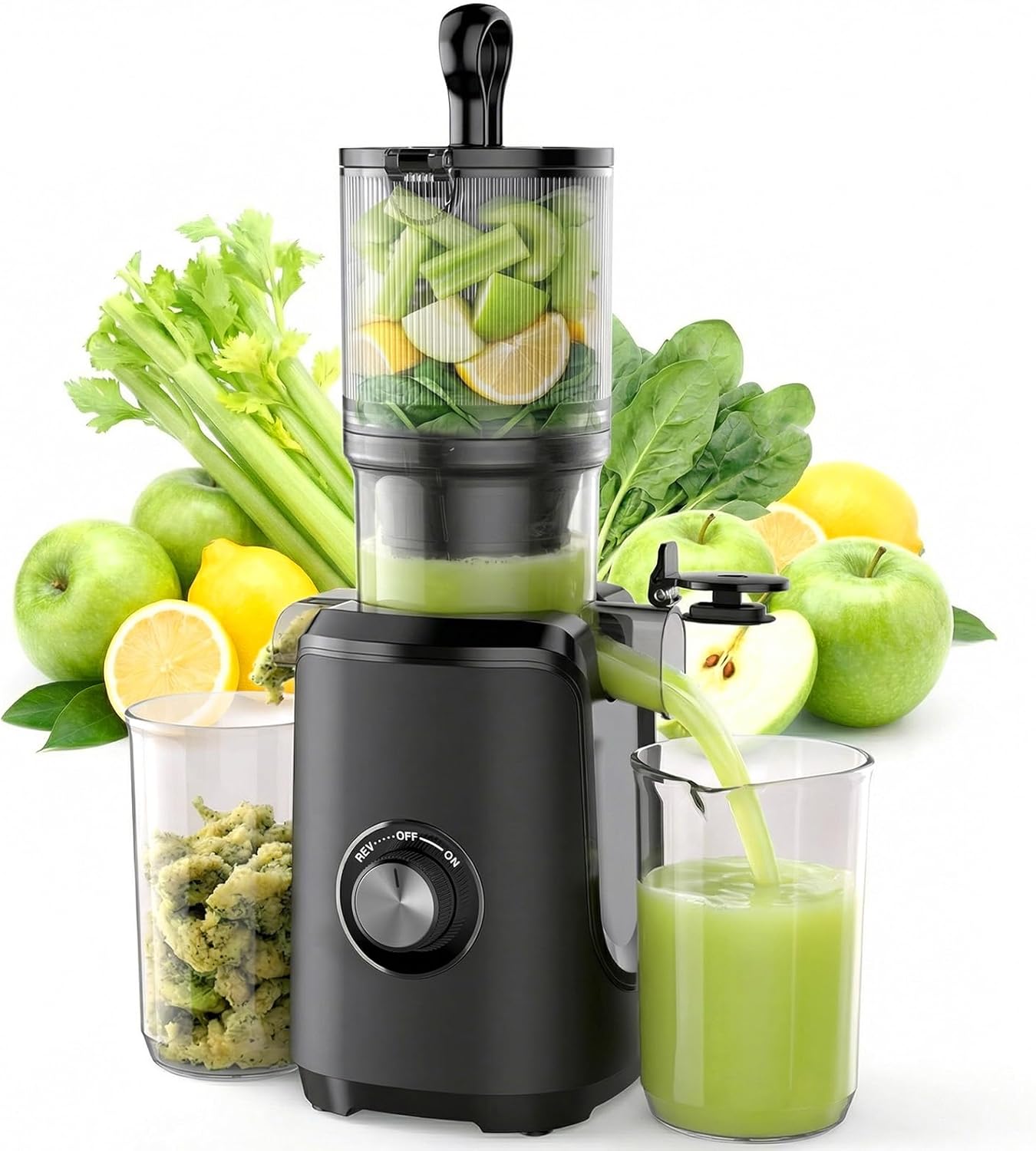
The NEWBULIG Cold Press Juicer is a single-auger masticating juicer aimed at preserving nutrients by juicing at low speed. It accepts larger produce through a 4.25-inch feed chute so you can often skip extensive chopping, and the quiet 200-watt motor reduces noise during operation. The auger-driven extraction minimizes heat and oxidation for richer flavor and longer-lasting juice, and a reverse function clears clogs quickly without full disassembly. Assembly and cleanup are straightforward: parts detach easily and the included cleaning brush helps remove pulp, but the manufacturer recommends hand washing. Safety features include a blade-free design and an automatic safety lock that stops the unit if opened. Practical limitations are that hand washing is required and the unit is a compact countertop appliance without dishwasher-safe assurances, so frequent heavy-duty juicing may need more time for cleaning. For buyers on a budget this model balances performance and sensible features for daily fruit and vegetable juicing.
Best for: Buyers looking for an affordable cold-press juicer that delivers nutrient-rich juice with minimal prep and quiet operation for everyday home use.
Less Ideal for: Users who need a commercial-grade juicer for very high daily volumes or who require fully dishwasher-safe components.
- 4.25-inch feed chute reduces prep by fitting whole or large produce
- Masticating slow-speed extraction preserves nutrients and reduces oxidation
- Reverse function quickly clears clogs without disassembly
- Quiet 200-watt motor suitable for home use
- Safety lock and blade-free design improve user safety
- Parts require hand washing rather than full dishwasher cleaning
- Not designed for industrial or continuous heavy commercial use
Verdict: A budget-friendly slow masticating juicer that makes nutrient-preserving juice with a wide feed chute and useful clog-clearing reverse function.
anybear Cold Press Juicer SJ054C
| Maximum Power | 200 watts |
|---|---|
| Wattage | 200 watts |
| Voltage | 110 volts |
| Blade Material | Stainless Steel |
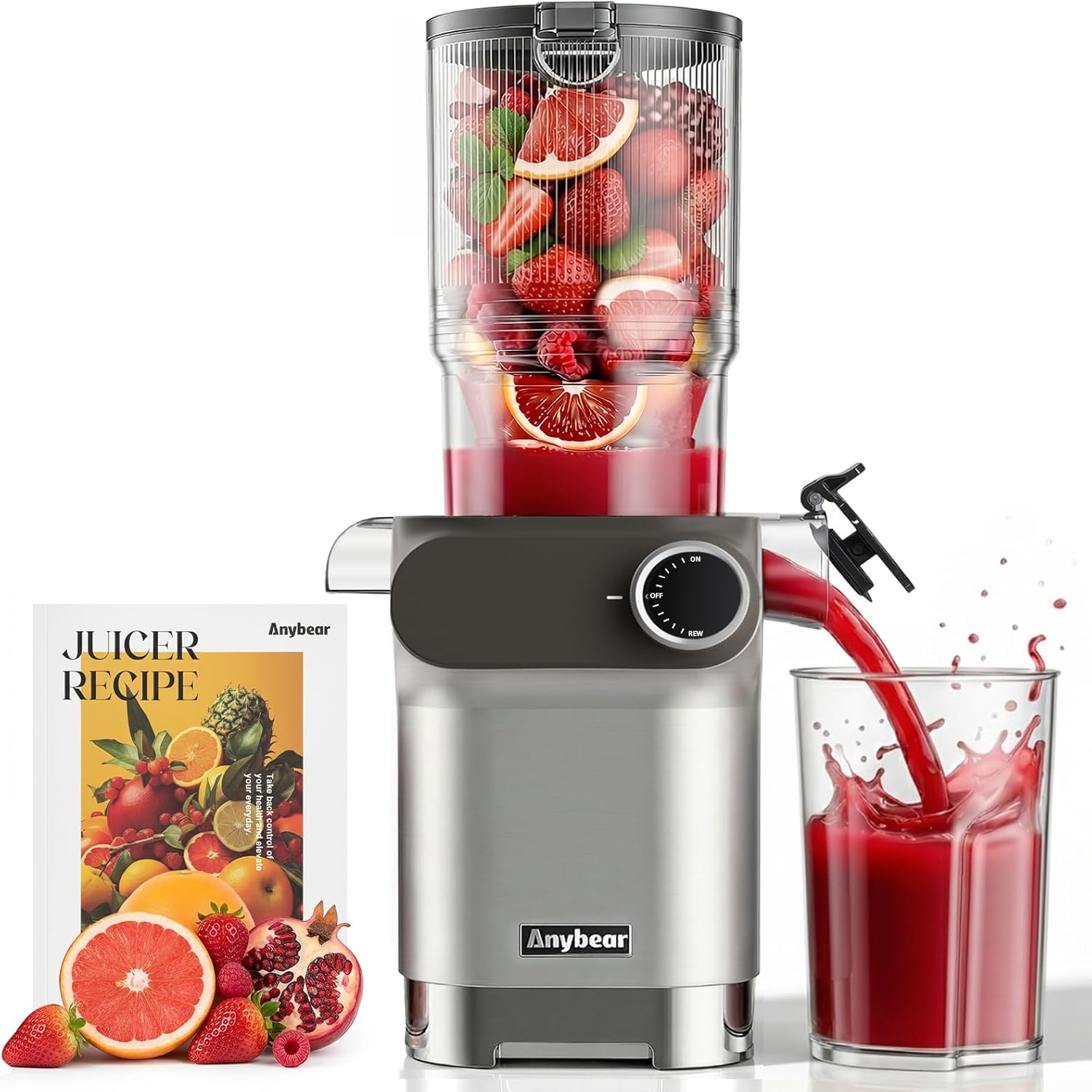
The anybear Cold Press Juicer SJ054C is a single-auger masticating juicer built to extract juice from whole fruits and vegetables at low speed. It uses a 200W, high-torque motor that turns at about 65 RPM to crush and press produce slowly, which reduces oxidation and preserves flavor while aiming for high yield. The 4.3-inch feed chute accepts larger items so you can add many fruits or vegetables with minimal chopping, and the Tritan feed components and stainless-steel filter are designed for food-safe contact. Cleaning is simplified by a one-piece stainless filter and included brush, with the manufacturer recommending hand wash only. The unit runs quietly compared with centrifugal models and is positioned for regular home juicing; its slow operation means juicing takes longer but produces clearer juice and better nutrient retention. The product comes with recipe guidance and an extended five-year warranty, which helps with long-term reliability expectations, though hand washing and disassembly are required after each use and the 200W motor limits throughput for very large batches.
Best for: Buyers who prioritize reliable, flavor-focused home juicing and want a slow-extraction machine that preserves nutrients and comes with extended support.
Less Ideal for: People who need very fast, high-volume or commercial juicing where speed and continuous throughput are the priority.
- High-torque 200W motor with low 65 RPM speed for reduced oxidation and higher juice clarity
- 4.3-inch wide feed chute that fits larger fruits and reduces prep time
- Tritan and stainless-steel food-contact parts for safer taste and durability
- One-piece stainless filter and included brush make cleaning simpler than multi-piece designs
- Extended five-year warranty and responsive customer service promise longer-term support
- Hand wash only and requires disassembly after each use, which takes effort
- Slower extraction means longer time per batch compared with centrifugal juicers
- 200W motor limits throughput for very large or commercial-scale juicing
Verdict: Choose this slow masticating juicer if you want reliable, low-speed extraction that maximizes juice flavor and comes backed by multi-year support.
AMZCHEF Cold Press Juicer 1902B

| Wattage | 300 watts |
|---|---|
| Maximum Power | 350 watts |
| Power Source | Electric |
| Voltage | 120 volts |
| Capacity | 5 pounds |
The AMZCHEF 1902B is a single-auger cold press juicer designed to extract juice from whole fruits and vegetables with minimal prep. It uses a slow masticating action and an enlarged spiral auger to increase juice yield and separate dry pulp, while a 5.4-inch feed chute accepts whole apples, carrots, and similar produce to reduce chopping. Practical features include an upgraded stainless steel blade, auto-reverse to clear clogs, overheat protection, and a quiet motor that makes early-morning juicing less disruptive. Detachable parts and a simple one-button operation make assembly and rinsing straightforward, though the manufacturer recommends hand washing. The unit handles soft puree for baby food as well as harder produce, and the included shaker cup helps collect servings. Expect solid extraction performance for daily household use, with the trade-offs being manual cleaning and some care around tougher fibrous items to avoid pushing or stalling the auger despite the auto-reverse function.
Best for: Buyers who value proven performance and social proof and want a dependable cold-press juicer for daily fruit and vegetable juices with minimal prep and solid extraction.
Less Ideal for: People seeking fully dishwasher-safe parts or a completely hands-off cleaning routine should consider alternatives with dishwasher-safe components or simpler maintenance.
- 5.4-inch wide feed chute accepts whole fruits and reduces prep time
- Upgraded spiral auger and stainless steel blade for higher juice yield and drier pulp
- Auto-reverse and overheat protection reduce clogging and protect the motor
- Quiet heavy-duty motor suitable for early-morning use
- Detachable parts and one-button operation simplify assembly and rinsing
- Manufacturer recommends hand washing which means more manual cleaning effort
- May require occasional reversing or careful feeding for very fibrous produce
Verdict: Choose the AMZCHEF 1902B when you want a quiet, high-yield cold press juicer that handles whole produce and delivers consistently dry pulp for daily fresh juices.
EanOruus 3-in-1 Cold Press Juicer E-18

| Wattage | 250 watts |
|---|---|
| Power Source | ac |
| Voltage | 110 volts |
| Capacity | 100 fluid ounces |
| Special Features | Auto-Reversing, Easy to Clean, Overheat Protection, Whole Fruit Processing |
The EanOruus E-18 is a single-auger cold press juicer designed for home kitchens that need large-capacity, low-speed extraction. It accepts whole fruits and vegetables through a wide 6.5-inch chute into a 100 oz hopper so you can batch multiple servings with less prep, and two interchangeable strainers let you switch between juice, nut milk and sorbet. The brushless AC motor is built for steady torque and includes overheat protection and auto-reverse to clear jams, which helps with fibrous produce. Detachable parts and a removable pulp outlet make rinsing and partial disassembly straightforward, though the unit is hand-wash only. At 250 watts it is quieter and gentler than centrifugal models, preserving more nutrients and producing drier pulp, but the slower masticating process takes longer per batch and the plastic auger and components are not as long-wearing as metal alternatives. For cautious buyers the EanOruus offers sensible safety features and user-friendly cleaning, with the caveat that it prioritizes yield and quiet operation over speed.
Best for: Buyers who want a quiet, high-yield cold press juicer for frequent home use and prefer simple, safety-focused features and easy batch processing over the fastest extraction times.
Less Ideal for: People who need very fast single-serving juicing or want heavy-duty metal components for commercial use should consider other options.
- Extra-wide 6.5-inch chute and 100 oz hopper reduce prep and let you batch multiple servings
- Brushless AC motor with overheat protection and auto-reverse for reliable, quiet operation
- Two interchangeable strainers let you make juice, nut milk and fruit sorbet
- Detachable pulp outlet and removable parts simplify cleaning and maintenance
- Slower extraction compared with centrifugal juicers, so batches take more time
- Major components use plastic materials which may be less durable than metal parts
Verdict: Choose this juicer if you want a quiet, high-capacity cold press that makes juice, nut milk and sorbet with safety features for dependable everyday use.
Choosing the Right Cold Press Juicer for Fruits and Vegetables: Key Factors to Consider
Juice Yield And Pulp Dryness
Higher juice yield and drier pulp mean you are extracting more liquid and nutrients from the same amount of produce, which reduces waste and cost per glass. For cold press juicers, this is largely determined by the auger design, motor torque, and gear reduction. Dense, fibrous vegetables such as carrots and beets require sustained torque to squeeze out the liquid; leafy greens benefit from augers and screens that handle light, fibrous material without clumping.
When comparing options, expect some tradeoff between speed and extraction. Machines tuned for maximum yield tend to run slower and take longer per batch, while faster units sacrifice a bit of extraction for throughput. Think about how much produce you plan to process and whether top yield or faster prep matters more to you.
Motor Torque And Speed Control
Torque is critical when juicing firmer vegetables or when you want to include a mix of roots, greens, and soft fruits in the same run. A higher-torque motor is less likely to stall or overheat under load, and it helps maintain consistent extraction through tougher fibers. Look for juicers that specify low RPM operation combined with adequate torque rather than high-speed motors.
Speed control and built-in reverse functions are practical features. Variable or low fixed speeds help limit heat build-up and oxidation, improving nutrient retention. A reverse mode is useful to clear jams without disassembly, which can be a time-saver during heavier produce loads.
Feed Chute Size And Preparation Time
Feed-chute diameter directly affects how much prep you must do. Larger chutes let you insert larger pieces or whole small fruits, reducing chopping time. For mixed fruit-and-vegetable juicing, a wider chute speeds prep and encourages regular use. However, larger chutes sometimes allow more air into the feed and may slightly increase oxidation risk if the machine design does not seal tightly.
Consider the tradeoff between convenience and extraction. If you frequently juice whole apples or long carrots, a larger chute reduces prep. If you mostly juice greens and beets, a smaller, better-sealed inlet that optimizes extraction may be preferable.
Ease Of Cleaning And Maintenance
Cleaning time is a major factor in whether a juicer gets used often. Cold press juicers often have multiple parts: auger, screens, pulp container, and juice jug. Designs that allow tool-free disassembly, have fewer small crevices, and include easy-rinse components will save significant time.
Some machines include brushes or removable screens sized for dishwasher use. Consider how often you plan to juice and whether quick cleanup is essential. Regular maintenance such as gasket checks and occasional full disassembly for a deep clean should also be straightforward to encourage long-term care.
Noise Level And Kitchen Use
Low-speed cold press juicers are generally quieter than high-speed centrifugal units, but noise matters for shared living spaces or early-morning routines. Look for documented noise levels or models noted for quiet operation when you expect to juice when others are sleeping or studying.
Think about where you will store the juicer. If you need to bring it out each time, quieter operation is less likely to disturb others during setup and cleanup. Noise also correlates with motor quality; very loud units may signal underpowered motors straining under load.
Build Quality And Longevity
Materials and construction affect both performance and lifespan. Augers made from durable plastics, glasslike food-grade materials, or metal with reinforced cores resist wear and retain shape under torque. Tight tolerances between the auger and screen improve extraction and reduce pulp wetness.
Warranty length and serviceability are part of long-term cost of ownership. A well-built machine with user-replaceable parts lowers the chance of early replacement. Consider the expected frequency of use and choose a juicer whose construction matches that demand.
Best Produce To Juice With A Cold Press Juicer
Cold press juicers work well across a broad range of fruits and vegetables but some produce yields better results than others. Soft fruits like oranges and pears juice easily, while firmer vegetables such as carrots and beets require more torque but give dense, flavorful juice. Leafy greens and herbs benefit from slow, low-oxygen extraction to maximize green color and nutrient retention.
For mixed batches, consider processing similar-texture items together for the cleanest juice and easiest cleanup. Start with softer fruits and finish with greens to help move fibrous material through the auger, or alternate small amounts of harder produce with wet fruits to lubricate the feed.
- High-yield: apples, cucumbers, celery
- High-torque required: carrots, beets, ginger root
- Best for greens: kale, spinach, wheatgrass
- Aromatic additions: lemon, mint, parsley
Prep Tips To Improve Yield And Speed
Proper prep reduces strain on the motor and speeds processing. Trim ends, remove large pits or thick peels when necessary, and cut produce into pieces that fit the chute without forcing. For tougher roots, smaller pieces help the auger bite consistently without stalling.
Cold press juicers are less forgiving of large, dense chunks than centrifugal models, so prioritize uniform pieces. Pre-soaking very dry produce is not necessary, but rinsing leafy greens and removing dense stems can reduce clogging. Use the reverse function to clear buildup rather than forcing more produce through a jammed auger.
- Cut roots and hard fruits into appropriate sizes for the chute
- Remove thick peels and pits that can damage blades or slow auger
- Process similar textures together for consistent flow
Extending Freshness: Storage And Oxidation Control
Cold press juicing reduces oxidation compared with high-speed methods, but juice still degrades over time. Store freshly pressed juice in airtight containers and refrigerate immediately to slow nutrient loss. Filling containers to the top limits air exposure and helps preserve color and flavor for longer.
If you plan to keep juice for more than a day, use opaque bottles and consume within 48 to 72 hours for best taste and nutrient quality. For single-serve convenience, portion into small containers to minimize repeated exposure to air.
- Use airtight, full-fill bottles to reduce oxidation
- Refrigerate immediately and consume within 2–3 days
- Label containers with juice type and date for rotation
Common Troubleshooting And Simple Fixes
Jamming, poor yield, and unusual noises are the most common issues. Jams often happen when fibrous greens or large root pieces accumulate. Stop the machine and use the reverse function or disassemble to clear the auger. Allow the motor to cool if it overheats and avoid running continuously beyond recommended duty cycles.
If juice appears watery or pulp is wet, check the screen for clogs or wear, and ensure components are seated correctly. Regular inspection and timely replacement of gaskets and screens keep extraction consistent and prevent leaks.
- Use reverse to clear jams before disassembly
- Check screen and auger seating for wet pulp issues
- Observe recommended duty cycles to avoid motor strain
Routine Maintenance For Reliable Performance
Perform light cleaning after each use and a deeper clean weekly if you juice often. Remove pulp and rinse the auger and screen promptly to prevent residue from drying. Inspect seals and gaskets regularly and replace them when they harden or crack to maintain a tight extraction chamber.
Store the unit in a dry, ventilated spot. If the juicer will be unused for an extended period, dry all parts thoroughly to prevent mold or odors and keep smaller components together so they are not lost.
- Rinse parts immediately after use to prevent drying
- Inspect and replace worn gaskets or screens
- Dry parts fully before long-term storage
How We Chose the Best Cold Press Juicer for Fruits and Vegetables
We prioritized machines designed specifically for cold press extraction and effective handling of both fruits and firmer vegetables. Key evaluation criteria included juice yield and pulp dryness to measure extraction efficiency, motor torque and speed control to assess whether the auger can process fibrous produce without stalling, and build quality including feed-chute design and sealing to limit oxidation during extraction. We also considered ease of cleaning and disassembly because long cleanup times often reduce regular use, plus noise level for early-morning or shared-kitchen use. Durability factors such as auger material and warranty coverage were weighed to distinguish models built for frequent juicing from occasional-use appliances. We excluded centrifugal and masticating machines not marketed or designed for low-speed cold press extraction. We also filtered out compact models intended only for soft fruits that lack adequate torque for leafy greens or root vegetables. The selections focus on machines that balance consistent yield, real-world usability, and maintainability for home kitchens.
Our full evaluation process is outlined in our review methodology.
FAQ
How much juice can I expect from a pound of carrots?
Yield varies by produce density and machine design, but a cold press juicer generally extracts more liquid than a high-speed model. Expect relatively high yield from carrots compared with centrifugal juicers, but actual volume depends on carrot freshness and prep.
Can I juice leafy greens and root vegetables in the same batch?
You can, but blending textures in a single run can affect flow. Many users process similar textures together or alternate small amounts to keep the auger from clogging. Using a reverse function to clear buildup is helpful when mixing greens and roots.
How long will cold-pressed juice stay fresh in the refrigerator?
Cold-pressed juice stored in airtight containers and refrigerated typically keeps best for 48 to 72 hours. Darker, denser juices may last toward the shorter end; always check aroma and appearance before consuming.
Will a cold press juicer handle ginger and turmeric root?
Yes, most cold press juicers with sufficient torque will process small amounts of tough roots like ginger or turmeric. Cut roots into small pieces and feed them gradually to avoid overloading the motor.
Is it worth getting a larger feed chute?
A larger chute reduces prep time by allowing larger pieces or whole small fruits, but it may slightly increase air intake. If you prioritize quick prep and plan to juice whole or large items often, a larger chute adds convenience.
Final Verdict
Choosing the right cold press juicer for fruits and vegetables comes down to matching extraction needs with real-world kitchen habits. Prioritize machines that deliver high juice yield and dry pulp if you want the most from your produce, and favor strong motors with low-speed operation when you plan to include fibrous roots and greens. Consider ease of cleaning and feed-chute size based on how often and how much you will juice. Balance the tradeoffs between throughput and extraction: slower, higher-torque units generally preserve nutrients and produce better yield, while larger-chute machines reduce prep time. Use the evaluation criteria above to pick a model that fits your routine and expected volume so you get consistent results and long-term reliability.