
Note: This article contains affiliate links. If you click on these links and make a purchase, we may earn a small commission at no extra cost to you. This helps support our research and content. Read our full affiliate disclosure here.
If you want fresher, more nutrient-rich juice from whole apples, pears, and other fruit, choosing the right cold press juicer matters. A machine that accepts whole fruit reduces prep time and keeps oxidation low so your juice stays brighter and fuller-tasting longer. This guide collects seven top cold press juicers for whole fruit, shortlisted for performance in real kitchens and built to handle common household fruit sizes. Below we test how each unit handles whole fruit feed, extraction yield, and day-to-day cleanup. Read on to find the right balance of throughput, ease of use, and maintenance for your routine.
Top Picks at a Glance
| Best Overall The best all-around choice for most situations | TUUMIIST Cold Press Juicer TM-780SJ | 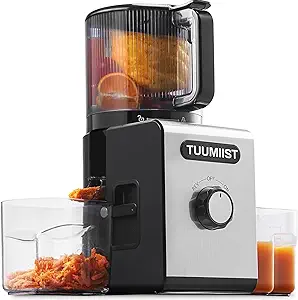 |
| Best Quality Built to a higher standard if you want something more solid | Hurom H70 Slow Juicer |  |
| Best Value The sweet spot between price and what you get | Ninja NeverClog Cold Press Juicer JC151 |  |
| Best Budget The cheapest option that still gets the job done reliably | SMALLHOO Cold Press Juicer TM-580SJ |  |
| Top Rated A top-rated pick with lots of positive feedback | NAMA J2 Cold Press Juicer |  |
| Most Popular A crowd favorite that many people choose with confidence | YPONE Cold Press Juicer SJ-057 |  |
| Best Seller A high-volume bestseller chosen again and again | EanOruus 3-in-1 Cold Press Juicer E-18 |  |
TUUMIIST Cold Press Juicer TM-780SJ

| Maximum Power | 350 watts |
|---|---|
| Voltage | 120 volts |
| Number of Speeds | 60 |
| Capacity | 3 liters |
The TUUMIIST TM-780SJ is a single-auger cold press juicer built for whole-fruit convenience. It accepts whole fruits via a 6.5-inch feed chute and uses a 350W motor running at about 60 RPM to slowly press produce, which helps preserve nutrients and reduce oxidation. The unit is pitched as a 3-in-1 machine — a removable strainer lets you switch between pure juice, nut milk, and sorbet-style preparations without changing major parts, and a large 100 oz hopper supports hands-free batch juicing. Controls are simple with a knob and multiple speeds, and safety features include overheat protection. Cleanup is designed to be straightforward with quick-release parts and a brush included; many components are dishwasher safe. Trade-offs are typical for slow masticating machines: the extraction process is slower than centrifugal models and the 350W motor means tougher items like very fibrous greens or large quantities of hard produce may require more time or prep. For buyers prioritizing nutrient retention and minimal prep, this model offers strong everyday performance with useful extras for family-sized batches.
Best for: Buyers who want a nutrient-focused whole-fruit juicer that minimizes prep time and can handle family-sized batches while producing quiet, high-yield juice.
Less Ideal for: If you need very fast single-serve juice on demand or often juice large volumes of hard produce quickly, a high-speed centrifugal model may suit you better.
- Extra-large 6.5-inch feed chute accepts whole fruit so you can skip a lot of chopping
- 3-in-1 strainer supports juice, nut milk, and sorbet without extensive part changes
- Large 100 oz hopper enables hands-free batch juicing for family prep
- Slow 60 RPM extraction preserves nutrients and reduces oxidation
- Quick-release parts and included brush make cleaning easier and faster
- 350W motor and slow extraction mean juicing is slower than centrifugal models and may struggle with very tough produce
- Relatively large footprint may take counter space in small kitchens
Verdict: Choose this TUUMIIST if you want a quiet, whole-fruit cold press juicer that handles hands-free batch juicing and also makes nut milk and sorbet.
Hurom H70 Slow Juicer

| Wattage | 150 watts |
|---|---|
| Power Source | Corded Electric |
| Material | Plastic |
| Special Features | Easy to Clean |
The Hurom H70 is a single-auger cold-press juicer built to extract maximum juice from whole fruit and vegetables while keeping cleanup simple. It uses a strainer-free Easy Clean chamber and a two-part auger system that removes pulp without a mesh filter, which speeds rinsing and reduces mineral buildup. The wider self-feeding hopper lets you add larger pieces or whole apples with less prep, and the slow masticating action yields smooth juice with minimal foam and longer refrigerator life. Practical benefits include a front-facing juice gauge to monitor fill level, straightforward assembly with fewer parts, and a compact footprint that fits most countertops. At 150 watts it balances power and quiet operation, but because it is a slow juicer it is optimized for yield and texture rather than blitz-speed batch processing. The unit uses plastic components and requires hand washing, so users who prefer dishwasher-safe parts should plan for a little hands-on cleaning. For someone focused on getting the most juice from whole produce and a smooth result, the H70 delivers strong performance in a space-conscious package.
Best for: Buyers who prioritize extracting maximum juice and a smooth texture from whole fruits and vegetables and who value easy, low-maintenance cleanup over the fastest cycle times.
Less Ideal for: People who need very fast, large-volume juicing for commercial use or who prefer dishwasher-safe parts and fully metal construction.
- Strainer-free Easy Clean chamber reduces scrubbing and rinses quickly
- Large self-feeding hopper accommodates whole or larger produce with less prep
- Slow masticating action produces high juice yield and smooth, low-pulp results
- Compact footprint fits easily on most countertops while still offering strong performance
- Most parts are plastic and require hand washing rather than dishwasher-safe cleaning
- Not designed for high-speed batch juicing, so single batches take longer than centrifugal models
Verdict: Choose the H70 if you want a compact cold-press juicer that maximizes yield from whole produce while keeping cleanup fast and simple.
Ninja NeverClog Cold Press Juicer JC151

| Maximum Power | 150 watts |
|---|---|
| Number of Speeds | 2 |
| Capacity | 24 fluid ounces |
| Power Source | Corded Electric |
The Ninja NeverClog JC151 is a slow masticating juicer designed to extract juice from fibrous fruits and vegetables without frequent clogging. It uses a 150-watt high-torque motor and a low-speed auger to crush and press produce for higher-yield, lower-foam cold-pressed juice, and includes two pulp filters so you can choose less or more pulp depending on the drink you want. The unit ships with a 24 oz. juice jug and a 36 oz. pulp container, which makes it convenient for making multiple servings or batching juice for the day. One-touch controls include start/stop and a reverse function to clear jams, and most juice-contact parts are dishwasher safe for easier cleanup. Practical features like an anti-drip lever and a compact footprint that fits under cabinets help in daily use. Limits to consider are the 150W motor, which is typical for masticating units but slower than high-power centrifugal machines, and the 24 oz. juice capacity may require emptying for larger households or party use.
Best for: Buyers who value steady, higher-yield cold-pressed juice from whole fruits and vegetables and want straightforward controls with manageable cleanup for regular at-home use.
Less Ideal for: If you need very fast throughput for large parties or want high-speed centrifugal juicing, this slow masticating model is not the best fit.
- Designed for fibrous produce with a high-torque auger to reduce clogging and improve extraction from celery, carrots, and leafy greens
- Two interchangeable pulp filters let you control juice texture from smooth to fiber-rich
- Generous pulp container and 24 oz juice jug support batch juicing without constant stops
- Reverse function and anti-drip lever reduce jams and spills during use
- Dishwasher-safe juice-contact parts simplify cleanup
- 150-watt motor means juicing is slower than centrifugal models
- 24 oz juice jug may be small for very large batches or big households
Verdict: Choose the Ninja NeverClog JC151 when you want reliable cold-pressed juice from whole, fibrous produce with easy pulp control and simple cleanup.
SMALLHOO Cold Press Juicer TM-580SJ
| Special Features | Extra-large Feed Chute |
|---|---|
| Wattage | 150 watts |
| Number of Speeds | 2 |
| Capacity | 1.77 liters |
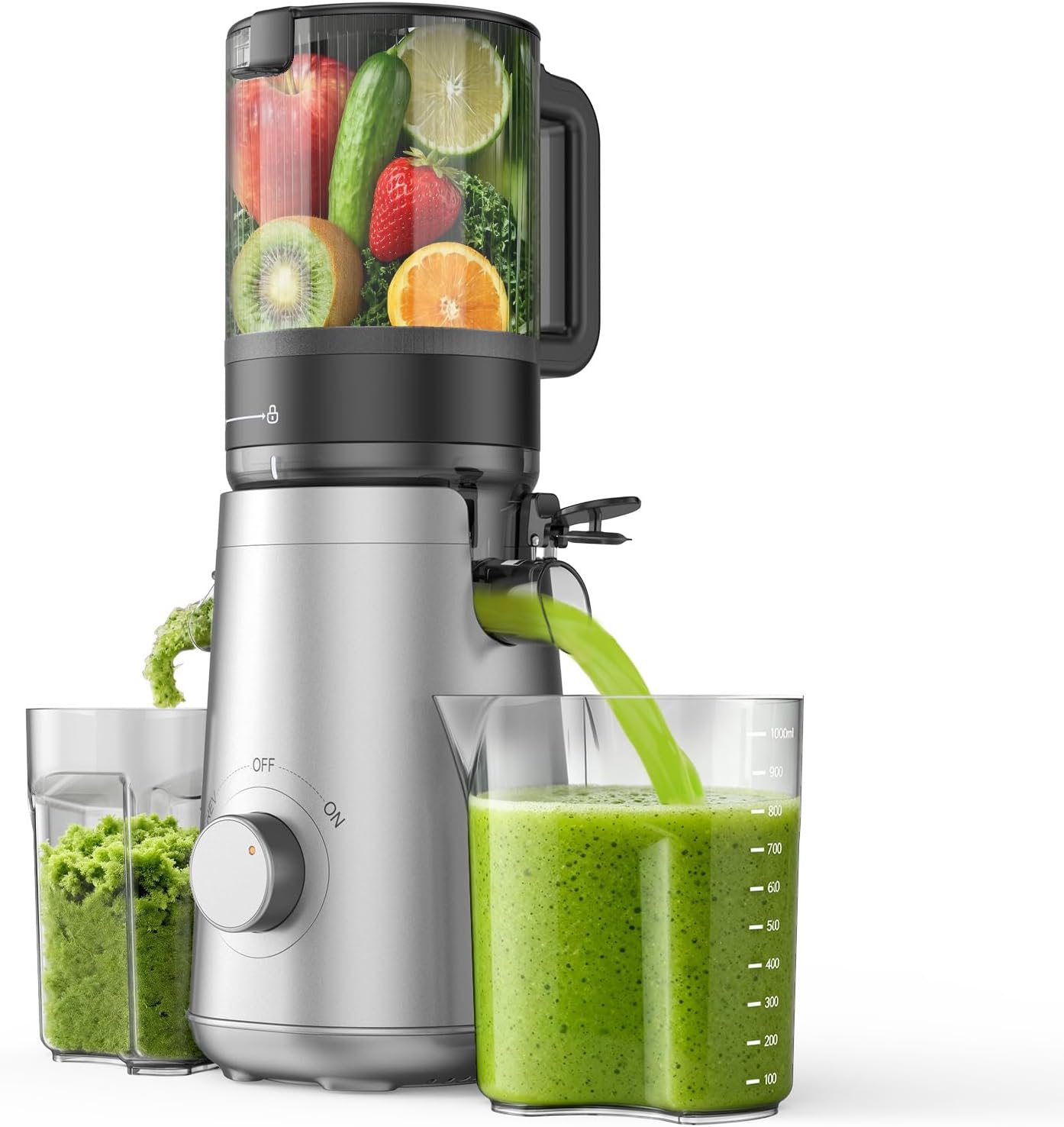
This SMALLHOO masticating juicer is built around a slow 55 RPM auger and a large 5.3-inch feed chute so you can drop in whole fruits and vegetables and let the machine extract juice hands-free. It runs on a reported 150 watts (marketing also references a 300W motor) with two speed settings and a rotary control, and the slow-press action reduces heat and oxidation to preserve flavor and nutrients. Practical touches include a 60 oz hopper for batch juicing, stainless steel blade parts where juice contacts metal, and a simple three-piece design that disassembles quickly for hand washing using the included brush. Limitations to note are the plastic exterior and hand-wash-only care, and the unit is relatively tall and not lightweight to move. Expect good yield from leafy greens and soft fruits, straightforward daily setup, and some countertop space commitment for longer produce runs.
Best for: Buyers seeking an affordable cold-press juicer that minimizes prep time and prioritizes nutrient retention and yield for everyday whole-fruit juicing.
Less Ideal for: Those who want fully dishwasher-safe components, a compact lightweight unit for frequent countertop moves, or a commercial-capacity juicer for heavy daily use should look elsewhere.
- Extra-large 5.3-inch feed chute accepts whole fruits and reduces prep time
- Slow 55 RPM masticating action preserves nutrients and improves juice yield
- Simple three-part design with included cleaning brush for faster cleanup
- 60 oz hopper lets you make multiple servings without refilling
- Body is plastic and requires hand washing rather than dishwasher-safe parts
- Motor wattage is inconsistently listed which may confuse buyers about power
Verdict: A budget-friendly cold-press juicer that lets you feed whole fruits and vegetables for high-yield, nutrient-preserving juice with minimal prep.
NAMA J2 Cold Press Juicer

| Capacity | 30 fluid ounces |
|---|---|
| Wattage | 200 watts |
| Power Source | Corded Electric |
| Number of Speeds | 1 |
The NAMA J2 is a compact masticating juicer built for hands-free whole-fruit juicing and steady daily use. It features a large self-feeding hopper that accepts whole recipes so you can load fruit and vegetables and walk away while the auger runs at a slow 50 RPM to minimize heat and preserve nutrients. The 200 W motor and single-speed operation focus on efficient, high-yield extraction with reduced pulp, and included strainers and containers make it straightforward to collect juice and separate pulp. Cleanup is simplified by quick-release parts, a spinning brush, and Tritan/stainless components that rinse clean with light scrubbing. Because the unit is designed for quiet, continuous operation and ships with a detachable power cord and full accessories, it suits someone who wants reliable, repeatable juicing without fiddly assembly. Limitations to consider are the single speed and hand-wash requirement, so advanced users who want variable rpm control or dishwasher-safe parts may prefer a different model.
Best for: Buyers who prioritize a dependable, low-maintenance cold press juicer for regular whole-fruit and vegetable juicing and want a hands-free workflow that produces consistent, high-yield results.
Less Ideal for: Users who need adjustable speed settings, fully dishwasher-safe parts, or advanced customization for specialty ingredients should consider other models.
- Self-feeding wide hopper supports hands-free loading of whole fruit and recipes
- Slow 50 RPM masticating action preserves nutrients and increases juice yield
- 200 W motor provides steady, quiet operation suitable for daily use
- Quick-release parts, spinning brush, and simple assembly make cleaning and maintenance easier
- Only a single speed is available, limiting control over extraction for different produce
- Key components require hand washing rather than dishwasher cleaning
Verdict: Choose the NAMA J2 if you want a reliable, hands-free cold press juicer that maximizes juice yield from whole fruit with quiet, consistent daily performance.
YPONE Cold Press Juicer SJ-057

| Maximum Power | 400 watts |
|---|---|
| Power Source | Corded Electric |
| Voltage | 120 volts |
| Number of Speeds | 1 |
| Capacity | 500 ml, 700 ml |
The YPONE SJ-057 is a 2-in-1 masticating cold press juicer built to handle whole fruit and vegetable prep with minimal chopping thanks to its 5.8-inch feed chute and single-auger design. It runs at a low 55 RPM to limit heat and oxidation, producing foam-free juice, nut milk, and soy milk while aiming to preserve nutrients. The 400W motor and dual 0.3mm mesh strainers claim up to 99% juice yield and reduced clogging, and included cleaning tools plus a simple three-part disassembly make cleanup straightforward. Safety features include a lid safety lock and an overheat protection mechanism. Practical limitations are that it has only one speed, so there is less control for very soft or very hard produce, and several components are PVC and plastic rather than higher-grade materials which may affect long-term durability. For buyers prioritizing quiet operation, high yield from whole produce, and easy cleaning, this unit performs well, but those seeking multiple speed settings or metal components should consider alternatives.
Best for: Buyers who want a quiet, low-speed cold press that handles whole fruit with minimal prep and emphasizes high juice yield and easy cleaning backed by steady customer feedback.
Less Ideal for: People who need multi-speed control for varied produce textures or who prefer primarily metal, commercial-grade construction for heavy daily use.
- Extra-large 5.8-inch feed chute accepts whole fruits and vegetables to reduce prep time
- Low 55 RPM masticating action preserves nutrients and produces low-foam juice
- Dual 0.3mm mesh strainers reduce clogging and aim for high juice yield
- Includes cleaning brush and disassembles into three main parts for easy cleaning
- Built-in safety lock and overheat protection improve safe daily use
- Only one speed setting limits control over different textures of produce
- Significant plastic and PVC components may feel less durable than metal alternatives
Verdict: Choose this juicer if you want a quiet, low-speed cold press that juices whole fruits with minimal prep and emphasizes nutrient retention and easy cleaning.
EanOruus 3-in-1 Cold Press Juicer E-18

| Capacity | 100 fluid ounces |
|---|---|
| Wattage | 250 watts |
| Power Source | ac |
| Voltage | 110 volts |
The EanOruus E-18 is a single-auger cold press juicer built to handle whole fruit with minimal prep thanks to its extra-wide 6.5-inch chute and 100 oz hopper. It uses a 250W AC brushless motor and a slow masticating auger to extract juice, make nut milk, and produce sorbet using two interchangeable strainers. The large capacity and wide feed chute reduce the need to chop fruits and let you process bigger batches for family use or meal prep, while auto-reverse and overheat protection help keep jams and motor stress down. Detachable parts and a removable pulp outlet make cleanup easier than some compact masticating models, though the product requires hand washing of components. At roughly 12 pounds it is a substantial counter appliance and its plastic/polycarbonate parts and plastic blade are functional but not high-end metal. For buyers who prioritize quiet, efficient whole-fruit juicing and versatile uses beyond juice, it offers strong value, but those wanting stainless steel construction or dishwasher-safe parts should look elsewhere.
Best for: Buyers who want a reliable, low-noise cold press juicer that handles whole fruit and larger batches with minimal prep and predictable, protected operation.
Less Ideal for: Buyers seeking premium metal construction, dishwasher-safe parts, or an ultra-compact model for small kitchens should consider other options.
- Extra-wide 6.5" chute accepts whole fruits to cut prep time
- Large 100 oz hopper for batching multiple servings
- Quiet, high-torque AC motor suited for heavy daily use
- Auto-reverse and overheat protection reduce jams and protect the motor
- Interchangeable strainers let you switch between juice, nut milk, and sorbet
- Removable parts are hand-wash only, no dishwasher-safe claim
- Mostly plastic construction and plastic blade rather than metal components
- Relatively heavy for storage or frequent cabinet moves
Verdict: Choose the EanOruus E-18 if you want a quiet, whole-fruit cold press juicer that speeds prep with a mega chute and large hopper for family-sized batches.
Choosing the Right Cold Press Juicer for Whole Fruit: Key Factors to Consider
Whole-Fruit Feed Size and Chute Design
A juicer that accepts whole fruit reduces prep time and makes daily juicing more practical. Chute diameter and feed geometry determine whether apples, pears, and other round fruit fit without being quartered. A wider, straight chute also reduces stress on the auger and motor because fruit can be fed more smoothly.
Consider whether the design requires frequent blocking or manual pushing. Models that use an effective pusher or gravity-fed throat make operation safer and more convenient. If you plan to juice larger or irregular fruit, check whether gentle pre-cutting is still needed and how that affects throughput and yield.
Cold-Press Extraction Efficiency
Yield matters because better extraction means more juice and less waste from the same amount of fruit. Slow-turning augers crush and press produce more thoroughly than high-speed alternatives, but auger design and squeezing geometry influence actual extraction. Look for designs that promote continuous pressing and separate pulp effectively to minimize trapped juice.
Efficient extraction also affects juice shelf life. Tighter pressing extracts less oxygen, which helps slow oxidation. If you plan to store juice for later consumption, choose machines that produce clearer juice with less foam and rapid settling.
Ease of Cleaning and Maintenance
Daily-use juicers must be quick to disassemble, rinse, and reassemble. Tool-free parts that click apart, dishwasher-safe components where appropriate, and accessible filter screens reduce the friction of regular cleaning. Complex mesh filters or many small parts increase cleaning time and often limit spontaneous juicing sessions.
Also consider how easy it is to remove trapped pulp from the auger and screen. Designs with smooth interior surfaces and widely spaced components reduce buildup. Regular maintenance tasks such as filter brushing or gasket inspection should be straightforward and require minimal special tools.
Durability, Warranty, and Motor Protection
A juicer for whole fruit faces higher mechanical stress than a unit used only for softer produce. Robust auger materials, reinforced housings, and thermal cutoffs help the machine survive heavier loads and repeated use. Buyers should weigh the expected duty cycle—how often and how much juice you will make—against the motor rating and any listed overload protections.
Consider warranty coverage and the availability of replacement parts like seals and screens. A well-supported unit reduces long-term ownership costs and avoids downtime when claims or part replacements are necessary.
Noise Level and Kitchen Fit
Cold press juicers are quieter than centrifugal models, but noise and vibration still vary by design. If you juice early in the morning or in small living spaces, a low-vibration model preserves household calm and reduces complaints from others. Low noise also reflects stable motor coupling and better-built components.
Check for anti-slip feet and balanced auger assemblies. Units that prioritize quiet operation often include slower, steadier motors and better isolation from countertops, which improves both comfort and longevity.
Juice Quality and Oxidation Control
Cold press methods aim to minimize heat and oxygen exposure, preserving vitamins, flavor, and color. Consider whether the machine's feed system and pressing action limit foam and air incorporation. Some designs include settling or secondary separation to improve clarity and reduce foam in the final cup.
If you plan to store juice, look for models that produce juice with slower discoloration and a pleasant mouthfeel. Juice that separates cleanly into liquid and compact pulp is easier to strain or refrigerate without losing texture.
Benefits of Juicing Whole Fruit
Feeding whole fruit into a slow-press juicer saves prep time and reduces waste from peeling and coring. For many home users, the convenience of dropping an apple or pear into a wider chute is the difference between daily juicing and skipping sessions.
Whole-fruit juicing is also kinder to the fruit's structure. Less cutting means less surface area exposed to air, which can reduce oxidation and help juice retain a fresher flavor and more nutrients for short-term storage.
- Faster prep equals more consistent use
- Less oxidation from reduced cutting
- Lower food waste and higher effective yield
Common Maintenance Tasks and How to Simplify Them
Routine maintenance mostly involves rinsing the screen and auger immediately after juicing, checking gaskets for residue, and occasionally scraping pulp from crevices. Doing small tasks immediately prevents buildup that becomes hard to remove later.
Use a soft brush to clear filter holes and a damp cloth for external surfaces. If the unit supports dishwasher-safe parts, reserve the dishwasher for weekly deep-cleaning rather than daily use, which helps gaskets and fine meshes last longer.
- Rinse parts promptly to avoid dried pulp
- Brush filter screens after each use
- Inspect seals periodically for wear
Optimizing Yield From Softer Versus Firmer Fruit
Different fruit textures affect how much juice is extracted. Firmer apples and pears generally respond well to steady pressure and continuous feed, while very soft or overripe fruit can clog screens or produce more foam. Adjust feed speed and use occasional reverse cycles if the motor supports it to keep the auger clear.
Alternating firmer and softer fruit during a single session can balance throughput and reduce clogging. Remove large pits and tough cores when possible to protect internal components and maintain steady pressing.
- Feed firmer fruit in steady streams
- Use reverse cycles to clear jams if available
- Avoid very large pits and tough cores
How Noise and Vibration Affect Placement
Place a cold press juicer on a level, firm countertop to reduce vibration transfer. Anti-slip feet and rubber pads improve stability and lower audible noise. If your kitchen layout puts the juicer near living spaces or bedrooms, consider quieter models or buffering mats under the machine.
Shorter operating cycles reduce the overall noise exposure in the home. If you often prepare single servings, choose a model with easy cleanup so you can run shorter sessions frequently without adding noise to the household routine.
- Use a stable countertop and rubber feet
- Buffer with a mat for noise-sensitive areas
- Favor short cycles for single servings
Storage and Long-Term Upkeep
Store removable parts dry and assembled loosely to prevent mold or odor buildup. If you produce juice infrequently, flush the system with warm water after each use and dry all components thoroughly before storing. Replace seals as soon as they show wear to maintain extraction efficiency.
Periodic deep cleaning with a mild citric solution helps remove mineral buildup and lingering pulp stains. Keep spare gaskets and a replacement screen on hand if your model supports straightforward parts replacement to minimize downtime.
- Dry parts completely before storage
- Perform periodic deep cleans with mild citric acid
- Keep spare seals and filters available
How We Chose the Best Cold Press Juicer for Whole Fruit
We prioritized machines that reliably accept whole fruit or require minimal cutting while preserving juice quality. Extraction yield was a core filter because higher yield lowers food waste and delivers more servings per fruit. Oxidation control and juice clarity were included to reflect how well the slow-rotation auger and sealing features protect vitamins and flavor during extraction. Ease of cleaning and tool-free disassembly were required, since frequent juicing demands fast, repeatable maintenance. Build durability and motor thermal protection were evaluated to ensure consistent performance during repeated cold-press cycles. Noise level and vibration were considered for home use, especially in small kitchens. We excluded centrifugal or high-speed juicers and units that mandate extensive chopping of typical fruit sizes because they fall outside the whole-fruit scope. We focused on spec-readiness and user-oriented design rather than marketing claims. Final selections champion practical throughput, straightforward cleaning, reliable safety protections, and measurable extraction efficiency.
Our full evaluation process is outlined in our review methodology.
FAQ
Do I need to core or peel fruit before using a whole-fruit juicer?
It often depends on the juicer and the fruit. Many whole-fruit models accept standard-sized apples and pears without peeling, but removing large cores or tough stems can protect the auger and improve flow. Extremely waxed or sprayed skins can be rinsed or peeled if you prefer.
How long will cold-pressed juice last in the fridge?
Cold-pressed juice typically keeps better than high-speed juice, usually lasting 48 to 72 hours when stored cold and in a sealed container. Freshness and color retention depend on how much oxygen was incorporated during extraction and how cold the storage is.
Can whole-fruit juicers handle citrus and stone fruit?
Most whole-fruit cold-press juicers handle citrus and stone fruit, but pits and thick rinds can affect performance. It is usually best to remove large pits and cut very large stone fruit to avoid stressing the auger or clogging the screen.
Will juicing whole fruit damage the motor faster?
Heavier feeding and hard cores increase workload, but models designed for whole-fruit use include stronger augers and motor protections. Regularly clearing jams and avoiding continuous overload will help maintain motor life.
What is the simplest way to reduce foam in my juice?
Slower feed rates, alternating firmer fruit with softer pieces, and allowing juice to settle briefly before bottling all reduce foam. Some machines also separate foam more effectively through design, but practical steps like gentle pouring and short settling time are often enough.
Final Verdict
When choosing a cold press juicer for whole fruit, prioritize machines that accept larger feed sizes, extract efficiently, and are simple to clean. Expect tradeoffs between throughput and quiet operation: faster feeding often increases motor load, while slower, steadier machines preserve nutrients and reduce foam. Focus on the factors that match your routine: if you need minimal prep, look for a generous chute and robust motor protections. If storage and clarity matter, value extraction efficiency and low-oxidation design. These tradeoffs will guide you to a dependable whole-fruit juicer that fits your kitchen habits.