
Note: This article contains affiliate links. If you click on these links and make a purchase, we may earn a small commission at no extra cost to you. This helps support our research and content. Read our full affiliate disclosure here.
If you want better juice at home without spending a fortune, the right cold press juicer makes a huge difference in yield, nutrient retention, and daily cleanup. Under $200, machines vary in motor torque, juicing speed, and how much pulp they leave behind, which matters for flavor and how long the juice keeps in the fridge. This guide shortlists seven top picks that strike useful tradeoffs for cost-conscious buyers, and we evaluate each against practical criteria like extraction efficiency and ease of cleaning. Read on to find a unit that fits your countertop space and routine.
Top Picks at a Glance
| Best Overall The best all-around choice for most situations | TUUMIIST Cold Press Juicer TM-780SJ | 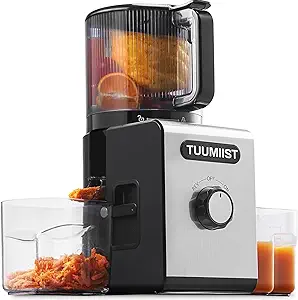 |
| Best Quality Built to a higher standard if you want something more solid | Omega NC1000HDS Masticating Juicer |  |
| Best Value The sweet spot between price and what you get | AMZCHEF Cold Press Juicer ZM1939 |  |
| Best Budget The cheapest option that still gets the job done reliably | NEWBULIG Cold Press Juicer |  |
| Top Rated A top-rated pick with lots of positive feedback | anybear Cold Press Juicer SJ054C |  |
| Most Popular A crowd favorite that many people choose with confidence | EanOruus 3-in-1 Cold Press Juicer E-18 |  |
| Best Seller A high-volume bestseller chosen again and again | Ninja NeverClog Cold Press Juicer JC151 |  |
TUUMIIST Cold Press Juicer TM-780SJ

| Maximum Power | 350 watts |
|---|---|
| Wattage | 350 watts |
| Power Source | Corded Electric |
| Voltage | 120 volts |
| Number of Speeds | 60 |
The TUUMIIST TM-780SJ is a single-auger masticating juicer designed for everyday home use and small-batch meal prep. It runs at a slow 60 RPM with a 350 W motor to minimize heat and oxidation, which helps preserve nutrients and yield more juice from leafy greens and hard produce. The extra-large 6.5 inch feed chute accepts whole fruits so you can skip much of the prep work, and a 100 oz hopper supports hands-free batch juicing. TUUMIIST advertises a no-mesh-filter design and a three-in-one strainer that switches between juice, nut milk, and sorbet modes, reducing the number of parts to clean. Practical benefits include quiet operation, overheat protection, and included cleaning brush and pulp cup. Limitations to consider are modest motor power compared with some high-end masticating units and a relatively high number of speeds listed that may be more marketing than practical; heavy continuous commercial use is not the intended use. For home users wanting nutrient-preserving extraction and easy prep, this model is a capable and user-friendly option.
Best for: Buyers who want a nutrient-focused cold press juicer for regular home use and value hands-free batch prep and minimal produce prep.
Less Ideal for: People who need a heavy-duty commercial extractor or the highest-power model for nonstop daily juicing should look at more robust machines.
- 6.5 inch extra-large feed chute accepts whole fruits to reduce prep time
- Slow 60 RPM extraction with 350 W motor preserves nutrients and increases juice yield
- 3-in-1 strainer supports juice, nut milk, and sorbet without swapping many parts
- 100 oz hopper enables hands-free batch juicing for family meal prep
- Includes overheat protection and an easy-clean design with a custom brush
- 350 W motor is less powerful than some premium masticating models for heavy continuous use
- Claims like 60 speeds may be exaggerated and not offer meaningful performance differences
Verdict: A user-friendly cold press juicer that maximizes juice yield from whole fruits and supports juice, nut milk, and sorbet making for everyday home use.
Omega NC1000HDS Masticating Juicer
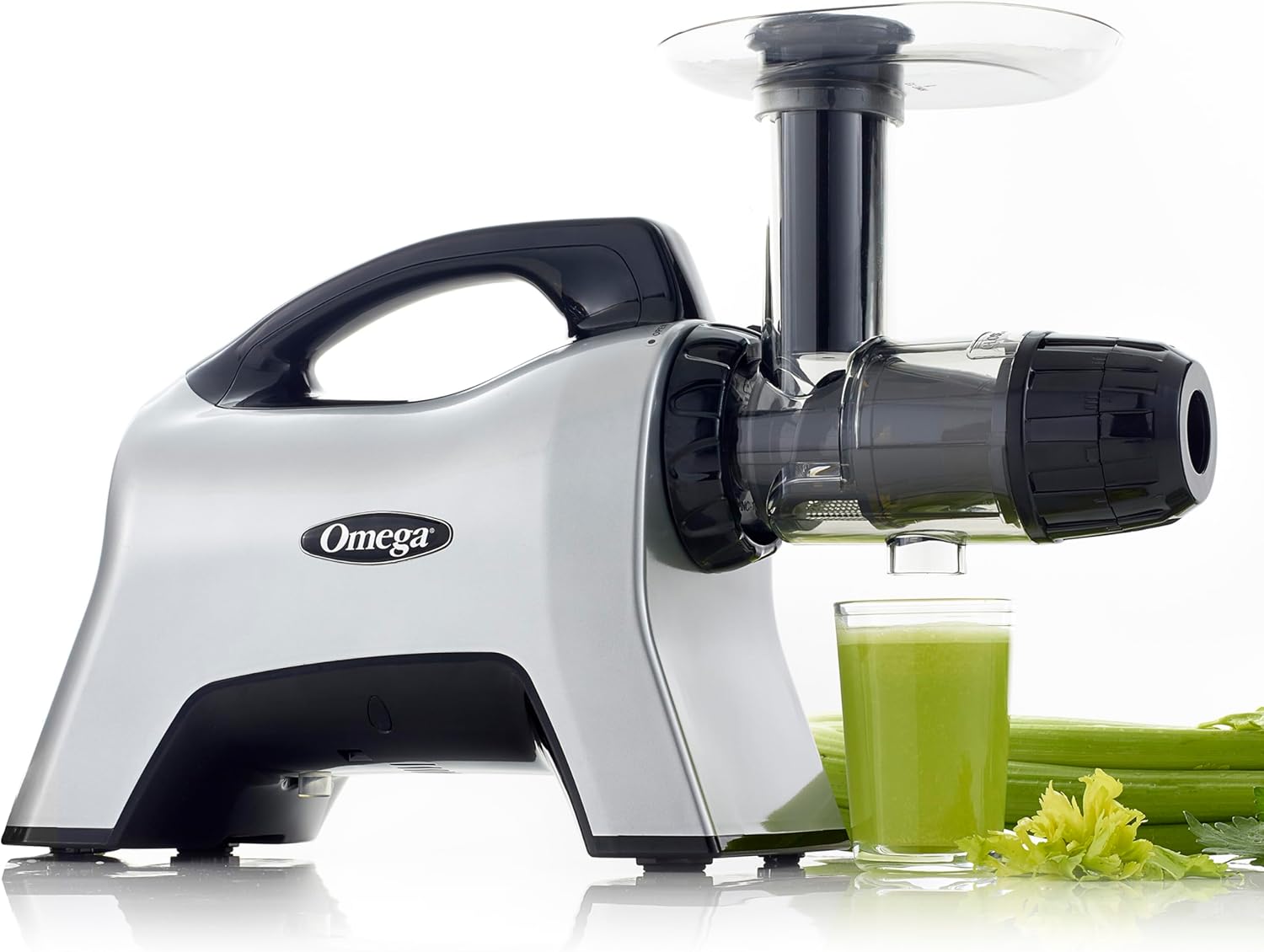
| Maximum Power | 200 watts |
|---|---|
| Power Source | Corded Electric |
| Voltage | 120 |
| Number of Speeds | 1 |
The Omega NC1000HDS is a slow masticating cold-press juicer built to maximize juice yield and preserve enzymes by running at about 80 RPM. It uses a single auger and a triple-stage extraction design with an adjustable end cap so you can dial pressure for leafy greens, hard vegetables, or softer fruits, and it includes accessories for pulp and juice collection. Beyond juicing, the removable parts let you make nut butter, baby food, and plant milks, turning the machine into a compact nutrition system. Practical benefits include quieter operation, minimal heat and oxidation for longer-lasting juice, and mostly dishwasher-safe components for easier cleanup. The unit is manual single-speed, so it lacks variable speed control and is larger and heavier than compact centrifugal models, which may require more counter space and prep time for some produce. For buyers focused on nutrient retention and versatile cold-press tasks, it delivers strong performance for the category and price point.
Best for: Buyers who prioritize maximum nutrient retention and juice yield and want a versatile cold-press machine that can also make nut butters and baby food.
Less Ideal for: If you need a compact, lightweight unit with multiple speed settings or very fast prep, a high-speed centrifugal or smaller model would be a better fit.
- Low 80 RPM masticating action preserves enzymes and reduces oxidation
- Triple-stage auger extraction increases juice yield from leafy greens and tough produce
- Includes accessories for nut butters, baby food, and plant milks for added versatility
- Removable parts are top-rack dishwasher safe for easier cleaning
- Single-speed motor with no variable speeds limits fine control for delicate ingredients
- Relatively large and heavier than compact juicers, requiring more counter space
Verdict: Choose the NC1000HDS when you want a versatile, performance-focused cold-press juicer that maximizes nutrient retention and juice yield under $200.
AMZCHEF Cold Press Juicer ZM1939

| Maximum Power | 600 watts |
|---|---|
| Power Source | dc |
| Voltage | 120 volts |
| Number of Speeds | 2 |
| Capacity | 5.6 pounds |
The AMZCHEF Cold Press Juicer ZM1939 is a single-auger masticating machine designed to handle whole fruits with minimal prep using its 6.5-inch wide chute and built-in cutting blades. It runs at two speeds and a 600W motor with reverse to reduce clogs, and includes two filters so you can switch between juice, nut milk, and frozen sorbet recipes. The large auger and slow cold-press action aim to maximize yield and preserve nutrients, while removable components and a cleaning brush make teardown straightforward and dishwasher-safe. Practical buyers will appreciate the self-feeding design that speeds morning routines and the anti-clogging features that cut interruptions during longer juicing sessions. Trade-offs are typical for slow juicers: it is larger and slower than centrifugal models and requires more time for soft or frozen ingredients unless you use the correct filter and technique. For those focused on extracting more juice and variety of preparations without spending on a premium model, it delivers a lot of capability for the category.
Best for: Buyers who want to maximize juice yield and versatility on a budget and prefer a slower cold-press method that handles whole produce with minimal chopping.
Less Ideal for: People who need very fast, single-serving juices on demand or who have extremely limited countertop space should consider compact centrifugal models instead.
- Wide 6.5-inch reversible feed chute with cutting blades reduces chopping and speeds prep
- 3-in-1 functionality lets you make fresh juice, nut milk, and frozen sorbet with included filters
- 600W motor with reverse and anti-clogging design helps maintain continuous operation
- Removable, dishwasher-safe parts and included brush simplify cleaning
- Slower processing speed compared with centrifugal juicers, so prep and run times are longer
- Larger footprint and heavier duty construction take more counter space
Verdict: If you want a budget-friendly cold-press juicer that handles whole fruits, makes nut milk and sorbet, and prioritizes yield over speed, this AMZCHEF model is a strong pick.
NEWBULIG Cold Press Juicer
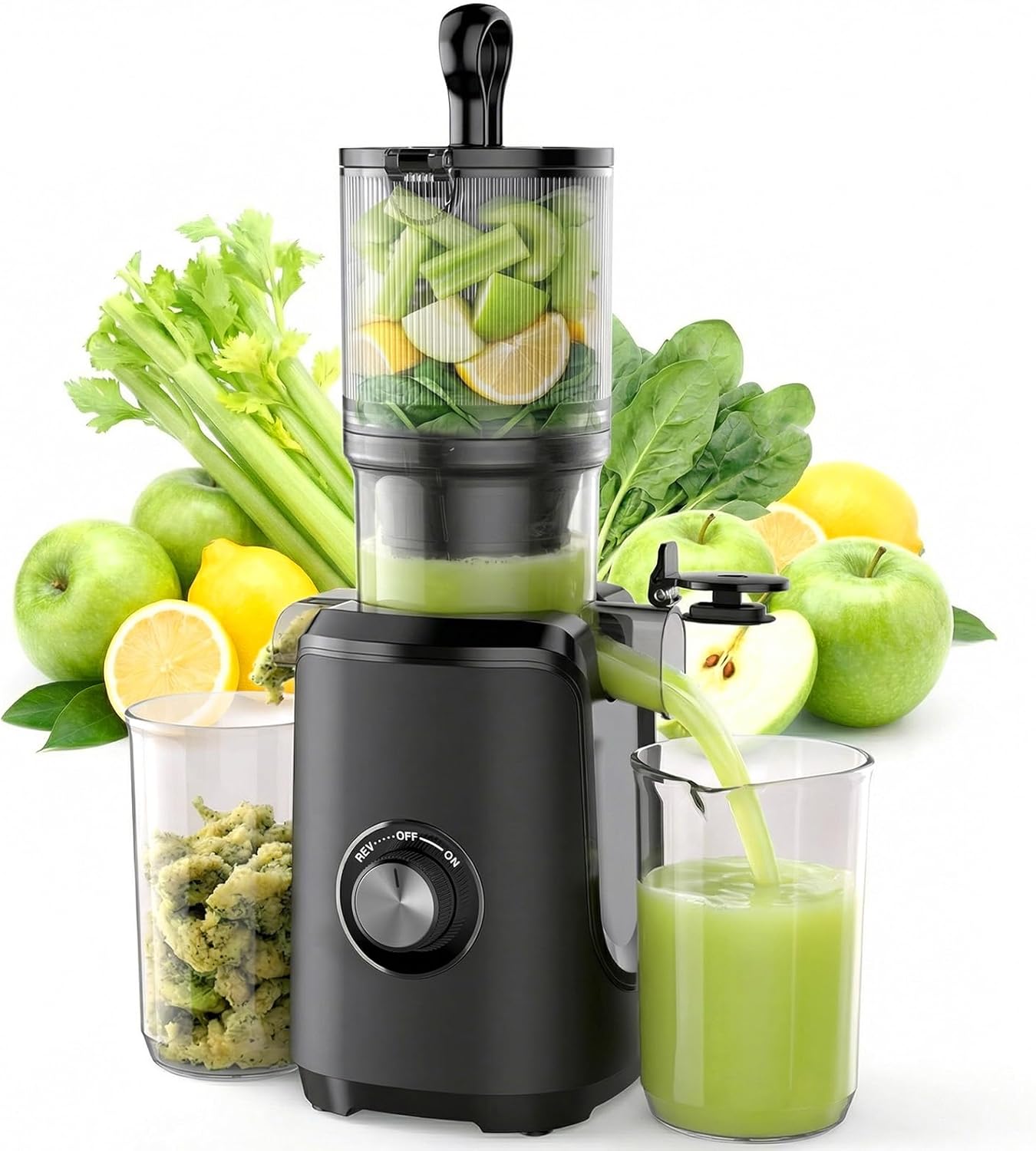
| Feed chute | 4.25 inches |
|---|---|
| Wattage | 200 watts |
| Voltage | 120 volts |
| Special features | Reverse function, Safety lock, Quiet motor |
The NEWBULIG Cold Press Juicer is a budget-friendly masticating juicer built for simple home use. It runs on a 200W slow-speed motor to minimize heat and oxidation, producing juice with less foam and better preservation of nutrients compared with centrifugal models. The 4.25-inch feed chute accepts whole fruits and many vegetables with minimal chopping, and a reverse function helps clear clogs without disassembly. Its blade-free auger and automatic safety lock make it safer to operate around kids, and detachable parts plus a supplied cleaning brush keep maintenance straightforward—parts are hand-wash only. Expect solid juice yield from leafy greens and softer fruits, though very hard produce may need some cutting. The machine is compact and reasonably quiet, but hand-wash care and occasional clearing of dense pulp are part of regular use. For the price this unit balances performance and convenience for daily homemade juice.
Best for: Buyers seeking an affordable cold-press juicer that delivers better juice quality than a centrifugal model and who want a compact, user-friendly machine for daily fruit and vegetable juicing.
Less Ideal for: Users who need fully dishwasher-safe components or who regularly juice very large volumes or industrial-scale quantities should look at higher-end or commercial models instead.
- Wide 4.25" feed chute reduces prep time by fitting whole fruits and many vegetables
- Reverse function clears jams quickly without taking the unit apart
- Quiet 200W masticating motor preserves nutrients and reduces foam
- Detachable parts and included cleaning brush make cleaning manageable
- Parts require hand washing rather than dishwasher-safe convenience
- May need some pre-cutting for very hard or oversized produce
Verdict: A wallet-friendly cold-press juicer that delivers higher-quality, low-oxidation juice with easy clog clearing, making it a strong pick under $200.
anybear Cold Press Juicer SJ054C
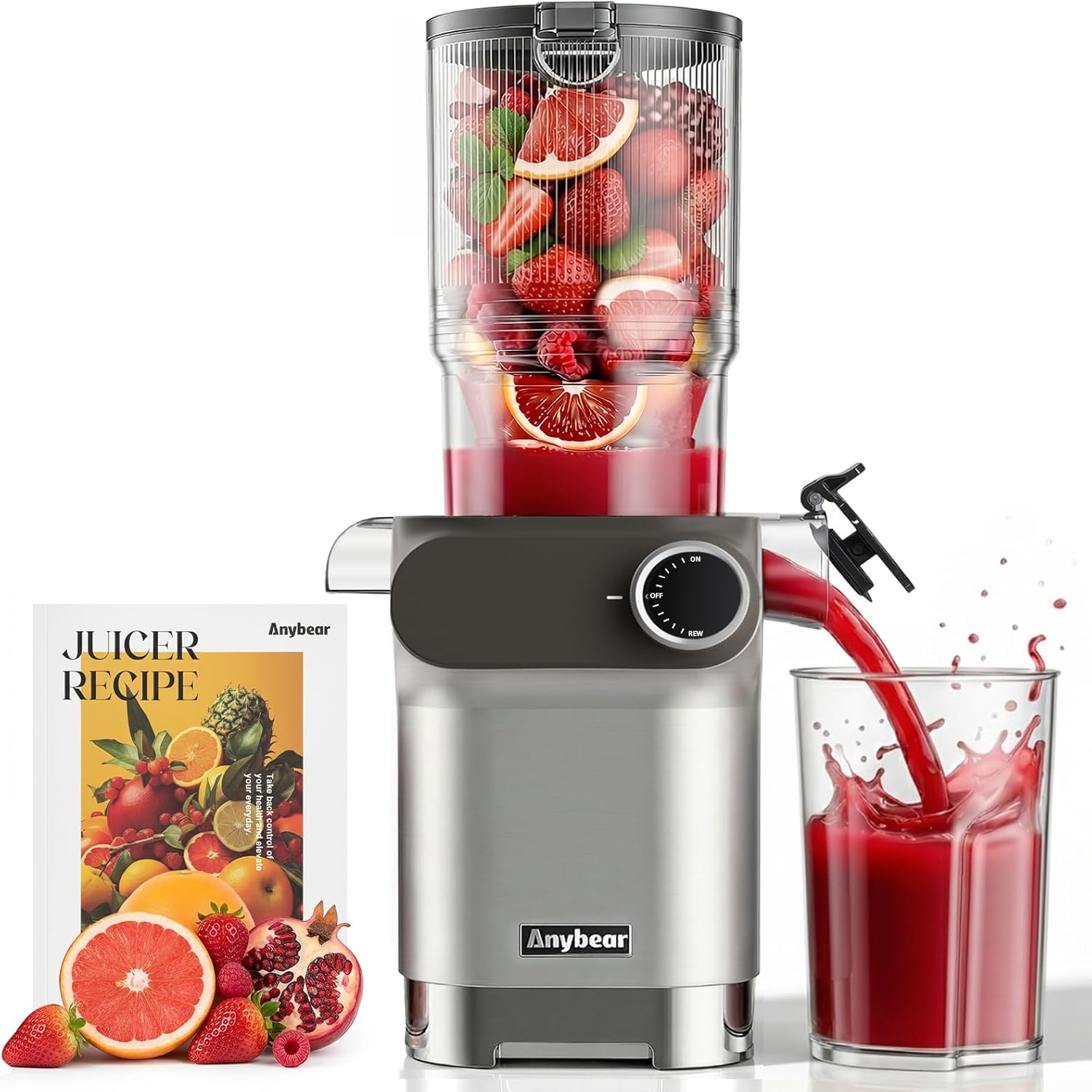
| Maximum Power | 200 watts |
|---|---|
| Wattage | 200 watts |
| Voltage | 110 volts |
| Special Features | Easy to Clean |
The anybear Cold Press Juicer SJ054C is a single-auger masticating machine that uses a 200W motor and a high-torque auger to extract juice at low speeds, preserving flavor and reducing oxidation. It handles whole fruits and vegetables through a 4.3-inch feed chute that often eliminates the need for extensive chopping, and the slow 65 RPM operation and stainless steel filter aim to increase yield and retain nutrients. Practical touches include a Tritan feed chute, a provided cleaning brush, and a simple three-step disassembly that the brand says allows one-rinse cleaning. The unit is intended for everyday home juicing where quiet operation and longer-lasting fresh flavor matter more than speed. Limitations include hand-wash-only care and the typical slower throughput of slow juicers, so it is not ideal if you want very rapid batch processing. For buyers prioritizing steady extraction and easier cleaning in a compact footprint, this model delivers reliable, low-oxygen juice performance for regular home use.
Best for: Buyers who want a dependable home cold-press juicer that emphasizes juice quality, reduced oxidation, and straightforward maintenance for regular use.
Less Ideal for: People who need the fastest possible throughput or want fully dishwasher-safe parts for heavy daily commercial use.
- High-torque 200W motor for steady low-speed extraction
- Large 4.3-inch feed chute reduces prep time for many fruits and vegetables
- One-piece stainless steel filter and simple disassembly make cleaning easier
- Tritan feed chute and stainless steel components use food-grade materials
- Hand wash only rather than dishwasher-safe parts
- Slower extraction speed means longer juicing sessions compared with centrifugal models
Verdict: A reliable, compact cold-press juicer that prioritizes steady low-speed extraction and easier cleaning for everyday home juicing.
EanOruus 3-in-1 Cold Press Juicer E-18

| Capacity | 100 fluid ounces |
|---|---|
| Maximum Power | 250 watts |
| Power Source | ac |
| Voltage | 110 volts |
The EanOruus E-18 is a masticating cold press juicer designed for heavy home use and meal prep. It processes whole fruit and vegetables through a wide 6.5-inch chute into a 100 oz hopper, extracts juice with a single auger and offers interchangeable strainers for juice, nut milk and sorbet. A 250 W AC brushless motor promises steady, higher-torque operation and the unit includes auto-reverse and overheat protection to reduce jams during fibrous loads. Detachable parts and a removable pulp outlet make cleaning easier than some single-auger models, though most parts are hand-wash only. Practical benefits include large batch capacity for families or prepping several days of juice at once and quiet operation compared with centrifugal juicers. Trade-offs are its relatively heavy build and plastic components that may feel less premium than metal alternatives, and the need to cut very large items despite the wide chute for optimal feeding. For buyers prioritizing high yield, quiet motor and multi-function versatility under $200, this covers core needs well.
Best for: Buyers who want a quiet, high-yield cold press juicer for regular batch juicing and value social proof from many reviewers when choosing a reliable, versatile machine under $200.
Less Ideal for: If you need the most premium metal construction or want a fully dishwasher-safe machine, consider higher-end models or chef-grade alternatives instead.
- Extra-wide 6.5-inch chute accepts larger pieces and reduces prep time
- Large 100 oz hopper supports batch juicing for families or meal prep
- 250 W AC brushless motor delivers steady torque and quieter operation than many centrifugals
- Includes interchangeable strainers for juice, nut milk and sorbet for added versatility
- Auto-reverse and overheat protection help prevent clogs and protect the motor
- Most removable parts are plastic and require hand washing
- Relatively heavy unit may be less convenient to move or store
Verdict: A versatile, quiet cold-press juicer with a very large hopper and solid motor performance that suits families and meal preppers looking for value under $200.
Ninja NeverClog Cold Press Juicer JC151

| Maximum Power | 150 watts |
|---|---|
| Number of Speeds | 2 |
| Power Source | Corded Electric |
| Capacity | 24 fluid ounces |
The Ninja NeverClog JC151 is a slow masticating cold press juicer designed to handle fibrous fruits and vegetables with a 150-watt high-torque motor and an auger that reduces clogging and foam. It comes with two interchangeable pulp filters so you can choose a smoother juice or a thicker, fiber-forward result, plus one-touch Start/Stop and a Reverse function to clear jams. The expanded 24 oz juice jug and 36 oz pulp bin make it practical for making multiple servings or prepping ahead, and an anti-drip lever helps reduce spills during pauses. Parts that contact juice are dishwasher safe and the unit is compact enough to fit under standard cabinets, which simplifies everyday use and cleanup. Limitations to note are the modest 150W motor compared with heavier-duty commercial masticators, and the unit still requires occasional use of Reverse to clear very dense or stringy loads. For routine home juicing of greens, carrots, apples, and ginger it offers predictable extraction, easy operation, and relatively low maintenance.
Best for: A cautious buyer who wants a reliable, easy-to-use cold press juicer for daily home use and values simple cleanup and predictable results over pro-level power.
Less Ideal for: People who need a commercial-grade juicer for high-volume or continuous heavy-duty use should look at higher-powered models.
- High-torque 150W auger designed to minimize clogging and preserve nutrients
- Two interchangeable pulp filters for control over juice texture
- Larger 24 oz juice jug and 36 oz pulp container for batch juicing
- Dishwasher-safe juice-contact parts for easier cleanup
- Anti-drip lever reduces spills and waste during use
- 150W motor is less powerful than some heavy-duty masticating models
- May need to use Reverse occasionally with very fibrous or dense ingredients
Verdict: Choose the Ninja JC151 if you want a user-friendly cold press juicer that reliably handles fibrous produce with easy cleanup and built-in anti-clog features.
Choosing the Right Cold Press Juicer: Key Factors to Consider
Extraction Yield
How much juice a machine extracts from the same quantity of produce directly affects operating cost and convenience. Higher extraction yield means you use less fruit and vegetables to get the same amount of juice, which is especially important if you juice regularly. Yield also reflects the machine's ability to handle different textures, from hard apples to leafy greens. In the under-$200 segment, look for machines with efficient auger design and slower press speeds, because these features typically squeeze more liquid and leave drier pulp.
Beyond immediate cost savings, better yield reduces prep time and waste. If you plan to juice for multiple people or make larger batches to refrigerate, extraction efficiency becomes a primary decision factor.
Motor Torque And Speed
Cold press juicers rely on low-speed, high-torque motors to crush and press produce without generating heat that can degrade nutrients. Torque matters more than raw RPMs in this category because stronger torque prevents clogging and handles fibrous items like kale or wheatgrass. Many budget machines advertise low speeds, but torque and motor build determine whether they sustain that performance under real loads.
For regular juicing, choose a unit with a reputation for steady torque and a motor that does not stall with denser fruits. Consider duty-cycle guidance and whether the manufacturer specifies continuous run times to avoid overheating during batches.
Ease Of Cleaning And Maintenance
You are more likely to use a juicer that is quick and simple to clean. Complex assemblies, tiny crevices, or parts that require special brushes will increase the friction of daily use and reduce the machine's practical value. Look for removable components that are dishwasher-safe or that rinse clean easily, and consider how many pieces you must disassemble to reach the auger and screen.
Maintenance also includes availability of replacement parts and how easy it is to clear clogs. A juicer that disassembles without tools and has user-accessible screens will save time and frustration over months of use.
Build Materials And Food Safety
Materials that contact juice should be BPA-free and resistant to stains and odors from acidic fruits and leafy vegetables. Durable plastics and corrosion-resistant components extend product life and keep flavors clean. Metal parts in the drive train should be robust enough to withstand torque without deforming, and seals should hold up to repeated washing.
Check for food-safe labeling and consider whether components retain odors or discolor over time. For people who juice frequently, higher-quality materials reduce long-term upkeep and preserve juice taste.
Noise, Vibration, And Countertop Footprint
Noise level and vibration affect where and how often you will run the machine. Quieter, low-vibration units are easier to operate during morning routines without disturbing others. Vibration also correlates with perceived build quality; excessive shaking can indicate imbalance or flimsy parts.
Additionally, consider the juicer's footprint and vertical height if you have limited counter or cabinet space. A compact design is useful for small kitchens, but ensure it does not compromise feed-chute size or auger length in ways that reduce yield or increase prep time.
Why Low Speed Matters For Nutrient Retention
Cold press juicers operate at low speeds to minimize heat and oxidation, which helps preserve heat-sensitive vitamins and enzymes. Slower extraction reduces foaming and introduces less air, producing clearer juice that can hold flavor and color longer in the refrigerator.
While lab-grade nutrient retention data varies by produce and protocol, choosing a unit with a true low-speed, high-torque mechanism is the practical way to prioritize fresher tasting juice in everyday use.
- Low RPMs reduce foam and oxidation
- High torque prevents stalling with fibrous greens
- Clearer juice typically lasts longer in refrigeration
Preparing Produce For Best Results
Proper prep reduces strain on the machine and increases yield. Trim tough stems, remove large pits, and cut items into sizes that fit the feed chute to avoid unnecessary force on the auger. Leafy greens benefit from being bundled with firmer produce like apples or cucumber to help move them through the throat and maximize extraction.
Avoid overloading the feed chute. Smaller, steady feeds ensure the auger works consistently and reduce the chance of clogs or motor stalls. If the model has a tamper, use it sparingly according to the manual to prevent damage.
- Cut hard fruits into manageable pieces
- Bundle leafy greens with firmer items
- Feed produce steadily rather than in large batches
Managing Pulp And Using Leftovers
Leftover pulp still contains fiber and flavor and can be repurposed in many ways. Dry, compact pulp indicates efficient extraction. Use dry pulp in muffins, crackers, compost, or as a base for vegetable broth to reduce waste and get more value from each juicing session.
If you prefer drier pulp but experience wetter residue, try multiple passes or compressing the pulp in a nut milk bag to extract additional liquid. Be mindful that repeated processing increases heat and oxidation, so balance extra extraction with intended juice quality.
- Dry pulp is a sign of good extraction
- Repurpose pulp in baking, soups, or compost
- Avoid excessive reprocessing to limit oxidation
Routine Care To Prolong Performance
Regular maintenance keeps a cold press juicer running smoothly. Rinse parts immediately after use to prevent sticky residue from hardening. Inspect seals and gaskets for wear and replace them when they begin to deform to maintain safe operation and keep the unit running quietly.
Store removable components dry and assembled loosely to prevent trapped moisture. If the unit is used daily, schedule a deeper clean weekly to remove buildup in the screen and feed tube.
- Rinse immediately after juicing to prevent residue buildup
- Check and replace seals as needed
- Perform a weekly deep clean for frequent users
Countertop Setup And Storage Tips
Plan where the juicer will live based on how often you use it. If daily use is likely, leaving the unit on the countertop saves time but requires available space and easy access to a power outlet. For less frequent use, ensure the juicer's size matches cabinet clearance and that tall lids will not block shelves when stored upright.
Consider a stable, level surface to reduce vibration and keep the motor bearings aligned. If you have limited counter space, measure feed-chute clearance and storage height before purchase to avoid surprises.
- Leave on-counter for daily use, or store compactly for occasional users
- Measure clearance for tall lids and feed chutes
- Use a stable surface to minimize vibration
How We Chose the Best Cold Press Juicer
We focused on objective, buyer-oriented metrics that matter for home cold-press juicing and filtered out machines that do not meet basic durability or performance expectations for the price range. Key evaluation criteria included extraction efficiency, measured by how much liquid is produced from whole fruit and leafy greens; motor torque and reliability, since low-speed, high-torque motors reduce heat and oxidation; ease of cleaning and part disassembly, because frequent use demands fast cleanup; build and materials quality, emphasizing BPA-free food paths and sturdy augers; and noise and vibration, which affect everyday use in kitchens. We excluded centrifugal or high-speed blenders and compact masticating units that cannot process fibrous greens reliably. We also filtered out products lacking clear replacement-part availability or safety features. The short list prioritizes units that deliver consistent juice yield, are straightforward to maintain, and use materials suited to repeated contact with acidic produce.
Our full evaluation process is outlined in our review methodology.
FAQ
How much fruit and vegetables do I need for one serving of juice?
It often depends on produce density, but a typical single serving uses about two to three medium apples or a couple of carrots plus a handful of leafy greens. Denser items yield more juice per pound, so you may need more leafy greens by volume to reach the same output.
Can cold press juicers handle leafy greens and wheatgrass?
Many cold press juicers are designed to process leafy greens, but performance varies. High-torque augers and slower press speeds generally handle greens better. If you plan to juice a lot of leafy produce, prioritize models with proven performance on fibrous items.
How long does cold-pressed juice stay fresh in the fridge?
Cold-pressed juice is usually best consumed within 24 to 72 hours, depending on how well it was extracted and how it is stored. Airtight containers and colder refrigerator settings help maintain color and flavor for longer. Expect the freshest flavor within the first day.
Is it necessary to clean the juicer immediately after use?
Cleaning as soon as possible makes removal of pulp and sticky residue much easier and prevents staining and odor retention. Rinsing parts right away reduces the need for soaking and simplifies daily maintenance.
What should I do if the juicer clogs or stalls?
Stop the motor and follow the manufacturer's instructions for clearing jams. Often gently reversing the auger or removing the feed material and processing smaller pieces resolves clogs. Avoid forcing the machine while the motor is running to prevent damage.
Final Verdict
When choosing a cold press juicer under $200, prioritize extraction yield, motor torque, and how easy the unit is to clean. Those factors most directly affect the ongoing cost of ingredients, everyday convenience, and the quality of the juice you get. Expect tradeoffs among footprint, noise, and materials; a compact, quiet unit may require more frequent feeding or produce slightly lower yields. Focus on the features that match your routine and capacity needs to pick a machine you will actually use consistently.