
Note: This article contains affiliate links. If you click on these links and make a purchase, we may earn a small commission at no extra cost to you. This helps support our research and content. Read our full affiliate disclosure here.
Choosing the right color LED smart light bulb changes how your rooms look and feel. The right bulb gives you accurate colors, smooth dimming, and rock-solid connectivity so you can set scenes for work, relaxation, or entertaining. This guide covers seven shortlisted smart bulbs that represent the best options across ease of setup, color fidelity, and app and voice control compatibility. We evaluate each pick on the practical factors that matter for daily home lighting, so you can find a bulb that fits your fixtures and lifestyle. Read on for quick buying guidance and deeper explanations of the features that make a smart bulb useful.
Top Picks at a Glance
| Best Overall The best all-around choice for most situations | Govee Smart A19 Light Bulb H6006 |  |
| Best Quality Built to a higher standard if you want something more solid | Philips Hue A19 Color Smart Bulb | 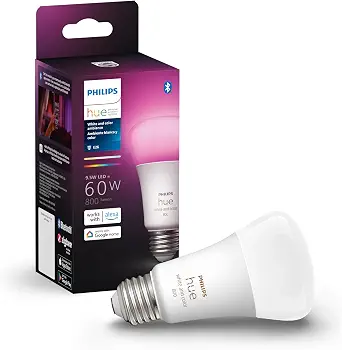 |
| Best Value The sweet spot between price and what you get | Tapo L531E Multicolor A19 |  |
| Best Budget The cheapest option that still gets the job done reliably | SYLVANIA SMART+ WiFi A19 |  |
| Top Rated A top-rated pick with lots of positive feedback | Philips Hue A19 Color Ambiance |  |
| Most Popular A crowd favorite that many people choose with confidence | Govee Smart A19 Light Bulb H6008 |  |
| Best Seller A high-volume bestseller chosen again and again | Amazon Basics Smart A19 LED Bulb | 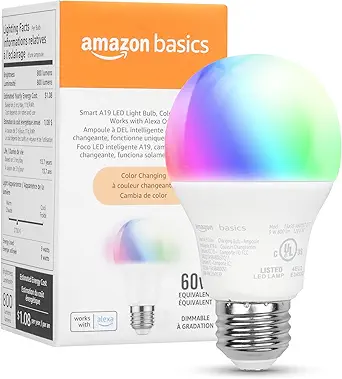 |
Govee Smart A19 Light Bulb H6006

| Light Output Maximum | 1000 lumens |
|---|---|
| Wattage | 9 watts |
| Color Temperature | 6500 Kelvin |
| Connectivity Protocol | Bluetooth, Wi-Fi |
| Light Source Operating Life | 30000 hours |
These Govee A19 smart bulbs are a versatile, high‑brightness option for color and white lighting in living rooms, bedrooms, and lamps. Each bulb produces about 1000 lumens (75W equivalent) from a 9W LED and offers tunable white (2700–6500K) plus RGB color across 16 million shades, controlled via the Govee Home app or voice assistants through Matter, Alexa, Google Assistant, and others. The bulbs support group control, timers, preset scenes and music sync for party or ambient lighting, and connect over 2.4GHz Wi‑Fi or Bluetooth for local and remote control. With a claimed 30,000‑hour life and CRI 90, colors look rich and whites render accurately for everyday tasks. Limitations to note: presets require a Wi‑Fi connection (Bluetooth alone does not save them) and these bulbs cannot be used with standard smart switches without leaving the switch on. For someone wanting bright, color-capable smart bulbs that integrate with popular ecosystems, these strike a good balance between brightness, color range, and app features.
Best for: Buyers who want a bright, color‑capable smart bulb that integrates with major voice platforms and offers both tunable white and vivid color for general room lighting and decorative scenes.
Less Ideal for: People who need bulbs that work with existing smart switches that cut power at the switch or who require offline preset saving via Bluetooth alone.
- High brightness at 1000 lumens for rooms that need strong illumination
- Tunable white plus full RGB color with 16 million color options
- Works with Wi‑Fi and Bluetooth and integrates with Matter, Alexa, Google Assistant, HomeKit and SmartThings
- Supports group control, timers, scene presets and music sync for dynamic lighting
- CRI 90 for accurate color rendering and a rated 30,000‑hour operating life
- Presets and some cloud features require a 2.4GHz Wi‑Fi connection rather than Bluetooth only
- Not compatible with switched circuits where the wall switch turns power off without leaving the bulb on
Verdict: A bright, ecosystem‑friendly smart A19 bulb that pairs strong white output with full RGB color and practical app and voice controls.
Philips Hue A19 Color Smart Bulb

| Light Output Maximum | 806 lumens |
|---|---|
| Wattage | 10 watts |
| Light Source Operating Life | 25000 hours |
| Connectivity Protocol | Bluetooth, Zigbee |
| Controller Type | Amazon Alexa, Google Assistant, homekit |
The Philips Hue A19 is a full-featured color-changing smart LED bulb designed for everyday and mood lighting in homes. It provides up to about 800 lumens (60W equivalent) and can produce warm-to-cool whites plus millions of colors, controllable from the Hue app, Bluetooth or via a Hue Bridge for expanded features. Typical uses include scene-based living room lighting, bedroom wake/sleep routines, accenting artwork, or syncing with smart assistants for voice commands. Notable features are multi-protocol connectivity (Bluetooth and Zigbee), wide compatibility with Alexa, Google Assistant and Apple HomeKit, and long rated life of 25,000 hours. The Hue Bridge unlocks routines, remote control and larger networks, while Bluetooth makes initial setup quick for single-room control. Trade-offs are that getting the full ecosystem benefits requires adding a Hue Bridge and that the bulb is primarily intended for indoor fixtures and standard E26 sockets. In real-world use it delivers rich, consistent colors, reliable voice control when paired to a stable hub, and solid white output for task lighting, making it a versatile choice for color-smart lighting projects.
Best for: Buyers who prioritize precise color quality, reliable integrations with major smart assistants, and the option to expand into a full smart lighting system.
Less Ideal for: Casual users who only want occasional color accents and do not plan to invest in a smart lighting hub or broader ecosystem.
- Supports warm-to-cool whites and millions of colors for flexible scene lighting
- Works with Hue Bridge plus Bluetooth for both single-room and whole-home control
- Compatible with Alexa, Google Assistant and Apple HomeKit for voice control
- Rated long operating life (25,000 hours) and solid 800 lumen brightness
- Full feature set (routines, remote access, large networks) requires purchasing a Hue Bridge
- Higher ecosystem cost compared with basic color bulbs
Verdict: Choose this Philips Hue A19 bulb if you want best-in-class color fidelity and seamless smart-assistant and hub integration for a scalable home lighting system.
Tapo L531E Multicolor A19

| Light Source Wattage | 9 watts |
|---|---|
| White Brightness | 800 lumens |
| Light Color | RGBW |
| Connectivity Protocol | Wi-Fi |
| Color Rendering Index | 90 |
The Tapo L531E is a Wi‑Fi smart A19 bulb designed to replace a standard 60W lamp with full RGBW color plus tunable white and app or voice control. It connects directly to your 2.4 GHz network so no hub is needed, and the Tapo app lets you pick from 16 million colors, save scenes, schedule timers, and enable Away Mode. With 800 lumens output and CRI over 90, it produces relatively vivid, usable light for living rooms or bedrooms while dimming from 1 to 100 percent. The bulb is energy efficient, rated about 9 watts while reporting low standby draw, and includes energy monitoring in the app so you can track consumption. Practical advantages include wide 220 degree coverage and Alexa and Google Assistant compatibility for hands‑free control. Important limitations are the requirement of 2.4 GHz Wi‑Fi and the usual dependency on the vendor app for advanced features, which may matter if you prefer local or hub-based ecosystems. For buyers wanting reliable color control without extra hardware, this is a solid pick.
Best for: Buyers who want an energy-efficient, hub-free smart color bulb that is easy to control by app or voice and that prioritizes practical features like scenes, schedules, and energy tracking.
Less Ideal for: Users who require local-only smart lighting, Zigbee/Z‑Wave hub integration, or support for 5 GHz Wi‑Fi should consider other options.
- Full RGBW spectrum with 16 million colors plus tunable warm-to-cool whites
- No-hub Wi‑Fi connection and voice control via Alexa and Google Assistant
- Bright 800 lumens output with CRI>90 for accurate color rendering
- App features include scheduling, scenes, Away Mode, and energy monitoring
- Only supports 2.4 GHz Wi‑Fi which may require network adjustment
- Advanced controls rely on the Tapo cloud/app rather than local-only integration
Verdict: A convenient, hub-free multicolor smart bulb that delivers bright, energy-efficient lighting and practical app features for everyday use.
SYLVANIA SMART+ WiFi A19

| Light Output Maximum | 800 lumens |
|---|---|
| Color Temperature | 2700 Kelvin |
| Light Color | Multicolor |
| Connectivity Protocol | Wi-Fi |
| Light Source Operating Life | 15000 hours |
This SYLVANIA SMART+ WiFi A19 bulb brings full color and tunable white lighting to standard E26 fixtures without a hub, controlled via the SYLVANIA app or voice assistants. It is typically used as a drop-in replacement for household lamps and ceiling fixtures to create scenes, schedules, and routines or to set color and white temperature for different activities. Notable features include 16 million color options, tunable white from soft to daylight, 90+ CRI for accurate color, 800 lumens at a 60W equivalent output, and Wi‑Fi connectivity that works with Alexa and Google Assistant; setup is quick on a 2.4 GHz network. Practical benefits are easy voice and remote control, reliable color rendering for living spaces, and the ability to automate lighting without extra hubs. Limitations include the requirement of a 2.4 GHz Wi‑Fi network and lack of Apple HomeKit support, and it is not rated for fully enclosed fixtures or outdoor use, which reduces mounting options for some installs.
Best for: Buyers who want an affordable, easy-to-install color smart bulb to add voice control, scenes, and schedules to everyday indoor fixtures without buying a separate hub.
Less Ideal for: People who need HomeKit integration, want outdoor- or enclosed-fixture rated bulbs, or who rely on 5 GHz-only Wi‑Fi networks should consider other options.
- Full color plus tunable white (2700K to 6500K) for flexible scenes and moods
- No hub required — connects directly to 2.4 GHz Wi‑Fi for app and voice control
- High CRI (90+) for more accurate and vibrant color rendering
- Dimmable and supports timers, routines, and remote control via the free app
- Requires a 2.4 GHz Wi‑Fi network and is not compatible with Apple HomeKit
- Not rated for enclosed fixtures or outdoor use
Verdict: A budget-friendly, hub-free color smart A19 bulb that delivers accurate color and easy voice and app control for everyday indoor lighting.
Philips Hue A19 Color Ambiance

| Bulb Shape Size | A19 |
|---|---|
| Bulb Base | E26 |
| Light Output Maximum | 806 lumens |
| Light Source Wattage | 9 watts |
| Connectivity Protocol | Bluetooth, Zigbee |
These Philips Hue A19 Color Ambiance bulbs provide full smart lighting control for everyday rooms and decorative fixtures. Each A19 bulb screws into a standard E26 socket and delivers both warm-to-cool whites and millions of colors, controllable from the Hue app or by voice with Alexa and Google Assistant. Out of the box they work over Bluetooth for quick local control of up to 10 lights in a room, and they integrate with a Hue Bridge via Zigbee to unlock routines, remote control, and expanded ecosystem features. At roughly 800 lumens the bulbs replace a 60W incandescent while using about 9 watts, and the Hue system includes preset scenes and dynamic effects for routines like focus and unwind. The main compromises are that advanced multi-room control and remote access require adding a Hue Bridge, and full smart-home features depend on fitting these into the Philips Hue ecosystem rather than a generic app. For buyers who prioritize stable, long-term smart lighting and broad platform support, these bulbs perform reliably night after night.
Best for: Buyers who want a dependable smart lighting solution that will integrate into a mature ecosystem and deliver consistent color and white light for daily routines and mood lighting.
Less Ideal for: Shoppers who need remote access or wide home automation right away without adding a hub, or those looking for the cheapest color bulb option.
- Supports both Bluetooth for quick local setup and Zigbee with Hue Bridge for reliable networked control.
- Wide color range plus warm-to-cool whites and preset scenes for mood and routines.
- Energy efficient with about 800 lumens output while drawing roughly 9 watts.
- Works with voice assistants including Amazon Alexa, Google Assistant, and Apple HomeKit via Hue ecosystem.
- Full remote control and advanced automations require purchasing a separate Hue Bridge.
- Higher price point compared with basic color bulbs and dependent on the Hue ecosystem for some features.
Verdict: Choose these Philips Hue Color Ambiance bulbs if you want reliable, ecosystem-ready color lighting that scales from simple Bluetooth control to full Zigbee-powered smart-home automation.
Govee Smart A19 Light Bulb H6008

| Light Source Operating Life | 50000 hours |
|---|---|
| White Brightness | 800 lumens |
| Wattage | 9 watts |
| Connectivity Protocol | Bluetooth, Wi-Fi |
| Control Method | App, Voice |
These Govee A19 smart bulbs are a practical, user-focused option for adding color and tunable white light to indoor rooms. They install like any E26 A19 bulb and connect directly to a 2.4 GHz Wi‑Fi network or Bluetooth, so no hub is required; control comes through the Govee Home app or voice assistants including Alexa, Google Assistant and Siri/HomeKit. The bulbs output about 800 lumens of white brightness and support millions of colors plus 54 preset scenes, dimming, timers and group control for coordinated lighting across multiple fixtures. A phone-based music sync uses the device microphone to animate colors to sound for parties or ambient effects. Runtime is rated up to 50,000 hours and power draw is 9 watts, so they are energy efficient for everyday use. Limitations to note: they require 2.4 GHz Wi‑Fi (no 5 GHz) and will not work behind smart switches that cut power, and advanced music-sync depends on microphone access which may be less reliable in noisy environments. For buyers seeking easy, hub-free color control and wide app compatibility, these deliver a lot of functionality in a four-pack.
Best for: Shoppers who prioritize easy, hub-free color lighting that integrates with voice assistants and want a multi-bulb pack for coordinating scenes across rooms while relying on social proof and dependable compatibility.
Less Ideal for: People who need bulbs that work with 5 GHz networks, must operate behind power-cutting smart switches, or require fully offline hardware-based music synchronization.
- Hub-free Wi‑Fi and Bluetooth direct connect for easy setup
- Works with major voice platforms including Alexa, Google Assistant and HomeKit
- 800 lumens white output with RGBWW color and 54 scene presets for flexible moods
- Music sync and timers for dynamic scenes and automated schedules
- Long rated life (50,000 hours) and low 9 W power draw for efficiency
- Requires stable 2.4 GHz Wi‑Fi and does not support 5 GHz networks
- Music sync relies on phone microphone which can be less consistent in some settings
Verdict: A convenient, hub-free four-pack for buyers who want reliable voice and app-controlled color lighting with efficient 800-lumen output and rich scene options.
Amazon Basics Smart A19 LED Bulb

| Wattage | 9 watts |
|---|---|
| Bulb Shape Size | A19 |
| Bulb Base | E26 |
| Light Output Maximum | 800 lumens |
| Network Connectivity | 2.4 GHz Wi‑Fi only |
This Amazon Basics Smart A19 is a straightforward color‑changing LED bulb designed for easy Alexa integration. It screws into any E26 socket and connects directly to 2.4 GHz Wi‑Fi so you can control color and brightness from the Alexa app or with voice commands, no hub required. The bulb offers 16 preset colors, adjustable white light at a 2700K tone, and dimming from 5% to 100% via the app, which makes it useful for mood lighting, scheduled routines, and remote on/off control when away from home. Setup is simple through the Alexa app but it only supports 2.4 GHz networks and works exclusively with Alexa, so it will not pair with Google Assistant, Apple HomeKit, or other smart platforms. It is not compatible with physical dimmer switches, so in-wall dimmers should be avoided. At an 800 lumen output and 9W power draw, it delivers energy-efficient lighting that replaces a 60W incandescent while adding smart features for everyday convenience.
Best for: Buyers who want a reliable, low‑hassle smart color bulb that integrates seamlessly with an Alexa‑centric home and prefers plug‑and‑play setup over tinkering with hubs or third‑party platforms.
Less Ideal for: Households using Google Assistant, Apple HomeKit, or other non‑Alexa ecosystems or anyone who needs compatibility with in‑wall physical dimmer switches.
- Direct Wi‑Fi connection to 2.4 GHz networks so no hub is required
- Works with Alexa for voice control, routines, and remote app access
- 16 preset colors plus adjustable white brightness for flexible mood lighting
- Energy efficient 9W LED output with 800 lumens (60W equivalent)
- Compatible only with Alexa and incompatible with Google Assistant or Apple HomeKit
- Does not work with physical dimmer switches
Verdict: Choose this bulb if you want an affordable, energy‑efficient color LED that sets up quickly and works reliably within an Alexa-focused smart home.
Choosing the Right Color LED Smart Light Bulb: Key Factors to Consider
Color Range and Accuracy
How many distinct hues and shades a bulb can produce matters because it directly affects scene quality. A broader color gamut yields richer reds, greens, and blues while better color accuracy prevents tones from looking oversaturated or off-cast. For rooms where lighting sets mood or supports media viewing, accurate color reproduction helps ensure scenes look as intended.
Also consider how the bulb handles color at different brightness levels. Some bulbs wash out colors when dimmed, which undermines the point of adjustable color. Look for bulbs and control apps that let you fine-tune saturation and temperature across the brightness range.
Connectivity and Protocol Support
The wireless protocol a bulb uses affects range, latency, and compatibility with hubs and voice assistants. Common options include Wi-Fi, Bluetooth, and mesh protocols. Wi-Fi bulbs connect directly to routers but can tax network bandwidth when many devices are present. Bluetooth is easy for single-room use but has limited range and fewer remote-control options without a bridge. Mesh-based protocols provide more reliable multi-room setups and better battery-free control for switches.
Protocol support also determines whether bulbs work with your existing smart home ecosystem. If you plan to group bulbs with other smart devices, pick bulbs that support the same control platform or that can join a shared hub to avoid fragmentation.
Dimming Performance and Color Temperature Control
Smooth dimming is essential for comfortable lighting. Bulbs that flicker, jump, or change hue noticeably as they dim degrade ambiance and can be distracting during low-light tasks. Look for bulbs advertised with continuous, flicker-free dimming and verify they maintain consistent color temperature when reducing brightness.
Adjustable color temperature is valuable even when you do not use vivid colors. The ability to set warm whites for evenings and cooler whites for work hours increases the bulb's utility. Check whether the bulb offers both warm-to-cool whites and tunable color options in the same device.
App Ecosystem and Voice Control
A friendly app and reliable voice assistant integration determine how quickly you can use scenes, schedules, and automations. A good app lets you create multi-bulb scenes, save favorites, and set timers without extra steps. Voice control should respond consistently and support the commands you need, such as color names, percentages for brightness, and named scenes.
Consider whether the app requires cloud access for basic local control. Local control reduces latency and keeps schedules running if the internet goes down. Also check whether multiple users can control the bulbs without complex account sharing or reconfiguration.
Form Factor and Fitment
Bulb size and shape determine whether a color LED smart light bulb fits your fixtures. Some bulbs are longer or wider than standard shapes, which can block shades or fail to fit enclosed fixtures where heat buildup is a concern. Verify the bulb's listed dimensions and whether it is safe for enclosed fixtures if you plan to use it in a lamp with a shade.
Also confirm the base type matches your sockets. Most home fixtures use standard bases, but specialty lamps may require different fittings. Proper physical fit ensures you can place bulbs where they will deliver the intended effect without heat or clearance issues.
Longevity and Energy Efficiency
Expected lifespan and power draw influence long-term costs and maintenance. LED bulbs last for thousands of hours, but heat management and component quality affect color stability and longevity. A bulb rated for longer life reduces the frequency of replacements and the chance of early color shift.
Energy efficiency affects operating cost and heat output. Lower wattage for equivalent lumen output is preferable. Also consider warranty terms and manufacturer support because they matter if a bulb fails prematurely or exhibits color drift.
How to Use Color Bulbs in Different Rooms
Different rooms have distinct lighting needs, and color LED smart light bulbs can be tuned accordingly. For living rooms, use warmer whites and muted colors for relaxed evenings, shifting to cooler whites for reading or hobbies. Bedrooms benefit from dim warm tones at night and energizing cool light in the morning to help wake up.
In kitchens and work areas, prioritize higher brightness and accurate whites for task visibility. Accent colors work well for entertainment zones around TVs or behind furniture to reduce eye strain and enhance perceived contrast.
- Living Room: warm ambient tones and soft accent hues
- Bedroom: dimmable warm whites for sleep-friendly settings
- Kitchen: bright cool whites for tasks, with color accents for ambiance
- Home Office: neutral to cool whites to support focus
Setting Scenes and Automations
Scenes let you recall combinations of color, brightness, and temperature with a single command. Create scenes for routines like morning wake-up, movie time, or dinner. Automations add convenience by triggering scenes based on time, sunrise and sunset, or other smart devices.
When designing automations, avoid overly complex chains that are hard to maintain. Start with a few dependable routines and expand as you discover what works in daily life.
- Create named scenes for common activities
- Use schedules for regular routines
- Trigger scenes with sensors or location-based rules
Mixing Color Bulbs with Standard White Bulbs
It is common to mix color bulbs and standard white bulbs in a single room. To maintain consistent lighting, place color bulbs where you want accents and keep whites for primary illumination. Mixing works best when color bulbs handle secondary lighting such as cove lighting, lamps, or accent spots.
Be aware that grouping different bulb types into a single circuit or smart group may make it harder to achieve uniform color and dimming behavior. Use separate groups for primary task lighting and decorative color lighting to preserve control granularity.
- Use whites for primary task areas, color bulbs for accents
- Group bulbs by function rather than by fixture
- Test scenes at different brightness levels to ensure cohesion
Managing Network Load and Latency
If you plan to install many smart bulbs, consider how they will affect your home network. Wi-Fi bulbs add traffic and can increase congestion on a crowded router. Mesh or local-control options help distribute load and reduce latency. For single-room deployments, Bluetooth or direct Wi-Fi may be sufficient.
For responsive voice control, minimize competing traffic on the same band and place the router or hub where it can reach the bulbs with few obstacles. Regularly update firmware to benefit from performance improvements and bug fixes.
- Avoid connecting dozens of Wi-Fi bulbs to a single router
- Prefer mesh-capable bulbs for multi-room installations
- Place hubs centrally for best coverage
Safety and Fixture Considerations
Not all smart bulbs are rated for enclosed fixtures. Heat buildup can shorten lifespan and affect color stability. Check ratings before installing a bulb in a recessed can, enclosed lamp, or sealed fixture. If in doubt, place color bulbs in open fixtures or use bulbs specifically rated for enclosed use.
Ensure the bulb's wattage equivalent and heat output are appropriate for dimmer switches and other control gear. Some older dimmers are incompatible with LED electronics and can cause flicker or noise.
- Confirm enclosed-fixture ratings where applicable
- Check dimmer compatibility before installation
- Follow ventilation guidance to extend bulb life
How We Chose the Best Color LED Smart Light Bulb
We shortlisted bulbs based on criteria that matter to people using smart lighting in real homes. First, color range and accuracy were essential because many buyers choose color bulbs for mood and task lighting; we favored bulbs that reproduce saturated hues and subtle whites reliably. Second, connectivity and protocol support determined whether a bulb works with common smart home setups; stable wireless performance and broad control options were prioritized. Third, dimming smoothness and color temperature control were evaluated because flicker-free dimming and usable warm-to-cool whites affect comfort and utility. Fourth, ease of setup and app usability were considered so less technical users can configure scenes and schedules quickly. Finally, build quality and expected lifespan were assessed to reduce the chance of early failure or color shift over time. We excluded bulbs that lack basic smart controls, have tiny color palettes, or rely on obsolete wireless standards. We did not include bulbs that are strictly single-color or that cannot deliver adjustable white tones alongside color. The final list balances practical performance, interoperability, and user experience rather than niche gimmicks.
Our full evaluation process is outlined in our review methodology.
FAQ
Can I use color smart bulbs with a standard wall dimmer?
Often not directly. Most color LED smart light bulbs have built-in dimming controlled by the app or voice. A standard line-voltage dimmer can interfere with the bulb's electronics and cause flicker. If you need wall control, use a compatible smart switch or a dimmer explicitly rated for LED electronics.
Do color bulbs retain their color when dimmed?
It depends on the bulb. Higher-quality color LED smart light bulbs maintain color saturation across brightness levels, while cheaper units may wash out or shift hue when dimmed. Check reviews or manufacturer specifications for dimming behavior and look for mentions of flicker-free performance.
Will these bulbs work if my internet is down?
Some bulbs offer local control without cloud access, while others rely on the internet for advanced features and voice integrations. Bulbs that support local mesh protocols or local LAN control will continue basic functions such as on/off, dimming, and saved scenes even if the internet is unavailable.
How many color bulbs can I control from one app?
This usually depends on the app and the protocol rather than the bulb itself. Many apps handle dozens of bulbs and group them into rooms and scenes. For very large installations, consider systems that support mesh networking or dedicated hubs to maintain performance.
Are color bulbs safe for enclosed fixtures?
Some are rated for enclosed fixtures and others are not. Enclosed fixtures trap heat and can shorten LED life or cause color shift if the bulb is not rated for that environment. Always check the bulb's specifications before use in covered fixtures.
Final Verdict
Color LED smart light bulbs give you flexibility to set ambiance, support tasks, and automate routines, but the best choice depends on how you plan to use them. Prioritize color accuracy and smooth dimming when mood and media are important, and focus on connectivity and protocol compatibility if you want reliable multi-room control. Consider physical fit, enclosed-fixture ratings, and whether local control is required for resilience. Decide which tradeoffs matter most in your home—maximum color fidelity versus simplest setup, or broad protocol support versus local-only control—and choose bulbs that align with those priorities. With the right balance, color smart bulbs can transform lighting without adding complexity.