
Note: This article contains affiliate links. If you click on these links and make a purchase, we may earn a small commission at no extra cost to you. This helps support our research and content. Read our full affiliate disclosure here.
If you bake frequently or run a bakery operation, the right commercial mixer for dough makes a decisive difference in speed, consistency, and kitchen throughput. You need a unit that handles heavy dough without overheating, offers bowl sizes suited to your batch scale, and delivers reliable controls for repeatable results. This guide shortlists six top commercial mixers for dough and explains the practical tradeoffs that matter to professionals and serious home bakers alike. Below we summarize the evaluation criteria used and then walk through features that determine whether a given mixer will fit your workflow.
Top Picks at a Glance
| Best Quality Built to a higher standard if you want something more solid | Winco EMP-30 Planetary Mixer |  |
| Best Value The sweet spot between price and what you get | ROVSUN 30Qt Commercial Mixer |  |
| Best Budget The cheapest option that still gets the job done reliably | KIOMGLE 30QT Commercial Dough Mixer |  |
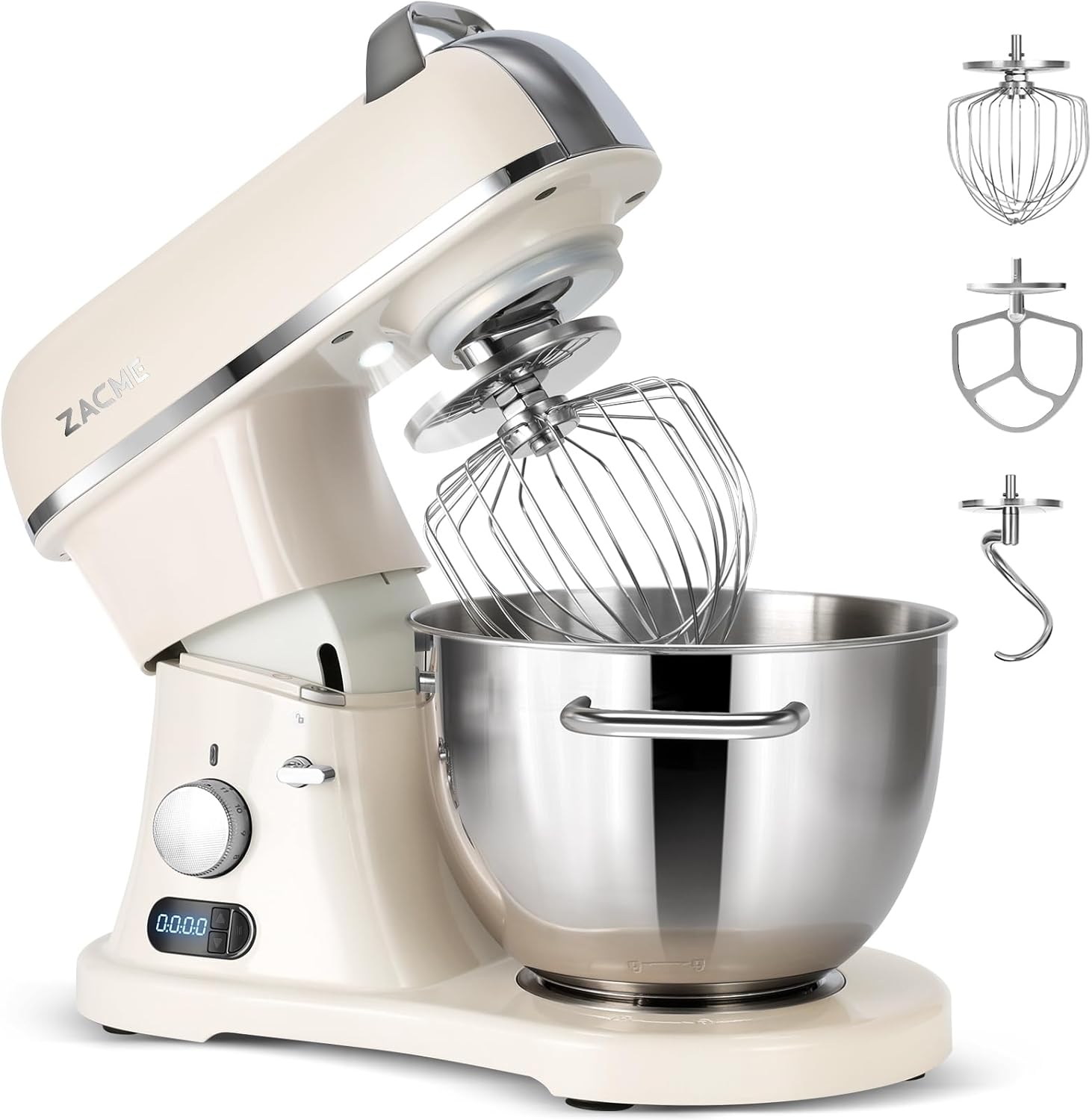
| Top Rated A top-rated pick with lots of positive feedback | ZACME 8.4QT Commercial Stand Mixer |  |
| Most Popular A crowd favorite that many people choose with confidence | KitchenAid Commercial 8-Quart Mixer |  |
| Best Seller A high-volume bestseller chosen again and again | VEVOR Commercial Food Mixer 30Qt |  |
Winco EMP-30 Planetary Mixer

| Capacity | 30 liters |
|---|---|
| Number of Speeds | 3 |
| Material | Cast Iron, Stainless Steel |
| Included Components | Flat beater, spiral dough hook, whip attachment |
The Winco EMP-30 is built for heavy bakery workloads, combining a 30‑liter stainless steel interlocking bowl and a die-cast iron body to stand up to daily use. It uses a gear-driven, high-torque motor with three speeds to handle everything from light whipping to thick doughs, and the included flat beater, spiral dough hook, and whip cover the common tasks in dough and batter production. A safety guard and removable bowl make loading and cleaning straightforward, while non-slip rubber feet keep the machine stable during mixing. The unit accepts industry-standard #12 attachments via its hub, which increases versatility for specialized tasks. Expect a large, heavy footprint and commercial power-consumption profile, so it is best suited to dedicated bakery or foodservice spaces rather than small home kitchens. If you need a rugged, no-nonsense mixer for high-volume dough work, the EMP-30 focuses on durability and consistent mixing performance rather than compactness or a long speed range.
Best for: Buyers who prioritize reliable, heavy-duty mixing for bakery or foodservice operations and need a machine that can handle frequent, large dough batches.
Less Ideal for: Small kitchens, occasional home bakers, or those who need a compact mixer with variable-speed precision should consider lighter, more compact models instead.
- Large 30‑liter stainless steel bowl handles high-volume batches typical in bakeries.
- Die-cast iron construction and gear-driven high-torque motor built for heavy daily use.
- Includes standard flat beater, spiral dough hook, and whip for common bakery tasks.
- Removable interlocking bowl and safety guard simplify loading and cleaning.
- Compatible #12 attachment hub increases functionality for specialized mixing tasks.
- Only three fixed speeds may limit fine control compared with variable-speed commercial models.
- Very heavy and large footprint requires dedicated space and professional installation.
Verdict: A rugged, high-capacity mixer built for relentless bakery work and consistent dough performance.
ROVSUN 30Qt Commercial Mixer

| Capacity | 30 quarts |
|---|---|
| Wattage | 550 watts |
| Voltage | 110 volts |
| Number of Speeds | 3 |
| Noise Level | 60 db |
This ROVSUN 30Qt commercial stand mixer is built for frequent kitchen use in bakeries, pizzerias, and restaurants. It pairs a stainless steel removable bowl with three interchangeable attachments — dough hook, flat beater, and wire whip — so you can handle heavy dough, batters, and whipped mixtures. The unit offers three speed settings (130, 193, 458 RPM) and a timer knob for up to 30 minutes, letting you dial in gentle kneading or high-speed aeration without babysitting the machine. Safety features include a protective shield that triggers auto shutoff if not closed and a removable handle for easier storage. The motor and controls are straightforward with a start/stop button and knob control, and the machine is aimed at repeated commercial cycles rather than occasional home baking. Limitations to note are the basic control layout with only three speeds and the absence of advanced digital controls or multiple bowl sizes, so shops needing fine speed control or modular capacity may want a different model.
Best for: A practical buyer running a small commercial kitchen or bakery who values durable, no-frills equipment that handles large dough batches reliably and is easy to maintain.
Less Ideal for: Shops that require precise digital speed control, frequent switching between multiple bowl capacities, or advanced programmability should consider higher-end models.
- Large 30-quart stainless steel bowl suitable for commercial batches
- Three standard attachments (dough hook, flat beater, wire whip) for versatile mixing tasks
- Timer knob up to 30 minutes reduces need for manual monitoring
- Safety guard with automatic shutdown prevents operation when open
- Removable bowl and handle simplify cleaning and storage
- Only three fixed speed settings limit fine-tuning for delicate recipes
- Controls are analog with no digital display or programmable presets
Verdict: Choose this mixer if you need a sturdy, easy-to-clean 30‑quart machine that reliably handles commercial dough workloads without complex controls.
KIOMGLE 30QT Commercial Dough Mixer

| Capacity | 30 quarts |
|---|---|
| Wattage | 1500 watts |
| Voltage | 110 volts |
| Noise Level | 85 db |
This KIOMGLE 30QT commercial dough mixer is built for small bakeries, schools, and restaurants that need a large-capacity machine for frequent dough mixing. The 1500W copper-wound motor with double gears and belts delivers steady power and a 40 rpm mixing rod speed that tackles high-volume flour and water batches. The 30-quart stainless steel bowl is stamped and 1.5 mm thick for durability and flips 90 degrees on a latch for easier cleaning and dough removal, while detachable stainless gear covers improve operator safety. Controls are simple push-button operation with a forward/reverse switch to knead and then eject dough. At an advertised noise level of 85 dB and a listed weight over 100 lb, it is a heavy, stationary unit that suits a commercial kitchen rather than a home counter. Expect basic functionality without advanced electronic controls or multiple speed presets, but the robust metal construction and serviceable design focus on reliability and heavy use.
Best for: Bakers and food-service operators seeking a budget-friendly, no-frills commercial mixer that reliably handles large dough batches in a busy kitchen.
Less Ideal for: Home bakers with limited space or operations needing precise speed control and portability should look at lighter countertop mixers or models with variable electronic speed controls.
- 1500W copper-wound motor with double gears and belts for consistent heavy-duty mixing power
- Large 30-quart stamped stainless steel bowl suitable for high-volume dough batches
- Forward and reverse rotation plus a flip-latch bowl for easier dough removal and cleaning
- Durable metal construction with detachable stainless gear covers for operator safety
- Basic push-button controls with no variable speed presets or digital settings
- Heavy and bulky unit intended for fixed commercial placement rather than portability
Verdict: A sturdy, high-capacity commercial mixer that delivers dependable heavy-duty kneading power for budget-conscious bakeries and kitchens.
ZACME 8.4QT Commercial Stand Mixer
| Capacity | 8.4 quarts |
|---|---|
| Wattage | 800 watts |
| Number of Speeds | 11 |
| Controls Type | Knob + LCD Panel |
| Noise Level | 48 db |
The ZACME 8.4QT Commercial Stand Mixer is built for frequent, large-batch mixing and kneading. Its 800W DC motor, metal gears, and planetary mixing action handle dense doughs and larger batter volumes while the tilt-head design and included stainless steel bowl and three attachments make loading and tool changes straightforward. The mixer has an LED display with a countdown timer and knob/LCD controls so you can set and monitor long mixing or proofing runs without babysitting. Noise is relatively low on the lower speeds and ZACME adds dual cooling fans to protect the motor during extended use, which supports commercial baking sessions. Practical limits are its weight and footprint, which reflect its commercial construction and will need a sturdy countertop; also accessories appear brand-specific so sourcing replacements could be slower than mass-market brands. For bakeries or home bakers who need consistent heavy-duty performance, this mixer offers commercial-grade durability and smart convenience features.
Best for: Buyers who prioritize consistent, commercial-grade reliability and need a mixer that can handle frequent large-batch doughs in a bakery, café, or serious home baking setup.
Less Ideal for: Casual bakers who rarely make large batches or those who need a lightweight, easily storable mixer for occasional home use.
- Robust 800W DC motor with metal gears for heavy kneading and long runs
- Large 8.4 quart stainless steel bowl suitable for big batches and bulk baking
- Digital LED display with countdown timer for hands-off mixing control
- Industrial-grade aluminum die-cast body and NSF/ANSI 8-2023 compliance for commercial reliability
- Dual cooling fans and overload protection to reduce overheating during marathon use
- Substantial weight and footprint require a sturdy workspace and limit portability
- Replacement parts and accessories may be less widely available than mainstream domestic brands
Verdict: If you need a durable, NSF-standard commercial mixer that reliably handles large doughs and long runs, this 8.4QT ZACME unit is built for that purpose.
KitchenAid Commercial 8-Quart Mixer

| Capacity | 8 quarts |
|---|---|
| Wattage | 500 watts |
| Number of Speeds | 10 |
| Voltage | 120 volts |
This KitchenAid Commercial 8-Quart Bowl Lift stand mixer is built for heavy dough work in bakeries and busy kitchens, combining a bowl-lift design with a high-efficiency DC motor and PowerCore technology to keep torque consistent while reducing heat buildup. It is typically used for mixing large batches, kneading multiple loaves of bread, and whipping large quantities; the bowl-lift keeps the bowl stable during heavy loads and the included spiral dough hook, flat beater, and 11-wire whip cover most production needs. Notable features include NSF commercial certification, speed control protection to avoid accidental starts during cleaning, soft start to reduce splash and flour puff, and commercial-grade accessories that are dishwasher safe. Practical benefits are reliable long-run performance for extended mixing tasks, the ability to handle large dough quantities without overheating, and a durable stainless-steel bowl and attachments. The main limitations are the mixer's substantial footprint and weight that require a dedicated counter or worktable and the high upfront cost typical of commercial equipment, which may be more than a home baker needs.
Best for: Bakers and small commercial kitchens that need a durable, production-capable mixer able to handle large dough batches reliably and repeatedly.
Less Ideal for: Casual home bakers with limited space or low-volume needs who would be better served by a smaller, less expensive mixer.
- NSF certified for commercial use, meeting health-inspection standards
- PowerCore high-efficiency DC motor delivers consistent torque with less heat buildup for long runs
- Bowl-lift design provides stable beater-to-bowl contact for heavy doughs and large batches
- Includes commercial-grade stainless-steel spiral dough hook, flat beater, and 11-wire whip
- Large, heavy unit requires permanent counter or worktable space
- Commercial price point may be excessive for occasional home baking
Verdict: Choose this KitchenAid Commercial 8-quart mixer when you need a rugged, NSF-certified machine that can knead and mix large dough batches reliably for commercial or high-volume baking.
VEVOR Commercial Food Mixer 30Qt

| Capacity | 28.5 liters |
|---|---|
| Wattage | 1100 watts |
| Number of Speeds | 3 |
| Noise Level | 70 db |
| Voltage | 110 volts |
This VEVOR commercial mixer is a floor-standing 30-quart machine built for heavy kitchen workloads. It pairs a gear-driven 1100W motor with three selectable speeds (130, 193, 458 rpm) and a timer knob to handle tasks from kneading dense dough to whipping cream. The machine includes a stainless steel bowl and three interchangeable beaters — dough hook, flat beater, and wire whisk — and a safety guard with an automatic shutdown if the cover is opened. A lever-style bowl lift and detachable parts make loading and cleaning easier than wheel-lift designs, and the reported 70 dB noise level is typical for commercial gear-driven mixers. Expect a robust, utilitarian machine that focuses on durability and throughput rather than quiet or compact operation; its substantial weight and footprint mean it suits a dedicated prep area and will require proper installation and handling. For kitchens needing consistent, large-batch dough mixing, this model delivers reliable performance with straightforward controls.
Best for: Buyers who prioritize reliable, heavy-duty mixing for a commercial kitchen and want a straightforward, safety-minded machine that handles large dough batches consistently.
Less Ideal for: Home bakers with limited space, low-volume operations, or anyone needing a lightweight, quiet countertop mixer should consider smaller or quieter alternatives.
- 1100W gear-driven motor for consistent mixing power
- Three practical speeds that cover kneading, mixing, and whipping
- Includes dough hook, flat beater, and wire whisk for versatile recipes
- Lever-style bowl lift and detachable bowl simplify loading and cleaning
- Built with stainless steel components that resist rust and are food-safe
- Large, heavy floor-standing unit that requires dedicated space and handling
- Not optimized for quiet operation with a reported noise level around 70 dB
Verdict: Choose this mixer when you need a durable, high-capacity commercial unit that reliably handles large dough batches in a busy kitchen.
Choosing the Right Commercial Mixer for Dough: Key Factors to Consider
Motor Power and Torque
Motor power determines how well a commercial mixer for dough can handle dense, high-gluten batters and large batch sizes. Higher horsepower and robust torque help the machine maintain consistent speed under load, which prevents stalling and reduces mixing time.
In practical terms, look for motors rated for continuous or commercial duty rather than short-cycle household motors. Torque matters more than peak horsepower for dough kneading because resistance increases as gluten develops. Proper motor cooling and a well-designed transmission also keep power delivery steady during long shifts.
Bowl Capacity and Geometry
Bowl size controls the maximum batch you can mix at once and affects mixing efficiency. Commercial bowl capacities are expressed in quarts or liters; choose a size that matches your typical production runs so you avoid underfilling or overloading the mixer.
Bowl shape and material influence dough circulation and cleanup. Rounded bottoms promote uniform mixing and prevent dead zones. Stainless steel bowls resist corrosion and are easier to sanitize. Consider how the bowl mounts and how easily it can be removed for cleaning during busy service periods.
Duty Cycle and Cooling
Duty cycle describes how long the motor can run before needing rest. For commercial dough work, you want a mixer designed for high-duty use with thermal protection and effective cooling. A poor duty cycle can force frequent cooldowns that interrupt production.
Inspect manufacturer specifications for continuous-run ratings, thermal cutouts, and ventilation design. Models with heavy-duty gearing and fan-cooled motors sustain longer periods of kneading. Also factor in expected shift length and whether the mixer will be used intermittently or continuously.
Attachment Compatibility and Versatility
Dough hooks are essential, but commercial mixers should also accept other attachments for whisking, mixing, or shredding when needed. Attachment mounting standards vary, so check compatibility if you plan to expand functionality.
Secure, easy-to-change fittings save time during busy prep. Some mixers offer planetary action that ensures thorough mixing across many attachment types. If you rely on multiple attachments, confirm availability of spare parts and optional accessory kits.
Controls and Speed Range
A useful speed range allows gentle initial incorporation and progressively stronger kneading without overspeeding. Variable speed controls let you adapt mixing to different dough hydration levels and formulas.
Look for clear, repeatable settings or digital presets to reproduce recipes across batches. Mechanical speed selectors are durable, while electronic controls may offer finer granularity. Also consider how intuitive the controls are for staff to reduce operator error.
Build Quality and Serviceability
Commercial kitchen equipment endures heavy use, so robust materials and access to replaceable parts matter. Metal gears, reinforced housings, and sealed bearings extend service life compared with lighter consumer designs.
Serviceability includes how quickly wear parts like belts, gears, and seals can be inspected or replaced, and whether the manufacturer documents routine maintenance. Equipment that is easier to service reduces downtime and long-term maintenance costs.
Sizing Your Mixer to Production Needs
Estimate typical daily dough volume and map that to bowl capacity and motor rating. If you bake dozens of loaves or many multiple-batch products, choose a machine with higher capacity and continuous-duty specs so you can reduce cycle counts and labor.
Also account for peak periods. A slightly larger mixer can prevent production bottlenecks during busy shifts, but oversizing wastes energy and counter space. Balance batch size with available storage and prep workflows.
- Calculate batch throughput: how many batches per hour you need
- Match bowl capacity to your largest routine batch
- Consider a two-tier approach: one large mixer for bulk and a smaller unit for specialty mixes
Where to Place and Install a Commercial Mixer
Plan a stable, level surface that can support the mixer's weight and minimize vibration. Allow clearance for lifting the bowl and for staff movement around the unit. Position the mixer near ingredient storage and work surfaces to streamline workflow.
Also think about electrical and ventilation needs. Installations in small kitchens may require dedicated circuits or specific power feeds. Ensure the area is easy to clean to meet sanitation requirements.
- Leave adequate access for maintenance and cleaning
- Place near flour and water stations to reduce transfer time
- Keep ventilation unobstructed to maintain motor cooling
Maintenance Basics to Maximize Uptime
Create a maintenance routine that includes daily cleaning, weekly lubrication where specified, and periodic inspection of belts and gears. Regular cleaning avoids dough buildup that increases wear and creates sanitation issues.
Track operating hours and establish a parts replacement schedule for items like seals and bearings. Promptly address unusual noises or heat buildup to avoid more serious failures.
- Wipe and sanitize bowl and attachments after each use
- Inspect drive components monthly for wear
- Keep a small inventory of common wear parts
Safety Features and Operator Ergonomics
Safety features such as bowl guards, emergency stops, and interlocks reduce risk during operation. Ergonomic controls and manageable bowl weights help prevent staff strain and speed up routine tasks.
Train staff on safe loading and unloading of heavy dough batches and on using guards properly. Simple design choices, like accessible speed controls and visible indicators, make a safer, more efficient workspace.
- Ensure guards prevent contact while the mixer is running
- Check that emergency stops are clearly labeled and functional
- Choose models with manageable bowl-lift mechanisms for staff safety
Recipe Tuning for Commercial Dough Mixers
Commercial mixers behave differently than home mixers. You may need to adjust mix time, hydration, and rest schedules to achieve the same dough characteristics. Start with conservative mix times and increase gradually while noting dough temperature and development.
Monitor dough temperature during mixing because mechanical work raises heat and affects yeast performance. Shorter, more intense mixes can produce similar gluten development while reducing time, but they may also increase dough temperature.
- Use shorter, staged mixing cycles for heavy doughs
- Record times and speeds for repeatable results
- Watch dough temperature and adjust water temperature accordingly
How We Chose the Best Commercial Mixer for Dough
We focused on attributes that directly affect daily production, durability, and operator control for dough mixing. Primary evaluation criteria included motor power and torque to handle dense dough, mixing mechanism and attachment compatibility for kneading action, bowl capacity and bowl material for batch size and sanitation, and cooling and duty-cycle specifications to ensure continuous use in busy kitchens. We also considered build quality and serviceability, such as gear train design and ease of replacing wear parts, plus safety features like planetary shielding and emergency stop controls. Products were excluded if they lacked specifications for continuous-duty use with high-hydration or high-resistance doughs, if they offered no clear attachment compatibility for dough hooks, or if documentation did not include mixing speeds and torque ratings. The final shortlist favors mixers with clear engineering for commercial workloads, reasonable maintenance access, and controls that let operators reproduce mixes reliably.
Our full evaluation process is outlined in our review methodology.
FAQ
What motor size is sufficient for commercial dough mixing?
It depends on batch size and dough type, but look for motors specified for continuous commercial use with higher torque ratings. Heavier, high-gluten doughs require more torque than lighter batters.
How do I choose the right bowl capacity?
Base capacity on your typical and peak batch sizes. Avoid consistently overfilling a bowl and consider a slightly larger capacity if you expect occasional larger runs.
Can commercial mixers run continuously all day?
Some models are designed for continuous duty with adequate cooling and heavy gearing. Check duty-cycle ratings and thermal protection to confirm whether a unit suits all-day operation.
How often should I service a commercial mixer used daily?
Daily cleaning is essential, with monthly inspections of drive components and scheduled lubrication or part replacement based on operating hours and the manufacturer's maintenance guidance.
Are attachments standardized across commercial mixers?
Attachment standards vary, so verify compatibility before assuming cross-compatibility. Many mixers accept common types like dough hooks and beaters, but mounting systems differ.
Final Verdict
Selecting a commercial mixer for dough means balancing motor strength, bowl capacity, and duty-cycle durability against your production patterns and workspace limits. Prioritize torque and continuous-run capability if you mix dense, high-volume doughs, and choose bowl size to minimize cycle counts without wasting space. Also consider ease of service and accessible controls to reduce downtime and operator error. With these priorities in mind, you can narrow choices to the machines that best match your throughput needs and maintenance capabilities.