
Note: This article contains affiliate links. If you click on these links and make a purchase, we may earn a small commission at no extra cost to you. This helps support our research and content. Read our full affiliate disclosure here.
If you run a business that depends on steady hot water—restaurants, multi-unit housing, laundries, or facilities management—selecting the right Commercial Tankless Water Heater matters. The wrong choice can mean insufficient flow during peak use, higher operating costs, or frequent maintenance interruptions. This guide shortlists top-performing units that are appropriate for commercial settings and evaluates them on real-world criteria like flow capacity, energy efficiency, and serviceability. Read on to see which features and specs matter most for reliable hot-water performance in demanding environments.
Top Picks at a Glance
| Best Overall The best all-around choice for most situations | MIZUDO Tankless Water Heater 199k BTU |  |
| Best Quality Built to a higher standard if you want something more solid | Noritz NR98SVNG Tankless Water Heater | 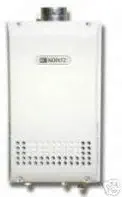 |
| Best Value The sweet spot between price and what you get | A. O. Smith ATI-540P-N Tankless Water Heater |  |
| Best Budget The cheapest option that still gets the job done reliably | GASLAND Gasmart E CE686NG |  |
| Top Rated A top-rated pick with lots of positive feedback | Rheem RTG-84XLN-3 Tankless Water Heater |  |
| Most Popular A crowd favorite that many people choose with confidence | Rinnai RX199iN Tankless Water Heater |  |
MIZUDO Tankless Water Heater 199k BTU

| Power Source | Natural Gas |
|---|---|
| Flow Rate | 10.3 gpm |
| Maximum Temperature | 149 °F |
| Heat Output | 199000 btu_per_hour_per_foot_per_fahrenheit |
| Wi-Fi Enabled | ✔ |
The MIZUDO 199,000 BTU tankless water heater is a high-capacity, indoor natural gas unit designed for large homes or light commercial use that need continuous hot water for multiple fixtures. It delivers up to 10.3 gallons per minute and is specified to support five to seven outlets simultaneously, so showers, a dishwasher, and other fixtures can run without noticeable drops in temperature. The unit uses a sealed direct combustion system and a phosphorous-deoxidized copper heat exchanger with stainless steel combustion components, which supports durability and maintains indoor air quality by drawing combustion air from outside. Built-in Wi‑Fi and app control let you adjust temperature, schedule operation, and receive alerts remotely, while a six-stage modulation claims ±1°F temperature stability for steadier output. Important considerations are that this is a heavy, wall-mounted indoor unit that requires proper venting and a 3/4" NPT gas and water hookup, and a direct vent kit is sold separately; professional installation is recommended. Its safety features and freeze protection make it practical for year-round operation, but expect the typical installation complexity and space needs of a high‑output tankless system.
Best for: Buyers who need reliable, continuous hot water for large homes or small commercial settings and prioritize steady temperature control and remote management.
Less Ideal for: People seeking a simple DIY replacement for a small household or those who cannot accommodate professional venting and gas hookup requirements should consider lower-capacity or simpler units.
- High heat output (199,000 BTU) suitable for large households or light commercial applications
- Up to 10.3 GPM flow supporting 5–7 fixtures at once
- Sealed combustion design preserves indoor air quality
- Wi‑Fi and app control for remote temperature management and alerts
- Multiple safety protections including freeze protection and flame failure detection
- Requires proper venting and professional installation; direct vent kit sold separately
- Relatively heavy and wall-mounted, taking dedicated indoor space
Verdict: If you need robust, whole‑house hot water capacity with precise temperature control and remote management, this high‑output MIZUDO tankless heater is a strong choice.
Noritz NR98SVNG Tankless Water Heater

| Power Source | Natural Gas |
|---|---|
| Flow Rate | 9.8 gpm |
| Maximum Temperature | 140 °F |
| Maximum Pressure | 150 psi |
The Noritz NR98SVNG is a commercial-grade indoor/outdoor natural gas tankless water heater aimed at high-demand applications where continuous hot water is required. It delivers flow rates up to 9.8 gallons per minute and can reach a maximum outlet temperature of 140°F, making it suitable for large homes or light commercial sites. The unit uses a commercial-grade copper heat exchanger that the manufacturer says is 25% thicker than standard models, which should improve durability and heat transfer. It includes dry combustion protection, a temperature lock feature, a remote thermostat, and a 6 foot power cord, and two units can be linked with a quick-connect cord for added capacity or redundancy. Installation requires single wall category III stainless steel venting and an IK-WV-200-1-XX-LF valve kit sold separately, so professional installation is recommended. The heater is wall-mounted and rated for up to 150 psi, but buyers should plan for proper venting and the separate valve kit when budgeting the system.
Best for: Buyers who need reliable continuous hot water for heavy residential or light commercial use and prioritize robust heat-exchanger construction and serviceable capacity expansion.
Less Ideal for: Those wanting a plug-and-play replacement or minimal installation work, or buyers needing a model with an included installation valve kit and simpler venting requirements.
- High flow rate up to 9.8 GPM suitable for multiple fixtures running simultaneously
- Commercial-grade copper heat exchanger 25% thicker than standard for improved durability
- Can be paired with a second unit via quick-connect for increased capacity and redundancy
- Includes remote thermostat and 6 foot power cord for convenient control and setup
- Requires single wall category III stainless steel venting and a separately sold valve kit for installation
- No built-in storage so consistent gas supply and proper venting are essential for peak performance
Verdict: Choose the NR98SVNG when you need a high-flow, commercial-grade tankless heater with a thicker copper heat exchanger and the option to link units for greater capacity.
A. O. Smith ATI-540P-N Tankless Water Heater

| Power Source | Natural Gas |
|---|---|
| Flow Rate | 10 gpm |
| Heat Output | 199000 british thermal units |
| Efficiency | 0.93 UEF |
| Mount Type | Wall |
This A. O. Smith ATI-540P-N is a commercial-grade natural gas condensing tankless water heater designed to deliver up to 10 gallons per minute of continuous hot water for mid-size homes or light commercial use. It mounts on the wall and uses a high-efficiency 0.93 UEF condensing design with a 199,000 BTU output to keep supply steady while limiting fuel use. Notable features include an integrated recirculation pump for near-instant hot water, multiple safety controls including overheat protection and air-fuel ratio sensing, and a marine-grade 316L stainless steel heat exchanger intended for long service life. Practical benefits are reliable continuous flow for multiple fixtures, reduced standby losses compared with tanks, and compatibility with common-venting arrangements for larger installations. The unit is intended for professional installation and may require a bypass valve to enable recirculation; size and BTU output mean it is best specified by installers for the target number of bathrooms. Expect a heavier, higher-capacity appliance that needs proper venting and gas supply planning rather than a simple DIY swap.
Best for: Buyers who prioritize reliable continuous hot water and efficiency for multi-bath homes or light commercial settings and who plan to have the unit professionally specified and installed.
Less Ideal for: Those seeking a simple drop-in replacement, a budget DIY solution, or units for very small single-fixture households should consider smaller or simpler models instead.
- 10 gpm continuous flow suitable for multiple simultaneous fixtures
- High heat output at 199,000 BTU for strong performance
- Condensing design with 0.93 UEF for improved fuel efficiency
- Integrated recirculation pump for faster hot-water delivery
- Commercial-grade 316L stainless steel heat exchanger for durability
- Requires professional installation and proper venting and gas supply planning
- Recirculation may need an external bypass valve which is not included
Verdict: A robust, efficient tankless unit built for multi-bath homes or light commercial use when you want continuous hot water and durable, high-capacity performance.
GASLAND Gasmart E CE686NG

| Power Source | Natural Gas |
|---|---|
| Flow Rate | 7.6 gpm |
| Heat Output | 199000 BTU |
| Maximum Temperature | 140 °F |
| Maximum Pressure | 150 psi |
The GASLAND Gasmart E CE686NG is a high-output indoor tankless natural gas water heater designed to deliver continuous hot water for whole-house or light commercial use. It produces up to 199,000 BTU and a maximum flow of 7.6 gallons per minute, making it suitable for multiple simultaneous showers and appliances in small commercial settings or larger homes. Built-in safety protections include anti-freeze, flame-failure, dry-combustion, and high-water-pressure safeguards plus an integrated error code indicator to simplify troubleshooting. Its compact wall-mounted form saves space compared with tank systems and the unit runs on standard 120V for electronics. Practical limits are the 7.6 gpm peak flow — larger commercial sites with many simultaneous draws will need higher flow models — and installation requires proper gas and venting work by a qualified technician. The heater lists a UEF and emphasizes energy savings versus tank systems, and GASLAND includes basic installation adapters and fixing kits in the box. For budget-minded buyers seeking a factory-quality, high-BTU tankless unit for indoor use, this model balances output and compactness well.
Best for: Buyers wanting an affordable, high-BTU indoor tankless unit that delivers continuous hot water for whole-house use or small commercial applications while minimizing footprint and operating costs.
Less Ideal for: Large commercial facilities or businesses with very high simultaneous hot-water demand should choose higher-flow commercial-rated systems and more robust installation packages.
- High heat output at 199,000 BTU suitable for whole-house or small commercial needs
- Maximum flow of 7.6 gpm supports multiple simultaneous hot-water uses
- Multiple built-in safety protections and integrated error codes aid reliable operation and servicing
- Compact wall-mounted design saves floor space and includes basic installation adapters and fixing kit
- 7.6 gpm maximum limits performance for larger commercial sites with heavy simultaneous demand
- Requires professional gas and venting installation which adds to total cost
Verdict: A budget-minded, high-BTU indoor tankless heater that delivers continuous hot water and strong energy efficiency for whole-house or small commercial use.
Rheem RTG-84XLN-3 Tankless Water Heater

| Power Source | Natural Gas |
|---|---|
| Flow Rate | 8.4 gpm |
| Maximum Temperature | 140 °F |
| Heat Output | 180000 BTU/h |
| Wattage | 132 watts |
The Rheem RTG-84XLN-3 is an outdoor, non-condensing natural gas tankless heater designed to supply continuous hot water for whole-house or light commercial use. It produces 180,000 BTU and up to 8.4 gallons per minute, which the manufacturer rates for multiple simultaneous showers and steady demand. Notable features include Hot Start Programming to avoid cold-water bursts, an Overheat Film Wrap for heat exchanger protection, a digital LED temperature control with ±1°F adjustments, and built-in safety functions like freeze and flame-failure protection. The unit is compact and wall-mounted to save floor space and is intended to be installed by a qualified technician; outdoor placement removes the need for venting. Practical benefits include reduced standby energy loss compared with tank systems, lower water waste thanks to a water-saving setting, and long heat-exchanger coverage backed by a 15-year warranty. Trade-offs are typical for non-condensing outdoor units: it requires proper gas supply sizing and professional installation, and efficiency gains versus condensing models are smaller. For reliability-focused buyers this model emphasizes robust protections and proven continuous performance.
Best for: Buyers who prioritize dependable, continuous hot water with robust safety protections and long heat-exchanger coverage for whole-house or small commercial applications.
Less Ideal for: Those seeking the highest possible gas-to-heat efficiency or indoor, condensing installations should consider condensing indoor models instead.
- High heat output (180,000 BTU) supports several simultaneous fixtures
- Hot Start Programming reduces cold-water bursts during back-to-back use
- Built-in safety features including overheat protection and freeze prevention
- Compact wall-mount design saves floor space and easier retrofits to replace tanks
- Water-saving setting reduces wasted water while waiting for temperature to stabilize
- Non-condensing design is less energy efficient than condensing units
- Outdoor installation requires weather-appropriate placement and clearances
Verdict: Choose the RTG-84XLN-3 when you need a rugged, high-output outdoor tankless unit that delivers continuous hot water with proven safety features and long heat-exchanger protection.
Rinnai RX199iN Tankless Water Heater

| Power Source | Gas Powered |
|---|---|
| Flow Rate | 11 gpm |
| Maximum Temperature | 140 °F |
| Efficiency | UEF .98 |
| Mount Type | Wall |
The Rinnai RX199iN is a compact, commercial-capable condensing tankless water heater designed to deliver continuous hot water for multiple fixtures. It supports either natural gas or propane via a Smart Sense gas control system and can be adapted for indoor or outdoor installation with the Versa Vent, making it flexible for different mechanical rooms and rooftop setups. Key practical features include an 11.1 GPM flow rate that can support several fixtures at once, a Quick Flush routine to simplify maintenance, and a user interface that works with Rinnai apps when paired with an optional Wi-Fi module for remote setup and troubleshooting. The unit is built for efficiency, boasting a UEF of 0.98 that reduces fuel use compared with non-condensing models, and its small footprint frees wall space. Important considerations are that professional installation is recommended, the Wi-Fi module is sold separately, and some buyers will need to verify local venting and fuel conversions for outdoor installs. For commercial buyers focused on reliable, high-efficiency on-demand hot water, this model balances performance and serviceability.
Best for: Facilities managers or contractors who need a compact, high-efficiency tankless unit that can handle continuous demand across multiple fixtures and who prioritize proven performance and serviceability.
Less Ideal for: Owners looking for a plug-and-play electric or non-condensing budget unit, or sites that cannot accommodate gas fuel lines or professional venting work.
- High efficiency condensing design with UEF 0.98 reduces fuel consumption
- Convertible to natural gas or propane via Smart Sense control for installation flexibility
- Up to 11.1 GPM supports multiple fixtures simultaneously
- Versa Vent allows indoor or outdoor installation with simple adaptation
- Quick Flush feature and app support simplify maintenance and troubleshooting
- Wi‑Fi control requires a separately sold Control-R module
- Professional installation and correct venting adaptations are necessary for reliable operation
Verdict: Choose the RX199iN when you need a compact, commercial-capable tankless heater that delivers high efficiency and reliable continuous hot water across multiple fixtures.
Choosing the Right Commercial Tankless Water Heater: Key Factors to Consider
Flow Capacity and Temperature Rise
Flow capacity determines how many fixtures can receive hot water simultaneously without noticeable temperature drop. For commercial use, you need to compare rated gallons per minute at the actual temperature rise your application requires rather than just the maximum GPM. Kitchens and laundries demand higher flow at moderate temperature rise, while some process uses require lower flow at higher temperature increases.
Ignoring the temperature-rise metric can lead to undersized equipment that underperforms during peak periods. Calculate the expected peak load, factor in incoming supply temperature for your climate, and select a unit whose rated output matches or exceeds that requirement with some safety margin.
Energy Efficiency and Operating Cost
Higher thermal efficiency reduces fuel or electricity consumption, cutting operating costs over the equipment life. For gas-fired units, look at combustion efficiency and standby losses; for electric units, steady-state efficiency and control strategies matter. Efficiency ratings often vary with load, so check performance curves or rated efficiencies at typical commercial loads rather than only at optimal conditions.
Because commercial systems run frequently, small efficiency differences compound into significant cost differences. Consider also control features such as modulation, sleep modes, or cascade staging that improve part-load efficiency and reduce wear over time.
Commercial-Grade Durability and Warranty
Commercial environments involve higher duty cycles, harder water, or more frequent temperature cycling than residential settings. Materials, heat-exchanger design, and protective coatings affect how a tankless heat exchanger resists scale and thermal stress. Units built with service-replaceable components and corrosion-resistant parts will typically last longer in commercial use.
Warranty coverage and the terms for commercial installations are meaningful indicators of expected longevity. Evaluate the warranty for heat exchanger and parts in a commercial context, and confirm whether regular maintenance requirements are necessary to keep the warranty valid.
Serviceability and Maintenance Access
Ease of maintenance minimizes downtime and labor costs. Look for units with straightforward access to filters, descaling ports, burner assemblies, and electrical connections. Diagnostic displays or remote monitoring that report error codes and performance data simplify troubleshooting and speed repairs.
For facilities with in-house technicians, modular components and clear spare-parts availability reduce mean time to repair. For outsourced service, choose products with established service networks and accessible documentation to ensure timely support.
Installation Flexibility and Venting
Commercial installations often face constraints such as compact plant rooms, long piping runs, or limited venting options. A unit that supports side or direct venting, has compact footprint options, or allows parallel (cascade) installation will adapt more easily to varied sites. Consider clearances, mounting options, and whether the unit supports external control integration for building management systems.
Installation flexibility also affects initial labor and material costs. Units designed for easy piping and electrical connections reduce complexity, especially when multiple units must be installed together to meet peak demand.
Sizing a Commercial Tankless System for Peak Demand
Determine your building's simultaneous hot-water needs by listing fixtures and their typical flow rates, then aggregate probable peak use scenarios. Convert those demands into required GPM at the desired outlet temperature using your local incoming water temperature for an accurate temperature-rise calculation.
If a single unit cannot meet peak demand reliably, plan a cascade of units. Cascading allows units to stage on and off to match demand, improves redundancy, and can yield better part-load efficiency. Ensure controls support staged operation and that piping layout minimizes temperature lag and recirculation losses.
- Perform a fixture-by-fixture load calculation for realistic sizing
- Use incoming water temperature to calculate required temperature rise
- Design for redundancy when continuous hot water is mission-critical
Controls, Monitoring, and Integration
Controls and diagnostics are central to commercial reliability. Look for systems with clear error codes, local displays, and remote monitoring options so staff can spot developing problems before they cause downtime. Networked control can also enable data logging that helps optimize schedules and fuel use.
Integration with building management systems is helpful for large facilities. Shared setpoint control, demand-driven circulation, or load-shedding features can reduce simultaneous peak draws and lower utility costs. Confirm protocol compatibility and wiring needs early in the design phase.
- Prioritize units with diagnostic readouts and alerting
- Plan for BMS integration if the facility has centralized controls
- Consider remote monitoring for multi-site or high-uptime operations
Water Quality and Scale Management
Hard water accelerates scale formation inside heat exchangers and reduces long-term efficiency and flow capacity. For commercial systems, implement water-conditioning strategies such as water softening, scale inhibitors, or scheduled descaling based on local water chemistry and operating hours.
Design accessible descaling and maintenance intervals into the service plan to avoid sudden capacity loss. Some commercial units include built-in maintenance cycles or service alerts that trigger when flow or combustion performance changes, which simplifies upkeep planning.
- Test local water hardness and design mitigation accordingly
- Schedule descaling at intervals based on actual usage and water chemistry
- Use inline filters and strainers to protect internal components
Venting, Combustion Air, and Installation Safety
Proper venting and combustion-air provisions are safety-critical for gas-fired commercial tankless units. Confirm vent-routing, clearances, and termination points with local codes. Consider direct-vent designs where indoor air quality or ventilation limitations are concerns.
Electrical and gas supply capacities must match startup draw and full-load demands. Coordinate with electricians and gas-service providers early to ensure feeders, breakers, and gas lines are sized and routed to code to prevent performance issues after installation.
- Follow local code for venting and combustion-air requirements
- Plan for correct electrical and gas service sizing before ordering equipment
- Provide clear access for routine inspections and safety checks
Redundancy Strategies and Peak-Shaving
Redundancy reduces the risk of total outage. In mission-critical settings, specify multiple smaller units rather than one oversized unit so single failures do not stop service. Parallel units also allow staged operation, improving efficiency during low-demand periods.
Peak-shaving techniques such as preheating, insulated buffer tanks, or timed-use scheduling can lower instantaneous demand on the tankless system. Evaluate whether adding a small buffer tank or using controlled recirculation reduces the number of units needed or improves overall system responsiveness.
- Use multiple units for redundancy and staged operation
- Consider buffer tanks or preheating for extreme peak loads
- Implement control logic that evenly cycles units to extend service life
How We Chose the Best Commercial Tankless Water Heater
We screened products that are explicitly designed for commercial continuous-duty use and shortlisted units that meet minimum performance and durability thresholds for business applications. Our selection criteria emphasized rated flow at realistic temperature rises, certified energy efficiency and combustion performance where applicable, and robust construction suitable for frequent cycling. We prioritized equipment with practical installation options, including modular or cascade-ready designs, clear service access, and documented maintenance intervals. Controls and connectivity for monitoring and diagnostics were evaluated because they directly affect downtime and operating costs. We excluded residential-only models and any product lacking commercial certifications or manufacturer-stated commercial warranties. The final picks reflect a balance of sustained flow capability, thermal efficiency, installation flexibility, and long-term serviceability. These dimensions were weighted to reflect what operators and contractors care about when specifying a Commercial Tankless Water Heater for buildings with continuous or intermittent high demand.
Our full evaluation process is outlined in our review methodology.
FAQ
Can a commercial tankless unit handle simultaneous use in a busy restaurant?
Often it can if sized correctly. Restaurants have high intermittent peaks, so choose units rated for the peak GPM at the required temperature rise or use multiple units staged to handle rush periods.
How often do commercial tankless systems need descaling?
It depends on water hardness and usage hours. Facilities with hard water typically need descaling more frequently, sometimes every few months, while treated water can extend intervals to a year or longer.
Are electric commercial tankless heaters practical for high-demand sites?
They can work for some sites but require substantial electrical service and may be limited on maximum flow. Gas-fired units often provide higher continuous output for the same footprint, but electrical options are viable where gas is unavailable.
What maintenance tasks should on-site staff handle versus a contractor?
Staff can perform basic visual checks, clean inlet strainers, and run simple diagnostic displays. More involved tasks such as burner servicing, combustion adjustments, or internal heat-exchanger work are usually best left to certified service technicians.
Is it better to install one large unit or multiple smaller units?
Multiple smaller units provide redundancy and staged operation advantages, while a single large unit may be simpler but lacks backup. For critical operations, multiple units are usually the safer choice.
Final Verdict
Choosing the right Commercial Tankless Water Heater comes down to matching rated flow at the actual temperature rise, ensuring durable construction for frequent duty, and planning serviceability into the installation. Prioritize flow capacity and ease of maintenance if uptime is crucial, and favor installation flexibility and control features when the site has space or venting constraints. Balance efficiency against local utility costs and duty cycle to minimize operating expenses over the unit's life. With careful sizing and a maintenance plan, you can select a configuration that delivers reliable hot water and manageable long-term costs.