
Note: This article contains affiliate links. If you click on these links and make a purchase, we may earn a small commission at no extra cost to you. This helps support our research and content. Read our full affiliate disclosure here.
If you are just starting to sew, a computerized sewing machine can dramatically shorten the learning curve by automating common tasks and offering clear stitch selection. The right beginner model helps you learn basic techniques, finish projects with clean results, and avoid frustration from fiddly manual settings. This guide highlights the top shortlisted computerized sewing machines for beginners and explains the features that matter most. We evaluated machines for ease of setup, stitch quality, and user-friendly controls to help you pick a machine you will actually use. Read on for a concise overview and what to expect from each category of beginner machine.
Top Picks at a Glance
| Best Overall The best all-around choice for most situations | SINGER Heavy Duty 6700C |  |
| Best Quality Built to a higher standard if you want something more solid | SINGER Quantum Stylist 9960 |  |
| Best Value The sweet spot between price and what you get | Janome MOD-50 Computerized Sewing Machine |  |
| Best Budget The cheapest option that still gets the job done reliably | EverSewn Charlotte |  |
| Top Rated A top-rated pick with lots of positive feedback | Janome JW8100 Computerized Sewing Machine |  |
| Most Popular A crowd favorite that many people choose with confidence | Brother XR9550 Sewing Machine |  |
| Best Seller A high-volume bestseller chosen again and again | Brother SE700 Sewing & Embroidery |  |
SINGER Heavy Duty 6700C

| Stitch applications | 411 |
|---|---|
| Presser feet included | 10 |
| Buttonhole styles | 7 one-step |
| Power source | ac |
The SINGER Heavy Duty 6700C is a computerized home sewing machine built for both heavy fabrics and creative sewing. It pairs a durable metal frame and a powerful motor with an easy-to-read LCD and touch-button stitch selection so you can pick from 411 stitch applications and a lettering font without fuss. Practical features include adjustable stitch length and width, built-in needle threader, seven one-step buttonhole styles, top drop-in bobbin, and a supplied kit of ten presser feet that covers common tasks from zipper insertion to blind hems. The speed control lets beginners slow the machine for precision while still offering high-speed stitching when you need to finish thicker projects quickly. Expect reliable performance on denim, canvas, and layered quilting, and convenient setup thanks to the included accessories. The machine is heavier than basic domestic models and leans toward sewists who want capability for heavier work as well as decorative sewing, so it may feel like more machine than strictly needed for simple mending.
Best for: Buyers who want a single beginner-friendly machine that can grow with them and tackle both heavy fabrics and decorative projects while offering straightforward controls and a comprehensive accessory set.
Less Ideal for: Those who only need a very lightweight, ultra-simple machine for occasional repairs or travel should consider smaller, more basic models instead.
- Powerful motor and metal frame handle thick fabrics and multiple layers
- 411 stitch options plus a lettering font for broad creative flexibility
- LCD display with touch-button stitch selection and adjustable speed for precise control
- Includes ten useful presser feet and multiple accessories to start sewing right away
- Heavier and more feature-rich than basic beginner machines, which may overwhelm some new users
Verdict: A versatile, beginner-friendly computerized machine that combines heavy-duty power with a wide stitch library and useful accessories for fast learning and long-term projects.
SINGER Quantum Stylist 9960

| Power Source | Corded Electric |
|---|---|
| Presser Feet Included | 13 |
| Built-in Stitches | 600 |
| Buttonhole Styles | 13 one-step |
The SINGER Quantum Stylist 9960 is a computerized sewing and quilting machine aimed at users who want a high-performance, versatile machine. It offers 600 built-in stitches and 1,172 stitch applications, plus mirror imaging, stitch elongation and a built-in lettering font for personalization. Practical conveniences include an automatic needle threader, top drop-in transparent bobbin, start/stop button for pedal-free sewing, adjustable speed control, and 13 one-step buttonhole styles that produce consistent results. The metal frame and a large extension table make it stable for quilting and larger projects, and the package includes 13 presser feet and useful accessories so you can start sewing right away. The machine's many stitch choices and automatic features speed up complex tasks but add a learning curve for absolute novices who prefer fewer options. Its size and breadth of functions favor dedicated hobbyists or beginners who plan to progress quickly rather than casual users who only need basic seams.
Best for: Buyers who want a high-performance, upgradeable computerized machine that will grow with their skills and support quilting, garment sewing, and personalized projects.
Less Ideal for: Anyone who only needs a simple, portable machine for occasional mending or who prefers a very short learning curve with minimal features.
- Extensive stitch library (600 stitches, 1,172 applications) for creative and technical work
- Automatic needle threader and top drop-in bobbin speed up setup and reduce interruptions
- Start/stop button and adjustable speed let you sew without a foot pedal for precise control
- Includes large extension table, 13 presser feet, and many accessories so you can tackle quilting and varied projects immediately
- Large feature set can be overwhelming for users who want a minimal, entry-level machine
- Machine complexity means a longer time to learn all functions and settings
Verdict: Choose the Quantum Stylist 9960 if you want a powerful computerized machine with roomy quilting support and a huge stitch palette that will support rapid skill growth.
Janome MOD-50 Computerized Sewing Machine

| Built-in stitches | 50 |
|---|---|
| Buttonholes | 3 one-step |
| Power source | AC/DC |
The Janome MOD-50 is a compact computerized machine aimed at hobbyists and beginners who want more stitch variety without complexity. It offers 50 built-in stitches including three one-step buttonholes, a one-hand needle threader, top-loading bobbin with clear cover, and a seven-piece feed dog system that helps move fabric smoothly whether you are sewing garments, home decor, or simple quilts. The backlit LCD and straightforward navigation keys make selecting stitches and adjusting settings quick, and convenience buttons like start/stop, reverse, locking stitch, and needle up/down simplify common tasks. In use the MOD-50 handles lightweight to medium-weight fabrics well and its drop-feed function lets you do free-motion work or darning. Trade-offs are typical for an entry-level computerized unit: it is not designed for very heavy-duty industrial tasks and the stitch selection, while broad, is fixed rather than user-expandable. For new sewers who want reliable, easy-to-use electronics and a solid set of practical stitches, it is a sensible choice.
Best for: Buyers wanting a practical, easy-to-use computerized machine to learn on and complete a wide range of home sewing projects with reliable guidance from simple controls.
Less Ideal for: People who sew heavy leather, thick multiple denim layers, or who need a commercial-grade machine for daily industrial use should look at heavier-duty models instead.
- 50 built-in stitches including 3 one-step buttonholes for versatile project options
- One-hand needle threader and backlit LCD for easier setup and stitch selection
- Top-loading bobbin with clear cover and 7-piece feed dog system for reliable fabric feeding
- Convenience buttons (start/stop, reverse, locking stitch, needle up/down) speed common tasks
- Not intended for heavy industrial or very thick multiple-layer sewing
- Stitch library is fixed and cannot be expanded with new patterns
Verdict: A practical, beginner-oriented computerized sewing machine that delivers a wide set of useful stitches and easy controls for learning and everyday home sewing.
EverSewn Charlotte
| Power Source | Standard US electrical outlet 110 V, 120 V nominal voltage |
|---|---|
| Included Components | 7 presser feet, 3 bobbins, spool holders, screwdriver set, quilting guide, needles |
| Item Type Name | Sewing Machine |
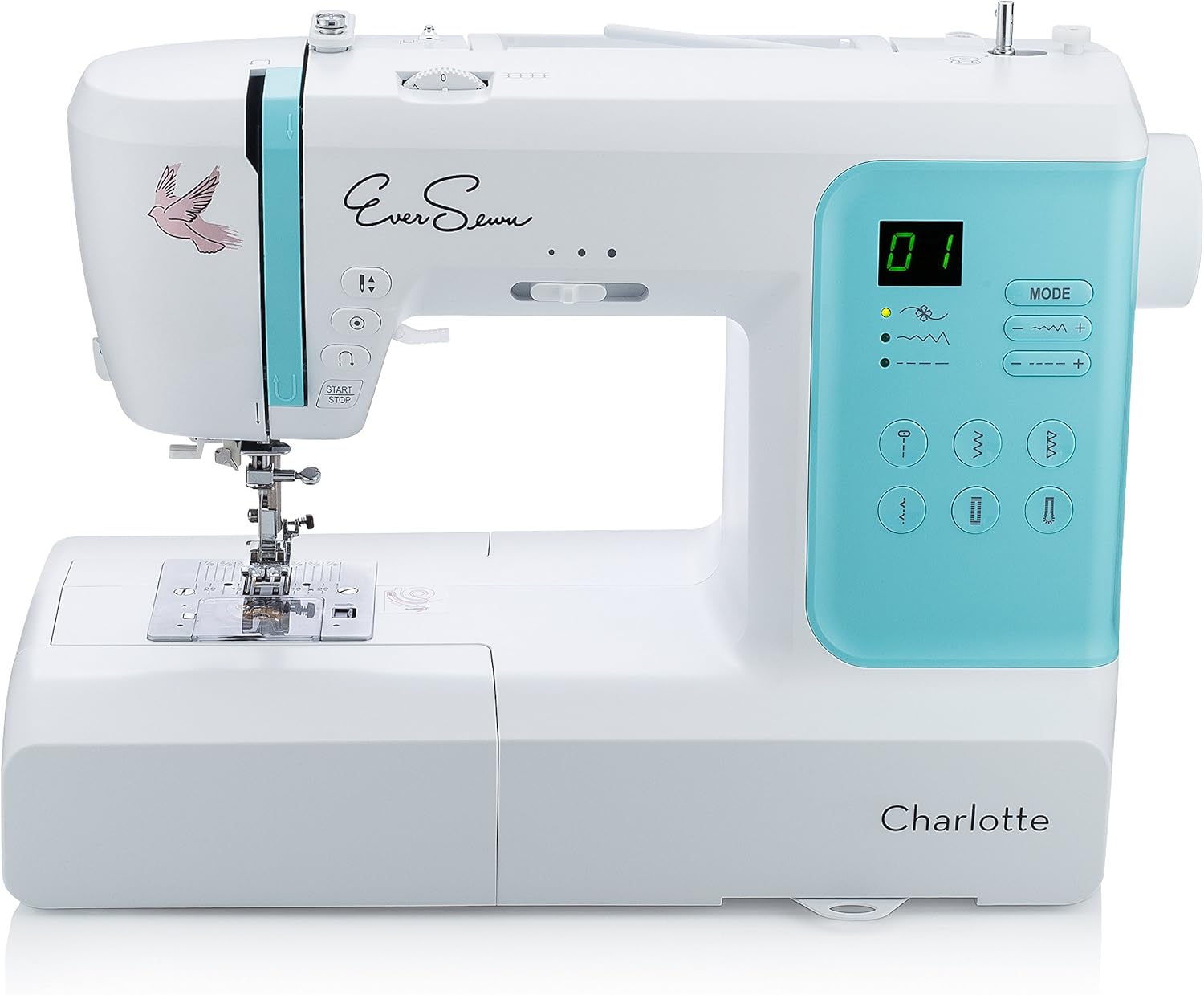
The EverSewn Charlotte is a compact computerized sewing machine that offers 70 to 80 stitches, a 7mm maximum stitch width, and a 6.5-inch-wide sewing space with drop-feed capability for quilting and free-motion work. It includes an automatic needle threader, a top-drop bobbin with clear cover, LED stitch panel, fingertip speed control, and seven presser feet that cover common tasks like buttonholes, zippers, and blind hems. In everyday use it handles garment sewing, basic quilting, and craft projects cleanly and with fewer manual adjustments than a mechanical machine. The adjustable sewing speed slider and start/stop controls make it approachable for learners, while the included quilting guide and feed dog drop add versatility for hobby quilters. Trade-offs are typical for the price class: it is not a heavy industrial machine so very thick multiple-layer leather or heavy denim may challenge it, and the feature set is simplified compared with high-end computerized models. For a budget-minded buyer wanting a capable first computerized machine that grows with basic quilting needs, Charlotte covers the essentials well.
Best for: Buyers looking for an affordable, easy-to-use computerized machine that supports learning sewing basics and basic quilting and who want included accessories to get started.
Less Ideal for: Professional sewists who need high-speed industrial performance or hobbyists who regularly sew very heavy fabrics and require advanced customization.
- Large stitch selection and 7mm stitch width provide creative flexibility for garment and quilt projects
- 6.5-inch-wide sewing space with feed dog drop supports quilting and free-motion work
- Automatic needle threader and drop-in bobbin make setup and bobbin changes quick and user-friendly
- Includes seven presser feet and accessories that cover most beginner sewing tasks
- Not designed for heavy industrial use and may struggle with very thick multiple-layer materials
- Simplified feature set lacks some advanced customization found on premium computerized machines
Verdict: A budget-friendly computerized sewing machine that gives beginners useful quilting and garment-sewing features without a steep learning curve.
Janome JW8100 Computerized Sewing Machine

| Built-in stitches | 100 |
|---|---|
| Buttonholes | 7 one-step buttonholes |
| Power source | Corded Electric |
| Feed dog system | 7-piece feed dog system |
The Janome JW8100 is a feature-packed computerized sewing machine aimed at home sewists and beginner quilters who want room to grow. It offers 100 built-in stitches and seven one-step buttonholes accessed via a backlit LCD and simple navigation buttons, plus a start/stop button and speed slider for sewing without the foot pedal. Practical touches like a built-in needle threader, needle up/down control, jam-proof drop-in bobbin, and auto-declutch bobbin winder reduce setup fuss and keep projects moving. The included extra-wide extension table, even-feed foot, and quarter-inch quilting foot make handling larger patchwork and layered fabrics much easier. For heavier or multi-layer projects the 7-piece feed dog system helps maintain balanced feeding. Trade-offs are mainly size and weight compared with compact beginner machines, and advanced sewists may miss specialized stitches or higher stitch width beyond typical home use. For reliability-focused beginners the JW8100 balances useful automation and quilting-ready accessories with straightforward controls.
Best for: Buyers who prioritize dependable, easy-to-use features and want a machine that supports quilting and general sewing as they learn and advance.
Less Ideal for: Sewers who need a lightweight travel machine or professionals seeking industrial-level stitch options and speed should look elsewhere.
- Large stitch library with 100 built-in stitches for garment sewing and decorative work
- User-friendly LCD and one-touch controls including start/stop and speed slider
- Convenience features like built-in needle threader and jam-proof drop-in bobbin reduce setup time
- Quilting-ready accessories included (extension table, even-feed foot, 1/4" foot)
- Relatively heavy and larger footprint compared with compact beginner machines
- Not aimed at highly specialized professional sewing functions
Verdict: A reliable, beginner-friendly computerized machine with strong convenience and quilting accessories that keeps sewing simple as you progress.
Brother XR9550 Sewing Machine

| Built-in stitches | 165 |
|---|---|
| Alphanumeric stitches | 55 |
| Power source | Corded Electric |
| Input voltage | 120 volts |
The Brother XR9550 is a full-featured computerized sewing and quilting machine aimed at hobbyists and beginners who want room to grow. It offers 165 built-in stitches including utility, decorative, quilting, and 55 alphanumeric stitches for monogramming, plus eight one-step auto-size buttonholes, all selectable on a clear LCD screen. Practical conveniences include an automatic needle threader, jam-resistant drop-in top bobbin, start/stop and reverse buttons, and variable speed control so you can sew with or without the foot pedal. The included wide table and spring-action quilting foot make handling larger quilt projects easier, and eight presser feet cover common tasks from zippers to blind hems. The machine's metal frame and top-loading bobbin improve stitch consistency, but it is best suited for lightweight to medium-weight fabrics; very heavy-duty leather or many thick layers may require optional accessories like a walking foot. For someone who values helpful automation, a broad stitch library, and quilting support, the XR9550 is a capable, beginner-friendly choice with features that scale as skills improve.
Best for: Buyers who want a reliable, beginner-friendly computerized machine that handles quilting and garment work while offering automated features to reduce setup friction and learning time.
Less Ideal for: If you need an industrial or heavy-duty machine for thick leather, many layered upholstery, or continuous commercial use, this home-focused model is not the best fit.
- Large stitch library including 55 alphanumeric stitches for monograms
- Automatic needle threader and drop-in top bobbin for easier setup and fewer jams
- Wide extension table and quilting foot included for handling larger quilt projects
- Computerized controls with LCD, variable speed, and start/stop for beginner-friendly operation
- Not optimized for very heavy-duty or industrial sewing without optional accessories
- Hard cover contains Styrofoam that should not be removed which may confuse some buyers
Verdict: A beginner-friendly computerized sewing and quilting machine that mixes a large stitch library with automation and quilting support for confident learning and project growth.
Brother SE700 Sewing & Embroidery

| Built-in embroidery designs | 135 |
|---|---|
| Built-in sewing stitches | 103 |
| Embroidery field | 4" x 4" |
| Screen | 3.7" touchscreen |
| Connectivity | Wireless LAN, USB |
The Brother SE700 combines full-featured sewing and basic embroidery in one compact, user-friendly machine aimed at hobbyists and beginners. It offers 103 built-in sewing stitches, 10 one-step auto-size buttonhole styles, and 135 embroidery designs plus 10 embroidery fonts, so you can move from simple repairs to personalized monograms without swapping machines. The 3.7-inch color touchscreen makes previewing and editing designs straightforward, and wireless LAN or USB lets you send files from the Artspira app or Design Database Transfer for easy project management. Practical conveniences include an automatic needle threader, automatic thread cutter, jam-resistant top drop-in bobbin, and eight included presser feet for common tasks. The 4" x 4" embroidery field is fine for monograms, kids clothing, and small home-decor projects but limits larger designs, and advanced embroiderers may find the hoop size and feature set restrictive. For cautious buyers the SE700 is a sensible, well-supported entry-level computerized combo that covers most beginner needs while keeping setup and operation approachable.
Best for: Buyers who want a reliable, easy-to-learn computerized machine that handles both everyday sewing and small embroidery projects with minimal fuss and good vendor support.
Less Ideal for: Users who need a larger embroidery field for big projects, industrial speed for production sewing, or highly advanced embroidery features for professional digitizing.
- Combines sewing and embroidery functions in one machine for flexible hobby use
- Wireless LAN and USB transfer let you send designs from the Artspira app or PC without complex cabling
- Large color touchscreen for on-machine editing and design previewing
- Automatic needle threader and jam-resistant drop-in bobbin reduce setup frustration for beginners
- Includes useful accessories: 4" x 4" hoop and eight presser feet to start many projects immediately
- 4" x 4" embroidery area limits larger designs and quilting-sized patterns
- Not aimed at heavy industrial use or high-volume production
Verdict: The SE700 is a dependable, beginner-friendly sewing and embroidery combo that delivers straightforward wireless design transfer and easy setup, making it an ideal first computerized machine.
Choosing the Right Computerized Sewing Machine for Beginners: Key Factors to Consider
Ease Of Setup And Onboarding
A beginner-friendly machine should be simple to unpack, thread, and start using with minimal fuss. Look for clear, labeled threading paths, color-coded guides, and an easy-to-load bobbin system. Machines that include quick-start guides, tutorial videos, or an intuitive LCD with step prompts reduce early frustration and help you reach productive sewing faster.
Fast setup matters because early wins build confidence. If loading the bobbin or threading the needle is fiddly, new users are more likely to abandon projects. Consider how much handholding the manufacturer provides and whether the manual explains common troubleshooting steps in plain language.
Stitch Options And Quality
Even if you plan to sew mostly simple seams, having a useful selection of basic stitches—straight, zigzag, stretch, and a few decorative stitches—makes the machine more versatile. Pay attention to stitch length and width controls and whether the machine maintains consistent tension across different fabrics.
Good stitch quality means neat, even stitches without skipped stitches or frequent tension adjustments. A stable feed system and reliable presser foot pressure help when moving between lightweight cottons and medium-weight fabrics, which beginners will encounter as they try different projects.
User Interface And Controls
Controls should be logical and forgiving for first-time users. Simple push-button or dial stitch selection with an easy-to-read display is preferable to nested menus. Features such as one-step buttonhole, automatic needle threading, and a start/stop button for sewing without a foot pedal can significantly simplify learning.
Consider whether adjustments are incremental and labeled clearly. An interface that provides visual feedback about selected stitch, length, and width helps avoid mistakes and speeds up the learning process.
Accessories And Presser Feet
Included accessories expand what you can practice without buying extras. Common helpful items include multiple presser feet (zipper, buttonhole, zigzag), extra bobbins, spool caps, and a seam ripper. A hard cover or carrying case is useful if storage or portability matters.
Beginners benefit from a moderate accessory assortment because it lets them try hems, zippers, and decorative techniques right away. Also check whether replacement parts and common extras are widely available and easy to attach.
Maintenance, Support, And Durability
A good beginner machine should tolerate some misuse and still be easy to maintain. Look for accessible bobbin areas for cleaning lint, straightforward oiling points if required, and clear guidance on basic upkeep. Durable construction in the feed dog and needle bar areas reduces the likelihood of early mechanical issues.
Support options matter when you hit snags. Machines backed by clear support documentation or responsive customer service make troubleshooting simpler. Consider the availability of local repair services if you plan to keep the machine long term.
Portability And Workspace Fit
Think about where you will use the machine and whether it needs to be moved regularly. Compact machines with carry handles or lighter weights work well for small apartments or sewing classes. Larger machines with extension tables are better if you need to work on quilts or large projects, but they require dedicated space.
Workspace fit also affects comfort. Check the throat space and whether the machine has an optional extension table for larger pieces. A machine that fits your typical workspace and project size will be used more consistently.
Why Computerized Machines Help Beginners
Computerized sewing machines automate many routine decisions so beginners can focus on fundamentals like seam allowance and fabric handling. Features like automatic thread trimming, preset stitch settings, and one-step buttonholes remove repetitive manual adjustments that often trip up new sewers.
Automation does not replace learning; it provides a gentler learning curve. You still practice control, alignment, and fabric handling, but with fewer technical barriers between intention and result.
- Automatic needle threaders reduce eye strain and speed setup
- Preset stitch settings minimize tension troubleshooting
- Onboard storage and screens can show stitch diagrams and numbers
Essential Beginner Features To Try First
Prioritize a reliable straight stitch and a one-step buttonhole. These two capabilities will cover a large share of common sewing tasks like hemming, garment repairs, and simple home decor projects. Automatic needle threading, clear stitch labels, and easy presser foot changes are next on the list.
A removable free arm is handy for sewing cuffs and collars, and an adjustable presser foot pressure adds versatility for different fabric weights.
- One-step buttonhole for quick closures
- Adjustable stitch length and width for basic tailoring
- Free arm for small circumference work
Common Beginner Mistakes And How A Machine Can Help
Beginners often struggle with tension and skipped stitches. Machines that offer clear tension indicators or automatic tension systems reduce this issue. Even with automated aids, learning to recognize the signs of tension problems is important so you can correct them when they occur.
Another common mistake is inconsistent feeding when guiding fabric. A good feed dog system and stable presser foot prevent bunching and help maintain straight seams, especially on slippery or stretchy fabrics.
- Use test scraps to dial in stitch settings before starting a project
- Keep a seam ripper handy for quick corrections without panic
Setting Up A Beginner Sewing Space
Designate a stable, well-lit workspace with enough room for your fabric and an iron. A table that keeps the machine at elbow height will reduce fatigue and improve control. Keep common supplies like pins, scissors, thread, and a measuring tape nearby to maintain workflow.
If storage is limited, a compact machine with onboard accessory storage and a removable cover helps keep things tidy. Consider a sewing light or task lamp for detailed work.
- Comfortable chair with good back support
- Flat, stable table at proper height
- Task lighting and organized supply area
When To Upgrade From A Beginner Machine
You may outgrow a beginner machine when you want faster stitching speeds, more throat space for large projects, or advanced presser feet for specialized techniques. Also consider an upgrade if you begin regular heavy-weight sewing, such as leather or thick upholstery fabrics.
If you outgrow the basic feature set, look for a machine that increases durability and offers modular upgrades while retaining user-friendly controls that helped you learn.
- Need more throat space for quilts
- Require higher stitch-per-minute capability
- Want advanced decorative stitch or embroidery support
How We Chose the Best Computerized Sewing Machine for Beginners
We focused on features that make a sewing machine genuinely approachable for someone new to the craft. Core evaluation criteria included setup and onboarding, which covers how easy it is to get the machine out of the box, thread and bobbin loading, and whether basic instruction materials are clear. Stitch quality and consistency were assessed by looking at stitch options, straight-seam reliability, and thread tension control. Usability and controls considered screen clarity, button layout, and how intuitive stitch selection and adjustments are. Accessory support and included presser feet matter for beginners because they expand learning opportunities right away. Finally, build reliability and serviceability reflect durability and how straightforward routine maintenance is. We excluded advanced industrial or heavy-duty models that are intended for professional production; those exceed the needs and budgets of most beginners. Products that primarily target embroidery-only workflows were also excluded because they require different skills. The final shortlist favors machines that balance automated features with clear manual controls so new sewers can learn fundamentals while benefiting from useful automation.
Our full evaluation process is outlined in our review methodology.
FAQ
Do beginners need a computerized sewing machine?
A computerized machine is not required, but it can make the learning process easier by automating threading, stitch selection, and buttonholes. Many beginners find these conveniences reduce frustration and speed progress.
How important is automatic needle threading for new sewers?
Automatic needle threading is a helpful convenience that saves time and reduces eye strain. It is particularly valuable for users with limited dexterity or poor lighting in their workspace.
Can a beginner machine handle different fabric types?
Many beginner machines handle a range of fabrics from light cotton to medium-weight knits when settings are adjusted properly. For very heavy fabrics or repeated heavy-duty projects, a more robust model may be preferable.
What maintenance should a beginner expect to do?
Regular maintenance includes cleaning lint from the bobbin area, changing needles frequently, and following simple oiling instructions if specified in the manual. Basic upkeep prevents common problems and extends machine life.
Is a foot pedal necessary for learning?
A foot pedal provides natural speed control, but many computerized machines include a start/stop button so you can sew without a pedal. Using both options helps beginners learn different control styles.
Final Verdict
When choosing a computerized sewing machine for beginners, prioritize ease of setup, clear controls, and consistent stitch quality. Accessories and a forgiving feed system expand what you can try right away, while straightforward maintenance and good support reduce downtime. Balance automation with features that teach foundational skills so you can progress without becoming dependent on presets. Focus on machines that make the first projects pleasant and manageable, and plan upgrades only when your projects demand greater capacity or specialized features.