
Note: This article contains affiliate links. If you click on these links and make a purchase, we may earn a small commission at no extra cost to you. This helps support our research and content. Read our full affiliate disclosure here.
If you work with canvas, denim, leather, or layered upholstery, a standard home machine will struggle or wear out quickly. A heavy-duty sewing machine gives you stronger stitching, a more powerful motor, and parts built to tolerate higher loads so you can sew thicker materials and run longer jobs without frequent breakdowns. This guide spotlights seven shortlisted heavy-duty sewing machines selected for durability, motor performance, and ease of use across a range of shop and home projects. Below we explain the evaluation criteria and practical differences so you can pick the machine that fits the materials you sew and the throughput you expect.
Top Picks at a Glance
| Best Overall The best all-around choice for most situations | Juki HZL-F600 Sewing Machine |  |
| Best Quality Built to a higher standard if you want something more solid | Janome HD3000 Heavy-Duty Sewing Machine |  |
| Best Value The sweet spot between price and what you get | SINGER Heavy Duty 4411 |  |
| Best Budget The cheapest option that still gets the job done reliably | kidoom FHSM-705 Sewing Machine |  |
| Top Rated A top-rated pick with lots of positive feedback | Brother ST150HDH Strong & Tough |  |
| Most Popular A crowd favorite that many people choose with confidence | SINGER Heavy Duty 4423 |  |
| Best Seller A high-volume bestseller chosen again and again | VEVOR Industrial Lockstitch JK9808T |  |
Juki HZL-F600 Sewing Machine

| Power Source | AC |
|---|---|
| Material | Metal |
| Built-in Stitches | 255 |
The Juki HZL-F600 is a heavy-duty computerized sewing and quilting machine designed for users who need a robust, versatile workhorse. It offers 255 built-in stitches including basic, stretch, decorative, letter, and buttonhole options, and an LCD stitch selector that makes choosing and adjusting stitches quick and visible. The automatic needle threader and jam-resistant design make setup and routine sewing less fussy, while the included accessory tray and dust cover keep tools organized. In practice the machine handles garment sewing and quilting tasks with reliable stitching choices and user-friendly controls, though its weight and metal construction mean it is best kept on a dedicated table rather than moved frequently. Power is AC only, so it is intended for stationary home or studio use. The HZL-F600 is a solid pick for sewists who want a durable, feature-rich machine that balances advanced stitch variety with practical everyday reliability.
Best for: Practical sewists and quilters who want a durable, feature-rich machine that handles a wide variety of everyday and heavier sewing tasks and will stay set up in a home studio or dedicated workspace.
Less Ideal for: If you need a lightweight, portable machine for classes or travel or require battery operation, look for smaller portable models instead.
- Large stitch library of 255 built-in stitches covering basic, stretch, decorative, letters, and buttonholes
- LCD stitch selector for clear, simple stitch selection and adjustments
- Automatic needle threader reduces setup time and eye strain
- Metal construction offers durability suited to heavy use
- Included accessory tray and dust cover help keep supplies organized
- AC-powered only, not designed for portable battery use
- Heavy and bulky, making it less convenient to move frequently
Verdict: The Juki HZL-F600 is a durable, feature-packed sewing machine that delivers heavy-duty reliability and a huge stitch selection for serious home sewists and quilters.
Janome HD3000 Heavy-Duty Sewing Machine
| Model Number | HD3000 |
|---|---|
| Built-in Stitches | 18 |
| Power Source | Corded Electric |
| Included Components | Foot Control, Power Cord, Standard Accessories |
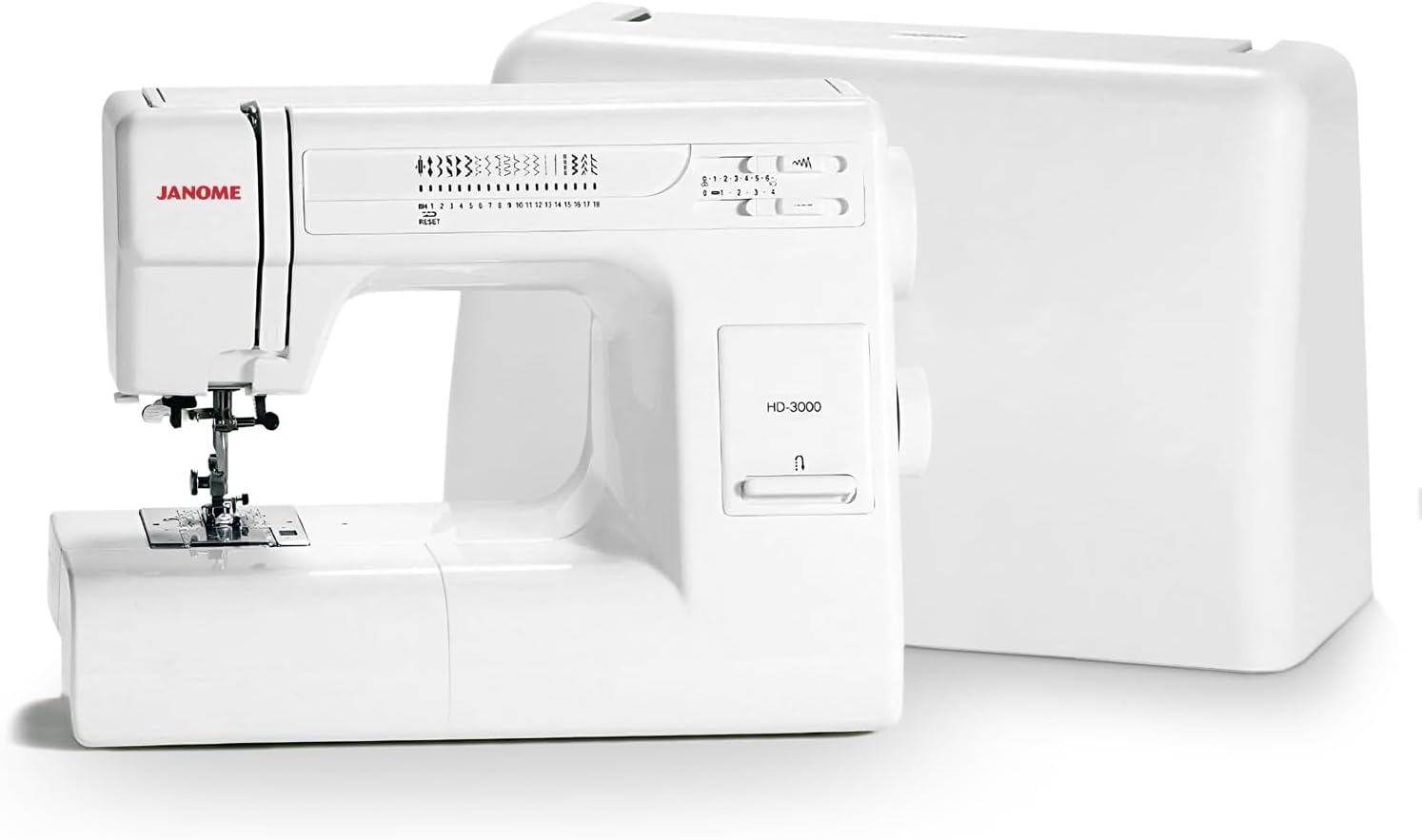
The Janome HD3000 is a straightforward, mechanically driven heavy-duty sewing machine aimed at users who need reliable, durable stitching without digital complexity. It offers 18 built-in stitches, a one-step buttonhole, built-in needle threader, snap-on presser feet, adjustable foot pressure, and a push-pull bobbin winder, which together cover most garment and home-sewing tasks. The extra-high presser foot and strong aluminum/plastic chassis give it the stability to handle heavier fabrics like denim and canvas better than basic domestic machines. Its manual controls and mechanical feed make it easy to service and predictable under load, but the lack of computerized stitch programming means stitch customization is limited to the built-in options. The included hard carrying case and simple maintenance features suit frequent use and transport. Expect a rugged, no-frills workhorse that prioritizes stitch strength and reliability over fancy automation.
Best for: Sewists who prioritize durable, dependable stitch performance for frequent use or heavier fabrics and prefer a straightforward mechanical machine they can maintain themselves.
Less Ideal for: Buyers who want touchscreen controls, advanced stitch programming, or a very lightweight portable machine should consider computerized or travel-focused alternatives.
- Sturdy construction with aluminum components for better stability under heavy fabrics
- 18 built-in stitches including a one-step buttonhole for common sewing tasks
- Adjustable foot pressure and extra-high presser foot accommodate thicker materials
- Built-in needle threader and snap-on presser feet speed setup and accessory changes
- Mechanical controls limit stitch customization compared with computerized models
- Relatively heavy and larger to move despite included carrying case
Verdict: Choose the Janome HD3000 if you need a rugged, mechanically simple sewing machine that reliably handles heavier fabrics and frequent use.
SINGER Heavy Duty 4411

| Power Source | Corded Electric |
|---|---|
| Built-In Stitches | 11 |
| Stitch Applications | 69 |
| Max Speed | 1,100 stitches/min |
The SINGER Heavy Duty 4411 is a straightforward mechanical sewing machine built to tackle tough fabrics like denim, canvas, and layered projects while still sewing finer materials when adjusted. It delivers up to 1,100 stitches per minute driven by a more powerful motor and sits on a solid metal interior frame to reduce skipping and wobble. The machine offers 11 built-in stitches across 69 stitch applications, a 4-step buttonhole, LED work light, stainless steel bed plate for smooth fabric feeding, and a top drop-in bobbin with a clear cover so you can monitor thread at a glance. Included accessories such as four presser feet, bobbins, needles, and basic tools make it ready to use out of the box. Trade-offs are its mechanical control layout, which lacks computerized stitch programming and touch controls, and a more basic feature set compared with higher-end models, so advanced decorative work or automated features require manual setup. For someone who wants durability and speed for everyday heavy sewing, it is a practical, no-frills workhorse.
Best for: Buyers who prioritize a durable, fast machine for frequent heavy-duty sewing and want a practical, ready-to-run tool rather than advanced computerized features.
Less Ideal for: Users who need computerized stitch customization, automated sewing functions, or a large library of built-in decorative stitches for detailed specialty work.
- Powerful motor and metal interior frame for reliable stitching on thick fabrics
- High top speed (up to 1,100 stitches per minute) for faster project completion
- Top drop-in bobbin with clear cover for easy thread monitoring
- Stainless steel bed plate and LED light improve fabric feed and visibility
- Includes essential presser feet and accessories so it is ready to use
- Mechanical interface with no computerized stitch programming or automatic features
- Limited built-in stitch count compared with feature-rich machines
Verdict: Choose the SINGER 4411 if you want a fast, rugged, no-nonsense sewing machine built to handle heavy fabrics reliably.
kidoom FHSM-705 Sewing Machine
| Brand Name | kidoom |
|---|---|
| Model Number | FHSM-705 |
| Included Components | AC/DC Adapter, Accessory Kit, Foot Pedal, Sewing Machine Body |
| Power Source | Electric |
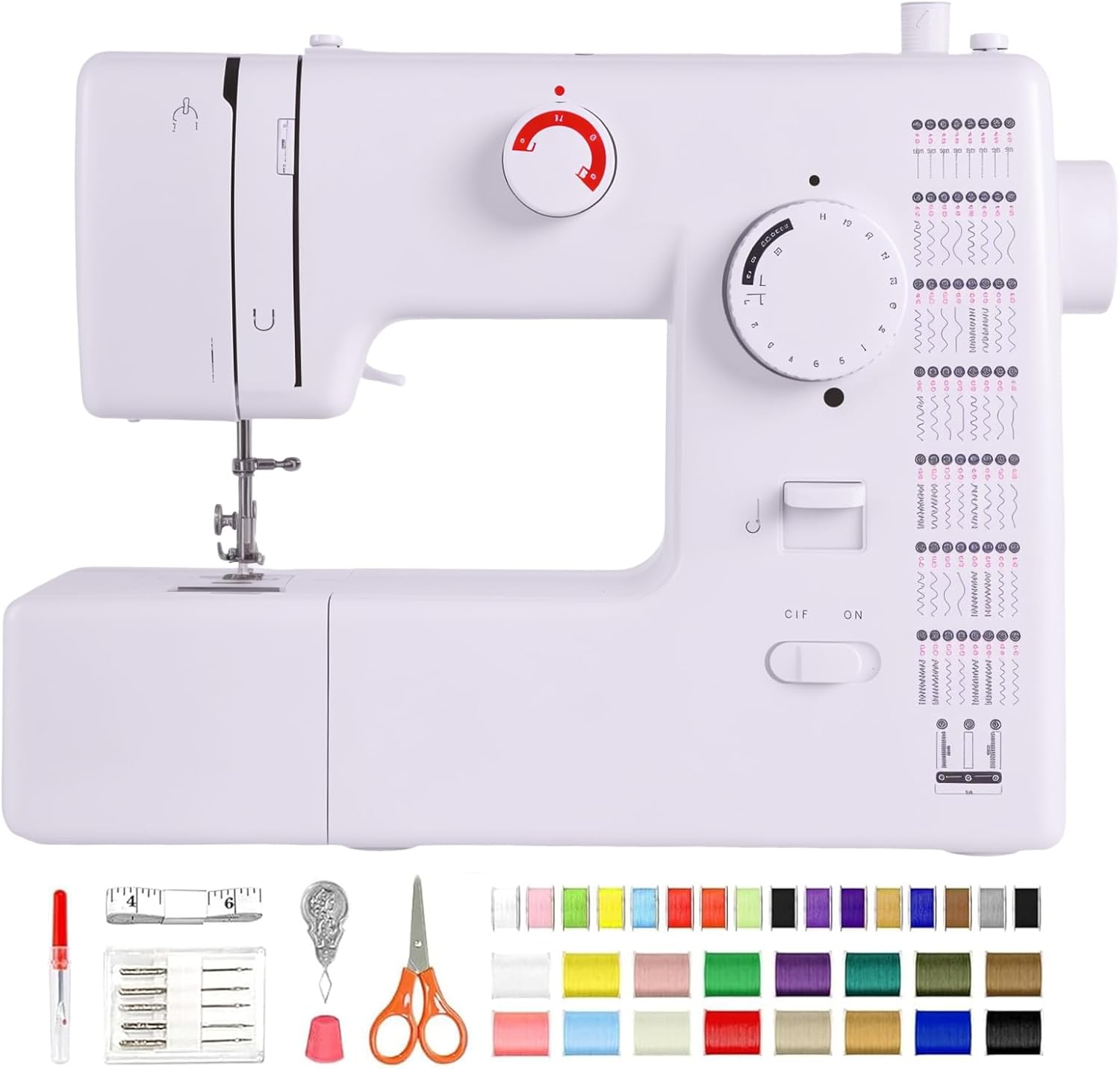
The kidoom FHSM-705 is a heavy-duty home sewing machine built around a full metal frame and a motor claimed to deliver roughly 50% more power than standard models, which helps it penetrate multiple fabric layers like denim. It offers 59 stitch patterns, a reverse sewing function, and a cylinder arm for sewing sleeves and tubular pieces, so it covers decorative and practical tasks from garment repairs to quilting. The unit includes a bright LED work light, automatic bobbin winding, adjustable thread tension, and a generous accessory kit with spare needles, bobbins, thread and a foot pedal, making it ready to use out of the box. Practical benefits are stable stitching on thicker materials and expanded arm space for larger projects. Expect a learning curve for stitch selection and setup, and while the metal frame improves stability, this is still a consumer machine so industrial pace or continuous commercial production may exceed its intended use.
Best for: Buyers seeking a budget-friendly, heavy-duty home machine that can handle thicker fabrics and varied stitch work for DIY projects, repairs, and quilting.
Less Ideal for: Users who need a commercial-grade machine for nonstop production or professional tailoring at high volume should consider industrial models instead.
- Full metal frame for improved stability and consistent stitch quality
- Powerful motor able to sew through multiple layers and thicker fabrics
- Large stitch selection with 59 built-in patterns including reverse sewing
- Cylinder arm and expanded work area for sleeves, cuffs, and larger projects
- Comprehensive accessory kit and automatic bobbin winding for quick setup
- Designed for consumer and hobby use rather than continuous industrial production
- May require time to learn stitch selection and tension adjustments for best results
Verdict: A cost-conscious heavy-duty home sewing machine that pairs a metal frame and a stronger motor to handle thicker fabrics and diverse stitch tasks.
Brother ST150HDH Strong & Tough

| Power Source | Corded Electric |
|---|---|
| Input Voltage | 120 volts |
| Included Stitches | 50 built-in stitches |
| Included Sewing Feet | 9 feet |
The Brother ST150HDH Strong & Tough is a metal-framed, computerized sewing machine built for durable everyday and heavy-duty use. It offers 50 built-in stitches and five auto-size buttonholes, an LCD for stitch selection, variable speed control, start/stop and needle up/down buttons, and an advanced automatic needle threader that simplifies setup. Practical features for heavy projects include longer 7-point feed dogs with a box-feed design and an included walking foot to help move multiple layers and difficult fabrics smoothly. The drop-in bobbin, clear-view bobbin cover, and quick-set winding make thread management straightforward, and the machine ships with nine feet and a set of heavy-duty needles so you can start on jeans, canvas, upholstery, or leather immediately. Trade-offs are typical for a strong metal-frame machine: it is heavier and takes more bench space than portable consumer models, and users expecting embroidery or extremely high stitch counts will find simpler decorative options here. For anyone prioritizing dependable construction and consistent fabric handling on thick materials, the ST150HDH performs as advertised.
Best for: Buyers who prioritize long-term reliability and machines that can handle frequent work on thick fabrics like denim, canvas, upholstery, or leather will appreciate its durable construction and practical controls.
Less Ideal for: If you need a lightweight, highly portable machine or built-in embroidery and advanced decorative stitch libraries, look at models focused on portability or embroidery instead.
- Metal interior frame improves stability for high-speed and heavy-fabric sewing
- 7-point longer feed dogs and walking foot for smoother feeding of multiple layers
- Advanced automatic needle threader and drop-in bobbin speed setup and reduce fiddling
- 50 built-in stitches plus 5 auto-size buttonholes cover utility and decorative needs
- Includes nine presser feet and heavy-duty needles so it is ready for thick fabrics out of the box
- Heavier and larger footprint compared with compact home models
- Does not include built-in embroidery capability or very high stitch counts found on specialized machines
Verdict: Choose the ST150HDH when you want a factory-quality, heavy-duty sewing machine built for reliable, consistent performance on thick and layered fabrics.
SINGER Heavy Duty 4423

| Built-in stitches | 23 (97 applications) |
|---|---|
| Max sewing speed | 1,100 stitches/min |
| Power source | Corded Electric |
| Input voltage | 120 volts |
The SINGER Heavy Duty 4423 is a straightforward mechanical sewing machine designed to handle both everyday sewing and heavier textiles like denim and canvas. It offers 23 built-in stitches that deliver 97 stitch applications, a high-speed motor rated to about 1,100 stitches per minute, and a top drop-in bobbin for easier monitoring of thread. Practical features include an automatic needle threader, LED work light, stainless steel bed plate for smoother fabric feed, and four essential presser feet stored in the accessory tray. The heavy-duty interior metal frame and stronger motor make it more capable on thick seams than basic machines, while adjustable presser-foot pressure helps with lighter fabrics. Limitations are its mechanical control layout if you prefer computerized stitch selection and the relatively basic accessory set compared with higher-end models, but for robust, fast sewing and reliable construction it is a solid value for hobbyists and small-scale makers.
Best for: Buyers who want a robust, no-nonsense machine that reliably handles heavy fabrics and finishes common home-sewing and mending tasks quickly and with fewer headaches.
Less Ideal for: Users seeking a computerized machine with many decorative stitch patterns, touchscreen controls, or a large accessory ecosystem for specialized quilting or embroidery work should look elsewhere.
- Powerful motor with high stitch speed suitable for thick fabrics
- Heavy-duty metal interior frame for skip-free, stable sewing
- Top drop-in bobbin and automatic needle threader for easier setup
- Includes commonly used presser feet and basic accessory kit
- Stainless steel bed plate and LED light improve fabric handling and visibility
- Mechanical controls lack the fine programming and stitch preview of computerized machines
- Accessory set is functional but not extensive for advanced quilting or specialty techniques
Verdict: Choose the SINGER 4423 when you need a fast, rugged machine that reliably tackles thick fabrics and everyday heavy-duty sewing.
VEVOR Industrial Lockstitch JK9808T

| Power Source | ac |
|---|---|
| Motor Power | 550W |
| Max Stitch Speed | 5000 SPM |
| Table Height Range | 22.4–29.1 inches |
The VEVOR JK9808T is a commercial lockstitch sewing machine built for heavy use. Driven by a 550W servo motor, it claims up to 5000 stitches per minute and can handle thick stacks—manufacturer notes up to ten layers of denim—making it suited for upholstery, bags, tents, and similar projects. The metal frame, automatic lubrication, and oil window point to durability and easier maintenance for continuous operation. Practical controls include an LCD for speed and needle position, soft start, a 0.5-inch knee lifter plus a manual presser lift, one-touch reverse, and automatic thread trimming to speed common workflow tasks. The kit includes a widened worktable with adjustable height, LED work light, and a storage drawer for accessories. Expect a relatively quiet operation under typical shop loads yet note the machine is large and intended for a dedicated workspace; installation and setup require some mechanical familiarity. For buyers who prioritize factory-style performance in a home or small-shop setting, this model brings industrial features at a non-industrial price point.
Best for: Buyers seeking a durable, production-capable machine for heavy fabrics who prefer a ready-to-run table kit with practical controls and maintenance features rather than a lightweight hobby model.
Less Ideal for: If you need a compact, portable machine for occasional home mending or travel sewing, this heavy bench system is overbuilt and not a good fit.
- High-speed servo motor rated to 5000 stitches per minute for fast production
- Metal body with automatic lubrication and oil window for durable, low-maintenance operation
- LCD controls for sewing speed, needle up/down, and soft start give precise, repeatable adjustments
- Knee lifter, manual presser lift, LED light and widened table improve handling of large or thick workpieces
- Automatic thread trimming and one-touch reverse streamline common sewing tasks
- Large, heavy bench setup requires a permanent workspace and basic mechanical setup
- Manufacturer specs on max layers and speed are typical lab figures and actual performance will vary by material and thread
Verdict: A factory-style, high-speed lockstitch machine that brings industrial durability and controls to small shops and serious home sewists.
Choosing the Right Heavy-Duty Sewing Machine: Key Factors to Consider
Motor Power and Torque
A stronger motor provides the torque needed to drive a needle through thick multi-layer seams without bogging down. Look beyond wattage to how the motor performs under load because continuous sewing on heavy fabrics demands sustained torque rather than brief bursts of speed.
Insufficient motor torque will lead to skipped stitches, broken needles, and an overheated motor in heavy use. If you plan to sew leather, upholstery, or multiple denim layers, prioritize machines spec'd for higher torque or those explicitly engineered for heavy materials.
Chassis Construction and Gear Materials
Metal chassis and metal internal gears absorb vibration and resist flexing when the needle meets resistance, which keeps stitch alignment accurate over time. A partly or fully plastic frame may be lighter but often transfers more shock to internal parts and can loosen under repeated heavy loads.
Durable construction also affects maintenance intervals. Machines with robust frames tend to hold timing and require fewer mid-life adjustments, making them a better investment for frequent or professional use.
Feed System and Stitch Consistency
A reliable feed system prevents fabric slipping, bunching, or uneven stitches when handling slippery or bulky materials. Look for machines with strong, well-aligned feed dogs, adjustable presser foot pressure, and walking foot compatibility when working with multiple layers.
Consistent stitch length under load is essential for professional-looking seams. Feed quality and presser foot control together determine whether the machine can move heavy fabrics smoothly without causing puckering or irregular stitches.
Presser Foot Range and Throat Space
Generous presser foot lift and a wider throat area make it far easier to manage thick seams, bulky hems, or large projects like upholstery pieces. A high presser foot lift lets you position multiple layers under the foot without forcing the fabric into place.
Throat space matters for maneuvering larger projects and for comfort during long sessions. If you frequently work on boxes, bags, or home décor items, prioritize machines with more working space and accessory compatibility for bulky tasks.
Needle System and Accessory Compatibility
A heavy-duty needle system that accepts stronger, larger needles reduces breakage when penetrating dense fabrics. Compatibility with industrial-style needles, screw-in presser feet, walking feet, and specialized feet for leather or vinyl expands the machine's versatility for tough jobs.
Check how easy it is to change needles and feet and whether the machine supports upgraded parts for thicker materials. A versatile needle system reduces trial-and-error and helps prevent damage to both fabric and machine.
Ease of Maintenance and Serviceability
Machines intended for heavy use should be easy to access for routine oiling, cleaning lint from the hook area, and replacing wear parts. Simple, documented maintenance procedures extend life and reduce downtime.
Consider how easy it is to get replacement parts such as bobbin cases, drive belts, and feet. Machines with clear service access and commonly available parts are easier to keep operational under frequent, demanding use.
When to Choose a Heavy-Duty Machine Over a Standard One
Heavy-duty machines are designed for materials and workloads that exceed typical home sewing needs. Choose a heavy-duty option when you routinely sew multiple layers of denim, leather, canvas, or when you run long production-style sessions that generate heat and stress in the drive train.
If your work includes upholstery, outdoor gear, or frequent repairs of heavy garments, the reinforced construction and higher torque of heavy-duty machines reduce the risk of skipped stitches, needle breakage, and premature wear. For occasional light projects, a standard machine will often suffice.
- Ideal for denim, canvas, leather, upholstery
- Better suited to long sessions and high stitch counts
- Reduces needle breakage and skipped stitches on thick seams
Common Upgrades and Accessories That Help With Heavy Materials
Certain accessories make heavy work much easier. A walking foot evens out fabric layers and prevents slippage on multi-layer seams. A high-lift presser foot is valuable when you need to position thick stacks of material under the needle.
Other helpful additions include heavy-duty needles sized for leather or denim, roller feet for sticky surfaces, and larger-capacity bobbins for long seams. Confirm accessory fitment with the machine's foot mounting system before purchasing.
- Walking foot for layered fabrics
- High-lift presser foot for bulky seams
- Heavy-duty needles and roller feet
Setting Up Your Machine for Thick Fabrics
Start with the right needle and thread combination. Use a heavier needle designed for the material and a durable thread that resists shredding. Increase presser foot pressure if the machine allows it, and test stitch length and tension on scrap material before sewing the final piece.
Slow your stitch speed and use manual fabric guidance on complex seams. This reduces stress on the motor and prevents the feed system from pulling fabric unevenly. Regularly clean the feed area and hook to remove lint that builds up faster when working with heavy threads.
- Match needle size to material
- Adjust presser pressure and stitch length
- Test on scrap before final seams
Maintenance Habits for Heavy Use
Develop a maintenance routine that includes frequent cleaning of lint and debris, regular oiling of recommended points, and inspection of needles and belts. Replace needles frequently when sewing heavy materials to avoid burrs that can damage fabric or timing.
Monitor belt tension and listen for unusual noises. If the machine heats excessively or produces unusual vibration, pause work and inspect for obstructions or worn parts. Proactive upkeep reduces downtime and extends the machine's useful life under heavy workloads.
- Clean hook and feed dogs after each heavy session
- Oil per manufacturer guidance
- Inspect and replace needles and belts regularly
Project Examples Where a Heavy-Duty Machine Excels
Heavy-duty machines are well suited to motorcycle gear, heavy denim repairs, canvas bags, leather goods, and home décor projects like upholstery and drapery that use thick seams and multiple layers. The stronger motor and reinforced frame keep stitch quality consistent across these demanding tasks.
For makers and small-scale production sewers, the reduced downtime and better durability translate into fewer interruptions and higher throughput. If your projects frequently cause stress on a standard machine, a heavy-duty option can be a productivity booster.
- Leather wallets and bags
- Multi-layer denim construction
- Upholstery and heavy curtains
How We Chose the Best Heavy-Duty Sewing Machine
We focused on features that reliably predict a machine's real-world performance on heavy materials. Key evaluation criteria included motor power and torque to assess capability on thick layers, metal chassis and gear durability to judge long-term wear resistance, feed system quality for even fabric handling, and presser foot/lift range and throat space to determine how well the machine takes bulky seams. We also reviewed stitch options and tension adjustability because proper stitch control matters when moving between thin and thick fabrics, and we checked maintenance access and parts availability as proxies for long-term serviceability. We excluded lightweight or purely decorative machines and machines with underspecified motors or plastic drive trains. Machines were only considered if they offered clear design choices that benefit heavy use, such as reinforced frames, high-torque motors, or specialized feed mechanisms. Our selection emphasizes capabilities that matter in upholstery, denim, leatherwork, and other demanding sewing tasks rather than simple feature counts.
Our full evaluation process is outlined in our review methodology.
FAQ
Can I use a heavy-duty sewing machine for lightweight fabrics?
Yes. Heavy-duty machines usually handle light fabrics well when you switch to an appropriate needle and reduce presser foot pressure. Adjust tension and stitch length to avoid puckering on thin materials.
How often should I change needles when sewing thick materials?
Needles should be changed more frequently when working with dense or abrasive fabrics. Changing needles after several hours of heavy use or at the first sign of burrs helps prevent skipped stitches and fabric damage.
Do heavy-duty machines require different thread?
Often heavier thread is beneficial for strength and durability on thick seams. Use thread that matches the needle size and material; heavier polyester or bonded threads are commonly used for leather and upholstery.
Is a walking foot necessary for heavy fabrics?
A walking foot is not always required but is very helpful for multi-layer projects and slippery fabrics. It synchronizes top and bottom fabric movement, reducing shifting and improving stitch consistency.
What maintenance is most important after a long sewing session?
Cleaning lint from the bobbin area and feed dogs, oiling recommended points, and inspecting needles and belts are the most important steps. These actions prevent buildup and detect wear before it causes problems.
Final Verdict
Prioritize motor torque, chassis durability, and a reliable feed system when choosing a heavy-duty sewing machine. Those elements determine whether a machine can handle thick materials consistently and survive extended use. Balance the need for power with serviceability and accessory compatibility. For frequent heavy work, choose a machine that makes maintenance straightforward and accepts robust needles and feet so you can keep projects moving with minimal downtime.