
Note: This article contains affiliate links. If you click on these links and make a purchase, we may earn a small commission at no extra cost to you. This helps support our research and content. Read our full affiliate disclosure here.
If you sew heavy materials like denim, canvas, upholstery, or layered cotton, a standard home machine often struggles. Choosing the right sewing machine for thick fabrics matters because tougher textiles demand more motor torque, a stronger feed system, and durable presser feet to prevent skipped stitches or broken needles. This guide shortlists the top options built to handle dense layers and frequent heavy-duty use and explains the practical strengths that matter in everyday projects. Below you will find the top picks and the testing-oriented criteria used to evaluate them, so you can choose a machine suited to your specific fabric and project workflow.
Top Picks at a Glance
| Best Overall The best all-around choice for most situations | Janome JW8100 Sewing Machine |  |
| Best Quality Built to a higher standard if you want something more solid | JUKI TL-2010Q |  |
| Best Value The sweet spot between price and what you get | Janome HD5000 Heavy-Duty Sewing Machine |  |
| Best Budget The cheapest option that still gets the job done reliably | SINGER MX60 Sewing Machine |  |
| Top Rated A top-rated pick with lots of positive feedback | Brother HC1850 Sewing Machine |  |
| Most Popular A crowd favorite that many people choose with confidence | SINGER Heavy Duty 4423 |  |
| Best Seller A high-volume bestseller chosen again and again | Brother XM2701 Sewing Machine |  |
Janome JW8100 Sewing Machine

| Built-in stitches | 100 |
|---|---|
| Buttonholes | 7 one-step |
| Feed dog system | 7-piece |
| Power source | Corded Electric |
| Maximum stitch length | 5mm |
The Janome JW8100 is a midrange computerized sewing machine designed for quilters and home sewists who need versatility and reliable fabric handling. It offers 100 built-in stitches, seven one-step buttonholes, a backlit LCD for selecting stitches, and convenience controls such as a start/stop button, needle up/down, and a speed control slider. Practical extras include an extra-wide extension table, an even feed foot and a 1/4" quilting foot that make sewing multiple layers and managing quilt blocks much easier, while the jam-proof drop-in bobbin and built-in needle threader reduce setup fuss. The machine uses a 7-piece feed dog system to move fabric evenly, which helps when sewing thicker fabrics or multiple layers, and an auto-declutch bobbin winder and presser foot lift add to day-to-day usability. Limits for heavy-duty use include a home-machine motor and consumer-grade construction, so extremely heavy industrial materials or prolonged high-torque tasks may push its limits, but for thick home quilting, denim and layered projects it performs well.
Best for: Buyers who want a dependable, feature-rich home sewing machine that handles quilting and thicker home fabrics without stepping up to industrial equipment.
Less Ideal for: People who sew professionally full time on very heavy materials or need an industrial-grade machine for nonstop commercial production should look elsewhere.
- Wide stitch selection with 100 built-in stitches for decorative and utility sewing.
- 7-piece feed dog system and even feed foot improve fabric feeding for layered or thicker materials.
- Quilting-ready accessories included such as an extra-wide extension table and 1/4" foot for managing large projects.
- User-friendly controls including LCD, start/stop button, speed slider, and built-in needle threader reduce setup time.
- Not designed as an industrial or heavy commercial machine for continuous high-torque sewing.
- Item weight and dimensions make it less portable than compact travel machines.
Verdict: A versatile, quilting-ready home machine that reliably handles layered and thicker fabrics for hobbyists and serious home sewists.
JUKI TL-2010Q
| Power Source | Treadle Powered |
|---|---|
| Material | Aluminum |
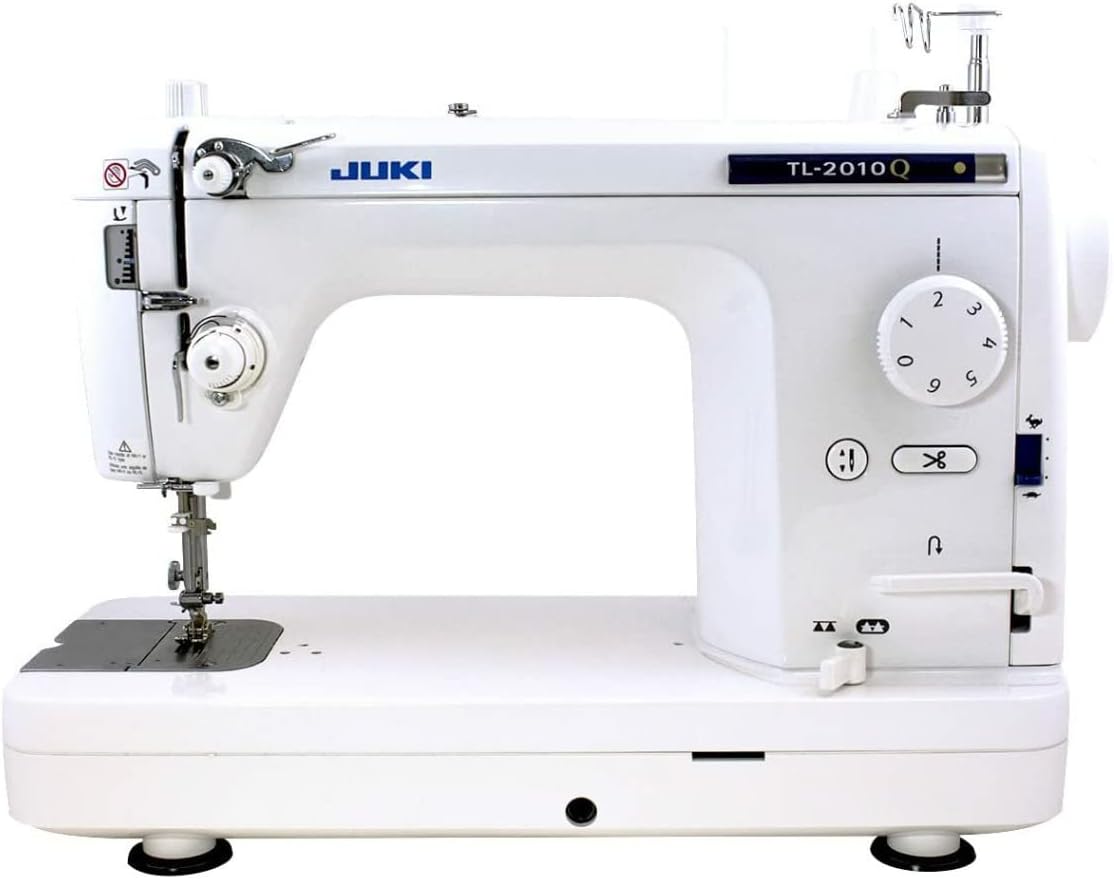
The JUKI TL-2010Q is a performance-focused single-needle lockstitch machine built for straight stitching and quilting and it handles heavier fabrics better than typical home models. It includes an automatic thread trimmer and an automatic needle threader that speed setup and reduce interruptions during long seams, while a knee lifter raises the presser foot up to 12 mm for feeding thick layers and bulky seams. Its sturdy aluminum construction and portable tabletop design let you mount it in a cabinet or use it on a quilting frame for demanding projects, and the included extension table increases workspace for large quilts. Practical limits are that it is a straight-stitch machine only, so decorative or zigzag stitches require another machine, and it lacks built-in computerized stitch patterns. For makers who need reliable high-speed straight stitching through multiple layers of denim, canvas, or quilt sandwiches, the TL-2010Q delivers industrial-style feeding and convenience without a full industrial cabinet setup.
Best for: Experienced sewists and quilters who prioritize durable, high-speed straight stitching through heavy fabrics and layered quilt sandwiches and want a robust, portable machine for workshop or frame use.
Less Ideal for: Casual hobbyists who need multiple decorative stitches or beginners who prefer an automated, computerized machine with built-in stitch choices.
- High-performance, industrial-style straight stitching suitable for multiple thick layers
- Automatic thread trimmer and needle threader speed workflow and reduce setup time
- Knee lifter raises presser foot up to 12 mm for easier handling of bulky seams
- Portable tabletop design can be mounted in a cabinet or used on a quilting frame
- Straight-stitch only with no built-in zigzag or decorative stitch options
- Not computerized, so no stitch memory or pattern customization
Verdict: Choose the TL-2010Q when you need a compact, high-performance straight-stitch machine that reliably sews through thick fabrics and multi-layer quilting projects.
Janome HD5000 Heavy-Duty Sewing Machine

| Power Source | Corded Electric |
|---|---|
| Included Components | Multiple presser feet, bobbins, needle set, foot control, power cord |
The Janome HD5000 is a mechanically controlled, heavy-duty sewing machine built around a sturdy aluminum frame and a responsive foot pedal for variable speed control up to 860 stitches per minute. It is typically used for hemming, quilting, upholstery, jean mending, and leather work thanks to a 5-piece feed dog system and an extra-high presser foot lift that give better traction and clearance for bulky materials. Controls are simple dial selectors with stitch length and width adjustments and a built-in automatic needle threader that eases setup for novice users. The drop-feed feature enables free-motion quilting and darning, and the package includes seven accessory feet and tools for common tasks. Practical benefits include reliable motor power for thick seams, durable construction for frequent use, and portability via an integrated handle. Limitations are that it is a fully mechanical machine with less automation than computerized models and it may be heavier to move than compact consumer machines.
Best for: Buyers who want a durable, no-nonsense machine that can reliably sew thick fabrics and layered seams while remaining easy to learn and maintain.
Less Ideal for: Users seeking advanced computerized features, touchscreen stitch selection, or an ultra-light travel machine should consider other options.
- Sturdy aluminum frame and 5-piece feed dog for reliable handling of thick fabrics and layered seams
- Extra-high presser foot lift provides clearance for bulky materials like denim, canvas, and leather
- Simple mechanical dials and automatic needle threader make it approachable for beginners
- Includes multiple accessory feet and quilting guide for varied sewing tasks
- Responsive foot pedal with top speed of 860 stitches per minute for efficient stitching
- Mechanical-only controls lack automated stitch programming found on computerized machines
- Heavier and less compact than minimalist portable models
Verdict: Choose the Janome HD5000 when you need a rugged, beginner-friendly machine that can power through denim, canvas, upholstery, and other thick materials.
SINGER MX60 Sewing Machine

| Model Number | MX60 |
|---|---|
| Power Source | Corded Electric |
| Stitch Applications | 57 |
| Built-In Stitches | 6 |
The SINGER MX60 is a compact, portable mechanical sewing machine aimed at hobbyists and beginners who need a straightforward, no-frills machine. It provides six built-in stitches that deliver 57 stitch applications through preset stitch length and width, making it easy to start sewing without complex adjustments. The machine includes common presser feet and accessories such as a zipper foot, buttonhole foot, darning plate and bobbins so you can tackle mending, simple garments, quilting pieces, and craft projects right away. A heavy-duty metal frame gives the unit stability and helps reduce skipped stitches when working through multiple fabric layers, and the top-drop bobbin and LED light make everyday tasks easier. Limitations are its modest stitch selection compared with computerized models and lower power; very heavy industrial fabrics or frequent heavy upholstery work may exceed its capabilities. For basic to moderate thick-fabric projects and class use, the MX60 is a portable, durable choice that keeps setup and operation simple.
Best for: Buyers wanting an affordable, easy-to-use machine for home sewing, craft projects, quilting pieces, and occasional thicker fabric work who value portability and simplicity.
Less Ideal for: Those doing regular heavy-duty upholstery, leatherwork, or commercial sewing where a high-torque, industrial or high-powered computerized machine is required.
- Lightweight and portable for easy transport to classes or small workspaces
- Heavy-duty metal frame improves stability and reduces skipped stitches on layered fabric
- Includes essential accessory kit (multiple presser feet, needles, bobbins) for immediate use
- Preset stitch length and width make it beginner-friendly and quick to set up
- Only six built-in stitches, which limits advanced decorative and utility options
- Lower motor power may struggle with very thick or heavy-duty upholstery fabrics
Verdict: A compact, budget-friendly sewing machine that gives beginners and hobbyists a stable, portable option for everyday sewing and moderate thick-fabric projects.
Brother HC1850 Sewing Machine

| Built-in stitches | 185 |
|---|---|
| Included feet | 8 |
| Power source | Corded Electric |
| Input voltage | 120 volts AC |
The Brother HC1850 is a computerized home sewing and quilting machine that handles a wide range of tasks from garment repairs to quilting and decorative stitching. It offers 185 built-in stitches including alphanumeric options and eight one-step auto-size buttonholes, all selectable via a backlit LCD and push-button controls. Practical features like an advanced automatic needle threader, jam-resistant drop-in top bobbin, adjustable sewing speed, and a strong feed system make setup and everyday use straightforward. The included wide extension table, spring-action quilting foot, and multiple presser feet expand its capability for larger quilting projects and heavier fabrics; with the right needle and settings it can sew through denim, canvas, and fleece. The HC1850 is lightweight and portable for classes and has extensive in-box accessories to get started. Limitations include that it is intended for 120V US use only and while versatile, it is not a heavy industrial machine so continuous high-volume, professional heavy-duty work may be beyond its design.
Best for: Buyers who prioritize a reliable, feature-rich home machine that can tackle quilting and medium- to heavy-weight fabrics for hobbyist and sewing-class use.
Less Ideal for: People who need a commercial-grade, nonstop heavy-duty production machine or require international voltage compatibility should consider purpose-built industrial models or units rated for other voltages.
- Wide selection of 185 built-in stitches including alphanumeric characters
- Automatic needle threader and jam-resistant drop-in top bobbin for easier setup
- Strong feed system plus spring-action quilting foot and extension table for handling larger and thicker projects
- Includes eight presser feet and multiple accessories so you can start sewing right away
- Designed for home and hobby use rather than continuous industrial heavy-duty sewing
- Requires 120V AC and warranty is void outside supported regions
Verdict: A dependable, full-featured home sewing and quilting machine that can handle thicker fabrics and larger projects while staying easy to use and set up.
SINGER Heavy Duty 4423

| Built-in stitches | 23 (97 stitch applications) |
|---|---|
| Max sewing speed | 1,100 stitches per minute |
| Power source | Corded Electric |
| Top bobbin | Top drop-in bobbin |
The SINGER Heavy Duty 4423 is built as a workhorse for home sewers who need power and speed for tough materials. It delivers up to 1,100 stitches per minute with a strengthened motor and heavy-duty metal interior frame so it pierces denim, canvas, and multiple thick layers without bogging down. The machine includes 23 built-in stitches that produce 97 stitch applications, a one-step buttonhole, a top drop-in bobbin for easy thread checking, and an automatic needle threader to speed setup. A stainless steel bed plate helps fabric feed smoothly and the LED light illuminates the work area. Singer packs a helpful accessory set—zippers, buttonhole and button feet, bobbins, needles, quilting guide—and stores them in the accessory tray. Trade-offs are its mechanical controls if you prefer computerized stitch selection and the overall footprint and weight that reflect its sturdy construction, which make it less portable than compact models.
Best for: Buyers who prioritize proven performance and need a rugged, fast machine that reliably handles denim, canvas, upholstery and layered home-decor projects.
Less Ideal for: If you want a lightweight, travel-friendly machine or need advanced computerized stitch programming and memory, this model is not the best fit.
- Powerful motor and heavy-duty metal frame for sewing thick fabrics and multiple layers
- High maximum speed (1,100 stitches per minute) for faster project completion
- Top drop-in bobbin and automatic needle threader simplify setup and reduce interruptions
- Includes a useful accessory kit (multiple presser feet, bobbins, needles, quilting guide)
- Mechanical controls lack the fine programmability of computerized machines
- Heavier and bulkier than lightweight portable models
Verdict: Choose the 4423 when you need a durable, high-speed machine that reliably sews thick fabrics and heavy seams.
Brother XM2701 Sewing Machine

| Power Source | Corded Electric |
|---|---|
| Input Voltage | 120 volts |
| Built-in Stitches | 27 |
| Included Feet | 6 |
The Brother XM2701 is a straightforward mechanical sewing machine built for everyday sewing and basic projects on a range of fabrics. It offers 27 built-in stitches, a one-step auto-size buttonholer, and six quick-change presser feet that make tasks like zippers, hems, and button sewing easy to set up. Practical touches include an automatic needle threader, jam-resistant drop-in bobbin, automatic bobbin winder, and a bright LED work light that help reduce setup time and eye strain. The free arm is useful for sleeves, cuffs, and pant hems, and the dial controls keep stitch selection and adjustments simple. For thicker fabrics the machine can handle mid-weight materials such as denim with the right needle and settings, but it is a mechanical, entry-level unit so expect limits when pushing through very heavy or layered industrial materials. Its lightweight, portable design makes it convenient to move or store, and included accessories cover common beginner needs. If you want a dependable, easy-to-learn home machine for alterations, quilting basics, and occasional heavier fabrics, the XM2701 is a practical choice; power users tackling frequent very thick materials will likely need a heavier-duty model.
Best for: Buyers who prioritize a reliable, easy-to-use machine for mending, garment construction, and occasional heavier fabrics and who prefer low-friction setup and straightforward controls.
Less Ideal for: Sewers who regularly work with very heavy leather, multiple layers of thick canvas, or industrial upholstery should choose a heavier-duty, motorized machine made for professional use.
- 27 built-in stitches including blind hem and decorative options for versatile sewing
- Automatic needle threader and jam-resistant drop-in bobbin simplify setup and reduce frustration
- Six included presser feet and one-step buttonholer cover common tasks without extra purchases
- Bright LED work light and easy dial controls improve visibility and make stitch selection intuitive
- Lightweight and portable design with useful accessories included
- Mechanical, entry-level motor can struggle with very thick multi-layer or industrial materials
- No advanced computerized features for precise speed control or specialty stitch programming
Verdict: A user-friendly, dependable home sewing machine that handles everyday projects and occasional heavy fabrics without complicated setup.
Choosing the Right Sewing Machine for Thick Fabrics: Key Factors to Consider
Motor Power and Torque
A strong motor is the foundation of a sewing machine that can handle thick fabrics. More torque helps the needle penetrate dense layers without stalling, and sustained power matters when you sew long seams through multiple layers. For battery-powered or low-wattage models, the motor can be a limiting factor on how many layers you can sew comfortably.
Consider how often you will be working with heavy materials. If you routinely stitch through multiple layers of denim or leather, choose a machine with higher torque and consistent motor delivery. Check whether the machine feels solid and controlled at slow speeds as well as faster stitching to avoid jerky starts that can bend needles or cause skipped stitches.
Feed System and Stitch Consistency
The feed mechanism determines how evenly fabric moves under the needle. Thick or slippery materials can bunch, shift, or feed unevenly on machines with weak feed dogs or inadequate pressure. A walking foot or adjustable feed-dog height improves control by moving both layers at the same rate, reducing puckering and skipped stitches.
Also consider whether the machine allows fine tuning of presser pressure and stitch length. Being able to increase stitch length and presser pressure for heavy layers makes seams stronger and prevents fabric compression. For patchwork or upholstery, consistent stitch formation across variable thicknesses is essential for a professional result.
Presser-Foot Clearance and Accessories
Presser-foot clearance and the available accessory feet directly affect what you can sew. Thick seams, multiple layers, and bulky trims need higher clearance and specialized feet such as walking feet, roller feet, or even a higher presser foot. A removable throat plate, a free-arm for cylindrical items, and compatibility with heavier-duty feet increase versatility for heavy fabrics.
Look for models that include or accommodate heavy-duty presser feet and that offer simple foot-change mechanisms. Machines that require extensive disassembly to fit a thicker foot or to add a walking foot will slow your workflow and increase the chance of user error.
Needle System and Thread Handling
Needle strength and the machine's ability to accept heavier needles and threads influence seam integrity. Thick fabrics typically require larger needle sizes and stronger threads. Machines with secure needle clamp systems and adjustable needle positions let you use the correct needle for edge stitching or topstitching near bulky seams.
Also consider the thread path and tension controls. Heavy threads need a clear, robust path and reliable tension adjustment to form balanced stitches. A machine that jams with thicker topstitching thread or cannot maintain even tension will produce weak or skipped seams, even with the right needle.
Workspace and Throat Space
The physical space around the needle affects what you can sew. Larger throat space gives more room to maneuver bulky items like jackets, bags, or upholstery cushions. A small workspace can make it awkward to manage large panels and increases the risk of catching fabric on the machine body while turning corners.
Consider whether you will be finishing larger projects regularly. If so, prioritize machines with ample flatbed area or the ability to remove the free arm and attach an extension table. Better workspace makes lining up seams, topstitching, and managing bulky seams much easier and safer.
Build Quality and Maintenance
Durable construction and easy maintenance directly impact long-term performance when sewing heavy fabrics. Metal frames or reinforced chassis reduce vibration and help the machine maintain alignment under load, which prevents timing issues and wear. Accessible parts for cleaning and lubrication extend the life of a heavy-use machine.
Consider how simple it is to change needles, clear lint and dust, and perform routine oiling. Machines intended for heavier fabrics should also have replaceable feed dogs and durable bobbin cases that withstand stronger thread tension without deforming.
Why Heavy-Duty Feed Systems Matter
Feed systems do more than move fabric; they control how multiple layers interact under the needle. When fabrics are thick or layered, a weak feed can cause one layer to advance faster than another, creating puckers or misaligned seams. For many heavy materials, a walking foot or adjustable dual feed provides the best control because it grips both layers evenly.
In practice, a better feed system reduces the need for pins, clamps, or slow manual guidance. It also lowers the risk of skipped stitches and broken needles, which are common if the feed lags. Inspecting feed dog height, whether the feed dogs are adjustable, and the availability of specialty feet will tell you how well a machine will manage heavy work.
- Walking foot benefits: even feed across layers
- Adjustable feed dog height for varied thicknesses
- Roller feet for sticky or coated fabrics
Adjusting Stitch Settings for Thick Materials
Stitch length and tension require adjustment when working with thick fabrics. Short stitches can compress layers and cause bunching, while longer stitches give thread room to form proper loops. Increasing stitch length slightly and loosening top tension are common starting points when moving from light to heavy textiles.
Also pay attention to needle position and backstitching. Moving the needle slightly off center helps clear bulky seams and allows you to stitch closer to folded edges. Test settings on scrap pieces of the same material and layer count before stitching the final seam to avoid surprises.
- Increase stitch length for thick fabrics
- Loosen top tension as a starting adjustment
- Test on scrap with matching needle and thread
Needle and Thread Choices for Durability
Selecting the correct needle and thread is as important as the machine itself. Heavy fabrics often need stronger needles such as jeans or leather needles and higher-denier threads designed for topstitching or construction seams. Using a thin needle with heavy thread will increase the chance of breakage and skipped stitches.
Always match needle size to both the thread and fabric. For very thick seams, consider using a longer, stronger needle and reduce sewing speed to avoid overheating or bending. Replace needles frequently during heavy work because they dull faster when penetrating dense materials.
- Use jeans or leather needles for dense fabrics
- Choose higher-denier thread for strength
- Replace needles more often during heavy projects
Workspace Setup and Accessories
A stable workspace and the right accessories make sewing heavy fabrics manageable. An extension table supports large pieces and prevents them from pulling on the machine while you sew. Clamps, binder clips, and heavy-duty pins help align layers without bending needles.
Specialized feet such as a walking foot, roller foot, or non-stick foot expand the effective range of what you can accomplish. Keep an organized set of replacement parts and a small toolkit handy so you can make adjustments quickly without interrupting your workflow.
- Use an extension table for large panels
- Keep heavy-duty clips and pins instead of thin pins
- Stock commonly used feet for quick changes
Common Problems and Practical Fixes
When sewing thick fabrics you may encounter skipped stitches, needle breakage, thread shredding, or uneven feeding. Many issues are solved by switching to a heavier needle, adjusting presser pressure, or slowing stitching speed. If the machine struggles consistently, check feed dog alignment and ensure the bobbin tension is not too tight.
Routine maintenance is also crucial. Clean lint from the bobbin area, check for burrs on the throat plate, and oil according to the user manual. These small steps prevent snags and extend the life of the machine under heavy use.
- Skipped stitches: try a heavier needle or walking foot
- Broken needles: reduce speed and check needle quality
- Uneven feed: adjust presser pressure or feed dog height
Setting Up for Specific Heavy Projects
Different heavy projects have different demands. Upholstery requires long-lasting structural seams and often uses thicker upholstery thread and specialized needles. Leatherwork needs non-stick surfaces or roller feet and low-stretch stitch options to avoid perforation that weakens the material. Bags and backpacks usually combine heavy fabrics with multiple seam layers and require higher throat space and strong presser-foot clearance.
Plan each project by preparing a scrap sandwich that mirrors the actual seam, including interfacing and any lining. This test piece lets you tune stitch length, tension, needle size, and presser settings so the first pass on the final piece is correct.
- Upholstery: prioritize seam strength and long stitch life
- Leather: use roller or non-stick feet and appropriate needles
- Bags: ensure sufficient throat space for bulky hems
How We Chose the Best Sewing Machine for Thick Fabrics
We selected machines for this list by focusing on the characteristics that directly affect sewing performance with dense, multi-layer materials. Primary evaluation criteria included motor power and torque to drive thicker needles through layers, the feed system and fabric control to prevent slippage or uneven feeding, and presser-foot and throat-space durability to accept bulky seams and larger presser feet. We also assessed stitch options and stitch quality for structural seams, the ability to adjust needle position and presser pressure for variable thicknesses, and the overall build and chassis strength for repeated heavy use. Units that lacked a robust feed mechanism, limited stitch adjustments for heavy fabrics, or insufficient presser-foot clearance were excluded. We prioritized machines designed or engineered with reinforced components, clear adjustment ranges, and user controls that make sewing thick materials reliable rather than marginal. The criteria above guided inclusion so each shortlisted machine is suitable for thicker textiles and practical heavy-duty projects.
Our full evaluation process is outlined in our review methodology.
FAQ
Can a regular home sewing machine handle multiple layers of denim?
Often it depends on the machine. Many home machines can handle a couple of denim layers with the right needle, thread, and adjustments, but repeatedly sewing thick stacks requires higher torque and a strong feed system to avoid skipped stitches and motor strain.
What needle type is best for sewing leather or vinyl?
Leather and vinyl usually need a specialized leather needle with a wedge point or a heavy-duty universal needle designed for coated materials. Slower stitching and a roller or non-stick foot also help prevent sticking and tearing.
Is a walking foot necessary for thick fabrics?
A walking foot is not always strictly necessary, but it greatly improves feed consistency when sewing multiple layers or combinations of slippery and heavy fabrics. It reduces puckering and layer shifting compared with a standard foot.
How often should I change needles when working on heavy projects?
Needles dull faster with heavy materials, so change them more frequently than with lightweight fabrics. For intensive heavy work, consider changing needles after every large project or whenever you notice skipped stitches or rough thread behavior.
Will thicker thread damage my sewing machine?
Thicker thread will not damage a properly equipped machine, but it requires a compatible needle, correct tension settings, and a clear thread path. Using thread that is too heavy for the needle or bobbin system can cause jams or uneven stitches.
How do I prevent fabric from bunching when sewing thick seams?
Prevent bunching by using the proper presser pressure, adjusting stitch length, employing a walking or roller foot, and testing on scrap layers. Support larger pieces with an extension table to reduce drag on the fabric while sewing.
Final Verdict
Choosing the right sewing machine for thick fabrics means balancing motor strength, a reliable feed system, and the ability to use heavier needles and threads. Prioritize machines with adjustable presser pressure, ample throat space, and compatibility with walking or roller feet so you can handle multiple layers without constant adjustments. Be prepared to test settings on scrap materials and maintain the machine regularly; that approach yields consistent seams and longer equipment life for heavy-duty projects.