
Note: This article contains affiliate links. If you click on these links and make a purchase, we may earn a small commission at no extra cost to you. This helps support our research and content. Read our full affiliate disclosure here.
If you want cleaner drinking water without installing plumbing, a countertop water dispenser with a filter is a convenient solution. These units sit on your counter or tabletop, filter water as it dispenses, and make it easy to get cold or room-temperature water on demand. Choosing the right dispenser matters because filtration quality, flow rate, and ease of maintenance affect daily convenience and long-term reliability. This guide covers seven shortlisted countertop water dispensers with a filter, selected for dependable filtration, usability, and simple upkeep. Read on to see the evaluation criteria we used and the features that matter most when you are picking a unit for regular household use.
Top Picks at a Glance
| Best Overall The best all-around choice for most situations | Avalon B8BLK Countertop Water Cooler | 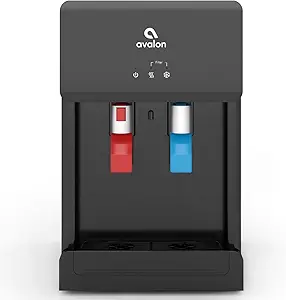 |
| Best Quality Built to a higher standard if you want something more solid | PHILIPS Countertop RO Dispenser |  |
| Best Value The sweet spot between price and what you get | Waterdrop ED04W-L Water Filter Dispenser |  |
| Best Budget The cheapest option that still gets the job done reliably | ZeroWater 22-Cup Ready-Read Dispenser |  |
| Top Rated A top-rated pick with lots of positive feedback | PUR 30-Cup Water Dispenser DS1800Z |  |
| Most Popular A crowd favorite that many people choose with confidence | Brita UltraMax 27-Cup Dispenser |  |
| Best Seller A high-volume bestseller chosen again and again | DREO RO Countertop Water Filter 113 |  |
Avalon B8BLK Countertop Water Cooler

| Wattage | 420 watts |
|---|---|
| Installation Type | Countertop, Under Sink |
| Upper Temperature Rating | 185 °F |
| Lower Temperature Rating | 47 °F |
| Capacity | 1500 gallons |
The Avalon B8BLK is a countertop, bottleless water cooler designed to provide on-demand hot and cold filtered water for home or small office use. It connects to tap water using the included installation kit and runs through a two-stage filtration system (sediment plus carbon block) rated for about 1,500 gallons or six months per filter set, which reduces ongoing bottled-water costs. Touchless dispensing and a child-safety lock on the hot spout make it practical for family settings, while the hot output (up to 185°F) and cold output (down to 47°F) cover common beverage and refreshment needs. The unit ships with filters and a full set of fittings and tubing to simplify installation under-sink or on a countertop. Trade-offs are typical for bottleless coolers: it needs a water line and occasional filter replacements, and its plastic exterior means buyers prioritizing metal finishes may look elsewhere. For a balanced, budget-conscious buyer wanting filtered hot and cold water without bottled jugs, the Avalon is a straightforward, ready-to-install option.
Best for: Buyers who want a ready-to-install, cost-saving alternative to bottled coolers that provides reliable hot and cold filtered water for a household or small office.
Less Ideal for: People who need a plug-and-play, non-plumbed solution or who prefer a premium metal finish and luxury materials.
- Includes dual-stage sediment and carbon block filters for basic contaminant and taste reduction
- Comes with a full installation kit (tubing, adapters, shutoff valve) for straightforward hookup
- Touchless dispensing and hot-spout child safety lock improve hygiene and family safety
- Provides both hot (up to 185°F) and cold (down to 47°F) outputs for versatile use
- Requires a water line and periodic filter replacements, adding installation and maintenance tasks
- Plastic exterior may feel less durable or premium compared with metal-bodied units
Verdict: A practical bottleless countertop cooler with included filters and installation hardware that delivers dependable hot and cold filtered water for everyday home or small-office use.
PHILIPS Countertop RO Dispenser

| Purification Method | Aquaporin Inside, Reverse Osmosis |
|---|---|
| Lower Temperature Range | 40 °F |
| Upper Temperature Rating | 203 °F |
| Maximum Flow Rate | 200 milliliters_per_minute |
| Filter Life Cycle | 12 months |
This Philips countertop RO dispenser combines a six-stage reverse osmosis filter with Aquaporin technology and a touch panel to deliver on-demand cold, ambient and near-boiling water without plumbing. It is designed to sit on a counter, fill a 1.8 L jug with purified water from a separate tap tank, and dispense at set temperatures from 40°F up to 203°F with four programmable volume presets. The unit displays real-time TDS in and out values, has a change-filter indicator, and a self-clean function to reduce scale buildup. Practical benefits include mineralization in the final stage for improved taste and a compressor-cooled tank for reliably cold water; the 12-month filter life keeps yearly maintenance predictable. Limitations to consider are its modest 200 ml/min flow rate, the need to refill the source tank regularly, and its relatively large footprint and weight compared with simpler countertop filters, which may matter if counter space is tight.
Best for: Buyers who prioritize water-purity and measurable performance and want a countertop unit that delivers both cold and near-boiling filtered water without plumbing.
Less Ideal for: People who need very fast filling or a compact, lightweight pitcher-style filter or who cannot accommodate a heavier, larger countertop appliance.
- Six-stage RO filtration with remineralization improves taste and reduces very small contaminants
- Built-in TDS display and change-filter alert provide visible, actionable water-quality feedback
- Instant hot and cold dispensing with selectable temperatures and volume presets
- Self-cleaning function and 12-month filter life simplify routine maintenance
- Maximum flow rate is limited to about 200 ml/min which is slow for high-volume use
- Requires manual refilling of the source tank and regular daily/ monthly upkeep
Verdict: Choose this dispenser if you want a countertop RO system that gives verifiable filtration performance plus instant hot and cold water without plumbing.
Waterdrop ED04W-L Water Filter Dispenser

| Capacity | 27 cups |
|---|---|
| Maximum Flow Rate | 0.8 liters per minute |
| Filter Life Cycle | 200 gallons / 3 months |
| Power Source | Built-in rechargeable battery |
| Certifications | NSF/ANSI 42, 53, 401, 372 |
The Waterdrop ED04W-L is an electric countertop water dispenser built to deliver filtered drinking water without lifting heavy pitchers. Fill the 27-cup reservoir, press the one-key control and the pump dispenses water at up to 0.8 liters per minute, making it convenient for kitchens, small offices, or shared living spaces. The unit uses a carbon-block five-stage filter certified to NSF/ANSI 42, 53, 401 and 372 to reduce chlorine, lead, PFOS/PFOA and dozens of other substances while leaving TDS unchanged. Filter life is rated at roughly 200 gallons or three months and the unit includes a replacement filter to start. It runs on a built-in rechargeable battery the brand says can last about 30 days per charge, which lets you place it on a counter or in a fridge without cord hassle. Trade-offs are that it does not lower TDS and flow is modest at under a liter per minute, so it is best for dispensing drinking water rather than high-volume filling tasks.
Best for: Buyers who prioritize convenient countertop dispensing and certified contaminant removal for households or small shared spaces and want minimal fuss from refills and power cords.
Less Ideal for: People who need water with reduced TDS for appliances or brewing, or who regularly fill large containers quickly should consider other systems.
- Large 27-cup reservoir reduces refill frequency for families or groups
- NSF/ANSI 42, 53, 401 and 372 certifications for broad contaminant reduction
- Built-in rechargeable battery for cord-free placement and about 30 days of runtime per charge
- Includes one replacement filter and uses a carbon-block multi-stage filter rated ~200 gallons
- Does not reduce total dissolved solids (TDS) so mineral content remains unchanged
- Maximum flow rate is modest at 0.8 L/min, not suited for rapid large-volume dispensing
Verdict: A large-capacity, rechargeable countertop dispenser that delivers certified contaminant reduction with easy one-touch dispensing for practical everyday use.
ZeroWater 22-Cup Ready-Read Dispenser

| Capacity | 5.2 liters |
|---|---|
| Filtration | 5-stage ion exchange |
| Supported Water TDS Level Maximum (PPM) | 1 |
| Included components | 1 x 22-Cup Dispenser, 1 x 5-Stage Filter, 1 x TDS Meter |
The ZeroWater 22-Cup Ready-Read dispenser is a countertop pitcher-style dispenser that filters tap water through a five-stage ion-exchange cartridge and provides an onboard TDS meter so you can see when the filter needs replacement. You fill the top, water passes through the 5-stage filter to remove virtually all total dissolved solids, and the spigot dispenses filtered water for drinking or cooking; the unit includes one replacement filter and the TDS meter. Practical benefits include IAPMO certification for reduction of lead, PFOA/PFOS, chromium and mercury, a 22-cup capacity that reduces frequent refills, and a plastic, space-saving design that fits on most counters. The built-in meter and change indicator help avoid guessing filter life, and using the dispenser can cut single-use plastic bottle waste. Limitations are typical of pour-through systems: flow is slower than under-sink filters, replacement cartridges are consumable and add ongoing cost, and the unit requires counter space rather than fitting inside a cabinet.
Best for: Buyers who want noticeably cleaner tasting water on a tight budget and prefer a self-contained countertop dispenser with visible filter monitoring.
Less Ideal for: People who need fast-flowing or plumbed-in filtration, want to conceal the unit inside cabinetry, or prefer a filter-free water cooler setup.
- Five-stage ion exchange filtration for very low TDS and improved taste
- Included TDS meter and change filter indicator for easy maintenance decisions
- 22-cup capacity reduces refill frequency compared with small pitchers
- IAPMO certified to reduce lead, PFOA/PFOS, chromium and mercury
- Plastic countertop design that is lightweight and easy to move
- Pour-through filtration has slower fill and dispense rates compared with plumbed or electric systems
- Ongoing cost for replacement 5-stage filters
- Not suited for in-cabinet or under-sink installation
Verdict: A budget-friendly countertop dispenser that delivers very low TDS water with a built-in TDS meter, ideal for buyers who prioritize measured filter performance without plumbed installation.
PUR 30-Cup Water Dispenser DS1800Z

| Capacity | 7.09 liters |
|---|---|
| Filter Life Cycle | 2 months |
| Purification Method | Ion Exchange |
| Supported Water TDS Level Maximum (PPM) | 500 |
The PUR 30-Cup Water Filter Dispenser is a slim countertop pitcher-style dispenser designed to store and dispense up to 30 cups of filtered water for home use. It uses a Genuine PUR filter rated for about 40 gallons or two months of regular use and employs ion exchange media to reduce chlorine, mercury, copper, zinc and other substances that affect taste and odor. The dispenser has a pull-down spout so you can pour water while it is still filtering, a carrying handle for refilling, and a LockFit to secure the filter. The plastic body is dishwasher safe which makes cleaning straightforward, and the slim footprint fits easily in a fridge door or on a counter. Expect faster filtration than some pitcher filters but plan on replacing the cartridge roughly every eight weeks under normal use. The dispenser does not filter microbes and replacement filters are required to maintain certified performance, so ongoing filter cost and timely changes are part of ownership.
Best for: Buyers who prioritize a reliable, certified filtration system and want a straightforward, fridge-friendly dispenser that consistently delivers better-tasting tap water for daily family use.
Less Ideal for: Those who need microbial or whole-house filtration, or who prefer metal-bodied dispensers for a heavier-duty aesthetic should consider other solutions.
- Large 30-cup capacity stores chilled filtered water for family use
- Genuine PUR filter certified to reduce chlorine, heavy metals and other chemicals
- Pull-down spout lets you pour while water continues to filter
- Slim, fridge-friendly shape and dishwasher-safe plastic for easy cleaning
- Includes one genuine filter so system is ready to use out of the box
- Filter life is limited to about 40 gallons or two months so replacements are recurring
- Plastic construction may feel less durable than heavier materials
Verdict: Choose this PUR dispenser when you want a dependable, fridge-friendly countertop system backed by certified filtration for consistently better-tasting tap water.
Brita UltraMax 27-Cup Dispenser

| Capacity | 27 cups |
|---|---|
| Material Type | Plastic |
| Included Components | Water Dispenser with Filter |
The Brita UltraMax is a fridge-friendly countertop dispenser designed to supply filtered drinking water for families or small groups. You fill the top reservoir, water passes through the included Brita filter and dispenses through a precision-pour spigot, while a filter-change sticker helps track replacement timing. It accepts both Standard and Elite Brita filters so you can choose longer life or faster replacement cadence, and the 27-cup capacity reduces trips to refill while still fitting on most refrigerator shelves. The plastic body is lightweight and easy to clean, and the locking lid keeps the reservoir covered. Limitations include the need to replace filters regularly (Standard ~40 gallons/2 months, Elite ~120 gallons/6 months) and the dispenser does not chill water itself, so it is best used with cold tap water or kept in the fridge. For buyers who prioritize reliable contaminant reduction and simple everyday use, it delivers straightforward filtered water without complicated setup.
Best for: Buyers who want a proven, easy-to-use countertop dispenser with certified contaminant reduction and visible social proof from many reviewers.
Less Ideal for: People who need built-in chilling, hot-water capability, or a heavy-duty metal dispenser for long-term rugged use should look elsewhere.
- Large 27-cup capacity fits in most refrigerators and reduces refill frequency
- Compatible with Brita Standard and Elite filters for flexible filter life
- Included filter reduces chlorine, mercury, copper and other impurities
- Easy-lock lid and precision-pour spigot make filling and dispensing simple
- Does not cool water on its own, requires refrigeration for chilled water
- Made of plastic which may show wear over time
Verdict: Choose the Brita UltraMax if you want a high-capacity, fridge-friendly dispenser that delivers reliably filtered tap water with minimal fuss.
DREO RO Countertop Water Filter 113

| Purification Method | Reverse Osmosis |
|---|---|
| Capacity | 5 liters |
| Other Special Features of the Product | Built In TDS Meter, Change Filter Indicator, Reduce TDS, Touch Control |
| Pure to Drain Rate | 3:1 |
The DREO RO Countertop Water Filter 113 is a plug-in reverse osmosis purifier designed for countertop use without plumbing. It uses a 7-stage RO cartridge to reduce common contaminants and reports real-time TDS for both source and purified water, while a change-filter indicator and twist-to-replace filter make maintenance straightforward. The unit includes a 5 liter reservoir and two autofill pitchers so one pitcher is always ready while the other refills automatically, and an internal self-cleaning flush helps limit biofilm buildup. The system is targeted at daily drinking-water needs for a small household and emphasizes ease of use: touch controls, an auto-fill sensor, and a compact footprint that fits on a kitchen counter. Important limitations are the 3:1 pure-to-drain ratio (so it uses more feed water than higher-efficiency systems) and a stated filter life of about 265 gallons per RO cartridge, so expect periodic cartridge replacements; it is also a countertop dispenser rather than a plumbed under-sink system. For buyers who prioritize tested contaminant removal, straightforward maintenance, and installation-free setup, this model is a practical choice.
Best for: Buyers who want a tested, install-free countertop RO unit that delivers reliably low-TDS drinking water with simple monitoring and low setup hassle.
Less Ideal for: Households that need a plumbed under-sink solution or want the highest possible water-use efficiency should consider other options.
- 7-stage RO filtration with SGS-tested contaminant removal claims
- Built-in TDS meter and filter life indicator for real-time monitoring
- Includes two autofill pitchers and a 5L reservoir for ready-to-use water
- Self-cleaning auto-flush feature reduces maintenance effort
- 3:1 pure-to-drain ratio is less water-efficient than some RO systems
- RO filter capacity listed around 265 gallons, requiring regular replacement
Verdict: A user-friendly countertop RO dispenser that delivers lab-tested contaminant reduction, simple maintenance, and ready-to-drink water without any plumbing.
Choosing the Right Countertop Water Dispenser with a Filter: Key Factors to Consider
Filtration Technology
Different countertop water dispensers use different filtration methods, from simple carbon block filters that reduce chlorine taste and odor to multi-stage cartridges that target sediment and specific contaminants. Understanding which contaminants the filter is certified or claimed to reduce matters because it determines the improvement in taste and safety you can expect.
Filtration capacity and rated lifespan are also important. A filter with higher stated capacity or a longer recommended replacement interval reduces the frequency of changes and total maintenance time, but it is important to replace cartridges on schedule to maintain effectiveness. Check whether replacement filters are readily available and whether the filter media is replaceable as a single cartridge or requires more involved servicing.
Dispense Performance
Flow rate and dispense ergonomics affect daily usability. Faster flow rates get water into a glass or pitcher quickly, which is helpful if you fill many containers or have a household with frequent use. Flow can be constrained by the filter design and internal tubing, so real-world dispensing speed may differ from manufacturer claims.
Also consider dispense controls and spout height. A well-placed spigot or tap that accepts tall bottles and pitchers avoids spills and makes filling larger containers straightforward. Some countertop dispensers include manual pumps or electric-assisted pumps; each has tradeoffs in speed, noise, and complexity.
Maintenance And Replacement
Maintenance includes cleaning accessible surfaces, sanitizing the reservoir if present, and swapping filters. Units that permit tool-free access to the filter housing and clearly mark replacement intervals make upkeep straightforward. Consider how easy it is to flush a new filter and whether the dispenser requires priming after a change.
Regular maintenance also affects longevity. Models with removable drip trays, easy-to-disassemble spigots, and clearly documented cleaning steps reduce the chance of residue buildup or bacterial growth. Note whether replacement parts such as seals or O-rings are common items or proprietary pieces that could complicate long-term care.
Space And Installation Needs
Countertop dispensers are chosen for convenience, but physical dimensions and water source method still matter. Measure the intended placement area and ensure the unit's footprint and height fit under cabinets and alongside other appliances. Check how the dispenser is refilled whether it uses a refillable reservoir, top-loading jugs, or connects to a water line even if not requiring professional installation.
Weight when filled and the location of controls influence placement flexibility. If you plan to move the unit for cleaning or seasonal use, lighter designs with ergonomic handles are easier to manage. Also consider whether the unit requires a nearby power outlet for cooling or pumps and whether cord length will reach comfortably.
Temperature And Energy Use
Some countertop dispensers offer chilled water or both chilled and room-temperature options. Cooling capability adds convenience but also draws power and can introduce additional components that require maintenance. Consider whether you need active cooling or whether a dispenser that provides room-temperature and filtered water is sufficient.
If cooling is required, look at energy usage patterns and whether the unit has standby modes or on-demand cooling to reduce power draw. Simpler, non-cooled dispensers are often quieter and require less maintenance, while cooled units provide immediate cold water but may be larger and more complex.
Material Safety And Durability
Materials in contact with drinking water should be food-grade and resist leaching. Look for clear statements about BPA-free plastics for reservoirs and food-safe stainless steel for spouts and chilled tanks. Durable construction reduces the risk of leaks and premature failures.
Examine how seals, valves, and moving parts are designed. Durable valves and corrosion-resistant fittings translate to fewer replacements and a lower chance of dripping. Also consider the finish and surface materials for ease of cleaning and resistance to staining or microbial growth.
How Countertop Filters Work
Most countertop water dispensers with filters use a cartridge that sits between the water source and the dispensing spout so water is treated as it exits the unit. Common elements include activated carbon for taste and odor, a sediment stage to trap particles, and sometimes specialty media for heavy metal or chemical reduction.
Understanding the filter flow path helps set expectations for replacement timing and dispense speed. Cartridges that force water through denser media often improve removal rates but can slow flow and require more frequent flushing when new.
- Single-stage carbon: good for chlorine taste and basic odor control
- Multi-stage cartridges: combine sediment and carbon for broader performance
- Specialty media: may target lead, VOCs, or microbial concerns in specific cartridges
Sizing For Household Use
Choose a dispenser capacity and flow rate that match how you use water. If you typically fill pitchers for several people, prioritize higher continuous flow and a larger reservoir or a design that accommodates quick refills.
For occasional use in a small kitchen or office, compact units with smaller cartridges and simpler controls can save counter space and reduce the frequency of replacements.
- High-use households: prioritize larger capacity and faster dispense
- Small households or offices: compact units with easier filter changes are often better
Cleaning And Sanitation Tips
Regular cleaning prevents residue buildup and helps maintain filter performance. Wipe external surfaces weekly and sanitize reservoirs or drip trays according to the manufacturer's guidance. Use food-safe cleaners or diluted vinegar solutions where appropriate.
When replacing filters, follow priming steps to clear trapped air and flush initial carbon fines. Periodically inspect seals and spigots for wear and replace small parts as needed to prevent leaks.
- Sanitize reservoirs every 1 to 3 months depending on use
- Flush new filters per instructions to remove loose carbon particles
- Inspect and replace O-rings or seals showing wear
Where Filters Can Fall Short
Countertop filters are convenient but may not address all water quality issues. They typically focus on improving taste, odor, and reducing particulates. If your water has specific contaminants such as high mineral hardness or certain industrial chemicals, a countertop cartridge may not be sufficient.
Regular testing of your source water can reveal whether a countertop solution meets your needs. If testing shows contaminants outside the filter's stated removal capabilities, consider alternate treatment approaches that match the required contaminant reduction.
- Not all filters remove heavy metals or dissolved minerals
- Cartridge capacity and replacement frequency impact long-term effectiveness
Installation And Placement Advice
Place the dispenser on a stable, level counter near a power outlet if the unit has active cooling. Allow clearance above and behind the unit for ventilation and cartridge access. Keep the dispenser away from direct sunlight to reduce microbial growth and protect materials.
If the unit uses refillable containers, ensure you can lift and replace them safely. For integrated reservoirs, plan access for periodic cleaning and make sure the drip tray is easy to remove and empty.
- Allow space for filter access and replacement
- Keep near a drain or place a mat to catch incidental spills during maintenance
How We Chose the Best Countertop Water Dispenser with a Filter
We started by focusing on countertop water dispensers that include integrated or built-in replaceable filters and that are intended for regular household use. Selection prioritized units with clear filtration claims such as sediment reduction, chlorine taste and odor reduction, or particulate removal, and we favored filters that are replaceable without specialized tools. Usability factors included dispense flow rate, ease of loading and refilling, and controls for chilled or ambient water where available. Durability and maintenance were important filters. We looked for units with accessible filter housings, straightforward replacement processes, and serviceable seals to minimize leaks. Safety and materials were assessed by checking for food-grade contact surfaces and clear instructions for sanitation. Energy considerations such as low standby power for cooled units and the availability of manual dispensing options influenced selections. We excluded countertop units that lack any replaceable filtration element, devices designed exclusively for single-use bottles, and systems requiring permanent plumbing or professional installation. Our final shortlist balances measurable filtration capability, simple day-to-day operation, and practical maintenance requirements that matter to typical household buyers.
Our full evaluation process is outlined in our review methodology.
FAQ
How often should I replace the filter cartridge?
Replacement intervals usually depend on the cartridge capacity and your household's water usage. Many countertop cartridges are rated for a few hundred gallons or a few months of typical use. Check the manufacturer's guidance and replace sooner if you notice reduced flow or changes in taste.
Will a countertop dispenser remove lead or microbial contaminants?
It depends on the cartridge media and its certifications. Some specialty cartridges target lead or specific contaminants, while basic carbon filters focus on taste and odor. If lead or microbial removal is a primary concern, verify the cartridge claims and laboratory certifications.
Can I use tap water or filtered water to refill the unit?
Most countertop dispensers are designed to be refilled with tap water or with pre-filtered water. If your tap water has known issues, use the cleanest source available and follow the filtration unit's instructions for priming and flushing after refills.
Do cooled countertop dispensers use a lot of electricity?
Cooled dispensers use more energy than non-cooled models, but actual consumption varies by compressor design and insulation. Units with efficient compressors or on-demand cooling modes tend to use less power overall compared with continuously refrigerated systems.
How do I prevent leaks around the filter housing?
Ensure the filter is seated correctly and that O-rings or seals are clean and undamaged. Hand-tighten housings to the specified torque, avoid cross-threading, and replace worn seals promptly. Regular inspection after replacement helps catch small leaks early.
Final Verdict
When choosing a countertop water dispenser with a filter, prioritize filtration effectiveness relative to the contaminants you want to reduce, and balance that with dispense speed and maintenance needs. Consider how often you will replace cartridges, whether you need chilled water, and the space available on your counter. Focus on units that make filter replacement and routine cleaning straightforward, and accept tradeoffs between advanced filtration and flow rate. With those priorities in mind, you can select a dispenser that delivers reliable filtered water and fits your daily habits.