
Note: This article contains affiliate links. If you click on these links and make a purchase, we may earn a small commission at no extra cost to you. This helps support our research and content. Read our full affiliate disclosure here.
A self-cleaning water dispenser cuts the most tedious part of owning a dispenser out of the picture: frequent manual sanitizing. If you rely on a dispenser daily for drinking water, coffee, or quick hot drinks, picking a model with effective sanitation features and sensible upkeep saves time and reduces health risk. This guide brings together seven top self-cleaning water dispensers that stood out for their sanitation systems, ease of maintenance, and day-to-day reliability. Below you will find concise evaluations of shortlisted options, plus the practical buying factors we used to judge them and the common tradeoffs to expect. Use this guide to match a dispenser to the amount of use, installation limits, and cleaning tolerance you have at home or in the office.
Top Picks at a Glance
| Best Overall The best all-around choice for most situations | Avalon A3 Bottom-Loading Water Cooler |  |
| Best Quality Built to a higher standard if you want something more solid | iSpring DS4S Water Dispenser |  |
| Best Value The sweet spot between price and what you get | Gleedelish Self-Cleaning Water Dispenser |  |
| Best Budget The cheapest option that still gets the job done reliably | YSHUSTGY Bottom Loading Water Cooler |  |
| Top Rated A top-rated pick with lots of positive feedback | Brio Bottom Load Water Cooler CLBL520SC |  |
| Most Popular A crowd favorite that many people choose with confidence | Brio Bottom Loading Water Cooler | 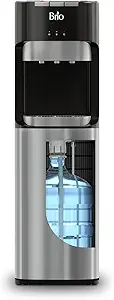 |
| Best Seller A high-volume bestseller chosen again and again | Avalon A5 Bottleless Water Cooler |  |
Avalon A3 Bottom-Loading Water Cooler

| Wattage | 150 watts |
|---|---|
| Access Location | Bottom |
| Number of settings | 3 |
| Upper Temperature Rating | 185 °F |
| Lower Temperature Rating | 47 °F |
The Avalon A3 is a bottom-load water cooler that gives you cold, hot, and room-temperature water from a stainless steel cabinet while hiding the bottle inside the base. It uses a compressor-based cooling system to deliver cold water around 47°F and a hot tap near 185°F, and push-button spouts with a child safety lock for the hot side. The unit includes an ozone self-cleaning cycle to sanitize internal lines, an empty-bottle indicator, and a removable drip tray; a small nightlight behind the spouts helps when dispensing in the dark. In practice it suits break rooms or home kitchens where you want the convenience of 3-temp dispensing without lifting heavy bottles to the top. The bottom-loading design reduces spills and makes bottle changes easier, though the unit is fairly heavy and needs floor space. Expect the usual maintenance of replacing bottles and occasionally running the self-clean cycle for best sanitation.
Best for: Buyers who want a low-maintenance, self-sanitizing dispenser that serves hot and cold water reliably for offices or busy households and prefer bottom-loading convenience.
Less Ideal for: People who need a compact countertop dispenser or who require integrated filtration or a lightweight portable unit should look elsewhere.
- Three distinct temperature taps including near-boiling hot for beverages and hot food prep.
- Ozone self-cleaning sanitizes internal lines to reduce bacterial buildup.
- Bottom-loading cabinet avoids lifting bottles to the top and lowers spill risk.
- Child safety lock on hot spout and UL/Energy Star compliance for safer operation.
- Unit is relatively heavy and requires dedicated floor space.
- No built-in water filtration is listed, so water quality depends on the bottle source.
Verdict: Choose the Avalon A3 if you want a durable, bottom-loading dispenser that delivers three temperatures with built-in ozone self-cleaning for easier sanitation.
iSpring DS4S Water Dispenser

| Model Number | DS4-S |
|---|---|
| Material Type | Stainless Steel |
| Included Components | Water dispenser, filters |
| Filtration Stages | 4-stage |
The iSpring DS4S is a floor-standing bottleless water dispenser that combines instant hot, cold, and room-temperature taps with a built-in 4-stage filtration system. It is typically plumbed into a water line using the included installation kit and tubing, and it is used for everyday drinking, coffee and tea preparation, and chilled water on demand. Notable features include sediment, carbon, and post-carbon filtration stages that target chlorine, lead, mercury, PFAS and other contaminants, a child safety lock on the hot tap, and a self-cleaning capability to reduce scale and bacterial buildup. The stainless steel exterior gives it a durable, finished look suited to kitchens and small offices, and filter replacement intervals are listed to keep ongoing maintenance predictable. Expect straightforward DIY installation with the provided adapters, but allow some space for a tall freestanding unit and plan regular filter changes every 3 to 12 months depending on the stage and water quality. The DS4S is a solid choice when you want filtered hot and cold water without bottles and with lower hands-on cleaning needs.
Best for: Buyers who prioritize performance and water quality and want a hard‑plumbed, no‑bottle solution that delivers filtered hot, cold, and room‑temperature water with low manual cleaning.
Less Ideal for: People who need a portable or countertop solution, renters who cannot plumb a water line, or those who want a zero-maintenance, filterless option.
- Integrated 4-stage filtration that removes sediments, chlorine, lead, mercury, PFAS and chloramine
- Instant hot, cold, and room-temperature dispensing with a child safety lock on hot water
- Self-cleaning function helps reduce scale and bacterial buildup
- Includes a comprehensive DIY installation kit with tubing and adapters
- Requires physical space and a dedicated water line connection for installation
- Periodic filter replacements (3–12 months) add ongoing maintenance cost
Verdict: Choose the DS4S when you want a hard‑plumbed, performance-focused dispenser that delivers reliably filtered hot, cold, and room‑temperature water with built-in self-cleaning.
Gleedelish Self-Cleaning Water Dispenser
| Wattage | 550 watts |
|---|---|
| Access Location | Bottom |
| Upper Temperature Rating | 203 °F |
| Lower Temperature Rating | 41 °F |
| Capacity | 5 gallons |
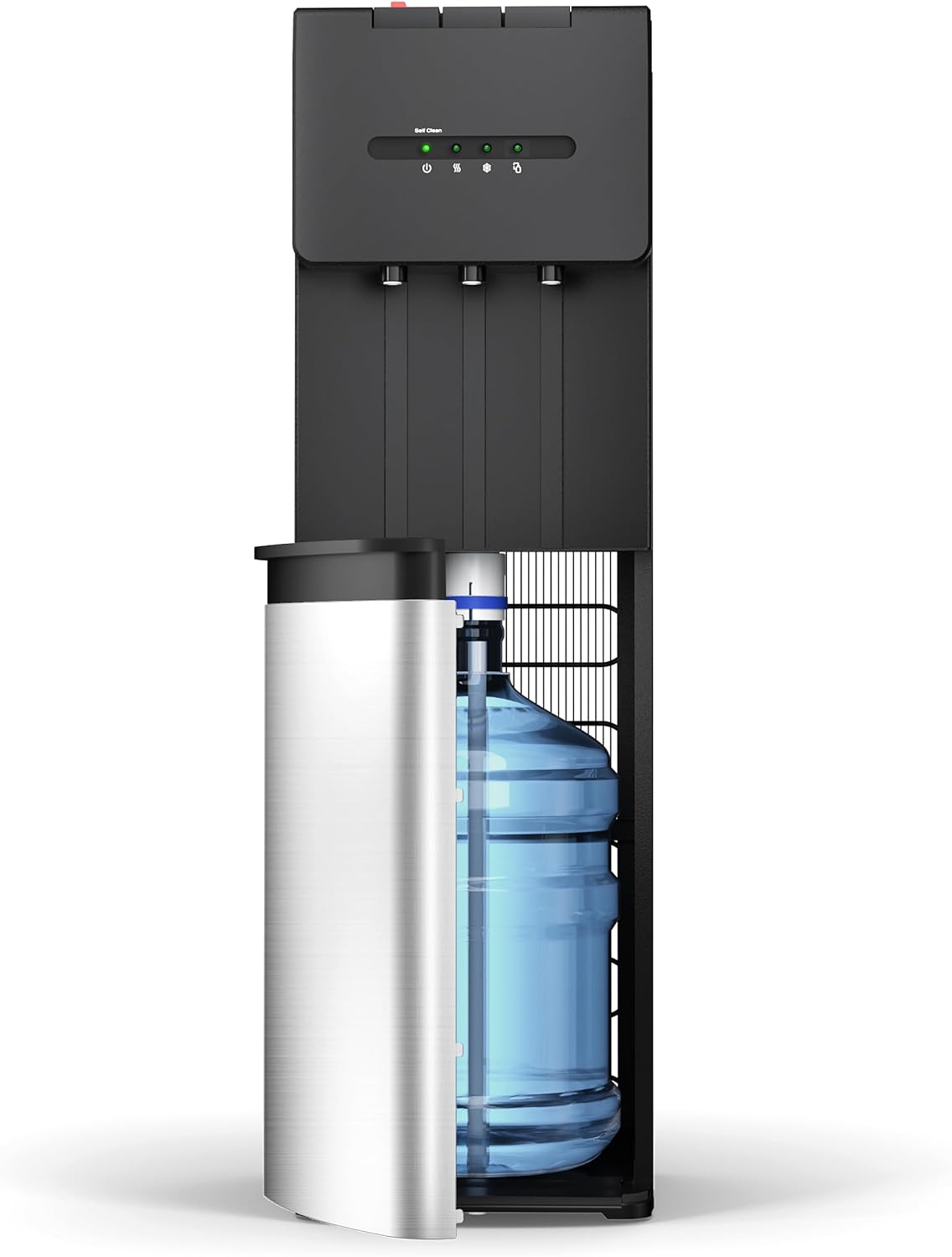
This Gleedelish bottom-loading dispenser is designed for everyday home or small office use, delivering hot, cold, and room-temperature water from a concealed 5-gallon bottle. Setup is straightforward thanks to the bottom-load design and automatic stainless-steel intake tube that pumps water without lifting heavy jugs, while LED indicators and an empty-bottle alert keep status visible. The built-in UV self-cleaning cycle helps reduce maintenance by sanitizing the internal tank, and a child-safe lock on the hot tap adds useful protection. Performance numbers claim up to 1.32 gallons per hour for hot water and 0.7 GPH for cold, and the unit includes a removable drip tray and a quiet motor for low-noise operation. Practical buyers should note the unit runs on mains power and the advertised self-cleaning is a helpful hygiene aid but does not replace regular manual cleaning of external parts and filters. The dispenser pairs everyday convenience with a modern stainless-steel look that fits kitchens and small shared spaces.
Best for: Buyers who prioritize low-maintenance daily hydration and easy bottle changes in a home or small office setting and want a dispenser that combines hygiene features with simple, practical operation.
Less Ideal for: Households needing very high daily throughput or fully portable units that run without mains power should consider other solutions.
- Bottom-loading design avoids heavy lifting and keeps the bottle concealed
- Built-in UV self-cleaning cycle helps maintain internal hygiene with minimal effort
- Dispenses three temperatures including instant hot with a child safety lock
- Quiet, high-efficiency motor and LED indicators for low-noise, user-friendly operation
- Self-cleaning feature does not eliminate the need for occasional manual cleaning and maintenance
Verdict: Choose this dispenser if you want an easy-to-use bottom-loading cooler with UV self-cleaning and three temperature outputs for reliable, low-effort hydration at home or a small office.
YSHUSTGY Bottom Loading Water Cooler

| Capacity | 2 liters |
|---|---|
| Heating power | 500W |
| Cooling power | 90W |
| Installation Type | Freestanding |
This bottom-loading dispenser delivers hot, cold, and room-temperature water and is designed for easier bottle changes thanks to its lower loading chamber. It uses 500W for heating and 90W for cooling, so you get reasonably fast hot and cold flow rates for everyday use, and the unit claims self-cleaning and multiple safety cutoffs including over-temperature, overload, and anti-dry burn protection. The detachable water collection box and electrostatic sprayed PP exterior make it simple to maintain and resist corrosion in a typical home or small office. Practical limitations are its modest 2-liter stated capacity (so frequent refills or bottle swaps for higher-volume locations) and the basic cooling power which is suitable for personal or small-group use rather than heavy commercial demand. For buyers who want a budget-friendly, easy-to-refill cooler with three temperature options and straightforward safety features, this model is a sensible choice.
Best for: Cost-conscious buyers who need a simple, easy-to-refill dispenser for home or small office use and value straightforward safety and maintenance features.
Less Ideal for: Large offices, heavy-use break rooms, or anyone needing high-capacity continuous cooling should look for a unit with greater cooling output and larger water capacity.
- Bottom-loading design makes bottle replacement easier for people with less strength
- Offers three temperature outlets: hot, cold, and room temperature
- Includes safety features such as over-temperature, overload, and anti-dry burn protection
- Detachable water collection box and corrosion-resistant electrostatic sprayed PP exterior for easier maintenance
- Stated 2-liter capacity is small for high-traffic environments
- Cooling power is modest and may not keep up in heavy-use or large-group settings
Verdict: A budget-friendly bottom-loading cooler that makes bottle changes easy and delivers hot, cold, and room-temperature water with basic self-cleaning and safety features.
Brio Bottom Load Water Cooler CLBL520SC

| Wattage | 500 watts |
|---|---|
| Installation Type | Freestanding |
| Access Location | Bottom |
| Number of settings | 3 |
| Power Source | Corded Electric |
The Brio CLBL520SC is a bottom-loading freestanding water cooler designed for places that need regular access to hot, cold, and ambient water without lifting heavy bottles. It uses a concealed bottom compartment for the refill bottle, an LED display and nightlight for visibility, and a UV self-cleaning cycle to reduce biofilm and microbial buildup. In everyday use the unit delivers immediate hot water with child-safety two-step dispensing and crisp cold water for drinks, while the removable drip tray and stainless steel reservoirs make maintenance straightforward. Practical benefits include easier bottle changes, a sturdy stainless steel construction that preserves taste, and automated UV sanitization that reduces manual cleaning frequency. Important limitations are that it is a standard bottom-load cooler without integrated reverse-osmosis filtration, and it requires routine filter replacements if fitted with optional filters and electricity for heating and UV functions. The design suits kitchens, small offices, and lounges where steady, low-maintenance water service is needed.
Best for: Buyers who prioritize a dependable, low-maintenance cooler that reduces cleaning chores and avoids heavy bottle handling for shared spaces like offices or kitchens.
Less Ideal for: People who need an integrated high-capacity filtration system or fully off-grid, non-electric water solutions should consider alternative products.
- Bottom-load design eliminates heavy lifting and simplifies bottle replacement
- UV self-cleaning cycle helps reduce biofilm and lowers manual sanitizing needs
- Three temperature settings provide hot, cold, and room-temperature water on demand
- Stainless steel reservoirs preserve water taste and resist corrosion
- Does not include built-in reverse osmosis or comprehensive filtration system
- Requires power for heating and UV cleaning, so it needs a nearby outlet
Verdict: Choose the Brio CLBL520SC if you want a reliable, low-effort bottom-load cooler with UV self-cleaning and three temperature options for steady, hygienic water service.
Brio Bottom Loading Water Cooler

| Wattage | 500 watts |
|---|---|
| Installation Type | Freestanding |
| Access Location | Bottom |
| Number of settings | 3 |
| Capacity | 5 gallons |
The Brio Bottom Loading Water Cooler is a freestanding dispenser designed to remove the strain of lifting bottled water while providing hot, cold, and room-temperature water on demand. It holds either 3- or 5-gallon bottles in a bottom cabinet and uses a stainless-steel reservoir to help preserve flavor. The unit includes a child-safety lock for the hot spout and an LED display with an empty-bottle alert so you know when to replace the jug. Typical use is straightforward: slide a bottle into the lower compartment, select the temperature, and dispense from separate hot, cold, and room taps. Practical benefits include no-heavy-lift loading, quick access to hot drinks, and a built-in indicator that reduces guesswork about refills. Important limitations are that self-cleaning features are not listed for this model and there is no integrated filtration beyond bottled water, so maintenance focuses on bottle changes and routine cleaning of the reservoir and exterior. The cooler is a solid, user-friendly choice when you want easy bottle handling and simple temperature control without a complex installation.
Best for: Buyers who prioritize easy bottle handling and reliable hot and cold dispensing for homes or small offices and who value visible social proof when choosing a proven, well-reviewed appliance.
Less Ideal for: People who want a bottleless or undersink filtration system or a model with documented self-cleaning/UV or ozone sanitation features should consider other options.
- Bottom-loading cabinet eliminates heavy lifting and awkward bottle flips
- Three temperature settings for hot, cold, and room-temperature water
- Stainless-steel reservoir helps maintain water taste and purity
- Child-safety lock on hot spout reduces risk of accidental scalding
- LED empty-bottle alert simplifies maintenance and refill timing
- No built-in filtration or bottleless connection included
- Self-cleaning features are not specified for this model
Verdict: Choose this Brio bottom-load cooler if you want a proven, easy-to-use bottled water dispenser that removes heavy lifting and delivers instant hot and cold water.
Avalon A5 Bottleless Water Cooler

| Wattage | 420 watts |
|---|---|
| Number of settings | 3 |
| Upper Temperature Rating | 185 °F |
| Power Source | Corded Electric |
| Included Components | water cooler, filter, installation kit |
The Avalon A5 is a commercial-style bottleless water dispenser designed for offices or busy homes that want filtered hot, cold, and room-temperature water without bottled jugs. It connects to the building supply using the included installation kit and runs water through a sediment plus carbon block dual-filter system that the brand rates for about six months or 1,500 gallons. The unit offers push-button dispensing, a child safety lock on the hot spout, a built-in nightlight, and a UV self-cleaning cycle intended to reduce microbial buildup. Practical benefits include continuous bottled-free service, straightforward under-sink hookup parts, and visible indicators for filter replacement, while the stainless steel cabinet and commercial styling suit break rooms or lobbies. Limitations to note are its physical footprint and weight for tight spaces, the need to replace filters on schedule, and the usual power draw for continuous hot and UV systems, so it is best where steady daily use justifies installation and maintenance.
Best for: Buyers who want a low-risk, continuously plumbed alternative to bottled coolers and prioritize hygienic features and straightforward installation for shared or commercial settings.
Less Ideal for: People who need a portable or purely countertop solution or who prefer zero-install, bottle-swappable coolers that require no plumbing or filter maintenance.
- Bottleless design with included installation kit for direct plumbing hookup
- Dual filtration (sediment + carbon block) rated for about 6 months or 1,500 gallons
- UV self-cleaning feature to help reduce microbial buildup in the dispenser
- Three temperature outputs and a child safety lock on the hot spout
- Requires periodic filter replacements and basic maintenance
- Relatively heavy and sizable, which may be awkward in small kitchens or tight spaces
Verdict: Choose the Avalon A5 when you want a professionally plumbed, self-cleaning bottleless dispenser that delivers reliable hot, cold, and room-temperature water with built-in hygiene features.
Choosing the Right Self-Cleaning Water Dispenser: Key Factors to Consider
Sanitation Method
Different self-cleaning dispensers use distinct sanitation methods, and the chosen method changes how often you need to intervene. UV-C LED sterilizers in the water path continuously reduce microbial loads without chemicals, which is useful if you want hands-off hygiene. Thermal or hot-flush systems periodically run near-boiling water through internal lines to kill bacteria; these can be highly effective but increase energy use and require robust heat-resistant components.
Ozone systems oxidize contaminants and leave no residue, though they rely on correct ozone generation and safe venting. Some models combine methods to cover surface and line sanitation. When selecting a dispenser, consider which sanitation method fits your safety preferences, energy budget, and the expected frequency of use.
Maintenance Frequency And Accessibility
A dispenser that claims self-cleaning still needs periodic user attention for filter replacement, drip-tray cleaning, and occasional deep sanitizing. Check how often the automated cycle runs by default and whether you can trigger manual clean cycles easily. Equally important is accessibility: removable water paths, tool-free access to the reservoir, and clear drain options make occasional maintenance much faster.
If you plan to place the dispenser in a shared office, favor models with clearly labeled service parts and straightforward filter-change procedures. For home use where you may prefer very low interaction, look for dispensers with longer filter life and intuitive cleaning indicators.
Materials In Contact With Water
Materials that contact water determine both durability and how resistant the dispenser is to bacterial growth. Stainless steel and certain food-grade plastics resist staining and biofilm buildup better than lower-grade plastics. Also inspect seals, valves, and tubing materials: silicone or EPDM elastomers usually perform better long-term than cheap rubber parts that can crack or harbor microbes.
A model that advertises replaceable tubing or serviceable wet components makes long-term hygiene easier because you can refresh parts that eventually degrade. Consider how easy it will be to source and swap those parts when assessing a dispenser for long service life.
Flow Performance And Temperature Control
How fast the dispenser delivers hot or cold water influences user behavior and sanitation. Slower flow increases contact time inside lines, which can matter for systems that rely on hot flushes to sanitize. Faster delivery is preferable in busy environments but requires a robust internal pump and effective cooling to avoid compromising sanitation cycles.
Temperature accuracy is also important for any thermal sanitation method and for users who want reliably hot water for beverages. Evaluate the stated delivery speeds and whether the unit maintains stable temperatures under expected usage patterns.
Energy Use And Operating Costs
Automated sanitation features can increase energy draw, especially thermal cleaning cycles that heat water frequently. Consider how often the cleaning cycle runs and whether the unit allows you to schedule or disable automatic cycles during low-use periods. Energy-efficient compressors and well-insulated reservoirs lower standby draw for chilled models.
Long-term operating costs also include filter replacements and any consumables used in sanitation cycles. Look for models that provide clear consumable life estimates so you can budget for replacements rather than be surprised by hidden upkeep costs.
Installation And Space Requirements
Self-cleaning dispensers vary in size and installation complexity. Countertop units are compact and typically easy to move and service. Freestanding or bottle-fed models may need floor space, while plumbed-in dispensers require a nearby water line and potentially a drain for sanitation flushes.
Check clearance for top-loading or bottom-load access, and whether the unit requires additional clearance for filter changes or service. If the dispenser will sit near food preparation areas, prioritize models with sealed drip trays and easy-to-remove grills for quick cleaning.
How Self-Cleaning Systems Actually Work
Automated sanitation systems follow a few common patterns. Continuous methods, like inline UV-C LEDs, act on water as it flows and reduce microbial counts in real time. Periodic methods, such as hot flushes or ozone treatments, run scheduled cycles that disinfect internal lines and reservoirs when triggered automatically or by user command.
Design choices determine where contaminants can accumulate. Units that circulate water through sealed loops with minimal dead volume reduce stagnation and are easier for automated cycles to sanitize. Understanding the basic operation of a dispenser helps you interpret manufacturer claims about "self-cleaning" and judge whether the mechanism fits your hygiene expectations.
- Continuous UV treats water as it is dispensed.
- Thermal flushes use high temperatures to sterilize lines.
- Ozone oxidizes organics and microbes without leaving residue.
Setting Up For Low-Maintenance Use
Proper installation and initial setup go a long way toward keeping maintenance light. Position the dispenser on a level surface, connect any required water or drain lines with secure fittings, and run the manufacturer-recommended initial sanitation cycle before first-use. If the unit has filter cartridges, install genuine-size filters correctly and prime them as directed to avoid air pockets.
Routine habits help too. Wiping the drip tray and exterior weekly, checking indicator lights, and scheduling filter replacements at recommended intervals prevents small issues from becoming hygienic risks. For shared spaces, post simple usage rules so everyone knows how to trigger a manual clean cycle if needed.
- Run the initial sanitation cycle before use.
- Keep drip trays emptied and cleaned regularly.
- Log filter changes and cleaning cycles for shared units.
Common Maintenance Tasks And How Often To Do Them
Even self-cleaning models require basic upkeep. Expect to empty and sanitize removable drip trays weekly and to wipe accessible exterior surfaces on the same cadence. Filters will need replacement per the manufacturer schedule, which is often every 3 to 12 months depending on use and filter type.
For systems with periodic thermal or ozone cycles, monitor indicator lights that report cycle completion. Perform a manual deep-sanitize if you notice odor, discoloration, or reduced water flow. Keep a small maintenance kit with basic replacement seals and a soft brush handy to address common small-service tasks quickly.
- Weekly: empty and clean drip tray and exterior.
- Monthly: run a manual sanitation cycle if usage is heavy.
- Every 3-12 months: replace filters and inspect seals.
Safety Features To Look For
Safety features matter most when dispensers deliver hot water. A reliable child-safety lock on the hot spout prevents accidental scalds. Look for clear icons or separate levers for hot, cold, and ambient outputs to avoid confusion. Overheat protection and automatic shutoffs during sanitation cycles improve safety and component longevity.
Electrical safety is also important. Units should have grounded plugs or appropriate protection for their intended installation. If the dispenser uses ozone or generates heat for sanitation, ensure the unit vents safely and the installation location tolerates the small amounts of heat or off-gassing those systems can produce.
- Child-safety lock on hot water
- Clear, separate controls for each temperature
- Automatic shutoff during service cycles
When To Choose Plumbed-In Versus Bottle-Fed
Plumbed-in dispensers draw from a municipal supply and can support heavy use without manual reloads. They often include professional-grade filtration and steady water pressure for fast delivery. However, they require a water line connection and possibly a drain for sanitation flushes, which increases installation complexity. Bottle-fed models are easier to set up and portable, but they need periodic bottle changes and can have more exposure to airborne contaminants when bottles are swapped. If you prefer minimal plumbing work and occasional relocation, a bottle-fed unit with strong automated sanitation may be the better fit.
- Plumbed-in: best for high-volume, low-intervention needs
- Bottle-fed: best for portability and easy setup
How We Chose the Best Self-Cleaning Water Dispenser
We prioritized features that directly affect how clean and low-maintenance a water dispenser stays over months of regular use. First, sanitation technology: we looked for models that include automated cleaning cycles, UV sterilization, ozone or hot-flush sanitization, and easy-to-disinfect water paths. Second, maintenance burden: we evaluated how often routine tasks are required, how accessible components are for manual cleaning, and whether filters or cartridges are straightforward to replace. Third, reliability and durability: build quality, corrosion-resistant materials in wet areas, and design choices that minimize stagnant water pockets were key filters. Fourth, user safety and convenience: clear controls for cleaning modes, child locks on hot water, and indicators for cleaning or filter status matter for everyday use. Finally, performance basics such as cold/hot delivery speed and energy efficiency were considered because they affect how the dispenser is used and cleaned in practice. We excluded units without any automated sanitation feature or those that required frequent disassembly for basic hygiene. We also filtered out devices with unclear instructions for sanitation or without accessible service parts. The final shortlist balances sanitation effectiveness, realistic maintenance effort, and everyday usability.
Our full evaluation process is outlined in our review methodology.
FAQ
How often does a self-cleaning cycle need to run?
It depends on the sanitation method and usage. Continuous methods like inline UV run during normal operation and need no extra cycles. Thermal or ozone cycles are often scheduled weekly or monthly, but heavy use may necessitate more frequent cycles.
Can I rely on a self-cleaning dispenser to eliminate all bacteria?
Self-cleaning systems significantly reduce microbial levels but do not guarantee absolute sterility. Regular filter changes and occasional manual inspection are still recommended to address buildup in areas the automatic system does not reach.
Are self-cleaning features energy intensive?
Some methods use extra energy, especially thermal flushes that heat water repeatedly. Continuous UV systems typically draw less power. Check whether the unit lets you schedule or disable automatic cycles to manage energy use.
Do self-cleaning dispensers need special filters?
They usually use standard replacement filters for sediment, chlorine, and taste removal. The sanitation system is separate from filtration, so verify filter size and replacement intervals to budget for consumables.
Is installation difficult for plumbed-in models?
Plumbed-in installation is more involved and may require a nearby water supply and a drain. Many units can be installed by a competent DIYer, but professional installation ensures correct fittings and prevents leaks.
Final Verdict
Focus first on the sanitation method and how much hands-on maintenance you realistically want to do. If you want truly low interaction, favor continuous sanitation systems or units with long filter intervals and easy service access. If maximum microbial kill is the priority and you accept higher energy use, thermal or combined-method systems offer stronger periodic disinfection. Balance delivery speed, material quality, and installation type against your daily usage. With those tradeoffs clear, you can pick a self-cleaning water dispenser that minimizes chores while delivering safe, reliable water for home or office.