
Note: This article contains affiliate links. If you click on these links and make a purchase, we may earn a small commission at no extra cost to you. This helps support our research and content. Read our full affiliate disclosure here.
When you are preparing for multi-day trips or basecamp-style backpacking, choosing the right countertop water filter for backpacking matters more than size alone. You need a system that reliably removes pathogens and particulates, yet is simple to operate from a campsite or hut. This guide shortlists the top countertop-style water filters that make sense for backpacking use, focusing on filtration performance, ease of transport, and field maintenance. Below are the top picks for this niche use case and a clear explanation of how we evaluated each option. Read on for what to prioritize when packing a countertop filter into your backpacking kit.
Top Picks at a Glance
| Best Overall The best all-around choice for most situations | Culligan MaxClear Gravity Filter MCS702B |  |
| Best Quality Built to a higher standard if you want something more solid | Berkey Travel Water Filter |  |
| Best Value The sweet spot between price and what you get | IceJoy Ultra-Filtration Countertop 2.25G |  |
| Best Budget The cheapest option that still gets the job done reliably | OEMIRY Countertop Water Filter OM-CF04 |  |
| Top Rated A top-rated pick with lots of positive feedback | cleanwater4less Countertop Water Filter |  |
| Most Popular A crowd favorite that many people choose with confidence | Purewell 3-Stage Gravity Water Filter |  |
| Best Seller A high-volume bestseller chosen again and again | DREO RO Countertop WF112 | 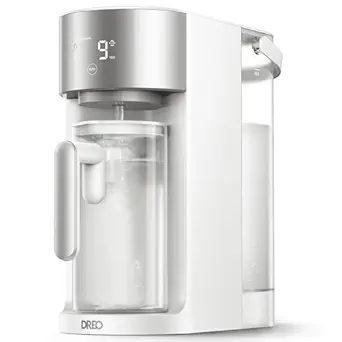 |
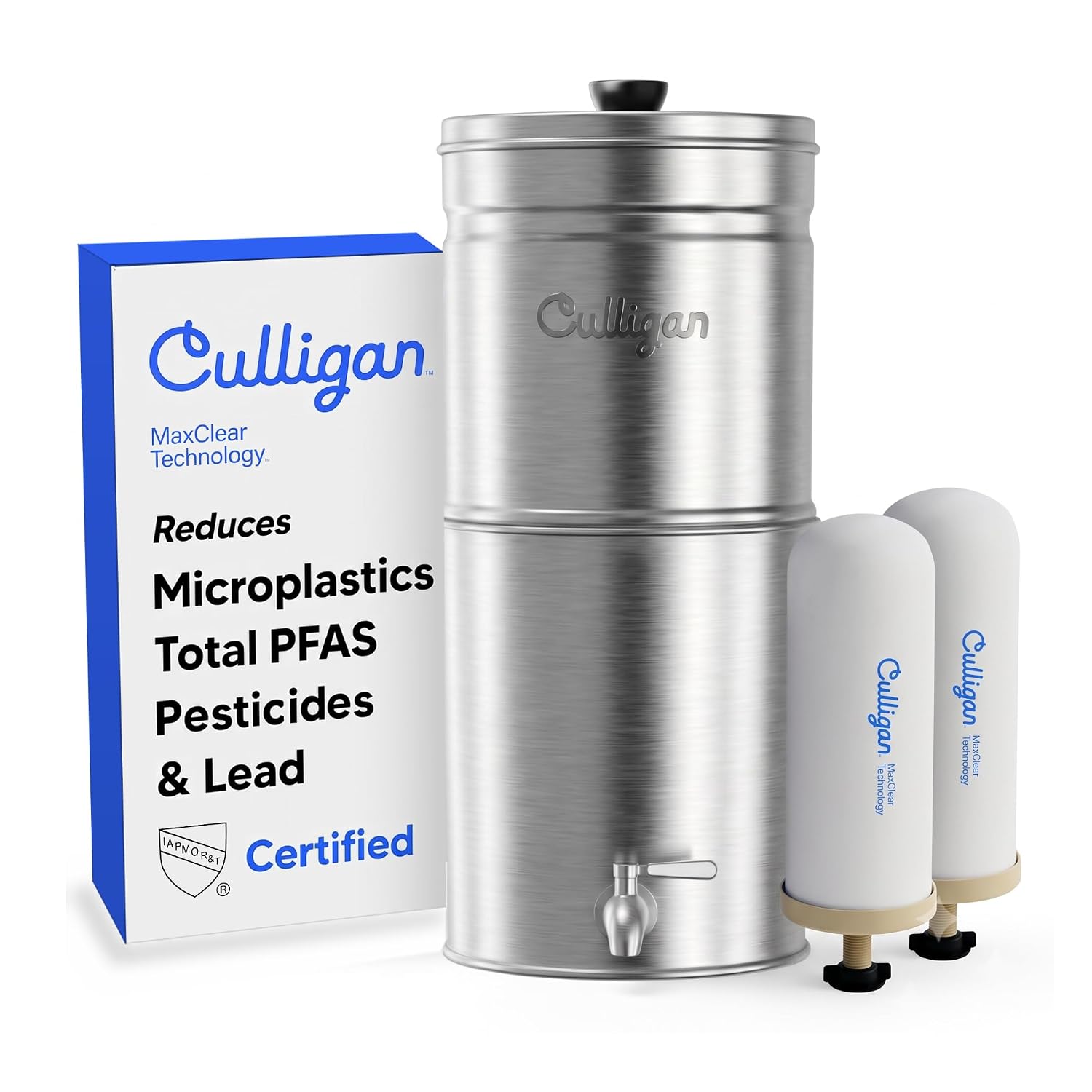
Culligan MaxClear Gravity Filter MCS702B
| Capacity | 2.25 gallons |
|---|---|
| Purification Method | Ceramic, Granular Activated Carbon |
| Filter Life Cycle | 6 months |
| Power Source | Gravity |
| Supported Water TDS Level Maximum (PPM) | 500 |
The Culligan MaxClear Gravity Filter is a portable countertop dispenser that filters water by gravity through a ceramic shell combined with activated carbon media, delivering treated water without electricity or plumbing. Setup is straightforward: stack the included ceramic+carbon filters in the upper chamber, pour water in, and let gravity draw filtered water into the lower reservoir where the ergonomic spigot dispenses it. Notable features include a stainless steel body that nests under 12 inches for storage, compatibility with common gravity filter replacement elements, and a claimed filter life of up to six months per cartridge. In real use it suits household counter use, short trips, and emergency storage because it holds multiple liters and retains beneficial minerals while targeting contaminants like PFAS, lead, and microplastics. Trade-offs are its size and weight compared with ultralight backpacking filters and the slower flow rate inherent to gravity systems, so it is better for group water storage and offline use rather than fast on‑trail pumping or inline filtering of natural sources.
Best for: Buyers who want a dependable countertop gravity filter for basecamp, car camping, or emergency water storage and prioritize contaminant reduction and durable construction over ultralight carry weight.
Less Ideal for: People planning long-distance backpacking or fast-moving trail use should choose a lighter pump, squeeze, or inline filter designed for treating natural source water on the go.
- Certified reduction of microplastics, lead, and Total PFAS according to manufacturer claims
- Durable stainless steel dispenser that nests compactly for storage
- Uses ceramic plus granular activated carbon for broad contaminant reduction while keeping minerals
- No electricity or plumbing required so it works in off‑grid or emergency situations
- Compatible with several common gravity replacement filter cartridges
- Relatively heavy and bulky for backpacking compared with lightweight pump or squeeze filters
- Gravity filtration is slower than pump or inline systems and not suited to filtering raw surface water quickly
Verdict: A rugged, countertop gravity filter best for basecamp, car camping, and emergency use when contaminant reduction and durability matter more than ultralight packability.
Berkey Travel Water Filter

| Capacity | 1.5 gallons |
|---|---|
| Purification Method | Activated Carbon |
| Power Source | Gravity-fed |
| Maximum Flow Rate | 0.05 gpm |
The Travel Berkey is a compact, gravity-fed countertop filter built for portable use and everyday countertop service. You pour water into the top chamber and it slowly passes through two Black Berkey purification elements into the lower chamber, where a spigot dispenses finished water; no electricity, tools, or installation are required. The system's stainless steel body and included Black Berkey elements deliver broad contaminant reduction—manufacturer and third-party testing cite removal or dramatic reduction of 200+ common contaminants—and each pair of elements is rated for up to 6,000 gallons. At 1.5 gallons capacity and 18 inches tall it is sized for 1–3 people, making it useful for short camping trips, RV use, or a compact countertop at home. The gravity feed design is easy and economical to run but is relatively slow, and you may want extra filter elements for heavy-use or very turbid water since flow rate and element life depend on feed-water quality. The Travel Berkey's portability, durable stainless build, and long-lived elements suit buyers who prioritize filtration performance in a small package.
Best for: Buyers who prioritize high contaminant reduction in a compact, travel-friendly filter and want a durable, no-power countertop solution for short trips or small households.
Less Ideal for: People who need fast continuous dispensing for larger groups or who prefer an electric or pump-driven filter for very high-flow demands.
- Removes or dramatically reduces 200+ common contaminants per third-party testing.
- Portable stainless steel construction designed for countertop or travel use.
- Includes two Black Berkey elements rated up to 6,000 gallons per pair.
- Requires no electricity, tools, or plumbing to operate.
- Slow gravity-fed flow rate that limits dispensing speed.
- Element lifespan depends on incoming water quality and may require earlier replacement with dirty sources.
Verdict: Choose the Travel Berkey when you want a compact, durable gravity-fed filter that delivers high contaminant reduction for camping, RVing, or small-countertop use.
IceJoy Ultra-Filtration Countertop 2.25G

| Purification Method | gravity |
|---|---|
| Capacity | 2.25 gallons |
| Filter Life Cycle | 6 months |
| Supported Water TDS Level Maximum (PPM) | 300 |
| Material Type | Stainless Steel |
The IceJoy countertop gravity filter uses a 0.01 micron ultrafiltration composite cartridge to deliver very fine, energy-free purification: pour water into the top chamber and gravity forces it through hollow fiber UF, silver-ion, and activated carbon layers into the lower tank. It removes chlorine, bad tastes and odors, PFAS, heavy metals, microplastics, and bacteria while preserving dissolved minerals because it does not lower TDS. The stainless steel 304 body is durable and corrosion resistant, and the sight-glass spigot makes it easy to see remaining water without opening the unit. Filters are replaceable and rated up to roughly 3,000 gallons per cartridge with a typical service life of about six months depending on source water. On the downside the 2.25 gallon size and stainless housing make it better for countertop or basecamp use than for minimalist backpacking, and ultrafiltration performance will slow with very turbid water unless you pre-filter. For someone who wants reliable, electricity-free purification and a rugged, low-maintenance unit for trips or camps where weight is less critical, this performs well.
Best for: Buyers who prioritize reliable, low-maintenance purification at basecamp, car-camping, or short outdoor trips and value a durable, electricity-free system over ultralight portability.
Less Ideal for: Minimalist backpackers or long-distance hikers who need the lightest, most compact filtration options should look at lightweight pump, straw, or chemical treatments instead.
- 0.01 micron ultrafiltration plus carbon and silver-ion layers for broad contaminant removal including bacteria and microplastics
- Gravity-powered operation needs no electricity or plumbing, so it works off-grid
- Durable food-grade 304 stainless steel construction resists rust and impact
- Sight-glass spigot lets you monitor lower-tank water level without opening the unit
- Replaceable filters rated up to about 3,000 gallons each for extended service life
- 2.25 gallon capacity and stainless-steel weight make it bulky for long-distance backpacking
- Not designed to reduce TDS so it will not remove dissolved minerals or salts
Verdict: Choose this if you want a rugged, electricity-free countertop ultrafiltration system for basecamp and car-camping where durability and broad contaminant removal matter more than pack weight.
OEMIRY Countertop Water Filter OM-CF04

| Purification Method | Non-woven fabric, Carbon block, KDF, Alkaline |
|---|---|
| Maximum Flow Rate | 1.6 gpm |
| Operating Pressure Range | 15-100 psi |
| Filter Life Cycle | 12 months / 8000 gallons |
| Power Source | Adapter |
The OEMIRY OM-CF04 is a small countertop alkaline filter that attaches to standard faucets to produce filtered, remineralized drinking water without electricity or a storage tank. Installation uses one of the supplied faucet adapters and a wrench for the threaded connection, and the unit switches between filtered and tap water with a twist valve, making it simple to use for drinking, cooking, and basic cleaning. Filtration is multi-stage (non-woven prefilter, carbon block, KDF and alkaline stages) so it reduces chlorine, taste and odor, heavy metals and some fluoride while retaining beneficial minerals; the maker rates the flow up to 1.6 gpm so you can fill a cup quickly. The housing is ABS plastic and the unit is tankless and portable enough to move between kitchens, RVs, or short trips where a countertop hookup is available. Important limits: it is only compatible with standard threaded faucets (not pull-out, spray, or sensor taps) and does not lower TDS, so it is not a substitute for RO for very low TDS needs. Filter replacement is yearly or ~8,000 gallons depending on use.
Best for: Buyers wanting an inexpensive, portable countertop filter to improve tap water taste and remove common contaminants in kitchens or RVs without plumbing changes or power.
Less Ideal for: People who need a filter that works with pull-out or spray-style faucets or who require reverse osmosis level TDS reduction for specialized uses.
- Multi-stage filtration reduces chlorine, taste, odor and many heavy metals while retaining beneficial minerals
- Tankless, compact design that does not require electricity and is easy to move between counters or RVs
- Fast rated flow up to 1.6 gallons per minute for quick filling
- Includes multiple faucet adapters and a wrench for straightforward installation on standard faucets
- Not compatible with pull-out, spray, or sensor faucets so installation can be limited
- Does not lower TDS or replace a reverse osmosis system for very low-mineral water needs
Verdict: If you need a budget-friendly, portable countertop filter that improves taste and removes common contaminants without plumbing or power, this unit delivers straightforward, fast filtration.
cleanwater4less Countertop Water Filter

| Purification Method | Activated Carbon |
|---|---|
| Installation Type | Countertop |
| Other Special Features of the Product | Chlorine Reduction |
| Supported Water TDS Level Maximum (PPM) | 1000 |
| Capacity | 10000 gallons |
This countertop filter attaches to a faucet via a diverter valve and uses an activated carbon element to reduce chlorine and improve taste for household tap water. It is supplied with a faucet adapter and claims a 10,000-gallon capacity, so it is intended for extended use without frequent cartridge changes. Installation is straightforward for standard faucets and the stainless steel housing looks durable for everyday kitchen use; the unit can also work with pull-out faucets if you contact the seller for an adapter. The system does not require electricity and handles water with up to 1000 ppm TDS, making it suitable for municipal supplies. Limitations: it is a countertop/faucet-mounted solution rather than a portable pump or gravity filter, so it is not designed for off-grid backpacking or treating untreated surface water; its stated benefits focus on chlorine reduction and taste rather than comprehensive pathogen removal. For users who need a simple, long-life faucet-mounted carbon filter at home, this delivers reliable basic filtration and easy setup.
Best for: Buyers who prioritize a low-maintenance, long-life countertop filter for reliable daily tap water improvement and straightforward installation.
Less Ideal for: People needing a lightweight, portable purification system for backpacking or for treating untreated river or lake water should choose a dedicated outdoor water purifier instead.
- Easy diverter-valve installation onto standard faucets
- Activated carbon media reduces chlorine and improves taste
- Stainless steel construction for a durable countertop presence
- High claimed capacity of 10,000 gallons reduces replacement frequency
- Not designed to remove microbes or make untreated surface water safe for backpacking
- Requires a compatible faucet or an adapter for pull-out faucets
- Bulky compared with lightweight portable filters for outdoor use
Verdict: Pick this unit if you want a durable, long-life countertop carbon filter that reliably improves tap water taste with minimal maintenance.
Purewell 3-Stage Gravity Water Filter

| Purification Method | Activated Carbon, Silver Ion, Hollow Fiber UF Membrane |
|---|---|
| Upper Temperature Rating | 100 °F |
| Supported Water TDS Level Maximum (PPM) | 500 |
| Filter Life Cycle | 6 months |
| Capacity | 2.25 gallons |
The Purewell 3-stage gravity filter is a countertop system that uses gravity to push tap water through a composite filter combination: a 0.01 μm hollow fiber UF membrane, activated carbon block and silver ion layer. You fill the upper stainless-steel chamber and filtered water collects in the lower chamber, dispensed through a stainless spigot; no power or plumbing is required, so it works indoors or in off-grid situations. The very small pore size promises high particle removal while the carbon improves taste and reduces chlorine, and Purewell rates flow at about 4 gallons per hour under normal conditions. The unit ships with two replaceable carbon filters and a stand, and each black carbon element is rated to about 3,000 gallons of service life. Practical limits: it does not reduce TDS and is bulky compared with lightweight backpack filters, and the 2.25 gallon capacity and 8.5 lb weight make it better for basecamp or car-camping than fast-and-light hikes. Filter replacement every six months and careful handling to avoid cross-contamination are needed to keep performance consistent.
Best for: Buyers who want a reliable, high-filtration countertop system for basecamp, group camping, or household backup and who prioritize verified contaminant reduction and durable materials.
Less Ideal for: Lightweight backpackers or solo hikers who need ultralight, pump- or straw-style filters for on-trail use should choose a more compact filter designed for carry-in purification.
- Very fine 0.01 μm hollow fiber membrane for high particle removal
- No electricity or plumbing required so it works off-grid or during outages
- 304 stainless-steel chambers and spigot for durable, food-grade construction
- Includes two replaceable filters and a stand for out-of-box use
- Relatively heavy and bulky compared with dedicated backpacking filters
- Does not reduce dissolved solids (TDS) or replace chemical disinfection for microbiologically unsafe water
Verdict: Choose this Purewell gravity filter if you need a durable, non-electric countertop system with very fine hollow-fiber filtration for basecamp or household backup.
DREO RO Countertop WF112

| Purification Method | Reverse Osmosis |
|---|---|
| Capacity | 3 liters |
| Other Special Features of the Product | Built In TDS Meter, Change Filter Indicator, Reduce TDS, Touch Control |
| Installation Type | Countertop |
The DREO WF112 is a countertop reverse osmosis purifier that delivers multi-stage filtration into a 3 liter tank and includes a 1.1 liter autofill pitcher for easy serving. It is designed for installation-free tabletop use: plug in, fill the raw-water reservoir, and the system performs RO filtration while the built-in TDS meter shows raw and purified TDS and an indicator reminds you when to change the cartridge. The unit's self-cleaning auto-flush helps keep internal tubing clear between uses and the twist-to-install RO cartridge makes replacements straightforward. Practical benefits include noticeably lower TDS and a reduced reliance on bottled water thanks to the 3:1 pure-to-drain efficiency and a filter lifespan rated around 265 gallons (1000 L). Important limitations are its countertop size and 3 liter capacity, which makes it best for one to two people rather than larger groups, and the need for periodic cartridge replacement and occasional descaling to maintain performance. For buyers focused on predictable, tested purification and hands-off monitoring, the WF112 offers usable convenience in a small package.
Best for: Buyers who prioritize reliable, lab-tested purification and straightforward, low-effort monitoring for daily drinking water in a small household.
Less Ideal for: People needing a lightweight, portable purifier for backpacking or multi-day remote trips or households that require high-volume water output.
- Built-in TDS meter and filter-life indicator for real-time water quality and maintenance visibility
- Auto-fill pitcher and installation-free countertop setup for easy everyday use
- Self-cleaning auto-flush reduces stagnant water and helps avoid buildup in internal tubes
- 3:1 pure-to-drain ratio and 7-stage RO filtration for thorough impurity reduction
- Small 3 liter tank capacity limits output for groups or heavy use
- Requires periodic cartridge replacements and occasional descaling to maintain RO performance
Verdict: Choose the DREO WF112 if you want a compact, installation-free countertop RO system that gives visible TDS monitoring and hands-off maintenance for reliable daily drinking water.
Choosing the Right Countertop Water Filter for Backpacking: Key Factors to Consider
Filtration Technology and Contaminant Reduction
Different countertop filters rely on ceramic, activated carbon, hollow-fiber membranes, or multi-stage cartridges. For backpacking use you should focus on media proven to remove bacteria, protozoa, and particulates. Some media also reduce chemicals and improve taste, which matters when sourcing water from streams or reservoirs. Understand the specific contaminants the filter targets so you can match it to the water sources you expect to use.
Weight and Packed Size
Even countertop-style systems intended for portable use vary widely in weight and collapsed dimensions. Weight affects how much other gear you can carry and how comfortable your pack will be over long distances. Packed size determines whether the filter fits inside your pack or must be strapped externally. Look for modular designs with detachable parts that nest together or fold flat to minimize bulk.
Flow Rate and Ease of Use
Flow rate dictates how quickly you can produce drinking water at camp. Faster systems reduce downtime and are more practical for groups. Consider whether the unit requires manual pumping, gravity feed, or simple pouring. The easiest systems to use in camp are those that deliver steady flow without complex setup and that work with common containers such as collapsible water bottles, hydration bladders, or cooking pots.
Durability and Materials
Backpacking exposes gear to bumps, drops, and variable temperatures. Robust housings, reinforced connections, and materials that resist cracking matter for longevity. Evaluate seals and fasteners for field serviceability, and prefer designs that tolerate sand and silt without catastrophic clogging. Durability also extends to the lifetime of the filter cartridge and how it handles repeated cleaning in primitive conditions.
Maintenance, Cleaning, and Replacement
Filters clog when treating turbid water, so the ability to clean or backflush in the field is critical. Consider whether the filter element can be brushed, soaked, or rinsed without special tools, and how often replacement cartridges are typically needed. Availability of replacement parts and straightforward maintenance procedures reduce the risk of being without filtered water mid-trip.
Compatibility With Backpacking Containers
A countertop filter's usefulness in backpacking depends on how well it interfaces with portable containers. Check whether the filter works with collapsible jugs, hydration reservoirs, or common pot sizes used for cooking. Adapters or threaded fittings that match lightweight water containers improve convenience and reduce the need to transfer water multiple times in camp.
Why Choose a Countertop-Style Filter for Backpacking
Countertop-style water filters offer a compromise between ultralight individual filters and heavy household purifiers. They are often designed for repeated filling and dispensing at camp, providing larger volumes of treated water for cooking, cleaning, and group hydration. For backpackers who establish a basecamp or stay in huts for several nights, these systems can be more efficient than filtering small quantities repeatedly.
When selecting a countertop unit for the trail, emphasize portability and resilience. Many units intended for portability feature quick-connect fittings, compact cartridges, and housings that tolerate outdoor use. These design choices make them more practical for multi-person trips when you need to supply more than one person with safe water quickly.
- Better for group use and cooking than handheld microfilters
- Often supports higher daily output without continuous pumping
- Can simplify water chores at a basecamp-style stop
Field Setup and Typical Use Cases
Setting up a countertop filter at camp usually involves mounting the filter on a stable surface or suspending it between supports, connecting an input container, and positioning an output container for treated water. Practical use cases include filling cooking pots, refilling hydration bladders, and producing water for campsite hygiene.
Plan your setup to minimize exposure to dirt and cross-contamination. Place input containers slightly above the filter when using gravity assistance, or use a simple pump if the system supports it. Choose containers that are easy to clean and that seal well to avoid introducing debris into the filter.
- Ideal for basecamp, hut stays, and group trips
- Works best with a stable flat surface or simple suspension
- Pair with collapsible jugs or wide-mouth pots for easier filling
Dealing With Turbid Water and Pre-Filtration
Stream and lake water can be highly turbid after rain or in glacial areas, which quickly clogs fine filter media. Using a simple pre-filter or settling strategy dramatically extends cartridge life. Letting water sit in a container to allow heavy particles to settle, or passing water through a coarse cloth or sock before the countertop filter, reduces silt load.
Pre-filtration is especially important when sources are visibly cloudy. A lightweight mesh or improvised cotton pre-filter adds minimal weight but can prevent frustration from repeated clogs and lost flow during a trip.
- Let water settle when possible to reduce silt
- Use a cloth or mesh pre-filter to catch large particulates
- Rotate multiple cartridges if treating many liters over several days
Packing Tips and Protecting the Filter
Pack components in protective layers to avoid crushing or puncturing housings and seals. Use a dry sack or padded compartment and keep small parts and fittings in a labeled mesh bag. Drain and dry filter elements when possible before long storage to prevent mold or biofilm formation.
Consider breaking the unit down into modular pieces for transport and reassembling it at camp. Replaceable cartridges are often lighter to carry than an assembled system and allow you to distribute weight across group packs if necessary.
- Store in a dry sack to protect from shocks and moisture
- Keep extra O-rings and small fittings in a labeled pouch
- Drain and air-dry elements before stowing for long periods
Safety Practices and Water Source Assessment
Even with a capable filter, assess each water source before treating. Look for upstream contamination, stagnant pools, or signs of animal activity that may indicate elevated microbial loads or chemical runoff. When in doubt, choose flowing water and collect from midstream rather than near banks where sediment accumulates.
Follow simple hygiene protocols when handling the filter and containers. Use clean hands or gloves if possible, avoid touching spouts, and keep treated water separate from untreated source containers to prevent cross-contamination.
- Prefer flowing sources and collect from midstream
- Avoid collecting near livestock or campsite runoff
- Keep treated and untreated water physically separated
How We Chose the Best Countertop Water Filter for Backpacking
We prioritized products that suit backpacking scenarios where campers use a compact countertop-style filter at basecamp or in huts rather than carrying larger household systems. Evaluation centered on measurable filtration performance, packability, durability for outdoor use, flow rate in field conditions, and ease of maintenance while on the trail. We checked filter media types and rated their pathogen and particulate reduction capabilities, compared system weight and collapsed packing dimensions, and assessed whether components are robust enough to survive repeated setup and transport. We also examined how easy it is to clean or backflush filters without workshop tools, whether replacement elements are commonly available, and the typical service life under high-turbidity source water. Exclusions included heavy household-only systems that are impractical to carry, gravity-only devices without replaceable certified media, and pumps designed exclusively for short-term emergency use. The final list favors units that balance verified filtration with real-world backpacking convenience.
Our full evaluation process is outlined in our review methodology.
FAQ
Can a countertop water filter remove bacteria and protozoa commonly found on trail water?
Often yes. Many portable countertop filters use membrane or ceramic media rated to remove bacteria and protozoa. Check the filter's stated reduction capabilities and whether the media is designed for biological contaminants. For viral contamination, additional treatment may be necessary.
Are countertop filters practical for solo backpacking?
They can be practical if you prioritize group water production at a basecamp, but countertop units are generally heavier than individual inline filters. For fast-and-light solo trips, ultralight personal filters may be a better fit unless you plan to stay multiple nights in one location.
How do I clean or maintain a countertop filter in the field?
Most portable countertop filters allow brushing, backflushing, or rinsing with clean water to clear sediment. Follow the manufacturer's maintenance steps for field cleaning, carry a small soft brush, and avoid using soaps that could damage filter media. Replace cartridges according to turbidity and use.
Can I use a countertop filter with collapsible water containers?
Usually yes. Many portable countertop systems have adapters or wide-mouth fittings that work with collapsible jugs and hydration bladders. Verify connection compatibility before your trip and carry simple adapters if needed.
Will freezing temperatures damage the filter?
Freezing can crack housings or damage media if water is left inside. Drain and dry the unit before exposure to subfreezing conditions, and store cartridges in insulated areas if you expect cold nights. Some media tolerate occasional freezing better than others, so confirm suitability for cold-weather use.
Final Verdict
For backpacking, prioritize a countertop water filter that balances reliable contaminant reduction with low weight, compact packing, and straightforward field maintenance. Expect tradeoffs between flow rate and packability: faster systems often weigh more, while ultralight options may be slower or require more care with turbid sources. Focus on filtration technology, ease of cleaning in primitive conditions, and compatibility with your chosen containers. With those priorities in mind, you can choose a system that supplies safe water efficiently at basecamp without adding unnecessary bulk.