
Note: This article contains affiliate links. If you click on these links and make a purchase, we may earn a small commission at no extra cost to you. This helps support our research and content. Read our full affiliate disclosure here.
If you want noticeably cleaner, better-tasting water without installing plumbing alterations, a countertop water filter is a fast, low-impact option. You get effective contaminant reduction while keeping installation simple and reversible, which makes these units a practical choice for renters, homeowners, and anyone who wants point-of-use purification. This guide covers six shortlisted countertop water filters that represent a range of filtration approaches, flow rates, and maintenance needs. We focus on real-world factors like filtration performance, flow rate, filter life, and ease of setup and upkeep so you can pick the unit that fits your kitchen and drinking habits. Read on to see the evaluation criteria and practical tradeoffs to consider before you buy.
Top Picks at a Glance
| Best Quality Built to a higher standard if you want something more solid | AquaTru Carafe Smart Alkaline |  |
| Best Value The sweet spot between price and what you get | WaterChef C6500 Countertop Filter |  |
| Best Budget The cheapest option that still gets the job done reliably | iSpring CKC1C Countertop Water Filter |  |
| Top Rated A top-rated pick with lots of positive feedback | DREO RO Countertop WF112 | 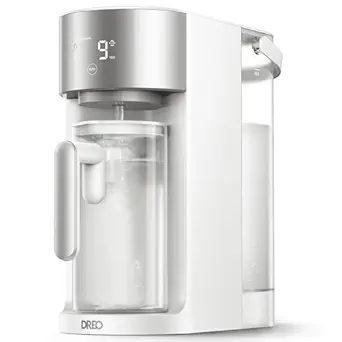 |
| Most Popular A crowd favorite that many people choose with confidence | Brita UltraMax 27-Cup Dispenser |  |
| Best Seller A high-volume bestseller chosen again and again | Brita Metro 6-Cup Pitcher |  |
AquaTru Carafe Smart Alkaline

| Purification Method | Reverse Osmosis |
|---|---|
| Power Source | Corded Electric |
| Maximum Flow Rate | 0.5 gpm |
| Supported Water TDS Level Maximum (PPM) | 300 |
| Filter Life Cycle | 6 months |
The AquaTru Carafe Smart Alkaline is a compact countertop reverse osmosis system that sits on a kitchen counter, plugs into a standard outlet, and dispenses purified water into a borosilicate glass carafe. It uses a four-stage filtration sequence (pre-filter, RO membrane, and carbon stages) designed to reduce 84 contaminants including lead, PFAS, microplastics, and other common tap-water pollutants, making it suitable for drinking, cooking, and beverages. Setup requires no plumbing or drilling—fill the feed tank and the pump-driven RO process delivers clean water at up to 0.5 gpm while built-in indicators track filter life. The system is notable for long filter lifespans (pre-filter up to 6 months, RO up to 24 months on some models) and a durable glass carafe that avoids plastic contact with finished water. Trade-offs include the need for a countertop footprint and electrical outlet, a modest water throughput compared with under-sink RO units, and the requirement to replace specialty filters that are unique to this model. For buyers who prioritize contaminant removal without installation, the Carafe balances performance and convenience well.
Best for: Buyers who want near-RO-level contaminant removal without plumbing or installation and value a compact, countertop purifier that delivers noticeably cleaner drinking water.
Less Ideal for: People who need high daily output for large households or want a hidden under-sink install with direct faucet plumbing should consider a traditional under-sink RO instead.
- Reverse osmosis purification removes a broad set of contaminants including PFAS, lead, and microplastics.
- Four-stage filter system with long filter life for reduced maintenance frequency.
- Glass borosilicate carafe avoids plastic contact and looks nicer on a counter.
- Plug-and-play countertop design requires no plumbing or drilling and includes filter life indicators.
- Lower output rate and smaller daily throughput than installed under-sink RO systems.
- Requires a dedicated countertop space and a nearby electrical outlet.
- Uses model-specific replacement filters rather than universal cartridges.
Verdict: If you want powerful RO-level contaminant reduction on your countertop without plumbing, the AquaTru Carafe delivers high-performance filtration in a compact plug-in package.
WaterChef C6500 Countertop Filter
| Capacity | 600 gallons |
|---|---|
| Filter life cycle | 1 years |
| Rated service flow | .75 gal/min @ 60 psi |
| Operating pressure range | 30-100 psi |
| Independent certification | IAPMO/NSF 42, 53, 401, 372 |
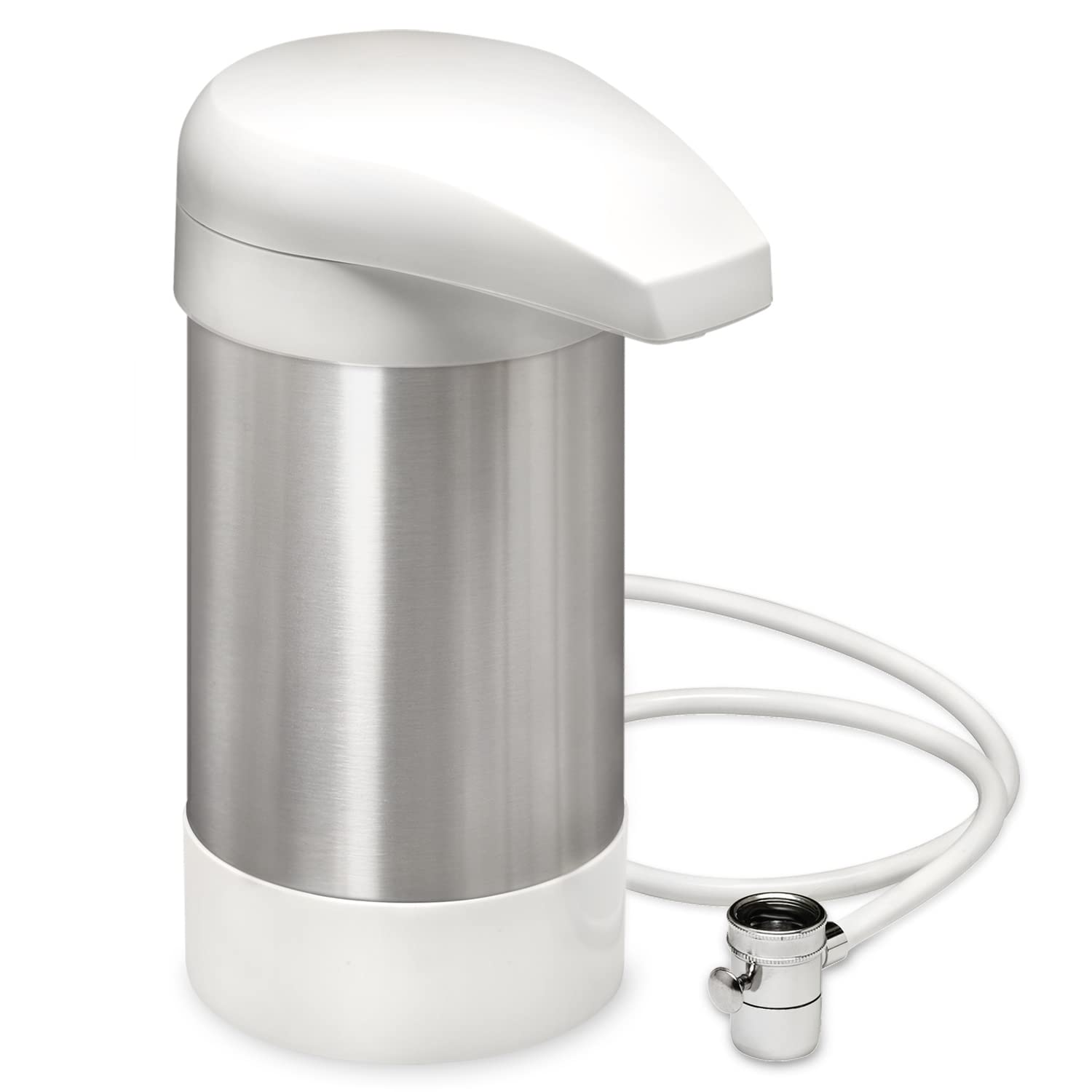
The WaterChef C6500 is a countertop faucet-mounted filtration system that uses a carbon-based Big Block cartridge to reduce 78 common tap water contaminants and deliver better-tasting water without plumbing. It attaches to most standard kitchen faucets without tools and includes a pre-installed CR65 cartridge rated for about 600 gallons or roughly one year of typical household use. Independent IAPMO/NSF certifications (Standards 42, 53, 401 and 372) back the contaminant claims, and the unit is built from ABS and stainless steel components and made in the USA. Flow is modest at about 0.75 gpm, so expect slower fill times compared with unfiltered tap water, but the tankless design keeps the footprint small and cartridge changes straightforward. The system is not recommended for pull-out faucets and requires matching the included fittings to your faucet, so check compatibility before buying. If you prioritize long cartridge life, broad contaminant coverage, and an easy no-plumbing install, the C6500 is a practical countertop solution.
Best for: Buyers who want a low-maintenance countertop filter that prioritizes validated contaminant reduction and long cartridge life without installing under-sink plumbing.
Less Ideal for: Those who need high flow rates, have pull-out style faucets, or prefer an under-sink concealed system with dedicated faucet plumbing.
- Certified reduction of 78 contaminants including lead, PFAS, microplastics and cysts
- Long single-cartridge life rated at 600 gallons or about 1 year
- Tool-free countertop install that fits standard faucets
- Tankless, compact footprint with durable ABS and stainless steel construction
- Lower flow rate (~0.75 gpm) can slow filling and be noticeable during heavy use
- Not recommended for pull-out style faucets so some kitchens will need a different model
Verdict: If you want a proven, low-maintenance countertop filter that removes a wide range of contaminants and runs a full year per cartridge, the WaterChef C6500 is a practical choice.
iSpring CKC1C Countertop Water Filter
| Model Number | CKC1C |
|---|---|
| Included Components | Housing, Carbon Block Filter, Tubing, Wrench, Diverter Valve, O-ring |
| Material Type | Food-grade Materials |
| External Testing Certification | ANSI, NSF |
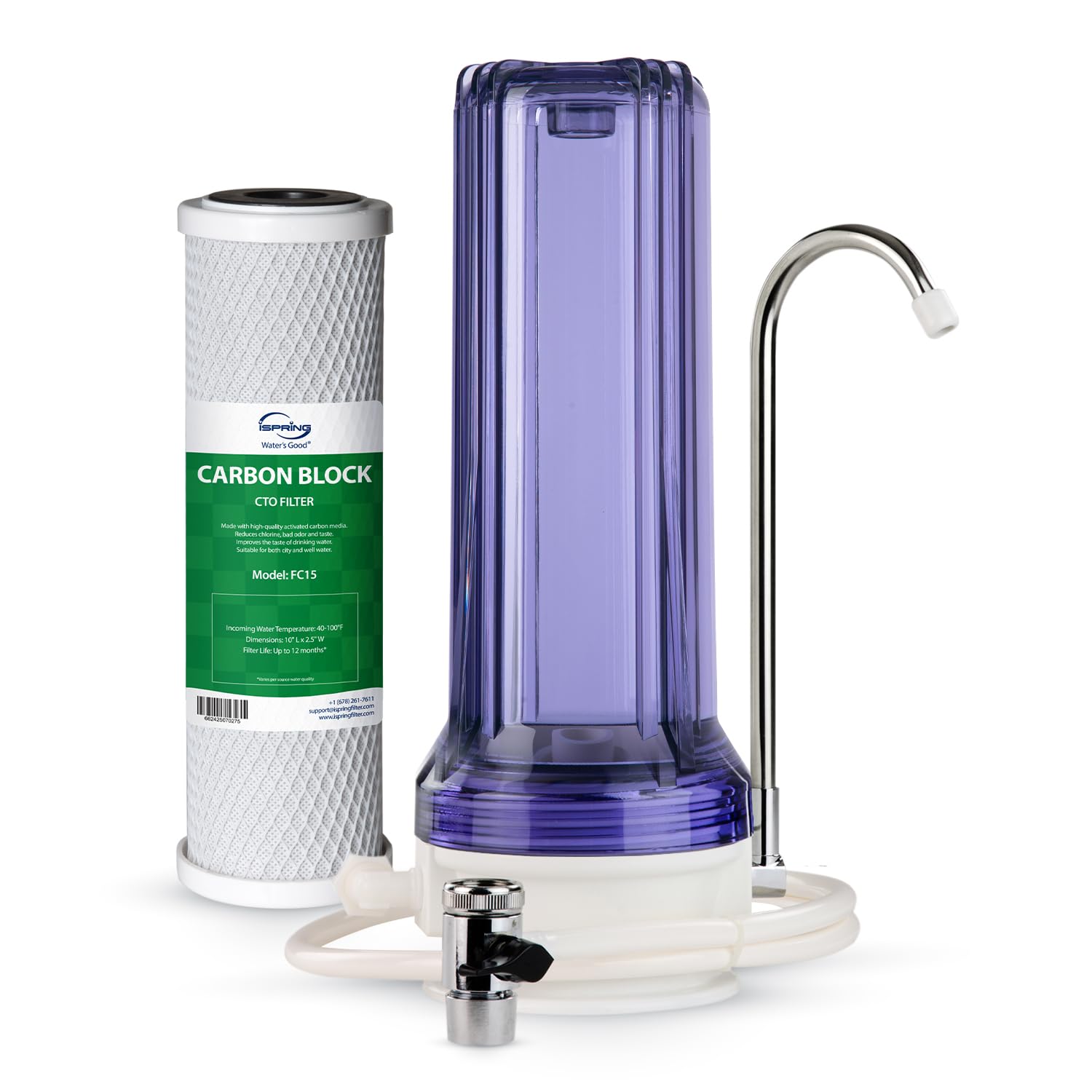
The iSpring CKC1C is a straightforward countertop filtration system meant to sit on your sink and connect to a standard faucet without drilling. It uses a 5-micron carbon block cartridge housed in a clear casing so you can visually check the cartridge condition and know when to replace it. Installation is simple and tool-light: the kit includes tubing, a diverter valve, adapters, an O-ring, and a wrench so most users can switch between filtered and tap water by twisting the diverter. The filter is NSF/ANSI tested to remove up to 95% of chlorine, odors, sand, silt, sediment and rust, and is built from food-grade materials to resist leaks. Replacement life is advertised at roughly 6 to 12 months depending on water quality, making it an economical choice for regular drinking and cooking water. It does not remove dissolved solids the way an RO system does, so it preserves healthy minerals but will not lower TDS. For buyers who want a simple, low-maintenance countertop solution, this model delivers reliable basic filtration.
Best for: Buyers who want a low-cost, easy-to-install countertop filter that improves taste and removes chlorine and sediment without plumbing changes.
Less Ideal for: People who need reduction of dissolved solids, fluoride, or want full RO-level purification should consider a different system.
- No-drill, tool-light installation with included diverter and adapters
- Clear housing lets you see filter condition for timely replacements
- NSF/ANSI-tested carbon block reduces chlorine, sediment, odors, and rust
- Includes all necessary hardware and a wrench for easy setup
- Does not reduce total dissolved solids or function like a reverse-osmosis system
- Filter life varies with local water quality and may require replacement within 6 months
Verdict: A budget-friendly, no-drill countertop filter that reliably reduces chlorine and sediment while being simple to install and maintain.
DREO RO Countertop WF112

| Purification Method | Reverse Osmosis |
|---|---|
| Capacity | 3 liters |
| Pure to Drain Rate | 3:1 |
| Included Components | WF112 Body, RO Filter, Autofill Water Pitcher |
The DREO WF112 is a countertop reverse osmosis system designed for daily filtered drinking water without a permanent installation. It uses a 7-stage RO filter and reports a 3:1 pure-to-drain ratio while providing a 3 liter reservoir and an included 1.1 liter autofill pitcher for hands-free refills. The unit has a built-in TDS meter and filter-life indicator so you can monitor incoming and purified water quality and know when to replace the cartridge, and the self-cleaning auto-flush helps reduce mineral buildup in the internal tubes. Setup is installation-free so it sits on a counter or in a small workspace and replacement filters twist in for quick swaps. Trade-offs are the limited daily capacity for larger households and the expected drain water from RO operation, but for one to two people the compact footprint, active monitoring, and easy maintenance make it a reliable source of low-TDS drinking water.
Best for: Buyers who prioritize a compact, reliable countertop RO system with active water-quality monitoring and low-effort maintenance for daily drinking water in small households or offices.
Less Ideal for: Those needing high daily output for large families, whole-house needs, or who cannot accommodate any drain water from RO operation should consider higher-capacity or plumbed systems instead.
- 7-stage RO filtration with up to 99.99% impurity reduction per SGS testing claim
- Built-in TDS meter and filter-life indicator for real-time water quality monitoring
- Autofill pitcher and installation-free countertop design for easy, hands-free use
- Self-cleaning auto-flush reduces mineral buildup and simplifies maintenance
- 3 liter tank and 1.1 liter pitcher limit output for larger households
- RO systems produce wastewater proportional to purified water due to the 3:1 pure-to-drain ratio
Verdict: A compact, installation-free countertop RO unit that delivers monitored, low-TDS water with easy maintenance for one to two people seeking reliable daily filtration.
Brita UltraMax 27-Cup Dispenser

| Capacity | 27 cups |
|---|---|
| Includes | 1 Standard Brita filter |
| Filter compatibility | Standard and Elite Brita filters |
| Material type | Plastic |
The Brita UltraMax is a fridge-friendly countertop water dispenser designed for families who want filtered tap water on demand. Water flows from a top-filled reservoir through a Brita Original filter (included) into the lower chamber and dispenses via a precision-pour spigot, which makes it convenient for filling glasses or pitchers without lifting a heavy pitcher. The unit's 27-cup capacity and narrow footprint save fridge shelf space while the easy-lock lid and sticker filter indicator simplify day-to-day use. It is compatible with both Standard and Elite Brita filters so you can choose longer-life filter options, and the filtration targets chlorine taste and odor plus select heavy metals for noticeably better tasting water. Limitations are its plastic construction and the need to replace filters regularly according to usage, and while the dispenser trims bottled-water waste it does not cool water like a chiller or offer advanced filtration beyond Brita's certified reductions.
Best for: Buyers who prioritize proven performance and social proof want a reliable, high-capacity countertop dispenser that improves tap water taste for daily family use.
Less Ideal for: People seeking chilled, mineral-adding, or advanced multi-stage purification systems should consider alternatives better suited to those needs.
- Large 27-cup capacity reduces refill frequency for families
- Fits in most refrigerators thanks to a slim, space-saving footprint
- Includes a Brita Original filter and works with Standard and Elite filters
- Sticker filter indicator and easy-lock lid simplify maintenance and use
- Made of plastic rather than higher-end materials
- Requires frequent filter replacements based on household usage
Verdict: A high-capacity, trusted countertop dispenser that delivers noticeably better-tasting tap water and strong social-proof reliability for everyday family use.
Brita Metro 6-Cup Pitcher

| Capacity | 6 cups |
|---|---|
| Filter Life Cycle | 2 months (40 gallons) |
| Certifications | WQA NSF/ANSI certified |
| Upper Temperature Rating | 85 °F |
| Supported Water TDS Level Maximum (PPM) | 500 |
The Brita Metro 6-cup pitcher is a small, fridge-friendly filtration pitcher intended for everyday countertop or dorm use. It holds about six cups and uses Brita Standard (or Elite) filters to reduce chlorine taste and odor as well as copper, mercury and cadmium, with a filter life of roughly 40 gallons or two months. The pitcher includes a SmartLight filter-change indicator so you know when to replace the cartridge, and its easy-fill lid lets you top it up without removing the cover. Because it is freestanding and requires no power, it is simple to set on a counter or in a fridge door and requires only occasional filter swaps. The practical benefits are straightforward: noticeably better-tasting tap water, lower single-use bottle waste, and a compact footprint for small kitchens. Limitations are inherent to pitcher systems: flow is slower than a tap, total capacity is limited to small households, and filtration addresses a defined list of contaminants rather than comprehensive purification for microbiological threats.
Best for: Buyers who prioritize reliable, certified improvement to tap water taste in a low-effort, compact solution and value a recognizable brand and visible filter-change reminders.
Less Ideal for: Homes needing large-volume filtration, comprehensive removal of all contaminants, or treatment for microbial contamination should consider larger or more advanced systems.
- Compact, fridge-friendly design fits most mini-fridge doors and counters
- WQA and NSF/ANSI certified reductions for chlorine, copper, mercury and cadmium
- SmartLight indicator notifies you when the filter needs replacement
- Compatible with Brita Standard and Elite filters for flexible replacement intervals
- Requires no power and is easy to fill and use
- Limited total capacity suitable for small households or individual use
- Filtration is limited to listed contaminants and does not replace point-of-entry whole-house treatment
Verdict: A small, certified, easy-to-use pitcher that reliably improves tap water taste for risk-averse buyers who want a low-effort countertop filter.
Choosing the Right Countertop Water Filter: Key Factors to Consider
Filtration Performance
The core purpose of a countertop water filter is to reduce unwanted contaminants and improve taste and odor. Assess the types of contaminants the system is certified or rated to remove, including particulates, chlorine, lead, volatile organic compounds, and microbial concerns when applicable. Different media target different contaminants, so match the filter capabilities to your local water profile.
Higher rated removal across a broader spectrum usually means cleaner, better-tasting water, but that can come with tradeoffs in flow rate and filter life. If your water has a specific issue, such as lead or heavy chlorine taste, prioritize systems with documented reduction for those contaminants.
Flow Rate and Daily Throughput
Flow rate determines how much filtered water you can get in a given time. Faster flow makes the filter more convenient for filling pitchers, cooking, or serving multiple people. Some countertop units sacrifice speed to achieve finer filtration, producing very slow trickle flows that are frustrating in daily use.
Consider typical household use: a single person may tolerate slower output, while families need higher throughput. Also check if the system stores a small reservoir or only filters on demand, because storage affects both available volume and potential for standing-water issues.
Filter Life and Replacement Frequency
Filter lifespan controls running cost and how often you need to perform maintenance. Look at the stated capacity in gallons or months, and understand that heavily contaminated source water can shorten effective life. A longer-lasting filter reduces the frequency of replacements, but replacement cartridges may cost more.
Also evaluate how easy replacements are to buy and install. A system with inexpensive, readily available cartridges that twist in quickly is usually less hassle than one requiring tools or hard-to-find components.
Installation and Ease of Use
One major advantage of countertop filters is minimal installation. Many models attach to a faucet with a diverter, while others sit independently and require no plumbing. Evaluate how the unit integrates with your faucet type, whether any adapters are needed, and how straightforward the initial setup is.
Ease of use also covers daily interactions like switching between filtered and unfiltered flow, accessing the filter housing for changes, and cleaning exterior surfaces. Simpler systems reduce the chance of user error and make regular maintenance less onerous.
Materials, Build Quality, and Safety
Materials affect durability and water-contact safety. Look for food-grade plastics or stainless-steel housings and avoid materials that could leach unwanted compounds. Seals and threaded fittings should feel robust to prevent leaks over time.
Better build quality can mean fewer replacements due to housing failure and more consistent performance through the life of the filter. Consider whether the unit has replaceable parts and whether spare seals or adapters are available.
Certifications and Testing
Independent certifications and third-party test results provide credible evidence for contaminant reduction claims. Certifications to common standards indicate the system was tested against specific contaminant reduction protocols and media longevity metrics.
While not every effective countertop filter will have full certification due to cost, documented lab results or transparent testing data are valuable. If you need removal of a specific contaminant, prioritize models with direct testing or certification for that substance.
How Countertop Filters Work
Most countertop water filters use layered media to capture particulates, reduce chlorine and organic taste compounds, and adsorb specific contaminants. Typical configurations include a sediment prefilter, activated carbon for taste and odor reduction, and specialized media for metals or chemical removal.
Some units operate on simple gravity feed into a reservoir while others filter on demand directly from a faucet connection. Understanding the basic mechanism helps set expectations for flow behavior, maintenance intervals, and the kinds of contaminants the system will handle effectively.
- Sediment layers remove visible particles and protect downstream media.
- Activated carbon improves taste and removes chlorine by adsorption.
- Specialty media target metals, fluoride, or volatile organic compounds when present.
Installation Scenarios and Compatibility
Countertop filters are often chosen for minimal installation. Many attach to a standard kitchen faucet with a simple diverter valve and adapter. Others are freestanding units that require no faucet connection and can be filled manually.
Before selecting a unit, check your faucet type and whether the filter's included adapters match your hardware. Measure counter clearance and available space because some housings are tall or wide and need room for cartridge changes.
- Faucet-attached filters need compatible thread sizes or included adapters.
- Freestanding pitchers or tanks require counter space and manual refilling.
- Consider whether the unit requires a permanent bracket or stays freely on the counter.
Maintenance Tips to Maximize Performance
Follow recommended replacement intervals and watch for signs of reduced flow or taste changes, which are common indicators that a cartridge is spent. Rinsing or backflushing options are rare on countertop units, so routine cartridge swaps are the main maintenance task.
Keep the housing clean and dry when changing cartridges to avoid mold growth. Store replacement cartridges according to manufacturer guidance and note the install date so you can track service intervals accurately.
- Record install dates to monitor filter life.
- Clean housings with mild soap and water during cartridge changes.
- Replace cartridges promptly when rated capacity or time limits are reached.
Common Tradeoffs: Purity Versus Convenience
Tighter filtration often reduces flow rate and increases cartridge replacement frequency. Decide which matters more for your situation: the highest possible contaminant reduction, or a filter that supplies water quickly with lower upkeep.
If you use filtered water mostly for drinking and cooking, prioritize higher removal for taste and safety. If you need larger volumes for meal prep or entertaining, choose a model with higher throughput and a longer service life.
- High-purity media can slow output significantly.
- Larger cartridges often deliver longer life but increase upfront size.
- Balance your daily water needs against how often you want to change cartridges.
Signs You Should Replace or Service Your Unit
Reduced flow, noticeable taste or odor returning, or visible discoloration in filtered water are primary signs a cartridge needs replacement. Leaks, cracked housings, or persistent odors even after cartridge changes indicate service or part replacement may be necessary.
If you experience frequent clogging, check source water quality and prefilter options. Regularly inspect seals and fittings to avoid slow leaks that can damage counters over time.
- Watch for diminished flow and address cartridges promptly.
- Inspect seals during every cartridge change.
- If problems persist after replacing a cartridge, remove and inspect housing and connections.
How We Chose the Best Countertop Water Filter
Our selection process prioritized measurable filtration capability, practical flow rate, maintenance demands, and installation simplicity. We focused on units that use proven filtration media and testable reduction targets for common tap contaminants. Flow rate and everyday throughput were treated as separate criteria because a high-purity filter that delivers water too slowly can be impractical for daily use. We also evaluated filter life and replacement ease to reflect total upkeep time and recurring tasks. Build quality and materials were reviewed for durability and food-safe construction. Ease of setup covered how quickly a unit can be connected to a standard kitchen faucet or used independently on a counter. Noise and convenience factors were included for people who keep the unit in frequent use. We excluded specialty or whole-house systems and under-sink plumbed units because they fall outside countertop usage. Systems that required professional installation, custom plumbing, or complex electrical hookups were also excluded. Final picks balance tested contaminant reduction, usable flow rate, and realistic maintenance cycles suitable for everyday home use.
Our full evaluation process is outlined in our review methodology.
FAQ
How often should I change countertop filter cartridges?
Most cartridges are rated by gallons or months of use. Typical replacement intervals range from three to twelve months depending on water quality and household usage. Monitor flow and taste and replace sooner if performance degrades.
Will a countertop filter remove lead and other heavy metals?
Some countertop media are designed to reduce lead and certain metals, but effectiveness varies by system. Check for tested reduction claims or third-party data for the specific contaminant you are concerned about.
Can I attach a countertop filter to any kitchen faucet?
Many models include adapters for common thread sizes, but not all faucets are compatible. Measure your faucet and verify included adapters or confirm that a universal diverter fits before buying.
Do countertop filters need electricity?
No. Most countertop water filters operate without electricity, using direct flow or gravity. This makes them simple to place and move without worrying about outlets or power use.
Is filtered water from a countertop unit safe for cooking and making baby formula?
Filtered water is generally safe for cooking, but for infant formula you should follow local health guidance. If you need microbiological protection, choose a system specifically rated for microbial reduction or use boiled water when required.
Final Verdict
When choosing a countertop water filter, weigh filtration performance against flow rate and ongoing maintenance. Prioritize the contaminants you need removed and pick a system with documented reduction for those substances. Consider how much filtered water you use daily, how often you want to replace cartridges, and how the unit will fit on your counter. The best countertop option for you balances effective contaminant reduction, usable flow, and straightforward upkeep. Focus on the evaluation criteria outlined here to select a unit that matches your water quality concerns and daily habits with minimal fuss.