
Note: This article contains affiliate links. If you click on these links and make a purchase, we may earn a small commission at no extra cost to you. This helps support our research and content. Read our full affiliate disclosure here.
Finding the right dehumidifier deals matters because the wrong choice can leave a room still feeling damp or cost more to run than it should. You want a unit that removes the right amount of moisture for your space, operates efficiently, and is easy to maintain. This guide shortlists seven top dehumidifier options across common home needs and budgets. We evaluate each pick on capacity, energy use, and practical features that affect day-to-day performance. Read on for concise buying guidance and the features that matter most before you pick a deal.
Top Picks at a Glance
| Best Overall The best all-around choice for most situations | yaufey 31-Pint Dehumidifier |  |
| Best Quality Built to a higher standard if you want something more solid | Gasbye DryPrime-50 Dehumidifier |  |
| Best Value The sweet spot between price and what you get | HUMILABS 21-Pint Dehumidifier |  |
| Best Budget The cheapest option that still gets the job done reliably | Eva-Dry E-333 Mini Dehumidifier |  |
| Top Rated A top-rated pick with lots of positive feedback | hOmeLabs 32-Pint Dehumidifier |  |
| Most Popular A crowd favorite that many people choose with confidence | Pro Breeze Mini Dehumidifier PB-02 |  |
| Best Seller A high-volume bestseller chosen again and again | ToLife Dehumidifier TZ-C2 |  |
yaufey 31-Pint Dehumidifier
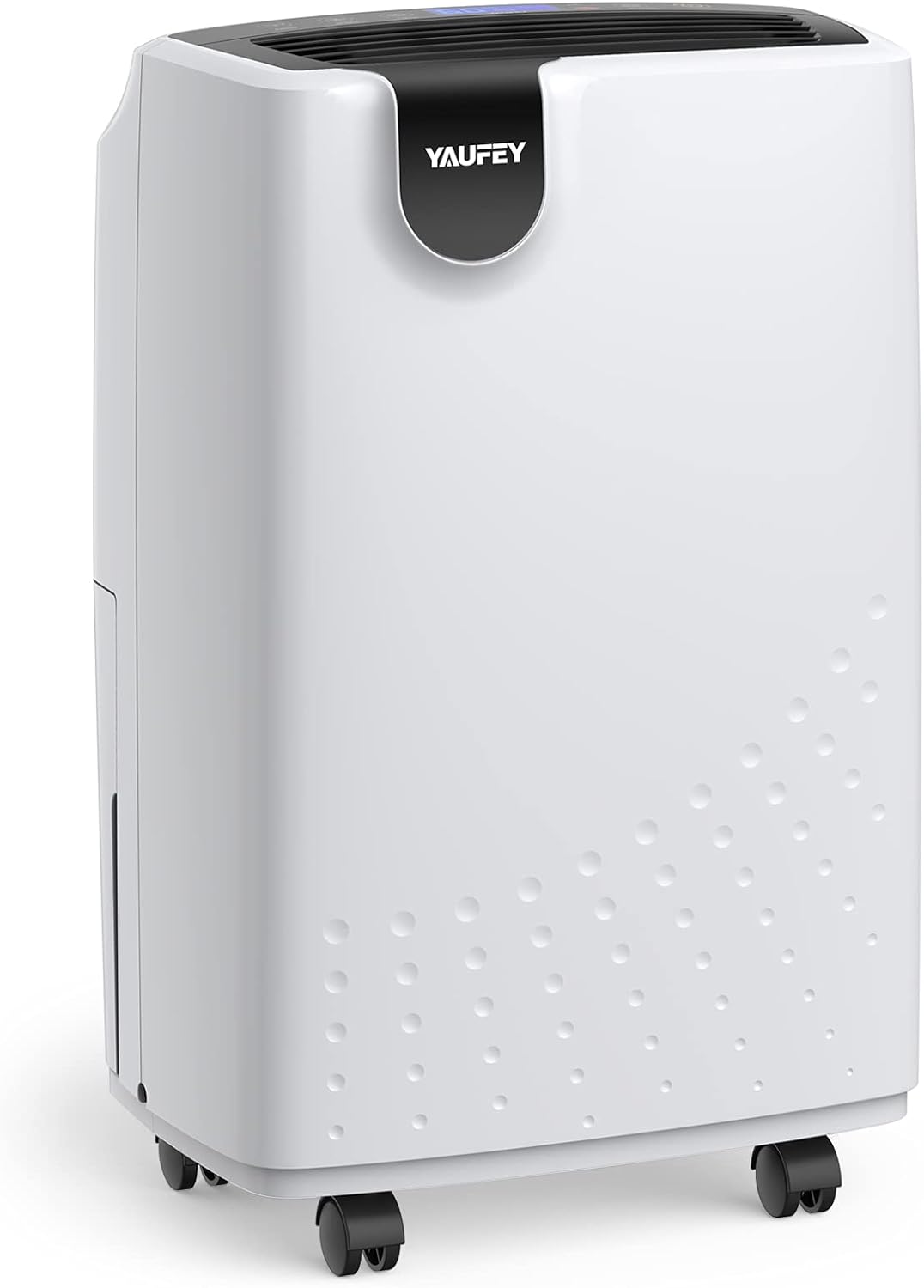
| Dehumidification Capacity | 31 pints_per_day |
|---|---|
| Floor Area | 2500 square_feet |
| Tank Volume | 0.48 gallons |
| Number of Speeds | 2 |
| Wattage | 230 watts |
The yaufey 31-pint dehumidifier is a compact, wheeled unit aimed at reducing humidity in medium rooms and basements. It removes up to 31 pints per day under extreme conditions and is intended for spaces up to about 2,500 sq ft, offering two fan speeds for regular or turbo drying. Key conveniences include a 0.48-gallon removable water tank plus a 6.56-foot drain hose for continuous gravity drainage, an adjustable humidity control with a 24-hour timer, and a washable filter for simple maintenance. The unit runs quietly and includes ergonomic handles and casters so you can move it between rooms with minimal effort. It uses about 230 watts and has auto defrost and auto shut-off features to protect the compressor and prevent overflow. Expect real-world capacity to vary with temperature and starting humidity, and note the water tank is relatively small, so continuous drain is best for long unattended runs.
Best for: Buyers who want a balanced, no-frills humidifier solution for medium rooms or basements and value portability, easy maintenance, and programmable operation.
Less Ideal for: Do not choose this unit if you need a heavy-duty commercial dehumidifier for very large spaces or continuous high-volume water removal without a drain connection.
- Capable 31-pint daily removal for medium rooms and basements
- Includes 6.56 ft drain hose and continuous drain option for unattended operation
- Washable, removable filter simplifies maintenance and reduces running costs
- Light-touch controls with 24-hour timer and adjustable humidity make scheduling easy
- Built-in wheels and handles make it easy to move between rooms
- 0.48-gallon tank is small, so manual emptying is frequent unless using the drain hose
- Rated capacity is measured at very high temp/humidity so everyday removal will often be lower
Verdict: A practical, portable 31-pint dehumidifier that balances decent capacity, easy maintenance, and mobility for typical home and basement use.
Gasbye DryPrime-50 Dehumidifier
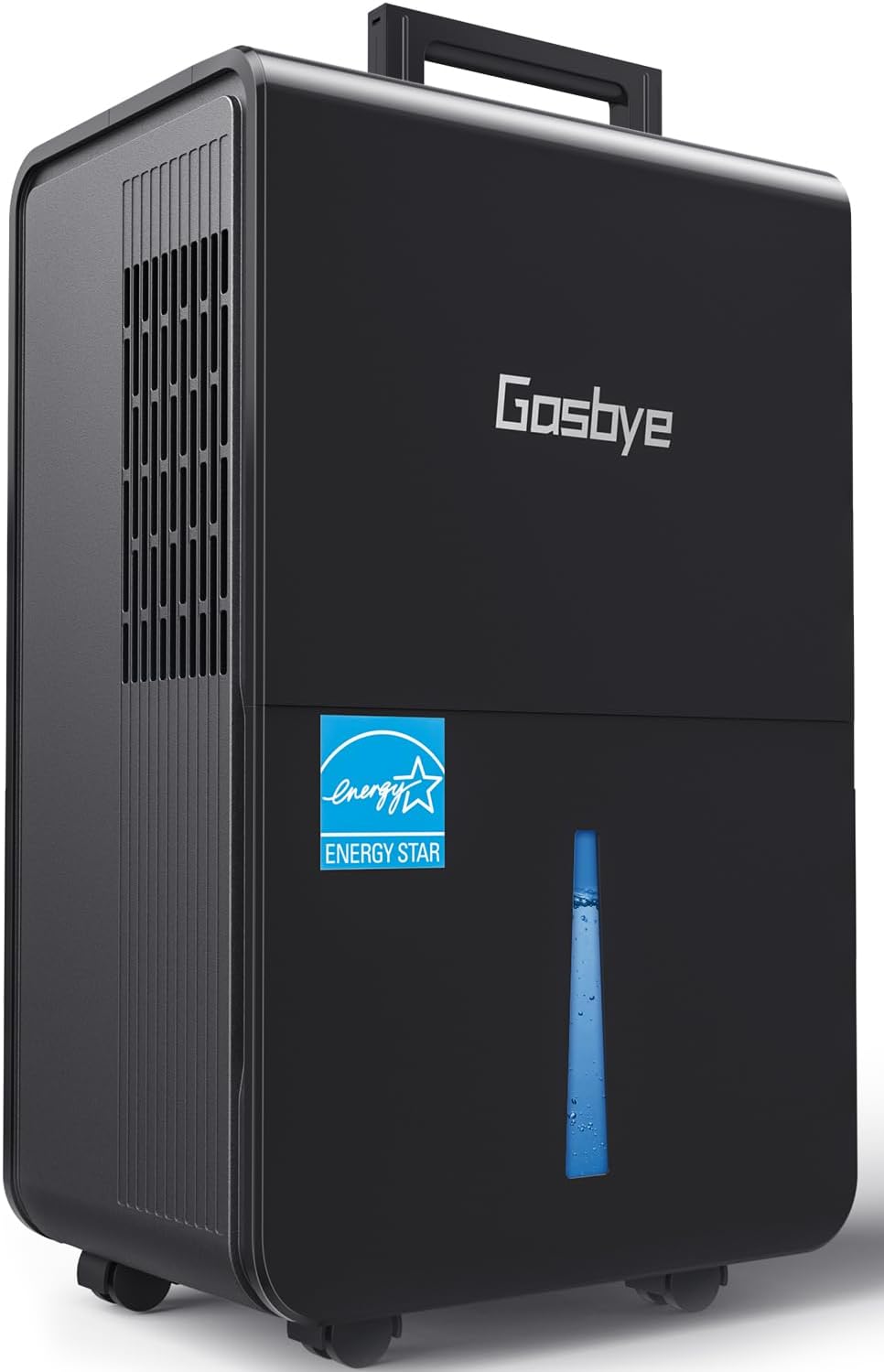
| Capacity | 115 pints |
|---|---|
| Tank Volume | 1.72 gallons |
| Wattage | 500 watts |
| Air Flow Capacity | 12600 cubic_feet_per_hour |
| Dehumidification Capacity | 100 pints_per_day |
The Gasbye DryPrime-50 is a heavy-duty compressor dehumidifier built for basements, garages, and large living areas where fast moisture removal matters. It delivers lab-tested dehumidification numbers across realistic temperature and humidity conditions, with a top figure of 115 pints/day at 86°F/80% RH and lower-capacity ratings at cooler or drier conditions, so performance expectations are grounded. The unit uses a reinforced copper coil and thicker tubing for durability, runs a relatively quiet 45 dB compressor, and includes smart humidity control that auto shuts off and restarts to maintain set levels. Practical features include a 1.7 gallon removable tank, an included 5-foot drain hose, and a threaded outlet for garden-hose drainage for continuous operation. Energy Star certification and a 500-watt compressor make it more efficient than many non-certified models, but the unit is relatively heavy and sized for larger rooms rather than small bedrooms. If you need reliable, fast dehumidification and long-term robustness, this model emphasizes performance and serviceable features over ultralight portability.
Best for: Buyers who prioritize real-world dehumidification performance and durability for basements or large rooms and want a unit that sustains high output with Energy Star efficiency.
Less Ideal for: People seeking a lightweight, ultra-quiet bedside or small-room dehumidifier should consider smaller models tailored to bedrooms or compact spaces instead.
- High measured capacity with lab-tested ratings at multiple temperature/humidity points (up to 115 pints/day)
- Energy Star certified for improved energy efficiency
- Durable construction with reinforced copper tubing and five-tier copper coil
- Multiple drainage options: 1.7 gal tank, included 5 ft hose, and threaded garden-hose outlet
- Smart humidity control with auto shut-off, auto-restart, and brief fan run-down for efficiency
- Relatively heavy and physically large compared with lightweight 'mini' units
- Single fan speed may limit fine-grained airflow control
Verdict: Choose this unit when you need a robust, Energy Star dehumidifier that delivers dependable high-capacity moisture removal for large spaces.
HUMILABS 21-Pint Dehumidifier

| Capacity | 21 pints |
|---|---|
| Coverage | Up to 1,600 square_feet |
| Power | 240 watts |
| Tank Volume | 0.37 gallons |
| Noise Level | As low as 37 dB |
This HUMILABS 21-pint dehumidifier is built to remove excess moisture from medium to large rooms while remaining easy to move and operate. It uses a compressor and R290 refrigerant to extract up to 21 pints per day and supports continuous drain via the included hose or manual collection in the translucent 1.7L tank with auto shutoff. The top LED touch panel and three modes (Sleep, Dry/Continuous, Auto) let you tune humidity, run a timer, and mute lights for nighttime use; Sleep mode drops noise to about 37 dB. Practical features include a washable filter, child lock, auto-defrost and restart, ergonomic handle, and caster wheels for portability. At 240W it aims to be energy conscious for daily use, but capacity is limited compared with larger commercial units, and the tank will require emptying if continuous drainage is not feasible. Expect solid humidity control and quiet operation for bedrooms, basements, laundry rooms, and living areas where a balance of performance, convenience, and energy use matters.
Best for: Buyers looking to optimize home comfort with a practical, energy-conscious dehumidifier that balances decent moisture removal, low noise, and easy maintenance for bedrooms, basements, and multiroom use.
Less Ideal for: Not a good choice for whole-house dehumidification or very large, persistently damp basements that require higher daily extraction rates and larger tanks.
- Removes up to 21 pints per day suitable for rooms up to 1,600 sq ft
- Dual drainage: continuous drain hose plus a translucent tank with auto shutoff
- Very quiet Sleep mode down to ~37 dB and display dimming for nighttime use
- Energy-efficient 240W operation with eco-friendly R290 refrigerant
- Portable design with ergonomic handle, caster wheels, and washable filter for easy maintenance
- 21-pint capacity is modest compared with larger whole-home or heavy basement units
- Tank volume is small so manual emptying is frequent if continuous drain is not used
Verdict: A compact, energy-conscious 21-pint unit that delivers quiet, convenient humidity control for medium to large rooms and weekend basements.
Eva-Dry E-333 Mini Dehumidifier

| Floor Area | 333 square_feet |
|---|---|
| Capacity | 6 ounces |
| Dehumidification Capacity | 0.38 pints_per_day |
| Operation Mode | Continuous |
| Voltage | 110 volts |
The Eva-Dry E-333 is a rechargeable, wireless mini dehumidifier that uses crystallized silica gel to absorb moisture without pumps, compressors, or filters. It is intended for small areas such as closets, cabinets, cars, bathrooms, and gun safes where continuous electric dehumidification is unnecessary. The unit holds about 4 to 6 ounces of moisture and the indicator beads change color to show when recharging is needed; one charge typically lasts several weeks depending on humidity. Because it is cordless and maintenance-free during use, you can hang it or tuck it into tight spaces and avoid leaks or spills. The device is renewable—rechargeable in an oven instead of replacing cartridges—so it can last years with periodic reactivation. Limitations are obvious: it does not actively dry large rooms, has a very low daily dehumidification rate, and requires manual recharging rather than automatic operation, so it is a supplement rather than a full-room solution.
Best for: Buyers looking for an inexpensive, low-maintenance way to control humidity in small enclosed spaces and who prioritize cordless convenience and long-term renewability.
Less Ideal for: People who need continuous or high-capacity dehumidification for whole rooms, basements, or persistently damp spaces should choose an electric compressor or larger desiccant unit instead.
- Cordless, rechargeable silica gel design needs no power or batteries during use
- Compact and hangable for tight spaces like closets, cars, and gun safes
- Visible moisture indicator beads show when recharge is required
- Rechargeable in place of disposable cartridges, offering long-term value
- Very low dehumidification capacity not suitable for full rooms
- Requires periodic oven recharging rather than automatic emptying
- Limited moisture capacity means frequent recharges in high-humidity conditions
Verdict: A very affordable, cordless solution for controlling moisture in small spaces when you need a low-maintenance, renewable option.
hOmeLabs 32-Pint Dehumidifier

| Dehumidification Capacity | 35 pints_per_day |
|---|---|
| Capacity | 1.8 gallons |
| Tank Volume | 1.6 gallons |
| Number of Speeds | 2 |
| Floor Area | 4500 square_feet |
This hOmeLabs unit is a straightforward, room‑scale dehumidifier built for large spaces like basements and open living areas. It removes up to 32 pints per day under typical conditions (and higher at very warm, humid extremes), and offers both a removable 1.6 gallon water tank with auto shutoff and a continuous drain outlet for hands‑free operation. The machine includes washable filter media, two fan speeds plus a TURBO mode for faster moisture removal, and smart features such as Wi‑Fi control and voice assistant compatibility so you can monitor and change humidity from your phone. Mobility is simple thanks to built‑in casters and a handle, and safety conveniences include automatic defrost and auto restart after power interruptions. Expect practical, reliable performance for basement humidity control, though it is a single‑hose portable unit so performance will vary with room layout and extreme cold conditions can reduce extraction rates. For buyers who want easy setup, remote control, and reliable daily dehumidification, this model covers the essentials without complex installation.
Best for: Buyers who want a reliable, easy‑to‑use dehumidifier for a basement or large room and value remote control, straightforward maintenance, and portability.
Less Ideal for: People seeking a hard‑plumbed or whole‑house solution or those who need maximum extraction in consistently cold spaces should consider other types of systems.
- Removes up to 32 pints per day with higher capacity at very high temperature and humidity
- Wi‑Fi control and compatibility with Alexa and Google Assistant for remote monitoring and adjustments
- Continuous drain option plus a removable tank with auto shutoff reduces manual emptying
- Washable air filter and caster wheels make maintenance and relocation simple
- Performance drops in cold environments since rated capacity is specified at warmer test conditions
- Only two fan speeds may limit fine control of noise versus extraction rate
Verdict: A portable, Wi‑Fi enabled dehumidifier that delivers dependable moisture removal and easy maintenance for large basements and open rooms.
Pro Breeze Mini Dehumidifier PB-02

| Floor Area | 215 square_feet |
|---|---|
| Capacity | 16 fluid ounces |
| Tank Volume | 17 fluid ounces |
| Wattage | 21 watts |
| Dehumidification Capacity | 0.25 liters_per_day |
The Pro Breeze Mini Dehumidifier PB-02 is a small, portable unit built for tackling humidity in tight spaces like bathrooms, closets, RVs, and small bedrooms. It uses thermoelectric Peltier technology for whisper-quiet operation and low power use, so you can run it day and night without much noise or energy draw. The unit collects moisture into a 16–17 ounce tank and features an auto shut-off and LED indicator when the tank is full, which makes unattended use easy. It is rated to handle roughly 215 sq ft and extracts only a few ounces per day, so it is best for mild humidity or spot treatment rather than whole-room drying after major leaks. The PB-02 has continuous operation mode and simple controls with multiple fan speeds, but its low daily extraction rate and upper temperature operating range mean it will struggle in very damp, cold, or large spaces. For buyers wanting a quiet, low-energy booster to reduce light condensation or protect small areas from mildew, this is a practical choice; for heavy-duty dehumidifying needs, a larger compressor model will be more effective.
Best for: Buyers who prioritize quiet, energy-efficient moisture control for small spaces and want a compact, low-maintenance unit backed by strong customer feedback.
Less Ideal for: Do not choose this unit if you need to remove large volumes of moisture, dry out water-damaged rooms, or cover medium to large open floor plans.
- Very quiet Peltier operation suitable for bedrooms and offices
- Low power draw for continuous use
- Auto shut-off with LED full-tank indicator for safe unattended operation
- Compact and lightweight for easy portability between rooms
- Low dehumidification capacity (about 0.25 liters/9 ounces per day) unsuitable for very damp rooms
- Limited operating temperature range reduces effectiveness in cold environments
- Small tank requires frequent emptying in higher humidity conditions
Verdict: Choose this compact, whisper-quiet dehumidifier when you need a low-energy, portable solution to reduce light humidity and condensation in small rooms.
ToLife Dehumidifier TZ-C2

| Floor Area | 1000 square_feet |
|---|---|
| Tank Volume | 95 fluid ounces |
| Number of Speeds | 2 |
| Wattage | 93 watts |
| Operation Mode | Comfort |
The ToLife TZ-C2 is a compact portable dehumidifier designed for bedrooms, bathrooms, closets and small basements. It uses semiconductor condensation technology to quietly remove moisture and offers two operating modes: a higher-power mode for faster moisture removal and a low-speed sleep mode that runs under 30 dB for nighttime use. The unit holds 95 ounces of water in a removable tank and will automatically shut off when the tank is full or not seated correctly, which reduces spill risk and simplifies monitoring. A seven-color ambient light can be locked to serve as a night light, and the built-in handle makes it easy to move between rooms. Practical limits are its modest listed dehumidification rate and the small footprint: it is aimed at localized humidity control rather than whole-house drying, and the condenser-type semiconductor design generally extracts less water than compressor units in very damp conditions. For risk-averse buyers it offers predictable safety features and quiet operation for everyday household use.
Best for: Buyers who prioritize quiet, safe, easy-to-use humidity control for single rooms or seasonal damp spots and prefer low-maintenance features.
Less Ideal for: Homes needing rapid, high-volume moisture removal or whole-house dehumidification should choose a larger compressor-based model instead.
- Quiet operation with a low-noise sleep mode suitable for bedrooms
- Automatic shutoff when the tank is full or not seated properly for spill prevention
- Large 95 oz removable tank reduces the frequency of emptying compared with very small units
- Portable design with a handle for easy room-to-room movement
- Seven-color ambient light that can be locked and used as a night light
- Semiconductor condensation technology and listed dehumidification capacity are modest compared with compressor dehumidifiers for very damp spaces
- Designed for small-area coverage rather than continuous whole-house dehumidification
Verdict: A compact, quiet room dehumidifier with a large removable tank and automatic shutoff that is well suited to safe, low-maintenance humidity control in single rooms.
Choosing the Right Dehumidifier Deals: Key Factors to Consider
Capacity and Room Size
Dehumidifier capacity, usually rated in pints per 24 hours, determines how quickly a unit can lower humidity in a space. Match capacity to the square footage and typical humidity level of the room. Smaller rooms or mildly damp spaces can get by with lower-capacity units, while basements, laundry rooms, or very damp areas need higher-rated machines.
Choosing the right capacity avoids constant cycling or underperformance. Oversizing can waste energy and create unnecessary noise, while undersizing leaves moisture problems unresolved. Consider the room layout too: high ceilings, open floor plans, or connected spaces may require a higher capacity than simple square-foot guidelines suggest.
Energy Use and Operating Cost
A unit's energy efficiency affects monthly running costs, which add up over a dehumidifier's lifetime. Look for Energy Factor or other efficiency indicators and compare wattage at typical operating conditions rather than peak draw alone. A more efficient unit may cost more upfront but save money over time in electric bills.
Also consider features that reduce runtime, such as accurate humidistats, auto-shutoff, and adjustable humidity setpoints. These controls let the machine run only as long as needed, limiting energy waste while keeping indoor humidity in a healthy range.
Reservoir Design and Drainage Options
How the unit handles collected water matters for convenience and placement. A large, easy-to-remove collection tank is preferable for intermittent emptying. Transparent tanks with fill lines help you know when it needs attention. Units that offer a continuous drain option let you route water to a floor drain or laundry sink for hands-off operation.
Consider the location where you will place the dehumidifier. If near a drain, continuous gravity drain is ideal. If not, you will rely on tank capacity or a pump-assisted drain that can lift water to a higher outlet. Ease of tank removal and splash-resistant designs reduce spillage during maintenance.
Controls, Sensors, and Smart Features
Accurate sensors and intuitive controls determine how effectively a dehumidifier maintains your target humidity. Look for models with a reliable humidistat, clear display, and straightforward buttons or dials. Some units include timers, auto-restart after power loss, and programmable setpoints that improve usability.
If remote monitoring matters, consider units with basic smart features or app connectivity, but weigh these against potential complexity. Sensor accuracy is more important than bells and whistles; a unit that maintains the set humidity reliably will usually feel more effective than one with many hard-to-use features.
Noise and Location
Noise level affects where you can comfortably place the unit. High-capacity units tend to be louder, which might limit use in living rooms or bedrooms. Check decibel ratings where available and consider fan speed settings that let you reduce noise at night or during quiet hours.
Placement also matters for airflow and condensate removal. Keep clearance around intake and exhaust to preserve efficiency. If the unit will run near living spaces, prioritize models with quieter operation or an eco mode that balances noise and performance.
Durability and Maintenance
Routine maintenance keeps a dehumidifier working well. Filters should be accessible and washable. Coils and internal components need to resist corrosion in damp environments. Consider warranty length and what it covers as a proxy for expected lifespan and manufacturer confidence.
Also review how simple it is to service common issues like clogged drains or frozen coils. Units with clear maintenance instructions and easily replaceable parts reduce long-term hassle and unexpected downtime.
Where Dehumidifier Deals Make the Biggest Difference
Deals are most valuable when they let you step up to the right capacity or a more efficient model without breaking the budget. If your space is marginally damp, a better deal on a slightly higher-capacity unit can deliver faster drying and less runtime, which pays back in comfort and lower energy use.
Look for promotions that improve features you will use daily, such as continuous drain, a larger reservoir, or quieter operation. Avoid deals that only reduce price on undersized units; getting the right fit matters more than the lowest sticker.
- Higher capacity for large basements reduces runtime.
- Better efficiency lowers monthly electricity costs.
- Added convenience features reduce daily maintenance.
Placement Tips for Best Performance
Place the dehumidifier centrally in the problem area with at least a few inches of clearance around intake and exhaust. Avoid corners or tucked-away spots that limit airflow. For basements, position the unit where moisture collects and within reach of a drain if continuous discharge is desired.
Keep doors and windows closed while the unit runs to allow it to control the room humidity effectively. In multi-room scenarios, a single unit may work if rooms are open to each other, but closed doors will block airflow and reduce effectiveness.
- Allow clearance for airflow to maximize extraction rate.
- Use continuous drain if you expect heavy condensate.
- Avoid placing directly against walls or furniture.
Seasonal Use and Auto-Defrost
If you plan to run a dehumidifier in cooler conditions, such as an unheated basement in winter, auto-defrost is an important feature. Coils can ice over at low temperatures, reducing performance. Units with auto-defrost mechanisms maintain extraction efficiency and reduce the need for manual defrost cycles.
In mild climates, a unit without advanced low-temperature features may perform fine year-round. However, buyers in cooler homes should prioritize models designed to handle lower ambient temperatures to avoid frequent freezing and lost capacity.
- Auto-defrost preserves performance in cool rooms.
- Check rated operating temperature ranges for year-round use.
Installation and Continuous Drain Options
Continuous drainage simplifies maintenance by routing condensate to a floor drain or laundry sink. Gravity-feed drains require placement near a lower drain point, while pump-assisted models can lift water to a higher outlet. Decide which option fits your space before choosing a unit.
If continuous drain is not feasible, choose a model with a large, easy-to-empty tank and clear fill indicators. Some units offer optional drain hoses that make temporary continuous draining easier during heavy use periods.
- Gravity drain is simple but requires nearby lower drain.
- Pump drains add flexibility for remote placement.
Common Mistakes Buyers Make
A frequent error is under-sizing based solely on square footage while ignoring ceiling height, humidity severity, and connected spaces. That leads to constant runtime and inadequate drying. Another mistake is prioritizing low upfront cost over efficiency and features that reduce long-term operating hassle.
Also avoid placing the unit in an enclosed cabinet or too close to walls where airflow is restricted. Finally, skipping routine maintenance such as filter cleaning shortens useful life and reduces efficiency.
- Do not rely only on square footage for sizing.
- Account for humidity severity and room layout.
- Maintain filters and coils regularly for consistent performance.
How We Chose the Best Dehumidifier Deals
To assemble this list we applied practical filters that mirror how homeowners choose dehumidifiers. First, we prioritized moisture removal capacity in pints per day for typical home spaces, plus performance across a range of relative humidity and temperature conditions. Second, energy efficiency was a hard filter: units needed reasonable Energy Factor or comparable efficiency indicators so operating costs stay manageable. Third, we checked usability features such as tank access, continuous drain options, and intuitive controls because these affect everyday convenience. Fourth, reliability cues like build quality, warranty terms, and commonly reported durability signals were considered. Finally, we favored products with clear safety and portability features including tip-over protection, auto-defrost for cooler rooms, and caster/wheel design for moving between rooms. We excluded specialty commercial units, units sized for whole-house HVAC integration, and any models lacking basic safety or efficiency information. The resulting picks balance real-world moisture removal, running costs, and homeowner-friendly operation.
Our full evaluation process is outlined in our review methodology.
FAQ
How do I know what capacity dehumidifier I need?
Match capacity to room size and humidity level. Use higher-capacity units for basements or very damp rooms. If in doubt, choose a slightly larger capacity to ensure adequate moisture removal and shorter run times.
Can I run a dehumidifier 24/7?
You can run it continuously, but set an appropriate target humidity to avoid unnecessary operation. Continuous drain or large tanks help with nonstop use. Monitor energy use and give the unit periodic checks to ensure proper function.
Is continuous drain necessary?
Continuous drain is convenient for heavy or continuous use because it eliminates the need to empty the tank. It is not required for occasional use or small rooms, but it is highly recommended for basements and laundry areas with steady condensate production.
Will a dehumidifier help with mold?
Lowering indoor humidity reduces conditions that encourage mold growth. A properly sized dehumidifier that maintains relative humidity below about 50 percent can significantly reduce mold risk, but it should be combined with ventilation and moisture source control.
How loud are dehumidifiers typically?
Noise varies by capacity and fan speed. Larger-capacity units usually run louder, while many consumer models offer lower-speed settings for quieter night operation. Check decibel ratings when quiet operation is important.
Final Verdict
When evaluating dehumidifier deals, prioritize matching capacity to the space, energy efficiency, and the drainage approach that fits your layout. Usability features like a reliable humidistat, easy-to-empty reservoir, and quiet operation matter for daily satisfaction. Expect tradeoffs between upfront cost, long-term operating expense, and convenience features. Choose a deal that upgrades at least one practical dimension you will use every day, and you will get the best balance of performance and value.