
Note: This article contains affiliate links. If you click on these links and make a purchase, we may earn a small commission at no extra cost to you. This helps support our research and content. Read our full affiliate disclosure here.
A dehumidifier with a drain hose makes long-term humidity control much easier by letting you run the unit without frequent emptying. If you deal with persistent dampness in basements, laundry rooms, or finished crawlspaces, a model that supports continuous drainage can save hours of maintenance and reduce the risk of overflow. This guide collects the top shortlisted dehumidifiers with drain hose capability and evaluates them on real-world factors like moisture extraction, drain reliability, and ease of set up. Read on to learn which features matter most and which tradeoffs to expect so you can pick the right continuous-drain solution for your space.
Top Picks at a Glance
| Best Quality Built to a higher standard if you want something more solid | Gasbye DryPrime-50 Dehumidifier |  |
| Best Value The sweet spot between price and what you get | HUMILABS 21-Pint Dehumidifier |  |
| Best Budget The cheapest option that still gets the job done reliably | UBBO Z18 95oz Dehumidifier |  |
| Top Rated A top-rated pick with lots of positive feedback | DuraComfort DH25L Dehumidifier |  |
| Most Popular A crowd favorite that many people choose with confidence | Waykar 80-Pint Dehumidifier JD025CE-80 |  |
| Best Seller A high-volume bestseller chosen again and again | AEOCKY RHEA 80-Pint Dehumidifier |  |
Gasbye DryPrime-50 Dehumidifier
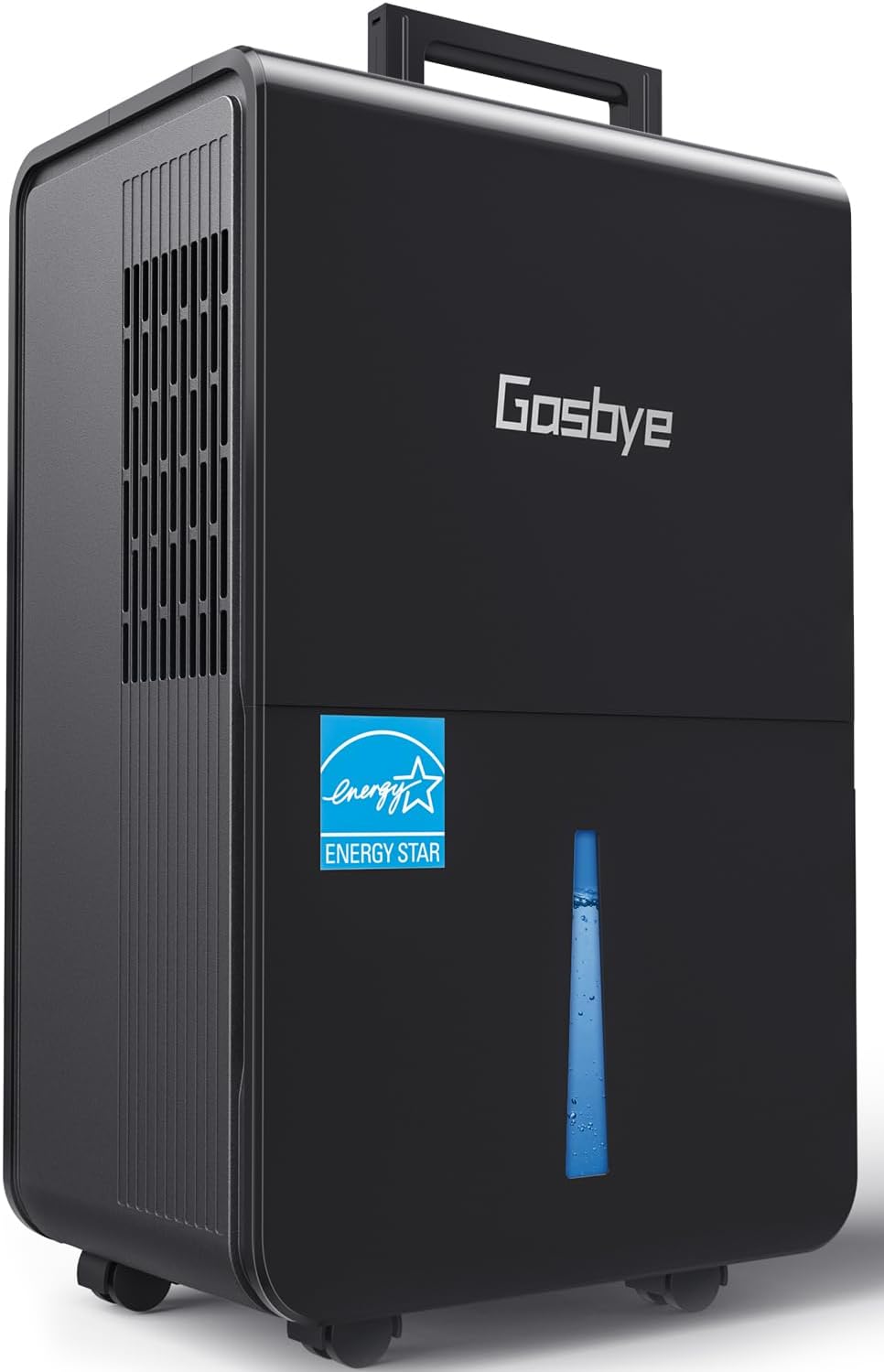
| Capacity | 115 pints |
|---|---|
| Tank Volume | 1.72 gallons |
| Wattage | 500 watts |
| Operation Mode | Normal, Turbo, Comfort, Continuous |
| Air Flow Capacity | 12600 cubic_feet_per_hour |
The Gasbye DryPrime-50 is a performance-focused compressor dehumidifier built for large spaces like basements, garages, and spacious living rooms. It delivers lab-tested capacity figures across temperatures — up to 115 pints/day at 86°F, with lower-rated outputs at cooler conditions — and uses a 500W compressor with reinforced copper tubing for durability. Practical features include Energy Star certification for improved efficiency, a 1.7 gallon removable tank plus two continuous-drain options (5-foot hose and threaded garden-hose connection), and an auto shut-off/restart cycle that maintains set humidity and resumes after power loss. The unit runs around 45 dB, so it is reasonably quiet for common living areas but may still be noticeable in very small rooms. At roughly 43 pounds it is heavier than lightweight models, which reflects its sturdier internal components but makes frequent moving less convenient. Controls are straightforward with simple mode choices including normal, turbo, comfort, and continuous, but there is only a single fan speed listed. If you need a reliable, high-capacity machine with serious drainage flexibility and solid construction, this model targets that need directly.
Best for: Buyers who prioritize reliable, high-capacity moisture removal and durable, factory-quality construction for basements or large rooms and who plan to use continuous drainage rather than frequent tank emptying.
Less Ideal for: People seeking a lightweight, ultra-quiet bedroom unit or those who need many fan-speed options and fine-grained airflow control should consider other models.
- High tested dehumidification capacity up to 115 pints/day in hot, humid conditions
- Three drainage methods: removable 1.7 gal tank, included 5-foot hose, and threaded garden-hose outlet
- Energy Star certified for improved energy efficiency vs non-certified models
- Reinforced copper tubing and heavier build aimed at long-term durability
- Auto shut-off and auto restart preserve settings and reduce manual monitoring
- Only one listed fan speed which may limit fine control over airflow
- At about 45 dB it can be audible in very small or quiet rooms
- Heavier construction makes it less convenient to carry between locations
Verdict: Choose this unit if you need a high-capacity, Energy Star dehumidifier with robust drainage options and durable compressor-based construction for large rooms or basements.
HUMILABS 21-Pint Dehumidifier

| Dehumidification Capacity | 21 pints/day |
|---|---|
| Floor Area | 1600 square_feet |
| Tank Volume | 0.37 gallons |
| Wattage | 240 watts |
| Operation Mode | Comfort – Continuous – Standard |
This HUMILABS 21-pint dehumidifier is a compact, transportable unit designed to control humidity in larger rooms and basements up to about 1,600 sq ft. It uses a compressor-based system and offers three modes—Sleep, Dry/Continuous, and Auto—so you can run quiet nighttime dehumidification, speed up laundry drying, or let the unit maintain a target humidity automatically. Practical features include a top LED touch panel, a translucent 1.7 L tank with full-auto shutoff, or a continuous drain option via the included hose for unattended operation. Mobility is easy thanks to hidden handle and swivel casters, and routine upkeep is simple with a washable filter and auto-defrost for cooler conditions. At 240 W it is reasonably energy efficient and uses R290 refrigerant. Limitations are its modest tank volume (so continuous drain is recommended for heavy use) and the 21-pint capacity is best for medium to large rooms rather than whole-house dehumidification.
Best for: Buyers who want a practical, easy-to-maintain dehumidifier with a drain-hose option for routine moisture control in basements, bathrooms, and medium to large rooms.
Less Ideal for: People seeking whole-house or high-capacity commercial dehumidification should consider larger, higher-capacity systems instead.
- Removes up to 21 pints per day, suitable for damp basements and large rooms
- Includes continuous drain hose for unattended, long-run operation
- Quiet Sleep mode down to 37 dB with display lights off for overnight use
- Washable filter and removable wheels/handle simplify maintenance and moving between rooms
- Energy-efficient 240W operation with low-GWP R290 refrigerant
- Small 1.7 L tank requires frequent emptying if continuous drain is not used
- Not intended for whole-house dehumidification or very large commercial spaces
Verdict: Choose this unit if you need a portable, energy-efficient dehumidifier with a reliable continuous-drain option for unattended humidity control.
UBBO Z18 95oz Dehumidifier

| Floor Area | 1000 square_feet |
|---|---|
| Capacity | 95 fluid ounces |
| Dehumidification Capacity | 1.2 liters_per_day |
| Other Special Features of the Product | Sleep Mode, Timer, Automatic Shutoff, Removable Tank, Washable Filter, Aroma box |
The UBBO Z18 is a small, portable dehumidifier built for bathrooms, bedrooms, RVs and other tight spaces where excess moisture is a nuisance. It uses dual semiconductor condensers to pull about 1.2 liters per day under optimal conditions and stores collected water in a 95 oz removable tank with automatic shutoff and audible/full indicator to prevent spills. For hands-off use you can attach the included drain hose for continuous drainage, and the unit offers a timer (8/16/24 hours) plus a lockable color night light and a sleep mode rated at about 35 dB. Maintenance is straightforward thanks to a washable filter and a removable tank, and the compact footprint makes it easy to move or tuck onto a shelf. The main limits are its modest daily capacity and the optimal-condition rating, which mean it is not suited for large basements or heavy damp problems, but it is a sensible, low-cost option for spot dehumidifying and places where quiet operation and a drain option matter.
Best for: Buyers who need an affordable, quiet dehumidifier to control humidity in small rooms, bathrooms, closets or an RV and value simple maintenance and a drain option.
Less Ideal for: People looking to dehumidify large basements or whole apartments with persistent high humidity should choose a higher-capacity model.
- Includes drain hose for continuous drainage to avoid frequent emptying
- Auto shutoff with full-tank indicator and audible alert prevents overflow
- Compact, lightweight design fits bathrooms, bedrooms, closets and RVs easily
- Washable filter and removable tank make upkeep simple
- 1.2 L/day dehumidification capacity is low for larger or very damp rooms
- Performance quoted is under optimal test conditions and will be lower in cooler or less humid environments
Verdict: A compact, budget-friendly dehumidifier with a drain hose and quiet sleep mode that fits small rooms and RVs where simple, continuous drainage is important.
DuraComfort DH25L Dehumidifier

| Dehumidification Capacity | 25 pints per day |
|---|---|
| Tank Volume | 6 pints |
| Wattage | 510 watts |
| Air Flow Capacity | 150 cfm |
| Number of Speeds | 2 |
The DuraComfort DH25L is a compact dehumidifier meant to remove up to 25 pints of moisture per day and manage humidity in basements, bedrooms, bathrooms, or RVs. It can run in continuous mode using the included drain hose for unattended operation or collect water in a removable 6-pint tank for occasional emptying. Controls include a digital humidistat, timer, auto defrost, and full-tank shutoff so the unit can be set-and-forget. At 47 dB during operation and Energy Star certified, it balances reasonable efficiency with quiet performance suitable for living spaces. Practical conveniences include two fan speeds, a washable filter, caster wheels, and a hidden carry handle for moving and storage. Trade-offs are modest capacity and single-zone coverage—it is sized for up to about 1,500 sq ft rather than whole-house dehumidification, and the 510 W power draw is typical for this class. For routine basement or room humidity control where continuous drainage is needed, this unit covers the essentials without extra complexity.
Best for: Buyers who prioritize a reliable, no-fuss dehumidifier that can run continuously with a drain hose and handle everyday humidity in a basement or individual rooms.
Less Ideal for: Homes needing high-capacity or whole-house dehumidification or users who require advanced airflow or multi-zone control features.
- Continuous drain hose included for unattended long-term use
- Digital humidistat and timer for set-and-forget operation
- Energy Star certified with relatively quiet 47 dB operation
- Washable filter and caster wheels simplify maintenance and mobility
- 25-pint capacity is suited to single rooms or small basements rather than whole-house dehumidification
- Only two fan speeds limit fine-grained airflow control
Verdict: Choose the DuraComfort DH25L when you want a dependable, Energy Star dehumidifier with a built-in continuous drain option for low-maintenance humidity control.
Waykar 80-Pint Dehumidifier JD025CE-80

| Dehumidification Capacity | 80 pints_per_day |
|---|---|
| Tank Volume | 2.5 gallons |
| Wattage | 270 watts |
| Air Flow Capacity | 165 cfm |
| Operation Mode | Continuous |
The Waykar 80-Pint Dehumidifier is built to handle large, damp areas such as basements by extracting up to 80 pints per day and offering both tank and continuous drain options. It is commonly used running continuously or on a timed schedule to bring basement humidity down to a selected setpoint between 30% and 80% relative humidity, and the 90° auto-swing helps spread airflow for more even drying. Practical features include an included drain hose and connector for gravity drainage, a washable removable filter, automatic defrost and overload protection for low-temperature reliability, and an Energy Star rating to keep running costs lower than noncertified units. At roughly 42 dB it is quieter than many similarly sized machines, making it reasonable for finished basements or nearby living areas. The unit is relatively heavy and targeted at larger spaces, so it is less convenient to move frequently, and the 1.14 gallon tank means emptying is still needed if you do not use continuous drainage. For buyers focused on dependable basement performance and energy efficiency, this model delivers strong moisture removal with sensible protections for extended operation.
Best for: Homeowners who need a reliable, high-capacity dehumidifier to control moisture in large basements and prefer proven features and energy efficiency over portability.
Less Ideal for: People looking for a lightweight, highly portable unit for small rooms or occasional use should consider smaller, easier-to-move models instead.
- High dehumidification capacity rated at 80 pints per day for large basements
- ENERGY STAR certification for better energy efficiency during extended use
- Multiple drainage options with included drain hose for continuous gravity drain
- Auto-defrost and overload protection improve reliability in cool basement conditions
- 90° auto-swing airflow and washable filter help distribute air and simplify maintenance
- Relatively heavy and sized for large spaces, so not ideal for frequent transport
- Water tank is modest at 1.14 gallons if continuous drainage is not used
Verdict: A powerful, Energy Star certified 80‑pint unit that reliably handles large basement humidity with continuous drain and protective auto-defrost features.
AEOCKY RHEA 80-Pint Dehumidifier
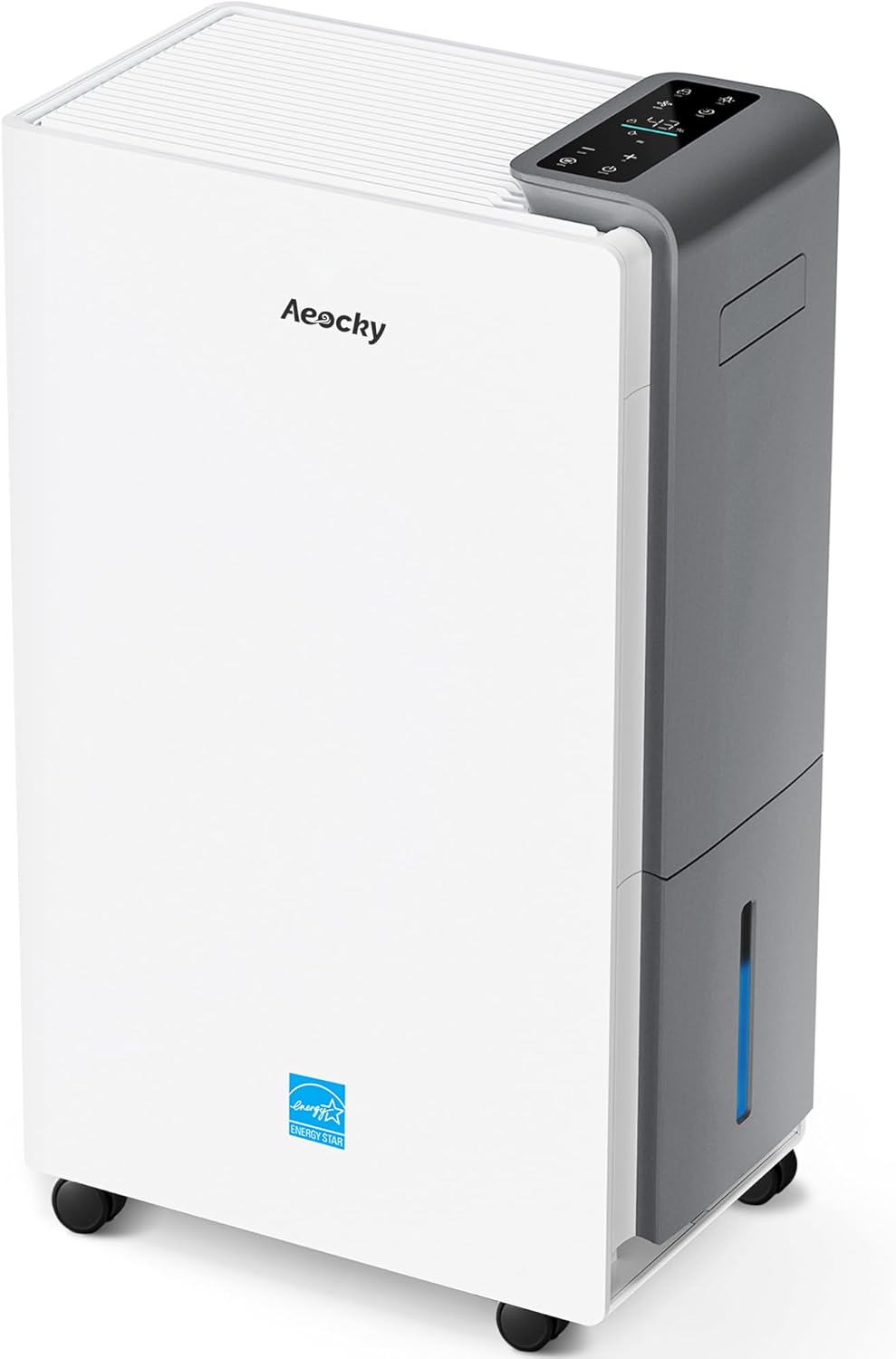
| Capacity | 80 pints |
|---|---|
| Tank Volume | 1.45 gallons |
| Wattage | 280 watts |
| Operation Mode | Auto, Constant Humidity, Continuous, Smart Drying, Sleep |
| Air Flow Capacity | 9006 cubic_feet_per_hour |
The AEOCKY RHEA is a high-capacity compressor dehumidifier built to manage very damp, large spaces up to the thousands of square feet, and it includes a drain hose for continuous drainage. It offers several operating modes including Auto, Constant Humidity, Continuous, Smart Drying and Sleep, plus adjustable humidity control and a timer for scheduled use. The unit emphasizes energy efficiency with an ENERGY STAR Most Efficient 2025 rating and a high airflow figure, which should cut runtime and electricity compared with lower-efficiency models. Practical features include a 1.45 gallon tank, a garden-hose adapter for direct drainage, a child lock, and quiet operation that the manufacturer rates around the mid-40 dB range. Limitations to note are its single fan speed setting listed and the size/weight typical of 80-pint compressors, which makes it less convenient to move frequently. For buyers focused on verified energy savings and continuous drain capability, RHEA delivers strong day-to-day performance with precise humidity control; for those needing ultra-compact portability or multiple fan speeds, a different model may suit better.
Best for: Buyers who prioritize verified energy efficiency and need a reliable, high-capacity dehumidifier with continuous drain capability for basements or large home areas and who prefer a durable, low-maintenance solution.
Less Ideal for: People who need an ultra-portable or very lightweight unit for occasional spot use or who want multiple adjustable fan speeds for precise airflow control.
- ENERGY STAR Most Efficient 2025 certification for lower energy consumption
- High dehumidification capacity (80 pints/day) suitable for large, very damp spaces
- Includes drain hose and garden-hose adapter for continuous direct drainage
- Multiple operation modes and precise humidity control with timer and child lock
- Quiet operation around the mid-40 dB range for minimal disruption
- Only one listed fan speed which limits fine-grained airflow control
- Relatively large and heavier compressor unit, so less convenient to move around frequently
Verdict: Choose the RHEA if you want a verified, energy-efficient 80‑pint dehumidifier with continuous drain capability for reliably drying large, very damp spaces.
Choosing the Right Dehumidifier with Drain Hose: Key Factors to Consider
Moisture Removal Capacity
Moisture removal capacity determines how quickly a dehumidifier can lower relative humidity in your space. Measured in pints per day, this spec should be matched to room size, typical temperature, and the severity of dampness. A unit that is undersized will run constantly and struggle to reach target humidity, while one that is oversized may short-cycle in small spaces, reducing efficiency.
In areas that are cool or near-freezing, many dehumidifiers lose efficiency, so consider rated performance at lower temperatures if the unit will be used in basements or unheated rooms. For continuous-drain setups, aim for a capacity that keeps runtime meaningful without overtaxing the drain arrangement.
Continuous Drain Type and Reliability
Dehumidifiers offer different continuous drain solutions: gravity-fed hoses, internal condensate pumps, or optional external pumps. Gravity drain is simple but requires a lower drainage point and careful hose routing. Internal pumps allow more flexible routing and discharge locations, but pumps add mechanical complexity and a potential failure point.
Reliability of the drain connection matters because a failed or poorly sealed hose can leak or allow backflow. Look for units with clear hose fittings, accessible drain ports, and built-in safeguards like check valves or float switches. Also consider how easy it is to attach standard hoses and whether the manufacturer specifies hose diameter and length limits.
Installation and Hose Routing
Installation affects how quickly you get a working continuous drain system and how tidy the final setup will be. Evaluate how the unit allows hose attachment, the angle and location of the outlet, and whether it has built-in clips or guides to secure the hose. Easier routing reduces the risk of kinks and improves long-term reliability.
If the drain is gravity-fed, plan for the drain termination to be below the dehumidifier's outlet. For pump-enabled units, check maximum lift and recommended piping. Also consider whether the unit's footprint and weight make placement near a suitable drain practical.
Maintenance and Service Access
Ongoing maintenance determines operating hassle and longevity. Regular tasks include cleaning or replacing filters, checking coils for frost or buildup, and confirming the drain remains clear. A design that makes filters and access panels easy to reach reduces service time and the chance of skipped maintenance.
For continuous-drain users, inspectability of the drain port and the ability to clear blockages without disassembly are important. Units with simple, tool-free access and clear maintenance indicators will be less disruptive when you need to perform routine care.
Noise and Daily Use Comfort
Because many dehumidifiers run for long periods, noise level is a practical comfort consideration. Louder fans and compressors can be obtrusive in living areas or bedrooms. Look at rated decibel levels and control options such as fan-speed selection or a low-noise mode for nighttime operation.
Placement also interacts with noise: a unit in a basement may tolerate higher sound levels than one in a finished room. If continuous drainage keeps the unit running longer, prioritize models that offer quieter operation without sacrificing airflow and extraction performance.
Gravity Drain Vs Pumped Drain: Which Fits Your Space
Gravity drains are simple and reliable when you can place the dehumidifier above a sink, floor drain, or outside discharge point. They require no electrical pump and have fewer moving parts, which reduces failure modes. However, they demand a consistent downhill path and limited hose length to maintain flow.
Pumped drains provide flexibility because they can lift condensate to higher drains or over obstacles. Built-in pumps enable placement in the center of a room or basement where gravity routing is impractical, but pumps add mechanical complexity and require periodic inspection for wear.
- Choose gravity drain if you have a nearby low drain and want minimal maintenance.
- Choose pump drain if you need to run the hose uphill or over long distances.
- Plan hose routing carefully to avoid kinks and sags that trap water.
Planning Hose Routing and Termination
Careful hose routing prevents backups and leaks. Use a straight run where possible, avoid tight bends, and maintain a continuous downward slope for gravity-fed lines. Secure hoses to walls or framing with clips to prevent movement or accidental disconnection.
When terminating the hose, use a protected drain point and avoid leaving the end loose in a floor drain where it can be stepped on or dislodged. For pump drains, confirm the discharge point can handle intermittent flows and that backflow is prevented by a check valve or elevated termination.
- Keep the hose diameter consistent with the unit's recommendation to avoid reduced flow.
- Insulate hoses in unheated areas to prevent freezing where applicable.
- Use hose clamps or fittings rather than relying solely on friction-fit connections.
Setting Targets and Controls for Continuous Use
Continuous-drain systems are often left running for long periods, so selecting the right humidity target reduces wear and energy use. Set a realistic relative humidity target, such as 45 to 50 percent, unless mold or condensation requires more aggressive control.
Look for units with programmable humidistats or digital controls so you can fine-tune operation and avoid unnecessary runtime. Features like timers, auto-restart after power loss, and frost control modes help maintain dependable performance in varying conditions.
- Avoid ultra-low setpoints unless necessary; they increase runtime and energy use.
- Use auto modes if available to let the unit manage fan speed and compressor cycles.
- Verify the unit resumes settings automatically after power interruptions.
Dealing with Cold Rooms and Frost
In cooler environments, coils can build frost and reduce extraction. Some dehumidifiers include automatic defrost cycles that maintain performance at lower temperatures. If your continuous-drain unit will operate in a cool basement, prioritize models with effective frost management.
Also consider placement to avoid direct exposure to cold drafts or uninsulated walls. In certain cases, running the unit intermittently or selecting a model rated for lower-temperature operation will yield more reliable long-term moisture control.
- Check rated operating temperature range when planning basement use.
- Consider units with adjustable defrost settings for prolonged low-temperature operation.
- Position the unit to minimize direct exposure to exterior walls or vents.
Common Installation Mistakes to Avoid
Small installation errors can undermine a continuous-drain setup. Avoid routing hoses across walkways where they can be stepped on or pinched. Never create high points in a gravity drain line where water can pool and block flow. Similarly, do not rely on nonstandard adapters that compromise seals.
For pump drains, do not exceed the specified lift or run length. Overstressing the pump reduces lifespan and can lead to premature failure. Finally, ensure the drain termination cannot be submerged or backfilled by water, which could introduce backflow into the unit.
- Keep hose runs as short and direct as practical.
- Secure fastenings to prevent accidental disconnection.
- Follow manufacturer guidance for maximum lift and hose type.
How We Chose the Best Dehumidifier with Drain Hose
We focused on dehumidifiers that are designed to support a continuous drain hose connection and then applied practical performance and usability filters that matter for everyday use. Key evaluation criteria included moisture removal capacity at typical indoor temperatures, the reliability and compatibility of the continuous drain option, build and control quality for unattended operation, and ease of installation including hose fittings and gravity versus pump drain options. We prioritized units with clear drain pathways, good airflow design, and serviceable filters and components so buyers will have lower long-term upkeep. We also considered noise levels for living spaces and energy efficiency because long run times can amplify those factors. Units that required extensive modification or offered only awkward aftermarket drainage solutions were excluded. The result is a set of machines that balance dependable continuous drainage with effective moisture control and straightforward setup.
Our full evaluation process is outlined in our review methodology.
FAQ
Can I run a dehumidifier with a drain hose 24/7?
Often you can run a continuous-drain dehumidifier around the clock, and that is the point of the setup. Continuous operation is appropriate when humidity sources are constant, but monitor energy use and check the drain and filters regularly. Use appropriate setpoints to avoid unnecessary runtime.
Do I need a pump to use a drain hose?
Not always. If you can route the hose downhill to a drain, gravity-fed drainage is typically sufficient. A pump is necessary only when the discharge point is above the dehumidifier or when you must run the hose a long distance or over obstacles.
How do I prevent backflow into the dehumidifier?
Prevent backflow by terminating the hose above potential flood levels, installing a check valve, or using a pump-equipped unit with a built-in nonreturn device. Also ensure the termination point cannot become submerged, and secure the hose to prevent dislodgment.
What hose size should I use for continuous drainage?
Follow the unit's specified hose diameter because manufacturers design drain ports for a particular size to ensure proper flow. Using a smaller hose can restrict drainage, while very large diameters may not seal properly without the correct fittings.
Will continuous drainage increase maintenance?
Continuous drainage reduces manual emptying but does not eliminate maintenance. You still need to clean filters, inspect the hose for clogs or kinks, and verify seals. Pumped systems may require occasional pump checks, while gravity systems need periodic inspection of the entire downhill run.
Final Verdict
For most homeowners dealing with persistent humidity, a dehumidifier with a drain hose delivers the convenience of continuous operation and lower hands-on maintenance. Prioritize moisture removal capacity appropriate for your space, a reliable drain solution that matches your layout, and accessible maintenance features to keep the system running smoothly. Balance the tradeoff between the simplicity of gravity drain and the placement freedom of pumped drains, and set realistic humidity targets to reduce unnecessary runtime. With those priorities in mind, you can confidently choose a continuous-drain dehumidifier that fits your space and operating habits.