
Note: This article contains affiliate links. If you click on these links and make a purchase, we may earn a small commission at no extra cost to you. This helps support our research and content. Read our full affiliate disclosure here.
A cold garage creates a unique moisture problem. When temperatures drop, condensation and slow-moving humidity can accelerate rust, mildew, and damage to stored belongings. Picking the right dehumidifier for a cold garage matters because standard warm-room units often lose efficiency or freeze up at low temperatures. This guide shortlists the top units suited to chilly, unheated garage spaces and explains the technical tradeoffs you should expect. We evaluated moisture removal, low-temperature operation, and ease of upkeep to narrow the field. Read on for the picks and practical buying guidance that will help you keep a cold garage dry and usable.
Top Picks at a Glance
| Best Overall The best all-around choice for most situations | yaufey 120-Pint Dehumidifier |  |
| Best Quality Built to a higher standard if you want something more solid | DECIUU 100-Pint Dehumidifier |  |
| Best Value The sweet spot between price and what you get | KNKA 34-Pint Dehumidifier |  |
| Best Budget The cheapest option that still gets the job done reliably | TABYIK DH-CS01 35oz Dehumidifier |  |
| Top Rated A top-rated pick with lots of positive feedback | Uthfy DEHUMIDIFIER 55-Pint |  |
| Most Popular A crowd favorite that many people choose with confidence | hOmeLabs 50 Pint Dehumidifier | 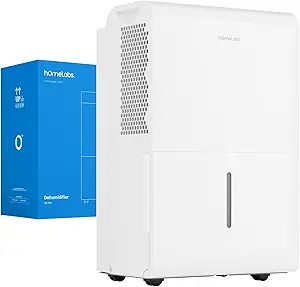 |
| Best Seller A high-volume bestseller chosen again and again | ToLife Dehumidifier TZ-C2 |  |
yaufey 120-Pint Dehumidifier

| Capacity | 120 pints |
|---|---|
| Tank Volume | 1.06 gallons |
| Wattage | 355 watts |
| Air Flow Capacity | 106 cfm |
| Dehumidification Capacity | 15 gallons_per_day |
This yaufey 120-pint dehumidifier is built for large, damp spaces such as garages and basements where continuous moisture control is needed. It delivers high-capacity removal (up to 120 pints/day in very humid conditions) while using an ENERGY STAR certified 355-watt system, and offers both manual tank collection and a continuous drain hose for hands-free operation. Controls are simple via an LED touch panel with four preset modes (Sleep, Living, Basement, Continuous) and three fan speeds, and built-in sensors provide rapid humidity and temperature feedback for precise control. Practical features include a visible 1.06-gallon tank with auto shutoff, washable reusable filter, castors and handles for mobility, and a 24-hour timer. It runs relatively quietly on low speed and includes overload protection and memory restart. Limitations are typical for large refrigerant dehumidifiers in colder spaces: performance will drop as ambient temperature falls toward the unit's lower operating limit, and the included 3.28 ft drain hose may require a longer garden hose for some installations.
Best for: Buyers who need sustained moisture removal in large, damp workspaces and want an energy-efficient, easy-to-use unit that can run continuously with a drain option.
Less Ideal for: People seeking a solution specifically tuned for freezing or near-freezing temperatures should consider models designed for low-temperature operation or with built-in heaters and pumps.
- High dehumidification capacity rated up to 120 pints/day for very humid conditions
- ENERGY STAR certification for better efficiency compared with non-certified models
- Dual drainage: visible 1.06 gallon tank with auto shutoff plus continuous drain hose option
- Simple LED touch panel with four preset modes and three fan speeds for easy operation
- Mobility features including ergonomic handles and universal castors
- Performance can decline in cold environments as temperature approaches the unit's lower operational range
- Included drain hose is relatively short and may need replacement or extension for some garage setups
Verdict: A high-capacity, energy-efficient dehumidifier with convenient continuous drainage and simple controls that fits large garages and basements needing reliable moisture removal.
DECIUU 100-Pint Dehumidifier

| Capacity | 100 pints per day |
|---|---|
| Floor Area | up to 5000 square_feet |
| Tank Volume | 1.45 gallons |
| Wattage | 300 watts |
| Air Flow Capacity | 9396 cubic_feet_per_hour |
The DECIUU 100‑pint dehumidifier is built to tackle heavy humidity in basements, garages, and large outbuildings where steady moisture removal is needed. It pulls up to 100 pints per day under hot, high‑humidity conditions and maintains set humidity between 35% and 80% with an intelligent control system and timer. Practical features include three drainage options (5.5 L tank, included drain hose, or garden hose hookup) for continuous operation, auto defrost for cooler environments, a washable filter, child lock, and smooth swivel casters for moving the unit around a garage. ENERGY STAR Most Efficient 2024 recognition points to relatively low power draw for the capacity, and a 300 W rating gives a sense of operating load. The unit is heavy-duty for large or very damp spaces but is sizable and designed for fixed-area use rather than portable household spot control, and it requires a standard 120 V outlet and room appropriate drainage planning.
Best for: Buyers who need robust, performance‑focused moisture removal for cold garages or large damp spaces and prioritize continuous, low‑energy operation over compactness.
Less Ideal for: People seeking a lightweight, quiet unit for small bedrooms or spot dehumidification should consider lower‑capacity models instead.
- High dehumidification capacity up to 100 pints per day for heavy moisture loads
- ENERGY STAR Most Efficient 2024 designation for better energy performance relative to capacity
- Three drainage methods including continuous drain hose and garden hose adapter for unattended operation
- Auto defrost and wide operating humidity setpoint (35%–80% RH) for use in cooler garage environments
- Removable washable filter and caster wheels simplify maintenance and repositioning
- Large unit intended for whole-room use rather than small-room portability
- 5.5 L internal tank still requires regular emptying unless continuous drain is used
Verdict: Choose this model when you need high daily moisture removal and energy‑efficient continuous operation for a cold garage or similarly large damp space.
KNKA 34-Pint Dehumidifier

| Capacity | 34 pints |
|---|---|
| Floor Area | 2500 square_feet |
| Tank Volume | 3 liters |
| Wattage | 230 watts |
| Number of Speeds | 2 |
The KNKA 34‑pint dehumidifier removes moisture from rooms up to about 2,500 sq ft and offers three operating modes for flexible use: DEHU (humidity-targeted control), DRY (clothes drying), and CONT (continuous run). It is typically used in basements, laundry rooms, garages, and other damp spaces where maintaining a stable humidity level matters. Notable features include a built-in 0.79 gal tank plus an included 3.28 ft drain hose for continuous draining, an auto humidity control that cycles the unit to keep your selected setpoint, a child lock and timer, and washable filter for simple upkeep. The unit is surprisingly quiet at about 37 dB and moves easily on 360° wheels with a leather-style handle, which helps when repositioning in a garage or workshop. Practical limitations: the 34‑pint rating is measured at high temperature and humidity so actual extraction in a cold garage will be lower, and the built‑in tank is relatively small so long unattended runs require the drain hose or larger external tank accessory.
Best for: Buyers who want a practical, easy-to-move dehumidifier for damp garages or basements and prioritize quiet night‑time operation, simple controls, and the option for continuous drainage.
Less Ideal for: People needing high-capacity commercial drying in very cold spaces where a low‑temperature or heat‑assisted dehumidifier is required should consider heavier‑duty models instead.
- Multiple modes (DEHU, DRY, CONT) for humidity control or continuous operation.
- Includes drain hose and supports continuous drainage to avoid frequent emptying.
- Low noise operation (around 37 dB) suitable for spaces where quiet is desired.
- Portable design with 360° wheels and comfortable handle for easy repositioning.
- Washable filter and simple digital controls make maintenance straightforward.
- 34‑pint rating is under ideal hot/humid conditions and yields lower capacity in cold environments.
- Internal water tank is modest in size, requiring drain hookup or optional external tank for long runs.
Verdict: A practical, quiet 34‑pint unit with continuous‑drain capability and simple controls that fits garages and basements where portability and low noise matter.
TABYIK DH-CS01 35oz Dehumidifier

| Tank Volume | 1000 ml |
|---|---|
| Dehumidification Capacity | 0.45 liters_per_day |
| Wattage | 40 watts |
| Floor Area | 280 square_feet |
This small Peltier dehumidifier is built for tight spaces where low noise and low energy use matter. It runs continuously and can extract up to about 450 ml (roughly 16 oz) per day under warm, very humid conditions, collecting into a 1,000 ml (35 oz) transparent tank with an auto shutoff when the tank nears full. The unit has a single-speed, plug-in design and claims very low power draw, making it inexpensive to run. A seven-color light adds ambiance and can be turned off, and the compact footprint plus a built-in handle makes moving it between a bedroom, bathroom, RV or small garage corner straightforward. Important limitations are the modest daily capacity and lower recommended operating temperature range for best performance, so it will struggle to remove large volumes of moisture in cold, damp garages or larger spaces. Expect simple operation and easy cleaning at the cost of slower moisture removal compared with compressor-based dehumidifiers.
Best for: Buyers seeking an inexpensive, energy-frugal dehumidifier for small, enclosed spots who prioritize quiet operation and portability over rapid moisture removal.
Less Ideal for: Those needing to dry large or cold garages, basements, or very damp areas quickly should choose a higher-capacity compressor dehumidifier instead.
- Very quiet operation reported at about 28 dB, suitable for noise-sensitive locations
- Low power consumption (under 1 kWh per day) for budget-friendly running costs
- Compact, lightweight design with built-in handle for easy placement and portability
- Transparent 35 oz tank with auto shutoff prevents overfilling and makes emptying simple
- Peltier (thermoelectric) design yields low daily extraction, so it is slow in high-humidity or cold environments
- Single-speed control offers limited flexibility for faster drying when needed
Verdict: A low-cost, ultra-quiet small-space dehumidifier that keeps energy bills down but is best used for modest moisture control rather than heavy-duty garage dehumidifying.
Uthfy DEHUMIDIFIER 55-Pint

| Dehumidification Capacity | 55 pints per day |
|---|---|
| Tank Volume | 1.2 gallons |
| Wattage | 173 watts |
| Operation Mode | Automatic |
| Voltage | 115 volts |
The Uthfy DEHUMIDIFIER is a compressor-based unit rated for up to 55 pints per day and intended for large, damp areas such as garages and basements. It uses a high-efficiency compressor and dual-turbo airflow to accelerate moisture removal and offers a 1.2 gallon removable tank plus an included drain hose for continuous drainage. Practical controls include dual-screen humidity and temperature readouts, an AI Cruise Control humidity sensor to hold a set range, child lock, 24-hour timer, and auto-defrost for winter operation. Noise-reduction measures and a claimed 35 dB sleep level make it quieter than many heavy-duty models, while R290 refrigerant and DOE/FCC compliance address efficiency and safety standards. Limits to consider are its size and power draw relative to small portable units and the need to place it level for reliable continuous draining; compressor units also require minimal warmup in very cold garages. For reliability-focused buyers who need consistent, high-capacity moisture removal in cold garage environments, this model brings robust engineering and convenient drainage, but expect typical compressor behavior in low temperatures.
Best for: Buyers who prioritize steady, reliable moisture removal in large or cold garage spaces and want a set-and-forget unit with continuous drain and automatic humidity control.
Less Ideal for: Those needing a very compact, ultra-low-power solution for small closets or infrequently used rooms should consider smaller or different-type dehumidifiers instead.
- High 55-pint daily dehumidification capacity suitable for large garages and basements
- Removable 1.2 gallon tank plus included drain hose for continuous unattended drainage
- AI humidity control and dual-screen display make set-and-forget operation straightforward
- Auto-defrost and compressor-based design maintain performance year-round, including colder months
- Multiple noise-reduction features claim quiet operation down to about 35 dB
- Compressor-based units can be less effective at very low temperatures compared with some desiccant units
- Relatively large footprint and higher power draw compared with small portable dehumidifiers
Verdict: Choose this unit when you need consistent, high-capacity moisture removal with continuous-drain convenience for cold garages and large damp spaces.
hOmeLabs 50 Pint Dehumidifier
| Dehumidification Capacity | 50 pints_per_day |
|---|---|
| Floor Area | 7000 square_feet |
| Tank Volume | 1.6 gallons |
| Wattage | 322 watts |
| Air Flow Capacity | 165 cfm |
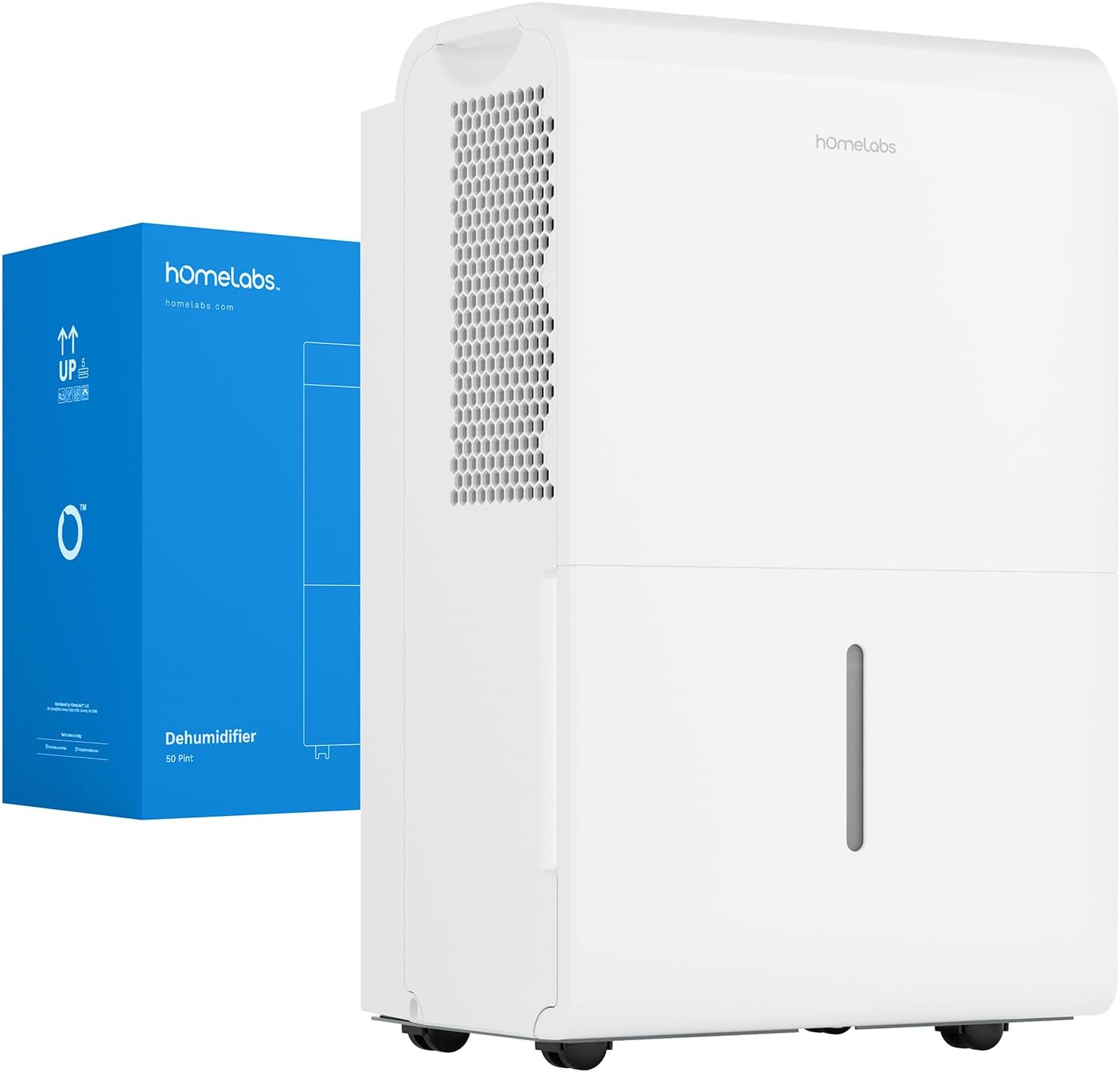
This hOmeLabs unit is a 50‑pint dehumidifier with Wi‑Fi control and features aimed at keeping large spaces dry. It claims capacity for up to 7,000 sq ft and removes up to 50 pints per day under standard test conditions, with higher-rated capacity at very high temperature and humidity. The unit offers two fan speeds, a removable tank with auto shutoff, and a hose outlet for continuous draining, plus washable filter and a touch control panel. Wi‑Fi lets you change setpoints and run the machine remotely which is convenient for monitoring a garage from elsewhere. Practical benefits include decent airflow for moving moist air through a single pass and caster wheels and handles that make repositioning easier. Important limitations for cold garages are that the upper temperature rating is 35°C and defrost is automatic but performance drops as temperatures fall toward typical garage lows; it may cycle more or collect less water at low ambient temps. Expect moderate noise and a 322 W power draw when running at higher fan speeds.
Best for: Buyers who want a high‑capacity, remotely manageable dehumidifier for large or frequently used garages and who value easy maintenance and unattended drainage.
Less Ideal for: Those needing reliable low‑temperature extraction in unheated, freezing garages should look for a unit specifically rated for cold‑climate or compressor‑defrost performance at low temperatures.
- Wi‑Fi remote control for on/off and humidity adjustments
- Tank with auto shutoff plus continuous drain outlet for unattended operation
- Two fan speeds and turbo mode to increase airflow when needed
- Washable filter and removable tank for straightforward maintenance
- Portable design with wheels and handles for repositioning large units
- Rated performance is measured at warmer conditions so extraction falls in cool environments
- Upper temperature rating suggests limited optimized use below moderate temperatures
Verdict: A high‑capacity, Wi‑Fi‑enabled dehumidifier that makes moisture control and remote monitoring simple for large garages that stay above near‑freezing temperatures.
ToLife Dehumidifier TZ-C2
| Floor Area | 1000 |
|---|---|
| Tank Volume | 95 fluid ounces |
| Number of Speeds | 2 |
| Wattage | 93 watts |
| Voltage | 220 volts |
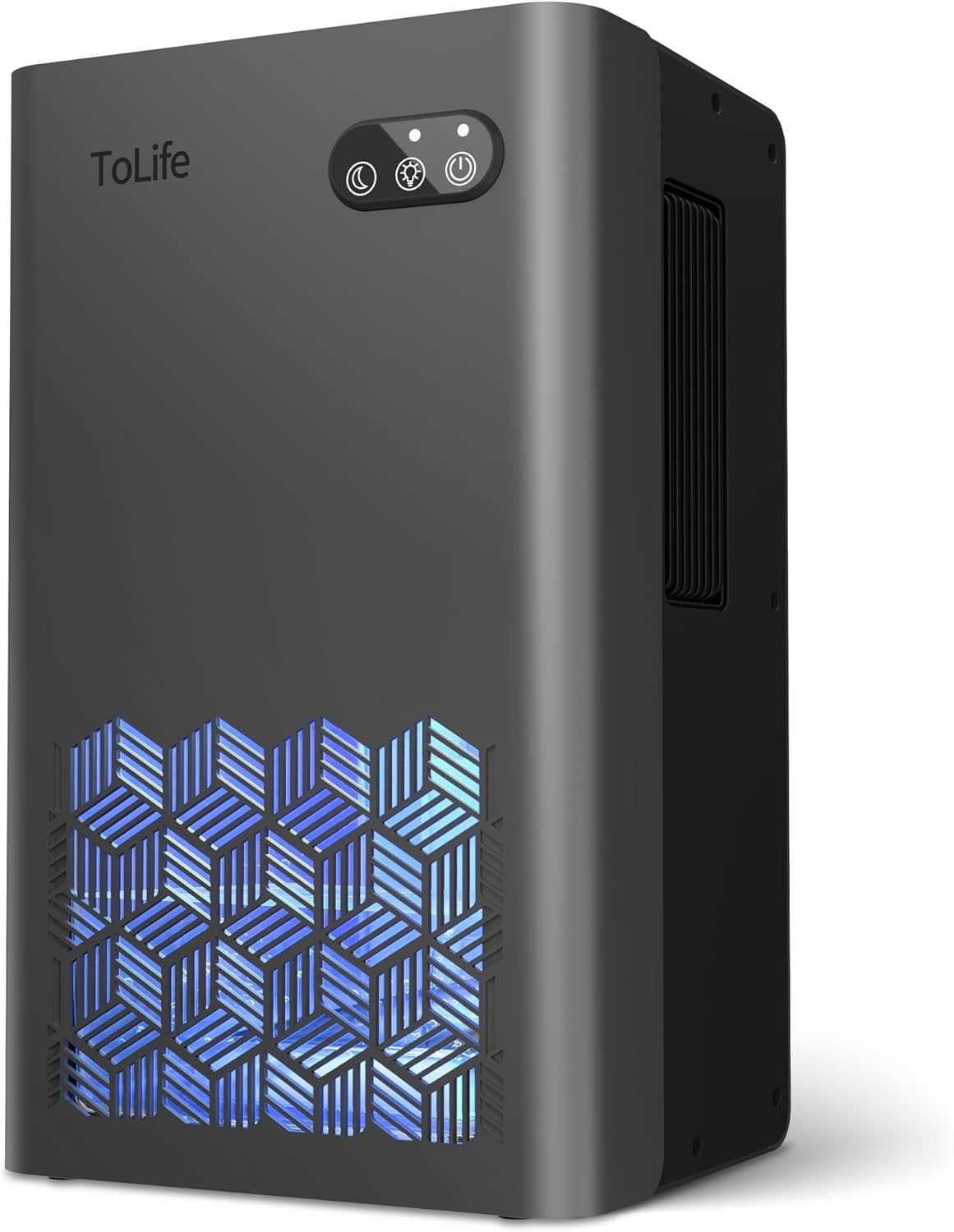
The ToLife TZ-C2 uses semiconductor condensation technology to quietly pull moisture from the air and deposit it into a removable 95 oz tank, making it a straightforward option for damp rooms. It offers two operating modes: a higher-power setting for faster moisture removal and a low-speed sleep mode that runs under 30 dB for overnight use. A seven-color LED can act as a night light and the unit includes automatic shutoff when the tank is full or removed, plus handles for easy moving between rooms. Practical benefits include simple setup, low noise, and a compact footprint that fits in basements, bathrooms, or bedrooms. Limitations are its modest rated dehumidification capacity and stated coverage, which means it will be most effective in smaller basement zones or for spot treatments rather than drying a large, very damp basement quickly. Also this model runs on 220 volts, so electrical compatibility should be confirmed for your location.
Best for: Buyers who need an affordable, portable dehumidifier for spot dehumidifying small basement areas, bathrooms, or bedrooms and who prioritize low noise and easy portability.
Less Ideal for: People looking to dry large, very damp basements or whole-house coverage should consider a higher-capacity compressor dehumidifier instead.
- Large removable 95 oz water tank reduces how often you need to empty it
- Quiet sleep mode under 30 dB suitable for nighttime operation
- Portable design with handles for moving between rooms
- Automatic shutoff prevents overflow when the tank is full
- Dehumidification capacity is modest and may be slow in very damp or large basements
- Requires 220 volt power which may not match all household outlets
Verdict: A compact, budget-friendly portable dehumidifier that is best for quiet, small-area moisture control and occasional basement spot treatments.
Choosing the Right Dehumidifier for Cold Garage: Key Factors to Consider
Low-Temperature Operation
Cold garages routinely dip below the temperatures that standard refrigerant dehumidifiers are rated for. When ambient air gets too cold, coils can ice over and a unit may shut down or cycle inefficiently. Look for explicit low-temperature ratings and built-in defrost or automatic switch-over systems.
A unit that maintains extraction at lower temperatures reduces the risk of prolonged dampness and prevents repeated freeze-thaw cycles that can worsen condensation problems. If your garage regularly drops near or below freezing, prioritize hardware designed for those conditions rather than a standard indoor model.
Moisture Removal Capacity in Cool Air
Manufacturers often state pints-per-day at warm-room conditions, which overstates real output in a cold garage. Effective cold-air moisture removal depends on compressor performance at low ambient temperatures and on airflow design.
Buyers should focus on rated capacity at lower temperature points if available, or choose units with strong nominal capacity plus frost-management features. Underestimating the required capacity will leave the space damp even if a unit is technically sized for a warmer room.
Frost Management and Defrost Methods
Ice forming on the evaporator coil is the main failure mode for dehumidifiers in cold spaces. Different models use different ways to deal with frost: automatic defrost cycles, hot gas bypass, reverse-cycle defrost, or intelligent sensors that pause and restart a fan.
Reliable frost handling ensures continuous operation and prevents build-up that can damage components. Consider how a unit implements defrost, how often it runs, and whether the process reduces overall extraction efficiency.
Drainage Options and Plumbing
Emptying a collection bucket by hand in a cold garage can be inconvenient and can expose the water to freezing. Continuous drain options with gravity-fed hoses, a condensate pump, or drain-port compatibility let you route water to a sink or floor drain and avoid frequent emptying.
Also consider hose fittings and whether the drainage path itself will be exposed to subfreezing temperatures. A pumped drain is often advantageous where gravity drainage is not practical or where drain lines may freeze.
Durability and Maintenance in Garage Conditions
Garages introduce dust, debris, and occasional fumes from vehicles or stored chemicals. A sturdier cabinet, washable or replaceable filters, and serviceable components extend life in harsher environments.
Regular filter cleaning schedules, accessible panels for maintenance, and corrosion-resistant finishes help keep a unit running. Consider units with clear maintenance guidance and readily available parts if you expect heavy use.
Noise, Placement, and Energy Use
Noise matters if the garage is attached to living space or used as a workshop. Compressor-based units typically make more noise than small desiccant units, and fans contribute to perceived sound. Check real-world noise data or user reports for workshop suitability.
Energy efficiency is also important when units run for long stretches in cold seasons. Look for models with efficient compressors or smart control features that limit run time while keeping humidity under control.
Why Refrigerant Units Are Usually Best for Larger Cold Garages
For most garage-sized spaces a refrigerant dehumidifier provides the best balance of capacity and energy use in cool-but-not-extremely-cold conditions. These units remove more water per run than small desiccant options and are generally more economical for continuous dehumidification.
That said, refrigerant systems need frost management to operate reliably below typical room temperatures. Understanding the unit's low-temp safeguards will tell you whether it will keep running when your garage gets chilly.
- Higher extraction rates in moderate cold compared with small desiccant units
- Better energy efficiency for continuous use
- Requires proven defrost strategy below typical indoor temps
When a Desiccant Dehumidifier Makes Sense
Desiccant units remove moisture using absorbent material and can perform well at very low temperatures without coil icing. They are often quieter and lighter, and they continue to extract water as air temperature falls.
However, desiccant models typically have lower overall capacity and higher energy draw per pint compared with compressor units in milder cold. They can be a strong choice for very cold garages or intermittent use where frost-free operation is essential.
- Works well at low or freezing ambient temperatures
- Lower capacity but consistent operation in the cold
- May consume more energy per unit of water removed
Placement and Airflow Tips for Cold Garages
Position the unit where it gets good airflow from the main open area of the garage and away from sources of dust or fumes. Elevating a dehumidifier a few inches off the floor reduces the chance of blocked intake in shallow snow or slush and helps drainage.
Keep at least a foot of clearance on all sides for airflow and service access. Avoid sealing the unit into a tight corner where it will recirculate already dehumidified air and lose efficiency.
- Center of the room or near the most humid zone for best circulation
- Elevate unit slightly to protect from puddles and enable gravity drains
- Leave service clearance for filter cleaning and coil access
Preventing Freeze in Drain Lines
A functioning dehumidifier can still be defeated by frozen drain lines. Run drains into an insulated, indoor drain point where possible, or use a condensate pump to move water into a warmer area. In unheated garages, route drain lines above likely snow or ice levels.
If you must route an outdoor drain, choose flexible hoses with simple removal for winter and avoid narrow tubing that clogs with ice. Regularly check the drain path during cold snaps to catch early freezing before it blocks flow.
- Use a condensate pump when gravity drainage leads to exposed outdoor lines
- Insulate exposed drain hoses and keep low points clear of standing water
- Design the drain path to avoid long runs through freezing air
Maintenance Checklist for Winter Performance
Regular maintenance preserves performance during cold months. Clean or replace filters per manufacturer guidance, inspect the coil for ice buildup, and verify that defrost cycles run as expected. Check seals and doorways in the garage to reduce excessive humidity load.
Also test continuous-drain fittings and any condensate pumps before the cold season starts. Keeping the unit and surrounding area clean extends component life and prevents performance loss caused by dust and debris.
- Clean filters monthly during heavy use
- Inspect coils and watch for repeated frosting
- Test drain plumbing and pumps before extended cold periods
How We Chose the Best Dehumidifier for Cold Garage
We focused on features that directly affect performance in unheated, cold garages. First, we prioritized low-temperature operation and frost-management systems because compressors and condensers can lose effectiveness or ice up below certain temperatures. Second, moisture removal capacity at lower temps was assessed, looking for models that maintain meaningful pints-per-day output in cooler ambient conditions. Third, we evaluated drainage and water-management options since freezing drains or difficult emptying can defeat a unit in a garage. Fourth, durability and corrosion resistance were considered because garages expose gear to dust, fumes, and fluctuating temperatures. Finally, we examined ease of use and maintenance: controls, filter access, and the availability of defrost or auto-restart features. We excluded units that are strictly designed for warm indoor rooms, small desiccant-only personal units without practical capacity, and products lacking any frost-control strategy. The shortlist reflects models that combine realistic low-temp capacity, robust drain options, and serviceable design for garage conditions.
Our full evaluation process is outlined in our review methodology.
FAQ
Can a regular indoor dehumidifier run in a cold garage?
Often it will run but may lose efficiency or ice up at lower temperatures. Units without frost-management can stop extracting effectively when coils freeze, so choose a model rated for lower temps or with a defrost system.
At what temperature should I switch to a cold-rated unit?
If your garage regularly falls below about 40°F, you should favor models with low-temperature ratings or desiccant technology. Many refrigerant units start to struggle below this range unless they include active defrost strategies.
Is a condensate pump necessary for a garage dehumidifier?
A condensate pump is helpful when gravity drainage is not possible or when the drain path would run through freezing areas. It lets you move water to an indoor drain and reduces the need to empty collection buckets manually.
How often should I run a dehumidifier in a cold garage?
Run time depends on humidity levels and usage. In damp seasons or when the garage is used for projects, continuous operation with smart controls or a humidistat is common. In drier periods, intermittent operation keyed to humidity readings usually suffices.
Will running a dehumidifier in an attached garage affect my home heating bills?
It can have a modest effect because dehumidifiers release some heat as a byproduct of operation, and a unit running long hours adds to electricity use. The net impact on home heating is generally small, but energy-efficient models reduce running costs.
Final Verdict
For a cold garage prioritize low-temperature performance, frost-management, and drainage flexibility. Decide whether a refrigerant model with proven defrost or a desiccant unit fits your typical winter lows and usage pattern. Consider placement, drain routing, and maintenance needs when selecting capacity. Balancing sustained moisture removal at low temps against energy use and noise will lead to the right choice for your space. Focus on the specific cold-weather capabilities described here and you can select a dehumidifier that protects tools, vehicles, and stored items through the winter.