
Note: This article contains affiliate links. If you click on these links and make a purchase, we may earn a small commission at no extra cost to you. This helps support our research and content. Read our full affiliate disclosure here.
If your home or basement stays damp through the colder months, a unit designed for low-temperature operation can prevent condensation, mold growth, and musty odors. Choosing the right dehumidifier for cold weather matters because standard warm-climate models lose efficiency and can ice up when temperatures drop. This guide presents seven shortlisted dehumidifiers built to handle chillier conditions and explains the practical tradeoffs buyers face. We evaluate units for their low-temperature extraction, frost-management strategies, drainage options, energy use, and noise. Read on to find a model that fits your space and operating pattern.
Top Picks at a Glance
| Best Overall The best all-around choice for most situations | hOmeLabs 32-Pint Dehumidifier |  |
| Best Quality Built to a higher standard if you want something more solid | Airzentti 155-Pint Dehumidifier |  |
| Best Value The sweet spot between price and what you get | VEAGASO VG380 36‑Pint Dehumidifier |  |
| Best Budget The cheapest option that still gets the job done reliably | BeOkay DH-A2 Dehumidifier |  |
| Top Rated A top-rated pick with lots of positive feedback | hOmeLabs 50 Pint Dehumidifier | 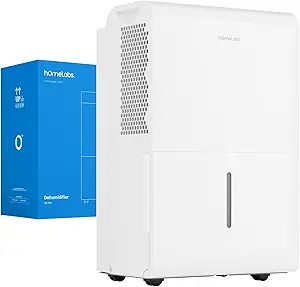 |
| Most Popular A crowd favorite that many people choose with confidence | TABYIK 35oz Dehumidifier DH-CS01 |  |
| Best Seller A high-volume bestseller chosen again and again | ToLife C2 Dehumidifier |  |
hOmeLabs 32-Pint Dehumidifier

| Dehumidification Capacity | 35 pints_per_day |
|---|---|
| Capacity | 1.8 gallons |
| Tank Volume | 1.6 gallons |
| Number of Speeds | 2 |
| Floor Area | 4500 square_feet |
This hOmeLabs unit is a straightforward, room‑scale dehumidifier built for large spaces like basements and open living areas. It removes up to 32 pints per day under typical conditions (and higher at very warm, humid extremes), and offers both a removable 1.6 gallon water tank with auto shutoff and a continuous drain outlet for hands‑free operation. The machine includes washable filter media, two fan speeds plus a TURBO mode for faster moisture removal, and smart features such as Wi‑Fi control and voice assistant compatibility so you can monitor and change humidity from your phone. Mobility is simple thanks to built‑in casters and a handle, and safety conveniences include automatic defrost and auto restart after power interruptions. Expect practical, reliable performance for basement humidity control, though it is a single‑hose portable unit so performance will vary with room layout and extreme cold conditions can reduce extraction rates. For buyers who want easy setup, remote control, and reliable daily dehumidification, this model covers the essentials without complex installation.
Best for: Buyers who want a reliable, easy‑to‑use dehumidifier for a basement or large room and value remote control, straightforward maintenance, and portability.
Less Ideal for: People seeking a hard‑plumbed or whole‑house solution or those who need maximum extraction in consistently cold spaces should consider other types of systems.
- Removes up to 32 pints per day with higher capacity at very high temperature and humidity
- Wi‑Fi control and compatibility with Alexa and Google Assistant for remote monitoring and adjustments
- Continuous drain option plus a removable tank with auto shutoff reduces manual emptying
- Washable air filter and caster wheels make maintenance and relocation simple
- Performance drops in cold environments since rated capacity is specified at warmer test conditions
- Only two fan speeds may limit fine control of noise versus extraction rate
Verdict: A portable, Wi‑Fi enabled dehumidifier that delivers dependable moisture removal and easy maintenance for large basements and open rooms.
Airzentti 155-Pint Dehumidifier
| Capacity | 155 pints |
|---|---|
| Dehumidification Capacity | 73.5 liters_per_day |
| Air Flow Capacity | 220 cfm |
| Wattage | 860 watts |
| Floor Area | 7500 square_feet |
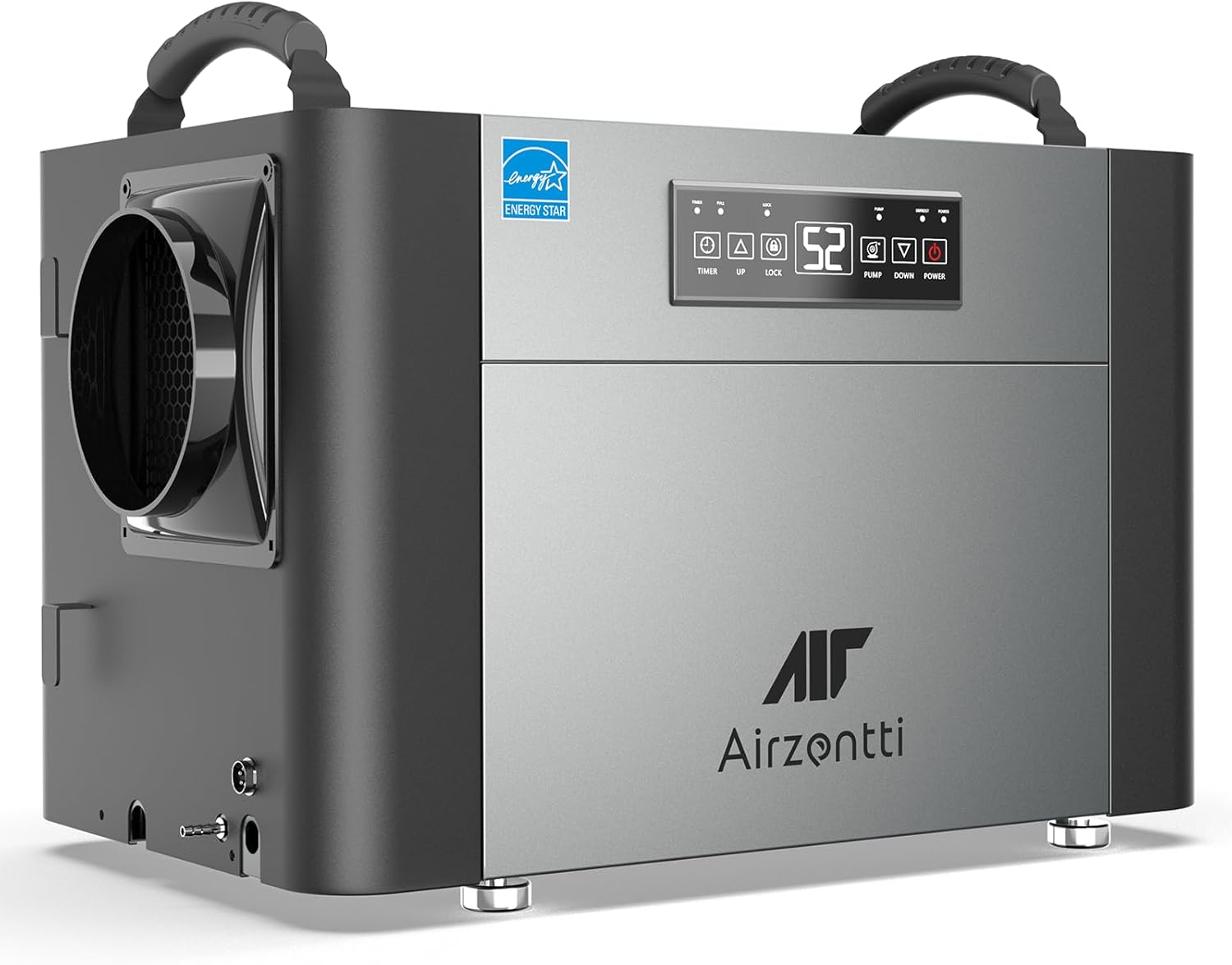
This Airzentti unit is built for heavy-duty moisture removal in large or problem spaces. It delivers up to 155 pints (73.5 L/day) under high-humidity conditions and pushes air at 220 CFM, making it suitable for basements, crawl spaces, attics, and water-damage jobs. The built-in pump can lift condensate up to roughly 16.4 feet and the unit also supports gravity drain, so you can run it continuous without emptying a tank. Controls include humidity setpoint, timer and a screen lock, and safety features such as auto-defrost and auto-restart help it run unattended in colder environments. At 860 watts it is a power-hungry performer, and its commercial footprint and weight mean it is less convenient to move than smaller consumer models. Expect practical, factory-quality durability and energy-efficient operation thanks to Energy Star and TUV compliance, but plan for the electrical load and the space needed to install ducting or the drain hose.
Best for: Buyers who prioritize fast, reliable moisture removal in large or problem spaces and need a rugged, set-and-forget solution for basements, crawl spaces, or restoration work.
Less Ideal for: If you need a lightweight, low-power household unit for a single small room or occasional use, a smaller consumer dehumidifier would be a better fit.
- Very high dehumidification capacity suitable for large or water-damaged spaces.
- Built-in condensate pump plus gravity drain for true continuous operation without emptying a tank.
- Auto-defrost and auto-restart allow reliable use in cooler environments prone to frost.
- Energy Star certified for more efficient long-run operation than many commercial units.
- Relatively high power draw at 860 watts compared with household dehumidifiers.
- Large and heavy design reduces portability and may require lifting or casters to move.
Verdict: Choose this Airzentti when you need a high-capacity, pump-equipped dehumidifier that runs continuously and performs reliably in cold, large, or water-damage environments.
VEAGASO VG380 36‑Pint Dehumidifier

| Dehumidification Capacity | 36 pints_per_day |
|---|---|
| Tank Volume | 2 gallons |
| Air Flow Capacity | 150 cfm |
| Wattage | 190 watt-hours |
| Voltage | 120 volts |
The VEAGASO VG380 is a 36‑pint dehumidifier aimed at drying large, damp spaces such as basements, garages, and large rooms. It removes up to 36 pints per day and offers continuous drain via the included hose or a 0.53‑gallon removable tank with automatic shutoff for unattended operation. The unit has three modes (Auto, Continuous, Sleep), a 24‑hour timer, and a digital humidity display with power‑off memory so set targets persist after outages. At lower fan speed it runs around 40 dB, which keeps noise low enough for bedrooms or nurseries, while casters and a built‑in handle make it easy to move between spaces. Practical features include child lock, auto defrost for cooler conditions, and intelligent humidity control to prevent over‑drying. Trade offs are that the 36‑pint rating is a warm‑room spec so performance in very cold basements will be reduced compared with tests at higher temperatures, and the compact tank means relying on the drain hose for long unattended runs.
Best for: Buyers who want a practical, moveable dehumidifier that can run unattended in large residential spaces and prioritize continuous draining, low noise, and simple digital controls.
Less Ideal for: People needing maximum cold‑temperature extraction for unheated, freezing basements or industrial spaces should consider units rated for low‑temperature performance or compressor models specified for cold operation.
- Up to 36 pints per day capacity for large rooms and basements
- Includes continuous drain hose for hands‑free, long‑term operation
- Quiet operation (~40 dB) on low makes it usable in bedrooms and nurseries
- Multiple modes, 24‑hour timer, digital humidity display and power‑off memory for convenient control
- Child lock, casters and handle improve safety and portability
- 36‑pint rating is based on warmer test conditions so drying rate drops in cold environments
- Small 0.53‑gallon tank requires frequent emptying if not using the drain hose
Verdict: Choose the VEAGASO VG380 when you need a quiet, portable 36‑pint dehumidifier with continuous‑drain capability and simple digital controls for large residential spaces.
BeOkay DH-A2 Dehumidifier

| Capacity | 1657 ml |
|---|---|
| Dehumidification Capacity | 0.3 liters_per_day |
| Number of Speeds | 3 |
| Wattage | 28 watts |
| Floor Area | 230 square_feet |
The BeOkay DH-A2 is a portable dehumidifier aimed at small residential spaces where gradual, low-noise moisture control is needed. It pulls moisture using a low-watt semiconductor system and stores condensate in a 1657 ml removable tank that triggers an automatic shutoff when full or if the unit is tilted. Controls offer three operating modes (sleep, normal, performance), five timer settings up to 96 hours, and a 10-color night light with adjustable brightness for convenience. At 28 watts and with a rated dehumidification capacity of about 0.3 liters per day, it is best suited to bedrooms, bathrooms, or small offices rather than tackling very damp or cold environments requiring fast moisture removal. Practical benefits include the quiet sleep mode for overnight use, easy emptying with the removable tank, and safety features like defrosting and tilt protection. The main limitation is its modest daily extraction rate, so expect slow, steady humidity reduction rather than rapid drying in cold, high-moisture spaces.
Best for: Buyers looking for an inexpensive, low-power dehumidifier to quietly manage mild humidity in bedrooms, bathrooms, or small offices who prioritize energy use and convenience over rapid drying.
Less Ideal for: People who need fast moisture removal in cold, very damp, or larger spaces should choose a higher-capacity dehumidifier built for those conditions.
- Large 1657 ml removable tank with auto shutoff reduces how often you need to empty it
- Quiet sleep mode keeps noise under about 40 dB for overnight use
- Multiple timers and three operating modes let you balance runtime and performance
- Low power draw at 28 watts for energy-conscious operation
- Very low dehumidification capacity (about 0.3 L/day) so it works slowly in damp or cold conditions
- Designed for small rooms only and not suitable for whole-room or basement dehumidification
Verdict: A budget-friendly, low-power dehumidifier that quietly manages mild humidity in small rooms rather than delivering rapid moisture removal in cold or very damp spaces.
hOmeLabs 50 Pint Dehumidifier
| Dehumidification Capacity | 50 pints_per_day |
|---|---|
| Floor Area | 7000 square_feet |
| Tank Volume | 1.6 gallons |
| Wattage | 322 watts |
| Air Flow Capacity | 165 cfm |
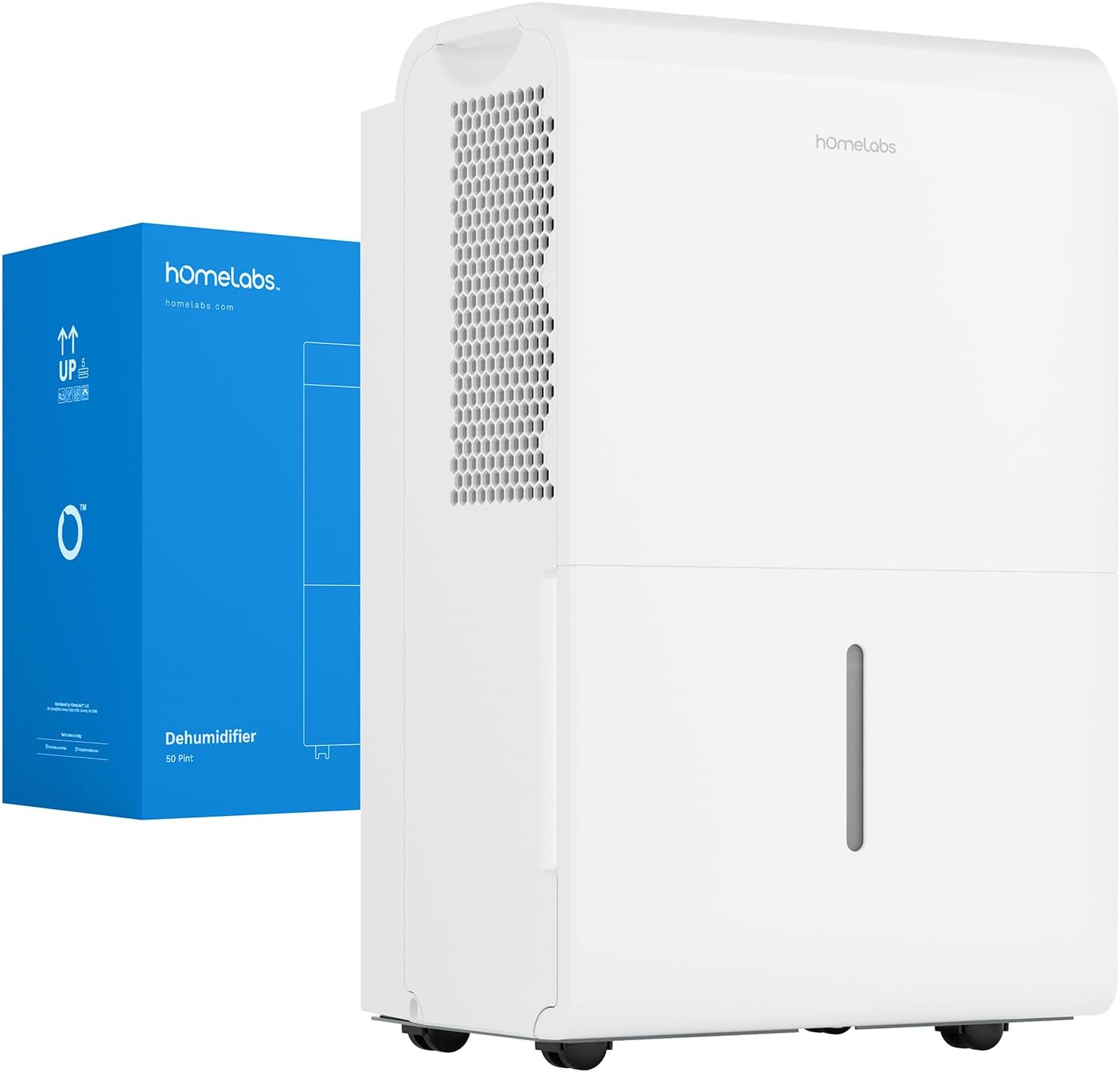
This hOmeLabs unit is a large-capacity dehumidifier built for whole-room or basement use where steady moisture control is needed. It removes up to 50 pints per day (with a higher peak rating under very hot conditions), offers two fan speeds plus a Turbo mode, and can run continuously with either the removable 1.6‑gallon tank or a continuous-drain hose connection. Wi‑Fi lets you change settings remotely and the touch control panel is easy to operate, while automatic shutoff and restart add convenience after power interruptions. For cold-weather situations, the automatic defrost helps prevent coil freeze at lower temperatures and the unit is rated to operate up to 35 °C. Practical compromises are its bulk and weight which make placement less flexible, and higher wattage compared with smaller models means greater energy draw when running long cycles. Expect straightforward maintenance from the washable filter and accessible tank, and smooth day-to-day reliability for controlling humidity in larger living spaces.
Best for: Buyers who prioritize a dependable, always-on solution for large, damp spaces and want remote control and automated protections to minimize hands-on management.
Less Ideal for: People who need a compact, lightweight dehumidifier for small rooms or infrequent use should choose a smaller portable model instead.
- High removal capacity suitable for large rooms and basements
- Wi‑Fi remote control for adjusting settings without being physically present
- Automatic defrost and continuous drain option for unattended operation in cooler spaces
- Removable washable filter and accessible tank simplify maintenance
- Relatively heavy and bulky which limits placement and transportability
- Higher power draw at 322 watts compared with smaller portable units
Verdict: Choose this model when you need a reliable, high-capacity dehumidifier with Wi‑Fi and defrost features for consistently drying large or cold spaces.
TABYIK 35oz Dehumidifier DH-CS01

| Applicable Area | 280 square_feet |
|---|---|
| Capacity | 1000 ml |
| Tank Volume | 1000 ml |
| Wattage | 40 watts |
| Dehumidification Capacity | 0.45 liters_per_day |
The TABYIK 35oz DH-CS01 is a small Peltier dehumidifier intended for bedrooms, bathrooms, closets, and RVs where excess dampness is mild. It runs continuously on a single speed, collects up to about 16 oz (450 ml) per day under warm, high‑humidity conditions, and stores captured water in a 1000 ml (35 oz) transparent tank that is easy to remove and clean. The unit is very quiet at roughly 28 dB and includes a 7‑color night light with an on/off control separate from the dehumidifying function. Practical safety features include an auto shutoff that stops the unit and flashes a red light when the tank nears capacity. Expect low energy use—advertised as under 1 kWh per day—but modest moisture removal compared with compressor models, and its single fixed fan speed limits fast drying in larger or colder spaces. The device is portable with a built‑in handle, simple to operate with one button, and requires routine cleaning of the rear intake filter to maintain airflow.
Best for: Buyers who prioritize quiet, energy‑efficient moisture control in small, regularly occupied spaces and who value straightforward, fuss‑free operation backed by many user reviews.
Less Ideal for: People needing fast moisture removal, whole‑room/compressed basement dehumidification, or reliable performance in cold, low‑temperature environments should look at larger compressor models instead.
- Low noise operation suitable for bedrooms (around 28 dB)
- Transparent 1000 ml tank with easy removal and cleaning
- Auto shutoff protects against overflow and signals when full
- Very low power consumption suitable for continuous use
- Compact and portable with built‑in handle
- Peltier technology yields low daily dehumidification compared with compressor units
- Single speed limits performance in larger or colder rooms
- Performance drops in temperatures below the recommended operating range
Verdict: A quiet, energy‑sipping compact dehumidifier that works well for mild dampness in small rooms when low noise and ease of use are top priorities.
ToLife C2 Dehumidifier

| Floor Area | 1000 |
|---|---|
| Capacity | 95 fluid ounces |
| Number of Speeds | 2 |
| Wattage | 93 watts |
| Air Flow Capacity | 95 liters per minute |
The ToLife C2 is a small, portable dehumidifier intended for bedrooms, bathrooms, closets and other confined spaces up to about 1000 sq ft. It uses semiconductor condensation technology for quiet operation and offers two modes: a higher-power setting for faster moisture removal and a low-speed sleep mode that runs under 30 dB. The unit collects moisture in a removable 95 oz tank and includes automatic shutoff when the tank is full or improperly seated, plus a 48-hour auto-stop protection to preserve the compressor. Practical touches include a carry handle for moving between rooms and seven-color LED ambient lighting that can be locked as a night light. Important limitations for cold-weather use are inherent to its technology: semiconductor dehumidifiers are less effective at low temperatures than compressor models, so performance will drop in unheated basements or winter garages. The C2 is best when you need quiet, portable humidity control in conditioned indoor spaces and are okay trading peak low-temperature extraction for lower noise and compact size.
Best for: Buyers who prioritize quiet, portable humidity control for bedrooms, bathrooms, or small conditioned rooms and who prefer simple, safety-minded features over maximum cold-weather extraction.
Less Ideal for: People who need robust dehumidification in very cold spaces, unheated basements, or large, leaky rooms should choose a compressor-style or higher-capacity unit instead.
- Quiet semiconductor condensation operation suitable for bedrooms and sleeping areas
- Two speed modes including a low-noise sleep setting under 30 dB
- Large removable 95 oz water tank with automatic shutoff to prevent overflow
- Portable design with handle for easy room-to-room use
- Seven-color LED lighting that can be locked for use as a night light
- Semiconductor condensation tech is significantly less effective at low ambient temperatures than compressor dehumidifiers
- Rated coverage claims (1000 sq ft) are optimistic for true moisture removal in larger or poorly sealed spaces
Verdict: Choose the ToLife C2 when you want a quiet, portable dehumidifier with a large removable tank for small heated rooms rather than maximum cold-weather extraction.
Choosing the Right Dehumidifier for Cold Weather: Key Factors to Consider
Low-Temperature Extraction Rate
A unit's rated extraction at low temperatures is the single most important factor for cold-weather use. Extraction specs measured at warmer conditions overstate real performance when ambient air is near freezing. Look for manufacturers that publish performance at lower temperature points or units specifically designed for basement and unheated spaces.
Extraction matters because inadequate moisture removal allows condensation, surface dampness, and mold to persist. If you expect prolonged operation in chilly rooms, choose a dehumidifier with documented low-temp capacity so it will remove humidity without relying on supplemental heat.
Frost Management and Defrost Strategy
When coils cool below the dew point in cold rooms, frost can form and reduce airflow and extraction. Different machines use different strategies to handle this: automatic defrost cycles that periodically warm the coils, hot-gas defrost methods, or reversible airflow designs. Understand how often a unit will need to defrost and whether that interrupts drying performance.
A robust frost-management approach reduces the need for manual intervention and preserves consistent moisture control. Consider whether defrost cycles are automatic and how they affect runtime and energy use in your expected temperature range.
Drainage Options and Placement Flexibility
Cold basements often require long-term unattended operation, so effective drainage is essential. Look for units that offer continuous drain ports with standard hose fittings, gravity or pump-assisted drain options, and clear guidance on hose routing for winter conditions.
Placement flexibility is linked to drainage. A unit you can locate near a floor drain or run to a condensate pump avoids frequent emptying and reduces the chance of overflow or freeze-related issues when temperatures fluctuate.
Energy Use and Operating Cost in Low Temps
Energy efficiency labels and warm-condition ratings do not always reflect consumption at low ambient temperatures. Some units run defrost cycles or resistive heating that increases power draw when it is cold. Evaluate expected wattage and the frequency of defrost cycles to estimate real operating cost during winter.
Long-run energy considerations matter if the dehumidifier will operate continuously. An efficient low-temp unit can pay back higher upfront complexity by lowering seasonal electricity use and avoiding the additional heat load of inefficient defrost systems.
Noise, Vibration, and Daily Use Comfort
A dehumidifier kept in a living area, bedroom, or workspace should be acceptably quiet and vibration-free. Cold-weather models may run longer cycles and so noise becomes more noticeable. Check reported noise levels and consider fan speed options or night modes for bedrooms or offices.
Also think about user controls and indicators. Clear humidity readouts, programmable timers, and user-friendly maintenance access make prolonged winter operation less intrusive and easier to maintain.
Build Quality and Cold-Climate Durability
Materials and component robustness are important when units cycle frequently in cold, damp environments. Look for corrosion-resistant coils, sturdy housings, and reliable fans and compressors designed for frequent starts and stops. Seals and electrical components should be rated for the expected humidity and temperature swings.
Durability reduces the chance of failures during peak wet months and minimizes service needs. Consider warranty terms and the availability of replacement parts in climates where seasonal operation is the norm.
How Low-Temp Specs Translate to Real-World Performance
Manufacturers often publish extraction rates measured at relatively warm lab conditions. In practice, as temperatures fall the refrigerant cycle becomes less efficient and frost can form on the cold coil. When evaluating an indoor unit for chilly rooms, focus on numbers or documentation that mention extraction at 50 degrees F or lower, or explicit cold-weather design claims.
If low-temp specs are not available, prioritize units with proven frost-management methods and reliable continuous drainage. Users in cold climates should expect lower extraction than the peak lab rating and plan for slightly larger capacity than needed for warm-season operation.
- Compare extraction figures at realistic low temps when available
- Factor in reduced capacity versus warm-weather ratings
- Expect more frequent defrost cycles as temps approach freezing
Placement and Installation Tips for Cold Spaces
Position the dehumidifier where cold, damp air naturally collects, such as basements, crawlspaces, or exterior wall corners. Keep it several inches from walls to ensure airflow and avoid placing it directly on cold concrete without a small platform to reduce cold transfer.
Plan for reliable drainage before installation. If a gravity-fed drain is not feasible, a condensate pump helps avoid manual emptying during unattended winter operation. Route hoses to avoid dips or low points where water could collect and freeze.
- Avoid blocking intake and outlet vents
- Use a short, insulated hose for external drainage if freezing is possible
- Elevate the unit slightly off cold floors to reduce direct conductive cooling
Maintaining Performance During Winter
Regular maintenance keeps cold-weather dehumidifiers operating efficiently. Clean or replace filters per manufacturer guidance and inspect coils for dirt that accelerates frosting. Keep intake areas clear of dust and stored items that may restrict airflow.
Check drain lines and pump operation before the cold season. Test automatic defrost cycles if available, and verify that condensate routing remains free of ice after the first freeze. Routine attention prevents common failures and preserves extraction capability.
- Inspect filters and coils monthly during heavy use
- Verify drain routing and pump function before extended unattended operation
- Record humidity and runtime to spot declining performance early
When to Consider Alternative Strategies
In some colder environments, a dehumidifier alone may not be enough if temperatures routinely drop below the unit's operating range. In those cases, consider combining modest heating with dehumidification or using heat-recovery ventilation to reduce humidity while maintaining temperature.
For short-term or spot treatment, running the dehumidifier only during daytime hours when the space is warmer can be effective. However, for persistent dampness in unheated rooms, choose a model built for continuous low-temperature duty or explore supplemental heat options.
- Supplemental heat can improve extraction but increases energy use
- Ventilation strategies reduce overall moisture load
- Spot dehumidification may suffice for occasional damp events
Common Installation Pitfalls to Avoid
Common mistakes include placing the unit too close to walls, failing to plan drainage, and under-sizing the dehumidifier for seasonal moisture loads. In cold spaces, ignoring frost-management and defrost behavior is another frequent oversight.
Also avoid relying on warm-season capacity ratings when sizing for winter. Under-sized machines will run continuously with limited effect and can cycle excessively, shortening component life.
- Do not block airflow with storage or curtains
- Do not route drain lines where they can freeze without protection
- Avoid using warm-temp extraction numbers for cold-space sizing
How We Chose the Best Dehumidifier for Cold Weather
We focused on features and performance that specifically affect dehumidifier operation in cold environments. Key evaluation criteria included low-temperature extraction rate, frost-control or defrost strategy, reliable drainage and defrost cycle behavior, energy efficiency at reduced temps, and durability of components exposed to frequent cycling. We prioritized units that demonstrate consistent moisture removal near or below typical basement and unheated-room temperatures, and that manage coil frosting without frequent manual intervention. Practical installation and maintenance aspects were important: robust drainage options, easy-access filters, and accessible coils for occasional cleaning were weighed heavily. We excluded units intended solely for warm, tropical conditions or those that cannot operate below roughly 60 degrees Fahrenheit. We also excluded devices without clear frost-management approaches or with poor user feedback on durability in seasonal cycling. The resulting list emphasizes balanced performance for real-world cold-weather use rather than peak extraction numbers measured only at warm test conditions.
Our full evaluation process is outlined in our review methodology.
FAQ
What temperature range is safe for most cold-weather dehumidifiers?
Many cold-weather models are designed to operate down to roughly 40 to 50 degrees Fahrenheit, with some systems rated lower. Performance drops as temperature falls, so confirm the manufacturer's low-temp operating range for reliable results.
How often will the unit need to defrost in a chilly basement?
Defrost frequency depends on ambient temperature, humidity, and coil design. In near-freezing conditions, expect more frequent automatic defrost cycles. Effective defrost strategies minimize downtime, but occasional short pauses in extraction are normal.
Can I run a dehumidifier continuously through winter?
Yes, continuous operation is common in damp, cold spaces, provided the unit is rated for low-temperature use and has adequate drainage. Continuous duty increases energy use so factor that into expectations and ensure regular maintenance.
Is a pump necessary for continuous drainage in a cold basement?
A pump is useful when gravity drainage is not possible or when the drain outlet sits above the unit. In cold climates, insulated or routed lines that avoid freezing may be sufficient, but pumps reduce manual emptying and the risk of overflow.
Will a dehumidifier heat the room noticeably in winter?
Dehumidifiers release some heat from their operation, which can slightly raise local air temperature. However, they are not intended as space heaters and the added warmth is usually modest compared with dedicated heating.
Final Verdict
Choosing a dehumidifier for cold weather means prioritizing low-temperature extraction, a reliable frost-management approach, and dependable drainage. Expect lower capacity than warm-condition ratings suggest and factor in defrost cycles and energy draw when sizing your unit. Aim for a model that matches your typical winter temperatures and offers easy maintenance and clear drain options. That approach minimizes downtime, prevents seasonal moisture problems, and gives you consistent, long-term control over dampness in cold spaces.