
Note: This article contains affiliate links. If you click on these links and make a purchase, we may earn a small commission at no extra cost to you. This helps support our research and content. Read our full affiliate disclosure here.
If you live in a big home, managing humidity is essential for comfort, indoor air quality, and preventing mold in basements, living areas, and attics. A dehumidifier sized and rated for a large house reduces musty smells, protects wood and drywall, and can cut down on allergy triggers. This guide highlights seven shortlisted dehumidifiers selected for whole-house capacity, energy efficiency, and ease of maintenance. The picks below focus on factors that matter for larger footprints: extraction rate, coverage area, drain options, and running cost. Use the quick overview to find units suited to your layout and maintenance preferences, then read the buying criteria to match a model to your home and habits.
Top Picks at a Glance
| Best Overall The best all-around choice for most situations | yaufey 120-Pint Dehumidifier |  |
| Best Quality Built to a higher standard if you want something more solid | AprilAire E100 Dehumidifier |  |
| Best Value The sweet spot between price and what you get | Waykar YDZ-80 Dehumidifier |  |
| Best Budget The cheapest option that still gets the job done reliably | AEOCKY LEO-Lite 74 Pint Dehumidifier |  |
| Top Rated A top-rated pick with lots of positive feedback | MIONJO V3 Dehumidifier |  |
| Most Popular A crowd favorite that many people choose with confidence | hOmeLabs 50 Pint Dehumidifier | 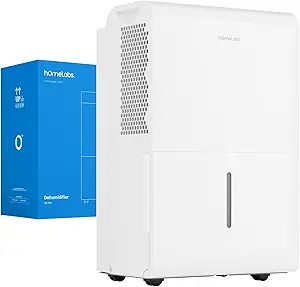 |
| Best Seller A high-volume bestseller chosen again and again | AEOCKY RHEA 80-Pint Dehumidifier |  |
yaufey 120-Pint Dehumidifier

| Capacity | 120 pints |
|---|---|
| Tank Volume | 1.06 gallons |
| Wattage | 355 watts |
| Air Flow Capacity | 106 cfm |
| Dehumidification Capacity | 15 gallons_per_day |
This yaufey 120-pint dehumidifier is built to handle very large, damp spaces such as basements, garages, and open-plan areas. It removes up to 120 pints per day in extreme conditions and offers both manual tank and continuous drain options, so you can run it unattended with the included hose or use the 1.06 gallon tank and its auto shut-off. Controls are simple thanks to a touch LED panel with four preset modes—Sleep, Living, Basement, and Continuous—and three fan speeds to balance performance and noise. Energy Star certification and a 355-watt rating mean it runs more efficiently than many heavy-duty models, and the unit reports humidity and temperature with fast sensors for tight control. Practical details include a washable filter, ergonomic handles, castors for mobility, and a 24-hour timer. Trade-offs are typical for a machine this capable: the tank is relatively small for a 120-pint class so continuous drainage is advisable for long runs, and the unit weighs enough that placement and hose routing need planning.
Best for: Buyers who need a robust, energy-efficient dehumidifier for whole basements or very large rooms and value straightforward controls and continuous operation.
Less Ideal for: People wanting a lightweight, easily portable unit for small rooms or those who prefer a large internal tank that reduces plumbing setup.
- High removal capacity rated up to 120 pints/day for very large spaces
- ENERGY STAR certified for improved energy efficiency at continuous operation
- Two drainage options: visible 1.06 gal tank with auto shut-off and included continuous drain hose
- Multiple modes and precise sensors for simplified humidity control
- Washable filter, ergonomic handles, and universal castors for maintenance and mobility
- Relatively small tank for the dehumidification class, making continuous drain preferable
- Noticeable weight that makes final placement and hose routing more cumbersome
Verdict: A powerful, Energy Star certified choice for homeowners who need continuous, efficient dehumidification across very large spaces.
AprilAire E100 Dehumidifier
| Capacity | 100 pints per day |
|---|---|
| Air Flow Capacity | 280 cfm |
| Operation Mode | Automatic on/off based on %RH set point |
| Wattage | 828 watts |
| Voltage | 120 VAC |
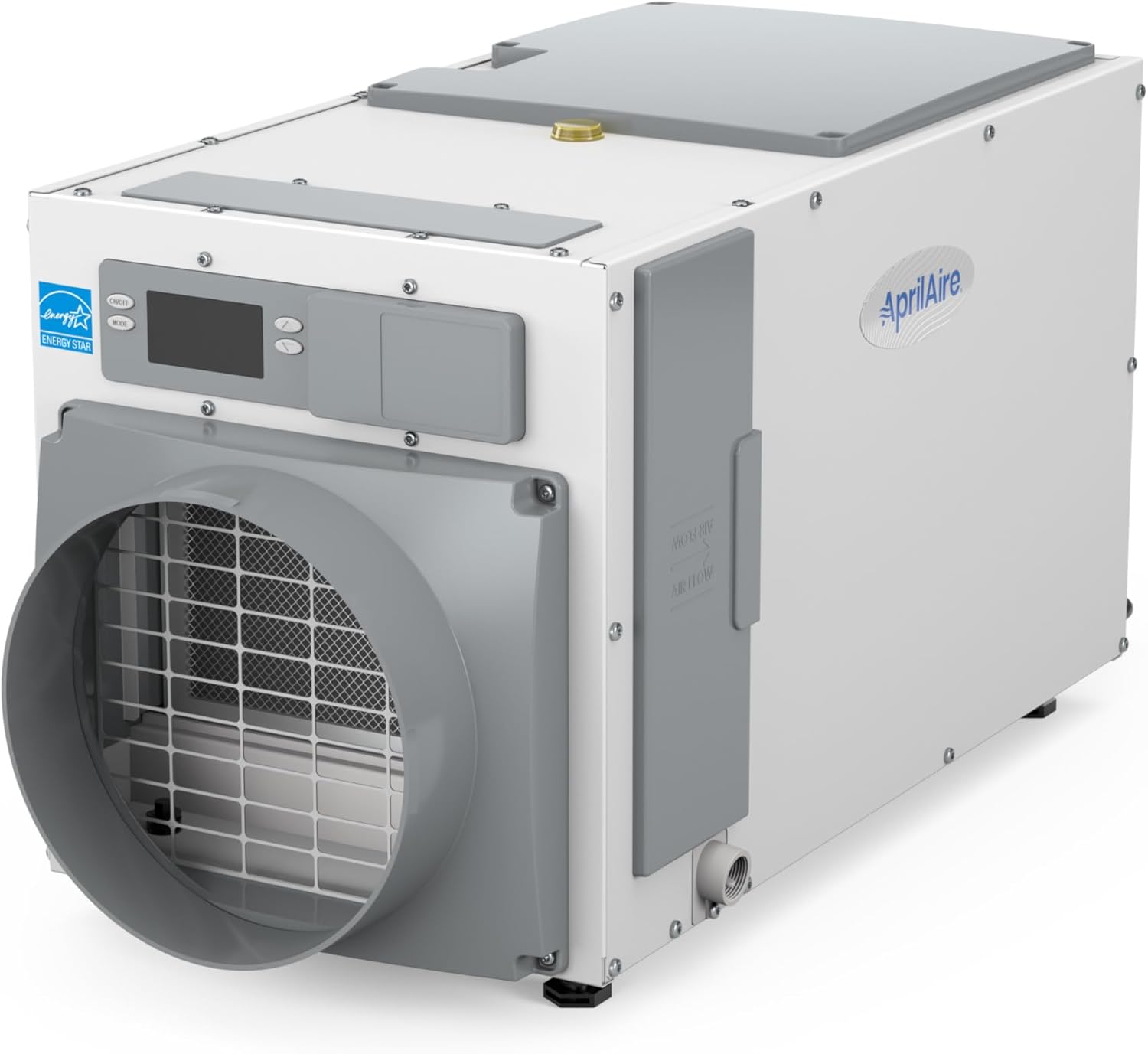
The AprilAire E100 is a high-capacity whole‑home dehumidifier built to control humidity in large houses, basements, or sealed crawl spaces. It removes up to 100 pints per day and can be ducted into HVAC systems or run standalone, with a top or front-mounted control for easy access. The unit uses automatic on/off based on a relative humidity set point and provides continuous draining so you avoid emptying a collection tray. Notable features include energy‑efficient operation (ENERGY STAR Most Efficient), a washable MERV 8 filter, corrosion-resistant aluminum coils, and a digital display that simplifies setup and monitoring. Practical benefits for large homes include robust airflow (280 CFM) and reliable daily moisture removal to reduce mold, mildew, and wood damage risk. Important trade-offs are the unit's commercial price tier and single fan speed, which limit fine-grained airflow control, and the requirement for 120VAC 60 Hz power so it is not suitable for 50 Hz installations. Installation may require basic HVAC or plumbing work for ducting and drain hookup.
Best for: Buyers who prioritize strong, reliable moisture removal for large homes or finished basements and want a durable, energy-efficient system they can integrate with HVAC ducting.
Less Ideal for: People seeking a low-cost portable unit for a single room or users who need variable-speed fan control for precise airflow management.
- High dehumidification capacity: removes up to 100 pints per day suitable for large homes.
- ENERGY STAR Most Efficient rating for reduced energy use compared with older high-capacity units.
- Ductable design with top or front control mounting for flexible installation with HVAC systems.
- Continuous drain option and no water tray make maintenance low effort for whole‑house use.
- Corrosion-resistant aluminum coils and washable MERV 8 filter improve longevity and reduce upkeep costs.
- Single-speed operation limits adjustability of airflow in varied spaces.
- Higher upfront cost consistent with commercial-grade whole-home equipment.
- Requires proper installation for ducting and drain connections which may need a pro.
Verdict: If you need a durable, energy‑efficient dehumidifier that can handle whole‑house moisture control up to about 5,500 sq ft, the AprilAire E100 delivers high daily capacity and HVAC integration for long-term performance.
Waykar YDZ-80 Dehumidifier

| Capacity | 80 pints |
|---|---|
| Floor Area | 5000 square_feet |
| Wattage | 300 watts |
| Air Flow Capacity | 147 cfm |
| Operation Mode | Auto, Continuous |
The Waykar YDZ-80 is a high-capacity portable dehumidifier built for large spaces such as basements and big living areas. It removes up to 80 pints per day in hot, humid conditions and offers both auto and continuous modes so you can let the unit manage humidity or run it nonstop for heavy dampness. Notable features include 2025 Energy Star certification, an auto-defrost system that lets it operate in cooler basements, a self-drying function to limit internal moisture after shutdown, and an auto air-swing to distribute dry air more evenly. Practical touches like a visible water tank with anti-overflow, included drain hose for continuous drainage, washable filter, 24-hour timer, two fan speeds, casters and a top handle make it straightforward to move, maintain, and schedule. The unit is reasonably efficient at 300 watts but has a relatively small tank compared with its capacity, so buyers should expect to use the continuous drain option for unattended operation in very damp environments.
Best for: Buyers who want a practical, energy-conscious solution for controlling humidity across large rooms or basements and who value easy maintenance and flexible drainage options.
Less Ideal for: People seeking silent, low-profile units for small bedrooms or those who prefer large built-in tank capacity without using a continuous drain setup.
- High moisture removal rated at 80 pints per day for large rooms and basements
- 2025 Energy Star certified for better energy efficiency
- Auto-defrost and self-drying features extend reliable operation in cool or infrequently used spaces
- Includes drain hose and anti-overflow visible tank for flexible continuous drainage
- Wheels, top handle, washable filter and 24-hour timer simplify mobility and maintenance
- Water tank capacity (0.92 gallons) is small relative to daily removal rate, making continuous drain advisable for heavy use
- Only two fan speeds limit fine-grain airflow control
Verdict: A high-capacity, Energy Star dehumidifier designed to efficiently dry large homes and basements while offering practical features for easy drainage and maintenance.
AEOCKY LEO-Lite 74 Pint Dehumidifier

| Capacity | 74 pints per day |
|---|---|
| Tank Volume | 1.45 gallons |
| Floor Area | 4500 square_feet |
| Operation Mode | Auto |
| Other Special Features of the Product | Timer |
The AEOCKY LEO-Lite is a high-capacity compressor dehumidifier built for large, damp spaces like basements. It removes up to 74 pints per day under peak conditions and uses a rotary compressor and a 3+2 evaporator/condenser layout to prioritize efficiency while keeping noise low. Controls include an intelligent humidistat with fast humidity sensing, an auto mode and timer, plus power-off memory for automatic recovery after outages. A 1.45 gallon tank and included drain hose let you choose between emptying the tank or continuous drainage. The unit meets ENERGY STAR Version 6.0 efficiency standards, so it runs more economically than many older basement models and includes an auto-defrost system to keep working in cooler basement temperatures. It is fairly quiet at low speed and is aimed at continuous or near-continuous operation for moisture control. Trade-offs are its single-speed fan control and relatively large footprint compared with tiny portable units, so it is best where sustained extraction and energy savings outweigh simple portability.
Best for: Buyers who want an efficient, high-capacity dehumidifier to control persistent basement humidity and reduce energy use over long runtimes.
Less Ideal for: If you need a lightweight, highly portable unit for small rooms or infrequent use, a compact low-capacity dehumidifier is a better fit.
- High dehumidification capacity rated at 74 pints per day for heavy basement humidity
- ENERGY STAR Version 6.0 rating for improved seasonal energy efficiency
- Auto-defrost keeps the unit operating in cool basement temperatures
- Included drain hose plus 1.45 gallon tank enables continuous drain or manual emptying
- Quiet operation for its class thanks to rotary compressor and low fan noise
- Single speed setting limits fine-grained control of airflow and sound
- Relatively large and heavier than compact room dehumidifiers
Verdict: Choose the LEO-Lite when you need a quiet, energy-efficient, high-capacity dehumidifier built to run continuously in a basement.
MIONJO V3 Dehumidifier

| Dehumidification Capacity | 80 pints_per_day |
|---|---|
| Capacity | 1.72 gallons |
| Operation Mode | Automatic |
| Other Special Features of the Product | 90° adjustable air outlet / humidity sensing / sleep mode / child lock / 24-hour timer / continuous dehumidification |
The MIONJO V3 is a compressor dehumidifier built to handle large spaces — the manufacturer rates it for up to 4,500 sq. ft. and an 80 pints-per-day capacity. It is designed for continuous home use with an internal rotary compressor, automatic humidity sensing, auto-defrost and overload protection so it can run in basements or laundry rooms without frequent intervention. Practical touches include a 1.72 gallon tank with auto shutoff plus a drain-hose option for nonstop drainage, 90-degree adjustable airflow for targeted drying, washable filter and caster wheels for easy movement. Energy Star certification and intelligent control reduce runtime and energy draw compared with older models. On the downside the unit is a larger, compressor-style appliance so it will take floor space and requires occasional filter cleaning and potential defrost cycles in very cold spaces. For buyers who prioritize steady, heavy-duty moisture removal the V3 delivers reliable, high-capacity performance across large rooms and basements.
Best for: Buyers who need a dependable, high-capacity dehumidifier for whole-floor or basement use and prioritize continuous performance and protective features over minimal footprint.
Less Ideal for: Those seeking a compact, ultra-light unit for a single small room or occasional spot use should consider smaller portable models instead.
- High dehumidification capacity rated at 80 pints per day suitable for large areas
- Energy Star certification for more efficient, lower-running energy compared with non-certified units
- Auto defrost and overload protection to extend durability during continuous operation
- Dual drainage: 1.72 gallon tank with auto shutoff plus included drain hose for continuous drain
- Adjustable 90° air outlet and caster wheels for targeted drying and easy relocation
- Compressor-style units are physically larger and need floor space compared with small portable models
- Requires periodic filter cleaning and maintenance to keep performance optimal
Verdict: Choose the MIONJO V3 when you need a robust, Energy Star certified compressor dehumidifier able to reliably remove large volumes of moisture across a big house or basement.
hOmeLabs 50 Pint Dehumidifier
| Dehumidification Capacity | 50 pints_per_day |
|---|---|
| Floor Area | 7000 square_feet |
| Wattage | 322 watts |
| Air Flow Capacity | 165 cfm |
| Operation Mode | Continuous |
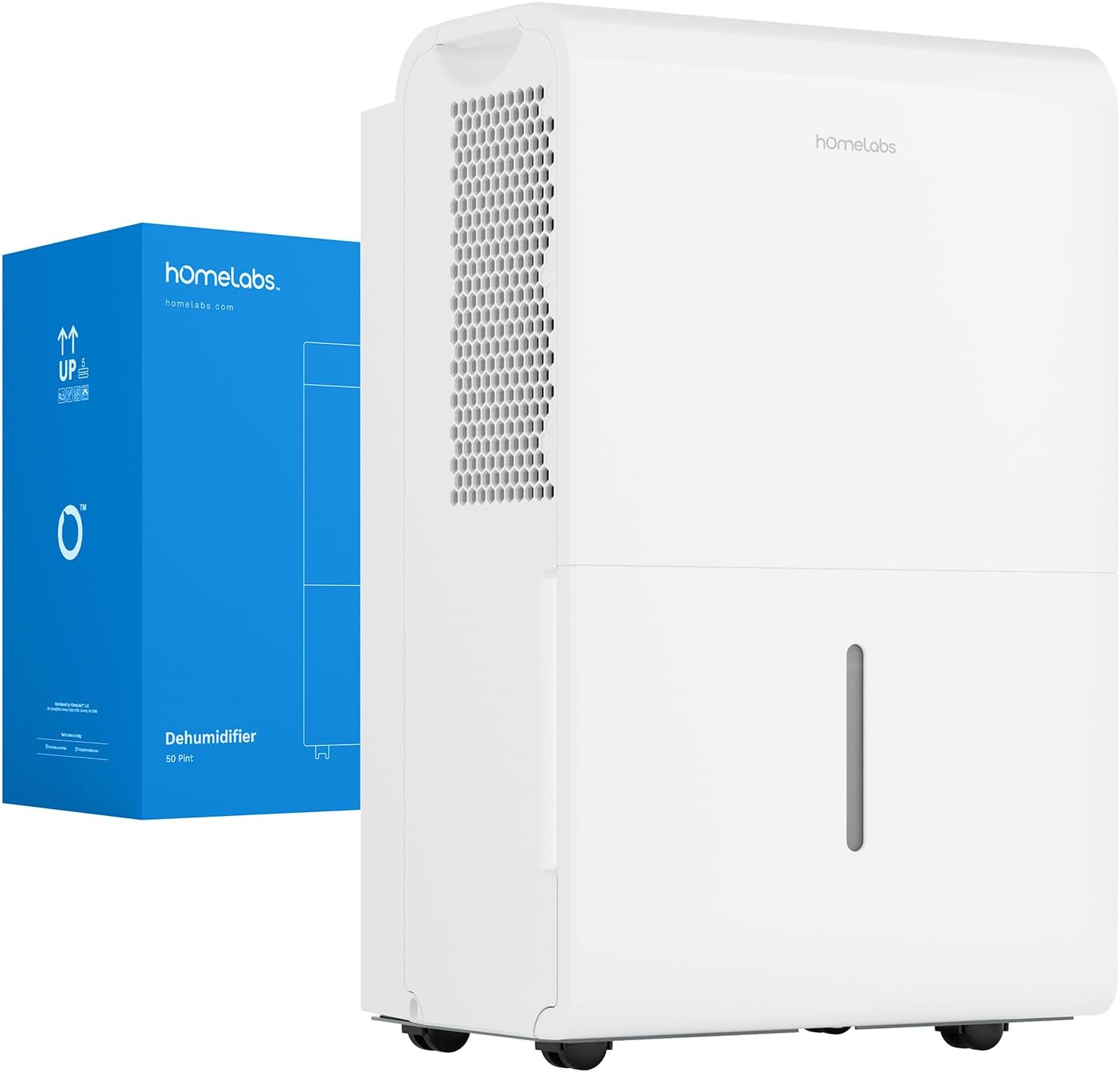
This hOmeLabs unit is a large-capacity dehumidifier aimed at keeping big homes and basements dry. It is rated to remove 50 pints per day (with higher short-term capacity at extreme conditions) and is specified to cover up to 7,000 square feet, so it is typically used in open-plan living areas, basements, or multiple connected rooms. The unit offers Wi‑Fi control for remote adjustments, a touch control panel, two fan speeds including a Turbo mode, and options for automatic shutoff or continuous drainage via a hose outlet. Practical benefits include a removable washable filter, wheels and handles for portability, and an automatic restart/defrost function that helps during outages or colder conditions. Trade-offs are its noticeable weight and size that make placement and lifting harder, and it draws modest power at 322 watts, which is typical for this capacity but worth factoring into ongoing energy use. Noise is subdued but can increase on Turbo mode.
Best for: Buyers who prioritize proven performance and social-proof reassurance and need a unit that can handle whole-floor or large open-plan moisture control with remote operation.
Less Ideal for: Small apartments, single-room use, or buyers who need an ultra-light portable unit should consider smaller, lower-capacity models instead.
- Rated to remove up to 50 pints per day for large residential areas
- Wi‑Fi connectivity and touch controls allow remote monitoring and adjustments
- Continuous drain option plus automatic shutoff and restart for hands-off operation
- Removable washable filter and castor wheels for straightforward maintenance and mobility
- Relatively heavy, making long-distance moves or carrying difficult
- Consumes around 322 watts which can increase electricity use in continuous operation
Verdict: Choose this Wi‑Fi‑enabled 50‑pint hOmeLabs dehumidifier when you need a proven, high-capacity solution to manage humidity across large homes and basements.
AEOCKY RHEA 80-Pint Dehumidifier
| Capacity | 80 pints/day |
|---|---|
| Applicable area | 5500 square_feet |
| Tank Volume | 1.45 gallons |
| Wattage | 280 watts |
| Operation Mode | Auto, Constant Humidity, Continuous, Smart Drying, Sleep |
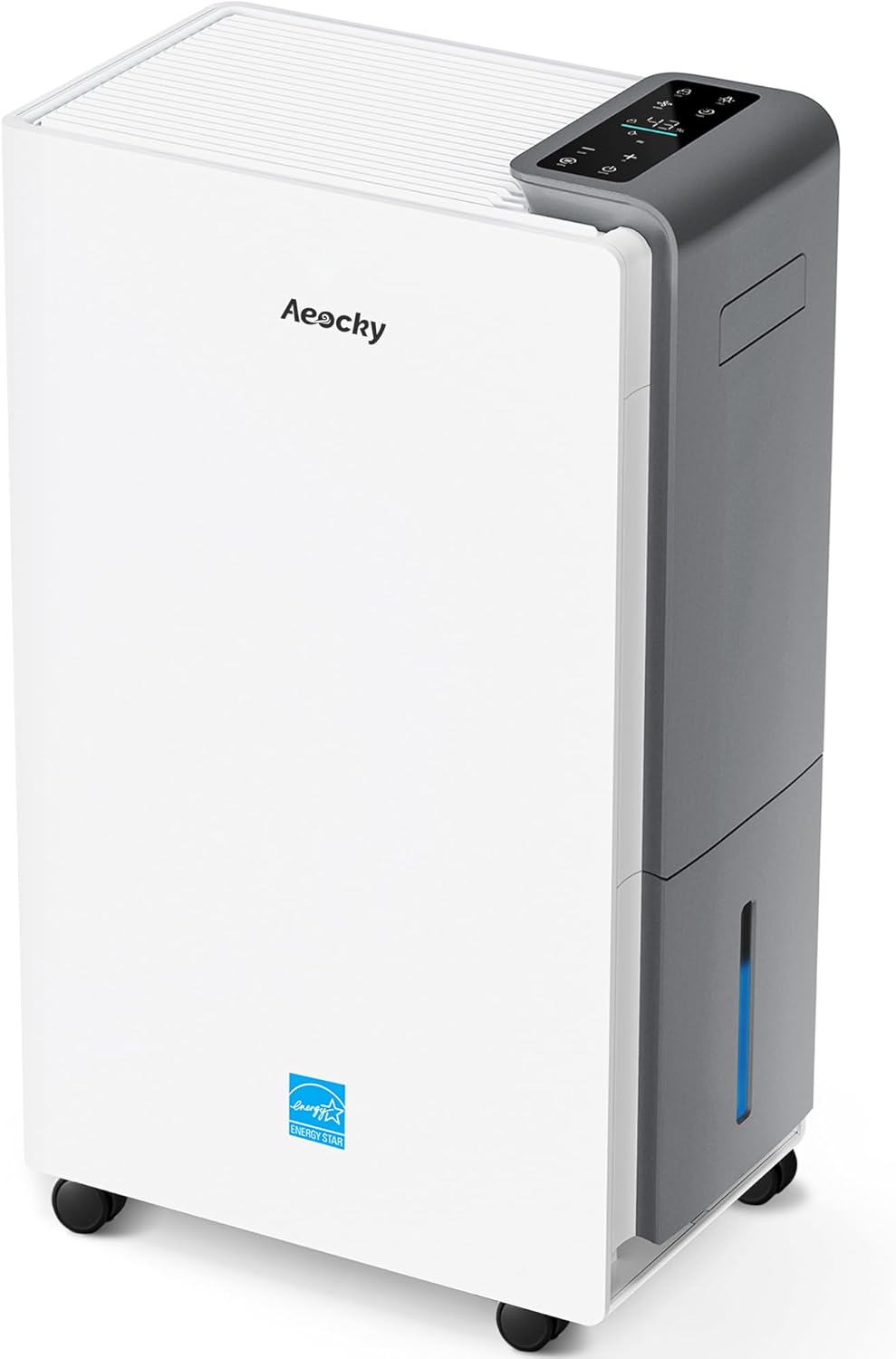
The AEOCKY RHEA-001 is a high-capacity compressor dehumidifier built for large spaces and continuous home use. It removes up to 80 pints per day under hot, humid test conditions and is rated for roughly 5,500 sq ft coverage, so it is intended to run in basements, large living areas, or whole‑house setups. Notable features include an ENERGY STAR Most Efficient 2025 rating for strong energy performance, multiple operation modes (auto, continuous, constant humidity, smart drying, sleep), an adjustable humidistat with fast humidity sensing, and a 1.45 gallon built‑in tank plus included drain hose and garden-hose adapter for continuous drain. The unit emphasizes low-noise operation and low-temperature defrosting to keep working in cool basements. Practical benefits are efficient, sustained moisture removal with lower energy use than many competitors, quiet day‑to‑day operation, and simple continuous‑drain capability that reduces maintenance. Limitations to consider are the single fan speed listing and the relatively modest tank size compared with the daily capacity, which means continuous drain or frequent emptying is needed for heavy use, and the product is a heavier, full‑size compressor unit that is less portable than compact models.
Best for: Buyers who prioritize reliable, energy‑efficient moisture control for large houses or damp basements and who want a low‑noise, long‑running compressor unit with continuous‑drain capability.
Less Ideal for: People seeking a lightweight portable dehumidifier for a single small room or those who want a large on‑board tank to avoid any plumbing for continuous drain.
- High 80 pint/day dehumidification capacity suitable for large homes and basements
- ENERGY STAR Most Efficient 2025 rating for superior energy efficiency
- Multiple operation modes and a responsive humidistat for precise humidity control
- Includes drain hose and garden hose adapter for continuous drainage
- Designed for low‑temperature operation and comparatively quiet performance
- Built for whole‑home use so it is large and less convenient to move between rooms
- 1.45 gallon tank is small relative to daily extraction, requiring continuous drain for heavy use
Verdict: Choose the AEOCKY RHEA-001 if you need a quiet, energy‑efficient 80‑pint dehumidifier built to handle large homes and long continuous operation.
Choosing the Right Dehumidifier for Large House: Key Factors to Consider
Daily Moisture Removal Capacity
Daily moisture removal capacity is the most direct measure of a dehumidifier's ability to control humidity in a large house. Higher-capacity units can extract more pints or liters of water per day, which matters in humid climates, after wet seasons, or in homes with persistent moisture problems.
Choosing a unit with a rated capacity that matches your home size and typical humidity levels prevents constant running and reduces the risk of underperformance. Overrating slightly for larger open-plan areas or houses with multiple damp zones provides headroom during peak humidity periods.
Coverage Area and Airflow
Coverage area is a practical approximation of where a dehumidifier will be effective without mechanical distribution. For large houses, pay attention to airflow rates and how many square feet the manufacturer rates the unit to serve. One high-capacity unit may handle an open-concept main floor but not multiple closed rooms or a full multi-level home.
Air circulation patterns matter: positioning near source rooms, using ceiling fans, or integrating with HVAC return registers can improve effectiveness. A unit's ability to move air efficiently will affect how quickly it reaches and maintains the target humidity in different parts of the house.
Drainage Options and Continuous Operation
Frequent tank emptying is impractical in large homes, so continuous drainage options are important. Look for models with gravity drain spouts or pump-assisted drains that can run to a floor drain, laundry sink, or condensate line for unattended operation.
Pump-equipped units are especially useful when the nearest drain is above the unit or at a higher elevation. Check hose fitting sizes and placement to ensure you can route condensate to a convenient location without obstruction.
Energy Efficiency and Running Costs
A high-capacity dehumidifier can use significant electricity when running continuously. Energy efficiency ratings, such as energy factor or EER values when available, help estimate operating costs. More efficient units lower monthly energy usage and make whole-house humidity control more affordable over time.
Consider programmable humidistats and automatic modes that cycle the unit based on demand to reduce runtime. Also factor in seasonal use patterns; heavy summer operation will impact annual energy consumption more than occasional use.
Noise Level and Placement
Noise matters in living spaces, finished basements, or near bedrooms. High-capacity fans and compressors produce more sound, so review decibel ratings and recommended placement. Placing the unit in a utility area, basement, or mechanical room can reduce perceived noise in occupied rooms.
Look for models with multiple fan speeds and quiet modes to balance performance and comfort. Vibration isolation feet and thoughtful placement away from walls can also minimize transmitted noise.
Maintenance Accessibility and Filter Care
Large-house units will run longer, so ease of maintenance affects long-term performance. Removable, washable air filters extend time between service and help maintain airflow. Accessible panels for cleaning coils and clear instructions for defrost cycles or winter storage reduce the chance of neglect.
Also check for replaceable parts like pumps or sensors and whether routine tasks can be completed without professional service. Lower maintenance overhead keeps the unit reliable and more cost-effective over its life.
Sizing a Unit for Whole-House Coverage
Estimate the square footage and the distinct damp zones in your house. Large open areas require robust airflow, while multiple closed rooms or floors may need more than one unit or strategic placement to achieve balanced humidity control.
When in doubt, choose a unit with higher capacity than the minimum recommendation for your total area, especially if you have a crawlspace, finished basement, or areas prone to condensation. Consider airflow pathways and whether fans or existing HVAC return points can help distribute dehumidified air.
- Measure the area of each level and note rooms with high moisture load
- Account for basement, attic, or attached garage moisture contributions
- Plan for at least one extra pint/day of capacity per particularly humid zone
Integrating a Dehumidifier with Home HVAC
Some large-house setups benefit from integrating a dehumidifier with the HVAC return or using a whole-house model connected to ductwork. Integration can improve distribution and reduce the need for multiple portable units, but it requires compatible ducting and proper sizing to avoid pressure or airflow issues.
If you cannot integrate directly, place the unit in a central location near return vents or high-humidity areas and use the HVAC fan intermittently to help circulate air. Ensure condensate routing is compatible with your HVAC condensate management to prevent conflicts.
- Check duct compatibility and airflow direction before attempting integration
- Coordinate condensate drainage with existing HVAC drain lines
- Use HVAC fan settings to assist dehumidified air distribution when needed
Practical Drainage Setup Options
For unattended operation in a large house, continuous drainage is the preferred option. Gravity-fed drains work when the unit can be placed above a floor drain or sink. If not, pump-assisted units can route condensate upward or across longer distances to an approved drain.
Plan the hose routing to minimize kinks and maintain a slight downward slope for gravity drains. Verify that your chosen drain destination can accept the expected condensate volume during peak operation periods.
- Use a short, smooth hose for gravity drains to reduce blockage risk
- Install a condensate pump if the drain point is higher than the unit
- Consider a dedicated condensate line to avoid interfering with household drains
Placement Tips to Maximize Effectiveness
Position the dehumidifier where it can access open airflow and where moisture generation is highest. Avoid tight corners and place the intake side away from walls or furniture to maintain good circulation. In multi-story homes, placing units on each level or near the main return vents gives more consistent results.
Keep the unit accessible for maintenance while ensuring hoses and power cords are safely routed. If noise is a concern, place the unit in a mechanical room or basement and check that the chosen location still allows adequate airflow from the rest of the house.
- Allow at least several feet of clearance around the unit for airflow
- Place near laundry rooms, basements, or other humid zones when possible
- Avoid placing directly under stairs or in tightly enclosed closets
Seasonal Use and Winter Considerations
In colder months, refrigeration-style dehumidifiers may cycle differently or require automatic defrost modes to avoid icing. If you expect winter operation in an unheated space, choose a unit rated for lower ambient temperatures or be prepared to relocate the unit seasonally.
Some homeowners reduce dehumidifier runtime during dry winter conditions to avoid over-drying indoor air. Use a humidistat to maintain a balanced relative humidity that prevents wood shrinkage while controlling dampness.
- Select a unit with an ambient operating temperature range that matches where you will run it
- Use programmable settings to limit runtime in colder months
- Consider temporary storage procedures for units that will not run year-round
How We Chose the Best Dehumidifier for Large House
Our selection process prioritized capacity, continuous drainage flexibility, and long-term operating cost because those dimensions most affect performance in large houses. We looked for units rated to cover large square footage with high daily moisture removal numbers and verified that recommended airflow and desiccant capacity matched whole-house needs. We evaluated energy efficiency and runtime controls since a high-capacity dehumidifier that consumes excessive power can be costly to run. Drainage options and tank capacity were assessed for convenience in large homes where frequent emptying is impractical. Durability features and ease of routine maintenance were included to ensure units can operate season after season with minimal service. We excluded small-room and portable-only models unsuitable for sustained whole-house duty. Units without clear capacity ratings, lacking automatic humidity control, or missing continuous drain capability were filtered out. Final picks reflect a balance of extraction rate, energy performance, drainage options, and user-friendly maintenance.
Our full evaluation process is outlined in our review methodology.
FAQ
How many pints per day do I need for a large house?
It depends on square footage and humidity sources. Large houses often need higher-capacity units rated for dozens of pints per day or multiple units distributed across levels to handle heavy moisture loads.
Can one dehumidifier handle a multi-level home?
One high-capacity unit can manage an open-plan single level but often struggles with separated floors or many closed rooms. For best results, place units on each level or integrate with HVAC return air for broader distribution.
Do I need a condensate pump for my dehumidifier?
A condensate pump is useful when a floor drain or sink is above the unit or not within easy gravity-drain distance. Pumps enable continuous unattended operation by moving condensate to higher-elevation drains.
How loud are large-capacity dehumidifiers?
They are generally louder than small-room units because of bigger fans and compressors. Noise varies by model and placement; mechanical rooms or basements reduce perceived noise in living spaces.
Will a dehumidifier lower my heating or cooling bills?
A dehumidifier can improve comfort and allow higher thermostat settings in humid months, which may reduce cooling runtime. However, the dehumidifier itself consumes power, so net effects on bills depend on usage patterns and unit efficiency.
Final Verdict
For large houses, prioritize extraction capacity, continuous drainage, and energy efficiency when choosing a dehumidifier. Match capacity to square footage and the home's highest-moisture zones, and plan for drain routing and noise-sensitive placement. Balancing moisture removal with operating cost and maintenance needs will help you pick a unit that keeps the whole house comfortable and safeguards structural materials. Focus on the tradeoffs outlined here to choose confidently between higher capacity, quieter operation, and lower long-term running costs.