
Note: This article contains affiliate links. If you click on these links and make a purchase, we may earn a small commission at no extra cost to you. This helps support our research and content. Read our full affiliate disclosure here.
A damp basement can damage finishes, fuel mold, and make the whole house feel musty. Choosing the right dehumidifier for a small basement matters because undersized units run constantly and oversized units waste energy. You want a compact machine that can pull the right number of pints per day, run quietly near living spaces, and handle cooler basement temperatures. This guide shortlists the top picks for small basements and explains the practical differences buyers should care about, including capacity, efficiency, noise, and maintenance. Read on to see which features matter most and how each shortlisted option meets common basement needs.
Top Picks at a Glance
| Best Overall The best all-around choice for most situations | Aiusevo AS280 21‑Pint Dehumidifier |  |
| Best Quality Built to a higher standard if you want something more solid | Midea 22 Pint Dehumidifier |  |
| Best Value The sweet spot between price and what you get | Spacekey QIG-D02 Dehumidifier |  |
| Best Budget The cheapest option that still gets the job done reliably | TABYIK 35OZ Dehumidifier DH-CS01 |  |
| Top Rated A top-rated pick with lots of positive feedback | VEAGASO VG380 34‑Pint Dehumidifier |  |
| Most Popular A crowd favorite that many people choose with confidence | BEDRED CT11 Dehumidifier |  |
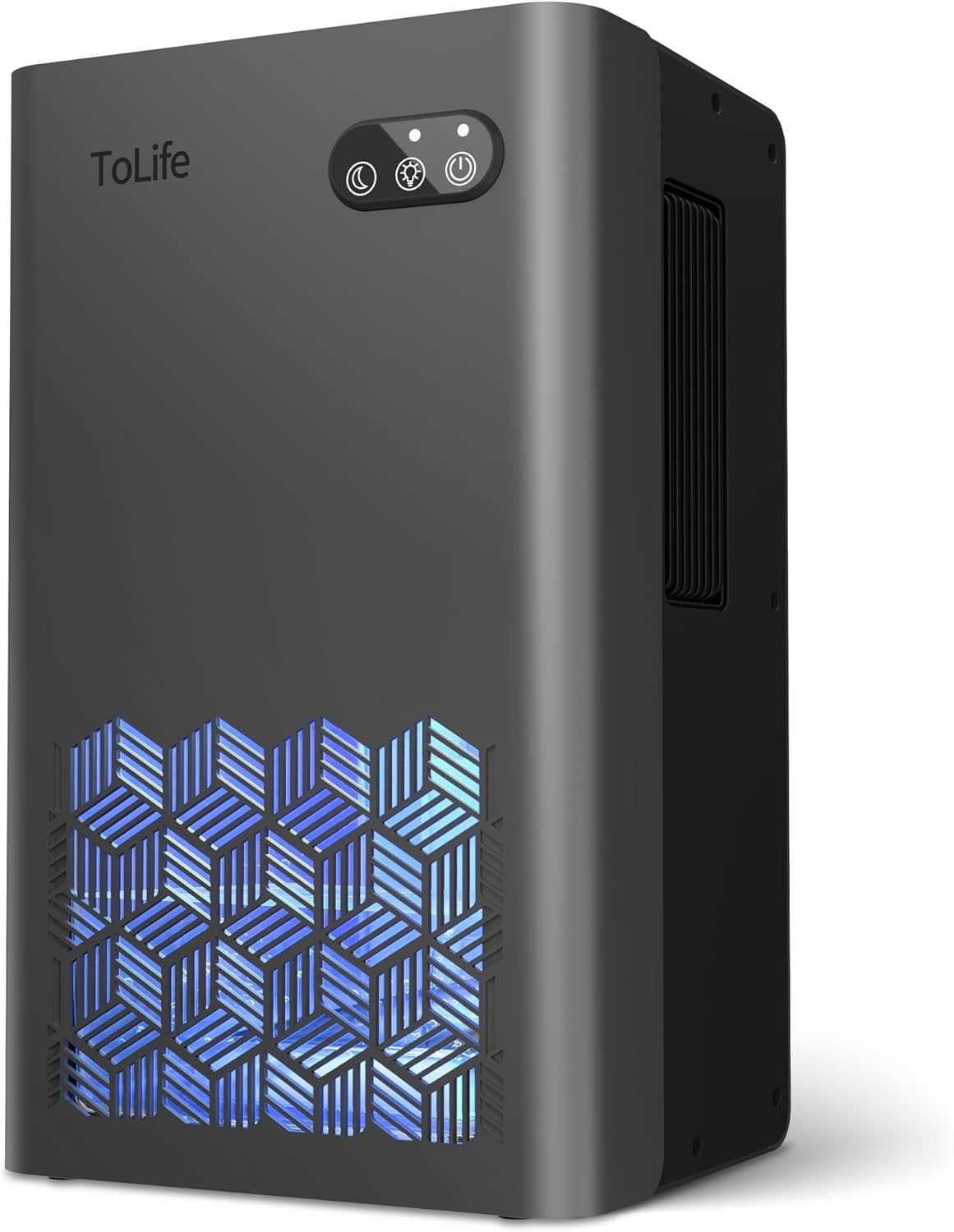
| Best Seller A high-volume bestseller chosen again and again | ToLife Dehumidifier TZ-C2 |  |
Aiusevo AS280 21‑Pint Dehumidifier

| Dehumidification Capacity | 21 pints_per_day |
|---|---|
| Floor Area | 1500 square_feet |
| Operation Mode | Dehumidify Mode, Dry Mode, Continuous Mode |
| Wattage | 120 watts |
| Included Components | 3.28ft Drain Hose |
The Aiusevo AS280 is a compact household dehumidifier that removes up to 21 pints of moisture per day and is meant for basements and other moderately damp spaces. It offers three operation modes (Dehu, Dry, Continuous) and two fan speeds, so you can target steady humidity control, speed up clothes drying, or run nonstop in very damp areas. The unit includes a 2L removable tank with an auto shutoff and a 3.28 ft drain hose for continuous gravity drainage, plus a digital control panel with timer, child lock, and adjustable humidity setpoints. Portable features like lift handles and 360-degree wheels make it easy to move and position, and automatic defrost and restart protect performance in cooler conditions. Practical limitations are the modest tank volume relative to daily removal rate and the lack of a pump for forced drainage, which means continuous drain requires a lower outlet. Noise and exact energy use will vary with fan speed but the 120 W rating suggests moderate power draw. For a small basement this unit balances performance, controls, and portability well.
Best for: Buyers who want a capable, easy-to-move dehumidifier for a small basement or large room and value simple, flexible controls and a continuous drain option.
Less Ideal for: People who need industrial or whole-house dehumidification, require pump-assisted drainage to a higher outlet, or want very quiet units with many fan speed settings.
- Removes up to 21 pints per day suitable for small basements and large rooms
- Three operation modes plus adjustable humidity control for flexible use
- Includes continuous drain hose and auto shutoff to reduce manual emptying
- Portable design with lift handles and 360° wheels for easy placement
- Smart control panel with timer and child lock for convenient operation
- 2L water tank is small compared with daily removal capacity so frequent emptying without continuous drain
- No built-in condensate pump so gravity drainage requires a lower drain point
- Limited to two fan speeds which reduces fine-grained noise and airflow control
Verdict: A compact, portable 21‑pint unit that delivers flexible humidity control and easy continuous drainage, making it a practical choice for small basements.
Midea 22 Pint Dehumidifier

| Dehumidification Capacity | 22 pints_per_day |
|---|---|
| Floor Area | 1500 square_feet |
| Tank Volume | 0.8 gallons |
| Wattage | 295 watts |
| Air Flow Capacity | 135 cfm |
The Midea 22 Pint Dehumidifier is a compact, performance-focused unit for small basements and rooms that removes up to 22 pints of moisture per day while offering smart controls and energy-efficient operation. It runs quietly at about 47 dBA, has two fan speeds plus a turbo mode for faster moisture removal, and supports continuous drainage via a hose connection so you can run it unattended. The reusable filter, auto defrost, and auto restart after power loss add reliability for basement use. Wi‑Fi connectivity and voice control let you monitor and adjust humidity remotely, and the programmable timer helps manage runtime and energy use. Limitations include a relatively small 0.8 gallon tank that will fill quickly in very damp conditions and a two-speed fan system that gives less fine-grained control than variable-speed compressors. For routine moisture control in small basements, laundry rooms, or bedrooms this unit balances quiet, smart features, and energy savings, though extremely damp environments may need a larger-capacity machine.
Best for: Buyers who prioritize steady moisture removal and smart remote control for a small basement or similar rooms and want an energy-efficient, quiet unit they can set and forget.
Less Ideal for: Users with very large or extremely damp basements who need higher daily extraction or a larger tank should consider higher-capacity models instead.
- Removes up to 22 pints per day suitable for spaces up to 1,500 sq. ft.
- Wi‑Fi and voice control for remote monitoring and adjustments
- ENERGY STAR certified for more efficient operation
- Quiet operation around 47 dBA for use in living spaces
- Auto defrost, auto restart, and continuous drain option for unattended use
- 0.8 gallon tank is small and may require frequent emptying in very humid conditions
- Only two fan speeds limit fine-grained humidity control compared with variable-speed units
Verdict: A quiet, energy-efficient 22‑pint dehumidifier with smart controls that fits small basements and routine moisture problems where portability and remote operation matter.
Spacekey QIG-D02 Dehumidifier

| Floor Area | 1000 square_feet |
|---|---|
| Capacity | 95 fluid ounces |
| Dehumidification Capacity | 40 pints_per_day |
| Wattage | 88 watts |
| Number of Speeds | 2 |
The Spacekey QIG-D02 is a compact residential dehumidifier intended for bedrooms, bathrooms, closets, RVs and small basements up to about 1,000 sq ft. It uses dual semiconductor technology and offers two operating modes: a higher-power setting for faster moisture removal and a sleep mode for near‑silent operation. A large 95‑ounce tank and automatic shutoff reduce the frequency of emptying and protect against spills, while a built-in handle and modest footprint make it easy to move between rooms. It also includes a 7‑color ambient LED that can serve as a night light and simple controls for switching modes. Expect practical performance for localized damp spots and seasonal humidity control, but note the 40 pints/day dehumidification rating is a laboratory-style figure and actual water removal will vary with temperature and room conditions; very damp or larger unfinished basements may need a higher-capacity compressor unit. The QIG-D02 excels as a quiet, portable solution where space and noise matter, with straightforward maintenance and safety features.
Best for: Buyers who want a low-noise, portable dehumidifier to control dampness in small basements, bedrooms, bathrooms, or RVs and value easy maintenance and mobility.
Less Ideal for: Not suited for very large or consistently waterlogged basements where high-capacity compressor dehumidifiers are required to quickly lower humidity over wide areas.
- Large 95 oz tank reduces how often you need to empty it
- Two modes including a quiet sleep setting for overnight use
- Auto shutoff with full‑tank indicator prevents spills
- Compact, lightweight design with integrated handle for easy relocation
- 7‑color LED provides gentle ambient lighting for bedrooms or closets
- Semiconductor (thermoelectric) design limits heavy-duty removal compared with compressor dehumidifiers
- Performance depends on ambient temperature and humidity so output can be much lower in cool basements
Verdict: A quiet, portable 95‑oz unit that’s a practical choice for controlling damp spots in small basements and other compact spaces.
TABYIK 35OZ Dehumidifier DH-CS01

| Tank Volume | 1000 ml |
|---|---|
| Dehumidification Capacity | 0.45 liters_per_day |
| Wattage | 40 watts |
| Number of Speeds | 1 |
| Floor Area | 280 square_feet |
The TABYIK 35OZ DH-CS01 is a small, portable Peltier dehumidifier meant to remove light moisture from confined spaces. It runs continuously on a single speed and can collect up to about 450 ml (16 oz) per day in warm, high-humidity conditions, storing water in a transparent 1000 ml tank with an auto shutoff that stops the unit when the tank nears full. Its 28 dB noise level and seven-color light make it unobtrusive in a bedroom or office, and the low 40 watt power draw keeps running costs down. The unit is easy to move with a built-in handle and simple one-button controls, and routine maintenance is limited to cleaning the rear intake filter and emptying the tank. As a Peltier device it does not match compressor dehumidifiers for high-capacity or cooler basement conditions, so expect modest dehumidification and slower water removal in lower temperatures or larger damp basements.
Best for: Buyers on a tight budget who need an inexpensive, low-energy unit to reduce mild dampness in small enclosed areas and want a quiet, easy-to-use device.
Less Ideal for: Homes needing rapid moisture removal or basements that are cool, very damp, or larger than a small room should choose a higher-capacity compressor dehumidifier instead.
- Quiet operation around 28 dB suitable for undisturbed rooms
- Low power consumption at 40 watts keeps energy use minimal
- Transparent 1000 ml tank with auto shutoff for safe unattended use
- Compact and portable with a built-in handle for easy placement
- Peltier dehumidification yields low daily extraction (about 0.45 liters/day), so slow in cooler or very damp spaces
- Single-speed control limits ability to adjust performance to conditions
Verdict: An affordable, ultra-quiet small-room dehumidifier that saves on energy but is best for light damp control rather than heavy-duty basement drying.
VEAGASO VG380 34‑Pint Dehumidifier

| Capacity | 34 pints/day |
|---|---|
| Coverage Area | 2500 square_feet |
| Tank Volume | 2 liters |
| Wattage | 230 watts |
| Operation Mode | Continuous, Dry, Dehumidify |
The VEAGASO VG380 is a compressor dehumidifier built to tackle damp basements and large rooms with up to 2500 sq ft coverage and a claimed 34 pints per day removal. It offers three practical modes — automatic humidity maintenance, a high‑intensity dry mode for laundry, and continuous run for persistently wet spaces — all set via an intuitive LED touch panel that displays real‑time humidity. For hands‑off use you can either empty the 0.53 gallon tank or attach the included drain hose for continuous drainage, and the unit remembers settings after power loss so it restarts where it left off. The compressor and auto‑defrost let it operate reliably in cooler environments down to about 41°F, and noise is kept low (around 35–40 dB) for bedroom placement. Tradeoffs are typical for a compressor unit of this size: the water tank is relatively small so heavy summer loads require frequent emptying if not using the hose, and it is a heavier, bulkier machine compared with tiny portable models. For anyone needing steady, dependable moisture control in a small basement, the VG380 focuses on durability and consistent performance.
Best for: Buyers who prioritize a reliable, season‑ready dehumidifier for basements or large rooms and want a unit that restarts after power loss and works at cooler temperatures.
Less Ideal for: People seeking an ultra‑compact, lightweight dehumidifier for small closets or infrequent spot use should consider smaller portable models instead.
- Compressor-based design with auto defrost allows operation in cooler basement temperatures down to about 41°F
- Three modes (auto humidity, dry for laundry, continuous) provide flexible, task-specific dehumidification
- Continuous drain hose included for unattended, long-term operation in basements or crawl spaces
- Power failure memory restores previous settings automatically after outages
- Relatively quiet operation around 35–40 dB suitable for overnight use
- Small 0.53 gallon tank requires frequent emptying under heavy humidity when not using continuous drain
- Unit weight and dimensions make it less convenient to lift or store compared with ultra‑compact models
Verdict: Choose the VG380 when you need a dependable compressor dehumidifier that handles basements, restarts after outages, and runs quietly while offering continuous drain for unattended use.
BEDRED CT11 Dehumidifier

| Floor Area | 1000 square_feet |
|---|---|
| Tank Volume | 95 fluid ounces |
| Capacity | 5.9 pounds |
| Operation Mode | Intermittent |
| Other Special Features of the Product | 7 Color Ambient Light, Automatic Shutoff, Sleep Mode |
The BEDRED CT11 is a compact thermoelectric dehumidifier intended to reduce humidity in small spaces such as bedrooms, bathrooms, and modest basements up to about 1000 sq ft. It uses semiconductor cooling rather than a compressor, so it runs quietly and is simple to operate with an intermittent operation mode and an automatic shutoff when the 95 oz tank fills. Sleep Mode turns off the lights and lowers noise for overnight use, and the seven-color ambient light gives an optional mood-lighting feature. Practical benefits include easy emptying from the included tank, portability thanks to a lightweight design, and low sound levels that suit living spaces. Important limitations are inherent to semiconductor units: lower capacity compared with compressor dehumidifiers, reduced performance in very cold or very damp basements, and a smaller tank that requires more frequent emptying in high-humidity conditions.
Best for: Buyers who prioritize quiet, low-maintenance dehumidification and want a compact unit that is easy to move and run in living spaces or small basements without frequent intervention.
Less Ideal for: People needing heavy-duty moisture control for large, cold, or very damp basements should choose a higher-capacity compressor dehumidifier instead.
- Quiet thermoelectric operation suitable for bedrooms and living rooms
- Automatic shutoff protects against overfill and simplifies unattended use
- 95 oz removable tank for straightforward water removal
- Sleep Mode and ambient light options for low‑noise nighttime use
- Compact and lightweight for easy placement or moving between rooms
- Semiconductor cooling gives lower moisture removal capacity than compressor models
- Performance drops in cold basement conditions and very high humidity areas
Verdict: Choose the BEDRED CT11 if you want a quiet, portable dehumidifier with auto‑shutoff and sleep‑friendly operation for small basements or living spaces.
ToLife Dehumidifier TZ-C2
| Floor Area | 1000 |
|---|---|
| Tank Volume | 95 fluid ounces |
| Number of Speeds | 2 |
| Wattage | 93 watts |
| Voltage | 220 volts |
The ToLife TZ-C2 uses semiconductor condensation technology to quietly pull moisture from the air and deposit it into a removable 95 oz tank, making it a straightforward option for damp rooms. It offers two operating modes: a higher-power setting for faster moisture removal and a low-speed sleep mode that runs under 30 dB for overnight use. A seven-color LED can act as a night light and the unit includes automatic shutoff when the tank is full or removed, plus handles for easy moving between rooms. Practical benefits include simple setup, low noise, and a compact footprint that fits in basements, bathrooms, or bedrooms. Limitations are its modest rated dehumidification capacity and stated coverage, which means it will be most effective in smaller basement zones or for spot treatments rather than drying a large, very damp basement quickly. Also this model runs on 220 volts, so electrical compatibility should be confirmed for your location.
Best for: Buyers who need an affordable, portable dehumidifier for spot dehumidifying small basement areas, bathrooms, or bedrooms and who prioritize low noise and easy portability.
Less Ideal for: People looking to dry large, very damp basements or whole-house coverage should consider a higher-capacity compressor dehumidifier instead.
- Large removable 95 oz water tank reduces how often you need to empty it
- Quiet sleep mode under 30 dB suitable for nighttime operation
- Portable design with handles for moving between rooms
- Automatic shutoff prevents overflow when the tank is full
- Dehumidification capacity is modest and may be slow in very damp or large basements
- Requires 220 volt power which may not match all household outlets
Verdict: A compact, budget-friendly portable dehumidifier that is best for quiet, small-area moisture control and occasional basement spot treatments.
Choosing the Right Dehumidifier for Small Basement: Key Factors to Consider
Removal Capacity Versus Basement Size
Picking a dehumidifier with the right removal capacity is the key to efficient basement moisture control. Capacity is commonly rated in pints per day under standard test conditions, but small basements need units sized to the actual square footage and expected humidity load.
If you undersize the unit it will run nearly continuously and struggle to lower humidity to a safe level. If you oversize it significantly you may cycle on and off frequently, which can be less efficient and harder on components. For small basements, aim for a capacity that reaches the recommended relative humidity range for the room in a few hours rather than all day.
Cold-Temperature Performance
Basements are often cooler than living spaces, and many dehumidifiers lose efficiency as temperatures drop. Frosting can occur on the coils when operating at low temperatures, which either reduces performance or forces frequent defrost cycles.
Look for units with assured low-temperature operation or automatic defrost modes that let the machine keep pulling moisture without damaging the compressor. Good cold-weather performance matters because otherwise the unit may be ineffective during cooler months when condensation risk remains high.
Noise and Placement Impact
Noise matters when the basement is adjacent to living spaces or used as a home office, gym, or entertainment area. Even small dehumidifiers can produce fan and compressor noise that becomes noticeable in quiet rooms.
Consider the stated decibel level and look for machines with quieter fan settings or a night mode. Placement also affects perceived noise: a unit on a concrete floor or near a wall may sound louder. A compact, low-noise design allows more flexible placement without disturbing household activity.
Drainage Options and Tank Usability
How the unit handles collected water changes daily convenience. Small basements benefit from larger tanks or straightforward continuous-drain setups so you do not empty the receptacle multiple times per day.
Check whether the tank is easy to remove and reseat, whether it has splash guards, and whether the continuous-drain connection uses a standard hose. Some units include a built-in pump for routed discharge; others rely on gravity. For basements where you cannot run a drain downhill, tank size and emptiness frequency become critical.
Energy Use and Operating Cost
Running a dehumidifier continuously can add to energy bills, so efficiency affects long-term cost. Look at how much moisture the unit removes per kilowatt-hour and whether it has an Energy Star or equivalent efficiency indicator.
Features that reduce runtime, such as precise humidistats, programmable schedules, and auto-humidistat control, help lower operating costs. For small basements, a machine that reaches target humidity quickly and cycles appropriately will typically cost less to run than one that runs constantly without reaching set points.
Maintenance and Filter Access
Routine maintenance keeps a dehumidifier effective and hygienic. Basements can produce dust and particulates, so a unit with an accessible, washable filter reduces clogging and preserves airflow.
Check how easy it is to access and clean the filter, whether replacement filters are standard sizes, and whether the unit has simple indicators for filter cleaning. Regular maintenance also includes coil and drain checks; designs that simplify these tasks save time and reduce the chance of downtime.
Sizing a Dehumidifier for Different Small-Basement Layouts
Small basements vary from a finished room to a partially finished utility space. To size a dehumidifier, estimate the square footage and consider factors such as ceiling height, presence of water leaks, and how air-tight the space is. A compact unit that might be adequate for a dry, finished 300-square-foot room will be insufficient for a wet utility basement of the same footprint.
When in doubt, favor a marginally higher capacity with better cold-climate performance rather than the absolute smallest model. Reliable humidity control is safer for finishes and indoor air quality.
- Measure the floor area and note ceiling height for better capacity estimation
- Consider humidity sources like laundry, sump pumps, or exterior seepage
- Account for how often you want to empty the tank or run a drain
Installation and Placement Tips
Place the unit where air can circulate freely around it and where the intake and exhaust are not obstructed. Avoid corners and put the machine a few inches from walls. If using continuous drain, plan the hose route to avoid kinks and ensure downhill flow or confirm pump capability.
Elevating the unit a few inches can help with drainage and reduce dust intake from the floor. For finished basements, consider vibration-absorbing pads to reduce noise transmission through the floor.
- Keep the unit clear of obstructions and allow airflow on all sides
- Use a flat, stable surface; consider a drip tray under the unit
- Verify access for maintenance and filter cleaning when selecting placement
Managing Humidity Targets and Controls
Aim for a relative humidity between 45 and 55 percent in basements to balance mold prevention and comfort. Many modern dehumidifiers include adjustable humidistats and programmable settings that let you maintain a steady target without manual intervention.
Use built-in timers or connect the unit to a smart plug for scheduled operation if you want control over runtimes. For spaces used intermittently, periodic operation to hold humidity below critical levels is more energy efficient than continuous running.
- Set a clear humidity target and program the unit accordingly
- Use lower fan speeds at night to minimize disturbance
- Consider using an independent hygrometer to verify performance
Noise Reduction and Quiet Operation Strategies
To reduce perceived noise, choose a unit with lower decibel ratings and multiple fan speeds. Running the dehumidifier on a lower speed often provides adequate moisture removal while producing less sound.
Additional strategies include placing the unit on rubber feet, orienting intake away from living spaces, and locating the unit where walls and furniture will help muffle sound. For basements with adjacent bedrooms, prioritize models emphasizing quiet operation.
- Compare decibel levels and use the lowest effective fan speed
- Add vibration-damping mats to cut transmitted noise
- Position exhaust away from quiet areas when possible
Winter Use and Frost Management
If your basement gets cold in winter, choose a dehumidifier with an automatic defrost or a low-temperature mode to prevent coil icing. Units without frost mitigation may stop removing moisture effectively as frost builds, then cycle into defrost which reduces efficiency.
Understand how the unit handles frost and whether you need to move it to a warmer location during the coldest months. Some compact models are specifically rated for cooler temperatures and will perform reliably year-round.
- Look for automatic defrost when basement temperature can drop below 60 degrees F
- Avoid units that require frequent manual defrost in cold basements
- Consider intermittent operation during extreme cold to limit icing
How We Chose the Best Dehumidifier for Small Basement
We focused on characteristics that matter specifically for small basement use rather than general home dehumidification. Our selection process prioritized measured moisture removal rates scaled to typical small-basement square footage, reliable performance at cooler temperatures, and real-world noise and runtime behavior. Evaluation criteria included humidity removal capacity at realistic basement temperatures, energy efficiency and estimated daily runtime, low operating noise for adjacent living areas, condensate handling options (tank size and continuous drain readiness), and ease of upkeep such as filter access and frost management. We also considered unit footprint and portability because space is often limited in basements. We excluded large-capacity commercial units and models that require complex installation. Units that lacked basic safety features or clear continuous-drain options were not considered. The result is a set of practical choices suited to small basement layouts and typical household humidity profiles.
Our full evaluation process is outlined in our review methodology.
FAQ
How big a dehumidifier do I need for a 300-square-foot basement?
It depends on ceiling height and moisture load, but for a typical small basement you want a unit rated to remove enough pints per day to lower humidity within a few hours. If the space is very damp or has active leaks, choose a slightly higher capacity and ensure good drainage.
Can I run a dehumidifier in a cold basement during winter?
Yes, but only if the unit is designed for low-temperature operation or has an automatic defrost mode. Units without frost management will lose efficiency or stop working properly when coils ice over.
Is a continuous drain necessary in a small basement?
Continuous drain is convenient and reduces maintenance because you do not need to empty the tank. If a gravity drain is not available, look for units with an internal pump or accept the need for periodic manual emptying depending on tank size.
How noisy are small dehumidifiers typically?
Noise varies by model and fan speed, but many compact models run at tolerable levels for adjacent living areas on low settings. Decibel ratings give a baseline, but placement and surface contact also influence perceived noise.
How often do I need to clean the filter?
Clean or rinse the washable filter every few weeks in dusty basements, or follow the manufacturer's recommended schedule. Regular filter maintenance preserves airflow and efficiency and reduces dust buildup inside the unit.
Final Verdict
For small basements, prioritize a dehumidifier sized to the room's area and moisture load, with reliable cold-climate performance and drainage options that fit your space. Balance capacity against noise and energy use so the unit can run effectively without becoming disruptive. Focus on units that make maintenance simple and offer automatic humidity control. Choosing based on those tradeoffs will keep your basement dry, help prevent mold, and minimize long-term operating costs.