
Note: This article contains affiliate links. If you click on these links and make a purchase, we may earn a small commission at no extra cost to you. This helps support our research and content. Read our full affiliate disclosure here.
High humidity makes basements, laundry rooms, and ground-level living spaces feel muggy and can encourage mold and musty odors. A dehumidifier with pump simplifies upkeep by removing moisture and moving it to a higher sink or drain so you do not need to empty water buckets frequently. This guide covers seven top-rated dehumidifiers with pump that we shortlisted for realistic home use. We evaluate them on capacity, drainage reliability, and ease of upkeep so you can match performance to the size and wetness of the room. Read on to see which features matter most for steady, low-effort moisture control.
Top Picks at a Glance
| Best Overall The best all-around choice for most situations | AEOCKY LEO Dehumidifier |  |
| Best Quality Built to a higher standard if you want something more solid | Waykar YDZ-150PM Dehumidifier |  |
| Best Value The sweet spot between price and what you get | DECIUU 100‑Pint Dehumidifier |  |
| Best Budget The cheapest option that still gets the job done reliably | Midea 50 Pint Dehumidifier with Pump |  |
| Top Rated A top-rated pick with lots of positive feedback | DuraComfort DH50PWM 50-Pint Dehumidifier | 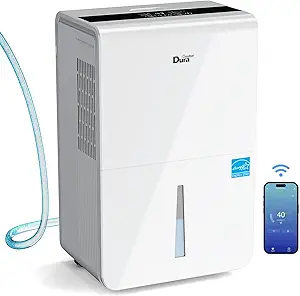 |
| Most Popular A crowd favorite that many people choose with confidence | hOmeLabs 50-Pint Dehumidifier with Pump |  |
| Best Seller A high-volume bestseller chosen again and again | avylo 90-Pint Dehumidifier ADC018 |  |
AEOCKY LEO Dehumidifier

| Capacity | 80 pints/day |
|---|---|
| Applicable Area | 4500 square_feet |
| Tank Volume | 1.45 gallons |
| Operation Mode | Automatic |
| Included Components | Drain Hose |
The AEOCKY LEO is a high-capacity compressor dehumidifier built around an integrated upward pump for automatic drainage and continuous operation. It is typically used in basements, large living areas, or anywhere a convenient elevated drain point is needed; the included 5 m hose and pump let you push water uphill to a sink or drain so you do not have to empty the tank. Key features include ENERGY STAR Most Efficient 2025 certification, a reported 80-pint daily capacity under hot, humid conditions, a 1.45 gallon internal tank, timer and automatic humidistat control. The maker emphasizes a low-vibration pump design and quieter operation than many pump models, plus a high-efficiency compressor and multi-row heat-exchange layout for better performance per watt. Trade-offs are typical for this class: a large-capacity compressor unit is bulkier and may draw more power when running at peak output, and real-world capacity falls with cooler, less humid conditions. If you need hands-off, heavy-duty dehumidification with built-in pump drainage, the LEO targets that use case effectively.
Best for: Buyers who want a hands-off, high-capacity dehumidifier for basements or large rooms and prioritize built-in pump drainage and certified energy efficiency.
Less Ideal for: People needing a compact, ultra-quiet unit for small bedrooms or occasional spot use should consider smaller non-pump models instead.
- Built-in pump with 5 m hose enables automatic upward drainage without a floor drain.
- ENERGY STAR Most Efficient 2025 rating signals high energy efficiency for this capacity class.
- High reported dehumidification capacity (80 pints/day) suitable for large, damp spaces.
- Automatic humidistat, timer and auto operation simplify set-and-forget use.
- Large-capacity compressor units are bulkier and may be noisier at higher output levels.
- Actual pint-per-day output varies significantly with temperature and relative humidity, so peak numbers require hot, very humid conditions.
Verdict: Choose the LEO if you need continuous, high-capacity dehumidification with a reliable built-in pump and top-tier energy efficiency.
Waykar YDZ-150PM Dehumidifier

| Capacity | 150 pints |
|---|---|
| Tank Volume | 1.85 gallons |
| Wattage | 520 watts |
| Air Flow Capacity | 212 cfm |
| Operation Mode | Auto, Continuous |
The Waykar YDZ-150PM is a heavy-duty dehumidifier built to remove large amounts of moisture from basements, warehouses, and other large indoor spaces. It claims up to 150 pints per day (95°F, 90% RH) and an 18.75 gallon/day dehumidification capacity, and it pushes air at 212 CFM for broad coverage. Key practical features include a built-in pump that can lift condensate nearly 10 feet for unattended drainage, three drain options (pump, gravity hose, or internal tank), an auto-defrost function for cold environments, and a self-drying mode that reduces internal moisture after use. The unit offers two fan speeds, a digital touch control panel with humidity setpoints and a 24-hour timer, plus a washable filter and casters for mobility. Trade-offs are its large physical footprint and substantial weight compared with residential models, and it consumes notable power when running at high capacity despite Energy Star certification. For buyers who need robust continuous drainage and fast moisture removal in large spaces, this model delivers strong real-world performance.
Best for: Buyers who prioritize rapid, high-volume moisture removal and need reliable unattended drainage for large basements, workshops, or commercial rooms.
Less Ideal for: If you need a compact, lightweight dehumidifier for small bedrooms or occasional use, this industrial-capacity unit is overkill and harder to maneuver or store.
- Very high moisture removal rate suitable for large areas up to 7,000 sq. ft.
- Built-in pump supports upward drainage up to about 9.84 feet for unattended operation.
- Multiple drain options including tank, pump hose, and gravity hose for flexible installation.
- Energy Star certified with auto-defrost and self-drying features that improve reliability and reduce maintenance.
- Large and relatively heavy compared with typical home dehumidifiers, making placement and storage more demanding.
- 1.85 gallon tank still requires occasional emptying if pump or continuous drain is not used.
Verdict: Choose the Waykar YDZ-150PM when you need a powerful, pump-equipped dehumidifier that can reliably remove large volumes of moisture and drain automatically in big spaces.
DECIUU 100‑Pint Dehumidifier

| Capacity | 100 pints |
|---|---|
| Floor Area | 5000 square_feet |
| Tank Volume | 1.45 gallons |
| Wattage | 300 watts |
| Air Flow Capacity | 9396 cubic_feet_per_hour |
This DECIUU unit is a heavy-duty dehumidifier built to manage very damp, large spaces such as basements, garages, and laundry rooms. It removes up to 100 pints per day under high-humidity conditions and is rated to cover roughly 5,000 sq ft, with three operation modes and a 24-hour timer for scheduled use. The integrated condensate pump can lift water up to 16.4 feet so you can route drainage to sinks or utility drains where gravity drain is not available, and there are also options for the internal tank or a garden-hose connection for continuous draining. Practical touches include 360-degree swivel casters for moving between rooms, a removable washable filter, and ENERGY STAR Most Efficient 2024 recognition for relatively low running cost. Trade-offs are typical for a unit of this capacity: it is fairly heavy and will be louder and draw more power than small portable models, and the pump/hoses add some installation complexity compared with simple bucket-only dehumidifiers.
Best for: Buyers who want a practical, workhorse dehumidifier to control moisture across large or problem areas and who prioritize continuous drainage and energy efficiency over compact size.
Less Ideal for: People who need a lightweight, ultra-quiet unit for small rooms or those who prefer a simple bucket-only dehumidifier for occasional use.
- Built-in condensate pump that drains vertically up to 16.4 ft for unattended continuous drainage
- High dehumidification capacity up to 100 pints per day suitable for very damp, large spaces
- ENERGY STAR Most Efficient 2024 rating for better energy use during extended operation
- Multiple drainage options including internal tank, included drain hose, and garden-hose connection
- Removable washable filter and caster wheels for easier maintenance and mobility
- Relatively heavy and larger footprint compared with small portable dehumidifiers
- Higher power draw and likely louder operation than lower-capacity units
Verdict: Choose this model when you need a powerful, pump-equipped dehumidifier that runs efficiently for continuous moisture control in large, damp spaces.
Midea 50 Pint Dehumidifier with Pump

| Dehumidification Capacity | 50 pints_per_day |
|---|---|
| Floor Area | 4500 square_feet |
| Tank Volume | 1.6 gallons |
| Other Special Features of the Product | Quiet Operation, Built-In Pump, Continuous Draining, Timer, Portable |
The Midea 50 Pint Dehumidifier with Pump is a portable unit intended for whole‑room or basement use where high daily moisture removal is needed. It removes up to 50 pints per day and offers an automatic mode plus adjustable humidity settings, a 1.6 gallon tank, and a built‑in pump so you can route water away for continuous draining without emptying the bucket. The four‑wheel design and timer make it easy to move between rooms and schedule operation when you are away. Notable practical benefits include relatively quiet operation (listed around 47 dBA), Wi‑Fi app control and voice assistant support for remote adjustments, and an easy hose hookup for long‑run drainage. As a renewed unit, buyers should expect prior use and limited warranty coverage compared with new models, and renewal condition can vary. It is a strong pick for high‑moisture areas where pump‑assisted continuous drainage is needed, though buyers who need brand‑new packaging or the longest factory warranty may prefer new units.
Best for: Buyers who need high daily moisture removal with pump‑assisted continuous drainage for basements, large rooms, or damp areas and who want remote control and portability on a budget.
Less Ideal for: Shoppers who prioritize a brand‑new unit with full factory packaging and the longest possible warranty should consider new models instead.
- Built‑in pump enables continuous automatic drainage without manual emptying
- 50 pints per day capacity suitable for large, damp spaces
- Portable four‑wheel design for easy relocation between rooms
- Wi‑Fi and voice assistant support allow remote control and scheduling
- Relatively quiet operation around 47 dBA for night or living‑space use
- This listing is for a renewed unit so cosmetic wear and shorter warranty may apply
- 1.6 gallon tank still requires verification of pump reliability for long continuous runs
Verdict: Choose this Midea model if you want a pump‑equipped dehumidifier that delivers strong daily moisture removal and continuous drainage at a budget‑minded price point.
DuraComfort DH50PWM 50-Pint Dehumidifier

| Capacity | 50 pints |
|---|---|
| Floor Area | 4500 square_feet |
| Tank Volume | 12 pints |
| Wattage | 510 watts |
| Air Flow Capacity | 150 cfm |
The DuraComfort DH50PWM is a large-capacity dehumidifier built for long runs in basements, garages, and laundry rooms where steady moisture control matters. It removes up to 50 pints per day and offers both a built-in pump with a 5 m hose and a gravity drain option, so you can run continuous drainage without frequent emptying. Smart features include 2.4 GHz WiFi app control, humidity setpoints from 30 to 85% RH, a washable filter with a clean reminder, and several operation modes like Comfort, Smart, Continuous, and Laundry Drying. Practical design touches such as wheels, handles, cord storage, and a child lock make placement and daily use easier. Energy Star certification and relatively quiet operation at around mid-40 dB add to its appeal for regular household use. Trade-offs are its large footprint and weight compared with compact units, and it requires 2.4 GHz WiFi for remote features, which may limit connectivity in some homes.
Best for: Buyers who prioritize dependable, continuous moisture removal in large or damp spaces and want the convenience of automatic pump drainage and app control for hands-off operation.
Less Ideal for: People who need a compact, lightweight unit for occasional spot use or those without a compatible 2.4 GHz WiFi network for smart features.
- Built-in pump with included 5 m hose allows automatic drainage up to 16.4 ft
- High dehumidification capacity suitable for spaces up to 4,500 sq ft
- Smart app control with humidity setpoint, timer, and mode selection over 2.4 GHz WiFi
- Energy Star certified and relatively quiet at about 44–48 dB
- Practical features such as washable filter, wheels, handles, and cord storage
- Physically large and heavy compared with portable small-capacity units
- Remote features require 2.4 GHz WiFi which may not work on all home networks
Verdict: Choose this pump-equipped 50-pint dehumidifier when you need reliable, continuous moisture removal in large damp spaces with minimal maintenance.
hOmeLabs 50-Pint Dehumidifier with Pump

| Dehumidification Capacity | 50 pints_per_day |
|---|---|
| Max Capacity | 120 pints (95°F, 90% RH) |
| Floor Area | 7500 square_feet |
| Air Flow Capacity | 135 cfm |
| Number of Speeds | 3 |
This hOmeLabs unit is a heavy‑duty residential dehumidifier that removes up to 50 pints per day (rated at 80°F, 60% RH) and can reach a higher short‑term capacity in very hot, humid conditions. It is typically used in basements, laundry rooms, mudrooms, or other large damp areas and offers three fan speeds plus a Turbo mode for faster moisture removal. The integrated pump and continuous drain option are practical for hands‑off operation when you cannot regularly empty a bucket, and Wi‑Fi control lets you adjust humidity remotely. A digital control panel with Comfort and Continuous presets, timer, auto restart and auto shutoff simplify daily use. The unit is portable on swiveling wheels and has a washable filter for easy maintenance. Expect a fairly large, heavy machine that needs floor space and will consume noticeable power under heavy load, and the pump increases complexity versus basic bucket models. For buyers focused on reliable moisture control in large rooms, the pump and smart controls are valuable; buyers needing a small, quiet, ultra‑compact unit should look elsewhere.
Best for: Buyers who need dependable, hands‑off humidity control for large or frequently damp spaces and prioritize automatic drainage and remote control.
Less Ideal for: Those who need a compact, ultra‑quiet dehumidifier for small rooms or who rarely require continuous drainage should consider smaller portable models instead.
- Built‑in pump enables continuous automatic drainage without manual bucket emptying
- Wi‑Fi connectivity allows remote monitoring and control
- Multiple fan speeds plus Turbo mode for faster moisture removal
- Digital controls, presets, timer and auto restart make operation simple
- Washable filter and casters improve maintenance and portability
- Large and relatively heavy, requiring floor space and careful placement
- Higher power use under Turbo/continuous operation compared with smaller units
Verdict: Pick this model if you want a pump‑equipped, Wi‑Fi capable dehumidifier that removes moisture reliably from large residential spaces with minimal daily maintenance.
avylo 90-Pint Dehumidifier ADC018

| Dehumidification Capacity | 90 pints_per_day |
|---|---|
| Tank Volume | 2.11 gallons |
| Number of Speeds | 3 |
| Wattage | 235 watts |
| Voltage | 115 volts |
The avylo ADC018 is a high-capacity dehumidifier engineered for basements and large rooms, offering up to 90 pints per day and Energy Star Most Efficient 2025 certification. It uses a high-efficiency compressor and optimized airflow to reduce operating cost, and the digital controls and humidity sensor let the unit maintain a set target automatically. A top-mounted 2.11 gallon tank includes a full-tank reminder and auto shutoff, and the built-in pump with a 15 ft lift plus supplied 15 ft drain hose enables continuous unattended drainage or gravity drain setups. The unit also runs relatively quietly with noise levels around 41 dB and includes practical features like a child lock, timer, and multiple safety protections. Trade-offs are typical for a machine this size: it is relatively heavy and bulky compared with small portable models and requires space for proper airflow and drain routing, and users who do not need whole-basement capacity might find it more powerful than necessary.
Best for: Buyers who prioritize reliable, low-cost continuous dehumidification for basements or large areas and prefer a unit with an integrated pump for hands-off drainage.
Less Ideal for: People who need a compact, lightweight dehumidifier for a single small room or those who do not want to accommodate plumbing or hose routing for continuous drain.
- High dehumidification capacity up to 90 pints per day for large spaces
- Built-in pump with 15 ft lift and included 15 ft drain hose for continuous unattended drainage
- ENERGY STAR Most Efficient 2025 certification and efficient compressor for lower operating cost
- Top-mounted 2.11 gallon tank with full-tank reminder and auto shutoff for overflow protection
- Quiet operation around 41 dB with timer and child lock for convenient indoor use
- Physically large and heavy, which can make placement and transport more difficult
- Requires space for proper airflow and drain routing, limiting placement options
Verdict: Choose this unit if you want energy-efficient, high-capacity dehumidification with a built-in pump for reliable, hands-off drainage in basements or large spaces.
Choosing the Right Dehumidifier with Pump: Key Factors to Consider
Dehumidification Capacity (Pints Per Day)
Capacity determines how much moisture a unit can remove in 24 hours. Choose a capacity that matches the square footage and typical dampness of the room. A modestly damp bedroom needs much less capacity than a poorly ventilated basement.
If you undersize the unit, it will run continuously and struggle to reach your target humidity. Oversizing can raise cost and may short-cycle in small spaces. Consider seasonal workload too: summer humidity spikes require higher effective capacity than cooler months.
Pump Lift Height And Hose Routing
An integrated pump lets you route condensate up and away to a sink, standpipe, or other drain. Check the pump's maximum lift height and whether the unit can sustain continuous flow at that elevation. The lift rating determines which drain locations are feasible without additional plumbing.
Also assess the hose diameter and how the manufacturer recommends routing to avoid kinks, air locks, or backflow. Easier access to a clear vertical run will simplify installation and reduce the risk of clogs or seepage.
Energy Use And Run Time
Dehumidifiers can run many hours or even continuously in humid climates, so energy consumption matters. Compare wattage at typical operating conditions and look for efficient defrost and fan controls that limit unnecessary runtime.
Features like dehumidistat control and overnight modes help reduce energy use. For spaces that need constant control, factor operating cost into long-term ownership rather than selecting purely on upfront capacity.
Noise And Placement Considerations
These units are often placed in basements, laundries, or finished living areas where noise can be annoying. Check documented noise levels or real-world user feedback about fan and pump sound. Lower fan speeds and insulated cabinets reduce disturbance.
Also plan placement to allow airflow into the intake and clear access to the pump connections. Placing a unit directly against a wall or in a tight closet can reduce performance and increase noise if airflow is restricted.
Filter Access And Maintenance
Regular cleaning prevents dust and biological growth inside the dehumidifier. Look for washable pre-filters, easy-to-remove covers, and clear condensate pathways that reduce clog risk. Straightforward access shortens maintenance time and encourages regular care.
Maintenance also includes checking the pump and hose for blockages. Units with visible condensate lines or removable pump baskets simplify troubleshooting when drainage slows or fails.
Defrost And Low-Temperature Performance
If you plan to run a dehumidifier in an unheated basement or garage, low-temperature operation matters. Frost can form on the condenser coils, reducing efficiency; units with auto-defrost cycles or low-temperature modes keep extraction steady in cooler spaces.
Consider how the defrost routine affects average run time and whether the pump continues to operate during defrost. Reliable low-temperature performance ensures steady humidity control year-round.
Where To Install A Dehumidifier With Pump
Ideal placement balances airflow, access to a drain, and noise considerations. Place the unit centrally in the room you want to treat, at least several inches from walls, to allow unobstructed intake and exhaust. If the space has multiple problem areas, a single larger-capacity unit near the wettest zone usually works better than multiple undersized machines.
- Allow clearance behind the unit for hose connections and airflow
- Choose a location where the pump can reach a drain without excessive vertical lift
- Avoid placing the unit directly on carpeting; use a hard, level surface or drain pan if needed
Setting Humidity Targets And Controls
Most homeowners aim for a relative humidity between 40 and 50 percent to reduce mold growth and improve comfort. Use the built-in humidistat to set a target and let the unit cycle automatically. For spaces that are intermittently wet after laundry or storms, set a slightly higher target briefly, then lower it when the room stabilizes.
If the unit includes timers, fan-speed presets, or adaptive modes, use them to match runtime to occupancy and seasonal demand. Lower fan speeds reduce noise and energy use but may slow moisture removal; balance speed against comfort preferences.
- Target 40–50% RH for general comfort and mold prevention
- Use timers or schedules for intermittent spaces like holiday homes
- Lower fan speeds for overnight quiet operation
Dealing With Continuous Drainage Problems
Even with a pump, drainage problems can arise from kinks, air locks, or partial clogs. Inspect the hose route for sharp bends and secure the line to prevent sagging pockets that trap water. If the pump cycles but no water flows, prime the hose by allowing the pump to push a small amount through or check for blockages at the discharge fitting.
If your drain line must run outdoors or through a cold area, insulate it to reduce the chance of freezing. Periodic flushing with water or a mild cleaning solution keeps the condensate path clear and reduces biological buildup that causes odors.
- Avoid tight bends and elevation changes that create air pockets
- Secure hose runs with clips or straps to maintain pitch toward the drain
- Insulate exposed runs in unheated areas to prevent freezing
Noise Mitigation Strategies
If noise is a concern, choose a location farther from living areas or run the unit at a lower fan speed during sleep hours. Some placement tricks reduce perceived noise: placing the dehumidifier on a vibration-absorbing mat and ensuring it sits level reduces buzzing and rattle. Keep intake and exhaust pathways clear to avoid strain on the fan that increases sound output.
If the pump produces noticeable clicks during cycling, confirm the unit is on a stable surface and that hoses are not amplifying vibration against hard walls. Small sound-damping barriers between the unit and adjacent surfaces can lower transmitted noise without restricting airflow.
- Use vibration-absorbing pads to reduce rattle
- Maintain a few inches of clearance for airflow and vibration isolation
How We Chose the Best Dehumidifier with Pump
We focused on practical, measurable attributes that matter when choosing dehumidifiers with built-in pumps. First, we prioritized moisture removal capacity relative to room size, using manufacturer capacity ratings and typical room coverage as baselines. Second, drainage performance was a key filter: we assessed whether the pump supports reliable continuous drainage, maximum lift height, and hose compatibility. Third, we examined energy efficiency and runtime features that affect operating cost and daily use, including Energy Star ratings when available and power draw at typical settings. Fourth, we considered noise levels and user controls because many units run in living spaces or finished basements where sound and convenience matter. Finally, durability and serviceability were weighed by looking at filter access, condensate-path design, and documented maintenance needs. We excluded units without an integrated pump or models intended only for industrial use. The resulting short list reflects options that balance capacity, drainage practicality, and everyday usability for residential spaces.
Our full evaluation process is outlined in our review methodology.
FAQ
How much capacity do I need for a damp basement?
It depends on size and how wet the space is. For a mildly damp small basement, a lower-capacity unit may suffice. For large or frequently wet basements, choose a higher-capacity unit rated for larger coverage and continuous operation.
Can the pump push water up several feet to an upstairs drain?
Possibly, but you must match the pump's rated lift height to the vertical distance. Also consider friction loss in long horizontal runs and avoid sharp bends that reduce flow.
Will the pump run during defrost cycles?
That varies by design. Some units pause pump operation during defrost while others continue to move condensate. Check the unit's operational documentation if continuous drainage during defrost is important for your setup.
How often should I clean the filter and condensate hose?
Inspect the filter monthly in dusty environments and clean or replace it per manufacturer guidance. Check the hose for buildup seasonally and flush it if you notice slow drainage or odors.
Is a dehumidifier with pump louder than one without?
Integrated pumps add mechanical noise during drainage cycles, but overall sound depends on fan speed and cabinet insulation. Positioning and pad isolation can minimize perceived difference.
Final Verdict
Choose a dehumidifier with pump by matching capacity to room size and paying close attention to pump lift and hose routing. Prioritize units with straightforward maintenance access, reliable continuous-drain designs, and efficient controls if you expect long run times. Balance noise and placement needs against extraction speed: a slightly lower fan setting often gives adequate drying with fewer disturbances. With the right capacity and a practical drain plan, a pumped dehumidifier delivers steady, low-effort moisture control for damp spaces.