
Note: This article contains affiliate links. If you click on these links and make a purchase, we may earn a small commission at no extra cost to you. This helps support our research and content. Read our full affiliate disclosure here.
If you struggle with damp rooms, musty smells, or condensation, choosing the right dehumidifier can make a big difference for comfort and home health. The right unit reduces humidity reliably, protects finishes and stored items, and can lower perceived temperature without overcooling a space. This guide collects seven shortlisted dehumidifiers that suit common home needs, from small bedrooms to larger basements. We evaluated options for moisture removal performance, running cost, and ease of use so you can pick a model that matches your room size and maintenance preferences. Read on for the practical tradeoffs and the features to prioritize before you buy.
Top Picks at a Glance
| Best Overall The best all-around choice for most situations | hOmeLabs 50 Pint Dehumidifier | 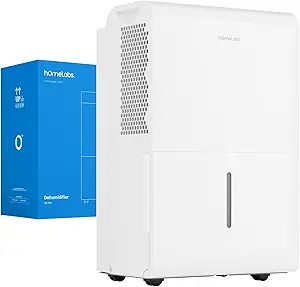 |
| Best Quality Built to a higher standard if you want something more solid | AprilAire E100 Dehumidifier |  |
| Best Value The sweet spot between price and what you get | Waykar 34-Pint Dehumidifier |  |
| Best Budget The cheapest option that still gets the job done reliably | TABYIK 35OZ Dehumidifier DH-CS01 |  |
| Top Rated A top-rated pick with lots of positive feedback | KeepGlad 80‑Pint Dehumidifier |  |
| Most Popular A crowd favorite that many people choose with confidence | BEDRED CT11 Dehumidifier |  |
| Best Seller A high-volume bestseller chosen again and again | ToLife Dehumidifier TZ-C2 |  |
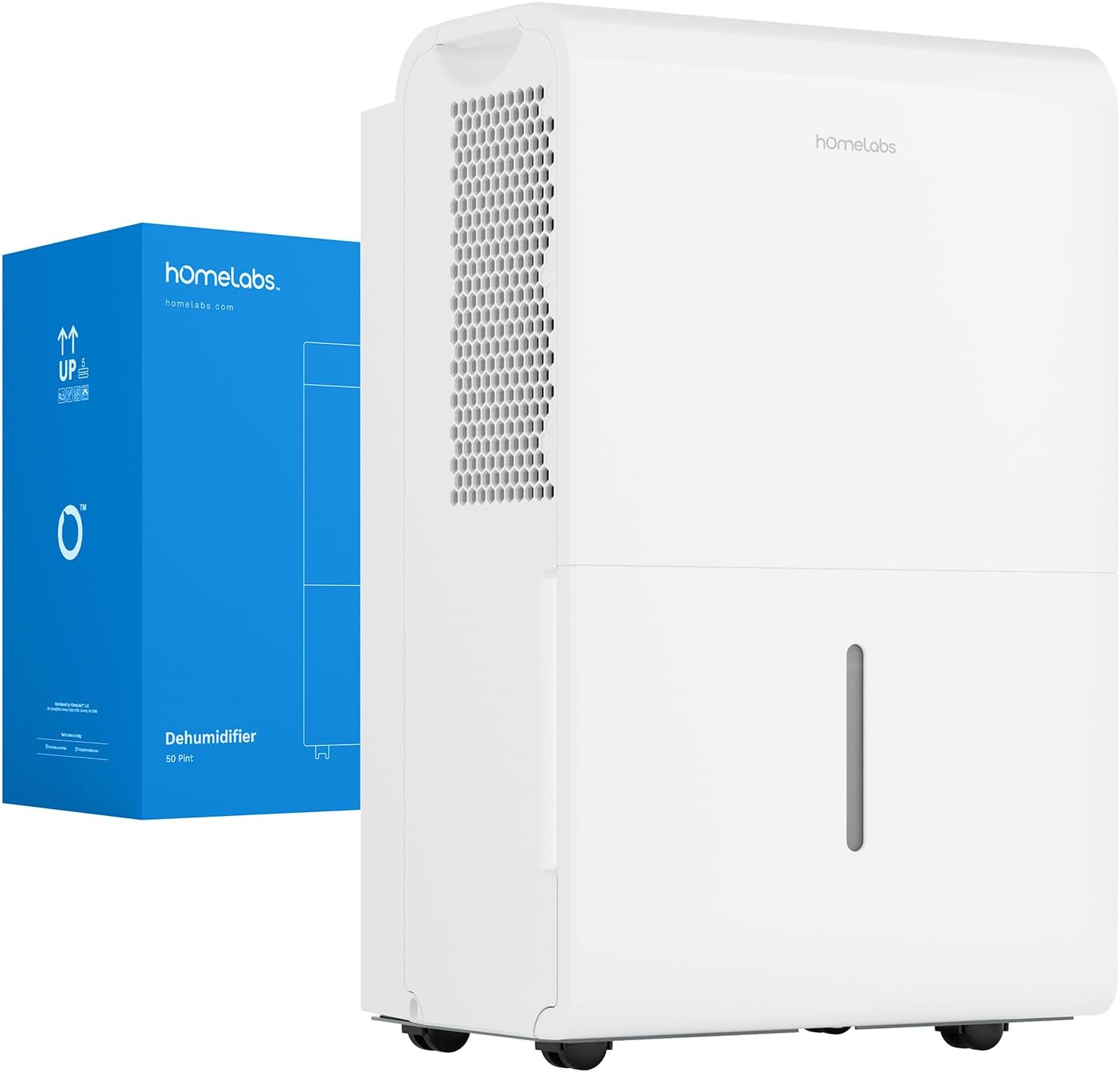
hOmeLabs 50 Pint Dehumidifier
| Dehumidification Capacity | 50 pints per day |
|---|---|
| Floor Area | 7000 square_feet |
| Tank Volume | 1.6 gallons |
| Wattage | 322 watts |
| Air Flow Capacity | 165 cfm |
This hOmeLabs 50 Pint dehumidifier is built to remove moisture from large rooms and basements, with Wi‑Fi control for remote adjustments and a continuous mode for long runs. It handles up to 50 pints per day at standard test conditions and claims higher capacity in very hot, high‑humidity environments, while a Turbo mode raises airflow for faster drying. Practical features include a removable, washable filter, a drain outlet for continuous draining, caster wheels and handles for moving it around, and automatic shutoff when the 1.6‑gallon tank fills. The touch control panel and timer make daily use straightforward, and the unit includes automatic defrost and restart for maintenance-free operation in varying temperatures. Trade-offs are its substantial weight and footprint for transport and storage, and it uses a conventional compressor so it is not the quietest option at highest fan speed. For large residential spaces needing reliable moisture control and app-based convenience, it delivers predictable performance and flexible drainage options.
Best for: Buyers who want a robust, app‑controllable dehumidifier for large rooms, basements, or whole‑floor use and who prioritize reliable moisture removal and easy maintenance.
Less Ideal for: People who need a very lightweight, ultra‑quiet unit for small rooms or frequent transport between locations.
- Wi‑Fi enabled for remote monitoring and control
- Removable washable filter and touch controls for easy maintenance
- Continuous drain outlet for unattended long‑term operation
- Automatic shutoff, defrost, and restart for safe, worry‑free use
- Turbo mode increases airflow for faster dehumidification
- Relatively heavy and bulky to move or store
- Compressor‑based unit can be louder at high fan speeds
Verdict: A powerful, Wi‑Fi–capable dehumidifier that reliably handles large residential spaces while offering continuous‑drain and easy maintenance features.
AprilAire E100 Dehumidifier
| Capacity | 100 pints per day |
|---|---|
| Floor Area | Up to 5,500 sq ft |
| Air Flow Capacity | 280 cfm |
| Wattage | 828 watts |
| Voltage | 120 volts AC |
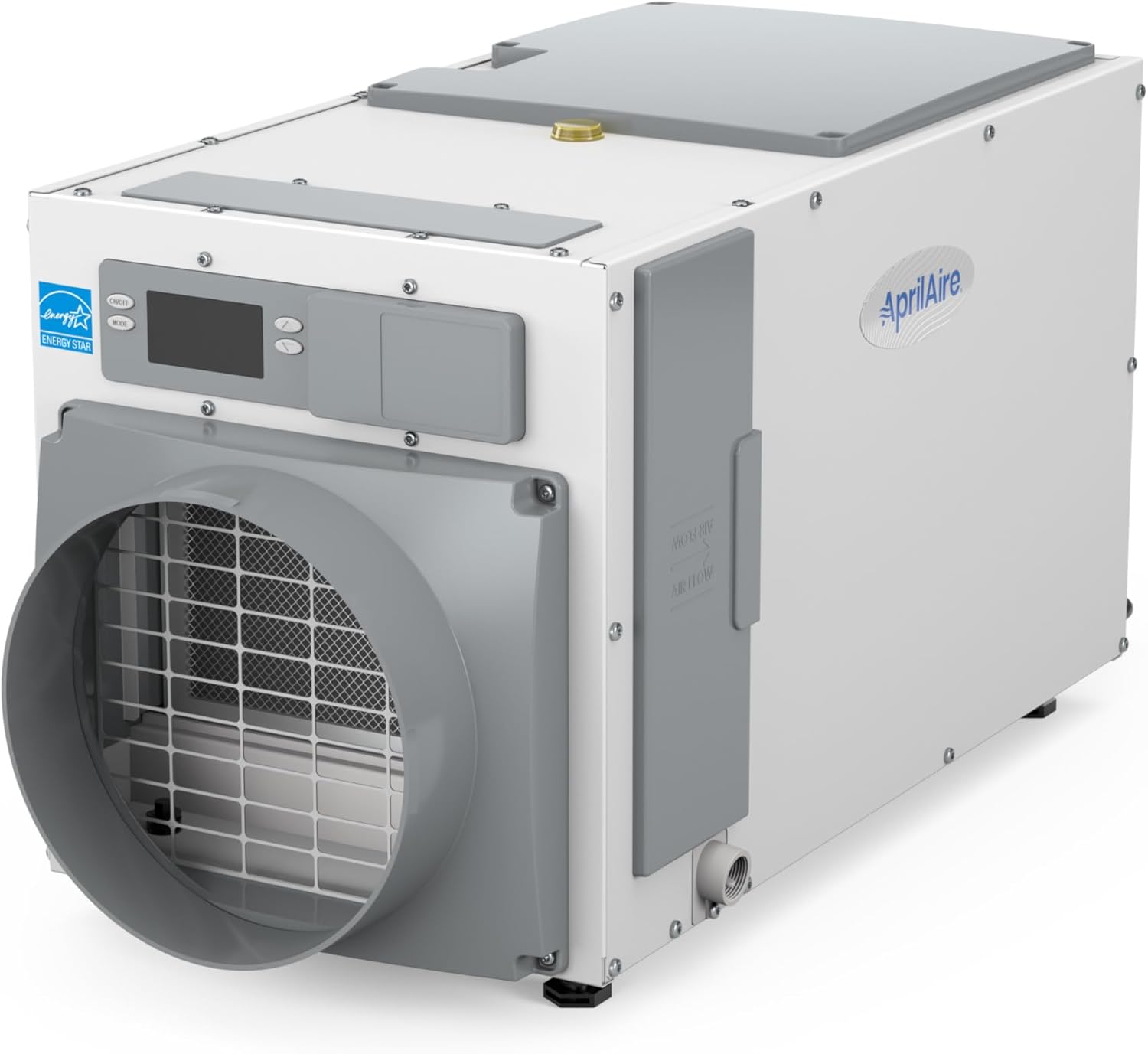
The AprilAire E100 is a commercial-grade whole-home dehumidifier built to control humidity in large spaces up to about 5,500 sq ft by removing up to 100 pints (15 gallons) of moisture per day. It is typically installed in basements, mechanical rooms, or ducted to an HVAC system and runs automatically using a humidity set point so it starts and stops without frequent user intervention. Notable features include an interactive digital display with top or front control mounting, continuous drain capability (no tray to empty), washable MERV 8 filter, corrosion-resistant aluminum coils, and ENERGY STAR Most Efficient certification for efficient operation at its capacity. Practical benefits are strong moisture removal for whole-house protection against mold and wood damage, low maintenance with annual filter cleaning, and robust build quality with a five-year manufacturer warranty. Important limitations are the single fan speed which reduces flexibility for very low-load conditions and the unit's size and power draw that require suitable space and a 120 VAC circuit; it is also not compatible with 50 Hz power systems. Installation may require plumbing or duct work for optimal performance.
Best for: Buyers who prioritize strong, reliable moisture removal for large homes or problem basements and want a low-maintenance, energy-efficient whole-home solution.
Less Ideal for: People seeking a compact, portable unit for small rooms or occasional use should consider smaller portable dehumidifiers instead.
- High dehumidification capacity up to 100 pints per day suitable for large homes
- ENERGY STAR Most Efficient certified for better energy use at high capacity
- Continuous drain option eliminates daily emptying and simplifies maintenance
- Durable construction with corrosion-resistant aluminum coils and washable filter
- Top or front-mount digital control and ducting options for flexible installation
- Single speed fan limits fine-grained control and may run louder at high output
- Physically large and requires appropriate space, ducting, and plumbing for best performance
Verdict: Choose the AprilAire E100 when you need a powerful, energy-efficient whole-home dehumidifier that reliably removes large volumes of moisture with low maintenance.
Waykar 34-Pint Dehumidifier
| Dehumidification Capacity | 34 pints_per_day |
|---|---|
| Floor Area | 2000 square_feet |
| Tank Volume | 0.66 gallons |
| Wattage | 230 watts |
| Air Flow Capacity | 62 cfm |
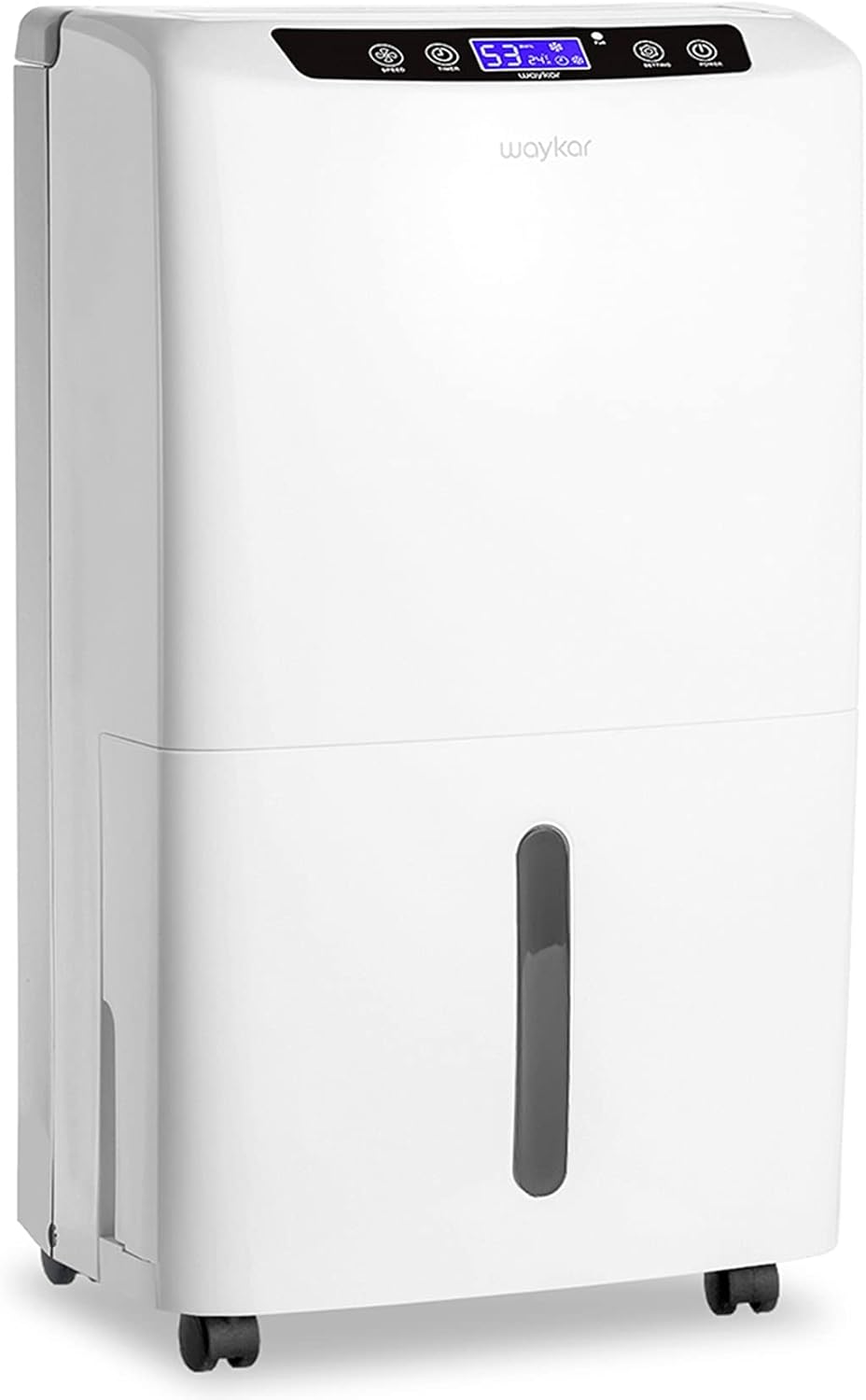
The Waykar 34-Pint Dehumidifier is built to remove excess moisture in large rooms and basements, with a rated capacity of 34 pints per day and coverage up to 2,000 square feet. You can run it in auto mode to let the unit maintain a set humidity between 30% and 80%, or use continuous mode with the included drain hose for unattended operation. It has two fan speeds and a 2.5 L (0.66 gallon) removable tank with an auto shut-off and full-tank indicator for simple maintenance. The unit includes an automatic defrost and overload protection system to support reliable performance in cooler environments, and Energy Star certification helps limit energy use during regular operation. Practical touches such as a 24-hour timer, ergonomic handle, washable filter, and a 90° manual airflow adjustment make it easier to position and live with. Expect a reasonably heavy floor unit that is portable but not pocket-sized, and it may be louder at higher fan speed during intensive dehumidification cycles.
Best for: Buyers who want a practical, energy-conscious dehumidifier for large rooms or basements and value reliable, low-maintenance operation over compactness.
Less Ideal for: People who need an ultra-light or very quiet bedside unit for small rooms should look at smaller, lower-capacity models.
- Rated to remove up to 34 pints per day suitable for large rooms and basements
- Energy Star certified for better real-world energy efficiency
- Dual drainage: removable 2.5 L tank plus included hose for continuous drain
- Smart features include adjustable humidity control (30%–80%), 24-hour timer, and auto-restart after power loss
- Automatic defrost and overload protection for reliable operation in cooler or continuous-use conditions
- Relatively heavy for a portable unit which may be awkward to move frequently
- Only two fan speeds limit fine-grained airflow/noise control
Verdict: A hardworking, Energy Star 34-pint dehumidifier that balances strong moisture removal and practical features for large rooms and basements.
TABYIK 35OZ Dehumidifier DH-CS01

| Tank Volume | 1000 ml |
|---|---|
| Dehumidification Capacity | 0.45 liters_per_day |
| Wattage | 40 watts |
| Number of Speeds | 1 |
| Applicable Area | 280 square_feet |
The TABYIK 35OZ DH-CS01 is a compact Peltier dehumidifier built for small rooms, bathrooms, closets, RVs and bedrooms where space and noise matter. It runs continuously on a single-speed setting, draws about 40 watts, and in lab-like conditions can collect up to roughly 16 oz (450 ml) per 24 hours; in practice expect best results in warm, humid rooms above about 45% RH. The unit uses a 35 oz (1000 ml) clear tank with an auto shutoff that stops operation when the tank approaches full and flashes a red light. It is very quiet at about 28 dB and includes a seven-color night light you can leave on or turn off, plus a built-in handle for moving it around. Major benefits are low power use and simple one-button operation, but the Peltier design limits extraction rate compared with compressor models so it is not suitable for damp basements or large open areas. Setup and maintenance are straightforward — empty the tank and clean the air intake filter periodically to keep airflow steady.
Best for: Shoppers who want an affordable, low-energy solution to reduce humidity in small spaces and prioritize quiet, simple operation over heavy-duty moisture removal.
Less Ideal for: People who need fast, high-capacity dehumidification for basements, whole floors, or persistently damp rooms should choose a compressor model instead.
- Compact and portable with a built-in handle for easy placement
- Very quiet operation (~28 dB) suitable for bedrooms and offices
- Large transparent 35 oz tank with auto shutoff for safe unattended use
- Low power consumption (around 40 watts) that keeps running costs down
- Single-speed Peltier system yields a low daily extraction rate compared with compressor dehumidifiers
- Designed for small, warm rooms so performance drops in cool or very large spaces
Verdict: A budget-friendly, ultra-quiet portable dehumidifier that is ideal for small rooms where low energy use and simplicity matter.
KeepGlad 80‑Pint Dehumidifier

| Capacity | 80 pints_per_day |
|---|---|
| Tank Volume | 1.84 gallons |
| Wattage | 300 watts |
| Floor Area | 4500 square_feet |
| Voltage | 115 volts |
The KeepGlad 80‑pint dehumidifier is built for sustained operation in large, moisture-prone areas like basements and garages. It actively removes up to 80 pints per day under extreme conditions and uses multiple modes — Comfort, Dry, Turbo, Continuous and Sleep — to match different needs from steady humidity control to rapid drying. Practical features include a visible tank with full‑tank protection, continuous drain hose option, 90° adjustable airflow, washable filter, child lock and a 24‑hour timer. The unit also claims quiet operation (about 35–40 dB) and an AI-driven protection system that triggers defrost cycles and overload cutoffs to limit downtime. Energy Star 2025 certification and a 300 W rating mean it aims to balance strong performance with lower energy use. Expect a fairly large, portable cabinet with ergonomic handles and a detachable filter that requires occasional cleaning; continuous drain is most convenient for long runs. If you need a dependable, high‑output dehumidifier for a basement that runs for long stretches, this model focuses on steady removal, energy efficiency and protective safeguards to reduce failure risk.
Best for: Buyers who prioritize a durable, high‑capacity dehumidifier for large basements or storage areas and want energy-efficient continuous operation with protective safety features.
Less Ideal for: Those who need a compact, lightweight unit for small rooms or infrequent use should consider lower‑capacity, more portable models instead.
- Very high dehumidification capacity up to 80 pints per day for large or very damp basements
- ENERGY STAR 2025 certification for lower energy use compared with similar output units
- Continuous drain option and full‑tank protection reduce maintenance during long runs
- Multiple modes including Turbo and Continuous let you tailor drying speed and humidity targets
- AI protection with auto‑defrost and overload cutoff helps prevent damage during continuous operation
- Relatively large physical footprint compared with low‑capacity models
- Requires periodic filter cleaning and occasional drain management for continuous use
Verdict: If you need reliable, energy‑efficient moisture removal for a large basement, this 80‑pint KeepGlad unit is built to run continuously with protective safeguards that minimize failure risk.
BEDRED CT11 Dehumidifier

| Floor Area | 1000 square_feet |
|---|---|
| Tank Volume | 95 fluid ounces |
| Capacity | 5.9 pounds |
| Operation Mode | Intermittent |
| Other Special Features of the Product | 7 Color Ambient Light, Automatic Shutoff, Sleep Mode |
The BEDRED CT11 is a compact thermoelectric dehumidifier intended to reduce humidity in small spaces such as bedrooms, bathrooms, and modest basements up to about 1000 sq ft. It uses semiconductor cooling rather than a compressor, so it runs quietly and is simple to operate with an intermittent operation mode and an automatic shutoff when the 95 oz tank fills. Sleep Mode turns off the lights and lowers noise for overnight use, and the seven-color ambient light gives an optional mood-lighting feature. Practical benefits include easy emptying from the included tank, portability thanks to a lightweight design, and low sound levels that suit living spaces. Important limitations are inherent to semiconductor units: lower capacity compared with compressor dehumidifiers, reduced performance in very cold or very damp basements, and a smaller tank that requires more frequent emptying in high-humidity conditions.
Best for: Buyers who prioritize quiet, low-maintenance dehumidification and want a compact unit that is easy to move and run in living spaces or small basements without frequent intervention.
Less Ideal for: People needing heavy-duty moisture control for large, cold, or very damp basements should choose a higher-capacity compressor dehumidifier instead.
- Quiet thermoelectric operation suitable for bedrooms and living rooms
- Automatic shutoff protects against overfill and simplifies unattended use
- 95 oz removable tank for straightforward water removal
- Sleep Mode and ambient light options for low‑noise nighttime use
- Compact and lightweight for easy placement or moving between rooms
- Semiconductor cooling gives lower moisture removal capacity than compressor models
- Performance drops in cold basement conditions and very high humidity areas
Verdict: Choose the BEDRED CT11 if you want a quiet, portable dehumidifier with auto‑shutoff and sleep‑friendly operation for small basements or living spaces.
ToLife Dehumidifier TZ-C2
| Floor Area | 1000 |
|---|---|
| Tank Volume | 95 fluid ounces |
| Number of Speeds | 2 |
| Wattage | 93 watts |
| Voltage | 220 volts |
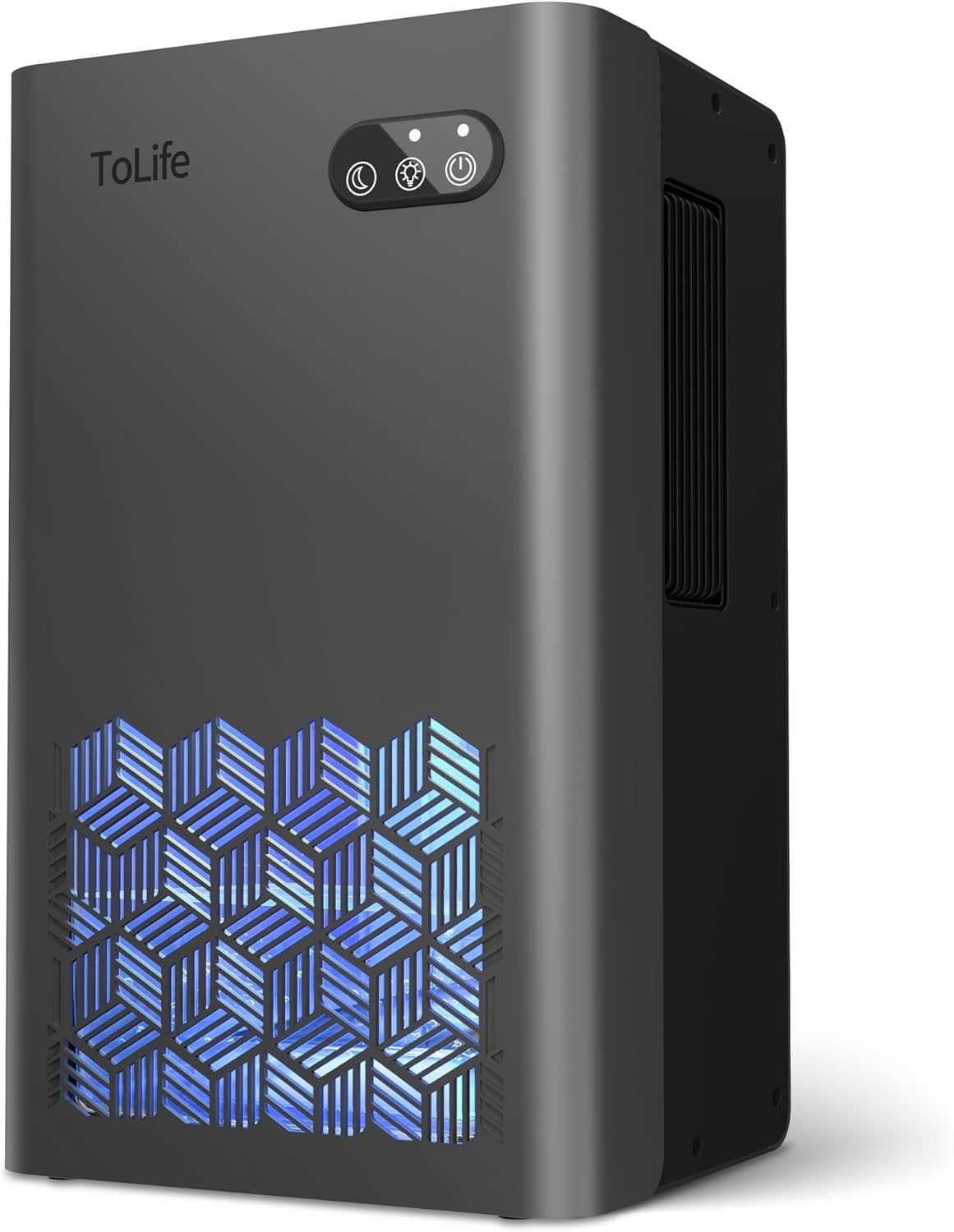
The ToLife TZ-C2 uses semiconductor condensation technology to quietly pull moisture from the air and deposit it into a removable 95 oz tank, making it a straightforward option for damp rooms. It offers two operating modes: a higher-power setting for faster moisture removal and a low-speed sleep mode that runs under 30 dB for overnight use. A seven-color LED can act as a night light and the unit includes automatic shutoff when the tank is full or removed, plus handles for easy moving between rooms. Practical benefits include simple setup, low noise, and a compact footprint that fits in basements, bathrooms, or bedrooms. Limitations are its modest rated dehumidification capacity and stated coverage, which means it will be most effective in smaller basement zones or for spot treatments rather than drying a large, very damp basement quickly. Also this model runs on 220 volts, so electrical compatibility should be confirmed for your location.
Best for: Buyers who need an affordable, portable dehumidifier for spot dehumidifying small basement areas, bathrooms, or bedrooms and who prioritize low noise and easy portability.
Less Ideal for: People looking to dry large, very damp basements or whole-house coverage should consider a higher-capacity compressor dehumidifier instead.
- Large removable 95 oz water tank reduces how often you need to empty it
- Quiet sleep mode under 30 dB suitable for nighttime operation
- Portable design with handles for moving between rooms
- Automatic shutoff prevents overflow when the tank is full
- Dehumidification capacity is modest and may be slow in very damp or large basements
- Requires 220 volt power which may not match all household outlets
Verdict: A compact, budget-friendly portable dehumidifier that is best for quiet, small-area moisture control and occasional basement spot treatments.
Choosing the Right Dehumidifier: Key Factors to Consider
Room Size and Coverage
Matching a dehumidifier's rated capacity to the room size is the single most important purchase decision. Manufacturers publish moisture removal rates or suggested square footage based on typical ceiling heights. Choosing a unit rated too low will leave humidity uncontrolled and force continuous operation, while oversizing a unit can lead to short cycling and uneven humidity control.
Consider not just the floor area but ceiling height and the room's dryness problem. Basements, laundry rooms, and rooms with poor ventilation often need higher-capacity units. For occasional dampness in small rooms, a compact model is usually adequate.
Moisture Removal Rate (Pint or L/day)
A dehumidifier's removal rate indicates how much water it can extract in a 24-hour period under standard test conditions. Higher removal rates are necessary for very damp environments or larger spaces. For milder humidity issues, a lower-rated unit may still maintain comfort while using less energy.
Keep in mind removal rates are often specified under ideal test conditions. Real-world performance can be affected by room layout, air circulation, and temperature, so choose a capacity with a margin above your current moisture problem.
Energy Usage and Operating Cost
Because dehumidifiers often run for extended periods, energy efficiency directly affects your monthly utility bill. Look for models that deliver good pints-per-kilowatt-hour numbers or have energy-saving modes. Features such as variable fan speeds, automatic humidistats, and programmable timers reduce run time while maintaining target humidity.
Also consider long-term costs beyond electricity. Units that require frequent filter replacements or premature maintenance will increase ownership cost. An efficient compressor-based unit may cost more upfront but run cheaper over a heating season than a poorly optimized alternative.
Water Removal Options and Maintenance
How a dehumidifier handles condensate matters for convenience. Many models offer a removable collection bucket with an overflow shutoff, while others support continuous drain connections for long-term unattended use. For basement installations, a gravity drain or pump-assisted discharge may be necessary.
Maintenance tasks typically include emptying the bucket, cleaning or replacing the air filter, and occasionally checking coils for frost or buildup. Choose a design with easy access to these parts and clear service instructions to minimize downtime and maintain efficiency.
Noise Level and Placement
Dehumidifiers use fans and compressors so noise is inevitable. Noise ratings or decibel figures help compare models, especially when units will operate in living spaces or sleeping areas. Lower fan speeds and sound-attenuating designs make a unit usable in a bedroom, while louder but higher-capacity models are often reserved for basements or garages.
Consider placement that isolates sound, such as a closet with ventilation or a corner away from seating and beds. If silence matters, prioritize models with quieter operation or selectable low-noise modes.
Controls, Automation, and Safety Features
Effective control options simplify long-term humidity management. Built-in humidistats let the dehumidifier cycle on and off to maintain a target humidity level, while timers and programmable settings reduce unnecessary runtime. Remote or app control can add convenience, but ensure the core controls are intuitive for everyday adjustments.
Safety features like auto-shutoff on full tank, tip-over protection for compact units, and frost control for cold-room operation increase reliability and reduce the risk of damage or leaks.
Sizing a Dehumidifier for Different Rooms
Estimate room needs by combining floor area with typical humidity load. Kitchens, bathrooms, and laundry rooms add transient moisture, while basements and crawl spaces often have consistent humidity issues that require higher daily removal rates.
If you are unsure, err on the side of a slightly larger capacity for spaces prone to persistent dampness. For whole-basement coverage, consider units designed for larger cubic volumes rather than models sized only by square footage.
- Small bedroom: compact units with modest removal rates
- Bathroom or laundry area: units with good fan airflow and quick removal
- Basement: higher-capacity or continuous-drain capable models
Installation and Placement Tips
Place the unit where it can draw unobstructed airflow, at least a few inches from walls and furniture. Avoid corners that reduce intake and exhaust circulation, which lowers effectiveness and can increase run time.
For continuous drainage, route the hose to a floor drain or sump pump location. If using a bucket, position the unit where emptying is convenient and where accidental spills will not damage finishes.
- Keep intake and exhaust free from obstructions
- Use a condensate pump if gravity drainage is not available
- Avoid placing on carpeted surfaces that limit airflow
Noise Management Strategies
If a unit will operate overnight or in a living area, select models with low-noise ratings or adjustable fan speeds. Run the dehumidifier on a low setting during quiet hours and use its humidistat to avoid continuous operation.
Physical placement affects perceived noise. Position the unit on a vibration-damping pad and away from thin walls or rooms where sound will carry.
- Use low fan speeds when possible
- Place on rubber or foam pads to reduce vibration
- Install in adjacent room if direct placement interferes with sleep
Managing Mold Risk Beyond Dehumidification
A dehumidifier reduces relative humidity, but addressing mold risk also requires improving ventilation and eliminating water sources. Fix leaks, ensure dryer vents and exhaust fans are functioning, and use targeted ventilation in moisture-prone areas.
Use the dehumidifier alongside improved airflow and cleaning to prevent mold regrowth. Regular inspection of hidden cavities and stored items helps catch issues early before they spread.
- Repair leaks and condensation sources promptly
- Increase airflow with fans or ventilation where possible
- Inspect and clean regularly in high-risk areas
Cold-Climate Considerations
Many compressor-based dehumidifiers lose efficiency or frost up at low temperatures. If you plan to use a unit in an unheated basement or garage, choose one rated for cooler operation or with an auto-defrost feature.
Alternatively, consider running the dehumidifier only during warmer periods and using passive measures such as improved insulation and ventilation to manage cold-season moisture.
- Look for auto-defrost for cool rooms
- Avoid placing units where temperature frequently drops below recommended limits
- Combine with insulation improvements for best results
How We Chose the Best Dehumidifier
We started by focusing on measurable performance and everyday usability. The list includes units that demonstrate reliable moisture removal rates for their recommended room size and maintain stable operation across typical household conditions. We prioritized energy efficiency so that continuous operation does not produce excessive utility costs, and we looked for units with straightforward controls and useful automation like built-in humidistats and timers. Durability and upkeep were key filters: we favored designs with accessible filters, easy water extraction options, and corrosion-resistant components. Noise level was also a practical consideration for units intended for living areas or bedrooms. We excluded novelty or single-feature models that underperform on moisture removal or lack basic safety features such as auto-shutoff or overflow protection. Editorially, we compared published specs and user-focused features rather than unverified performance claims. The evaluation emphasized moisture removal rate, energy use (runtime efficiency), control and automation, build and maintenance convenience, and noise during operation. These dimensions reflect what most buyers consider when choosing a dehumidifier.
Our full evaluation process is outlined in our review methodology.
FAQ
How often should I run a dehumidifier?
How often you run a dehumidifier depends on ambient humidity and room use. In persistently damp spaces it may run most of the day with automatic cycling via the humidistat. For mild problems, scheduled or intermittent use with a target humidity setting is usually sufficient.
What humidity level should I aim for indoors?
A target relative humidity between 30 and 50 percent balances comfort and mold prevention. Levels above 60 percent encourage mold and dust mites, while very low humidity can cause discomfort and dry finishes.
Can I leave a dehumidifier running overnight?
Yes, but choose a model with low noise and reliable safety features if it will run while you sleep. Use the humidistat and timer functions to prevent unnecessary runtime and ensure the unit has overflow protection for unattended operation.
Do dehumidifiers help with heating costs?
Dehumidifiers do not heat a space but reducing humidity can make rooms feel cooler in summer and slightly more comfortable in shoulder seasons. In some cases lowering humidity allows you to set the thermostat a degree higher without losing comfort, which can indirectly affect energy use.
How do I maintain my dehumidifier?
Regular maintenance includes emptying or connecting the condensate outlet, cleaning or replacing the air filter as recommended, and checking coils for frost or buildup. Keeping intake and exhaust areas clear helps preserve efficiency and extend service life.
Final Verdict
Choose a dehumidifier by matching capacity to the actual moisture load and room volume, then prioritize energy efficiency and practical maintenance features. Noise, control convenience, and drainage options define how well a unit will fit into daily life, so balance those tradeoffs based on where the unit will operate. Think of a dehumidifier as part of a broader moisture-management plan that includes ventilation and leak prevention. Prioritize steady moisture removal and easy upkeep to keep spaces comfortable and protect your home from mold and moisture damage.