
Note: This article contains affiliate links. If you click on these links and make a purchase, we may earn a small commission at no extra cost to you. This helps support our research and content. Read our full affiliate disclosure here.
If you struggle with mold, musty odors, or persistent dampness in cool spaces, a desiccant dehumidifier can make a major difference. These units perform well at lower temperatures and in tight spaces where refrigerant-style machines lose efficiency. You want a model that balances drying speed, energy use, and noise so the unit can run overnight or in living spaces without disruption. This guide shortlists the top desiccant dehumidifiers for typical home use, with picks chosen for real-world performance, operating cost, and ease of upkeep. Read on for our evaluation criteria and what each shortlisted option does best.
Top Picks at a Glance
| Best Overall The best all-around choice for most situations | Ivation 19-Pint Desiccant Dehumidifier |  |
| Best Quality Built to a higher standard if you want something more solid | Eva-Dry Rotary Desiccant Dehumidifier EDV-4000H |  |
| Best Value The sweet spot between price and what you get | Ivation 13-Pint Desiccant Dehumidifier |  |
| Best Budget The cheapest option that still gets the job done reliably | QFOX CS10E Dehumidifier |  |
| Top Rated A top-rated pick with lots of positive feedback | ECOR PRO EPD50-PRO Desiccant Dehumidifier |  |
| Most Popular A crowd favorite that many people choose with confidence | Eva-Dry Mini Dehumidifier E-333 |  |
| Best Seller A high-volume bestseller chosen again and again | AEOCKY X1-Pro Dehumidifier |  |
Ivation 19-Pint Desiccant Dehumidifier

| Dehumidification Capacity | 19 pints_per_day |
|---|---|
| Floor Area | 410 square_feet |
| Tank Volume | 0.75 gallons |
| Number of Speeds | 2 |
| Operation Mode | Comfort, Continuous |
The Ivation 19-Pint Desiccant Dehumidifier is a lightweight, user-friendly unit built for small rooms, closets, bathrooms, RVs and other compact spaces where moisture and odors are a concern. It uses a desiccant rotor that works well in cooler temperatures and produces slightly warmed, dry air; the unit supports two fan speeds, adjustable humidity control, timer and a dimmable LCD for straightforward operation. Practical touches include a 0.5 gallon reservoir with auto-shutoff, a continuous drain hose hookup for unattended use, a washable filter and a carry handle for portability. Its quiet operation and low operating temperature range make it useful in basements and cold-season use where compressor models struggle. Trade-offs are its modest daily capacity compared with larger compressor dehumidifiers and a smaller tank that means more frequent emptying if not using the drain hose, so it is best for targeted small-area control rather than whole-house drying.
Best for: Buyers who want a portable, quiet dehumidifier to control moisture in single rooms, RVs or seasonal spaces and who prioritize reliable performance in cooler conditions.
Less Ideal for: People needing high-volume moisture removal for whole-house drying or large, very damp basements should choose a larger compressor model instead.
- Effective desiccant rotor that works in lower temperatures where compressor units lose efficiency
- Compact and lightweight with a carry handle for easy placement and transport
- Includes continuous drain hose option for unattended operation
- User-friendly LCD with adjustable humidity, timer, fan speeds and dimmable screen
- Washable filter and auto-shutoff add simple maintenance and safety
- 19 pints per day capacity is modest compared with larger compressor dehumidifiers
- 0.5 gallon reservoir requires frequent emptying if continuous drain is not used
Verdict: A compact, quiet desiccant unit that reliably controls moisture in single rooms and cold-season spaces where compressor dehumidifiers underperform.
Eva-Dry Rotary Desiccant Dehumidifier EDV-4000H

| Floor Area | 444 square_feet |
|---|---|
| Dehumidification Capacity | 14.81 pints_per_day |
| Capacity | 2 liters |
| Number of Speeds | 2 |
| Upper Temperature Rating | 105 °F |
The Eva-Dry EDV-4000H uses rotary desiccant technology to pull moisture without a compressor, so it continues working in cold spaces that shut down standard compressor units. It is sized for roughly 4,000 cubic feet (about 444 sq ft) and removes up to 14.81 pints per day into a 2-liter tank with auto shutoff, or you can run it continuously via a drain hose. Controls include three preset humidity targets, two fan speeds, and a clothes-dry mode for laundry or damp gear, plus a built-in ionizer. Practical benefits include reliable cold-weather performance down to 34°F, low vibration and no refrigerant maintenance, and a compact, lightweight form that fits crawl-space access openings. Expect moderate daily extraction compared with larger compressor machines, and the small onboard tank means direct drainage is preferable for unattended use. For buyers focused on steady year-round moisture control in unheated basements, garages, or cabins, this unit delivers reliable, quiet performance with simple controls.
Best for: Buyers who need dependable moisture removal in cool or unheated spaces and prioritize consistent cold-weather performance and low maintenance over maximum extraction capacity.
Less Ideal for: Those who need the fastest possible water removal for very large or extremely damp basements should consider higher-capacity compressor units instead.
- Rotary desiccant system works in cold temperatures down to 34°F where compressors fail
- Compact and lightweight design fits crawl spaces and tight access hatches
- Three preset humidity levels and two fan speeds simplify set-and-forget operation
- 2‑liter tank with auto shutoff plus continuous drain option for unattended use
- No compressor means low vibration, no refrigerant, and quieter continuous operation
- Daily extraction rate (~14.8 pints) is modest compared with larger compressor units for very wet spaces
- Small onboard reservoir requires frequent emptying unless using the drain hose
Verdict: Choose the EDV-4000H when you need a compact, reliable desiccant dehumidifier that continues extracting moisture in cold, unheated spaces where compressor units fail.
Ivation 13-Pint Desiccant Dehumidifier
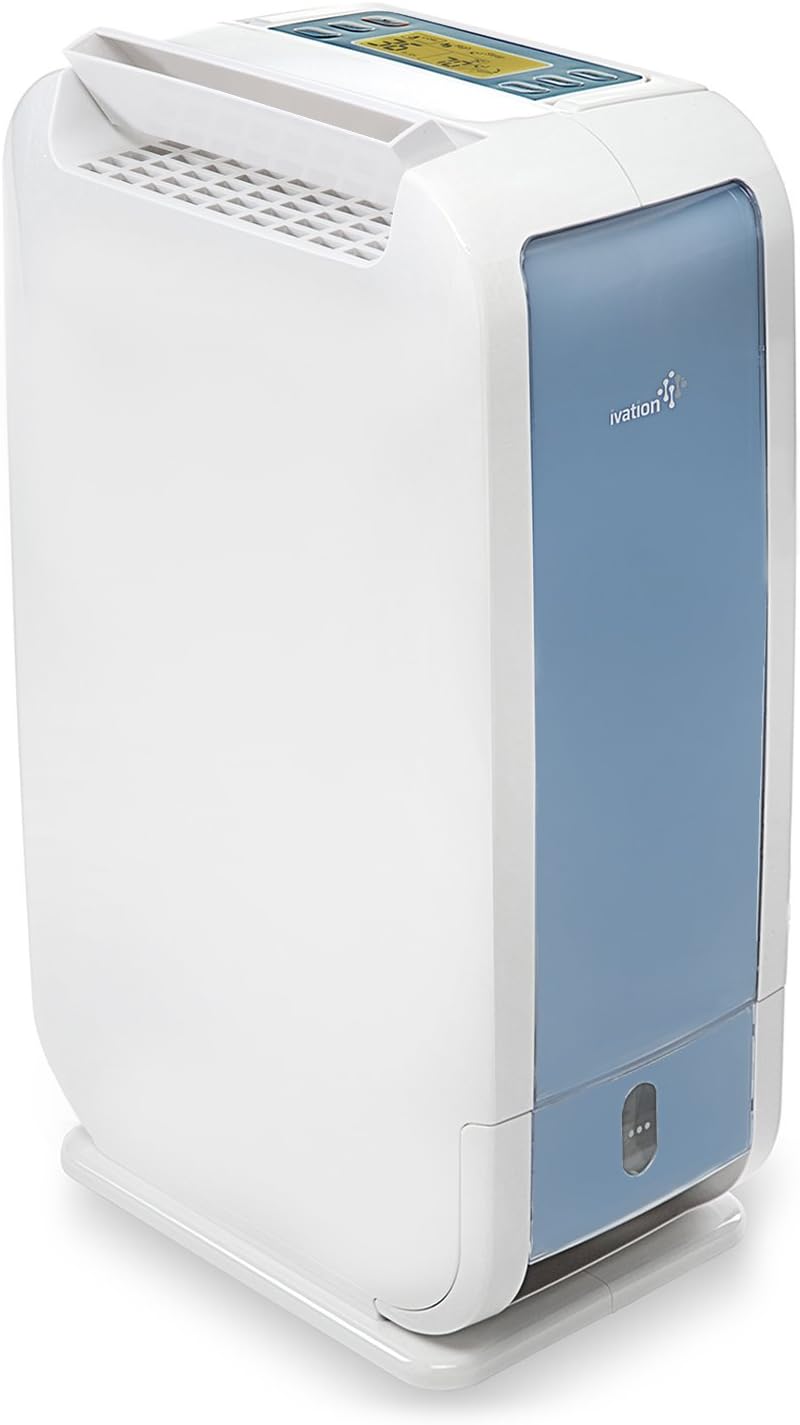
| Dehumidification Capacity | 13 pints_per_day |
|---|---|
| Floor Area | 270 square_feet |
| Tank Volume | 3.8 pints |
| Wattage | 470 watts |
| Operation Mode | Comfort, Continuous |
The Ivation 13-pint desiccant dehumidifier uses a desiccant rotor to pull moisture from rooms up to roughly 270 square feet, making it suited for bathrooms, crawlspaces, attics and closets. It offers two fan speeds and user controls on an LCD touch panel so you can set a humidity target, timer or sleep mode, and the unit can run in Comfort or Continuous modes. A removable 3.8-pint reservoir is convenient for occasional emptying, and the included drain hose lets you run it hands-free for longer stretches. The unit is relatively quiet and can operate at lower temperatures where compressor dehumidifiers struggle, and it has safety features like auto-restart after power loss and overflow shutoff. Trade-offs are its modest daily capacity compared with larger compressor models and the need to manage the smaller tank if you do not use continuous drain. It is compact and energy-conscious for small problem areas but not intended as whole-house equipment.
Best for: Buyers who need a compact, reliable solution to control humidity in confined or cooler spaces and who prioritize straightforward controls and the option for continuous drainage.
Less Ideal for: People seeking high-capacity or whole-house dehumidification should choose a larger compressor-based unit instead.
- Effective at moisture removal in small spaces using desiccant rotor technology
- LCD touch controls with humidity target, timer and mode settings for easy operation
- Includes removable tank plus continuous drain hose for flexible unattended use
- Operates at lower temperatures where compressor units are less effective
- Auto-restart and overflow/tilt protection improve reliability and safety
- 13 pints per day capacity is modest compared with larger compressor dehumidifiers
- 3.8-pint reservoir requires frequent emptying if continuous drain is not used
Verdict: A compact, low-temperature-capable desiccant dehumidifier that gives practical, hands-free humidity control for single rooms and problem spots.
QFOX CS10E Dehumidifier

| Floor Area | 2000 square_feet |
|---|---|
| Capacity | 2.5 liters |
| Other Special Features of the Product | Automatic Shutoff, Continuous Draining, Digital Display, Sleep Mode, Washable Filter |
The QFOX CS10E is a small desiccant rotary dehumidifier made to remove moisture in spaces up to about 2,000 sq ft while remaining quiet and easy to move. It uses rotary desiccant technology that works at low temperatures, so it can run in cool basements, laundry rooms, RVs, and closets where compressor units often lose efficiency. Controls are handled through a touch LED panel with real-time humidity readout, timer settings, sleep mode, and seven ambient light choices that can be turned off for overnight use. Practical features include a 2.5 L removable tank, a supplied drain hose for continuous draining, washable filter, and auto shutoff with alerts when the tank is full or misaligned. The unit is compact with a built-in handle for portability, and its noise level is advertised around 35 dB for bedroom-friendly operation. Limitations are its small tank which requires emptying if you do not use the drain hose, and its daily extraction rate is specified under warm, humid test conditions so performance will vary in cooler or drier environments.
Best for: Buyers who want a low-cost, portable dehumidifier that works in cool spaces and prioritizes quiet, all-season moisture control for basements, closets, RVs, or bedrooms.
Less Ideal for: Those needing large-scale, high-volume water removal for big damp basements or whole-house dehumidification should choose a larger compressor or whole-house system.
- Rotary desiccant design stays effective at low temperatures where compressors struggle
- Compact, lightweight body with built-in handle for easy placement and transport
- Includes both a 2.5 L removable tank and a drain hose for continuous drainage
- Quiet operation and sleep mode make it suitable for bedrooms and living spaces
- Touch LED display with real-time humidity readout, timer, and color light control
- Small 2.5 L tank requires frequent emptying when not using continuous drain
- Rated extraction (up to 101 oz/day) is measured at warm, high-humidity conditions and will be lower in cooler/drier rooms
Verdict: A budget-friendly, portable desiccant dehumidifier that reliably removes moisture in cool, small-to-medium spaces while staying quiet and easy to use.
ECOR PRO EPD50-PRO Desiccant Dehumidifier

| Dehumidification Capacity | 50 pints_per_day |
|---|---|
| Floor Area | 1000 square_feet |
| Wattage | 550 watts |
| Air Flow Capacity | 85 cfm |
| Operation Mode | Continuous |
The ECOR PRO EPD50-PRO is a portable desiccant dehumidifier intended for continuous operation in small commercial or residential spaces such as basements, bathrooms, crawlspaces and boats. It uses a desiccant wheel instead of refrigerant compression, which lets it run across wide temperature ranges and prevents liquid water collection by venting only vapors. The unit is stainless steel for corrosion resistance and designed for wall or ceiling mounting or floor placement, with a compact footprint and integrated controls for straightforward use. Practical benefits include quiet operation around 52 dB, a self-regulating continuous mode that can be left unattended, and no drain hoses or tanks to empty. Important limitations are its 85 CFM airflow and 50 pint-per-day capacity, which suit small spaces up to about 1,000 sq ft but are not enough for large rooms or very wet conditions, and it draws 550 watts when running. For buyers needing reliable, always-on moisture control in harsh or cold environments, this model emphasizes durability and steady performance rather than maximum capacity.
Best for: Buyers who prioritize dependable, always-on moisture control and corrosion resistance for small commercial sites or damp residential spaces and who want a unit that can be left running without frequent intervention.
Less Ideal for: People needing high-capacity drying for large areas, rapid water removal after flooding, or the lowest possible energy consumption should consider other options.
- Desiccant wheel design works across wide temperature ranges and avoids liquid collection
- Stainless steel construction improves corrosion resistance in harsh environments
- Designed for continuous unattended operation with self-regulating controls
- Compact and portable with options for wall or ceiling mounting
- 50 pint-per-day capacity and 85 CFM airflow limit effectiveness in very large or extremely damp spaces
- Higher power draw at 550 watts compared with some refrigerant units
Verdict: Choose the EPD50-PRO when you need a corrosion-resistant, always-on desiccant unit that reliably controls humidity in small commercial or damp residential spaces.
Eva-Dry Mini Dehumidifier E-333

| Floor Area | 333 square_feet |
|---|---|
| Capacity | 6 ounces |
| Dehumidification Capacity | 0.38 pints_per_day |
| Operation Mode | Continuous |
| Wattage | 22.5 |
The Eva-Dry E-333 is a portable, fully cordless desiccant dehumidifier intended for small spaces like closets, cabinets, cars, bathrooms and gun safes. It uses non-toxic crystallized silica gel beads that change color as they absorb moisture, and the unit captures about 4 to 6 ounces before needing recharging. Because it requires no batteries or continuous power, you simply hang or place it where humidity is a problem and recharge the beads in a low-heat environment when the indicator shows saturation. The device is simple to use, quiet in operation since it has no fan, and marketed to last for years with repeated recharges. Practical benefits include true cordless convenience and a leak-free, spill-resistant design that suits enclosed areas where conventional condensate dehumidifiers cannot fit. Limitations are obvious: its dehumidification rate and capacity are tiny compared with electric dehumidifiers, so it will not control humidity in large rooms or very damp environments, and recharging adds recurring maintenance compared with plug-in units.
Best for: Buyers who value a low-maintenance, cordless moisture solution for small enclosed spaces and who prefer proven user feedback when choosing reliable, long-lived desiccant products.
Less Ideal for: Do not choose this if you need active humidity control for whole rooms, basements, or consistently damp environments where a powered dehumidifier is required.
- Cordless rechargeable design works without batteries or constant power
- Non-toxic silica gel beads provide leak-free moisture absorption
- Compact shape fits closets, cabinets, cars, gun safes and other tight spaces
- Color-change indicator shows when recharging is needed
- Very low moisture removal rate unsuitable for large or very damp areas
- Requires periodic recharging rather than continuous automatic drainage
Verdict: A simple, cordless silica-gel dehumidifier that is ideal for keeping small, enclosed spaces dry without power or complex setup.
AEOCKY X1-Pro Dehumidifier

| Dehumidification Capacity | 10 pints/day |
|---|---|
| Tank Volume | 85 fluid ounces |
| Wattage | 340 watts |
| Operation Mode | Automatic |
| Other Features | Sleep Mode, Timer |
The AEOCKY X1-Pro is a small rotary desiccant dehumidifier built for tight, cooler, or consistently damp spaces where compressors can frost and Peltier units underperform. It uses a zeolite molecular-sieve core plus a 340W heater to adsorb then expel moisture into an 85 oz tank, and it can also run hands-free via the included drain hose for continuous drainage. Controls include a hygrostat with custom 40%–80% humidity targets, a 24-hour timer, and a Sleep Mode that reduces noise to around 25 dB. In real-world home conditions the unit is likely to deliver less than lab peak (typical extraction cited around 5 pints/day at 86°F/80% RH), but it remains frost-free down to 34°F and stays effective where compressors struggle. Expect some warm exhaust air and an initial slight baking scent as the desiccant cycles, and note the unit uses notable power relative to ultra-low-wattage Peltier devices. For small bedrooms, RVs, closets, or laundry rooms this model offers reliable, quiet dehumidification with practical continuous-drain convenience, while users managing large open basements will need a higher-capacity compressor unit instead.
Best for: Buyers who prioritize dependable, frost-free humidity control in small or cool spaces and want a quiet, portable unit with automatic drainage and simple controls.
Less Ideal for: People needing high-capacity dehumidification for large open basements or whole-house use should choose a larger compressor-based model instead.
- Frost-free desiccant operation works reliably at low temperatures
- Includes 85 oz tank plus a drain hose for continuous hands-free drainage
- Smart hygrostat with 40%–80% target range, 24H timer, and quiet Sleep Mode
- Very compact and lightweight for easy placement and portability
- Higher power draw (340W) compared with tiny Peltier units
- Collected water can freeze below 34°F, reducing tank usability in very cold conditions
Verdict: Choose the X1-Pro when you need a compact, quiet desiccant dehumidifier that stays frost-free and offers reliable hands-free drainage for small or cool spaces.
Choosing the Right Desiccant Dehumidifier: Key Factors to Consider
Low-Temperature Performance
Desiccant dehumidifiers are commonly chosen for cool spaces because their drying media or adsorption process does not depend on vapor-compression coils. Look for manufacturers' specs that list moisture removal at lower ambient temperatures or explicit low-temp ratings. A unit that maintains a strong removal rate at 40 to 50 degrees Fahrenheit will control dampness in basements, garages, and unheated rooms more reliably.
If you mainly need a dehumidifier for a cold basement or an uninsulated utility room, low-temperature performance should be at the top of your decision list. Models with clear low-temp curves or test data reduce guesswork and help predict real-world run times and energy use.
Moisture-Removal Rate
Rated capacity—usually expressed as pints or liters per 24 hours—gives a baseline for how much water a unit can extract. For desiccant units, pay attention to whether the rating is measured at room temperature or at lower temps; cooler-condition ratings are more representative for basement use. Higher removal rates shorten runtime and are helpful in very damp spaces but may increase energy draw.
Consider the size of the space and the severity of humidity when matching rated capacity to your room. Oversizing wastes energy, while undersizing leaves humidity uncontrolled and can lead to persistent mold and odor problems.
Energy Efficiency and Operating Cost
Desiccant systems often consume more power than refrigerant dehumidifiers at higher temperatures, but they can be more efficient in cold environments where refrigerant units lose effectiveness. Compare wattage and the energy-per-liter removed estimates when available. Units with programmable timers, eco or low-power modes, and the ability to use a continuous drain can significantly reduce hands-on maintenance and operating costs over time.
Also account for how often the unit will run in your climate. A model used continuously in a damp, cool basement should be evaluated more heavily for long-term energy impact than one used intermittently in a closet or RV.
Noise Level and Placement Options
Noise matters when you place a dehumidifier near living spaces, bedrooms, or finished basements. Desiccant units vary widely in fan and regeneration noise because of differing designs. Look for objective decibel ratings or real user reports about hum versus short-cycle bangs. If you plan to run the unit overnight or in an area where conversation and sleep occur, prioritize low-noise designs or models with whisper modes.
Placement flexibility also reduces noise impact. Compact, portable units can be positioned away from seating areas or on vibration-dampening pads to minimize audible disturbance.
Maintenance and Filter Access
Desiccant media may require periodic inspection or replacement depending on the design, and many units include washable pre-filters. Consider how easy it is to reach the water collection tank, access filters, and clean or replace sorbent cartridges. Units with clear maintenance intervals and simple, tool-free access reduce the chance of performance decline over time.
Easy-to-empty tanks, clear full-tank indicators, and the option for a continuous drain hose are practical features that cut down on daily upkeep and make long-term ownership less burdensome.
Where Desiccant Dehumidifiers Shine
Desiccant dehumidifiers excel in cool, low-temperature environments and in spaces where fast initial drying is needed. Because they use adsorption media or heat-assisted sorbent cycles instead of refrigeration, their performance is far less affected by cold ambient air. That makes them a strong choice for basements, unheated garages, laundry areas, and some RV or boat interiors during shoulder seasons.
They are also useful where quiet, continuous operation and rapid moisture pickup are required. For many households, the ability to reliably drop humidity without coil freeze-ups or reduced capacity is the primary justification for choosing a desiccant model.
- Effective below typical refrigerant dehumidifier operating ranges
- Faster recovery from very damp conditions
- Good for small to medium-sized enclosed spaces
Installation and Setup Tips
Most desiccant dehumidifiers are plug-and-play and require no special installation, but placement affects performance. Position the unit centrally in the problem area if possible, or near the source of moisture for faster correction. Leave several inches of clearance around intake and exhaust vents and avoid blocking airflow with storage boxes or furniture.
If the unit supports a continuous drain, plan routing to a nearby floor drain or a condensate pump for longer unattended operation. Otherwise, pick a model whose tank capacity matches your expected daily removal to reduce emptying frequency.
- Allow 6 to 12 inches of clearance around vents
- Use continuous drain for long unattended runs
- Place on a level, stable surface away from direct sunlight
Controlling Humidity for Different Rooms
Target relative humidity levels vary by room. Finished living spaces and storage areas typically perform best around 40 to 50 percent relative humidity to limit mold growth while avoiding overly dry air. For basements or laundry rooms, aim for similar ranges but monitor closely during seasonal shifts. Desiccant dehumidifiers with built-in hygrometers and digital humidistats make it easier to maintain a steady target.
When treating multiple rooms, one larger, well-placed unit may suffice for open-plan basements, while separate units are better for isolated rooms, garages, or closets where airflow and doors can impede distribution.
- Keep finished basements near 40-50% RH
- Use hygrometer readings to fine-tune placement
- Consider multiple smaller units for isolated spaces
Safety and Long-Term Care
Follow basic electrical safety guidelines: plug the unit into a dedicated outlet, avoid extension cords for long-term use, and ensure the plug and cord remain dry. Regularly empty tanks and clean filters to prevent microbial growth. If the unit uses replaceable sorbent cartridges, follow manufacturer intervals and disposal guidance.
Check seals, drain fittings, and any condensate pumps periodically to avoid leaks. Proper long-term care preserves drying performance and reduces the likelihood of service issues.
- Use a dedicated outlet and avoid long extension cords
- Clean washable filters monthly in dusty environments
- Inspect drain fittings and housings for leaks
When a Desiccant Unit Might Not Be Right
If you need to dehumidify large, warm living spaces year-round or your environment rarely dips below standard room temperature, a refrigerant-style dehumidifier can be more energy-efficient. Desiccant units can have higher steady-state energy draw in those conditions. Also, if ultra-quiet operation is a must near sleeping areas, compare decibel ratings carefully because some desiccant regeneration cycles produce noticeable heat or fan noise.
Finally, for continuous whole-house dehumidification, evaluate system-level solutions that integrate with HVAC rather than relying on portable units alone. Portable desiccant units excel at targeted, localized drying rather than whole-home control.
- Less energy-efficient in consistently warm environments
- May produce more heat during regeneration cycles
- Better suited to room-focused use than whole-house control
How We Chose the Best Desiccant Dehumidifier
We focused on features and performance that matter most for desiccant dehumidifiers in home environments. Selection began by screening units designed specifically for low-temperature operation and continuous moisture removal rather than specialty industrial machines. We prioritized measurable technical attributes including rated moisture-removal capacity at cool ambient temperatures, power consumption per liter removed, and usable operating temperature range. Practical usability factors were next: tank versus drain options, runtime and runtime controls, noise levels, and filter or media accessibility for maintenance. We also considered build and portability: weight, footprint, and whether controls are straightforward for nontechnical users. Exclusions included devices intended solely for industrial use, units lacking clear performance specs, and products without standard safety features such as overheat protection or tip-over safeguards. Our final shortlist balances drying capability, everyday operating cost, and user convenience for typical home and basement scenarios.
Our full evaluation process is outlined in our review methodology.
FAQ
How low can a desiccant dehumidifier operate effectively?
Desiccant dehumidifiers typically perform well at much lower temperatures than refrigerant models, often down into the 40s Fahrenheit. Check the unit's specified low-temperature rating or removal rate at those conditions to confirm effective operation for cool basements.
Are desiccant dehumidifiers noisy?
Noise varies by model. Fans and regeneration heaters contribute to sound, and some units list decibel ratings. If quiet operation matters, prioritize models with lower dB ratings or eco modes and place the unit away from sleeping or living areas.
Do desiccant dehumidifiers use more electricity?
They can use more power than refrigerant units in warm conditions, but in cool environments desiccant models may be more effective overall. Compare energy-per-liter or wattage specs and consider how many hours per day the unit will run in your typical climate.
Can I run a desiccant dehumidifier continuously?
Many units are designed for continuous operation and offer continuous-drain options or durable tanks. Ensure the model has proper safety features and plan for maintenance like filter cleaning and periodic media checks when running long-term.
How often should I clean or replace filters and media?
Washable pre-filters typically benefit from monthly cleaning in dusty environments. Replaceable sorbent media intervals depend on the design and usage intensity; follow the manufacturer guidance, and inspect media periodically for signs of degradation or contamination.
Final Verdict
Choose a desiccant dehumidifier by balancing low-temperature drying capability with reasonable energy use and manageable noise. Prioritize units with clear low-temp performance data, practical maintenance access, and options for continuous draining if you expect heavy daily moisture removal. For small to medium cool spaces, select the model that best matches the room size and expected runtime to avoid overspending on capacity or enduring insufficient drying. With those tradeoffs in mind, you can pick a reliable unit that controls dampness without unnecessary hassle.