
Note: This article contains affiliate links. If you click on these links and make a purchase, we may earn a small commission at no extra cost to you. This helps support our research and content. Read our full affiliate disclosure here.
Selecting the right Diamond Stone Knife Sharpener makes a real difference in how easily you maintain kitchen knives and how long edges stay usable between touch-ups. The right sharpening stones remove metal quickly when you need to reprofile an edge, yet allow controlled progression to finer finishes for everyday slicing. This guide lists the top shortlisted diamond stones for kitchen use and explains the practical tradeoffs between rapid grit removal, surface finish, and ease of use. Read on for a clear look at the evaluation criteria we used and what to expect from each type of diamond stone.
Top Picks at a Glance
| Best Overall The best all-around choice for most situations | DMT Dia-Sharp Bench Stone D8F |  |
| Best Quality Built to a higher standard if you want something more solid | DMT Diamond Whetstone 3-Pack |  |
| Best Value The sweet spot between price and what you get | Lifeholic Diamond Sharpening Stone | 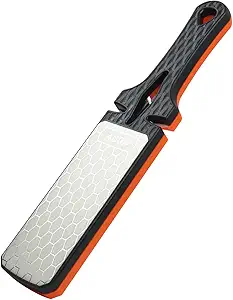 |
| Best Budget The cheapest option that still gets the job done reliably | Okxiri Diamond Sharpening Stone 5-Pack |  |
| Top Rated A top-rated pick with lots of positive feedback | SHARPAL 162N Diamond Sharpening Stone |  |
| Most Popular A crowd favorite that many people choose with confidence | SHARPAL 121N Diamond Sharpening Stone |  |
| Best Seller A high-volume bestseller chosen again and again | RAZORSHARP Knife & Scissor Sharpener |  |
DMT Dia-Sharp Bench Stone D8F

| Grit Type | Fine (600 mesh / 45 micron) |
|---|---|
| Material Type | Micronized Monocrystalline Diamond |
| Included Components | Dia-Sharp Fine Grit |
| Model Number | D8F |
The DMT Dia-Sharp D8F is an 8-inch continuous fine-grit diamond bench stone built for routine sharpening of kitchen knives, chisels, axes, and similar edged tools. Its micronized monocrystalline diamond surface cuts quickly and stays flat, so you can restore a razor edge without using oils—sharpen dry or with water—and the large continuous plate makes long, consistent strokes easy. Non-skid rubber feet add stability during use and the durable bonded diamond surface resists hollowing so it remains usable for years. Expect fast material removal for re-profiling and efficient honing to a fine edge, but note that the fine 600-mesh surface is aimed at finishing and edge refinement rather than heavy stock removal; for very dull or damaged blades you may want a coarser stone first. Made in the USA and offered in a workshop-friendly 8-inch length, this bench stone suits cooks and hobbyists who want a dependable, low-maintenance diamond sharpening surface.
Best for: Buyers who want a reliable, low-maintenance bench stone for routine edge maintenance and fine sharpening of kitchen and workshop blades.
Less Ideal for: People who need rapid stock removal or to reprofile heavily damaged blades without first using a coarser sharpening surface.
- Micronized monocrystalline diamond surface sharpens quickly and stays flat
- Large continuous 8-inch plate accommodates long strokes and various blade shapes
- No oil required — works dry or with water for easier cleanup
- Non-skid rubber feet provide stable sharpening sessions
- Durable, factory-quality construction made in the USA
- Fine 600-mesh grit is better for finishing than aggressive stock removal
Verdict: Choose this DMT 8-inch fine diamond bench stone when you want a fast, durable, low-maintenance sharpening surface for finishing and everyday edge upkeep.
DMT Diamond Whetstone 3-Pack
| Included components | Three 6-in diamond whetstones in hardwood box |
|---|---|
| Material Type | Micronized Monocrystalline Diamond |
| Grit Type | Coarse, Fine, Extra-Fine |
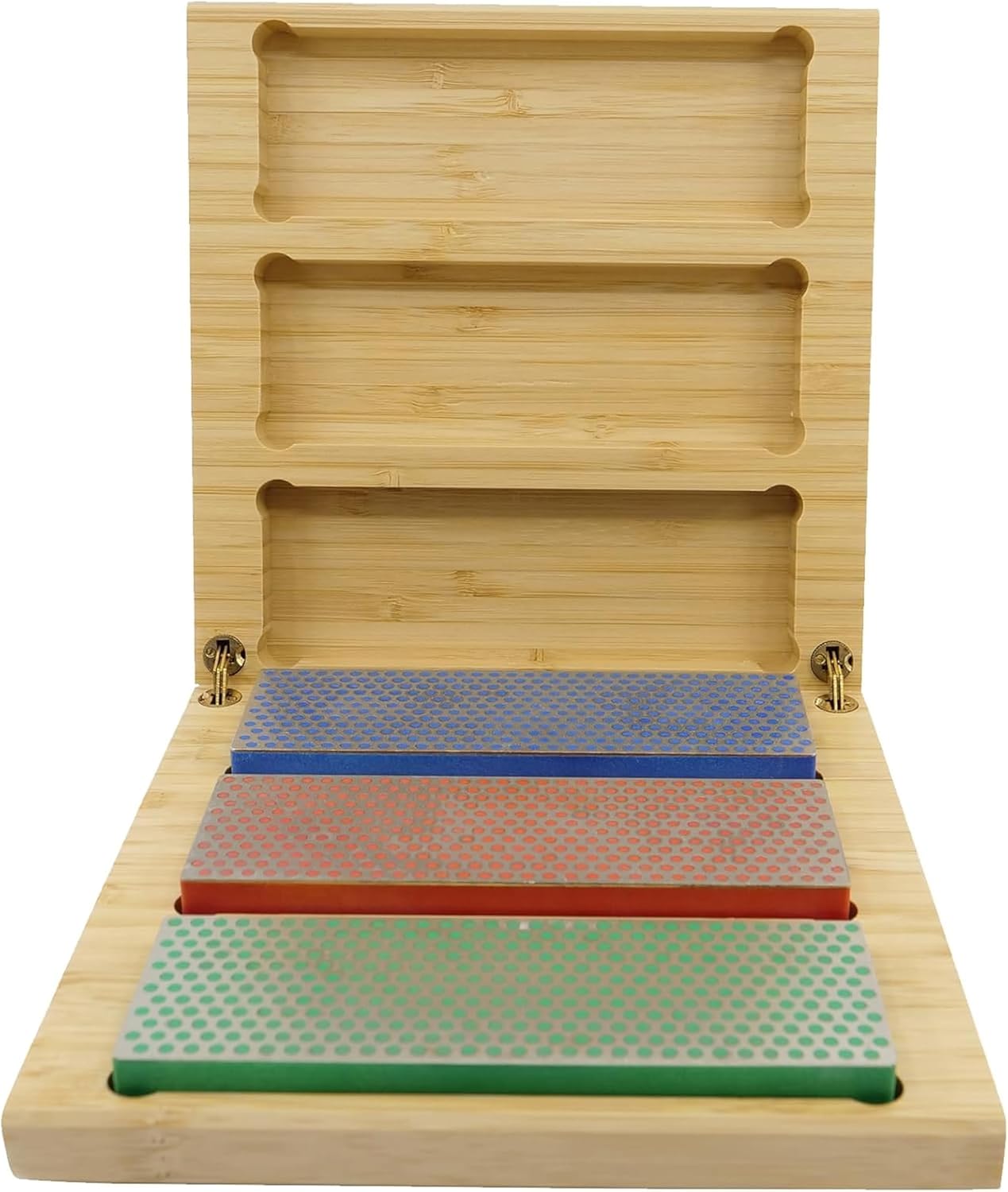
This DMT kit provides a practical three-stage sharpening system for kitchen knives, outdoor blades, and workshop tools. The set includes color-coded 6-inch diamond stones in coarse (45 micron/325 mesh), fine (25 micron/600 mesh), and extra-fine (9 micron/1200 mesh) grits so you can quickly restore a damaged edge, refine the bevel, and polish to a razor finish. The micronized monocrystalline diamond surface sharpens quickly and can be used dry or with water, avoiding messy oils and reducing prep time. Stones sit in a hardwood box with rubber feet for tidy storage and a stable working base. Because the stones are relatively short at 6 inches, long blades require more passes and attention to maintain a consistent bevel compared with larger bench stones, and the kit does not include a guided angle system so beginners must learn proper hand technique. For a performance-focused user who wants durable, fast-cutting diamond surfaces in a compact package, this set delivers pro-grade results in a small, attractive kit.
Best for: Buyers who prioritize fast, professional-quality edge restoration and want a compact, durable three-stage sharpening system for knives and general blades.
Less Ideal for: Users who need a guided-angle system or who primarily sharpen very long blades and prefer larger bench stones for single-pass consistency.
- Three distinct grits (coarse, fine, extra-fine) cover full sharpening progression
- Micronized monocrystalline diamond surface cuts fast and stays consistent
- Can be used dry or with water so no oil required
- Hardwood storage box with rubber feet keeps stones organized and stable
- 6-inch stone length means extra passes on long blades and less edge support than larger bench stones
- No angle guide included so consistent bevels require practice
Verdict: This compact three-stone DMT set gives performance-minded users fast, durable diamond sharpening from restoration to a polished razor edge.
Lifeholic Diamond Sharpening Stone

| Material Type | Corundum |
|---|---|
| Grit Type | Coarse,Fine |
| Unit Count | 1 Count |
This Lifeholic diamond sharpening stone is a compact, multi-function whetstone that handles heavy repair and edge refinement without soaking or long prep. The 400-grit side removes nicks and reshapes a damaged edge while the 1000-grit side hones and deburrs for a usable razor finish, and the honeycomb surface helps trap grinding debris. Built-in sharpening features include a scissors slot, a tungsten-steel rod for restoring a V-bevel, and a ceramic rod for polishing. Because it is diamond-based it stays flat and wears far less than traditional stones, and you can use water or honing oil for cleaning and cooling during extended sessions. The stone is small and portable with a hanging hole for storage, but its compact sharpening face means very large blades or long tools require more passes to cover the edge. For routine kitchen maintenance or restoring moderately damaged blades this stone is fast and convenient, though pro knife technicians working on high-end blades might prefer larger bench stones for finer control.
Best for: Buyers who want a practical, all-in-one sharpening tool to quickly restore and maintain kitchen and outdoor blades without the fuss of soaking stones.
Less Ideal for: Highly detail-oriented knife enthusiasts who need large bench stones for precision work or professional knife technicians.
- Dual 400/1000 grit diamond surfaces for repair and honing without soaking
- Integrated scissors slot, tungsten-steel and ceramic sharpening rods for multiple edge tasks
- Honeycomb diamond surface reduces clogging from metal filings
- Diamond material resists wear and stays flatter than conventional whetstones
- Compact and portable with hanging hole for easy storage
- Small sharpening face requires more passes on long or large blades
- Not a substitute for larger bench stones when precision or long edges are needed
Verdict: A portable, no-soak diamond stone that combines coarse repair and fine honing plus built-in slots and rods for fast, practical blade maintenance.
Okxiri Diamond Sharpening Stone 5-Pack

| Number of Items | 5 |
|---|---|
| Included Components | Diamond Sharpening Stone |
| Grit Type | Very Fine |
This five-piece diamond sharpening stone set covers a wide grit range (400, 600, 800, 1000, 1200) so you can go from repairing chips to refining a razor edge using the same compact plates. The stones are diamond-coated for hard-wearing performance and the honeycomb layout channels swarf to help keep the surface cutting; a non-slip base makes handheld sharpening more stable. Use them wet or with light honing oil, hold a consistent angle and work each grit in sequence for predictable results on kitchen knives, carving tools, and small hard materials. Because the plates are thin and portable they are easy to store and take to the workshop, but the small footprint means they are less convenient for flattening large blades or long woodworking tools. For buyers on a budget this pack gives a full grit progression and durable surfaces at a low price, though it lacks a larger backing or guide system that some users prefer for absolute angle control.
Best for: Buyers looking for an inexpensive, full-grit diamond sharpening set to maintain kitchen knives and small tools without investing in larger stones or guided systems.
Less Ideal for: Users who need a large, single stone for flattening long blades, or professionals who require a guided sharpening setup for absolute angle repeatability.
- Five distinct grit levels (400–1200) provide a complete sharpening progression
- Diamond coating offers durable, fast-cutting sharpening and long service life
- Honeycomb surface and non-slip base reduce clogging and stabilize use
- Compact, lightweight plates are easy to store and transport
- Thin plates have limited surface area, making them less suitable for very long blades or flattening
- No included angle guide or larger backing for precise, repeatable honing
Verdict: A budget-friendly five-grit diamond stone pack that delivers durable, versatile sharpening for home cooks and hobbyists.
SHARPAL 162N Diamond Sharpening Stone

| Material Type | Monocrystalline Diamond |
|---|---|
| Grit Type | Coarse, Extra Fine |
| Model Number | 162N |
The SHARPAL 162N is a dual-grit diamond whetstone designed to rapidly restore and refine edges on kitchen knives, chisels, axes, and other hard tools. One side uses coarse 325-grit for establishing an edge or repairing chips while the extra-fine 1200-grit side hones and polishes the bevel. The stone is electroplated with monocrystalline diamonds on a 0.35-inch stainless steel backing for durability and sustained flatness, and it comes with a storage case that doubles as a non-slip base plus a simple angle guide with common sharpening angles. In use it sharpens noticeably faster than traditional oil or water stones and does not require oil or water, though light pressure and routine cleaning of metal filings are recommended to avoid discoloration. Practical limits are that diamond stones can feel aggressive at first and will smooth with break-in, and they are not intended to be used with heavy pressure. For someone prioritizing consistent, long-lasting performance the 8-inch size makes working on longer blades easier, but users should plan to maintain the stone by removing filings and avoiding corrosive cleaners on plated surfaces.
Best for: Buyers who need a reliable, long-lasting sharpening solution for knives and workshop tools and who value consistent flatness and fast material removal.
Less Ideal for: People who prefer traditional whetstone feel or very gentle, slow honing sessions may prefer water or oil stones instead.
- Dual-grit surfaces (325 coarse and 1200 extra-fine) for edge setting and polishing
- Monocrystalline diamond electroplating for fast, durable cutting action
- Precision-ground flatness for consistent contact and longer useful life
- Includes storage case that works as a non-slip base and an integrated angle guide
- Can feel aggressive during initial uses until it breaks in
- Requires periodic cleaning of metal filings to prevent surface discoloration
Verdict: Choose the SHARPAL 162N when you want a fast, durable dual-grit diamond stone that delivers consistent, factory-quality sharpening over years of use.
SHARPAL 121N Diamond Sharpening Stone

| Material Type | Monocrystalline Diamond |
|---|---|
| Grit Type | Coarse, Extra Fine |
| Model Number | 121N |
The SHARPAL 121N is a compact dual-grit diamond sharpening stone designed for both coarse edge setting and fine honing. One side uses 325 grit for quickly re-profiling dull or damaged edges while the 1200-grit side refines and polishes the bevel. The stone is bonded with monocrystalline diamond on a full-tang stainless steel base, so it feels solid in hand and resists corrosion from the handle construction. Built-in 20° angle guides on both sides make it easier for beginners to maintain a consistent bevel while sharpening pocket knives, lawn mower blades, axes, hatchets, shears and chisels. Because it is diamond-coated, you can sharpen dry without oil or water, and cleaning is simple with a brush or eraser for metal filings. Expect fast material removal on the coarse face and a noticeably smoother edge after finishing on the fine face, though aggressive pressure will wear the diamond faster so light, controlled strokes are recommended. Its small footprint makes it convenient for workshop or outdoor use but limits it for very large blades or long bevels.
Best for: Buyers who prioritize proven performance and clear user feedback and want a compact, easy-to-use diamond stone for keeping kitchen and garden blades sharp.
Less Ideal for: Users who frequently sharpen wide or long blades like large swords or long mower blades and need a larger stone surface for extended bevels.
- Dual-grit (325 coarse and 1200 extra-fine) covers edge setting through honing in one tool.
- Monocrystalline diamond surface provides long-lasting, fast-cutting performance.
- Integrated 20° angle guides simplify consistent bevel control for less experienced users.
- Full-tang stainless steel base adds rigidity and resists handle corrosion.
- Can be used dry without oil or water, reducing prep and cleanup.
- Small working length makes it less efficient for very long blades or extensive bevels.
- Diamond surface can darken with filings and requires occasional cleaning to maintain performance.
Verdict: A compact, dual-grit monocrystalline diamond stone that delivers fast edge setting and precise honing with built-in angle guides for reliable, beginner-friendly results.
RAZORSHARP Knife & Scissor Sharpener

| Material Type | Tungsten Carbide, Diamond Coated Ceramic, ABS Plastic |
|---|---|
| Grit Type | Fine |
| Number of Items | 1 |
The RAZORSHARP Knife & Scissor Sharpener is a compact guided sharpener built for quick home sharpening of kitchen and chef knives plus scissors. It uses a two-stage system with diamond-coated abrasive for initial edge restoration and ceramic stones for fine polishing, and a separate third slot for scissors. An adjustable knob lets you set angles between 14 and 24 degrees so you can tune the edge for western or Asian-style blades, and the unit stores the chosen angle for repeatable use. The ABS frame with a contoured grip and thick rubber matting on the underside keeps the tool stable during passes, and the manufacturer claims most edges can be refreshed in under 15 seconds. Because it is a handheld guided system rather than a freehand whetstone, it is easy to use for someone who wants consistent results without extensive practice. It will not replace professional bench sharpening for very damaged blades, and the fixed guided slots limit advanced edge geometry work, but it is a reliable, low-effort option for maintaining everyday knives and scissors.
Best for: Buyers who want a low-risk, easy-to-use sharpener that delivers consistent, usable edges at home without training or freehand sharpening skills.
Less Ideal for: Users seeking full control over custom bevel angles, professional finish work, or restoration of heavily damaged blades should look to bench stones or professional sharpening services instead.
- Adjustable 14–24 degree angle guide for consistent, repeatable edges
- Diamond-coated and ceramic whetstones provide both aggressive sharpening and fine polishing
- Non-slip rubber base and contoured ABS grip improve stability and safety during use
- Includes a dedicated scissor sharpening stage for extra versatility
- Guided slots limit the ability to create custom edge geometries or perform complex bevel work
- Not suitable for restoring severely chipped or damaged blades compared with a professional bench stone
Verdict: A beginner-friendly diamond and ceramic guided sharpener that gives consistent, repeatable edges with minimal effort.
Choosing the Right Diamond Stone Knife Sharpener: Key Factors to Consider
Grit and Cutting Behavior
The grit grade determines how aggressively the diamond surface removes metal and the kind of edge it leaves. Coarse grits remove material quickly to reshape damaged edges or change bevel angles, while finer grits refine and polish the bevel.
Consider what tasks you do most often. If you frequently repair chips or reprofile knives, a coarser diamond surface makes the job faster. For routine maintenance and creating a refined cutting edge, mid-to-fine grits produce a smoother finish and reduce burr formation.
Plate Size and Coverage
Plate dimensions affect how easy it is to work along the length of a blade and how much contact you can maintain on longer knives. Larger plates let you draw long chef knives in fewer passes without stopping or changing hand position.
If you regularly sharpen full-size kitchen knives, prioritize a stone with enough usable surface to support consistent strokes. Compact plates suit small knives and travel use but may be frustrating on longer blades because of increased stroke variation.
Substrate Flatness and Bonding
A diamond coating only performs as well as the plate beneath it. Rigid, well-bonded substrates keep the diamond surface flat so bevel angles remain consistent during sharpening. Flexible or warped plates make it harder to maintain a uniform edge.
Look for materials and construction that resist bending and for manufacturing tolerances that favor an even distribution of abrasive. Flatness matters especially when you want predictable bevel geometry across the blade length.
Mounting, Backing, and Non-Slip Features
How a stone is mounted or supported affects both safety and results. Non-slip backing, rubber feet, or a clamping system prevents movement that can cause uneven sharpening or accidents. Some plates are designed to be used on a flat work surface; others pair with simple jigs for angle control.
Assess how you plan to use the stone: occasional at-the-counter touch-ups need minimal setup, while frequent sharpening benefits from sturdier mounting and features that limit lateral movement.
Maintenance and Cleaning
Diamond stones require different upkeep than waterstones. They tend not to absorb metal particles, but slurry and filings can accumulate on the surface and reduce cutting efficiency. Many diamond stones are easy to clean with water and a nylon brush.
Regular cleaning restores bite and prolongs abrasive life. Consider whether you prefer a tool that is essentially maintenance-free or one that requires periodic scrubbing and inspection to keep performance consistent.
Durability and Coating Life
Diamond coatings vary by manufacture and application method, which affects how long the abrasive remains effective. A high-quality bonding process keeps diamonds attached under the stress of sharpening and prevents premature wear.
Think about how often you will use the stone. Heavy, frequent use justifies choosing a more durable option. For light, occasional use a less expensive plate may be acceptable, but note that abrasive longevity ties directly to long-term sharpening costs.
Choosing the Right Grit Progression
A practical sharpening sequence usually combines coarse, medium, and fine surfaces to move from metal removal to edge refinement. Coarse diamond surfaces (for example, below a typical mid-range grit) are excellent for correcting damaged edges. Medium grits establish the bevel and remove the burr left by coarser passes. Fine grits close micro-serrations and improve slicing performance.
When selecting stones, decide whether you want a single multipurpose plate or a set that covers several levels of abrasion. A matched progression helps you work efficiently and produces more repeatable results, whereas a single mid-grit plate can handle routine maintenance but may not be ideal for heavy repair work.
- Use coarse for chip removal and reprofiling
- Use medium for bevel formation and burr removal
- Use fine for polishing and edge longevity
Using Angle Guides and Jigs
Angle control is pivotal to consistent edges. Freehand sharpening develops skill and is fast once learned, but angle guides and simple jigs reduce the learning curve and help maintain the same bevel across passes. Many users combine a guide for initial passes and freehand strokes for finishing.
If you prefer a guided setup, choose stones that work well with common angle fixtures or have a flat, accessible surface that accepts clamping. For freehand users, a larger plate and unobstructed edges make it easier to maintain steady strokes.
- Guides speed up consistent bevel reproduction
- Freehand offers more tactile feedback once skilled
- Consider plate compatibility with jigs before buying
Wet Vs Dry Use
Most diamond stones cut well without oil or soaking, but running water and light brushing keep the surface clear of filings and reduce clogging. Unlike traditional oilstones, diamond plates do not rely on lubrication to work and are often marketed as dry-use friendly.
If you prefer a wetter setup, check whether the stone is rated for use with water and whether its backing tolerates moisture. Wet use can improve debris clearance and feel cooler during long sessions.
- Dry use is convenient and still effective
- Water flushing helps clear debris and maintain bite
- Verify manufacturer guidance for wet-cleaning the backing
Edge Profiling and Specialty Tasks
Diamond stones are particularly good for shaping and restoring bevels because they cut fast and stay flat. This makes them a good choice for tasks like changing bevel angles, restoring damaged tips, and grinding back excessive edge geometry.
For specialty jobs such as making a convex edge or thinning very thick blades, pair a diamond plate with additional finishing steps to refine the surface and remove any micro-notches caused by aggressive cutting.
- Great for changing bevel angles quickly
- Useful for repairing chips and heavy wear
- Follow with finer abrasives for a polished finish
Storing and Transporting Diamond Stones
Proper storage keeps plates flat and protects the diamond surface from knocks and contamination. Store stones flat in a protective sleeve or case and avoid stacking heavy items on top. For travel, choose a compact, well-padded option to prevent edge damage.
Also consider how quickly you need a stone ready for use. Some plates ship with protective films or covers that should remain in place until you start sharpening to preserve the abrasive surface.
- Store flat to prevent bending or warping
- Use protective sleeves or rigid cases for transport
- Keep surfaces clean and dry when not in use
How We Chose the Best Diamond Stone Knife Sharpener
We evaluated diamond stones using criteria that reflect the tasks home cooks and pros need to accomplish with a knife sharpener. First, grit and cutting speed: how quickly a stone removes metal matters for reprofiling and fixing nicks. Second, surface finish and edge refinement: some diamond stones produce a toothier edge for heavy cutting while others allow finer polishing. Third, flatness and substrate stability: stones that stay flat and resist warping give repeatable bevel geometry. Fourth, ease of use and setup: we considered how straightforward each stone is to mount, whether it needs lubrication, and how accessible it is for different hand positions. Fifth, durability and abrasion longevity: diamond coatings vary in life and consistency. Sixth, safety and non-slip features: pad backing, edge guards, and secure surfaces affect control and accident risk. We excluded stones intended solely for industrial metalworking or non-knife sharpening tasks. We focused on products suitable for kitchen and general-purpose knives, prioritizing stones that match common user needs rather than niche specialty abrasives.
Our full evaluation process is outlined in our review methodology.
FAQ
Do diamond stones need oil or water during use?
Diamond stones usually work well dry, but rinsing with water and brushing off filings helps keep the surface clear. Avoid heavy oils unless recommended, because oil can trap filings and reduce cutting efficiency.
How do I know when a diamond stone is worn out?
A stone that takes noticeably longer to remove metal or that produces inconsistent cutting is likely losing abrasive bite. Inspect the surface for missing patches of coating or reduced diamond feel. With moderate use, quality plates last a long time, but heavy daily use will shorten service life.
Can I use a diamond stone on serrated knives?
Serrated knives require specialized attention and are not well suited to flat diamond plates for full-profile sharpening. Individual serrations can sometimes be maintained with diamond-tipped tools designed to fit each gulley, but general flat stones are better for straight-edged blades.
Will diamond stones change the blade geometry?
Yes, aggressive use with coarse diamond surfaces can remove metal quickly and alter bevel angles if you are not careful. Use consistent strokes and an angle guide if you need to preserve a specific geometry, and progress to finer abrasives to refine the edge.
Are diamond stones safe for all kitchen steels?
Diamond abrasives cut a broad range of steels, including hard stainless and high-carbon alloys. They can be more effective than softer abrasives on very hard steels, but you should adjust pressure and stroke count to avoid over-grinding and to achieve the desired finish.
Final Verdict
Prioritize the grit progression, plate size, and mounting stability when choosing a diamond stone for kitchen knives. Faster-cutting, coarser diamond surfaces speed repair and reprofiling jobs, while mid and fine grits help you build a reliable, long-lasting edge. Balance durability and ease of use with the typical tasks you perform most often and plan a finishing step to achieve the slicing performance you want. With those tradeoffs in mind, pick the stone that matches your common sharpening tasks and the length of blade you most often service.